Downloaded 24 times
![Parental [capacity] to
change
Nathan Loynes](https://image.slidesharecdn.com/parentingcapacitytochange-151111125603-lva1-app6892/75/Parenting-capacity-to-change-1-2048.jpg)





![‘Good Enough’ Parenting
• Social workers also need to be realistic; being a
competent parent and having the capacity to parent is
not about being 'super-human‘ or 'perfect‘.
• Instead, an assessment of parenting capacity needs to
employ a reasonable standard of parenting that
ensures the "parenting is adequate to meet the basic
safety and emotional needs of the child a [and that it
considers] the lowest threshold of parenting skills
necessary to protect a child's welfare, given the risks
and protective factors present in the family" (Budd,
2005, p. 433).](https://image.slidesharecdn.com/parentingcapacitytochange-151111125603-lva1-app6892/75/Parenting-capacity-to-change-17-2048.jpg)

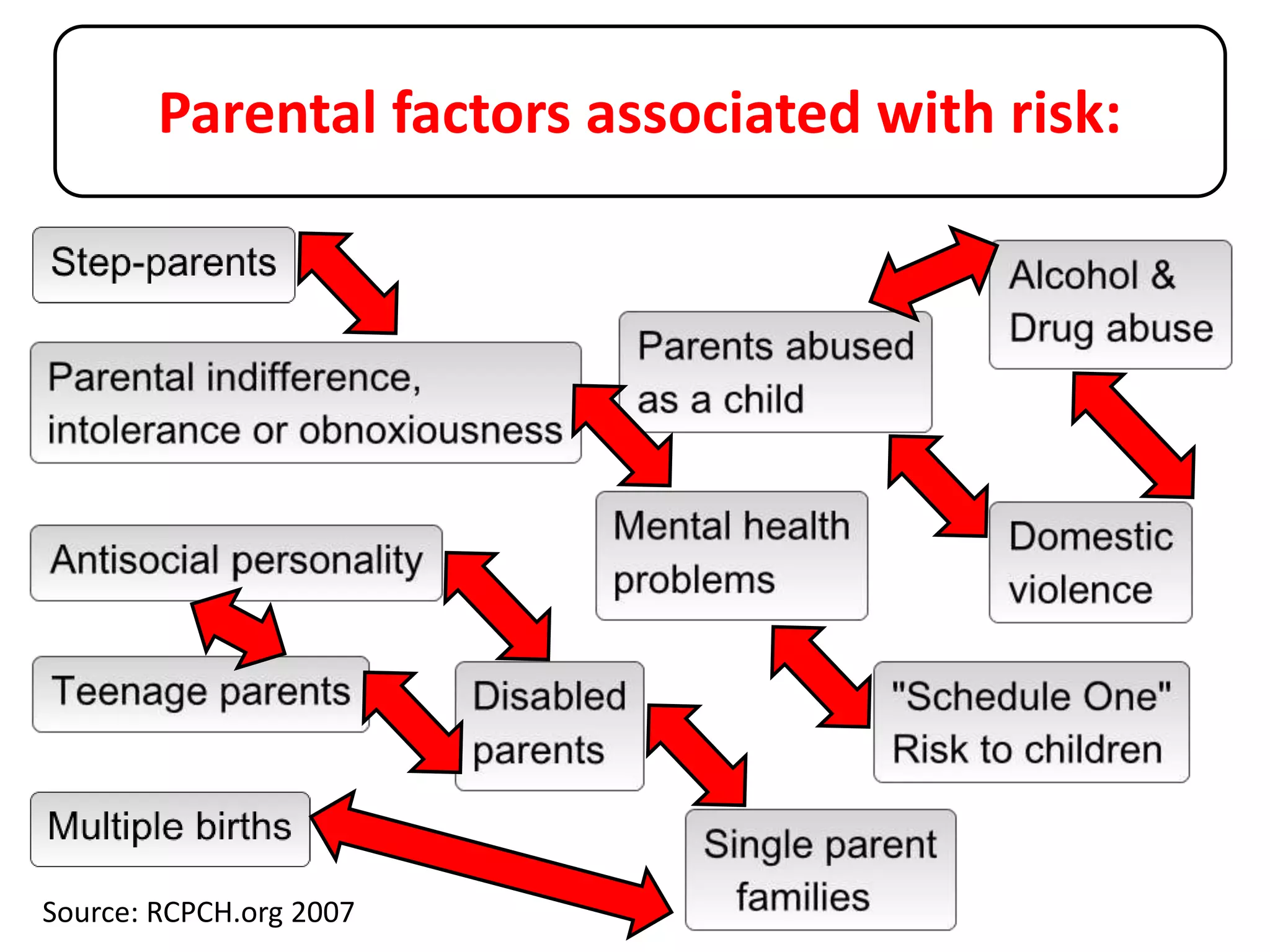
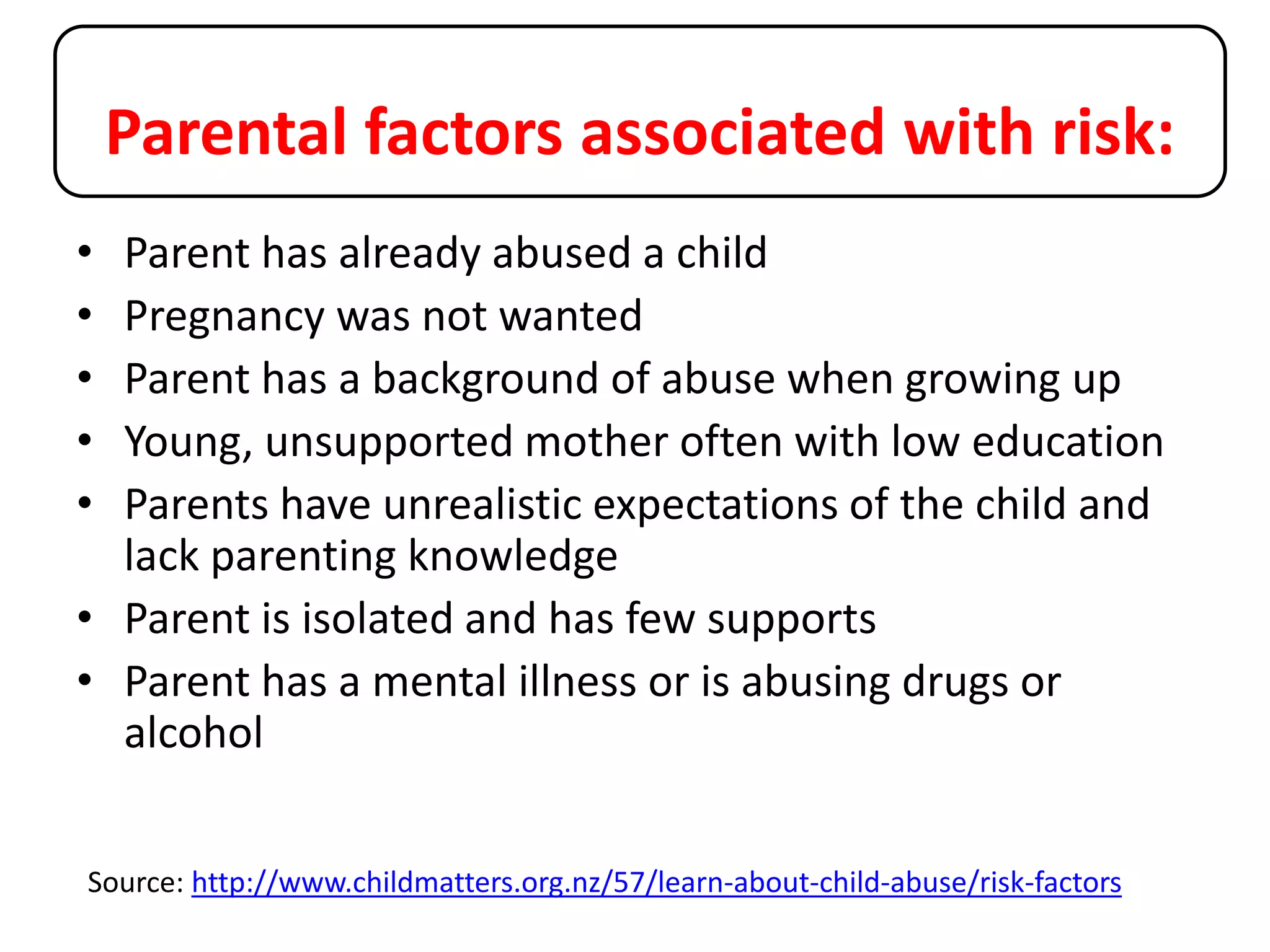
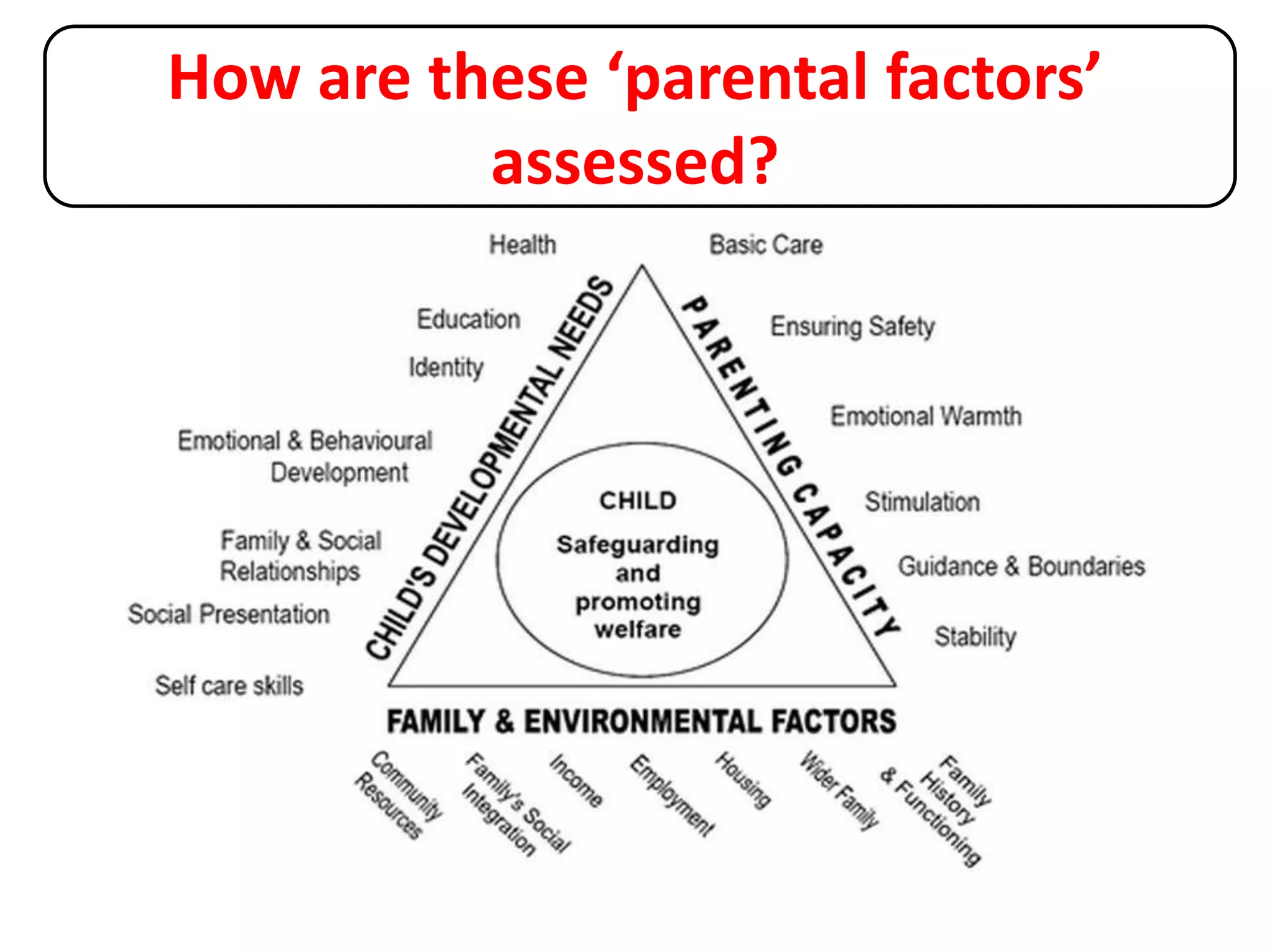
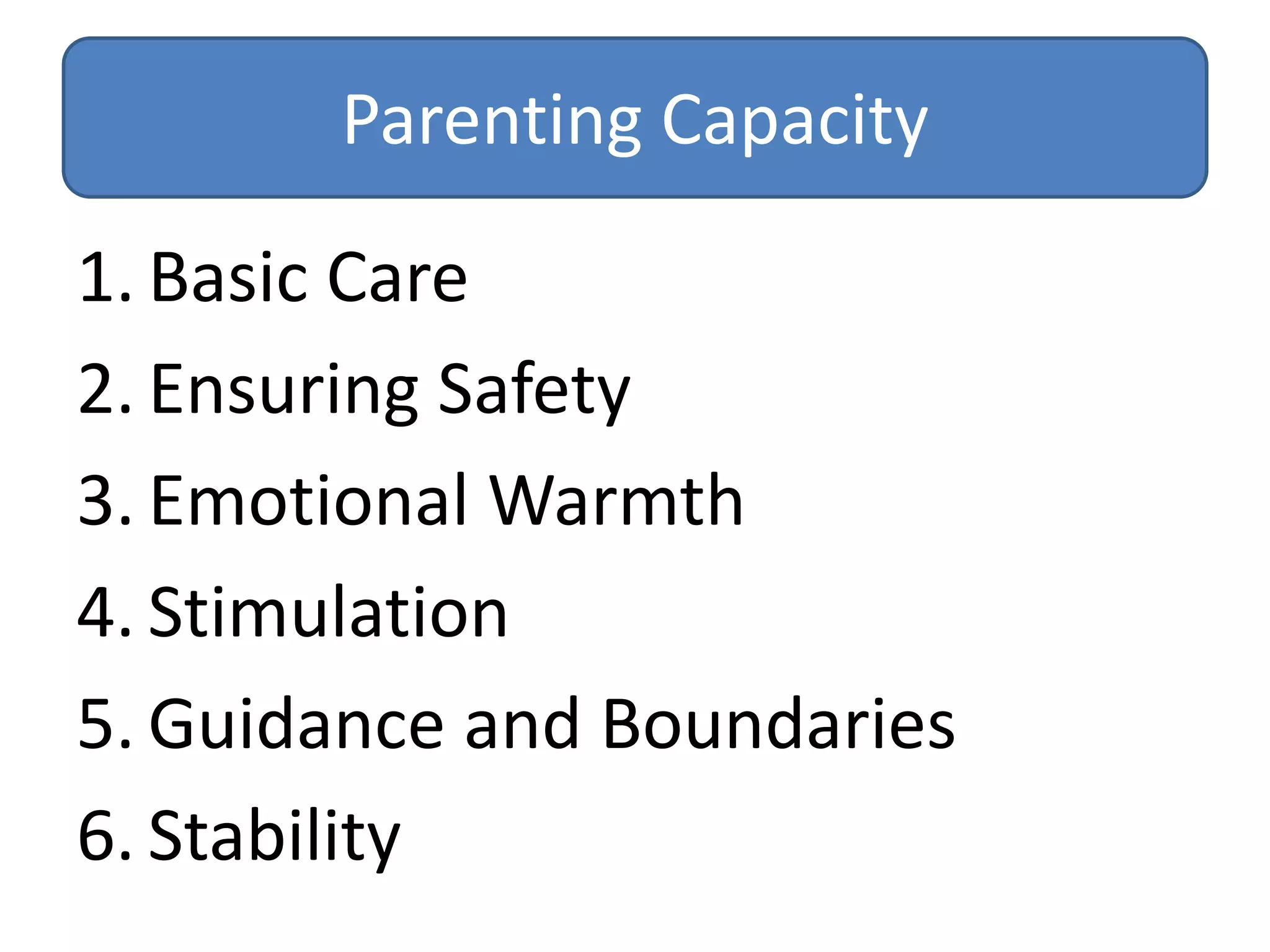
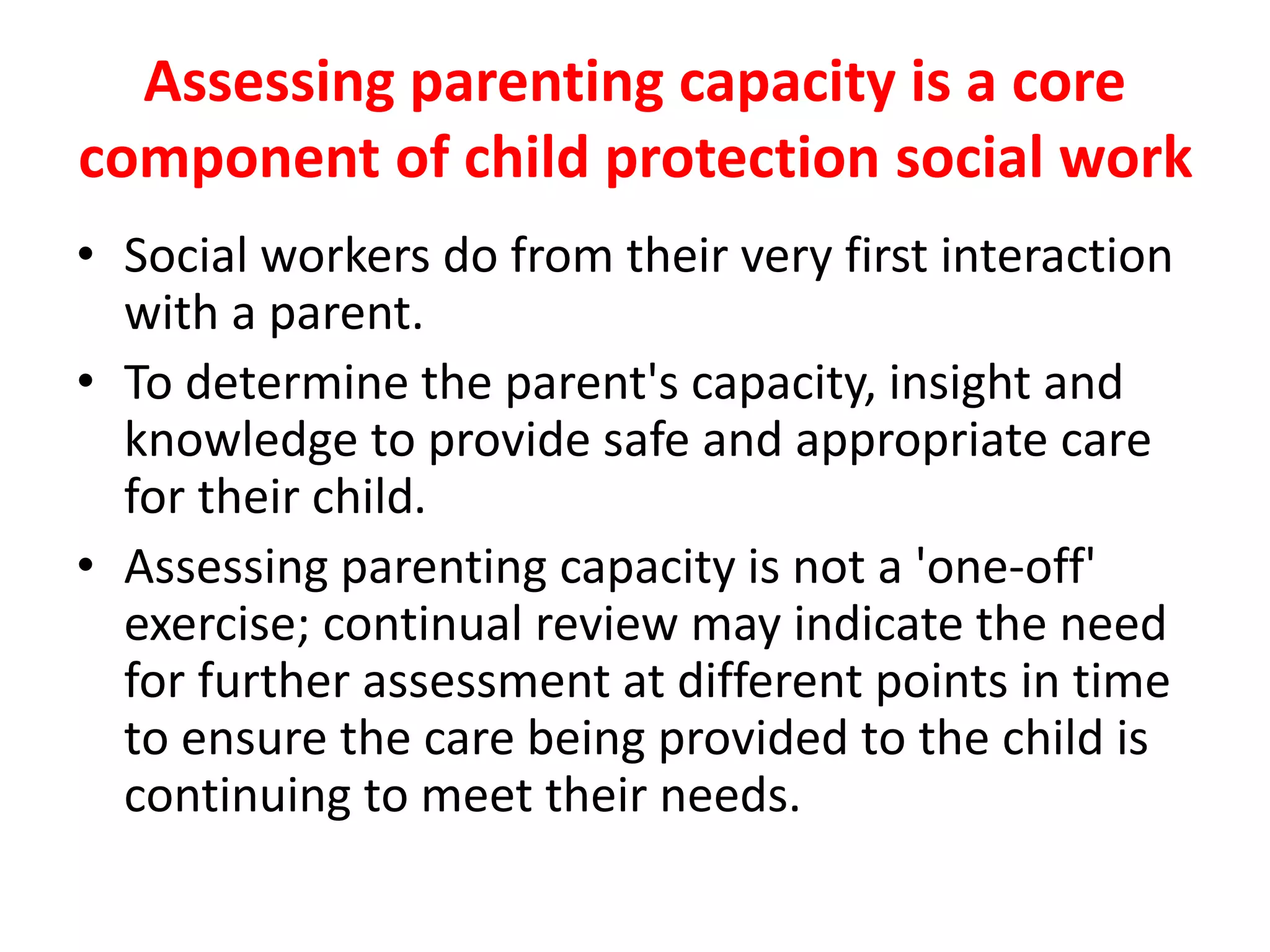
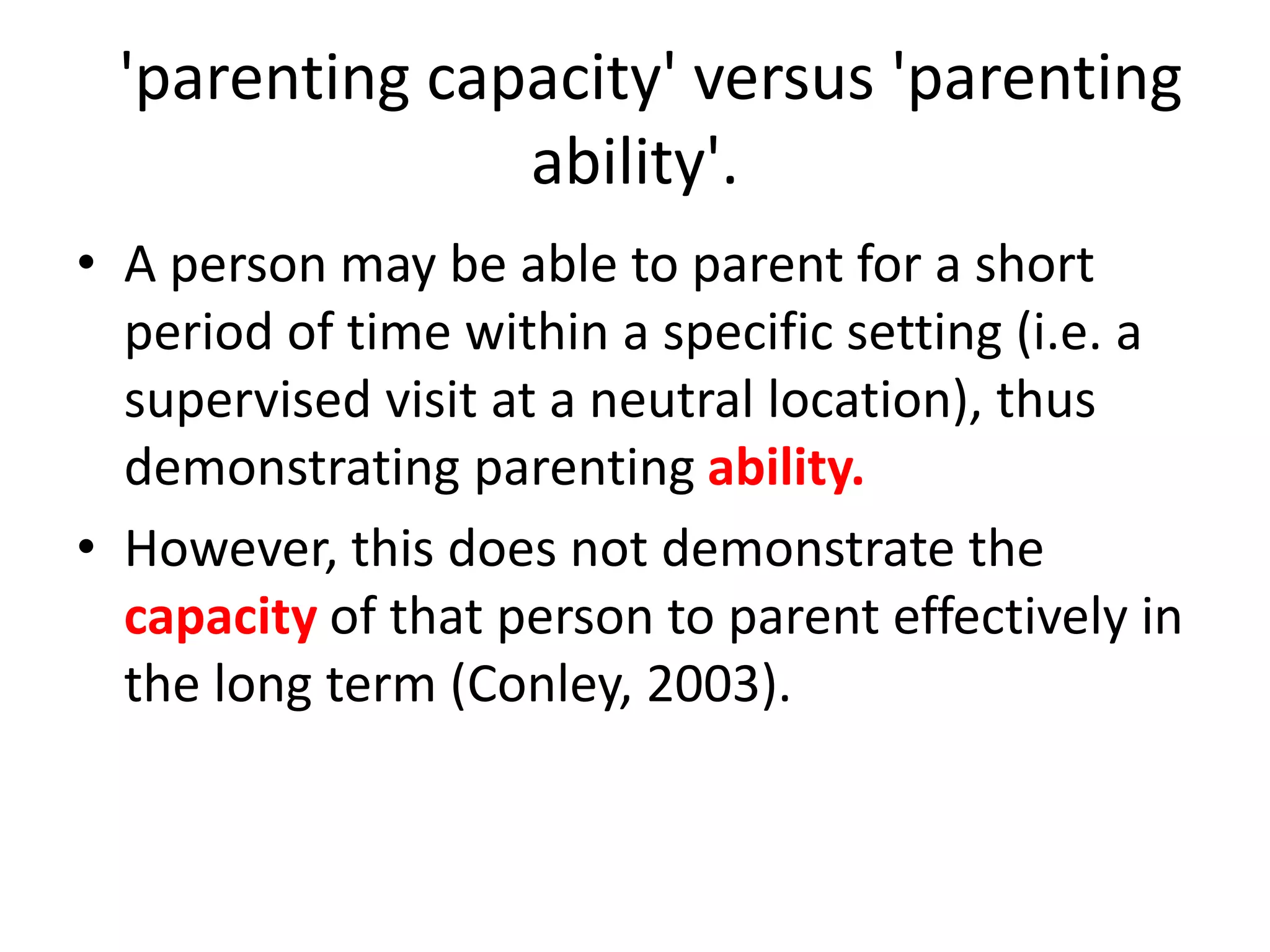
Parental capacity to care for a child is assessed based on factors like basic care, safety, emotional warmth, stimulation, guidance and boundaries, and stability. Risk factors include a history of abuse, unwanted pregnancy, parental abuse or mental health issues, isolation, unrealistic expectations, and substance abuse. Assessing capacity looks at a parent's ability to meet a child's needs over the long-term, not just during supervised visits. It employs a "good enough" standard of adequate care that protects a child's welfare given family risks and protections. Regular reassessment may be needed as circumstances change.


