Kingdom of Saudi Arabia
Ministry of Education in Yanbu (girls)
Private and Foreign Education

Prepared & Presented by:
Nadia K AL.Ghamdi
Foreign Education Supervisor
Why we observe teacher’s
performance
ACTIVITY( 1 ) ANALYSIS THE
TEACHING
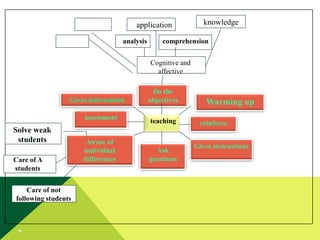
 The next slide shows a mind map of
analysis the teaching , complete the map
by writing the activities which done by
the teacher:
application
analysis

knowledge

comprehension
Cognitive and
affective

Gives information

Do the
objectives

assessment

Solve weak
students
Care of A
students
Care of not
following students

teaching

Aware of
individual
differences

Ask
questions

Warming up
reinforce

Gives instructions
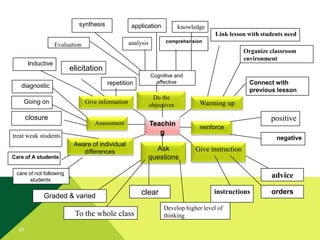
synthesis

application

knowledge
Link lesson with students need

inductive

Organize classroom
environment

elicitation
repetition

diagnostic
Going on

closure

Give information

Assessment

treat weak students

Care of A students

comprehension

analysis

Evaluation

Aware of individual
differences

Cognitive and
affective

Do the
objectives

Teachin
g
Ask
questions

Connect with
previous lesson

Warming up

positive
reinforce
negative

Give instruction

care of not following
students

advice

Graded & varied

To the whole class

clear

instructions
Develop higher level of
thinking

orders
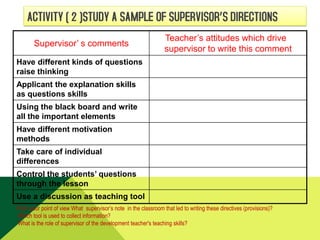
ACTIVITY ( 2 )STUDY A SAMPLE OF SUPERVISOR’S DIRECTIONS
Supervisor’ s comments

Teacher’s attitudes which drive
supervisor to write this comment

Have different kinds of questions
raise thinking
Applicant the explanation skills
as questions skills
Using the black board and write
all the important elements
Have different motivation
methods
Take care of individual
differences
Control the students’ questions
through the lesson
Use a discussion as teaching tool
From your point of view What supervisor’s note in the classroom that led to writing these directives (provisions)?
Which tool is used to collect information?
What is the role of supervisor of the development teacher's teaching skills?
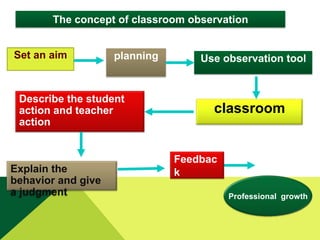
The concept of classroom observation
Set an aim

planning

Describe the student
action and teacher
action

Explain the
behavior and give
a judgment

Use observation tool

classroom

Feedbac
k
Professional growth
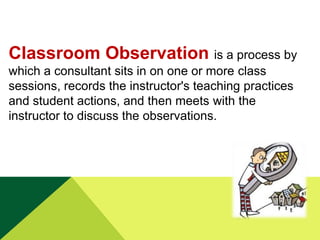
Classroom Observation is a process by
which a consultant sits in on one or more class
sessions, records the instructor's teaching practices
and student actions, and then meets with the
instructor to discuss the observations.
A

classroom

f o
o b
wh
c l
e n
c o
t e

r
s
i
a
v
n
a

s
o
t
c
f
t

e
s

p
b
o
o
e
h

n
e
e

ma
e r
l e
s s
i r
d u
c h

observation

i
o
c
e
r
c
e
r
i
s

l
o r
i n f
v a t i o n
o f
t e a
i t i s t a k i n g p l a c
r o o m o r o t h e r l e a
o n me n t .
Ty p i
c t e d
b y
f
e r s , a d mi n i s t r a t o
i n s t r u c t
c i a l i s t s ,
c l a s
e r v a t i o n s a r e o f t e n
p r o v i d e
t e a c h e r s
s t r u c t i v e
c r i t
d b a c k a i me d a t i mp r o
i r
c l a s s r o o m ma n a g e

s
r ma
h i n
i n
n i n
a l l
l l o
s , o
o n a
r o o
u s e
wi t
i c a
v i n
me n

a
l
g
a
g
y
w
r
l
m
d
h
l
g
t
 First models is comprehensive
observation applied to whole lesson
 Second model is intensive
observation of one skill or more
focus on details.
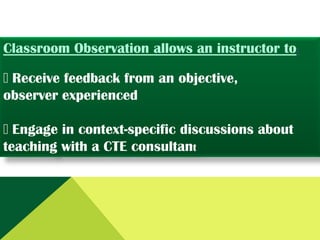
Classroom Observation allows an instructor to:


Receive feedback from an objective,
observer experienced

Engage in context-specific discussions about
teaching with a CTE consultant
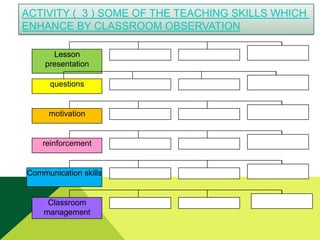
ACTIVITY ( 3 ) SOME OF THE TEACHING SKILLS WHICH
ENHANCE BY CLASSROOM OBSERVATION
Lesson
presentation
questions

motivation

reinforcement

Communication skills

Classroom
management
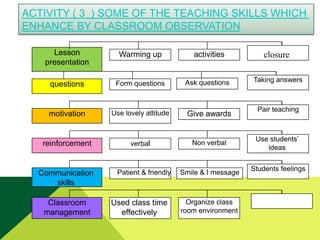
ACTIVITY ( 3 ) SOME OF THE TEACHING SKILLS WHICH
ENHANCE BY CLASSROOM OBSERVATION
Lesson
presentation

Warming up

activities

closure

questions

Form questions

Ask questions

Taking answers

motivation

Use lovely attitude

Give awards

reinforcement

verbal

Non verbal

Communication
skills
Classroom
management

Patient & friendly

Used class time
effectively

Smile & I message

Organize class
room environment

Pair teaching

Use students’
ideas
Students feelings
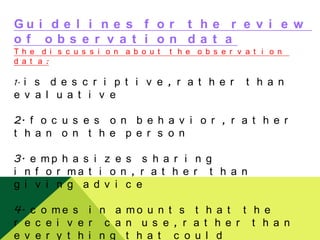
Gu i d e l i n e s f o r t h e r e v i e w
of obs e r v a t i on da t a
Th e d i s c u s s i o n a b o u t
d a t a :

t h e o b s e r v a t i o n

i s d e s c r i p t i v e , r a t h e r
e v a l u a t i v e
1.

t h a n

2. f o c u s e s o n b e h a v i o r , r a t h e r
t h a n o n t h e p e r s o n
3. e m p h a s i z e s s h a r i n g
i n f o r ma t i o n , r a t h e r t h a n
g i v i n g a d v i c e
4. c o m e s i n a m o u n t s t h a t t h e
r e c e i v e r c a n u s e , r a t h e r t h a n
e v e r y t h i n g t h a t c o u l d
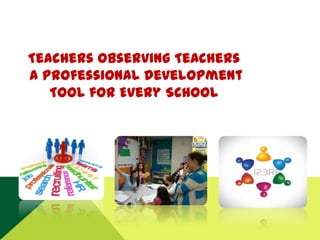
Teachers Observing Teachers
A Professional Development
Tool for Every School
Administrators benefit from:
The opportunity for reflective dialogue with and among
teachers.
An increased sense of shared responsibility.
An increased focus on student achievement.
An increased trust and collegiality among staff.
Participation in a professional and collaborative learning
community.
A cadre of self-reliant, confident teachers who love
teaching.
Enriched teacher efficacy
Participation in a professional and collaborative learning
community
Teachers Benefit from:
An opportunity to engage in reflective dialogue about their work.
The focused classroom support.
Improvement of classroom practices.
Support from an "expert" (peer) who understands the daily demands
of the classroom.
Satisfaction with one's work.
Reduced job stress, especially for the new teacher.
A welcoming atmosphere for new teachers.
The comfort of knowing that someone is available to help, explain,
and assist
The School Benefits from:
Increased collaboration among teachers.
The establishment of a professional learning
community.
An increased focus on student achievement.
Enthusiasm for the teaching profession.
https://www.teachingchannel.org/videos/improvingteacher-performance
http://www.educationworld.com/a_admin/admin/admin136.shtml
http://worldteacher-andrea.blogspot.com/2013/05/observation-andyour-teaching-staff.html
http://tntp.org/assets/documents/TNTP_RatingATeacherObservationT
ool_Feb2011.pdf
https://www.teachingchannel.org/videos/improving-teacherperformance
classroom observation

classroom observation

  • 1.
    Kingdom of SaudiArabia Ministry of Education in Yanbu (girls) Private and Foreign Education Prepared & Presented by: Nadia K AL.Ghamdi Foreign Education Supervisor
  • 7.
    Why we observeteacher’s performance
  • 8.
    ACTIVITY( 1 )ANALYSIS THE TEACHING  The next slide shows a mind map of analysis the teaching , complete the map by writing the activities which done by the teacher:
  • 9.
    application analysis knowledge comprehension Cognitive and affective Gives information Dothe objectives assessment Solve weak students Care of A students Care of not following students teaching Aware of individual differences Ask questions Warming up reinforce Gives instructions
  • 10.
    synthesis application knowledge Link lesson withstudents need inductive Organize classroom environment elicitation repetition diagnostic Going on closure Give information Assessment treat weak students Care of A students comprehension analysis Evaluation Aware of individual differences Cognitive and affective Do the objectives Teachin g Ask questions Connect with previous lesson Warming up positive reinforce negative Give instruction care of not following students advice Graded & varied To the whole class clear instructions Develop higher level of thinking orders
  • 12.
    ACTIVITY ( 2)STUDY A SAMPLE OF SUPERVISOR’S DIRECTIONS Supervisor’ s comments Teacher’s attitudes which drive supervisor to write this comment Have different kinds of questions raise thinking Applicant the explanation skills as questions skills Using the black board and write all the important elements Have different motivation methods Take care of individual differences Control the students’ questions through the lesson Use a discussion as teaching tool From your point of view What supervisor’s note in the classroom that led to writing these directives (provisions)? Which tool is used to collect information? What is the role of supervisor of the development teacher's teaching skills?
  • 13.
    The concept ofclassroom observation Set an aim planning Describe the student action and teacher action Explain the behavior and give a judgment Use observation tool classroom Feedbac k Professional growth
  • 15.
    Classroom Observation isa process by which a consultant sits in on one or more class sessions, records the instructor's teaching practices and student actions, and then meets with the instructor to discuss the observations.
  • 16.
    A classroom f o o b wh cl e n c o t e r s i a v n a s o t c f t e s p b o o e h n e e ma e r l e s s i r d u c h observation i o c e r c e r i s l o r i n f v a t i o n o f t e a i t i s t a k i n g p l a c r o o m o r o t h e r l e a o n me n t . Ty p i c t e d b y f e r s , a d mi n i s t r a t o i n s t r u c t c i a l i s t s , c l a s e r v a t i o n s a r e o f t e n p r o v i d e t e a c h e r s s t r u c t i v e c r i t d b a c k a i me d a t i mp r o i r c l a s s r o o m ma n a g e s r ma h i n i n n i n a l l l l o s , o o n a r o o u s e wi t i c a v i n me n a l g a g y w r l m d h l g t
  • 18.
     First modelsis comprehensive observation applied to whole lesson  Second model is intensive observation of one skill or more focus on details.
  • 21.
    Classroom Observation allowsan instructor to:  Receive feedback from an objective, observer experienced  Engage in context-specific discussions about teaching with a CTE consultant
  • 23.
    ACTIVITY ( 3) SOME OF THE TEACHING SKILLS WHICH ENHANCE BY CLASSROOM OBSERVATION Lesson presentation questions motivation reinforcement Communication skills Classroom management
  • 24.
    ACTIVITY ( 3) SOME OF THE TEACHING SKILLS WHICH ENHANCE BY CLASSROOM OBSERVATION Lesson presentation Warming up activities closure questions Form questions Ask questions Taking answers motivation Use lovely attitude Give awards reinforcement verbal Non verbal Communication skills Classroom management Patient & friendly Used class time effectively Smile & I message Organize class room environment Pair teaching Use students’ ideas Students feelings
  • 25.
    Gu i de l i n e s f o r t h e r e v i e w of obs e r v a t i on da t a Th e d i s c u s s i o n a b o u t d a t a : t h e o b s e r v a t i o n i s d e s c r i p t i v e , r a t h e r e v a l u a t i v e 1. t h a n 2. f o c u s e s o n b e h a v i o r , r a t h e r t h a n o n t h e p e r s o n 3. e m p h a s i z e s s h a r i n g i n f o r ma t i o n , r a t h e r t h a n g i v i n g a d v i c e 4. c o m e s i n a m o u n t s t h a t t h e r e c e i v e r c a n u s e , r a t h e r t h a n e v e r y t h i n g t h a t c o u l d
  • 26.
    Teachers Observing Teachers AProfessional Development Tool for Every School
  • 27.
    Administrators benefit from: Theopportunity for reflective dialogue with and among teachers. An increased sense of shared responsibility. An increased focus on student achievement. An increased trust and collegiality among staff. Participation in a professional and collaborative learning community. A cadre of self-reliant, confident teachers who love teaching. Enriched teacher efficacy Participation in a professional and collaborative learning community
  • 28.
    Teachers Benefit from: Anopportunity to engage in reflective dialogue about their work. The focused classroom support. Improvement of classroom practices. Support from an "expert" (peer) who understands the daily demands of the classroom. Satisfaction with one's work. Reduced job stress, especially for the new teacher. A welcoming atmosphere for new teachers. The comfort of knowing that someone is available to help, explain, and assist
  • 29.
    The School Benefitsfrom: Increased collaboration among teachers. The establishment of a professional learning community. An increased focus on student achievement. Enthusiasm for the teaching profession.
  • 31.
  • 33.