Downloaded 622 times

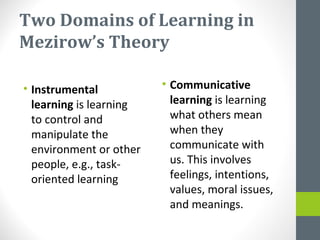
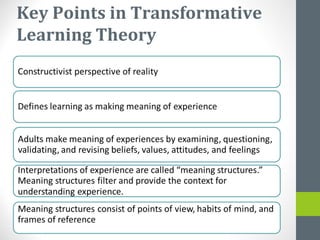
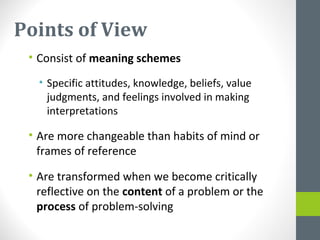

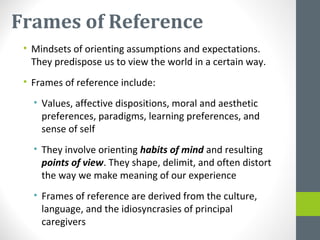

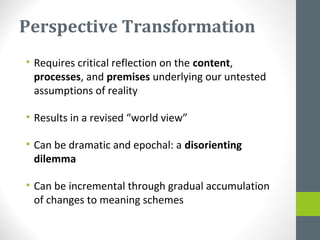

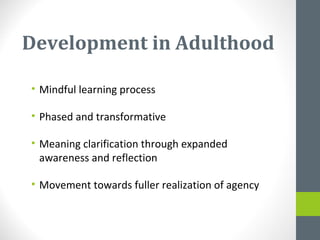
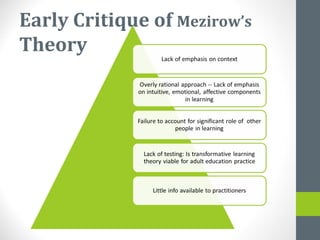
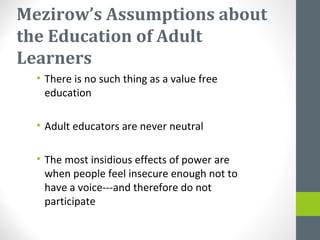


Mezirow's transformative learning theory posits that learning in childhood is formative, derived from authority figures, while learning in adulthood is transformative as adults can recognize distortions in their own beliefs. Transformative learning involves using prior interpretations to create new understandings to guide future actions. It occurs through instrumental learning of skills and communicative learning of meanings and perspectives. Learning transforms when meaning structures like points of view and habits of mind are revised through critical reflection on assumptions and perspectives, which can result in a perspective transformation - a dramatic shift in worldview. The adult educator's role is to support this process through challenging assumptions and encouraging critical reflection and discourse.


