TRANSFORMATIVE EDUCATION
I. Definition of terms
II. Transformational Learning Theory
-Two Kinds of Learning
III.Perspective Transformation
-Process of Perspective Transformation
-Elements of frame reference
-Four Ways of Learning
IV.Reasons To Consider and Practice for
Students
V.Instructional Practices
VI.Educational Implications
VII.Research
o ep mn - i dn ed
Definition
clue
2 letters clue
: willing to
consider different
ideas or opinions
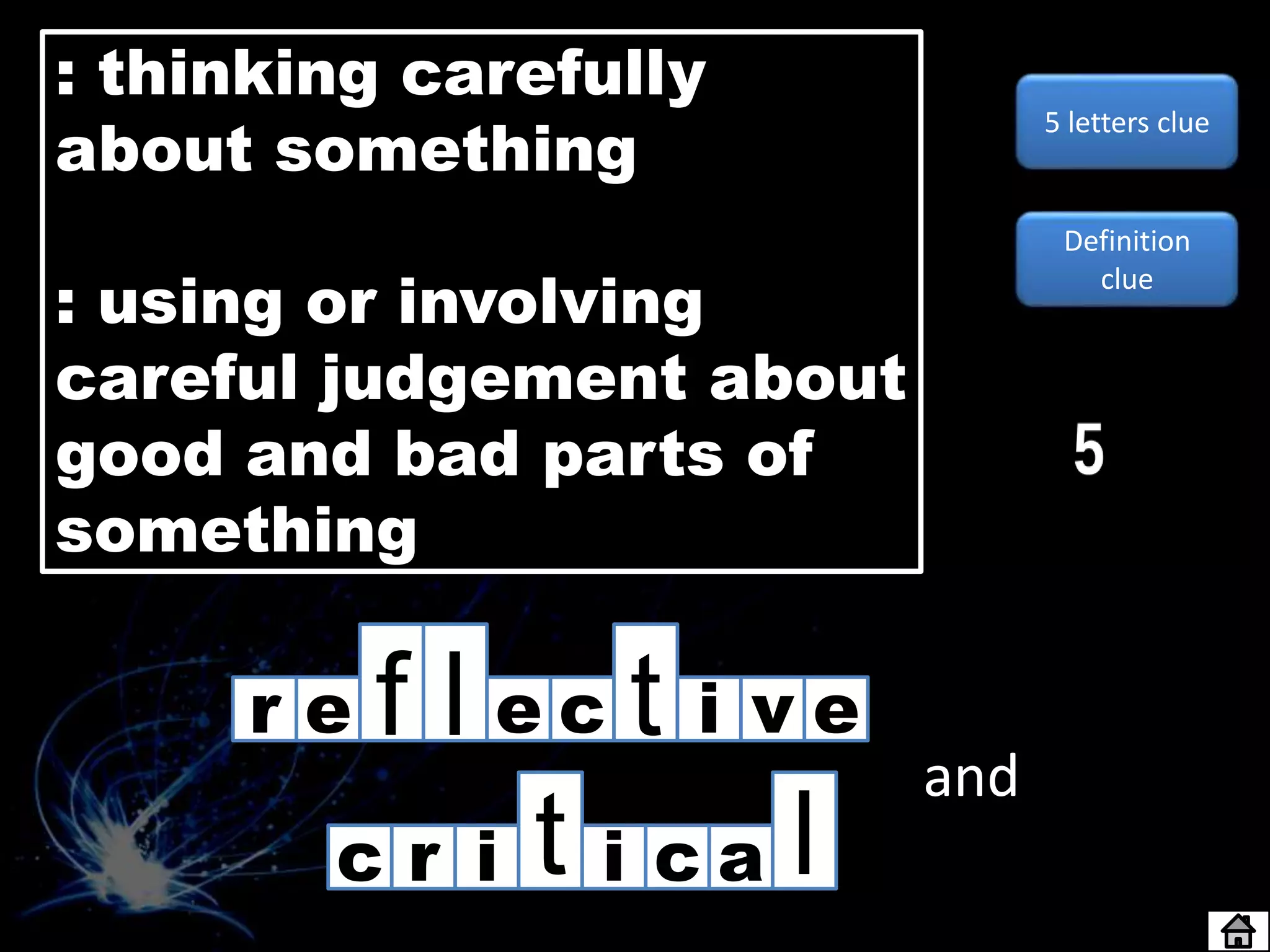
r e f l e c t i v e
rc
and
i t i c a l
Definition
clue
5 letters clue
: thinking carefully
about something
: using or involving
careful judgement about
good and bad parts of
something
TRANSFORMATIVE
EDUCATION
Transformational learning
about change, dramatic,
fundamental change in the way we see
ourselves and the world in which we
live. (Merriam, 2007)
Reflective & critical
Open to perspectives
of others
Less defensive &
more accepting of
new ideas
Transformative learning
involves experiencing a deep,
structural shift in the basic premises of
thought, feelings and actions.
(O’Sullivan, 1999)
TRANSFORMATIVE
EDUCATION
RELATIONS
SELF
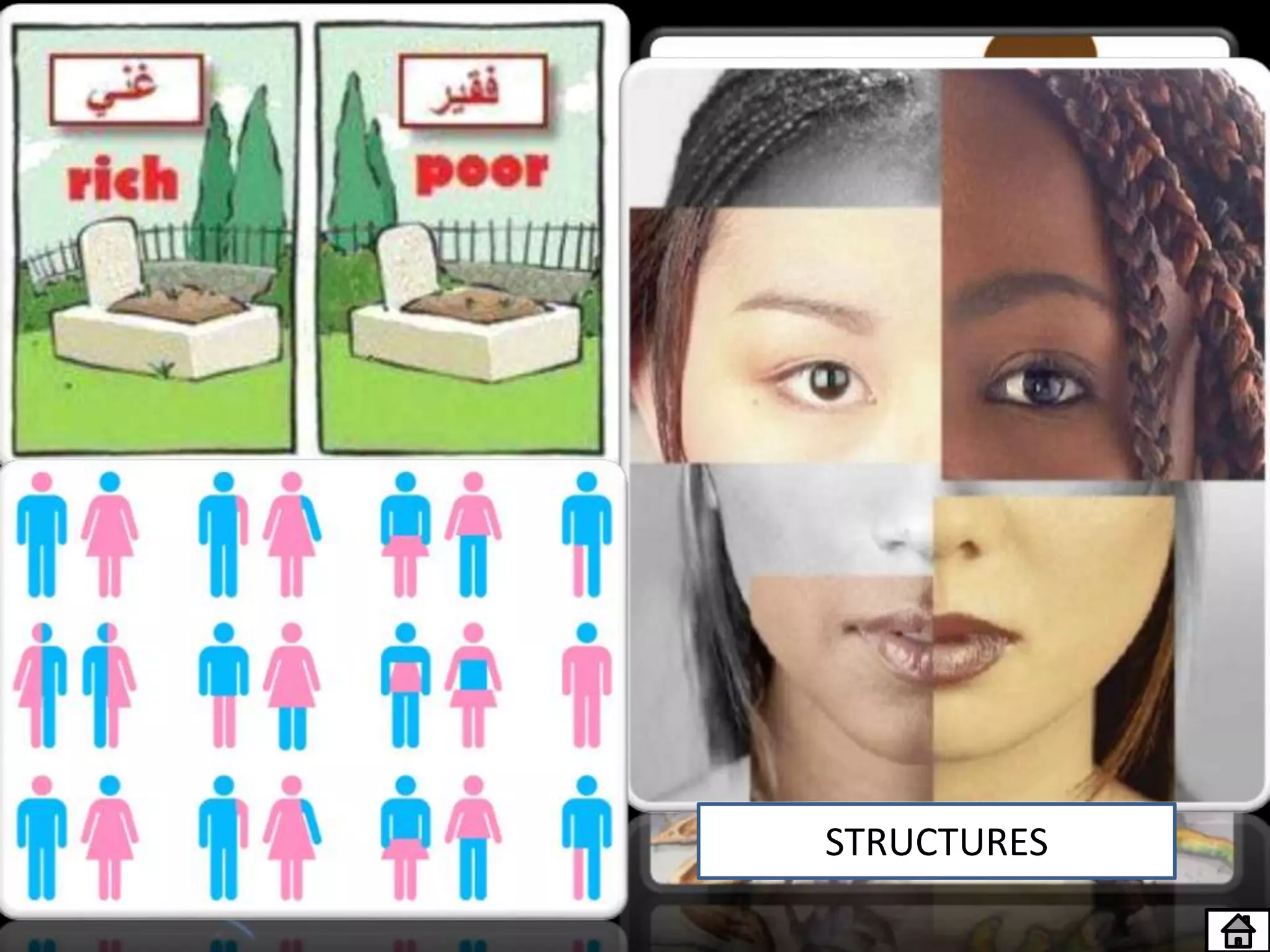
STRUCTURES
Transformational learning theory
CONSTRUCTIVIST
(Taylor, 1998 & Mezirow, 1997)
- this theory involves two kinds of learning:
An orientation which holds that the way
learners interpret and reinterpret their
sense experience is central to making
meaning and hence learning.
What is Love?
Transformative learning
Instrumental
learning
Task-oriented
problem solving
Cause and effect
relationships
Communicative
learning
Feelings, needs
and desires with
another person
Psychological
Convictional
Behavioral
PROCESS OF
PERSPECTIVE
TRANSFORMATI
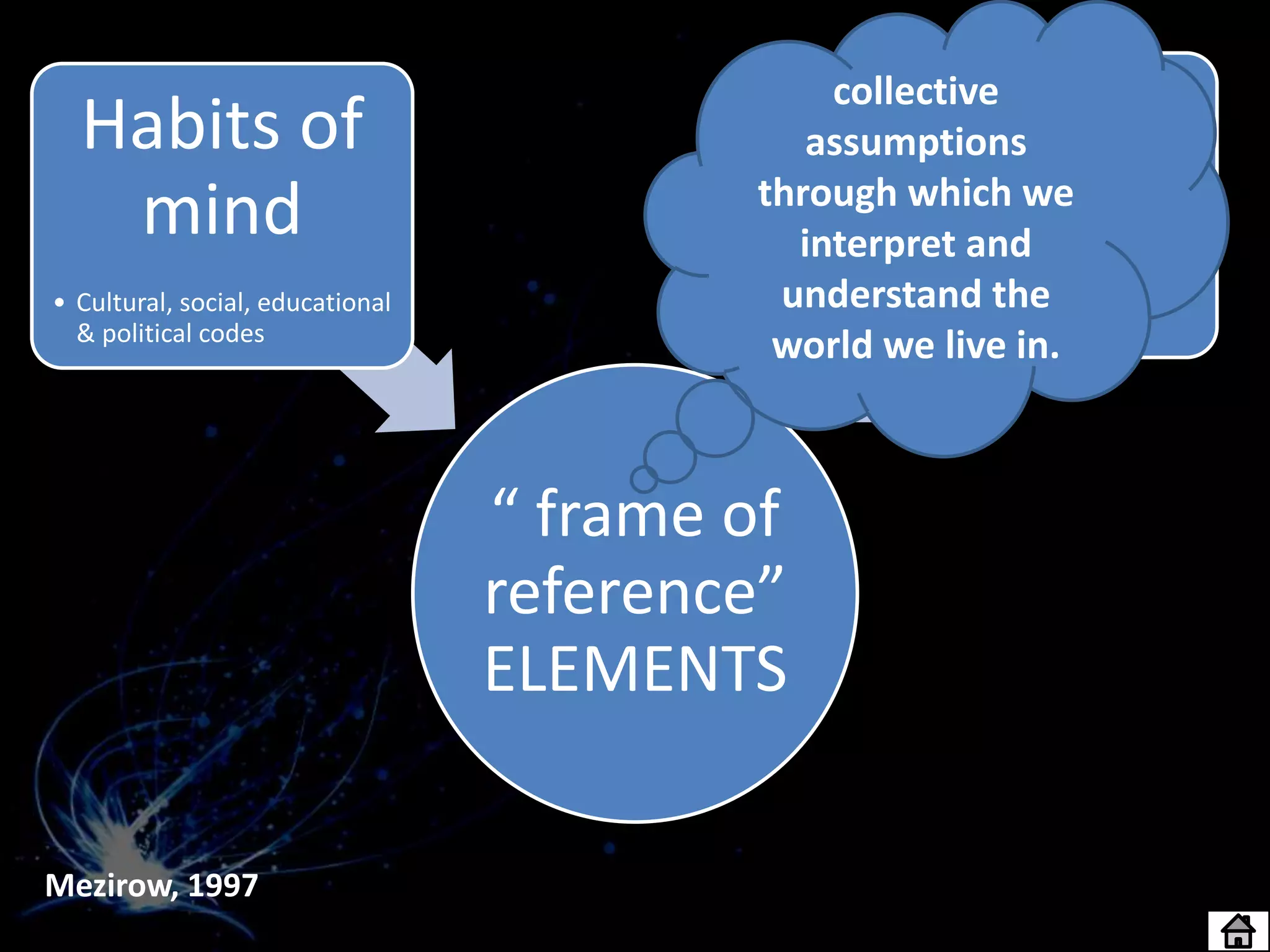
“ frame of
reference”
ELEMENTS
Habits of
mind
• Cultural, social, educational
& political codes
Point of
view
• From habits of mind
Mezirow, 1997
collective
assumptions
through which we
interpret and
understand the
world we live in.
LEARNING
EXISTING
Frames of
Reference
Habits
of Mind
Points of
View
NEW
Frames of
Reference
ELABORATING
TRANSFORMING
L
E
A
R
N
I
N
G
T
R
A
N
S
F
O
R
M
I
N
G
An important part of transformative
learning is:
for individuals to change their
frames of reference
 critically reflecting on their
assumptions and beliefs
 and consciously making and
implementing plans that bring
about new ways of defining their
worlds.
This process is fundamentally rational
and analytical.
Diverse experiences such as:
--is part of the process of
transformative education
Reasons to consider transformative learning
theory and practice for students:
• Transition to
adult life
• Beliefs and
assumptions
may be
challenged
• Some degree of
personal or social
transformation is
required
• We are living
through a period of
transformational
change
Guide for Educators of Adult, 1994
TRANSFORMATIVE
EDUCATION
Reasons to consider transformative
learning theory and practice for students
(Guide for Educators of Adult, 1994)
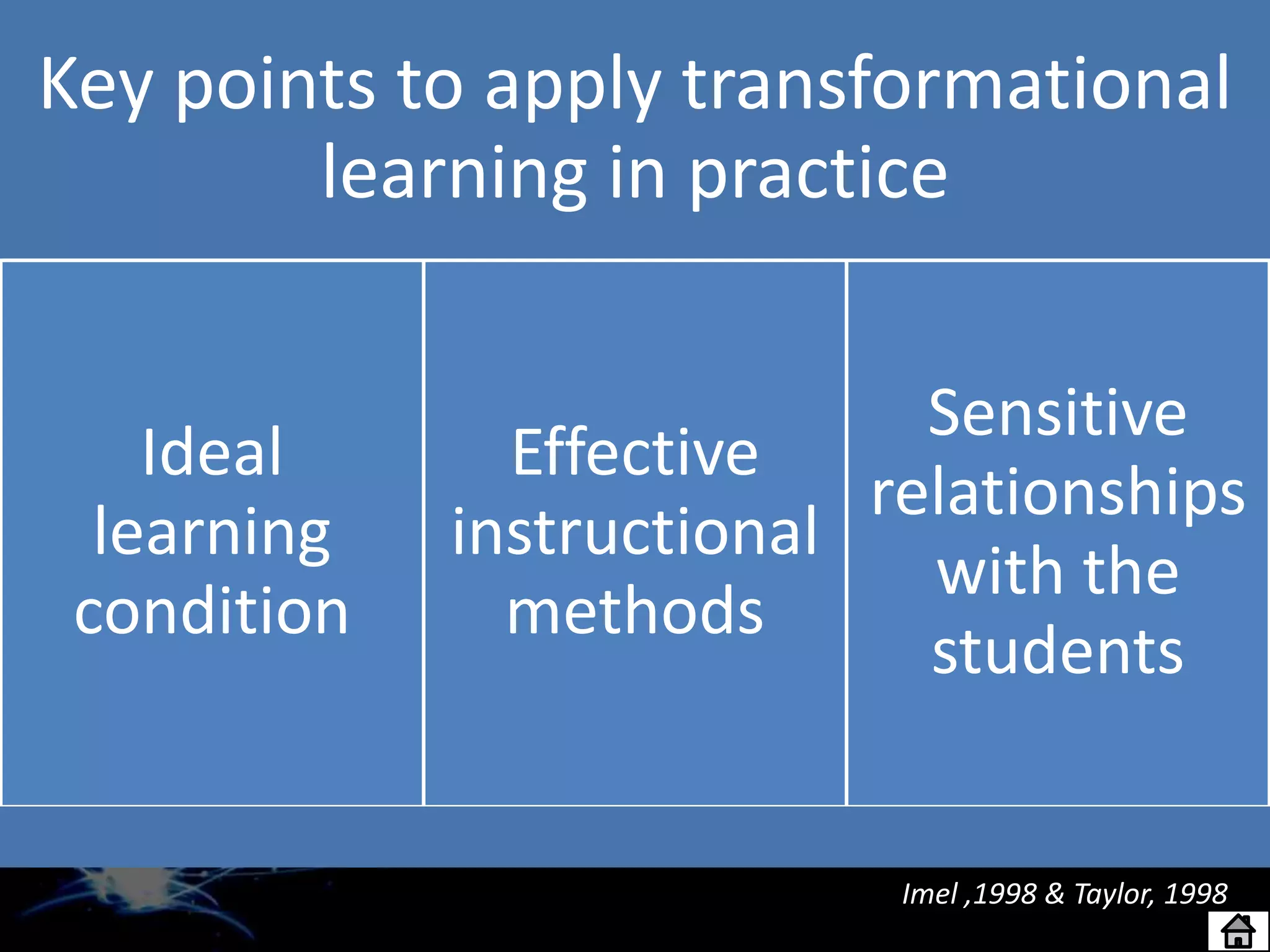
Key points to apply transformational
learning in practice (Imel, 1998, Taylor,
1998)
Instructional practices to increase
participation and engagement (de
Frondeville)
Imel ,1998 & Taylor, 1998
Key points to apply transformational
learning in practice
Ideal
learning
condition
Effective
instructional
methods
Sensitive
relationships
with the
students
• creating an emotionally safe classroom
• creating an intellectually safe
classroom
• cultivating engagement meter
• practicing journal or blog writing to
communicate with students
•Teaching self-awareness about
knowledge
• Using the design process to increase
the quality of work
• marketing the projects
Perspective transformation leading to transformative learning occurs infrequently.
Mezirow believes that it usually results from a disorienting dilemna, which is triggered by
a life crisis or major life transition, although it may also result from an accumulation of
transformations in meaning schemes over a period of time. Less dramatic predicaments,
such as those created by teacher, also promote transformation.

Transformative education

  • 2.
    TRANSFORMATIVE EDUCATION I. Definitionof terms II. Transformational Learning Theory -Two Kinds of Learning III.Perspective Transformation -Process of Perspective Transformation -Elements of frame reference -Four Ways of Learning IV.Reasons To Consider and Practice for Students V.Instructional Practices VI.Educational Implications VII.Research
  • 3.
    o ep mn- i dn ed Definition clue 2 letters clue : willing to consider different ideas or opinions
  • 4.
    r e fl e c t i v e rc and i t i c a l Definition clue 5 letters clue : thinking carefully about something : using or involving careful judgement about good and bad parts of something
  • 5.
    TRANSFORMATIVE EDUCATION Transformational learning about change,dramatic, fundamental change in the way we see ourselves and the world in which we live. (Merriam, 2007) Reflective & critical Open to perspectives of others Less defensive & more accepting of new ideas
  • 7.
    Transformative learning involves experiencinga deep, structural shift in the basic premises of thought, feelings and actions. (O’Sullivan, 1999) TRANSFORMATIVE EDUCATION
  • 8.
  • 9.
    Transformational learning theory CONSTRUCTIVIST (Taylor,1998 & Mezirow, 1997) - this theory involves two kinds of learning: An orientation which holds that the way learners interpret and reinterpret their sense experience is central to making meaning and hence learning. What is Love?
  • 10.
    Transformative learning Instrumental learning Task-oriented problem solving Causeand effect relationships Communicative learning Feelings, needs and desires with another person
  • 11.
  • 12.
    “ frame of reference” ELEMENTS Habitsof mind • Cultural, social, educational & political codes Point of view • From habits of mind Mezirow, 1997 collective assumptions through which we interpret and understand the world we live in.
  • 13.
    LEARNING EXISTING Frames of Reference Habits of Mind Pointsof View NEW Frames of Reference ELABORATING TRANSFORMING L E A R N I N G T R A N S F O R M I N G
  • 14.
    An important partof transformative learning is: for individuals to change their frames of reference  critically reflecting on their assumptions and beliefs  and consciously making and implementing plans that bring about new ways of defining their worlds. This process is fundamentally rational and analytical.
  • 15.
    Diverse experiences suchas: --is part of the process of transformative education
  • 16.
    Reasons to considertransformative learning theory and practice for students: • Transition to adult life • Beliefs and assumptions may be challenged • Some degree of personal or social transformation is required • We are living through a period of transformational change Guide for Educators of Adult, 1994
  • 17.
    TRANSFORMATIVE EDUCATION Reasons to considertransformative learning theory and practice for students (Guide for Educators of Adult, 1994) Key points to apply transformational learning in practice (Imel, 1998, Taylor, 1998) Instructional practices to increase participation and engagement (de Frondeville)
  • 18.
    Imel ,1998 &Taylor, 1998 Key points to apply transformational learning in practice Ideal learning condition Effective instructional methods Sensitive relationships with the students
  • 19.
    • creating anemotionally safe classroom • creating an intellectually safe classroom • cultivating engagement meter • practicing journal or blog writing to communicate with students •Teaching self-awareness about knowledge • Using the design process to increase the quality of work • marketing the projects
  • 20.
    Perspective transformation leadingto transformative learning occurs infrequently. Mezirow believes that it usually results from a disorienting dilemna, which is triggered by a life crisis or major life transition, although it may also result from an accumulation of transformations in meaning schemes over a period of time. Less dramatic predicaments, such as those created by teacher, also promote transformation.

Editor's Notes

  • #8 A shift of conciousness that dramatically and irreversibly alters our way of being in the world.
  • #9 Such a shift involves our understanding of ourselves and our self-locations; our relationships with other humans and with the natural world; our understanding of relations of power in interlocking structures of class, race and gender
  • #10 Answers: example love is painful Why? Bcos of the experience of being heartbroken and so coming up with a meaning that love is painful.
  • #12 Psychological- (self) i.e. a child acts like a child and a matured person acts matured. Children-play, matured person-thinks critically and realiably
  • #13 Frame of reference- collective assumptions through which we interpret and understand the world we live in.
  • #15 Result: open, inclusive, reflective and willing to change
  • #16 Isolation, Discomfort, tension and chaos