Effective
Instructional
Techniques and
Effective Teaching
Effective Teaching
• Effective teaching focuses on how the
teaching competencies and skills of the
teacher facilitate the students' intellectual
growth.

• It is safe to conclude that teaching
effectiveness is one component or
dimension of expert teaching in Philippine
Higher Education.
Effective teaching may be broken down into
six domains:
• Subject matter expertise
• Classroom management expertise
• Instructional expertise
• Communication expertise
• Diagnostic expertise; and
• Rational expertise
SUBJECT MATTER
EXPERTISE
by
Ronaliza Esguerra
SUBJECT MATTER EXPERTISE
Defined as having thorough mastery of
content as indicated by knowledge of
latest advancements related to the
lesson, relationship of the lesson to
other subjects or disciplines, varied
examples and application, and effective
way of organizing content to facilitate
learning.
STRANDS OF
SUBJECT MATTER
EXPERTISE
1. Thorough/excellent knowledge
of content
• All of the expert teachers possess a
thorough mastery of what they teach.
• An expert shares the personal outlook that
reflects humility: “Remember that no one
knows everything and that you learn even
from an educated person”
2. Being up-to-date with the latest
developments in their fields
Example:
Explains new alternative ways of
solving a chemistry problem based on
the latest book edition.
3. Knowledge of the
interrelationships among the
structural elements or concepts of
the subject matter
• The expert teachers have a clear,
coherent view of their course content in
terms of the interrelationships among
the various topics or constructs
comprising it.
4. Knowledge of the relationship of
the lesson with other courses or
disciplines
• An expert teacher asserts: "A teacher
must have the diligence to know not only
the specific subject matter that she
teaches but also the related subject area."
5. Knowledge of practical
application and concrete,
interesting examples to clarify
abstract ideas/concepts
• The expert teachers have readily available
examples, which are simple, clear, and
interesting, to clarify or concretize abstract
ideas.
CLASSROOM MANAGEMENT
EXPERTISE
by
Jennica Cabrera
CLASSROOM MANAGEMENT
EXPERTISE
Another sub-domain of effective
teaching is Classroom management
expertise. This sub-domain consists of
the following strands:
STRANDS OF
CLASSROOM
MANAGEMENT
EXPERTISE
1. Efficient handling of routine
activities and time management
• All expert teachers manage classroom
routine and time efficiently. This is another
essential of teaching expertise. One class
observer notes:
“She knows all the names of her students and
calls them by their first names or nicknames.
She knows who are absent without looking at
the class record and seat plan.”
• In the classrooms of the expert teachers,
classes are started and ended on time,
checking of class attendance is done in
the shortest time possible, enough time is
allotted for group activities, and activities
are completed with the time limit.
2. Maintenance of students’ on-
task behavior.
• The expert teachers keep their students
highly participative during class
discussions. An expert teacher maintain
that students are generally serious and
quiet while answering seat works or
experiment, and attentive while listening to
the teachers or to their classmates.
3. Absence of class disruptions
• Expert teaching makes sure that classes
do not experience interruptions or delays
in learning which are often caused
intentionally by bored, disinterested, or
misbehaving students.
• Alexander (1996) describes expert
teachers as those who experience very
few interruptions or delay. Alexander gave
reasons for the absence of learning
interruption is the ability of the teacher on
the following:
Ability to plan
 Ability to engage students in creating
meaningful and interesting activities
Ability to hold students’ attention when
they lecture;
 Ability to clearly communicate their
expectations of student behavior and of
class activities.
INSTRUCTIONAL EXPERTISE
by
Marie Crizelle Navarro
INSTRUCTIONAL EXPERTISE
The third domain of teaching expertise
is instructional expertise. It refers to the
facility in the use of varied instructional
methods and strategies, effective use
of instructional devices and materials,
and instructional clarity to facilitate
learning.
STRANDS OF
INSTRUCTIONAL
EXPERTISE
1. Use of varied teaching activities
• Expert teachers employ teaching
strategies suited to the students’ interests,
experiences, and maturity levels.
• The teachers can employ lecture and
recitation, together with at least one of the
following teaching strategies to make the
learners active participants in the learning
process:
concept mapping
 brainstorming
song and movement
 role-playing
 pantomime
 choral reading
visual imagery
 simulation
 individual/group reporting
 jazz chants
 debate; and
cooperative learning, among others.
2. Use of varied instructional
equipment and materials to
enhance instruction
• The experts use instructional devices and
materials to clarify concepts, enrich or
strengthen an input lecture, sustain
students’ attention and encourage their
participation, induce reflective thinking,
and test students’ comprehension of the
lesson or ability to apply learned concepts.
The following are the materials to enhance
instruction:
Computer
Slide projector
Laboratory apparatuses
Films
PowerPoint presentations
Videos and audio tapes
Pictures
Science specimens
Drawings
Cartoons
Play/cue cards
Students’ projects; and
Ordinary materials (e.g., paper clips,
leaves, news paper, cartolina and
Manila paper.
3. Instructional clarity
• Explanations of expert teachers are well-
organized, easy to follow, and direct to the
point. The experts signal transitions and
give clear, practical examples to facilitate
students’ understanding of the lesson.
COMMUNICATION EXPERTISE
by
Aiman Dale Andres
Communication expertise refers to the
skillful and expressive use of verbal
and non-verbal language that serves to
arouse and maintain student’s interest
and attention and to facilitate
instruction. In the absence of
communication expertise, subject
matter expertise would be useless and
instruction would suffer.
COMMUNICATION EXPERTISE
STRANDS OF
COMMUNICATION
EXPERTISE
1. Expressive nonverbal or body
language
The expert teachers are very expressive in
driving home a point their voice, facial
expressions, hand and arm gestures, and
whole body movement.
The following indicates how the expert teachers
use nonverbal language to communicate in the
classroom:
Her eyes are very expressive, and she is very
likely. She is a visual aid herself
The teacher’s gestures and facial
expressions are more than enough to explain
his point of view. He is very convincing.
Face is very expressive, changes
expressions according to moods.
• The expert teachers who are expressive
with their voice, eyes, face, hands, arms,
and bodies are more able to hold students’
attention than those who are not, oral
communication skills being equal.
2. Excellent oral communication
skills
• Most of the expert teachers are very
fluent, articulate, and have good voice
quality (well-modulated, pleasant or not
irritating to the ears, and clear. When they
talk, they vary their voice pitch, intonation,
and volume and rate of speech, depending
on what they what to emphasize.
3. Provision for two-way
communication
Experts provide for two-way communication
in the classroom. However, they differ in that
some experts speak more expressively or
emphatically than others. They vary their
tempo or rate of speech, intonation, and
voice volume to stress important points
during instruction.
These teachers possess good voice quality
(pleasant, well-modulated, and clear). They
are highly articulate, fluent, and concise.
Their expressiveness in oral communication
helps arouse and sustains attention.
DIAGNOSTIC EXPERTISE
by
Catherine Acuna
Diagnostic expertise is defined as
sensitivity to students’ learning problems
or difficulties, anticipation of probable
learning problems or misconceptions, and
knowledge of students’ interests and
ability levels.
DIAGNOSTIC EXPERTISE
STRANDS OF
DIAGNOSTIC
EXPERTISE
1. Sensitivity to students’ learning
problems/difficulties
• An expert teacher is likely to pause and
ask if students have questions or if they
understand what is being
presented/discussed. An expert teacher
approaches different groups to check if
they are on the right track. All of the
experts demonstrate sensitivity to students
who are unable to follow a lecture or a
discussion.
2. Anticipation of probable
learning problems or
misconceptions
• Expert teacher determines students’
learning problems or misconceptions
about the lesson through oral questions
and sensitivity to nonverbal clues.
• Teachers get clues from students’ body
language. A number of the experts
informally talk to students before or after
the classes. They are well-informed as to
where their students coming from.
RELATIONAL EXPERTISE
by
Rjhay Capatoy
RELATIONAL EXPERTISE
Relational expertise refers to the
teachers’ human relations skills in the
classroom, which facilitate the
establishment of high rapport with the
class and provision of a
nonthreatening, psychologically safe
learning atmosphere that enhances
students’ self-esteem.
STRANDS OF
RELATIONAL
EXPERTISE
1. Nonthreatening disposition
• The expert teachers have very pleasing
personalities. They appear
nonthreatening, non-intimidating, and
patient. They smile as they explain or
listen to the students’ responses. They are
patient and do not mind giving additional
examples and explanations as needed.
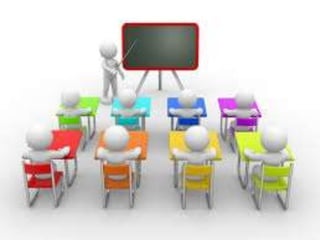
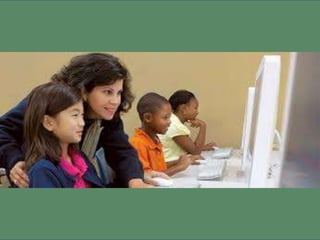
Try to think if your
teacher
looks like . . .
2. Enthusiasm
• The teacher is very lively and enthusiastic
throughout the lecture. There has never
been dull moment in the class. He is full of
stories and examples related to the topic
3. Providing a psychologically safe
learning environment
• The effective teacher addresses their
students by name, express concern
towards their students, and treat them with
respect, promoting psychologically safe
learning environment.
4. Making learning pleasant and
enjoyable
• Some teachers conduct their classes
seriously in a nonthreatening manner.
However, other teacher go further to make
learning pleasant and enjoyable instead of
being boring. Their well-planned,
interesting, and exciting learner-centered
activities bring about this kind of learning
situation.
Following are some suggestion for the
beginning teacher:
In teaching symptoms of infections of
fallopian tube, the teacher makes use of a
popular television advertisement:
Amuy-amuyin (foul odor)
Pisil-pisilin (tenderness)
Silip-silipin (if there are discharges or
if there is swelling)
In a class, cooperative learning teams
present their assignments through songs,
monologues, and drama.
After a class activity, a teacher tells her
students to do a “firecracker clap”.
5. High rapport with students
• The teachers enjoy what they teach and
their interaction with students.
• Even if the teachers are nonthreatening,
they are still respected by the students.
•
Example: A teacher interview
“ There is camaraderie between me and my
students, a wholesome relationship, but
there is respect. When I am angry, they are
afraid of me. In class, they know I mean
business. Outside the classroom, they can
approach me, even shares jokes with me,
but the respect is still there.
6. Affectionate interactions with
students
• They consider students as “special” and
“important persons” instead of “numbers’
that comprise a class. They give each
student a feeling of being appreciated.
Responsible Teaching
by
John Elly Baylon
Responsible teaching
• Responsible teaching is a component of
expert teaching characterized by learner-
centerdness, development of students
who can assume responsibility for their
own learning, and values integration.
Responsible teaching is demonstrated by
teachers when they are:
1. Integrate values in teaching;
2. Communicate their belief in the students’
capacity for learning;
3. Facilitate development of understanding
and draw out generalizations and insights
from students;
4. Provide students with opportunities to
assume an active role in the learning
process and to be responsible for their own
learning; and
5. Select and implement teaching strategies,
learning activities, and instructional
materials in consideration of the varying
needs, interests, and backgrounds of the
learners.
Effective
Instructional
Techniques and
Effective Teaching

Effective Instructional Techniques and Effective Teaching

  • 1.
  • 2.
    Effective Teaching • Effectiveteaching focuses on how the teaching competencies and skills of the teacher facilitate the students' intellectual growth. • It is safe to conclude that teaching effectiveness is one component or dimension of expert teaching in Philippine Higher Education.
  • 3.
    Effective teaching maybe broken down into six domains: • Subject matter expertise • Classroom management expertise • Instructional expertise • Communication expertise • Diagnostic expertise; and • Rational expertise
  • 4.
  • 5.
    SUBJECT MATTER EXPERTISE Definedas having thorough mastery of content as indicated by knowledge of latest advancements related to the lesson, relationship of the lesson to other subjects or disciplines, varied examples and application, and effective way of organizing content to facilitate learning.
  • 7.
  • 8.
    1. Thorough/excellent knowledge ofcontent • All of the expert teachers possess a thorough mastery of what they teach. • An expert shares the personal outlook that reflects humility: “Remember that no one knows everything and that you learn even from an educated person”
  • 9.
    2. Being up-to-datewith the latest developments in their fields Example: Explains new alternative ways of solving a chemistry problem based on the latest book edition.
  • 10.
    3. Knowledge ofthe interrelationships among the structural elements or concepts of the subject matter • The expert teachers have a clear, coherent view of their course content in terms of the interrelationships among the various topics or constructs comprising it.
  • 11.
    4. Knowledge ofthe relationship of the lesson with other courses or disciplines • An expert teacher asserts: "A teacher must have the diligence to know not only the specific subject matter that she teaches but also the related subject area."
  • 12.
    5. Knowledge ofpractical application and concrete, interesting examples to clarify abstract ideas/concepts • The expert teachers have readily available examples, which are simple, clear, and interesting, to clarify or concretize abstract ideas.
  • 13.
  • 14.
    CLASSROOM MANAGEMENT EXPERTISE Another sub-domainof effective teaching is Classroom management expertise. This sub-domain consists of the following strands:
  • 15.
  • 16.
    1. Efficient handlingof routine activities and time management • All expert teachers manage classroom routine and time efficiently. This is another essential of teaching expertise. One class observer notes: “She knows all the names of her students and calls them by their first names or nicknames. She knows who are absent without looking at the class record and seat plan.”
  • 17.
    • In theclassrooms of the expert teachers, classes are started and ended on time, checking of class attendance is done in the shortest time possible, enough time is allotted for group activities, and activities are completed with the time limit.
  • 18.
    2. Maintenance ofstudents’ on- task behavior. • The expert teachers keep their students highly participative during class discussions. An expert teacher maintain that students are generally serious and quiet while answering seat works or experiment, and attentive while listening to the teachers or to their classmates.
  • 20.
    3. Absence ofclass disruptions • Expert teaching makes sure that classes do not experience interruptions or delays in learning which are often caused intentionally by bored, disinterested, or misbehaving students.
  • 21.
    • Alexander (1996)describes expert teachers as those who experience very few interruptions or delay. Alexander gave reasons for the absence of learning interruption is the ability of the teacher on the following:
  • 22.
    Ability to plan Ability to engage students in creating meaningful and interesting activities Ability to hold students’ attention when they lecture;  Ability to clearly communicate their expectations of student behavior and of class activities.
  • 23.
  • 24.
    INSTRUCTIONAL EXPERTISE The thirddomain of teaching expertise is instructional expertise. It refers to the facility in the use of varied instructional methods and strategies, effective use of instructional devices and materials, and instructional clarity to facilitate learning.
  • 25.
  • 26.
    1. Use ofvaried teaching activities • Expert teachers employ teaching strategies suited to the students’ interests, experiences, and maturity levels.
  • 28.
    • The teacherscan employ lecture and recitation, together with at least one of the following teaching strategies to make the learners active participants in the learning process:
  • 29.
    concept mapping  brainstorming songand movement  role-playing  pantomime  choral reading visual imagery  simulation  individual/group reporting  jazz chants  debate; and cooperative learning, among others.
  • 30.
    2. Use ofvaried instructional equipment and materials to enhance instruction • The experts use instructional devices and materials to clarify concepts, enrich or strengthen an input lecture, sustain students’ attention and encourage their participation, induce reflective thinking, and test students’ comprehension of the lesson or ability to apply learned concepts.
  • 31.
    The following arethe materials to enhance instruction: Computer Slide projector Laboratory apparatuses Films PowerPoint presentations Videos and audio tapes
  • 32.
    Pictures Science specimens Drawings Cartoons Play/cue cards Students’projects; and Ordinary materials (e.g., paper clips, leaves, news paper, cartolina and Manila paper.
  • 34.
    3. Instructional clarity •Explanations of expert teachers are well- organized, easy to follow, and direct to the point. The experts signal transitions and give clear, practical examples to facilitate students’ understanding of the lesson.
  • 36.
  • 37.
    Communication expertise refersto the skillful and expressive use of verbal and non-verbal language that serves to arouse and maintain student’s interest and attention and to facilitate instruction. In the absence of communication expertise, subject matter expertise would be useless and instruction would suffer. COMMUNICATION EXPERTISE
  • 39.
  • 40.
    1. Expressive nonverbalor body language The expert teachers are very expressive in driving home a point their voice, facial expressions, hand and arm gestures, and whole body movement.
  • 41.
    The following indicateshow the expert teachers use nonverbal language to communicate in the classroom: Her eyes are very expressive, and she is very likely. She is a visual aid herself The teacher’s gestures and facial expressions are more than enough to explain his point of view. He is very convincing. Face is very expressive, changes expressions according to moods.
  • 42.
    • The expertteachers who are expressive with their voice, eyes, face, hands, arms, and bodies are more able to hold students’ attention than those who are not, oral communication skills being equal.
  • 43.
    2. Excellent oralcommunication skills • Most of the expert teachers are very fluent, articulate, and have good voice quality (well-modulated, pleasant or not irritating to the ears, and clear. When they talk, they vary their voice pitch, intonation, and volume and rate of speech, depending on what they what to emphasize.
  • 44.
    3. Provision fortwo-way communication Experts provide for two-way communication in the classroom. However, they differ in that some experts speak more expressively or emphatically than others. They vary their tempo or rate of speech, intonation, and voice volume to stress important points during instruction.
  • 45.
    These teachers possessgood voice quality (pleasant, well-modulated, and clear). They are highly articulate, fluent, and concise. Their expressiveness in oral communication helps arouse and sustains attention.
  • 47.
  • 48.
    Diagnostic expertise isdefined as sensitivity to students’ learning problems or difficulties, anticipation of probable learning problems or misconceptions, and knowledge of students’ interests and ability levels. DIAGNOSTIC EXPERTISE
  • 50.
  • 51.
    1. Sensitivity tostudents’ learning problems/difficulties • An expert teacher is likely to pause and ask if students have questions or if they understand what is being presented/discussed. An expert teacher approaches different groups to check if they are on the right track. All of the experts demonstrate sensitivity to students who are unable to follow a lecture or a discussion.
  • 53.
    2. Anticipation ofprobable learning problems or misconceptions • Expert teacher determines students’ learning problems or misconceptions about the lesson through oral questions and sensitivity to nonverbal clues.
  • 54.
    • Teachers getclues from students’ body language. A number of the experts informally talk to students before or after the classes. They are well-informed as to where their students coming from.
  • 55.
  • 56.
    RELATIONAL EXPERTISE Relational expertiserefers to the teachers’ human relations skills in the classroom, which facilitate the establishment of high rapport with the class and provision of a nonthreatening, psychologically safe learning atmosphere that enhances students’ self-esteem.
  • 58.
  • 59.
    1. Nonthreatening disposition •The expert teachers have very pleasing personalities. They appear nonthreatening, non-intimidating, and patient. They smile as they explain or listen to the students’ responses. They are patient and do not mind giving additional examples and explanations as needed.
  • 60.
    Try to thinkif your teacher looks like . . .
  • 61.
    2. Enthusiasm • Theteacher is very lively and enthusiastic throughout the lecture. There has never been dull moment in the class. He is full of stories and examples related to the topic
  • 63.
    3. Providing apsychologically safe learning environment • The effective teacher addresses their students by name, express concern towards their students, and treat them with respect, promoting psychologically safe learning environment.
  • 67.
    4. Making learningpleasant and enjoyable • Some teachers conduct their classes seriously in a nonthreatening manner. However, other teacher go further to make learning pleasant and enjoyable instead of being boring. Their well-planned, interesting, and exciting learner-centered activities bring about this kind of learning situation.
  • 68.
    Following are somesuggestion for the beginning teacher: In teaching symptoms of infections of fallopian tube, the teacher makes use of a popular television advertisement: Amuy-amuyin (foul odor) Pisil-pisilin (tenderness) Silip-silipin (if there are discharges or if there is swelling)
  • 69.
    In a class,cooperative learning teams present their assignments through songs, monologues, and drama. After a class activity, a teacher tells her students to do a “firecracker clap”.
  • 70.
    5. High rapportwith students • The teachers enjoy what they teach and their interaction with students. • Even if the teachers are nonthreatening, they are still respected by the students. •
  • 71.
    Example: A teacherinterview “ There is camaraderie between me and my students, a wholesome relationship, but there is respect. When I am angry, they are afraid of me. In class, they know I mean business. Outside the classroom, they can approach me, even shares jokes with me, but the respect is still there.
  • 72.
    6. Affectionate interactionswith students • They consider students as “special” and “important persons” instead of “numbers’ that comprise a class. They give each student a feeling of being appreciated.
  • 74.
  • 75.
    Responsible teaching • Responsibleteaching is a component of expert teaching characterized by learner- centerdness, development of students who can assume responsibility for their own learning, and values integration.
  • 76.
    Responsible teaching isdemonstrated by teachers when they are: 1. Integrate values in teaching; 2. Communicate their belief in the students’ capacity for learning; 3. Facilitate development of understanding and draw out generalizations and insights from students;
  • 77.
    4. Provide studentswith opportunities to assume an active role in the learning process and to be responsible for their own learning; and
  • 78.
    5. Select andimplement teaching strategies, learning activities, and instructional materials in consideration of the varying needs, interests, and backgrounds of the learners.
  • 79.

Editor's Notes

  • #4 Rhona, jhen, criz, aiman, cathy, rjhay, ely