ASSERTIVENESS

Prepared ByChirag Solanki
Wasim Kazmi
Macklinbrett Veigas
Mayur Veer
(SE MECH-B)
WHAT IS ASSERTIVENESS?
• Assertiveness is about self
confidence which means having
a positive attitude towards
yourself and others.
• Assertiveness is form of behavior
characterized by a confident declaration or
affirmation of a statement without need of
proof; this affirms the person's rights or point
of view without either aggressively
threatening the rights of another (assuming a
position of dominance) or submissively
permitting another to ignore or deny one's
rights or point of view.[1]
Ten Points about Assertive
Behaviours
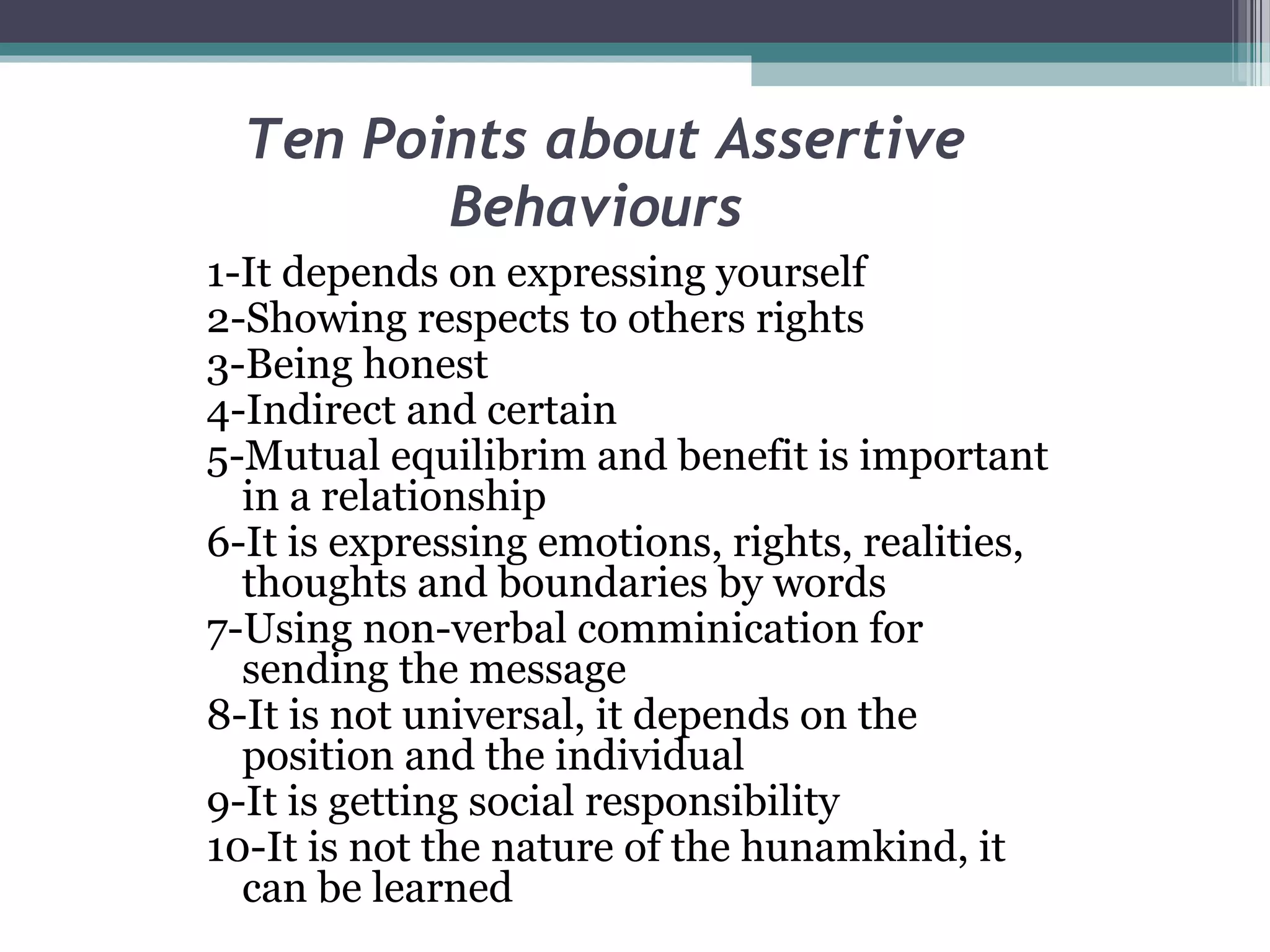
1-It depends on expressing yourself
2-Showing respects to others rights
3-Being honest
4-Indirect and certain
5-Mutual equilibrim and benefit is important
in a relationship
6-It is expressing emotions, rights, realities,
thoughts and boundaries by words
7-Using non-verbal comminication for
sending the message
8-It is not universal, it depends on the
position and the individual
9-It is getting social responsibility
10-It is not the nature of the hunamkind, it
can be learned
Being Assertive
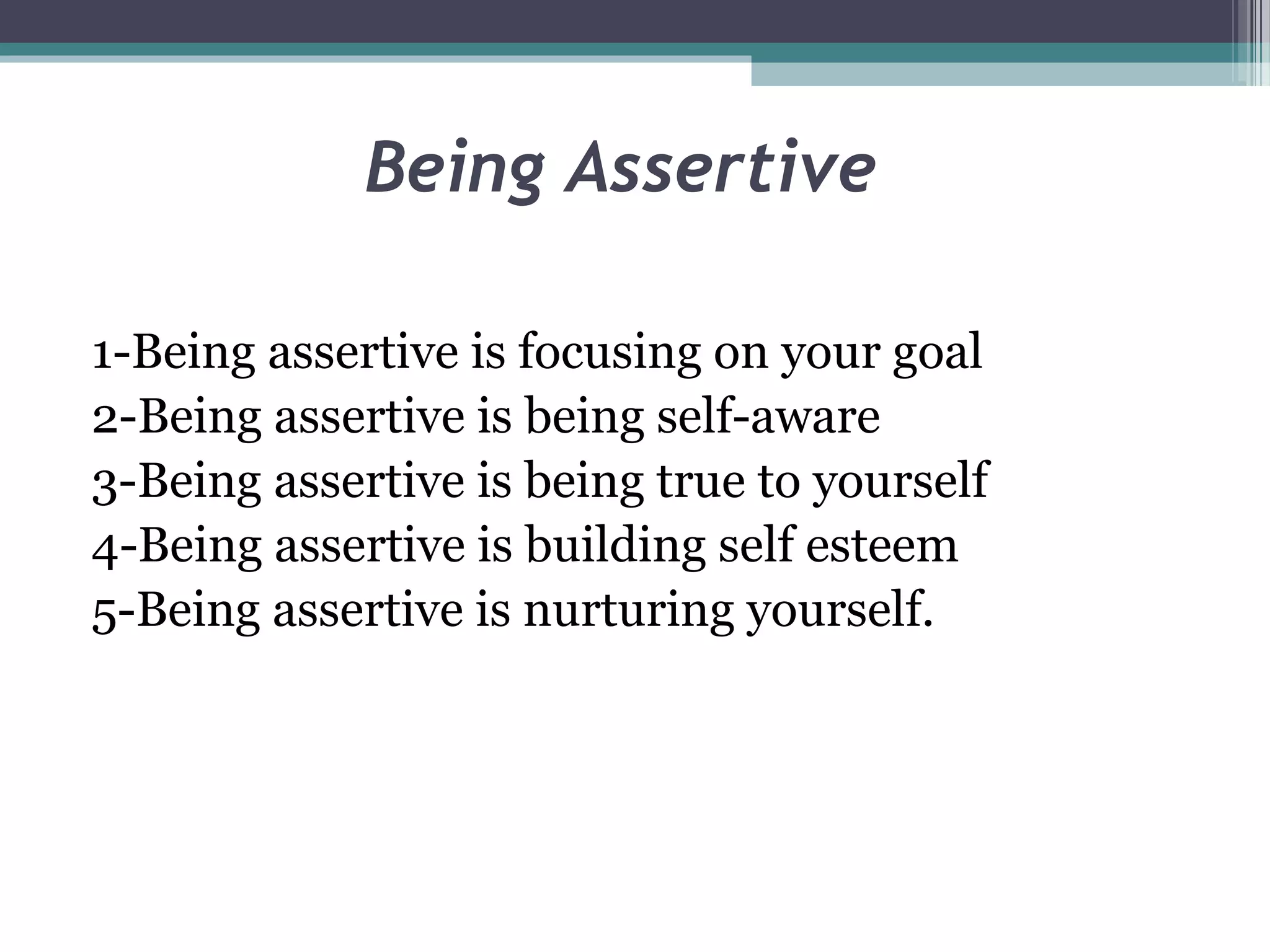
1-Being assertive is focusing on your goal
2-Being assertive is being self-aware
3-Being assertive is being true to yourself
4-Being assertive is building self esteem
5-Being assertive is nurturing yourself.
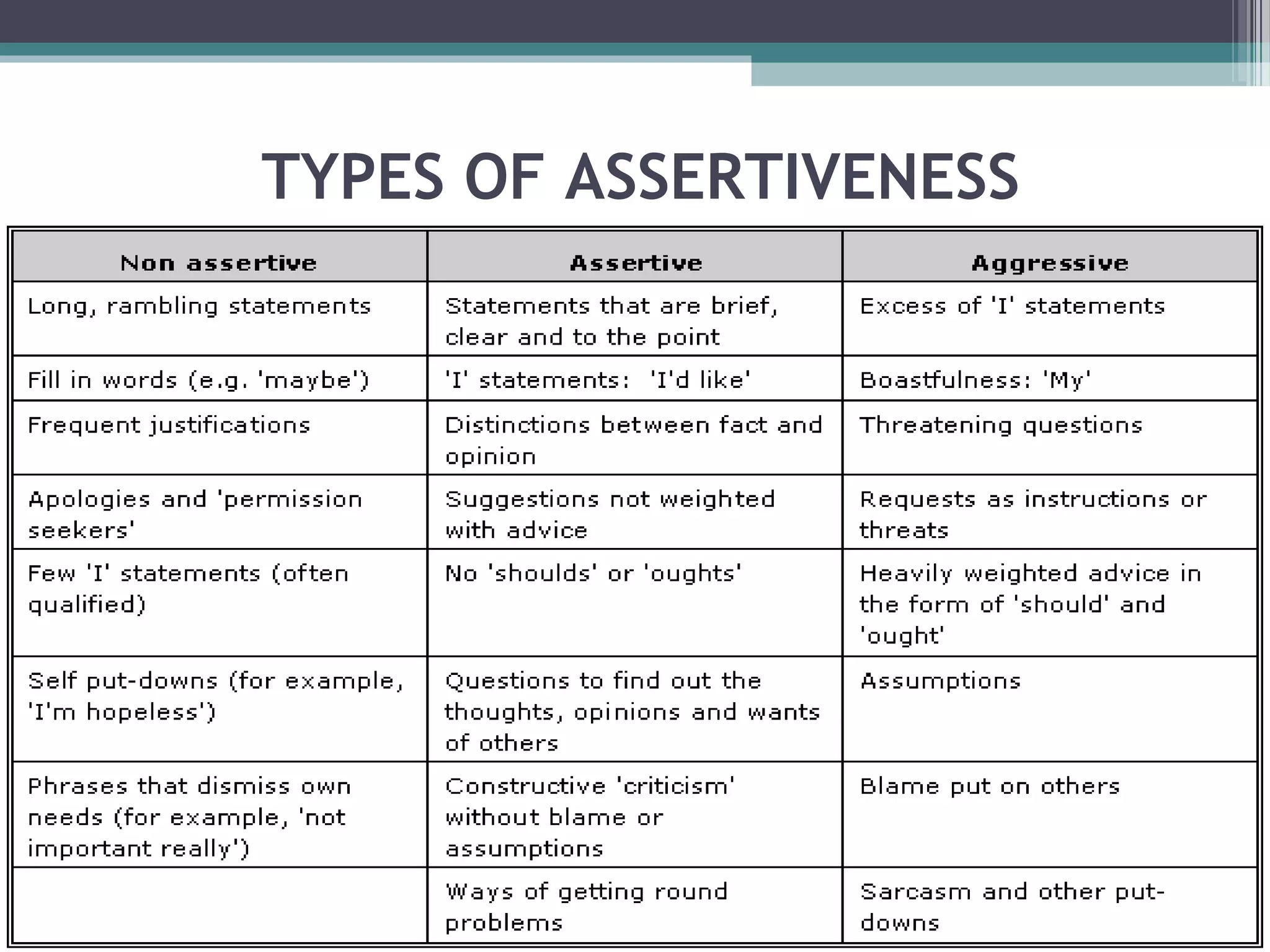
TYPES OF ASSERTIVENESS
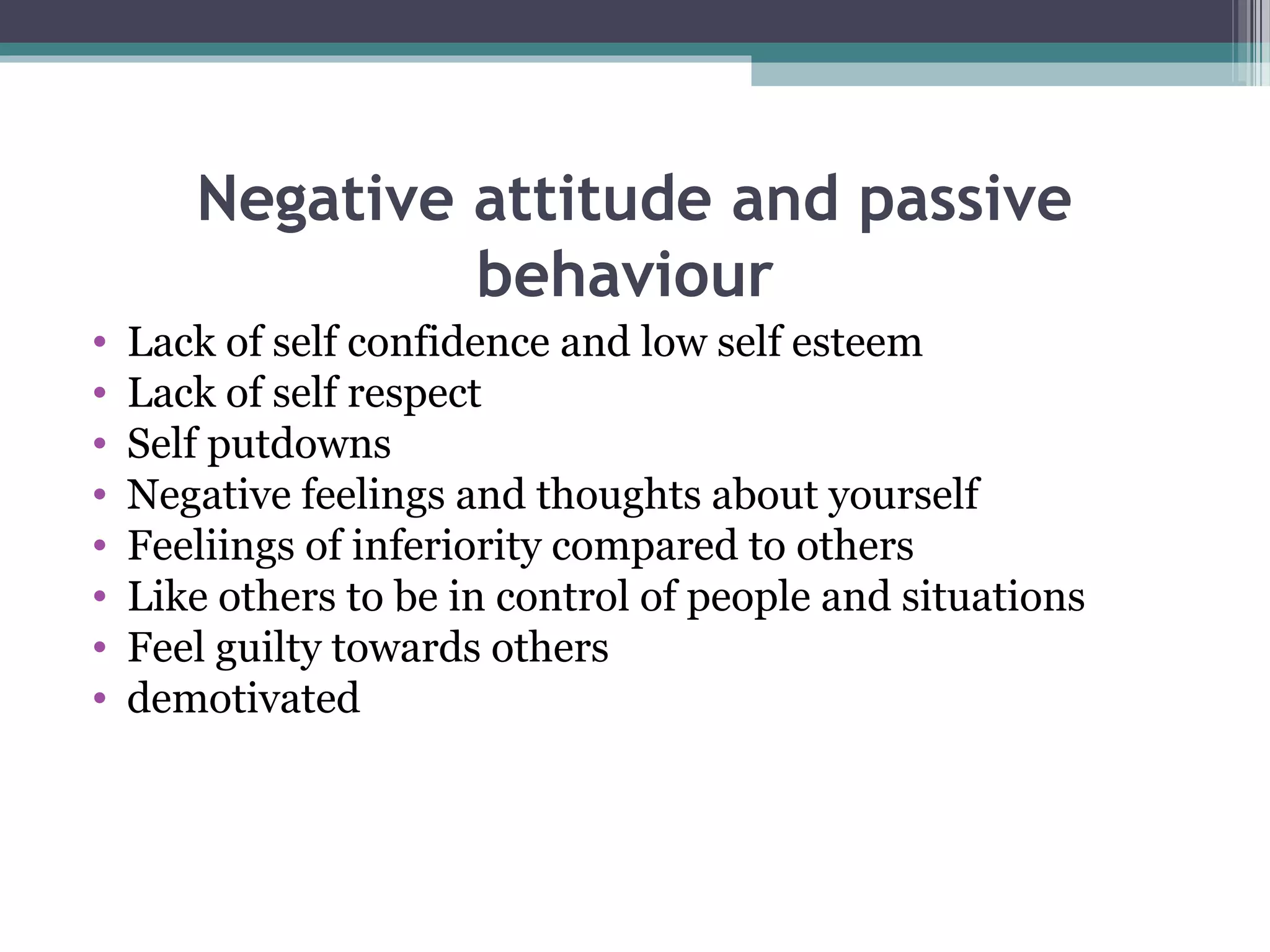
Negative attitude and passive
behaviour
•
•
•
•
•
•
•
•

Lack of self confidence and low self esteem
Lack of self respect
Self putdowns
Negative feelings and thoughts about yourself
Feeliings of inferiority compared to others
Like others to be in control of people and situations
Feel guilty towards others
demotivated
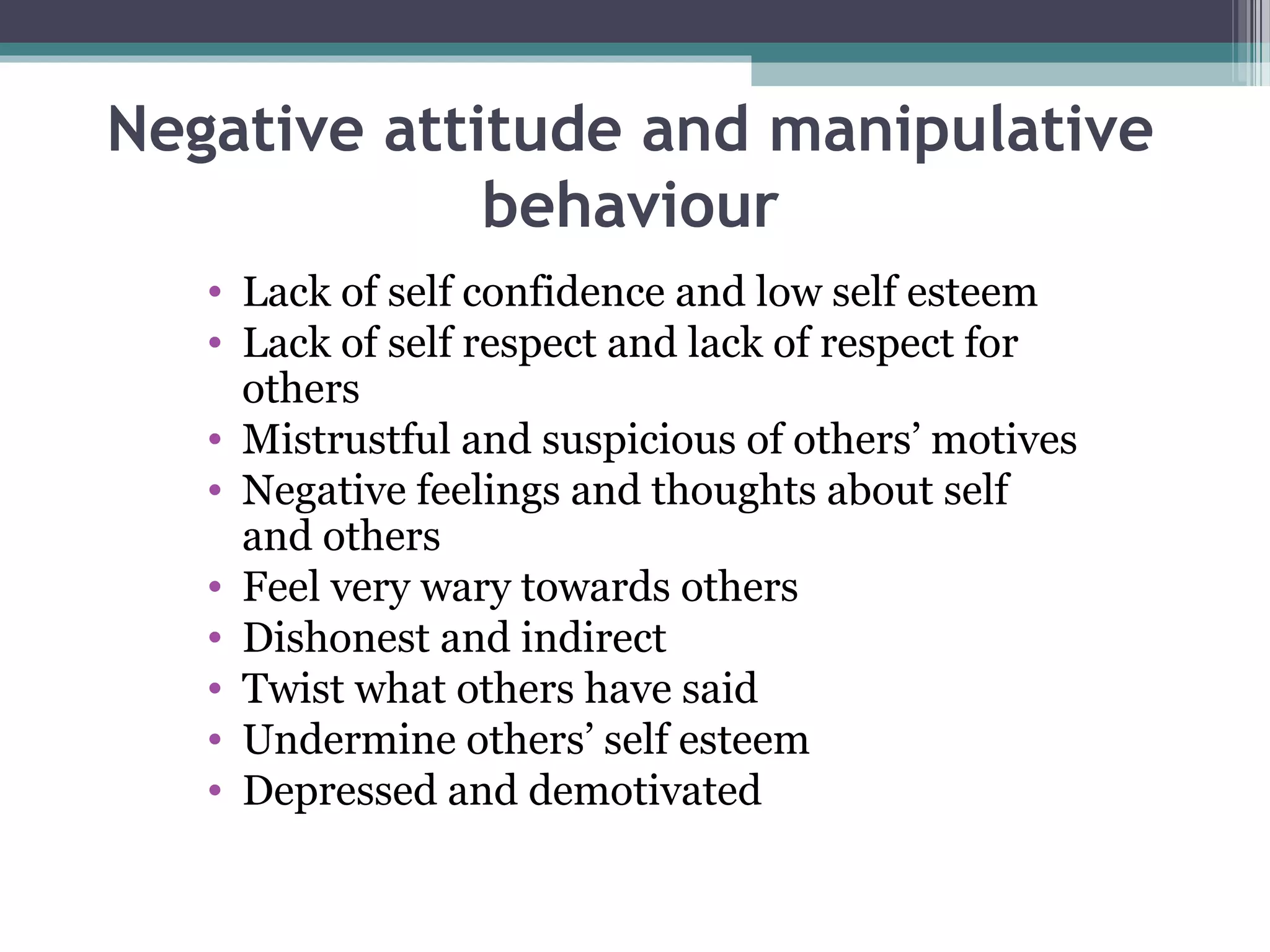
Negative attitude and manipulative
behaviour
• Lack of self confidence and low self esteem
• Lack of self respect and lack of respect for
others
• Mistrustful and suspicious of others’ motives
• Negative feelings and thoughts about self
and others
• Feel very wary towards others
• Dishonest and indirect
• Twist what others have said
• Undermine others’ self esteem
• Depressed and demotivated
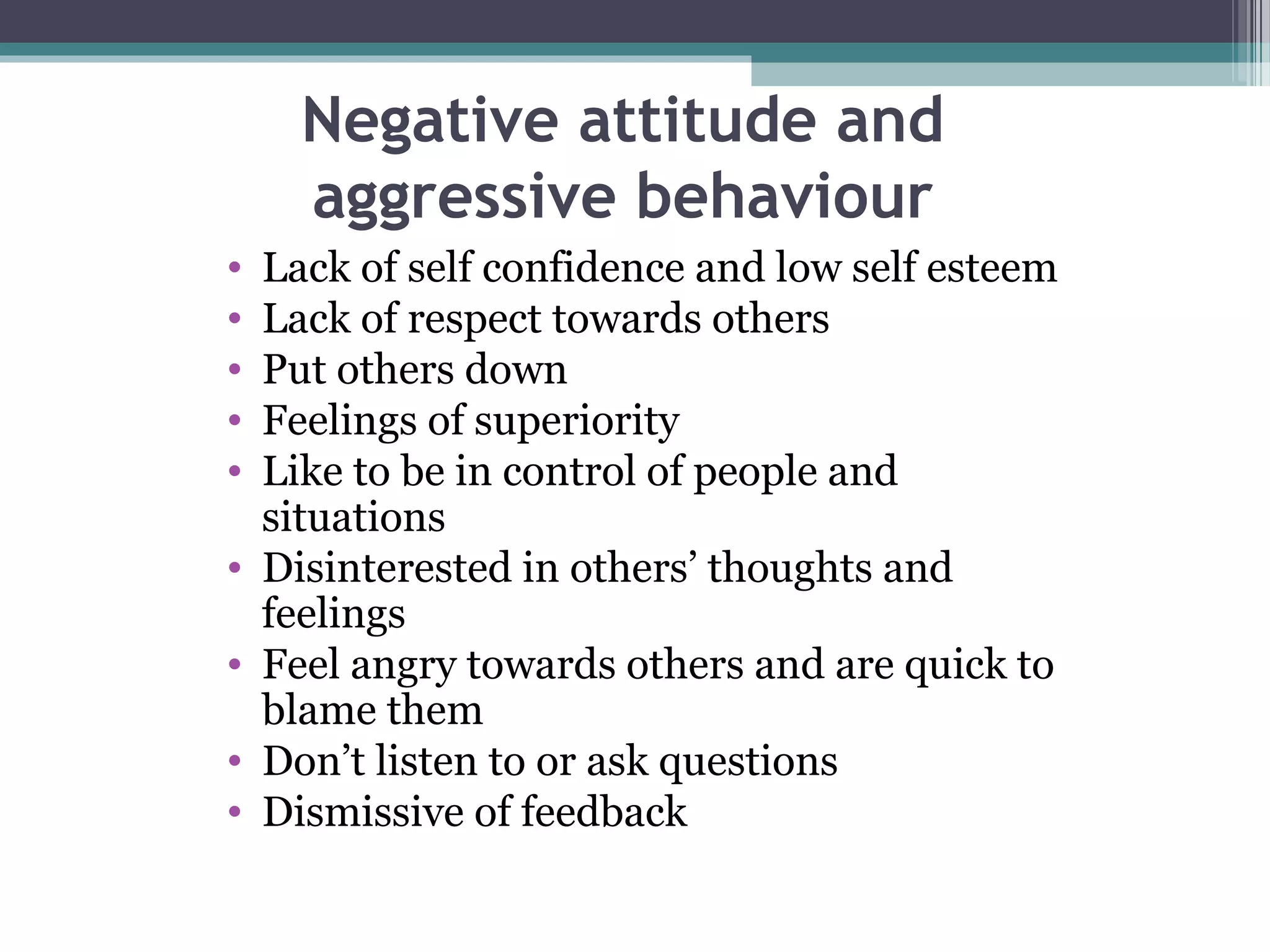
Negative attitude and
aggressive behaviour
•
•
•
•
•
•
•
•
•

Lack of self confidence and low self esteem
Lack of respect towards others
Put others down
Feelings of superiority
Like to be in control of people and
situations
Disinterested in others’ thoughts and
feelings
Feel angry towards others and are quick to
blame them
Don’t listen to or ask questions
Dismissive of feedback
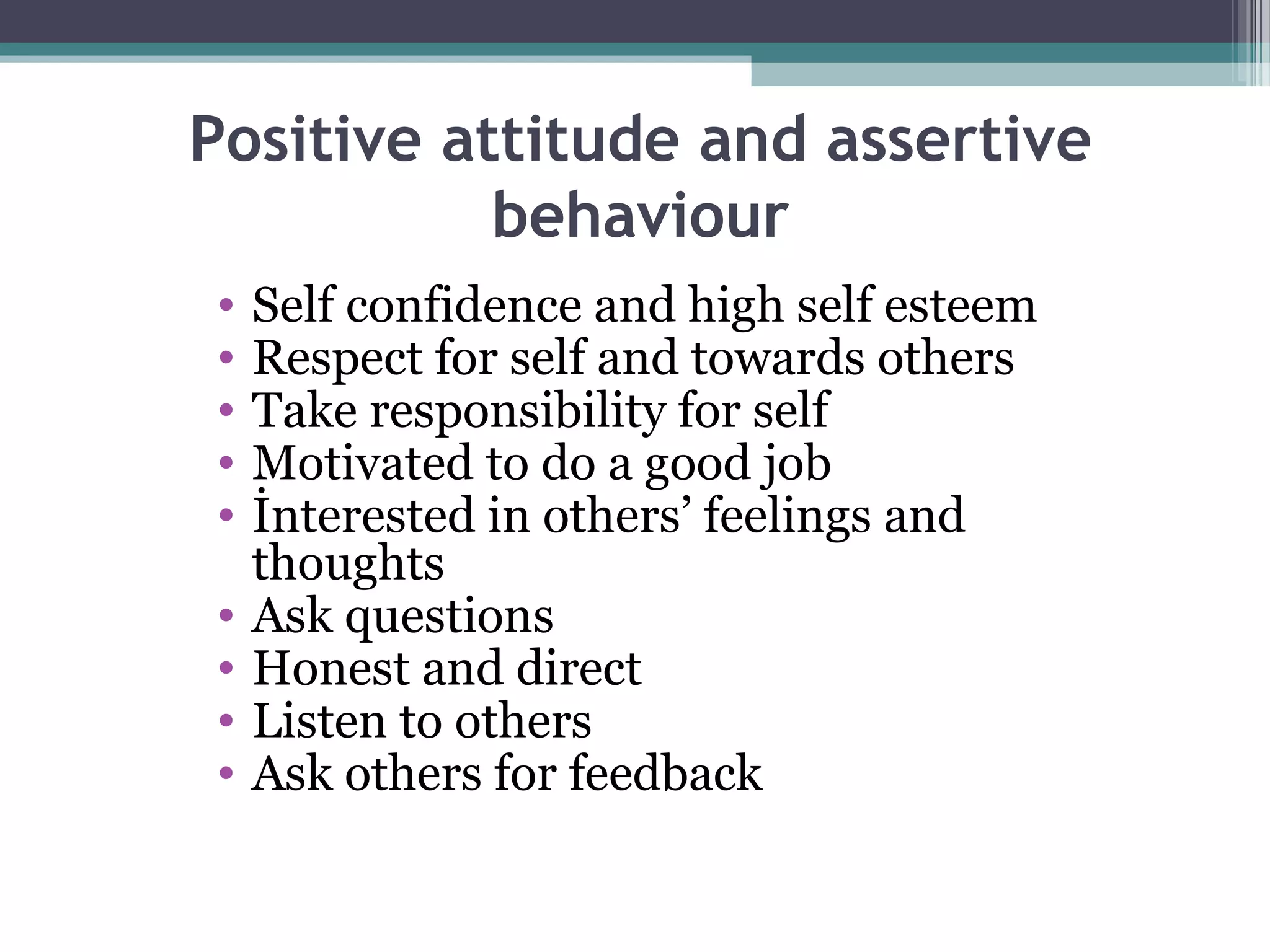
Positive attitude and assertive
behaviour
•
•
•
•
•
•
•
•
•

Self confidence and high self esteem
Respect for self and towards others
Take responsibility for self
Motivated to do a good job
İnterested in others’ feelings and
thoughts
Ask questions
Honest and direct
Listen to others
Ask others for feedback
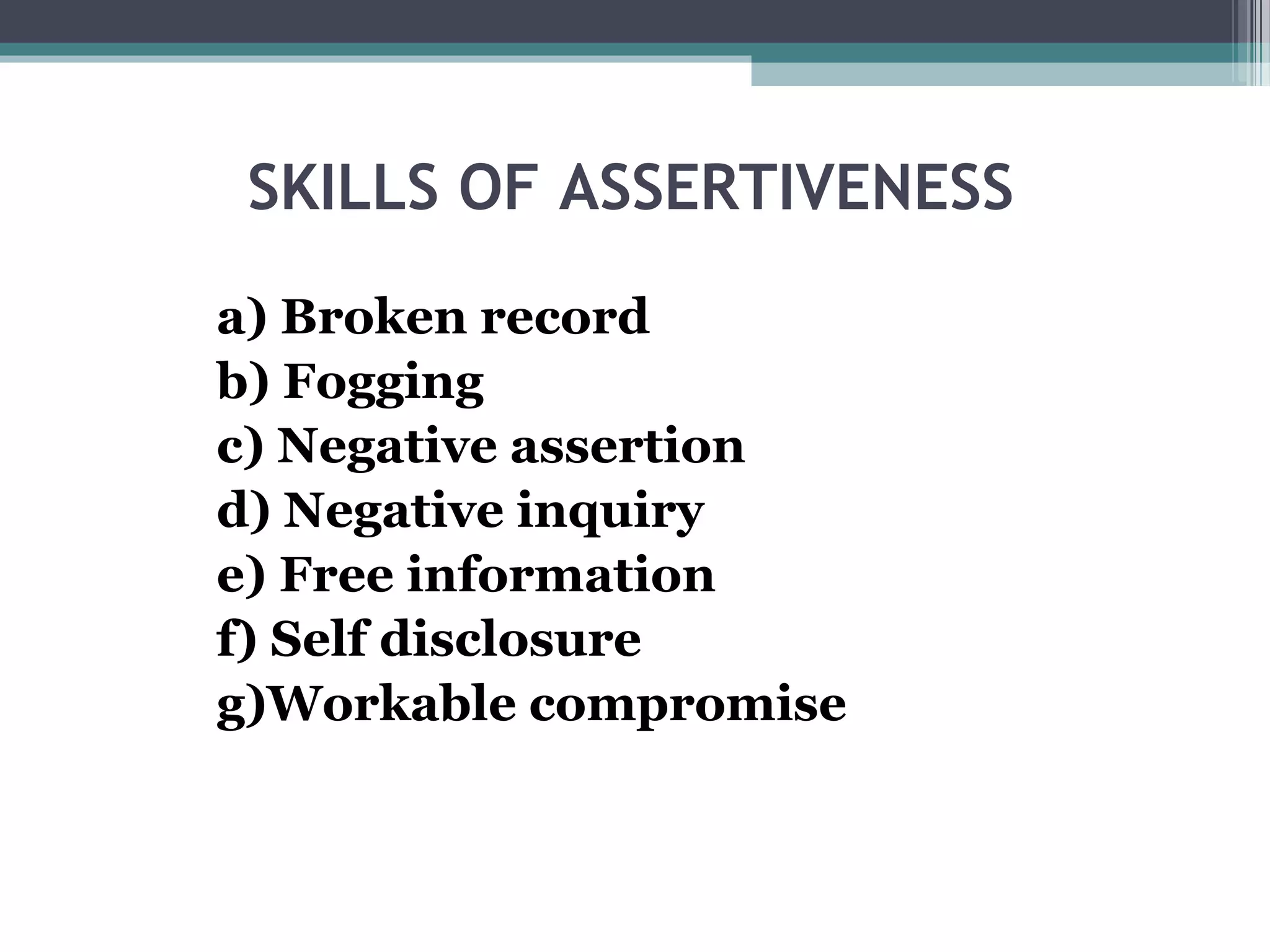
SKILLS OF ASSERTIVENESS
a) Broken record
b) Fogging
c) Negative assertion
d) Negative inquiry
e) Free information
f) Self disclosure
g)Workable compromise
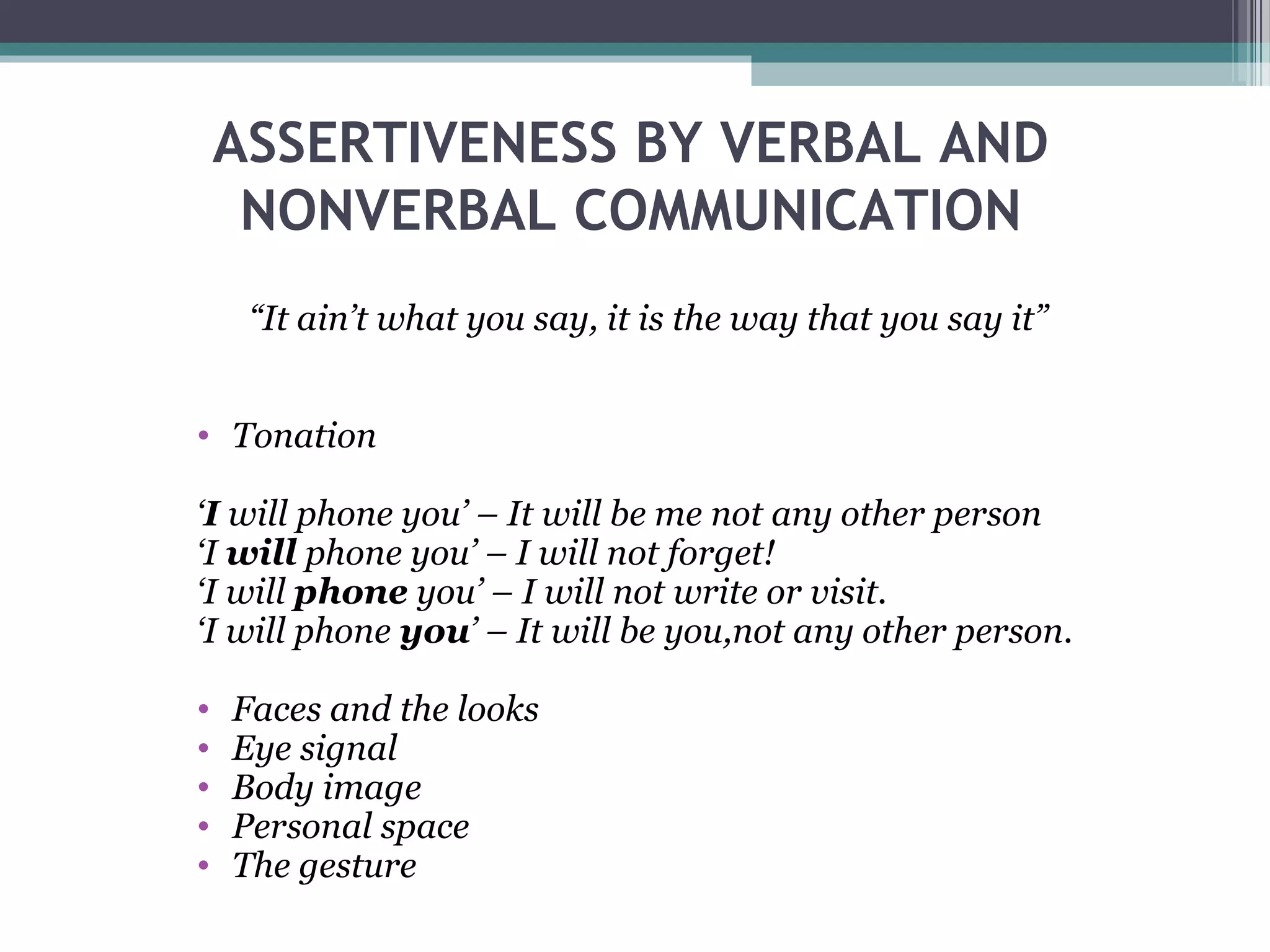
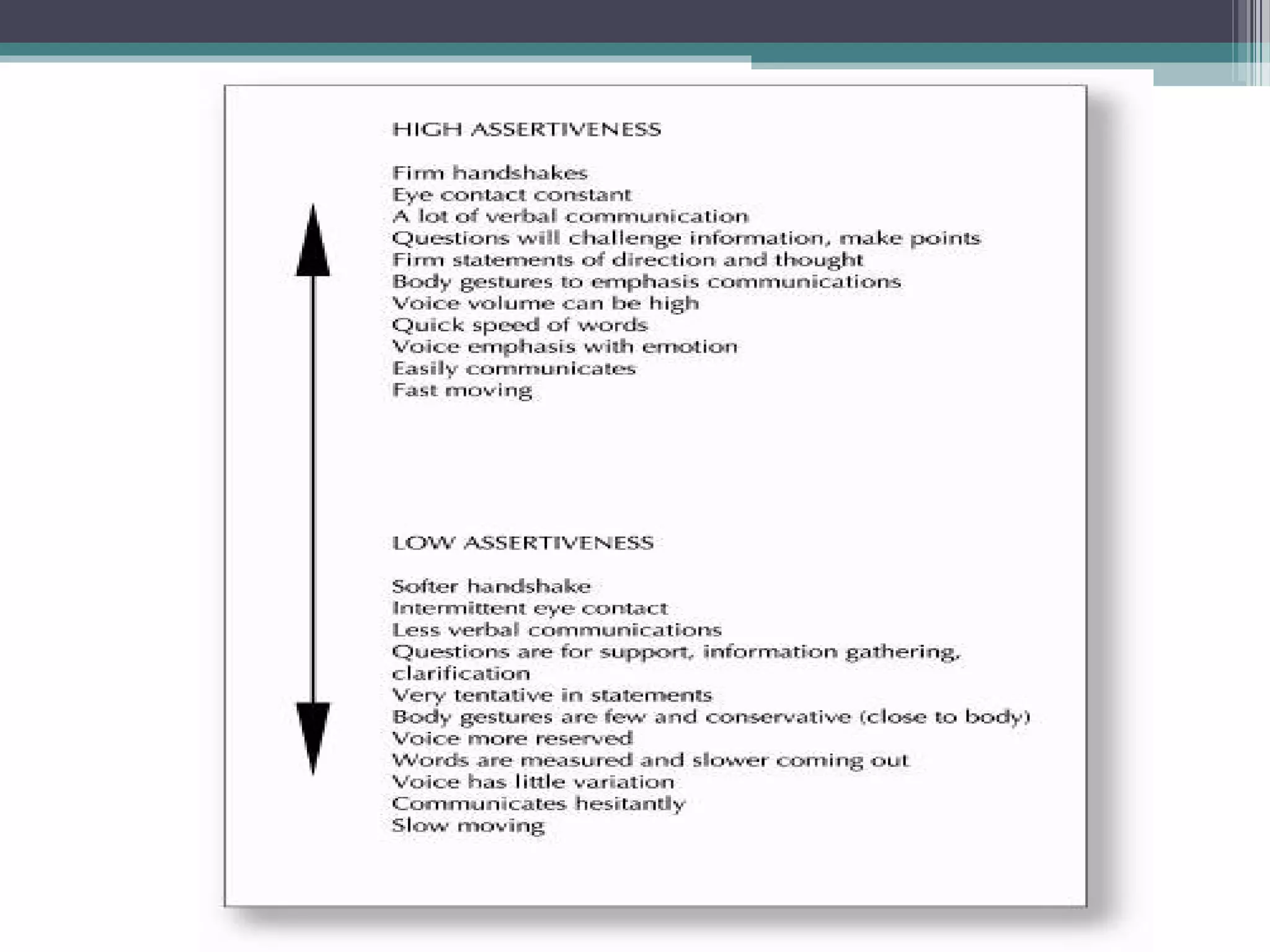
ASSERTIVENESS BY VERBAL AND
NONVERBAL COMMUNICATION
“It ain’t what you say, it is the way that you say it”
• Tonation
‘I will phone you’ – It will be me not any other person
‘I will phone you’ – I will not forget!
‘I will phone you’ – I will not write or visit.
‘I will phone you’ – It will be you,not any other person.
•
•
•
•
•

Faces and the looks
Eye signal
Body image
Personal space
The gesture
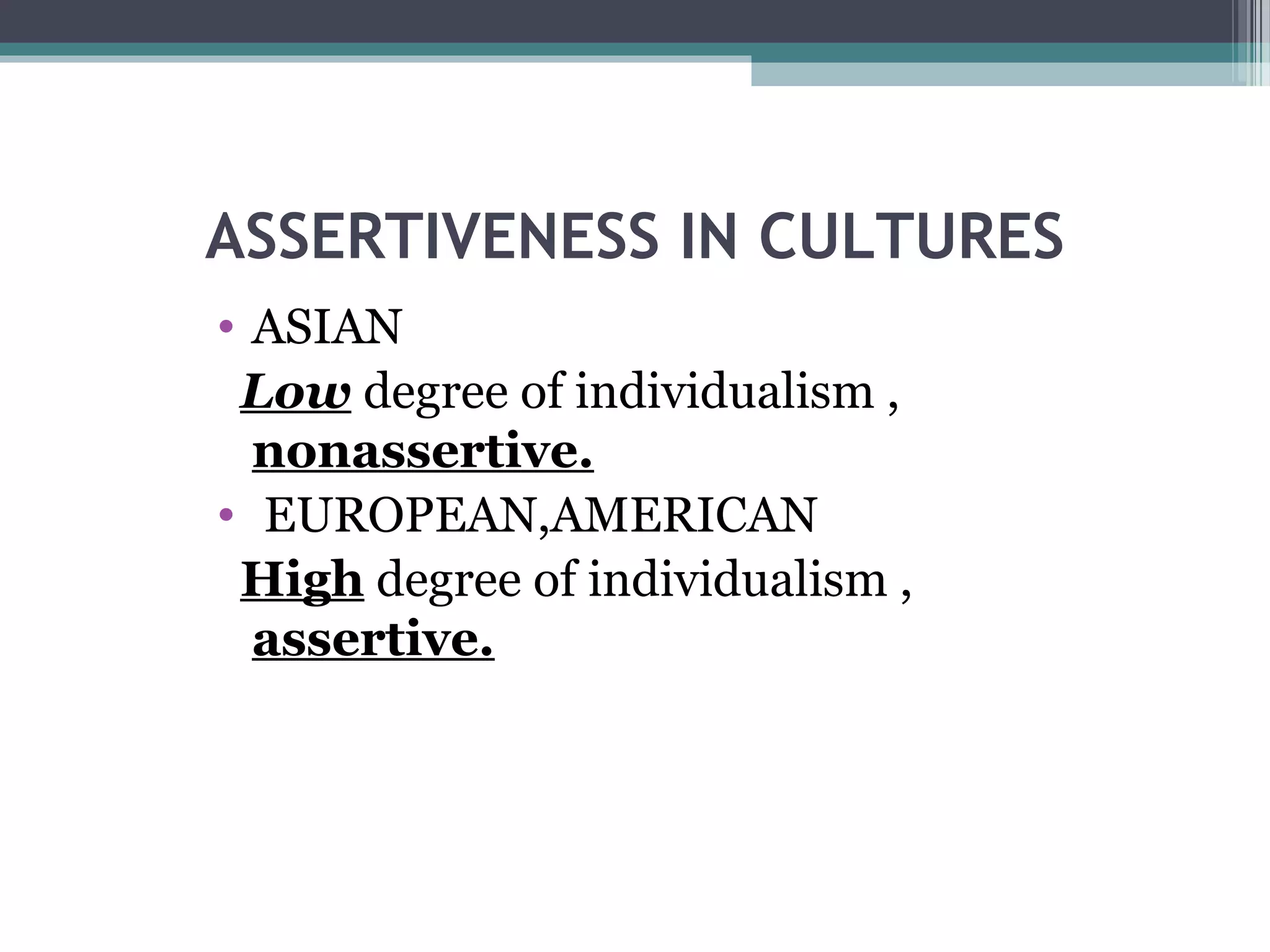
ASSERTIVENESS IN CULTURES
• ASIAN
Low degree of individualism ,
nonassertive.
• EUROPEAN,AMERICAN
High degree of individualism ,
assertive.
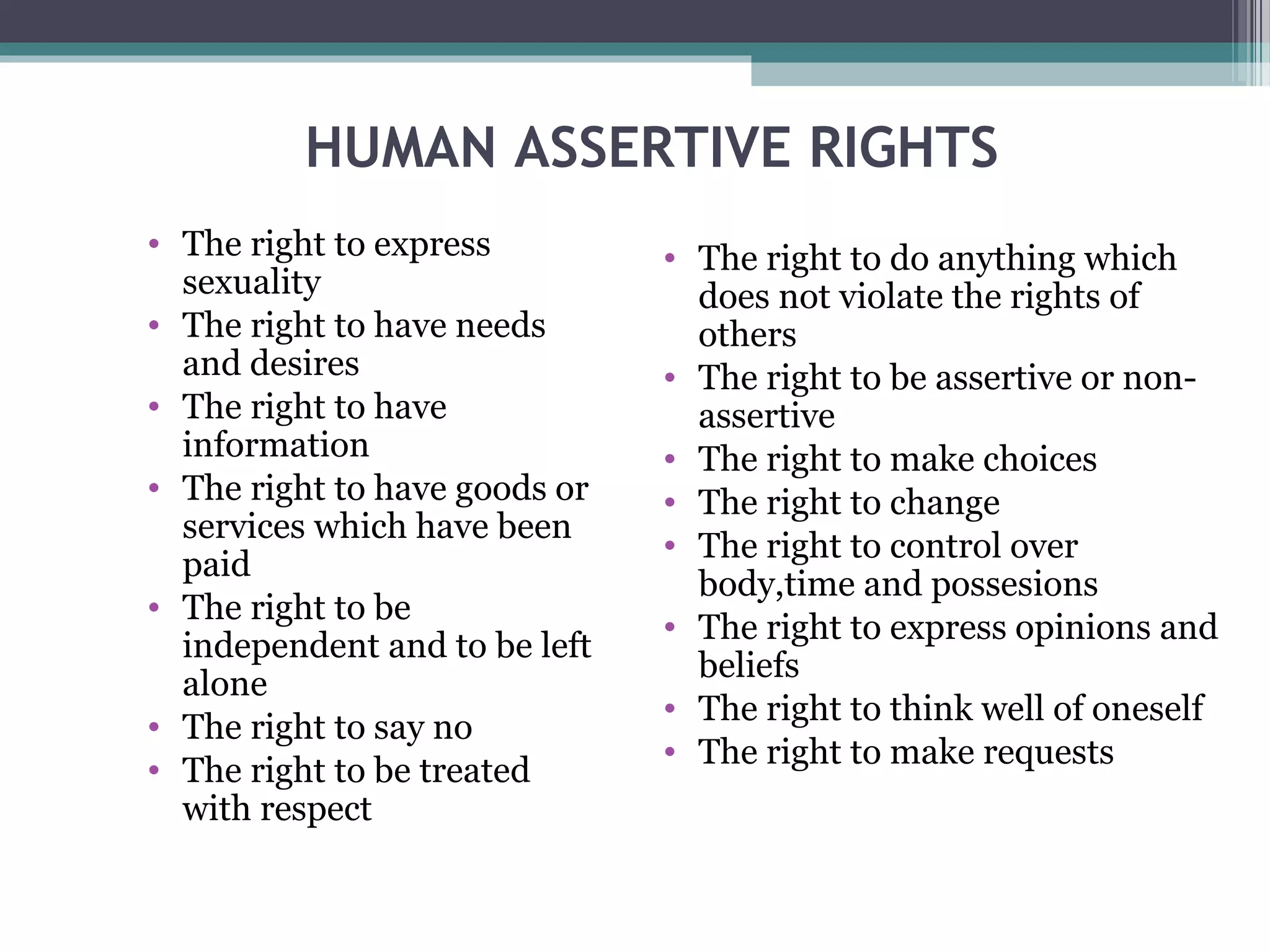
HUMAN ASSERTIVE RIGHTS
• The right to express
sexuality
• The right to have needs
and desires
• The right to have
information
• The right to have goods or
services which have been
paid
• The right to be
independent and to be left
alone
• The right to say no
• The right to be treated
with respect

• The right to do anything which
does not violate the rights of
others
• The right to be assertive or nonassertive
• The right to make choices
• The right to change
• The right to control over
body,time and possesions
• The right to express opinions and
beliefs
• The right to think well of oneself
• The right to make requests
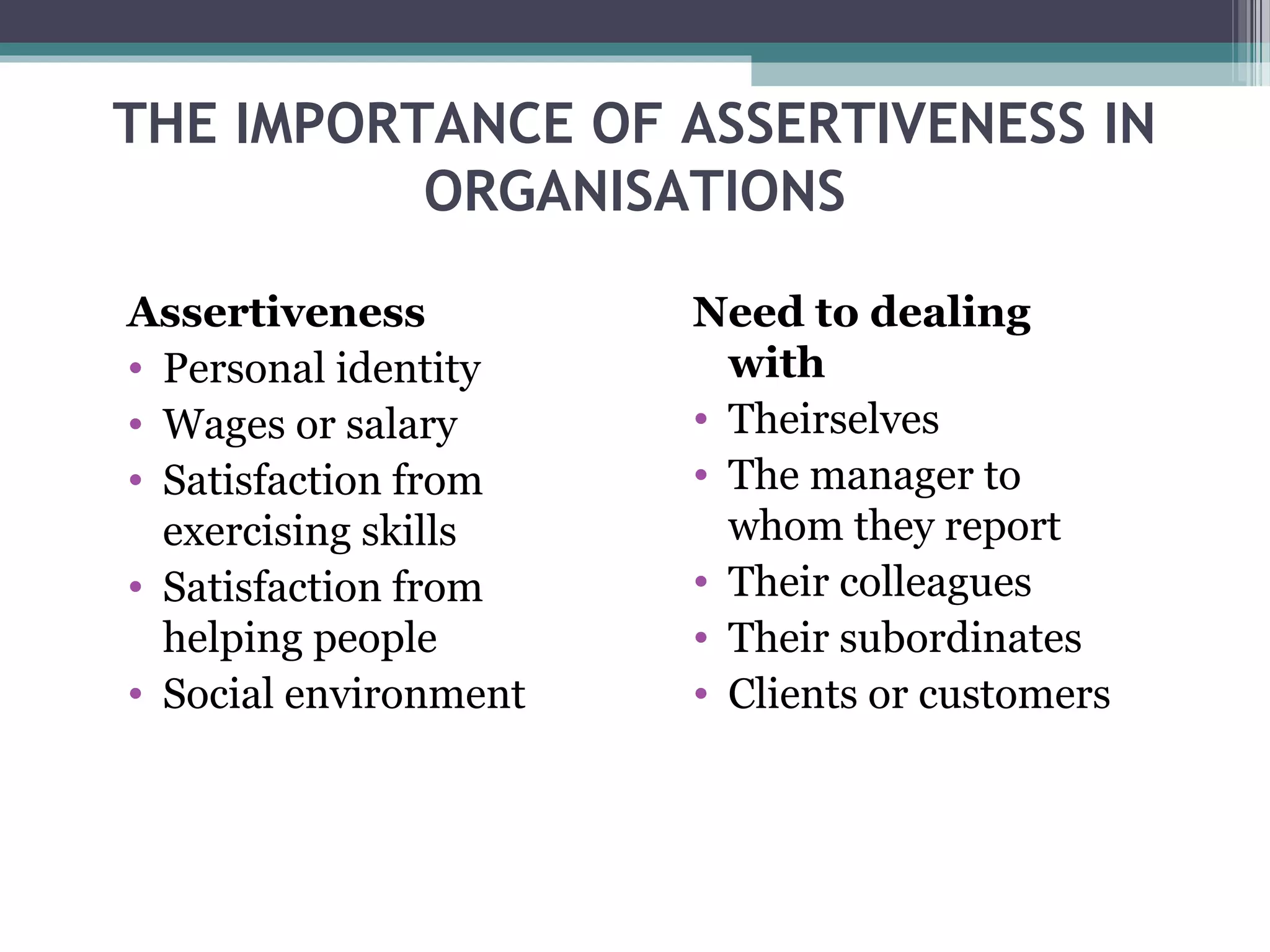
THE IMPORTANCE OF ASSERTIVENESS IN
ORGANISATIONS
Assertiveness
• Personal identity
• Wages or salary
• Satisfaction from
exercising skills
• Satisfaction from
helping people
• Social environment

Need to dealing
with
• Theirselves
• The manager to
whom they report
• Their colleagues
• Their subordinates
• Clients or customers
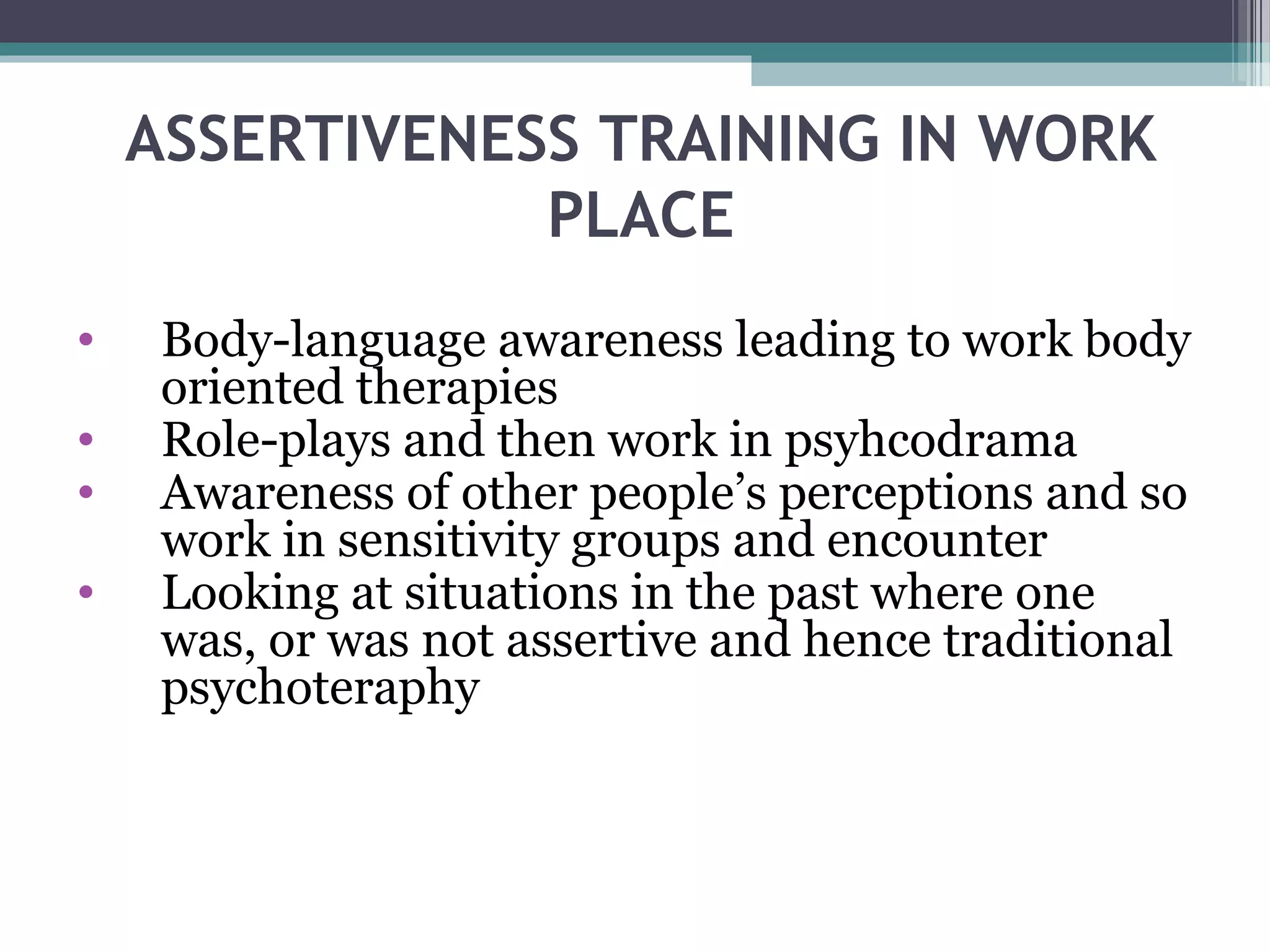
ASSERTIVENESS TRAINING IN WORK
PLACE
•
•
•
•

Body-language awareness leading to work body
oriented therapies
Role-plays and then work in psyhcodrama
Awareness of other people’s perceptions and so
work in sensitivity groups and encounter
Looking at situations in the past where one
was, or was not assertive and hence traditional
psychoteraphy
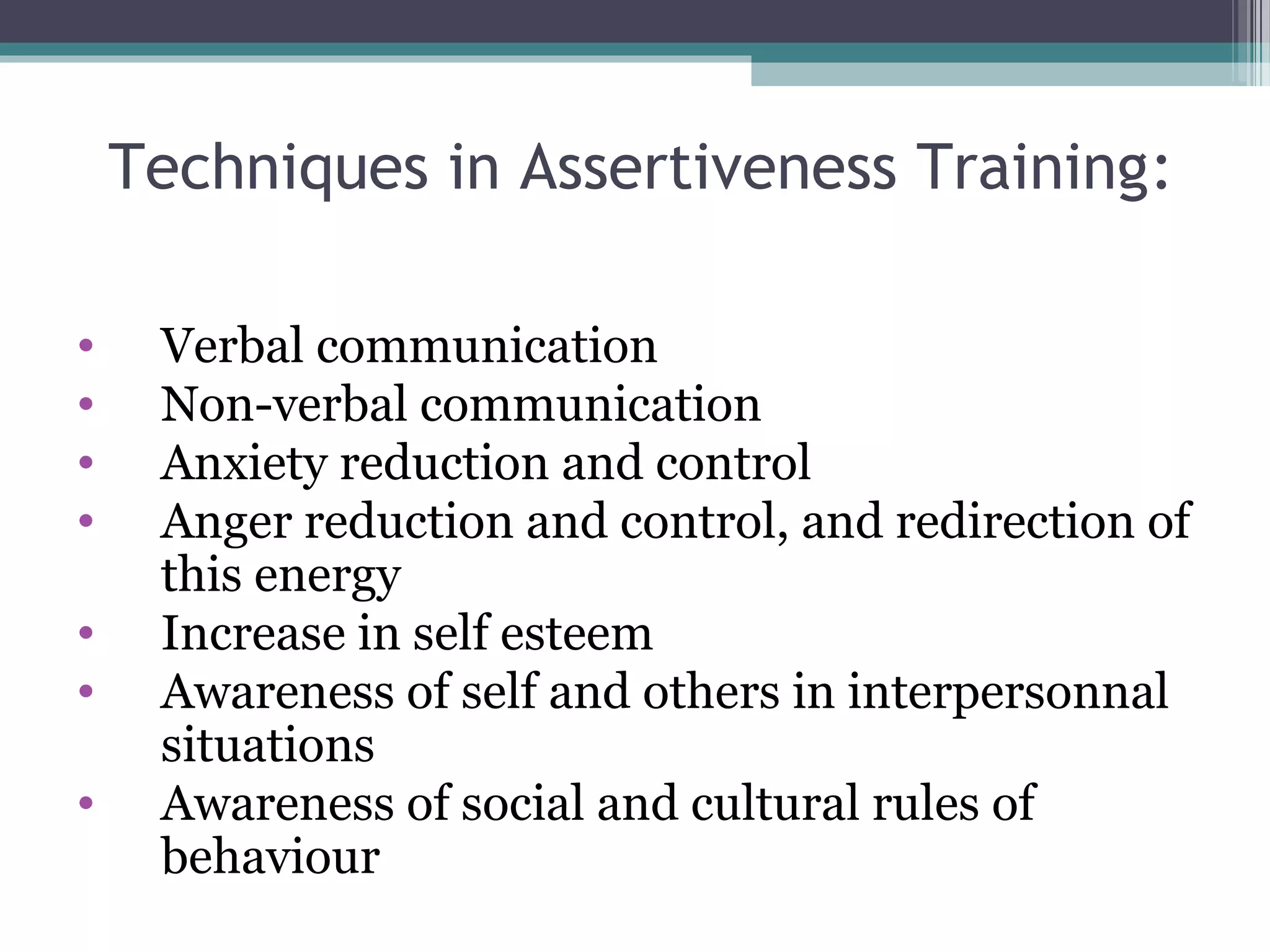
Techniques in Assertiveness Training:
•
•
•
•
•
•
•

Verbal communication
Non-verbal communication
Anxiety reduction and control
Anger reduction and control, and redirection of
this energy
Increase in self esteem
Awareness of self and others in interpersonnal
situations
Awareness of social and cultural rules of
behaviour
Ackowledgement• Google
• Wikipedia
• Communication Skills by Oxford Publications

Assertiveness ppt

  • 1.
    ASSERTIVENESS Prepared ByChirag Solanki WasimKazmi Macklinbrett Veigas Mayur Veer (SE MECH-B)
  • 2.
    WHAT IS ASSERTIVENESS? •Assertiveness is about self confidence which means having a positive attitude towards yourself and others. • Assertiveness is form of behavior characterized by a confident declaration or affirmation of a statement without need of proof; this affirms the person's rights or point of view without either aggressively threatening the rights of another (assuming a position of dominance) or submissively permitting another to ignore or deny one's rights or point of view.[1]
  • 3.
    Ten Points aboutAssertive Behaviours 1-It depends on expressing yourself 2-Showing respects to others rights 3-Being honest 4-Indirect and certain 5-Mutual equilibrim and benefit is important in a relationship 6-It is expressing emotions, rights, realities, thoughts and boundaries by words 7-Using non-verbal comminication for sending the message 8-It is not universal, it depends on the position and the individual 9-It is getting social responsibility 10-It is not the nature of the hunamkind, it can be learned
  • 4.
    Being Assertive 1-Being assertiveis focusing on your goal 2-Being assertive is being self-aware 3-Being assertive is being true to yourself 4-Being assertive is building self esteem 5-Being assertive is nurturing yourself.
  • 5.
  • 6.
    Negative attitude andpassive behaviour • • • • • • • • Lack of self confidence and low self esteem Lack of self respect Self putdowns Negative feelings and thoughts about yourself Feeliings of inferiority compared to others Like others to be in control of people and situations Feel guilty towards others demotivated
  • 7.
    Negative attitude andmanipulative behaviour • Lack of self confidence and low self esteem • Lack of self respect and lack of respect for others • Mistrustful and suspicious of others’ motives • Negative feelings and thoughts about self and others • Feel very wary towards others • Dishonest and indirect • Twist what others have said • Undermine others’ self esteem • Depressed and demotivated
  • 8.
    Negative attitude and aggressivebehaviour • • • • • • • • • Lack of self confidence and low self esteem Lack of respect towards others Put others down Feelings of superiority Like to be in control of people and situations Disinterested in others’ thoughts and feelings Feel angry towards others and are quick to blame them Don’t listen to or ask questions Dismissive of feedback
  • 9.
    Positive attitude andassertive behaviour • • • • • • • • • Self confidence and high self esteem Respect for self and towards others Take responsibility for self Motivated to do a good job İnterested in others’ feelings and thoughts Ask questions Honest and direct Listen to others Ask others for feedback
  • 10.
    SKILLS OF ASSERTIVENESS a)Broken record b) Fogging c) Negative assertion d) Negative inquiry e) Free information f) Self disclosure g)Workable compromise
  • 11.
    ASSERTIVENESS BY VERBALAND NONVERBAL COMMUNICATION “It ain’t what you say, it is the way that you say it” • Tonation ‘I will phone you’ – It will be me not any other person ‘I will phone you’ – I will not forget! ‘I will phone you’ – I will not write or visit. ‘I will phone you’ – It will be you,not any other person. • • • • • Faces and the looks Eye signal Body image Personal space The gesture
  • 13.
    ASSERTIVENESS IN CULTURES •ASIAN Low degree of individualism , nonassertive. • EUROPEAN,AMERICAN High degree of individualism , assertive.
  • 14.
    HUMAN ASSERTIVE RIGHTS •The right to express sexuality • The right to have needs and desires • The right to have information • The right to have goods or services which have been paid • The right to be independent and to be left alone • The right to say no • The right to be treated with respect • The right to do anything which does not violate the rights of others • The right to be assertive or nonassertive • The right to make choices • The right to change • The right to control over body,time and possesions • The right to express opinions and beliefs • The right to think well of oneself • The right to make requests
  • 15.
    THE IMPORTANCE OFASSERTIVENESS IN ORGANISATIONS Assertiveness • Personal identity • Wages or salary • Satisfaction from exercising skills • Satisfaction from helping people • Social environment Need to dealing with • Theirselves • The manager to whom they report • Their colleagues • Their subordinates • Clients or customers
  • 16.
    ASSERTIVENESS TRAINING INWORK PLACE • • • • Body-language awareness leading to work body oriented therapies Role-plays and then work in psyhcodrama Awareness of other people’s perceptions and so work in sensitivity groups and encounter Looking at situations in the past where one was, or was not assertive and hence traditional psychoteraphy
  • 17.
    Techniques in AssertivenessTraining: • • • • • • • Verbal communication Non-verbal communication Anxiety reduction and control Anger reduction and control, and redirection of this energy Increase in self esteem Awareness of self and others in interpersonnal situations Awareness of social and cultural rules of behaviour
  • 18.
    Ackowledgement• Google • Wikipedia •Communication Skills by Oxford Publications