
Represented By:
Adel Mohie
rapport has a harmonious and understanding
relationship between people.
What is Rapport?
•Rapport is a state of harmonious understanding with
another individual or group that enables greater and
easier
communication.
• In other words rapport is getting on well with
another
person, or group of people, by having things in
common;
this makes the communication process easier and
usually
more effective.Rapport is Developing a relationship built on
trust.
•Any representative of our business will need to
maintain a
professional attitude to their job - especially if it is
customer facing . It's up to each and every one to make
customers feel welcome.
• The skills involved in building ordinary relationships
and
establishing contact and rapport with customers are
basically the same. Customer-facing people need to be
comfortable using these
skills in order to do their job well.
•The art of customer service is making people feel
special.
• Making people feel special is one of the essential
elements in forming good customer relationships.
• You can show that you think a customer is worth
your time and attention in many ways. It is this ability
to show that you feel this - and not just say it - that
makes good customer relationships.
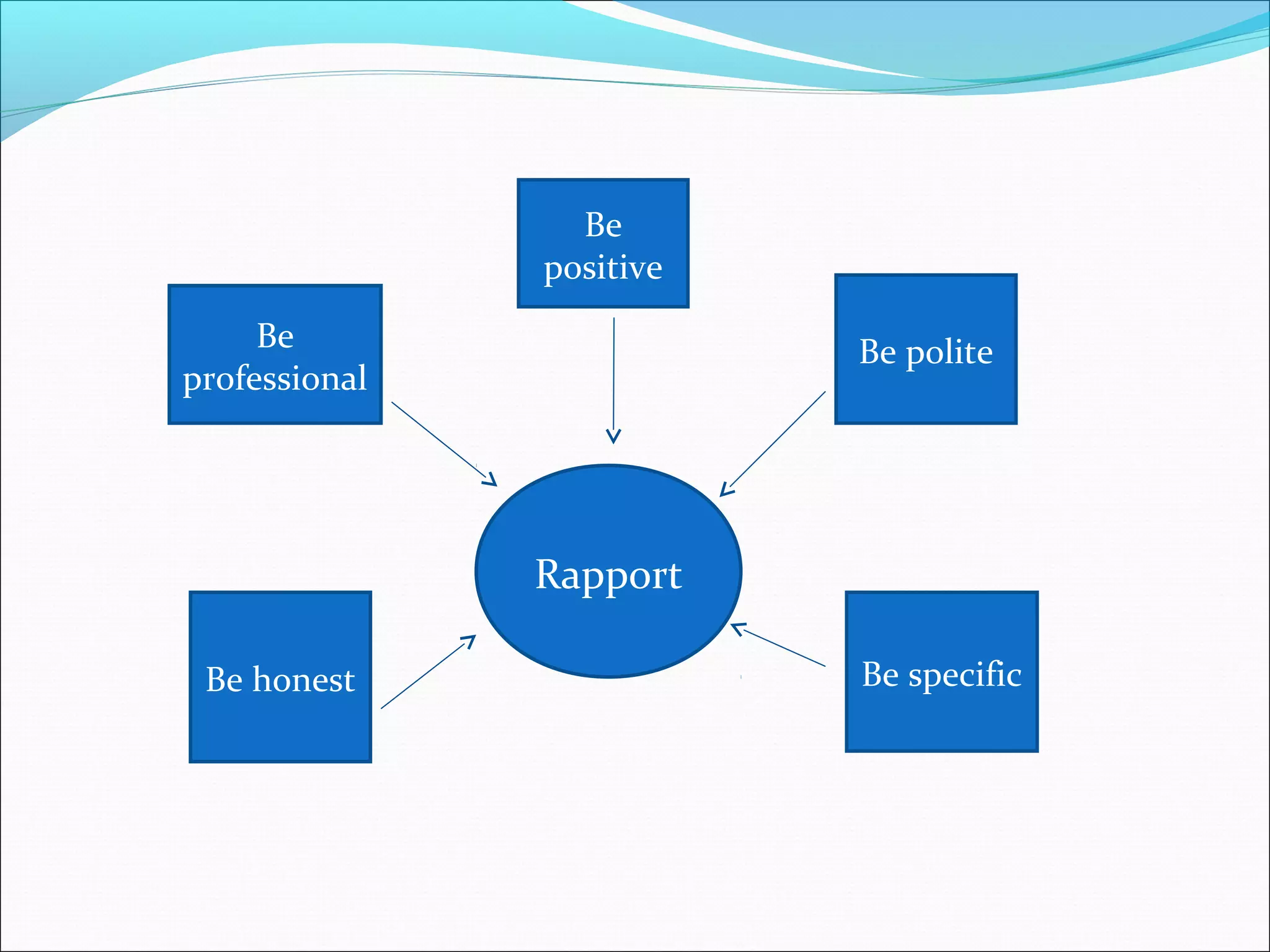
Rapport
Be
professional
Be
positive
Be polite
Be specificBe honest
•They need to feel welcome.
• They need to feel comfortable.
• They need to be understood.
• They need assistance.
• They need to feel important.
Customer’s needs:
•They need to be recognized.
• They need to be treated with respect.
• They need to be listened to.
• They need prompt service.
• They need to trust you.
Think about these when you are next dealing with a
customer.
When meeting somebody for the first time some simple
tips will help:
•you reduce the tension in the situation enabling both
parties to feel more relaxed and thus communicate
more effectively:
• Use non-threatening and ‘safe topics’ for initial small
talk
• Listen to what the other person is saying and look for
shared experiences or circumstances
Break The Ice
• Try to inject an element of humor
• Show some empathy.
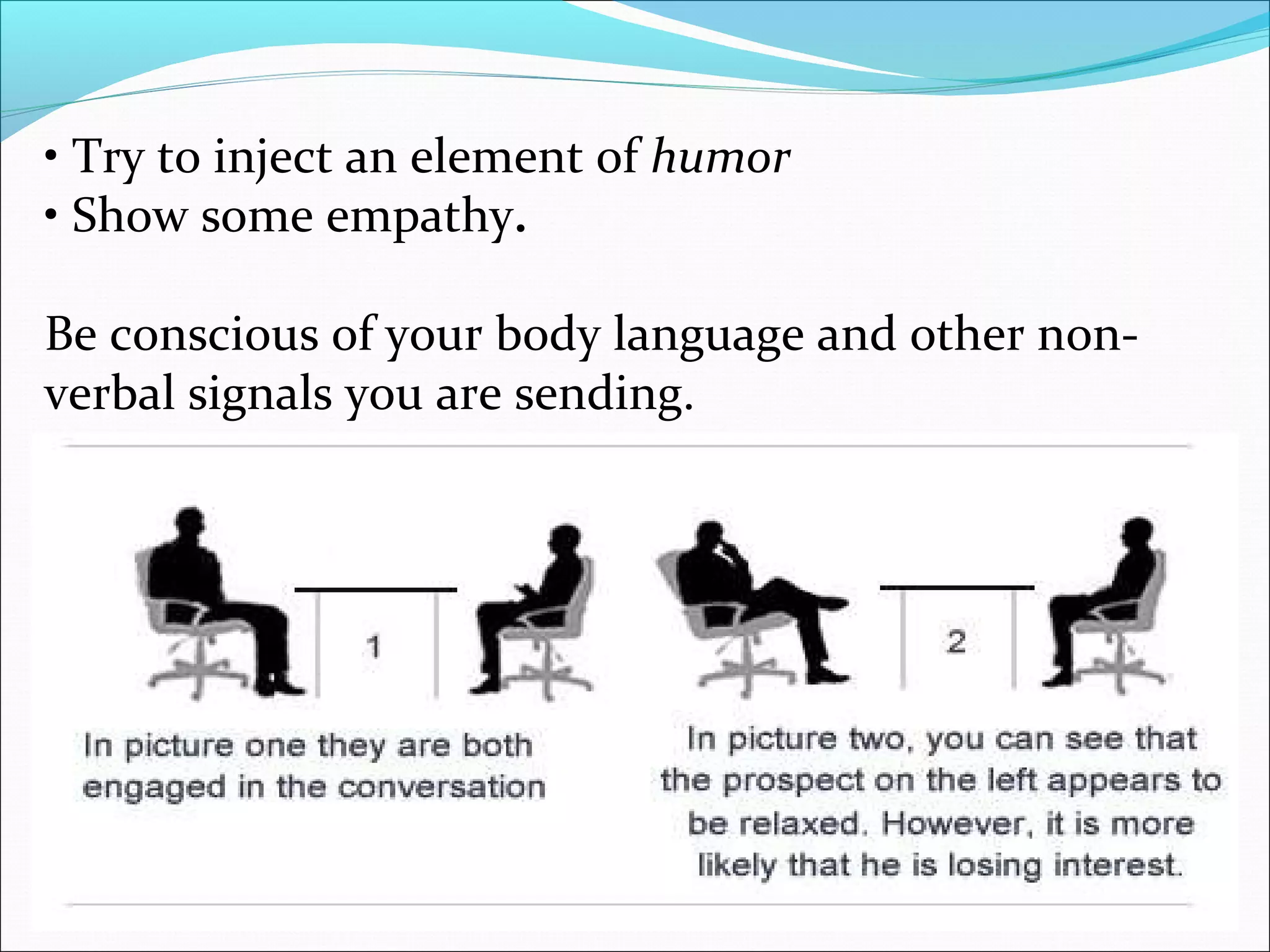
Be conscious of your body language and other non-
verbal signals you are sending.
•Understanding your clients and what they want to
achieve is your key to success. Without this
understanding
and trust, the client-seller relationship cannot flourish.
•As clients share more information about who they are
—likes, dislikes, fears, and goals—you can better
understand how they function and how to best interact
with them.
•Building rapport is a critical component of successful
client-seller relationships, as this process promotes open
communication, develops trust, and fosters the client’s
desire to participate in an exercise program.
Barriers to rapport building
•The absence of rapport is telling your subject’s mind
that
you’re a person that they can’t trust yet.
• The problem with this is – without trust, there’s no
way
to push forward.
• It’s your job to make your subject feel safe so you can
quickly get down to doing what you do best.
By using the 4 A’s formula.
Assure
Acknowledge
Affirm
Appreciate
Rapport
ASSURE: I assure you we can solve this.
Everyone likes to know you can help them.
ACKNOWLEDGE: I can help you…
ALWAYS ACKNOWLEDGE THE CUSTOMER’S
OPENING STATEMENT
AFFIRM: That is a great choice!
AFFIRMING ON THE PERSONAL LEVEL CAN BE A
COMPLIMENT SUCH AS “I LIKE YOUR SENSE OF
HUMOR.”
APPRECIATE: Thank You for your patience…or I
appreciate your patience, thank you!
THANK YOU

Rapport building

  • 1.
  • 2.
    rapport has aharmonious and understanding relationship between people. What is Rapport?
  • 4.
    •Rapport is astate of harmonious understanding with another individual or group that enables greater and easier communication. • In other words rapport is getting on well with another person, or group of people, by having things in common; this makes the communication process easier and usually more effective.Rapport is Developing a relationship built on trust.
  • 5.
    •Any representative ofour business will need to maintain a professional attitude to their job - especially if it is customer facing . It's up to each and every one to make customers feel welcome. • The skills involved in building ordinary relationships and establishing contact and rapport with customers are basically the same. Customer-facing people need to be comfortable using these skills in order to do their job well.
  • 6.
    •The art ofcustomer service is making people feel special. • Making people feel special is one of the essential elements in forming good customer relationships. • You can show that you think a customer is worth your time and attention in many ways. It is this ability to show that you feel this - and not just say it - that makes good customer relationships.
  • 7.
  • 8.
    •They need tofeel welcome. • They need to feel comfortable. • They need to be understood. • They need assistance. • They need to feel important. Customer’s needs:
  • 9.
    •They need tobe recognized. • They need to be treated with respect. • They need to be listened to. • They need prompt service. • They need to trust you. Think about these when you are next dealing with a customer.
  • 10.
    When meeting somebodyfor the first time some simple tips will help: •you reduce the tension in the situation enabling both parties to feel more relaxed and thus communicate more effectively: • Use non-threatening and ‘safe topics’ for initial small talk • Listen to what the other person is saying and look for shared experiences or circumstances Break The Ice
  • 11.
    • Try toinject an element of humor • Show some empathy. Be conscious of your body language and other non- verbal signals you are sending.
  • 12.
    •Understanding your clientsand what they want to achieve is your key to success. Without this understanding and trust, the client-seller relationship cannot flourish. •As clients share more information about who they are —likes, dislikes, fears, and goals—you can better understand how they function and how to best interact with them. •Building rapport is a critical component of successful client-seller relationships, as this process promotes open communication, develops trust, and fosters the client’s desire to participate in an exercise program.
  • 13.
    Barriers to rapportbuilding •The absence of rapport is telling your subject’s mind that you’re a person that they can’t trust yet. • The problem with this is – without trust, there’s no way to push forward. • It’s your job to make your subject feel safe so you can quickly get down to doing what you do best.
  • 14.
    By using the4 A’s formula. Assure Acknowledge Affirm Appreciate Rapport
  • 15.
    ASSURE: I assureyou we can solve this. Everyone likes to know you can help them. ACKNOWLEDGE: I can help you… ALWAYS ACKNOWLEDGE THE CUSTOMER’S OPENING STATEMENT
  • 16.
    AFFIRM: That isa great choice! AFFIRMING ON THE PERSONAL LEVEL CAN BE A COMPLIMENT SUCH AS “I LIKE YOUR SENSE OF HUMOR.” APPRECIATE: Thank You for your patience…or I appreciate your patience, thank you!
  • 17.