
ASSERTIVENESS
ASSERTIVENESS
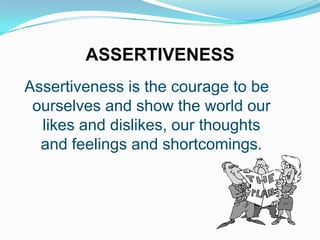
Assertiveness is the courage to be
ourselves and show the world our
likes and dislikes, our thoughts
and feelings and shortcomings.
ASSERTIVENESS
 Assertive people have the

following characteristics:
 They feel free to express their
feelings, thoughts and desires.
 They know their rights.
 They have control over their anger.
 They have a good understanding of
feelings.
Why Assertiveness is
Important?
 Effective communication brings about

the achievement.
 Assertiveness increases your ability to
reach these goals.
AGGRESSIVE PEOPLE
 Aggressive people are:
 Expresses point of view arrogantly, as

if no other is possible.
 Tends to dismiss or ignore the
opinions or feelings of others.
 Believes one’s own needs are most
important.
 Feels powerful when dominating
others.
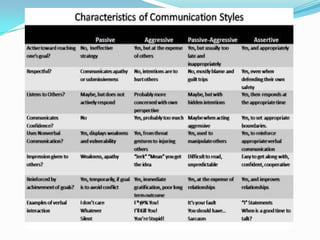
BEHAVIOUR ASPECTS
 Assertive people

are direct, honest
and expressive.
They feel
confident, gain
self respect and
make others feel
valued.

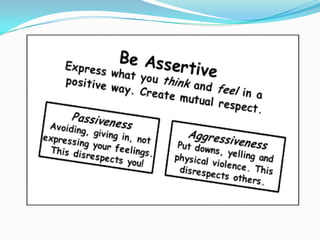
 Aggressive

people humiliate
others, and elicit
either pity or
scorn from
others.
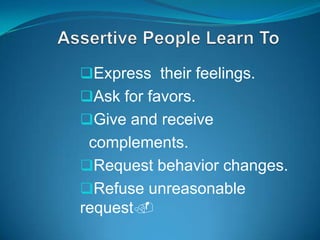
Express their feelings.
Ask for favors.
Give and receive

complements.
Request behavior changes.
Refuse unreasonable
request.
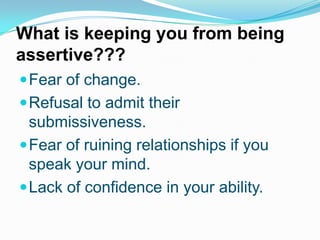
What is keeping you from being
assertive???
 Fear of change.
 Refusal to admit their

submissiveness.
 Fear of ruining relationships if you
speak your mind.
 Lack of confidence in your ability.
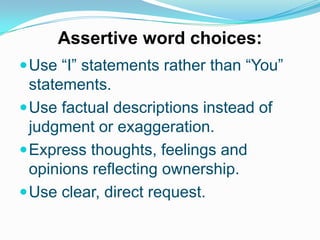
Assertive word choices:
 Use “I” statements rather than “You”

statements.
 Use factual descriptions instead of
judgment or exaggeration.
 Express thoughts, feelings and
opinions reflecting ownership.
 Use clear, direct request.
Body language as related to
assertive behavior.
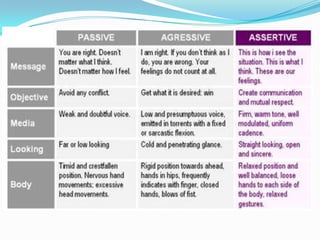
1)Eye contact and facial expression:
Maintain direct eye contact, appear
interested and alert, but not angry.
2) Posture:
Stand or sit erect, possibly leaning
forward slightly.
3) Distance and contact:
Stand or sit at a normal conversational
distance from the other.
Body language as related to
assertive behavior.
4)Gestures:
Use relaxed, conversational gestures.
5) Voice:
Use a factual, not emotional tone of
voice. Sound determined and full of
conviction, but not overbearing.
Handling Criticism
• Fogging
• Negative Assertion
CRITICISM
Usually people react to criticism
by
avoiding it,
Taking it to heart
or
by reacting aggressively to it.
Tips to handle criticism:
 Face and listen to criticism rather than

avoiding it.
 Don't take it to heart.
 React calmly and respect others rights.
 Be prepared for constructive criticism.
 This does not include blaming, put-downs
or attempting to hurt someone.
Fogging
A skill that teaches acceptance of
manipulative criticism by calmly
acknowledging to your critic the
probability that there may be some
truth in what he says. Yet allows you
to remain your own judge of what you
do.
Fogging
•

Requires some self-control.
• Stay calm in the face of criticism,
and agreeing with what may be fair
and useful in it.
• By refusing to be provoked and
upset by criticism, you removed its
destructive power.
Negative Assertion
A Skill that teaches acceptance
of your errors and faults without
having to apologize by strongly
agreeing with criticism your negative
qualities.
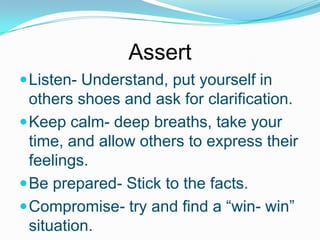
Assert
 Listen- Understand, put yourself in

others shoes and ask for clarification.
 Keep calm- deep breaths, take your
time, and allow others to express their
feelings.
 Be prepared- Stick to the facts.
 Compromise- try and find a “win- win”
situation.
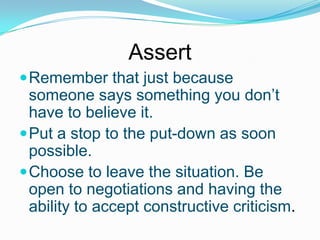
Assert
 Remember that just because

someone says something you don’t
have to believe it.
 Put a stop to the put-down as soon
possible.
 Choose to leave the situation. Be
open to negotiations and having the
ability to accept constructive criticism.
BY:
S.E.CHEM.
GROUP 3

Assertiveness

  • 1.
  • 2.
    ASSERTIVENESS Assertiveness is thecourage to be ourselves and show the world our likes and dislikes, our thoughts and feelings and shortcomings.
  • 3.
    ASSERTIVENESS  Assertive peoplehave the following characteristics:  They feel free to express their feelings, thoughts and desires.  They know their rights.  They have control over their anger.  They have a good understanding of feelings.
  • 4.
    Why Assertiveness is Important? Effective communication brings about the achievement.  Assertiveness increases your ability to reach these goals.
  • 5.
    AGGRESSIVE PEOPLE  Aggressivepeople are:  Expresses point of view arrogantly, as if no other is possible.  Tends to dismiss or ignore the opinions or feelings of others.  Believes one’s own needs are most important.  Feels powerful when dominating others.
  • 7.
    BEHAVIOUR ASPECTS  Assertivepeople are direct, honest and expressive. They feel confident, gain self respect and make others feel valued.  Aggressive people humiliate others, and elicit either pity or scorn from others.
  • 8.
    Express their feelings. Askfor favors. Give and receive complements. Request behavior changes. Refuse unreasonable request.
  • 9.
    What is keepingyou from being assertive???  Fear of change.  Refusal to admit their submissiveness.  Fear of ruining relationships if you speak your mind.  Lack of confidence in your ability.
  • 10.
    Assertive word choices: Use “I” statements rather than “You” statements.  Use factual descriptions instead of judgment or exaggeration.  Express thoughts, feelings and opinions reflecting ownership.  Use clear, direct request.
  • 12.
    Body language asrelated to assertive behavior. 1)Eye contact and facial expression: Maintain direct eye contact, appear interested and alert, but not angry. 2) Posture: Stand or sit erect, possibly leaning forward slightly. 3) Distance and contact: Stand or sit at a normal conversational distance from the other.
  • 13.
    Body language asrelated to assertive behavior. 4)Gestures: Use relaxed, conversational gestures. 5) Voice: Use a factual, not emotional tone of voice. Sound determined and full of conviction, but not overbearing.
  • 14.
  • 15.
    CRITICISM Usually people reactto criticism by avoiding it, Taking it to heart or by reacting aggressively to it.
  • 16.
    Tips to handlecriticism:  Face and listen to criticism rather than avoiding it.  Don't take it to heart.  React calmly and respect others rights.  Be prepared for constructive criticism.  This does not include blaming, put-downs or attempting to hurt someone.
  • 17.
    Fogging A skill thatteaches acceptance of manipulative criticism by calmly acknowledging to your critic the probability that there may be some truth in what he says. Yet allows you to remain your own judge of what you do.
  • 18.
    Fogging • Requires some self-control. •Stay calm in the face of criticism, and agreeing with what may be fair and useful in it. • By refusing to be provoked and upset by criticism, you removed its destructive power.
  • 19.
    Negative Assertion A Skillthat teaches acceptance of your errors and faults without having to apologize by strongly agreeing with criticism your negative qualities.
  • 20.
    Assert  Listen- Understand,put yourself in others shoes and ask for clarification.  Keep calm- deep breaths, take your time, and allow others to express their feelings.  Be prepared- Stick to the facts.  Compromise- try and find a “win- win” situation.
  • 21.
    Assert  Remember thatjust because someone says something you don’t have to believe it.  Put a stop to the put-down as soon possible.  Choose to leave the situation. Be open to negotiations and having the ability to accept constructive criticism.
  • 23.