Today’s Objective:
SWBAT to create graphs and choose the best
type of graph to represent data
Data: Results from an experiment
August 29, 2013
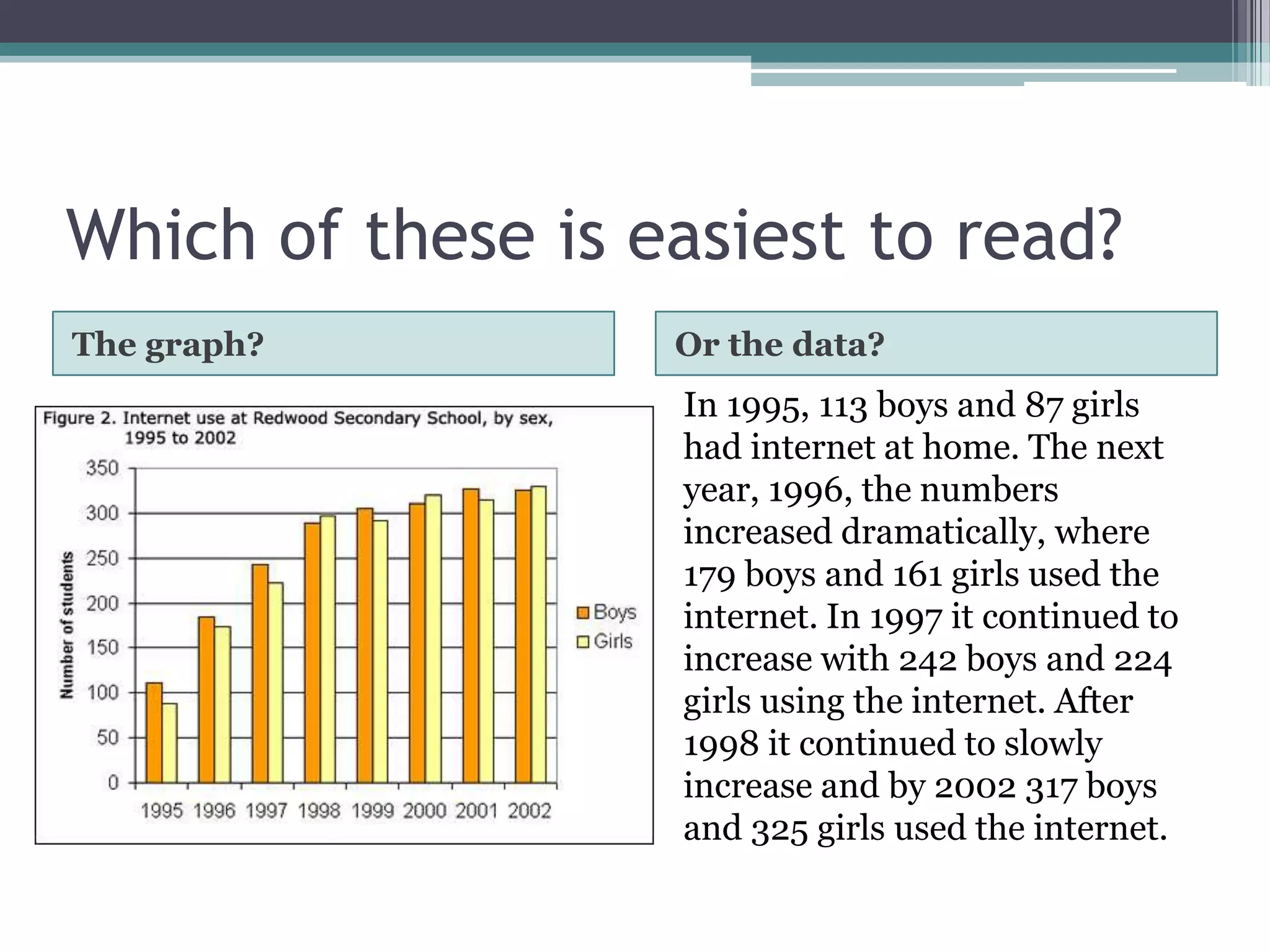
Which of these is easiest to read?
The graph? Or the data?
In 1995, 113 boys and 87 girls
had internet at home. The next
year, 1996, the numbers
increased dramatically, where
179 boys and 161 girls used the
internet. In 1997 it continued to
increase with 242 boys and 224
girls using the internet. After
1998 it continued to slowly
increase and by 2002 317 boys
and 325 girls used the internet.
Bar Graphs
• A visual display used to compare the amounts
or number of times something happens
*Draw a quick sketch of a bar graph under “bar
graph” on the left side of your Cornell notes
• Ex: different types of birds in an environment
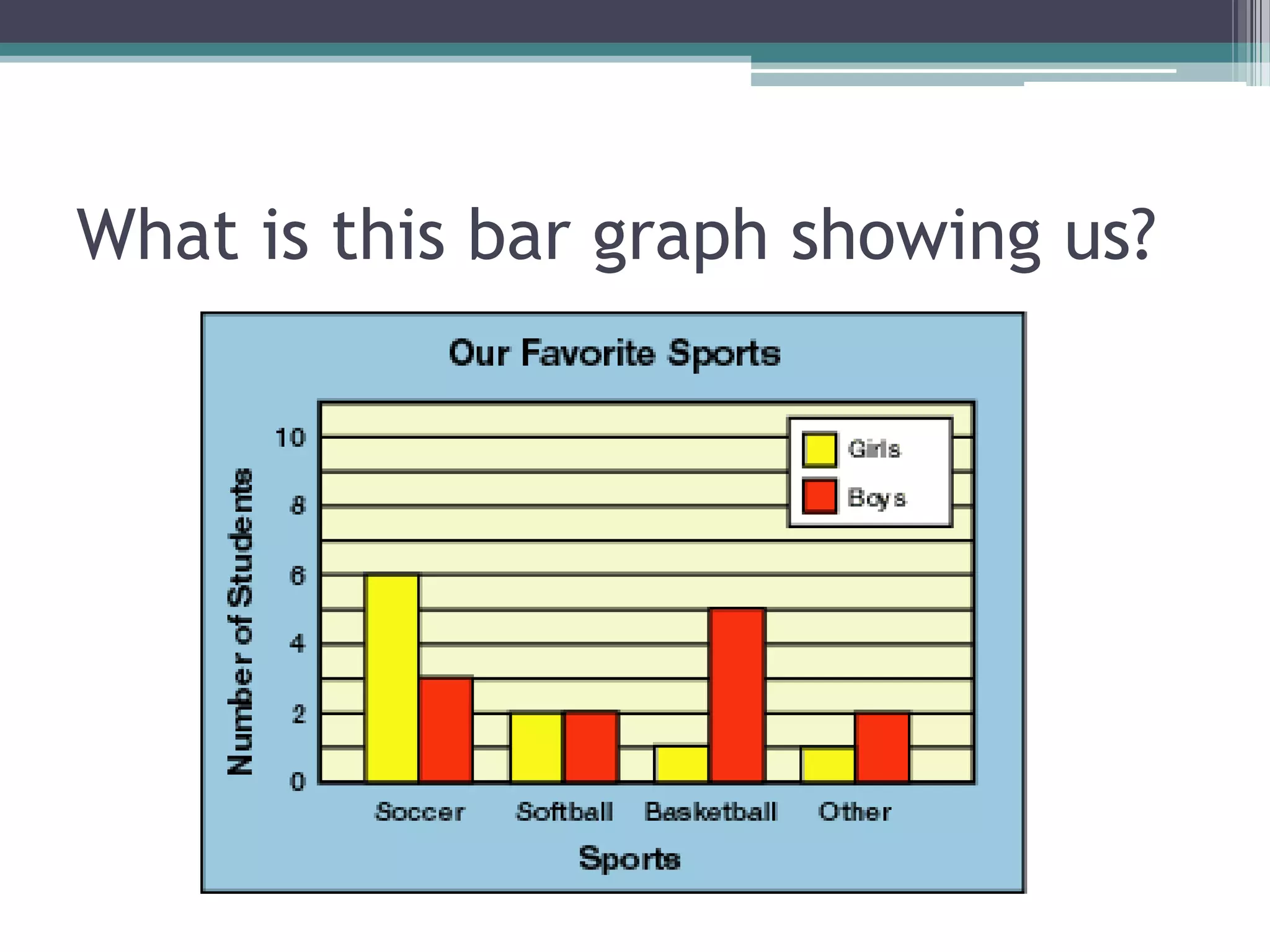
What is this bar graph showing us?
Line Graphs
• A visual display used to show how something
changes over time by connecting points on a
graph.
• *Draw a quick sketch of a Line graph on the left
side of your Cornell notes
• Ex: How weight changes over time
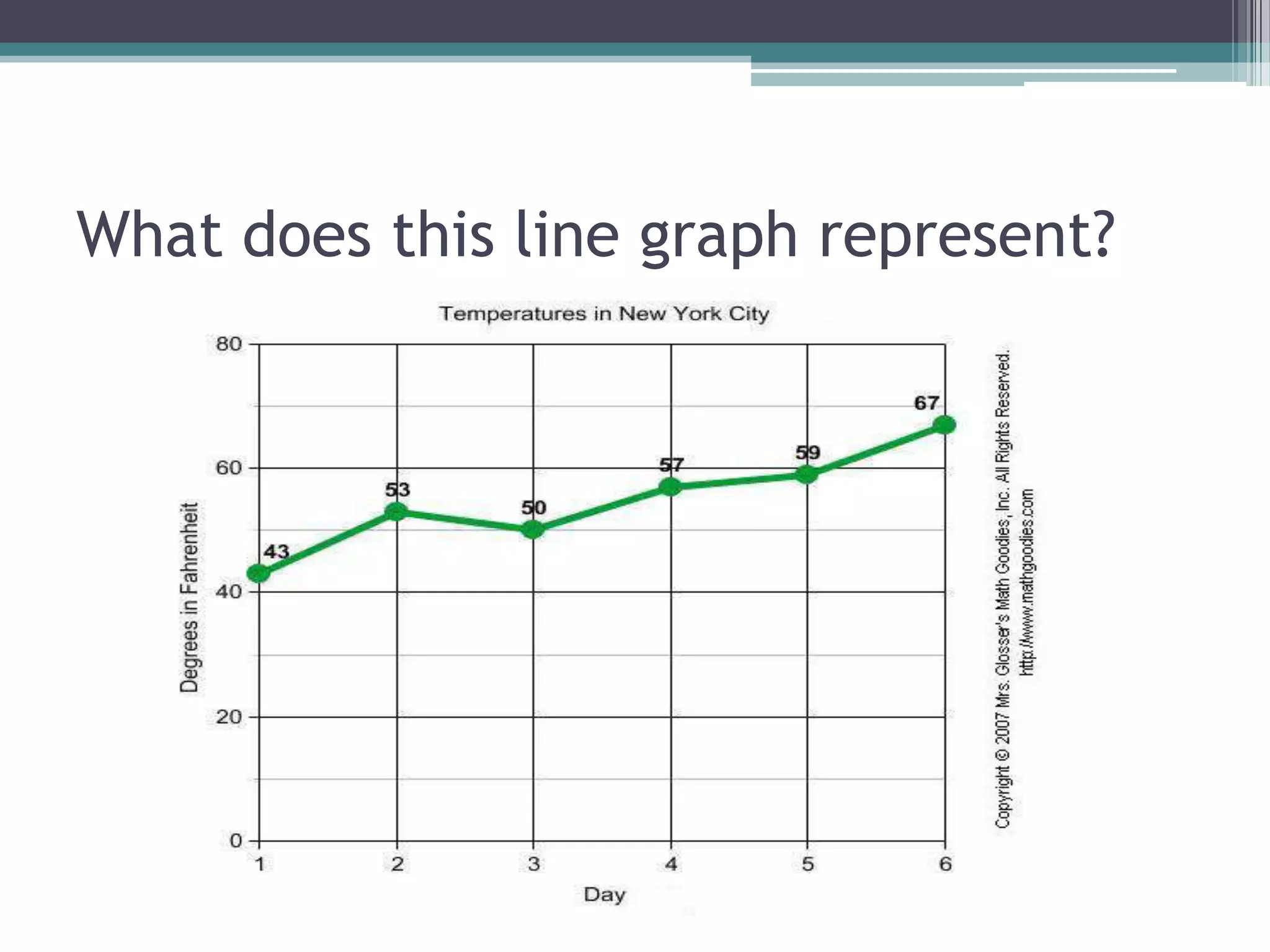
What does this line graph represent?
Scatter Plots (a type of line graph)
• Scatter plots usually consist of large bodies of
data and show how much one variable is affected
by another.
• The relationship between two variables is called
their correlation.
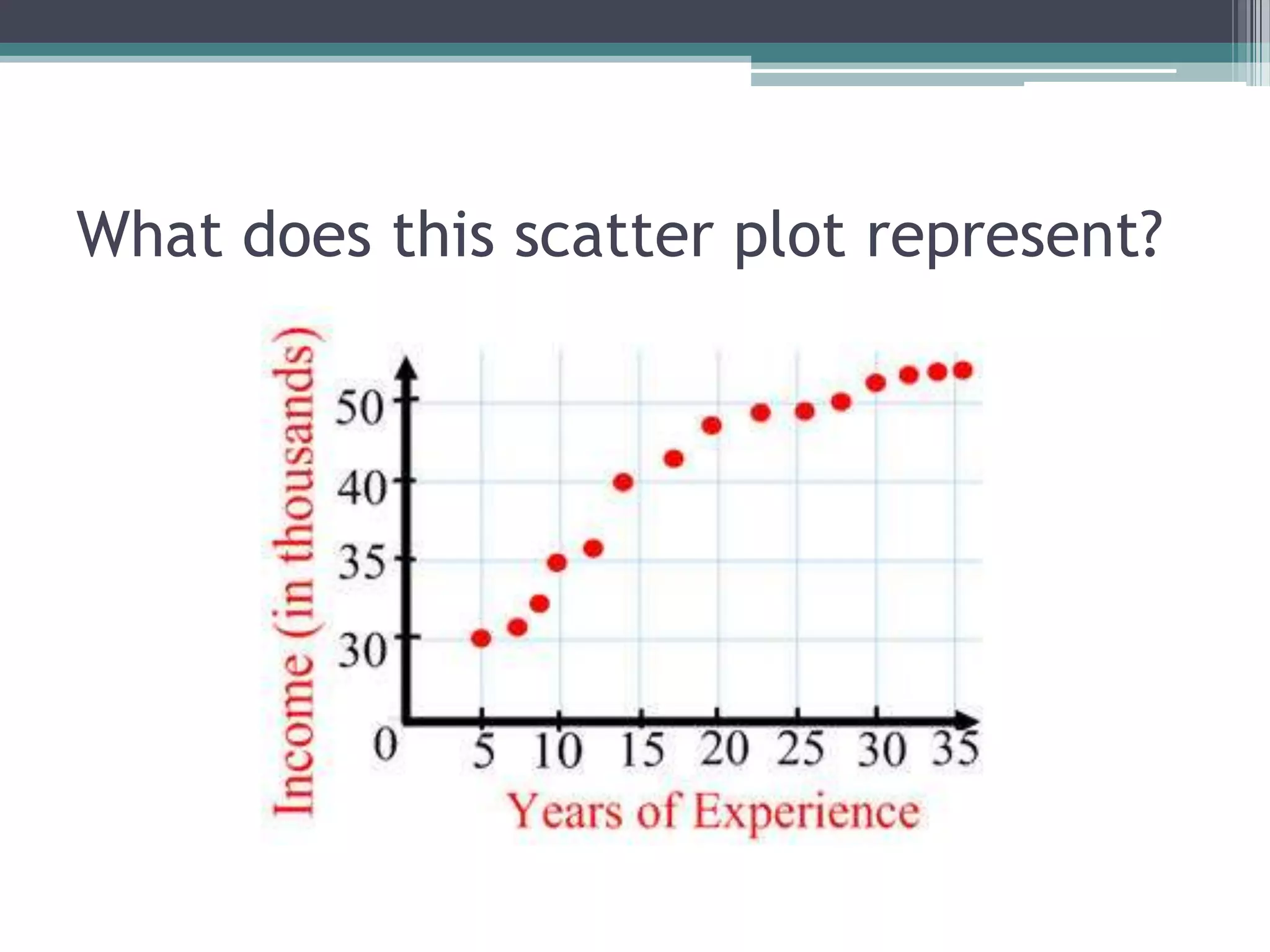
What does this scatter plot represent?
Correlation! Correspondence, interaction, relationship
• The closer the data points come when plotted to
making a straight line, the higher the correlation
between the two variables, or the stronger the
relationship.
• Positive Correlation: When graphed, you get an
upward slope -- that is up from left to right.
• Negative Correlation: When graphed, you get a
downward slope- that is down from left to right
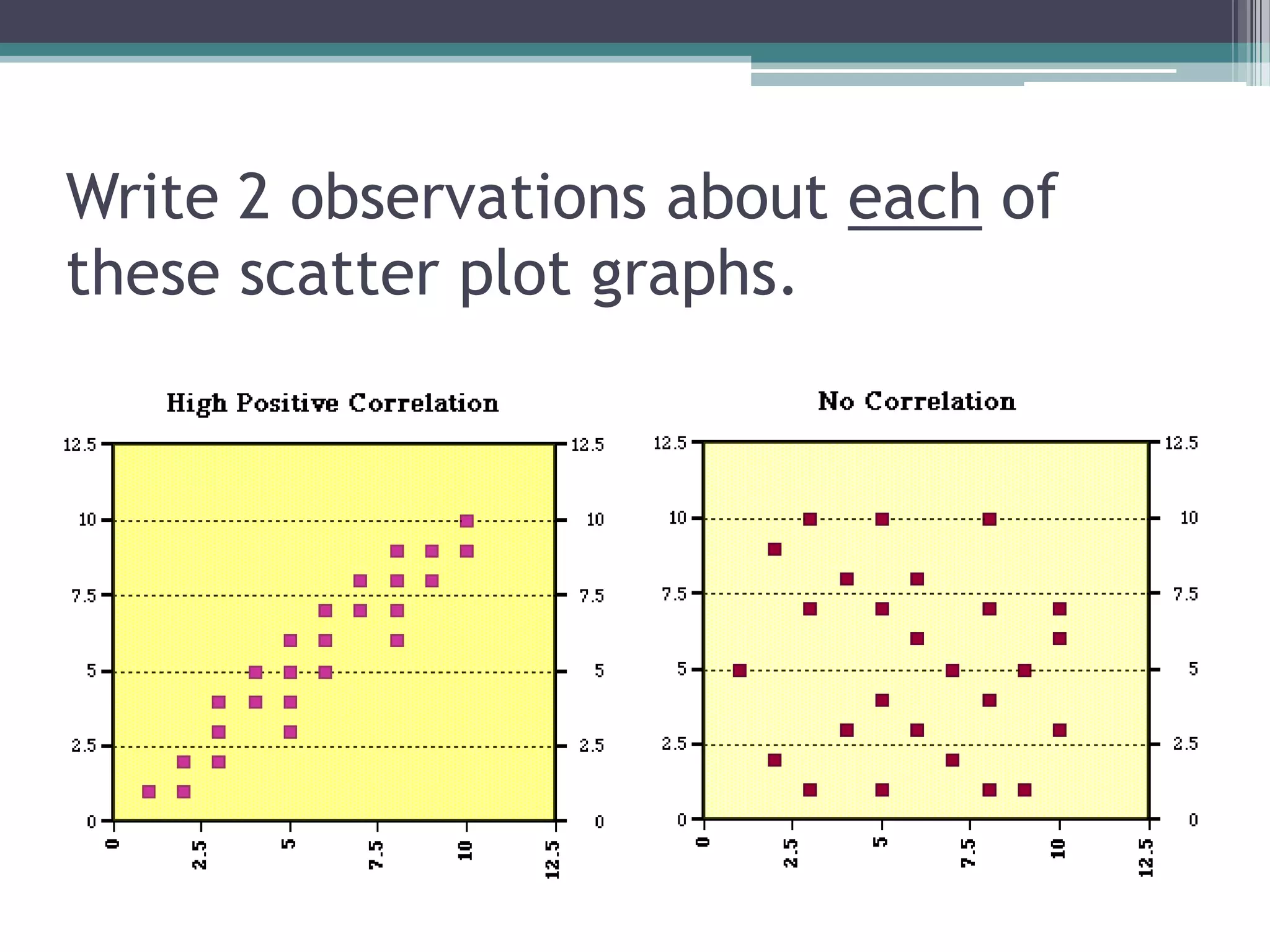
Write 2 observations about each of
these scatter plot graphs.
•
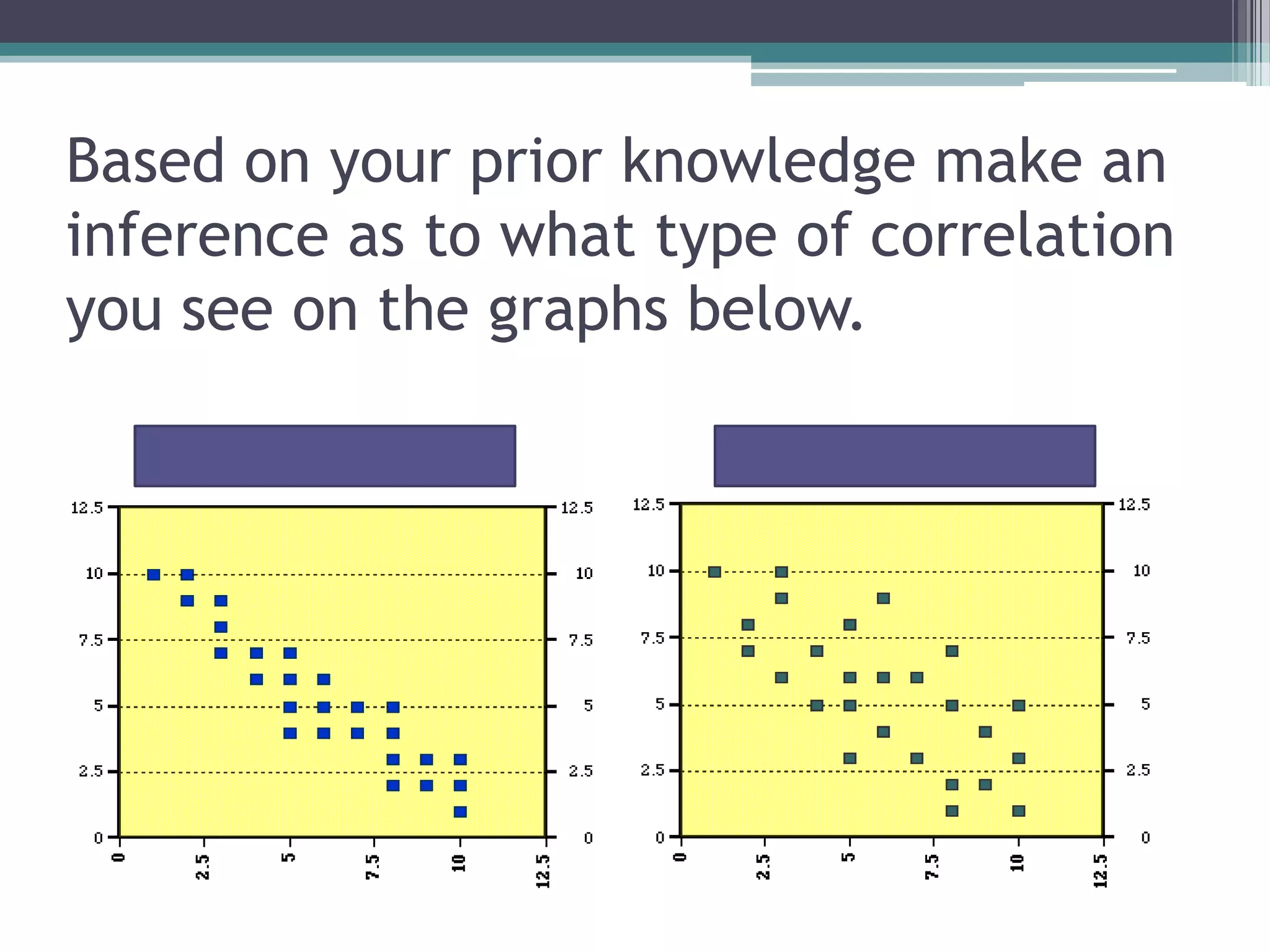
Based on your prior knowledge make an
inference as to what type of correlation
you see on the graphs below.
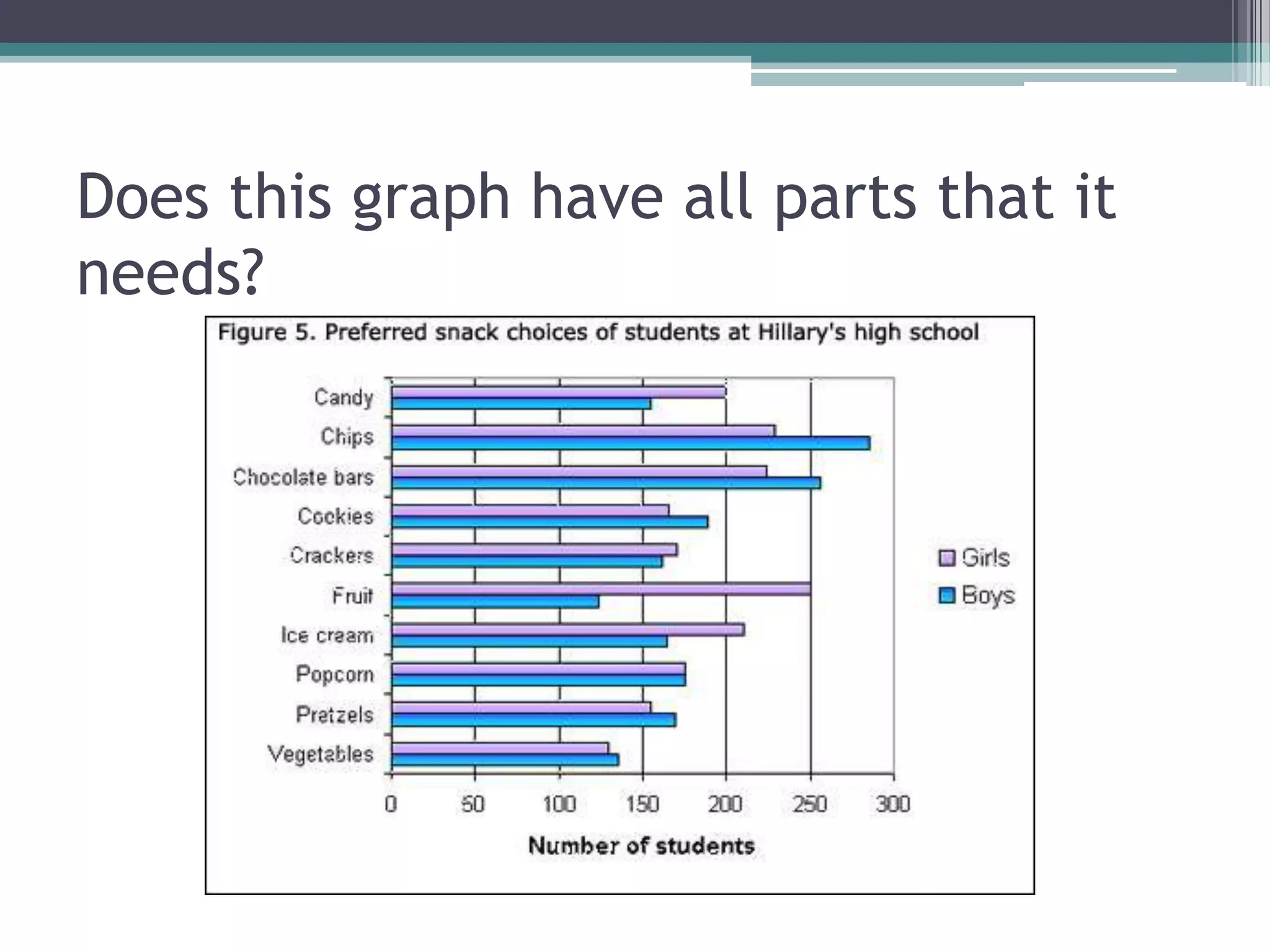
When making a graph from your data,
all graphs:
• Must have a title
• Must have x (horizontal) and y (vertical) axes
that are labeled
• Must start at zero
• Have an equal distance between each number
and use 75% of the axes.
• Must have a key if using more than one data set
Does this graph have all parts that it
needs?
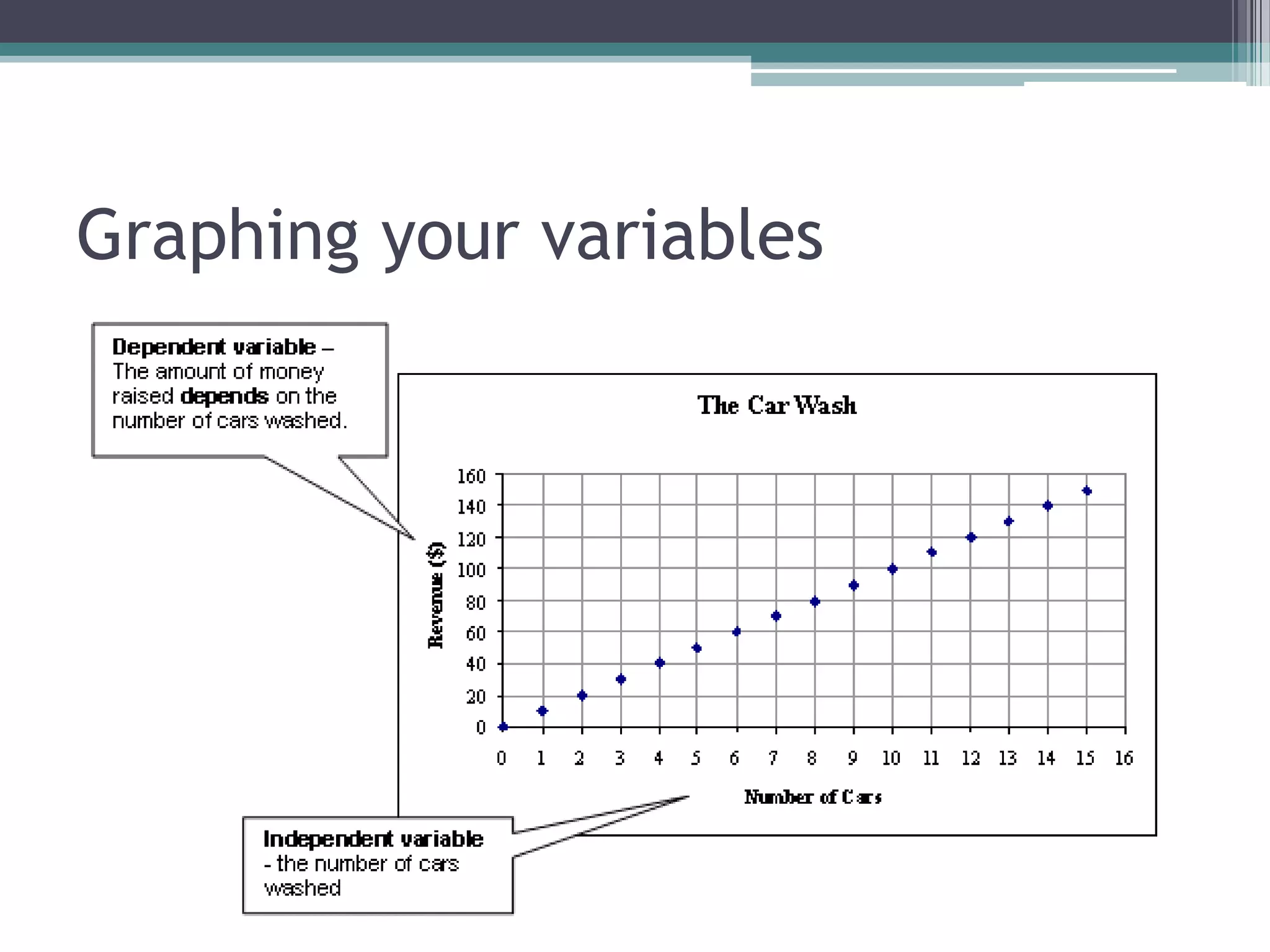
Graphing your variables
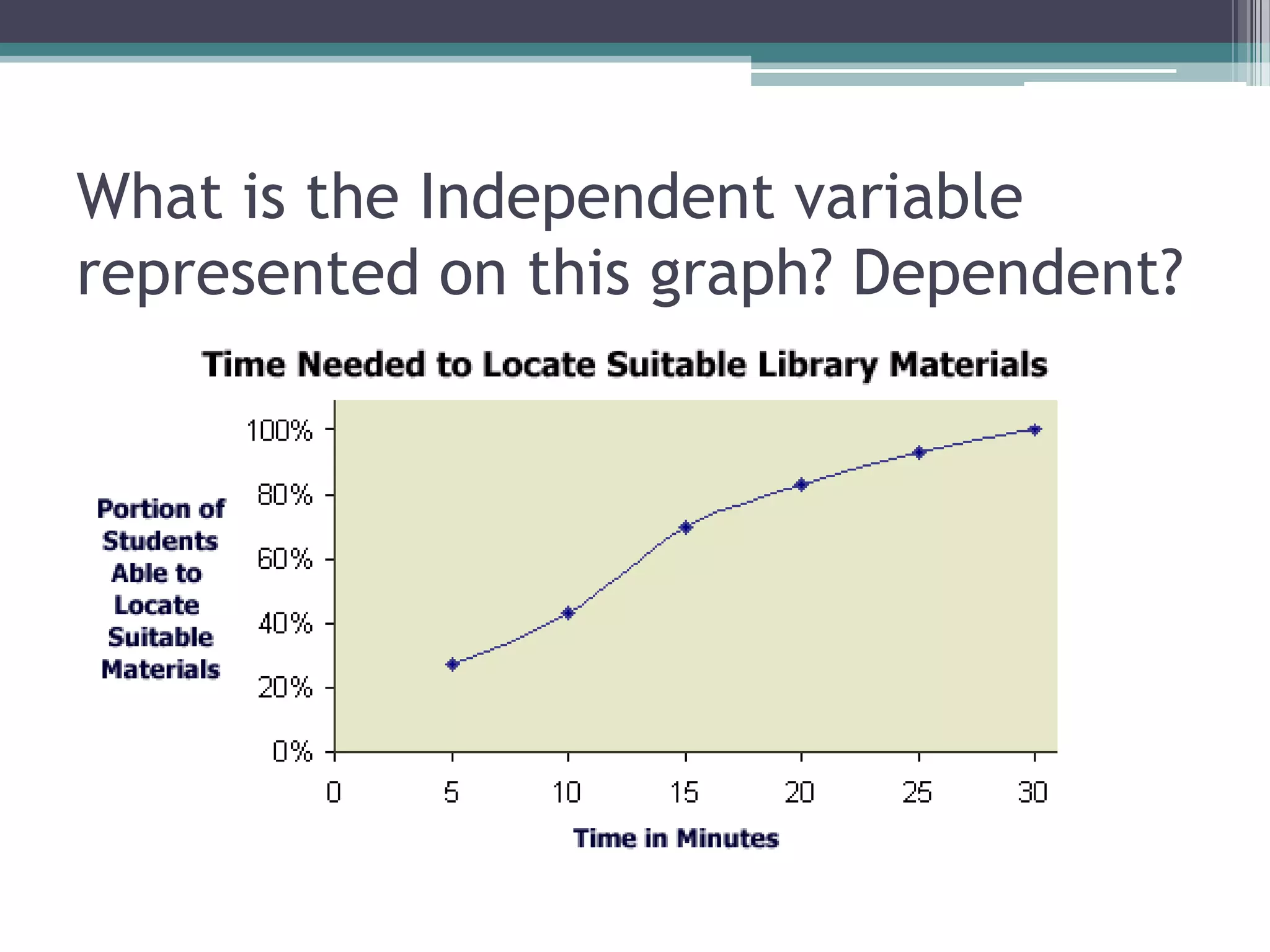
What is the Independent variable
represented on this graph? Dependent?

Intro to Graphing Data Powerpoint-7th and 8th Grade

  • 1.
    Today’s Objective: SWBAT tocreate graphs and choose the best type of graph to represent data Data: Results from an experiment August 29, 2013
  • 2.
    Which of theseis easiest to read? The graph? Or the data? In 1995, 113 boys and 87 girls had internet at home. The next year, 1996, the numbers increased dramatically, where 179 boys and 161 girls used the internet. In 1997 it continued to increase with 242 boys and 224 girls using the internet. After 1998 it continued to slowly increase and by 2002 317 boys and 325 girls used the internet.
  • 3.
    Bar Graphs • Avisual display used to compare the amounts or number of times something happens *Draw a quick sketch of a bar graph under “bar graph” on the left side of your Cornell notes • Ex: different types of birds in an environment
  • 4.
    What is thisbar graph showing us?
  • 5.
    Line Graphs • Avisual display used to show how something changes over time by connecting points on a graph. • *Draw a quick sketch of a Line graph on the left side of your Cornell notes • Ex: How weight changes over time
  • 6.
    What does thisline graph represent?
  • 7.
    Scatter Plots (atype of line graph) • Scatter plots usually consist of large bodies of data and show how much one variable is affected by another. • The relationship between two variables is called their correlation.
  • 8.
    What does thisscatter plot represent?
  • 9.
    Correlation! Correspondence, interaction,relationship • The closer the data points come when plotted to making a straight line, the higher the correlation between the two variables, or the stronger the relationship. • Positive Correlation: When graphed, you get an upward slope -- that is up from left to right. • Negative Correlation: When graphed, you get a downward slope- that is down from left to right
  • 10.
    Write 2 observationsabout each of these scatter plot graphs. •
  • 11.
    Based on yourprior knowledge make an inference as to what type of correlation you see on the graphs below.
  • 12.
    When making agraph from your data, all graphs: • Must have a title • Must have x (horizontal) and y (vertical) axes that are labeled • Must start at zero • Have an equal distance between each number and use 75% of the axes. • Must have a key if using more than one data set
  • 13.
    Does this graphhave all parts that it needs?
  • 14.
  • 15.
    What is theIndependent variable represented on this graph? Dependent?