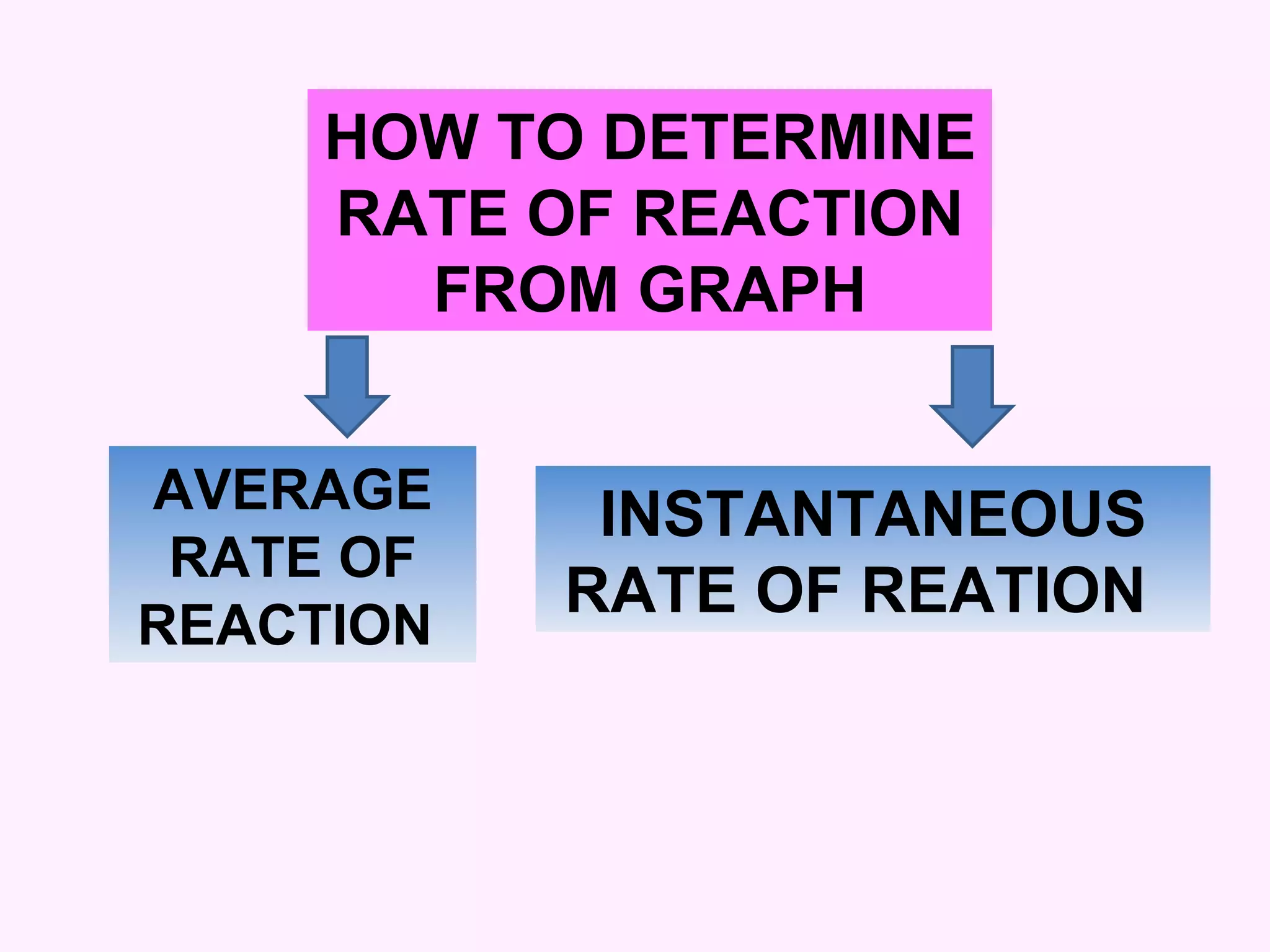
HOW TO DETERMINE RATE OF REACTION FROM GRAPH AVERAGE RATE OF REACTION  INSTANTANEOUS RATE OF REATION
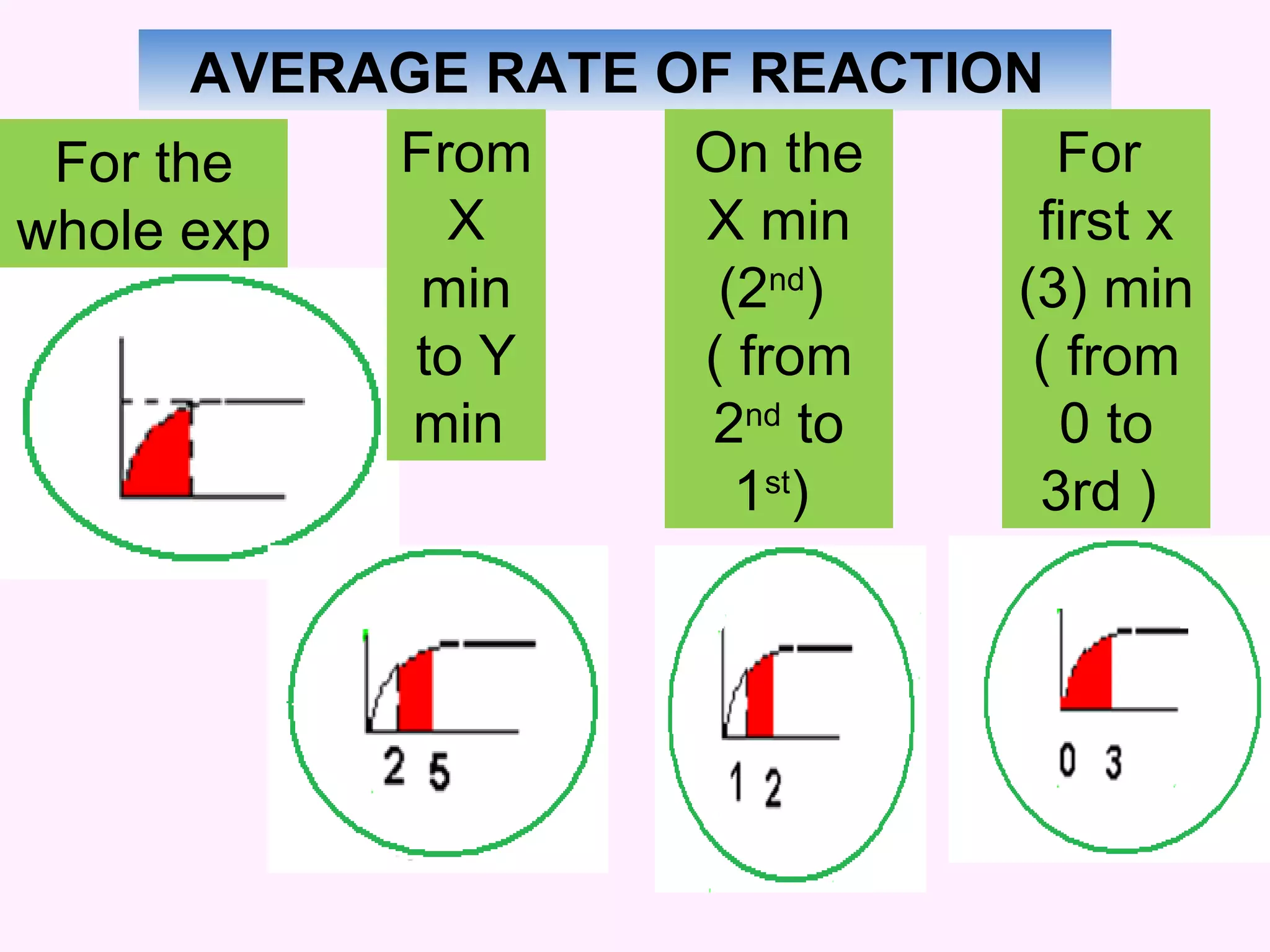
AVERAGE RATE OF REACTION  For the whole exp From X min to Y min  On the X min (2 nd )  ( from 2 nd  to 1 st )  For  first x (3) min ( from 0 to 3rd )
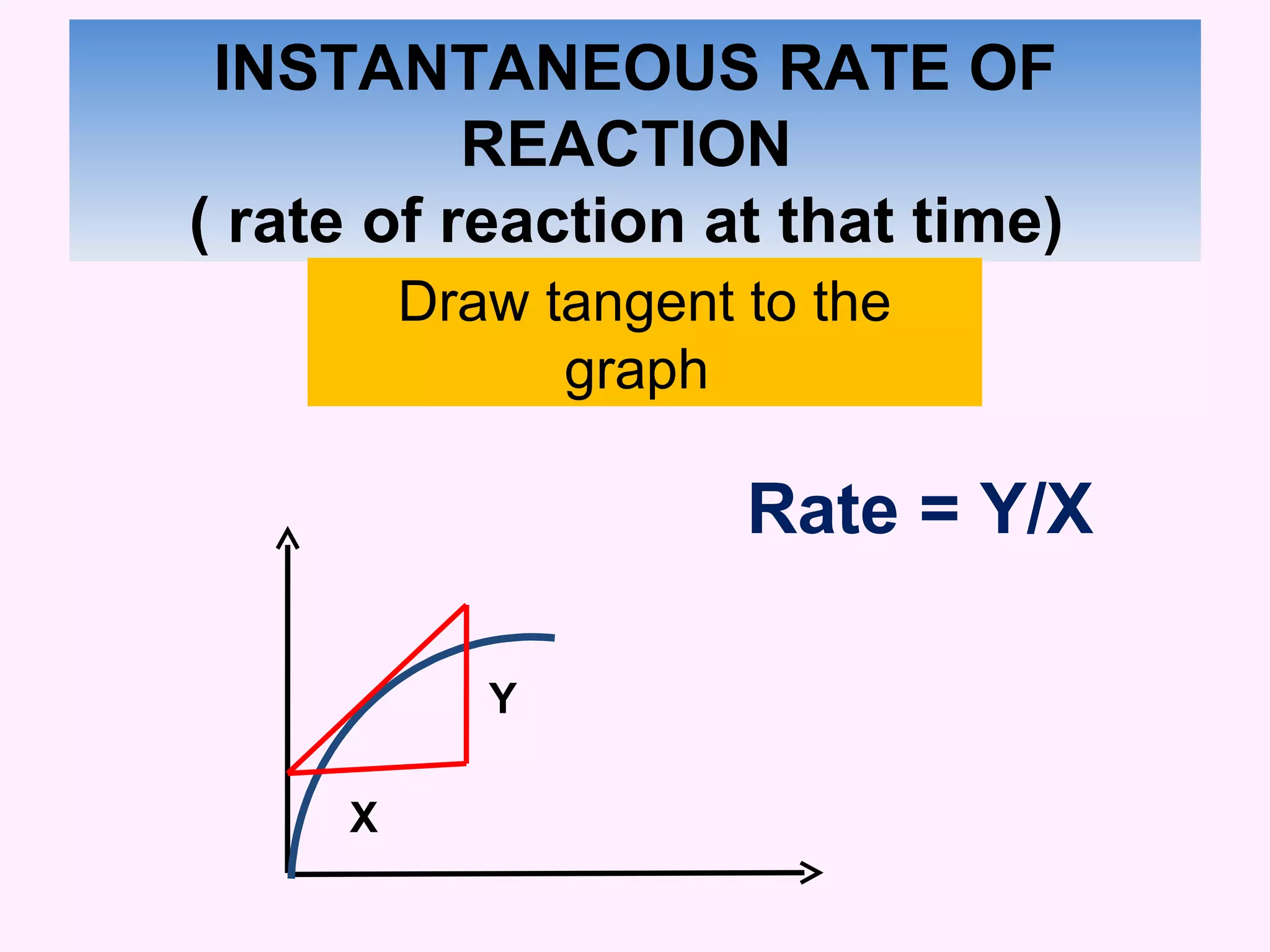
INSTANTANEOUS RATE OF REACTION  ( rate of reaction at that time)  Draw tangent to the graph  Y X Rate = Y/X
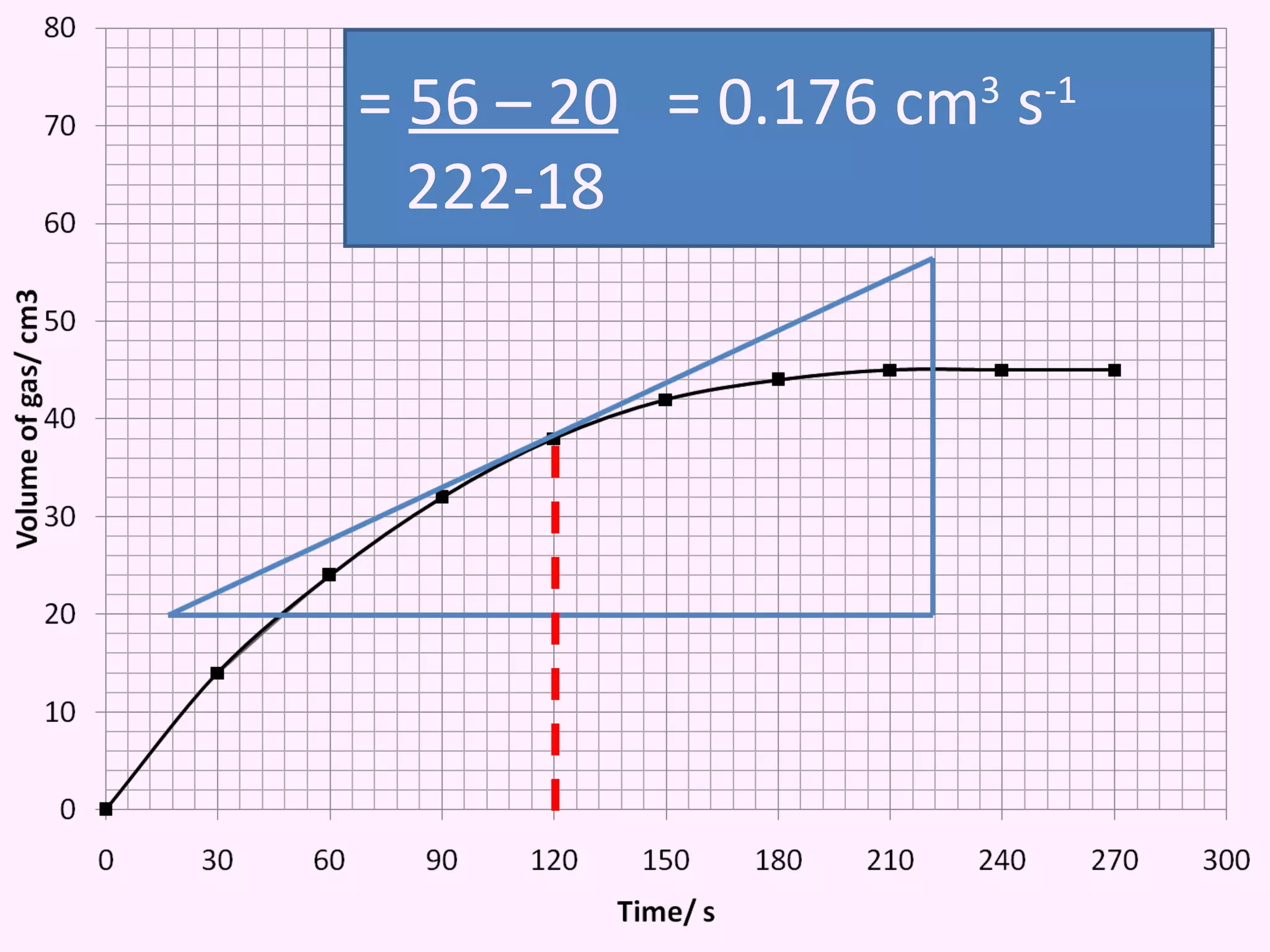
b) Example from the graph, determine: i) The rate of reaction at 120 s Instantaneous rate of reaction = Draw tangent to the graph
=  56 – 20   = 0.176 cm 3  s -1 222-18
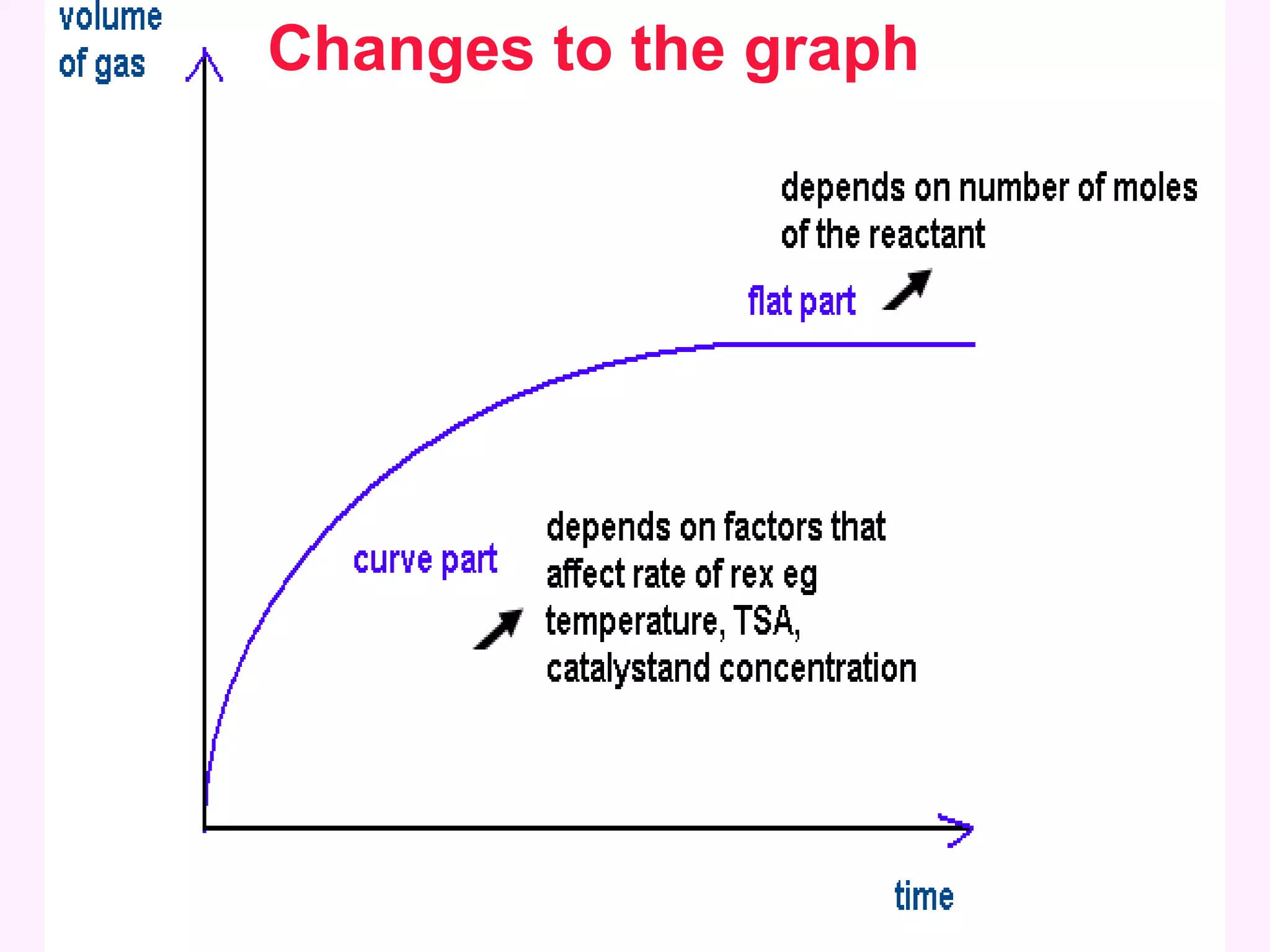
Changes to the graph
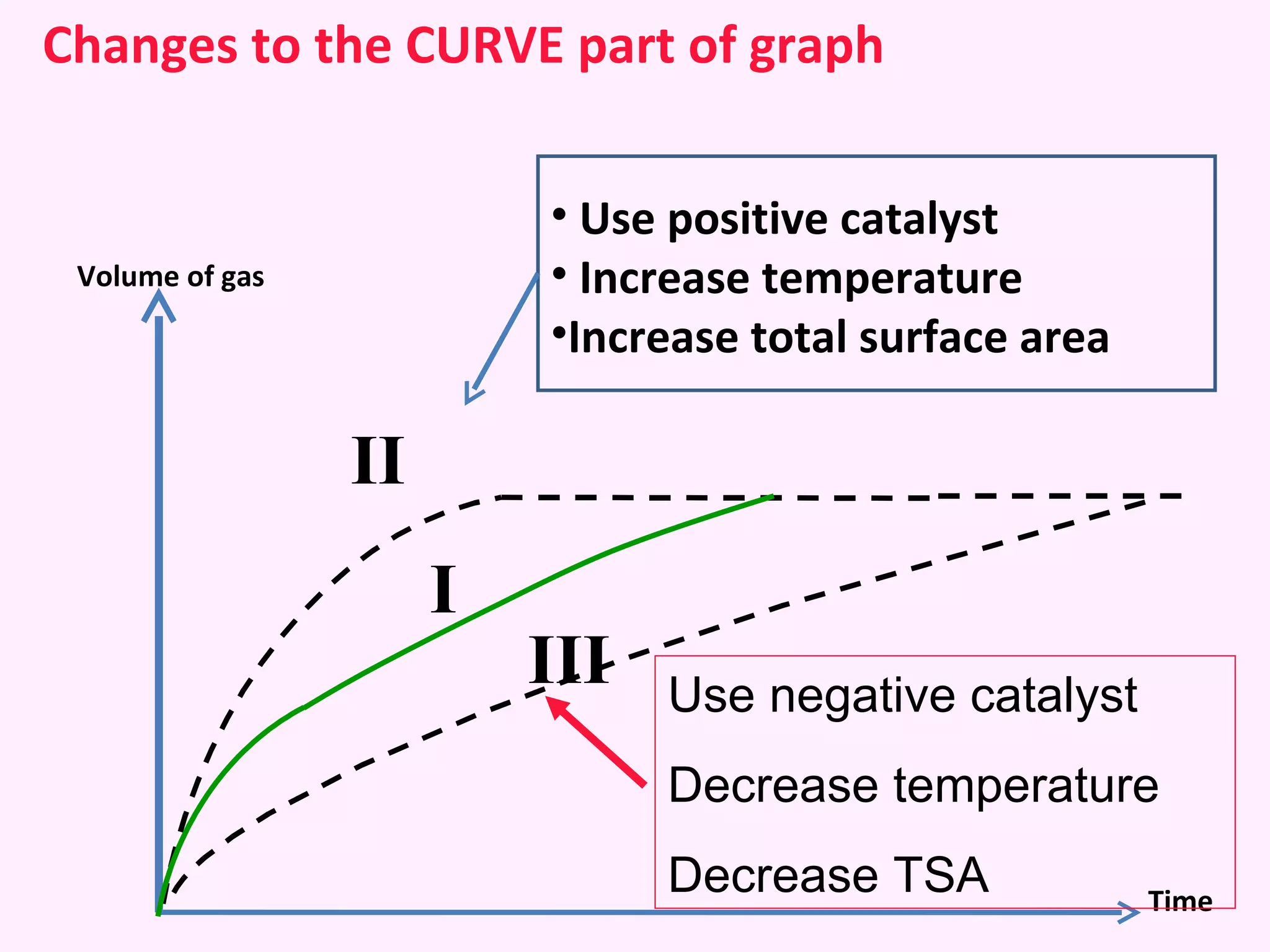
Changes to the CURVE part of graph II I III Volume of gas Time Use negative catalyst Decrease temperature Decrease TSA Use positive catalyst Increase temperature  Increase total surface area
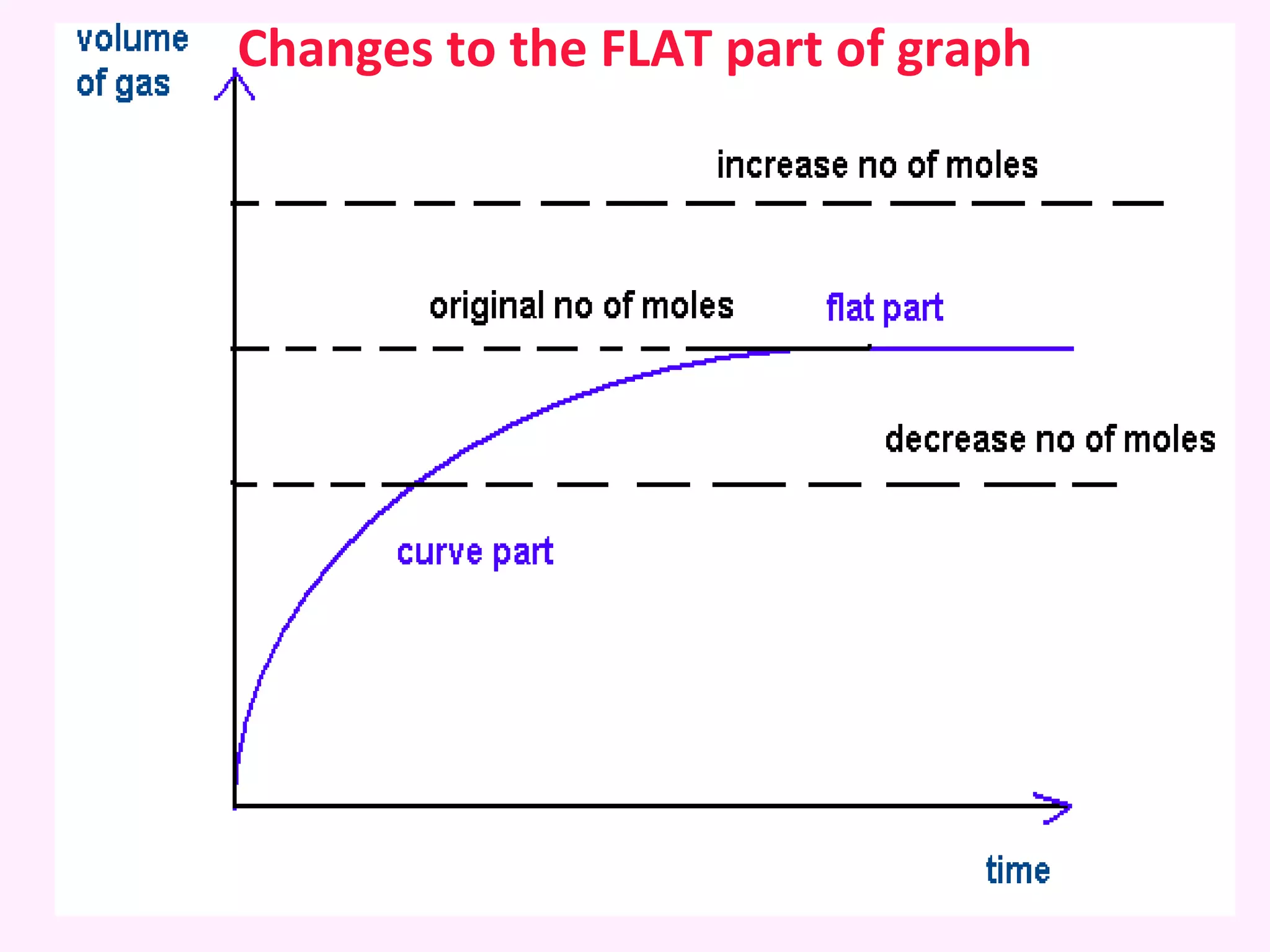
Changes to the FLAT part of graph
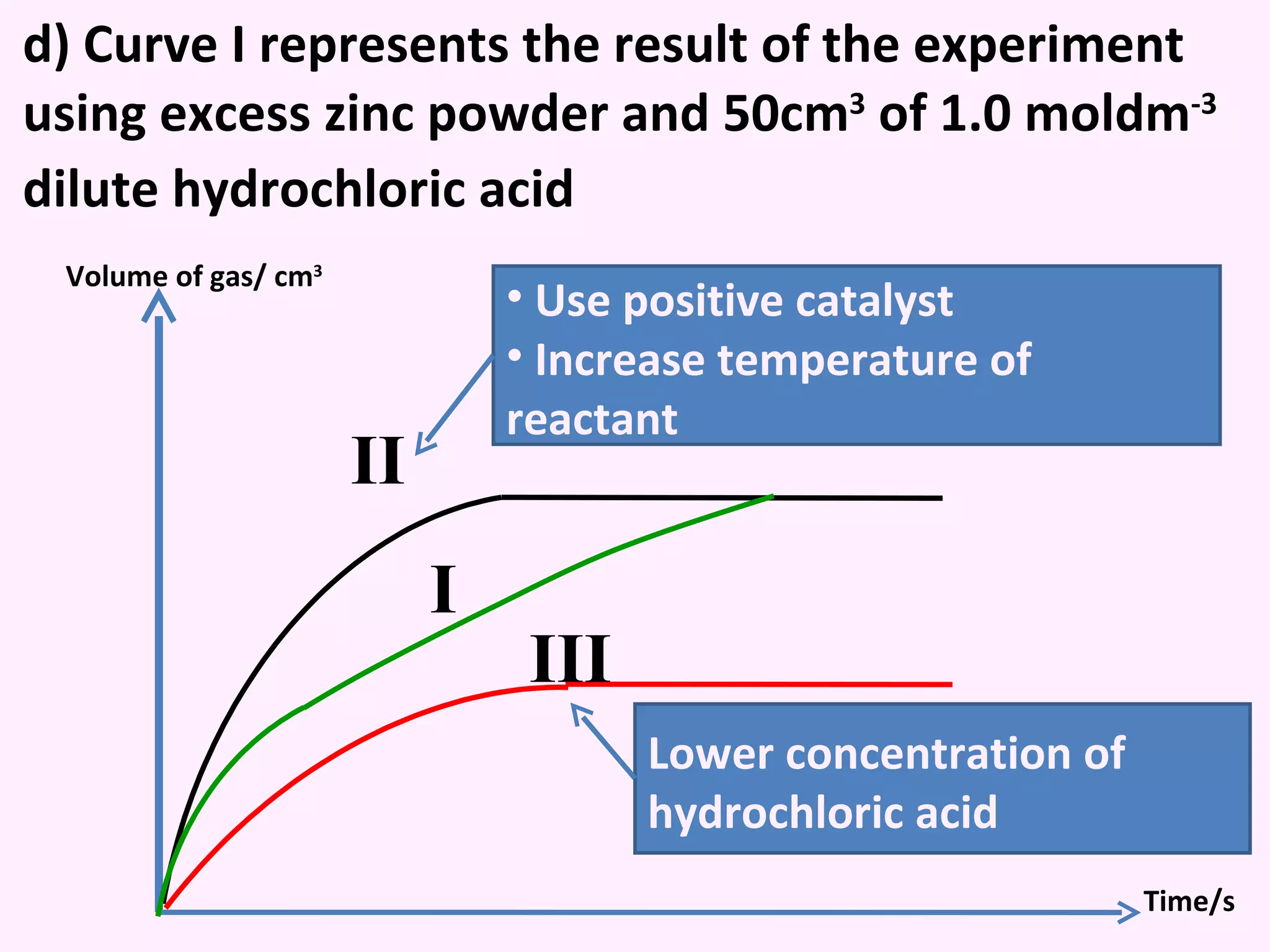
d) Curve I represents the result of the experiment using excess zinc powder and 50cm 3  of 1.0 moldm -3  dilute hydrochloric acid   II I III Volume of gas/ cm 3 Time/s Use positive catalyst Increase temperature of reactant Lower concentration of hydrochloric acid
Collision theory Theory that explains how factors affect rate of reaction Before reaction can occur, particles must first collide Particles collide so that bonds are broken and new bonds can form
Collision theory Collision of particles must be effective collisions to produce result Effective collisions  are collisions which  produce enough energy to overcome  energy of activation correct orientation
Collision theory Activation energy  is the minimum energy the colliding particles must overcome so that reaction occur In order for particles to overcome the activation energy, several factors involve
How factors affect rate of reaction according to collision theory  Size of reactant for solid reactant Temperature  of reactant mixture Concentration of solution reactant Presence of catalyst
How Collision theory explain factor  of  size of solid reactant The  smaller the size of reactant , the  larger the total surface area Frequency of Collisions  between particles increase Frequency of Effective collisions  between particles increase Therefore  rate of reaction  also increase
How Collision theory explain factor  of  concentration  The  higher the concentration of reactant solution , the  higher the number of particles per unit volume  Frequency of Collisions  between particles increase Frequency of Effective collisions  between particles increase Therefore  rate of reaction  also increase
How Collision theory explain factor  of  temperature The  higher the temperature of reactant solution , the  higher the kinetic energy of particles  Frequency of Collisions  between particles increase Frequency of Effective collisions  between particles increase Therefore  rate of reaction  also increase
Collision theory explain factor  of  catalyst  Presence of catalyst provide an alternative path  This alternative path has a lower activation energy More colliding particles can overcome this lower activation energy  Frequency of Effective collisions  between particles increase Therefore  rate of reaction  also increase

Rate of reaction =measure rate and intro and collision theory

  • 1.
    HOW TO DETERMINERATE OF REACTION FROM GRAPH AVERAGE RATE OF REACTION INSTANTANEOUS RATE OF REATION
  • 2.
    AVERAGE RATE OFREACTION For the whole exp From X min to Y min On the X min (2 nd ) ( from 2 nd to 1 st ) For first x (3) min ( from 0 to 3rd )
  • 3.
    INSTANTANEOUS RATE OFREACTION ( rate of reaction at that time) Draw tangent to the graph Y X Rate = Y/X
  • 4.
    b) Example fromthe graph, determine: i) The rate of reaction at 120 s Instantaneous rate of reaction = Draw tangent to the graph
  • 5.
    = 56– 20 = 0.176 cm 3 s -1 222-18
  • 6.
  • 7.
    Changes to theCURVE part of graph II I III Volume of gas Time Use negative catalyst Decrease temperature Decrease TSA Use positive catalyst Increase temperature Increase total surface area
  • 8.
    Changes to theFLAT part of graph
  • 9.
    d) Curve Irepresents the result of the experiment using excess zinc powder and 50cm 3 of 1.0 moldm -3 dilute hydrochloric acid II I III Volume of gas/ cm 3 Time/s Use positive catalyst Increase temperature of reactant Lower concentration of hydrochloric acid
  • 10.
    Collision theory Theorythat explains how factors affect rate of reaction Before reaction can occur, particles must first collide Particles collide so that bonds are broken and new bonds can form
  • 11.
    Collision theory Collisionof particles must be effective collisions to produce result Effective collisions are collisions which produce enough energy to overcome energy of activation correct orientation
  • 12.
    Collision theory Activationenergy is the minimum energy the colliding particles must overcome so that reaction occur In order for particles to overcome the activation energy, several factors involve
  • 13.
    How factors affectrate of reaction according to collision theory Size of reactant for solid reactant Temperature of reactant mixture Concentration of solution reactant Presence of catalyst
  • 14.
    How Collision theoryexplain factor of size of solid reactant The smaller the size of reactant , the larger the total surface area Frequency of Collisions between particles increase Frequency of Effective collisions between particles increase Therefore rate of reaction also increase
  • 15.
    How Collision theoryexplain factor of concentration The higher the concentration of reactant solution , the higher the number of particles per unit volume Frequency of Collisions between particles increase Frequency of Effective collisions between particles increase Therefore rate of reaction also increase
  • 16.
    How Collision theoryexplain factor of temperature The higher the temperature of reactant solution , the higher the kinetic energy of particles Frequency of Collisions between particles increase Frequency of Effective collisions between particles increase Therefore rate of reaction also increase
  • 17.
    Collision theory explainfactor of catalyst Presence of catalyst provide an alternative path This alternative path has a lower activation energy More colliding particles can overcome this lower activation energy Frequency of Effective collisions between particles increase Therefore rate of reaction also increase