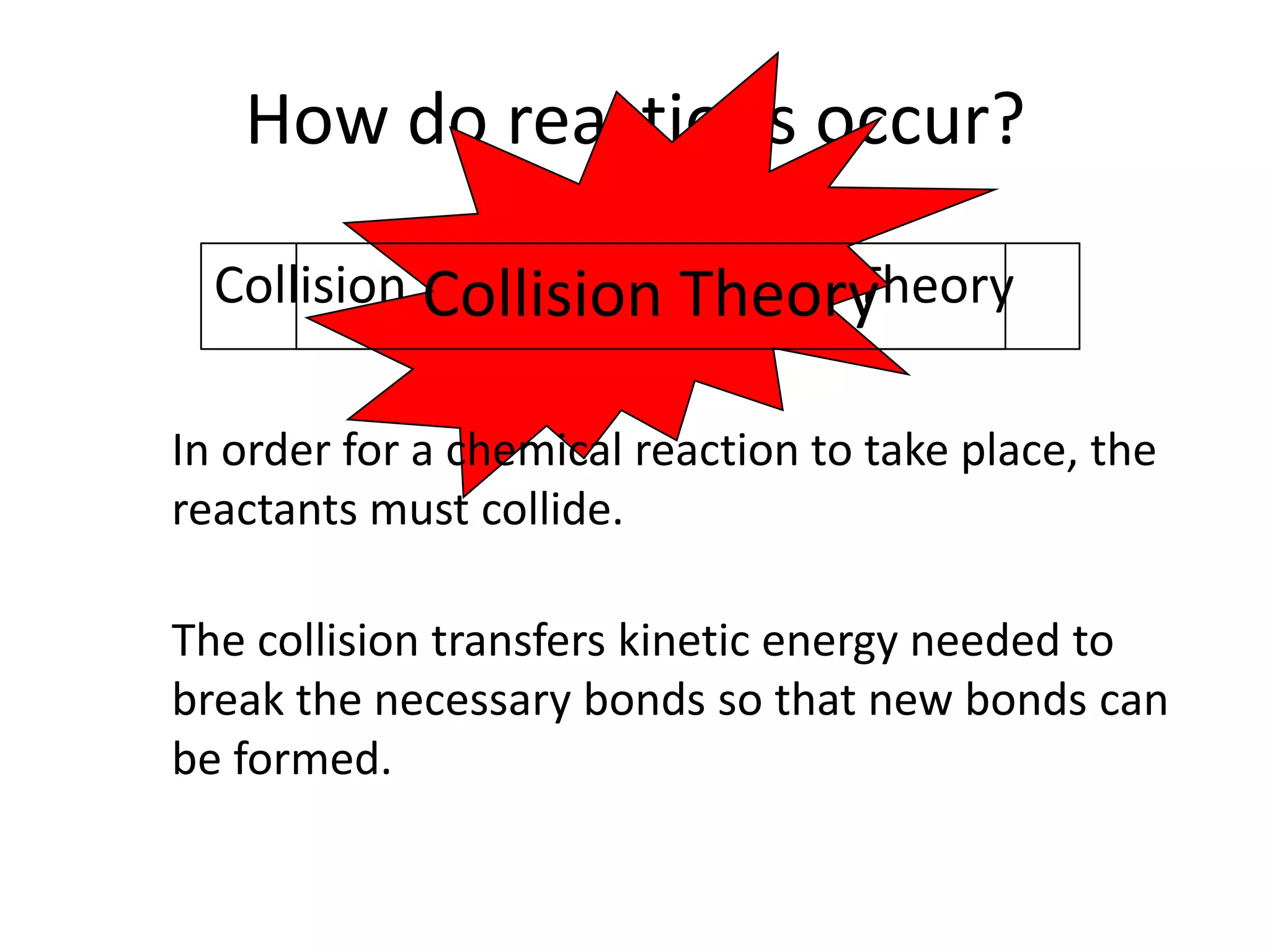
How do reactions occur?Collision TheoryCollision TheoryCollision TheoryIn order for a chemical reaction to take place, the reactants must collide.The collision transfers kinetic energy needed to break the necessary bonds so that new bonds can be formed.
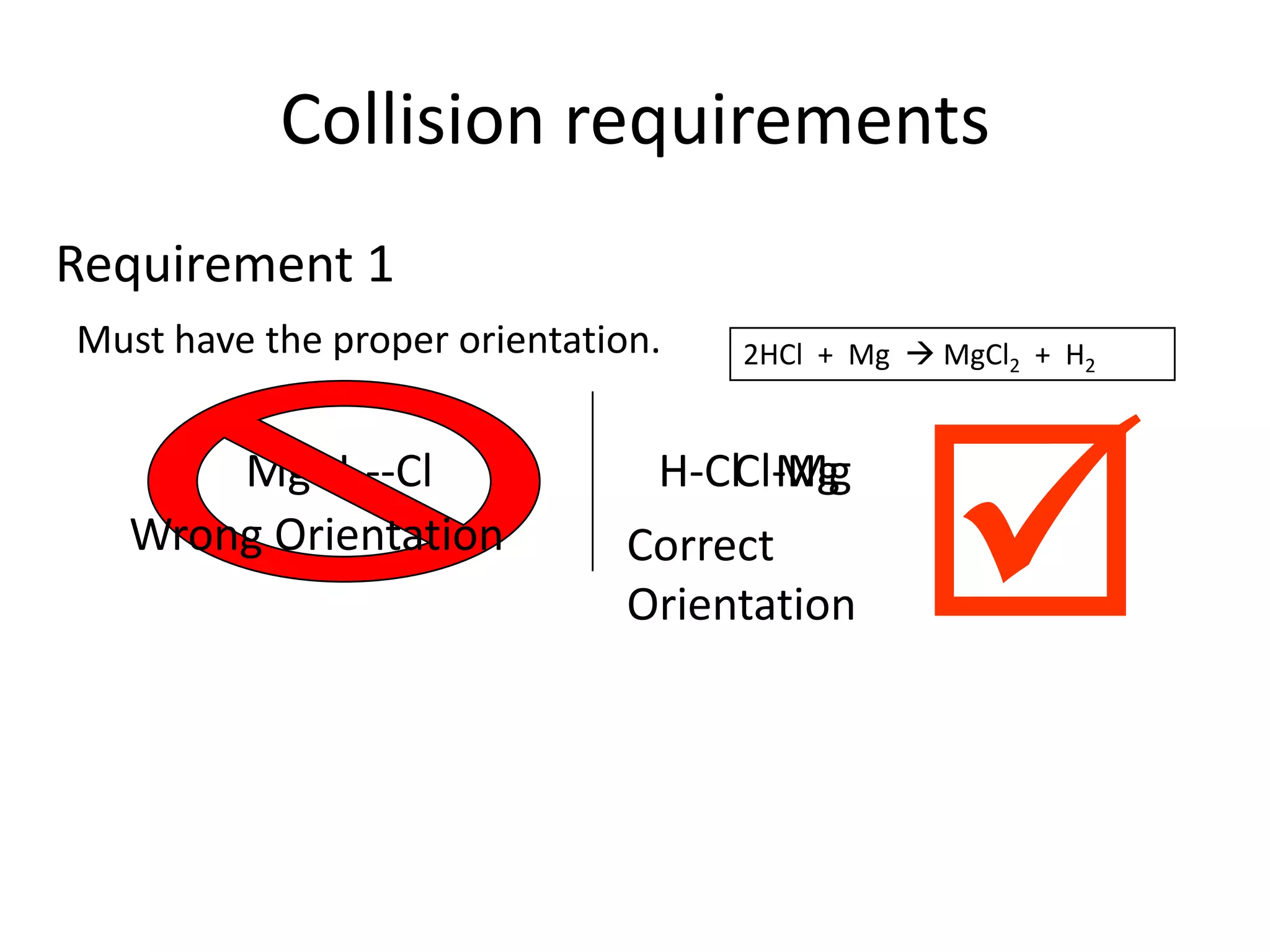
Collision requirementsRequirement 1Must have the proper orientation.2HCl  +  Mg   MgCl2  +  H2H---ClMgH-ClMgH    Cl-MgWrong OrientationCorrect Orientation
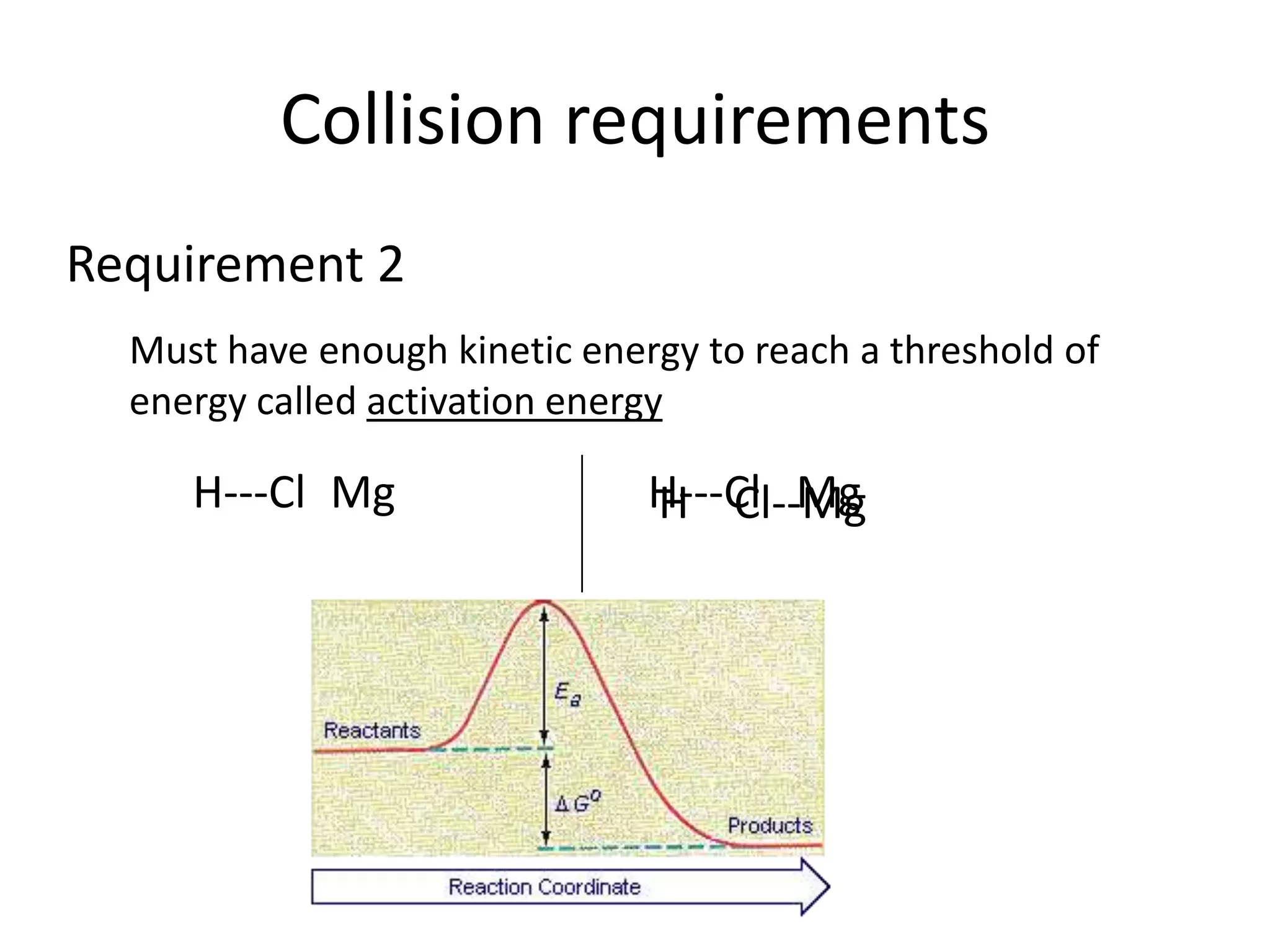
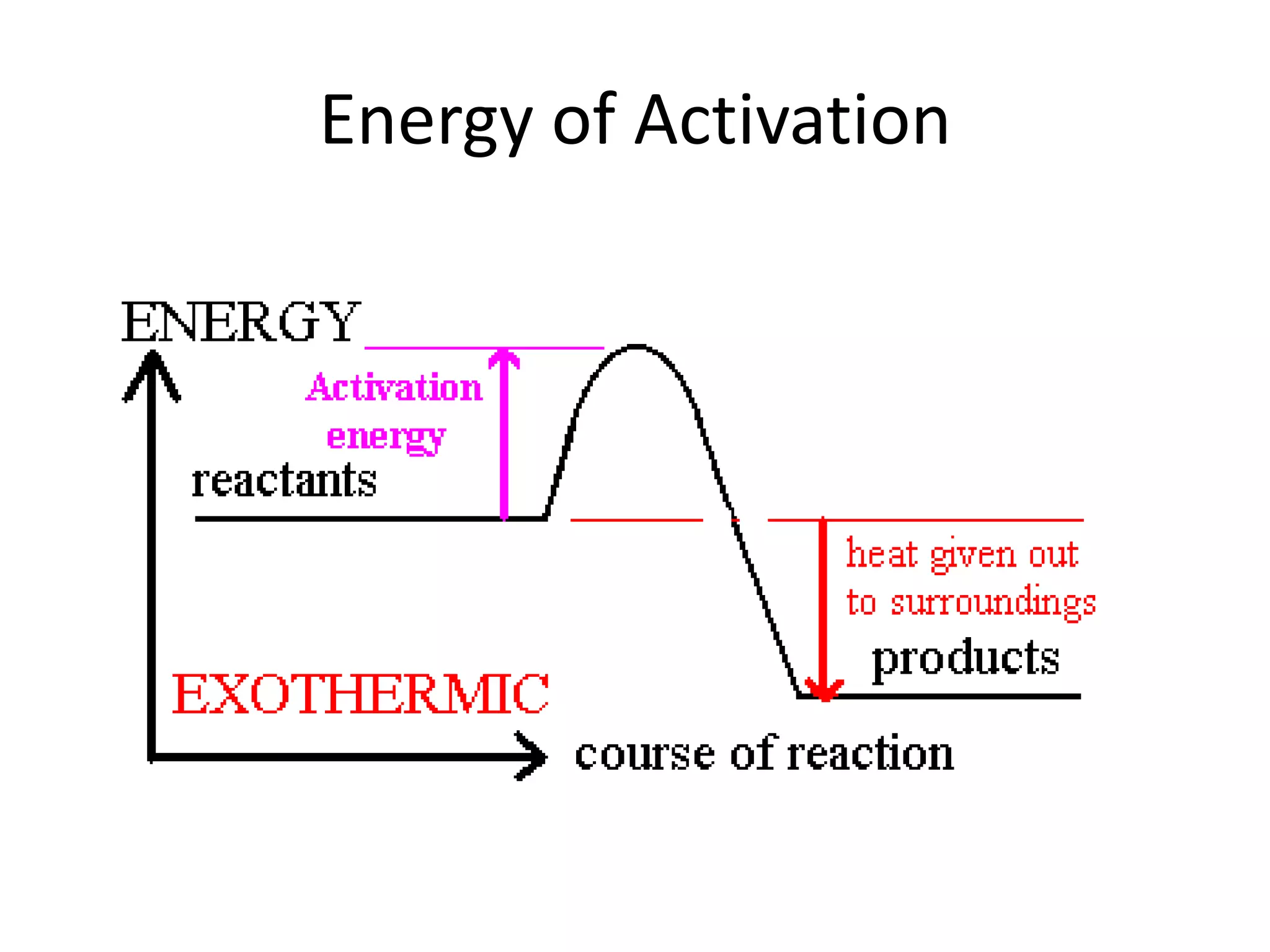
Collision requirementsRequirement 2Must have enough kinetic energy to reach a threshold of energy called activation energyMgH---ClH---ClMgH    Cl--Mg
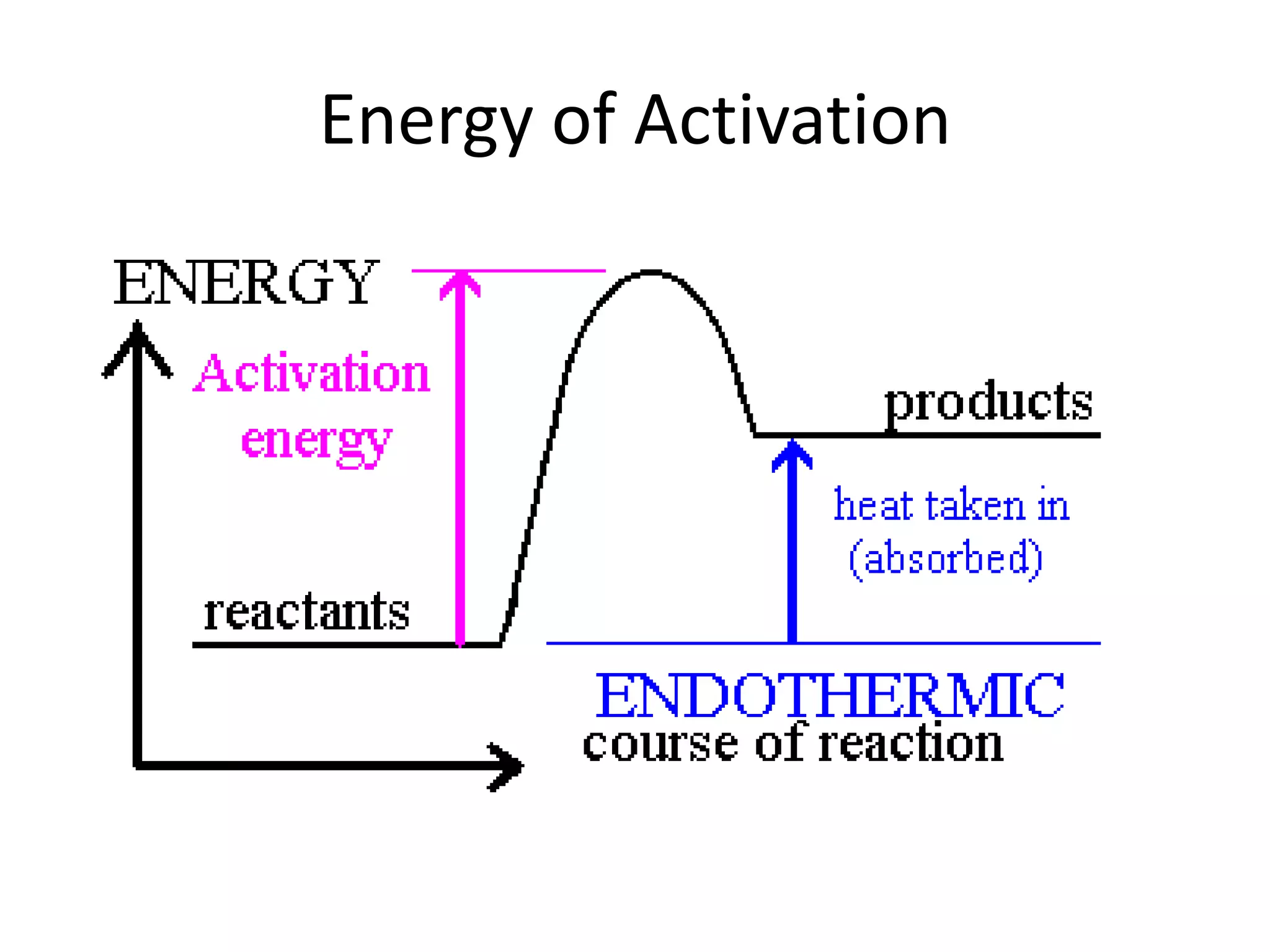
Energy of Activation
Increasing the Rate of ReactionsWhat needs to happen in order for the rate of the chemical reaction to increase (go faster)?More collisions= Faster reaction rate
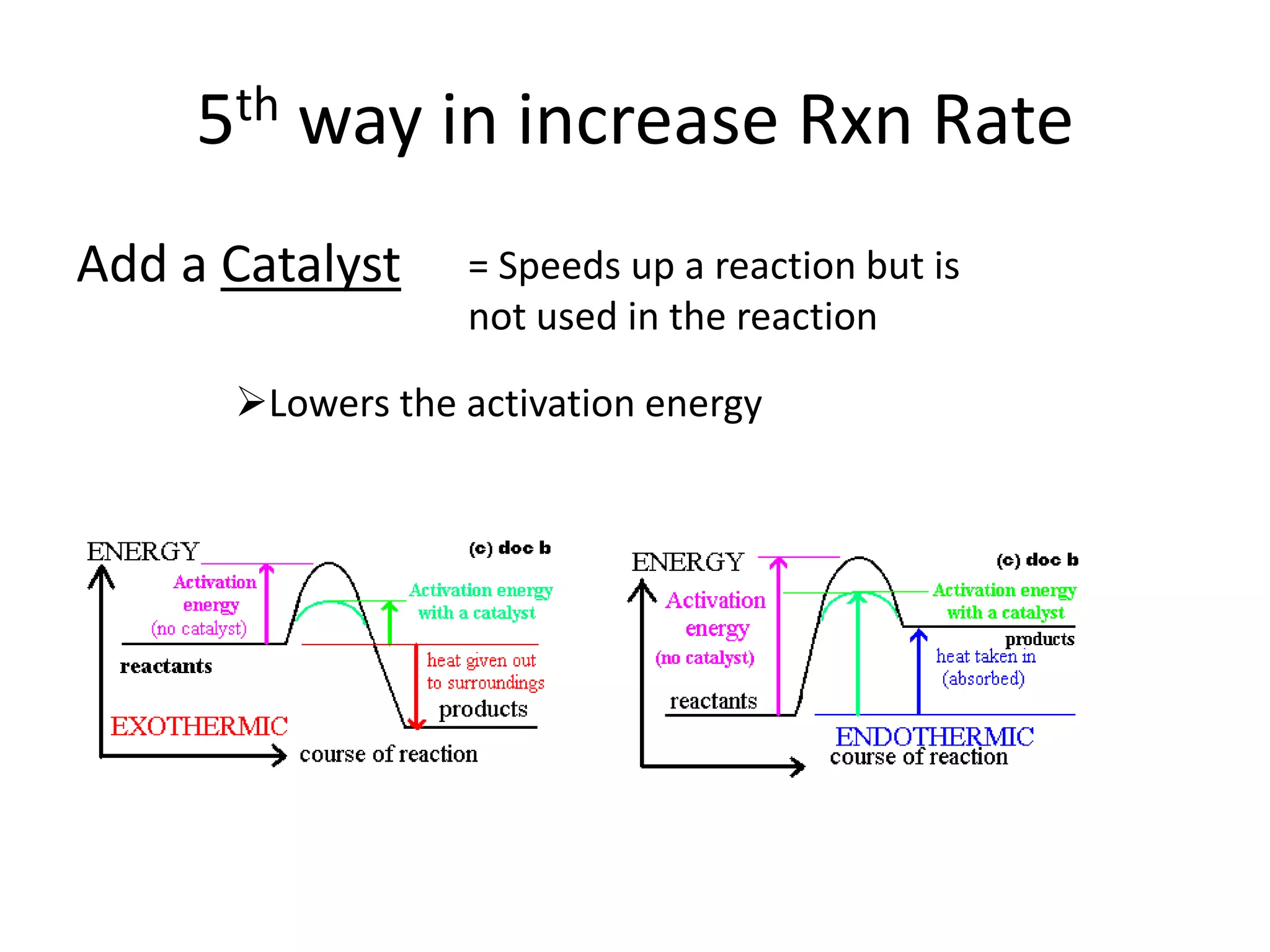
5th way in increase Rxn RateAdd a Catalyst= Speeds up a reaction but is not used in the reactionLowers the activation energy

Collison Theory

  • 1.
    How do reactionsoccur?Collision TheoryCollision TheoryCollision TheoryIn order for a chemical reaction to take place, the reactants must collide.The collision transfers kinetic energy needed to break the necessary bonds so that new bonds can be formed.
  • 2.
    Collision requirementsRequirement 1Musthave the proper orientation.2HCl + Mg  MgCl2 + H2H---ClMgH-ClMgH Cl-MgWrong OrientationCorrect Orientation
  • 3.
    Collision requirementsRequirement 2Musthave enough kinetic energy to reach a threshold of energy called activation energyMgH---ClH---ClMgH Cl--Mg
  • 4.
  • 5.
  • 6.
    Increasing the Rateof ReactionsWhat needs to happen in order for the rate of the chemical reaction to increase (go faster)?More collisions= Faster reaction rate
  • 7.
    5th way inincrease Rxn RateAdd a Catalyst= Speeds up a reaction but is not used in the reactionLowers the activation energy