Factors
affecting the
rate of
reaction
PREPARED BY: TYPE YOUR NAME HERE
S10MT - IVh - j -24
Explain how the factors
affecting rates of chemical
reactions are applied in food
preservation and materials
production, control of fire,
pollution, and corrosion
The rate of reaction depends on
the five factors below
 Total surface area of solid reactant
 Temperature of reactant
 Concentration of reactant
 Use of catalyst
 Pressure of gaseous reactant
Effect of total surface area
on rate of reaction
 For a fixed mass of solid reactant, the smaller the size of the
reactant, the larger the total surface area thus the higher the
rate of reaction
 For example : powdered zinc will react faster with acid than
granulated zinc
 Powdered zinc has larger total surface area compared to
granulated zinc.
 Thus its rate of reaction is higher
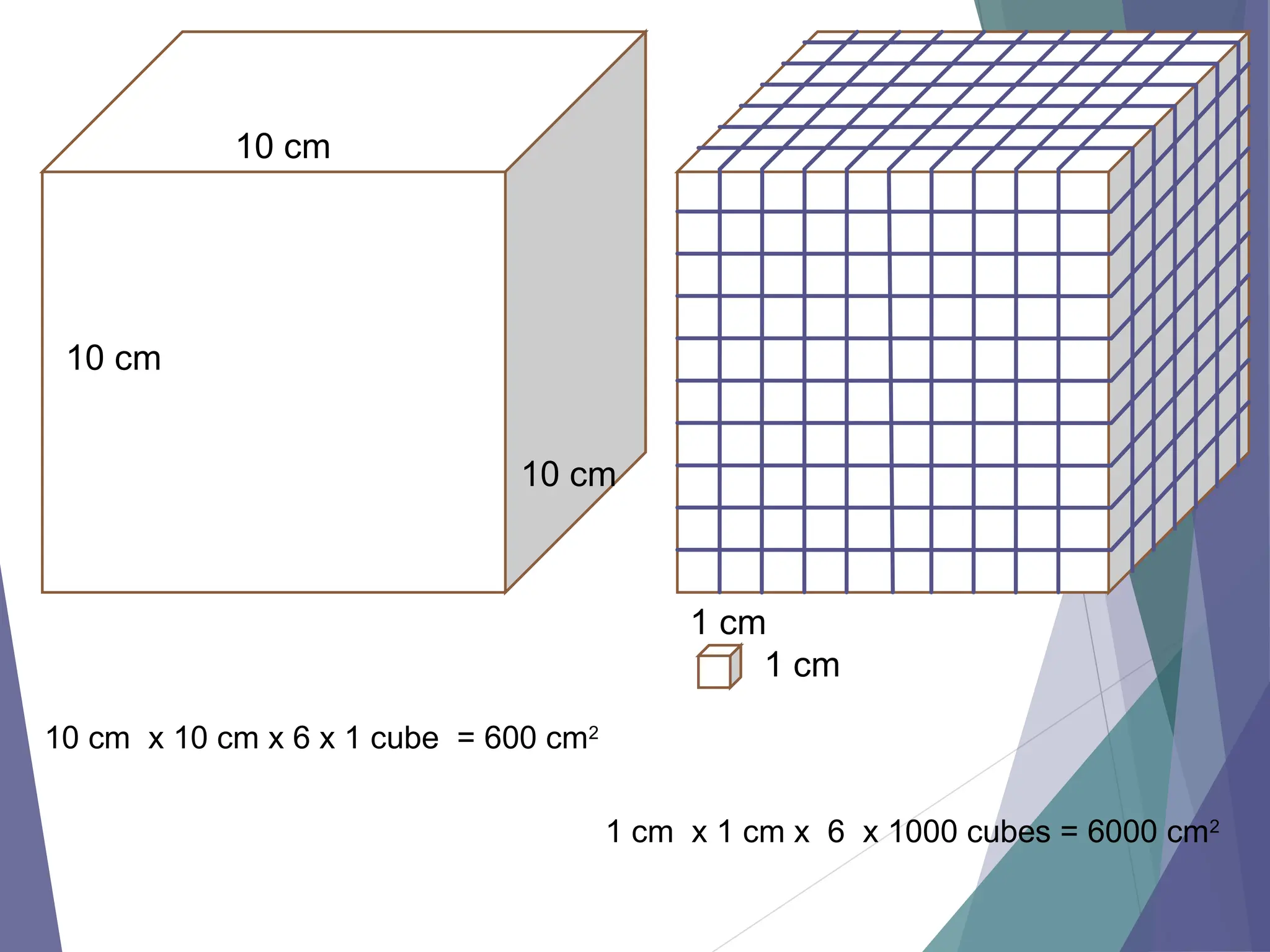
10 cm
10 cm
10 cm
1 cm
1 cm
10 cm x 10 cm x 6 x 1 cube = 600 cm2
1 cm x 1 cm x 6 x 1000 cubes = 6000 cm2
Effect of total surface area
on rate of reaction
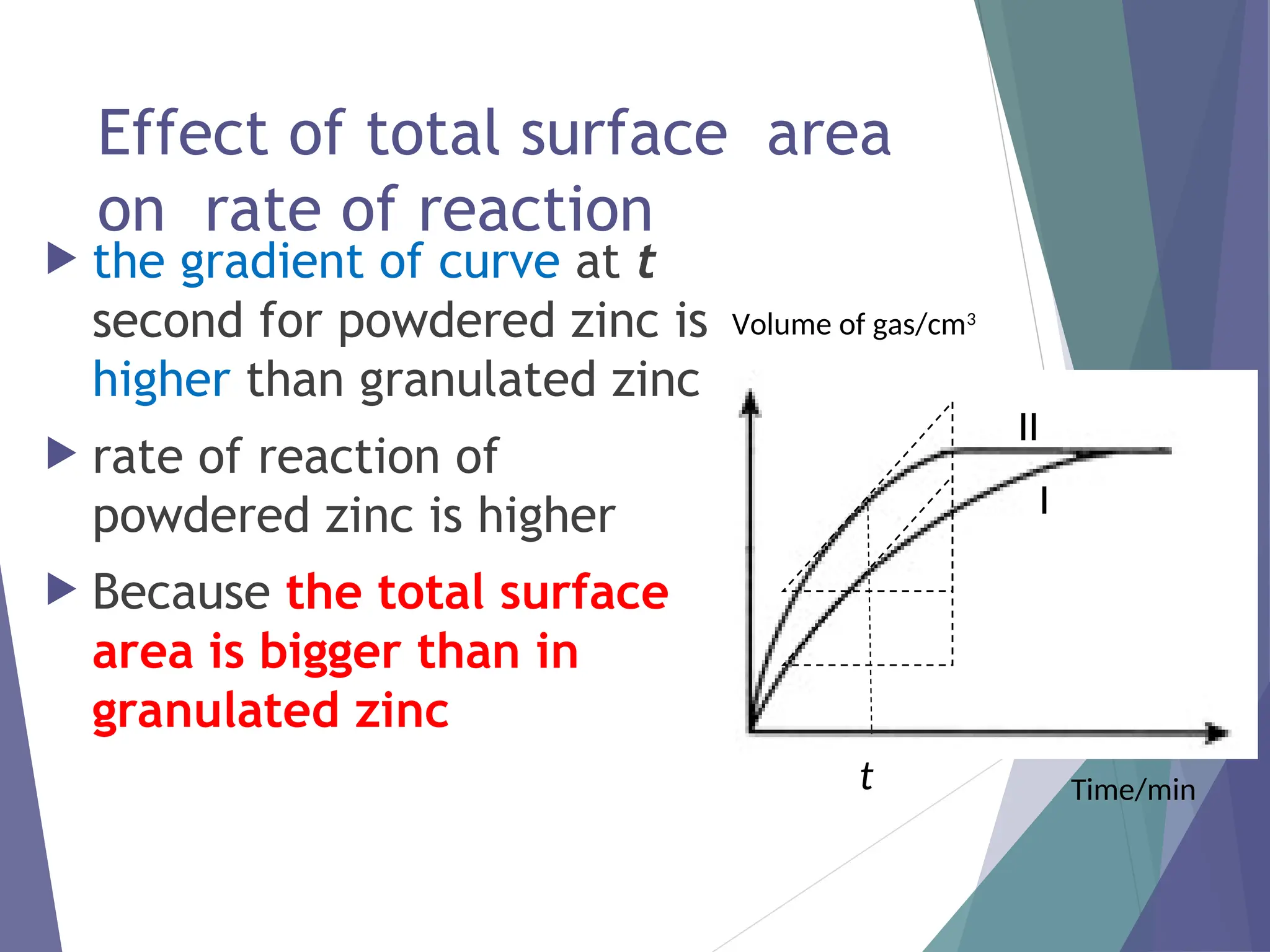
 the gradient of curve at t
second for powdered zinc is
higher than granulated zinc
 rate of reaction of
powdered zinc is higher
 Because the total surface
area is bigger than in
granulated zinc
Volume of gas/cm3
Time/min
II
I
t
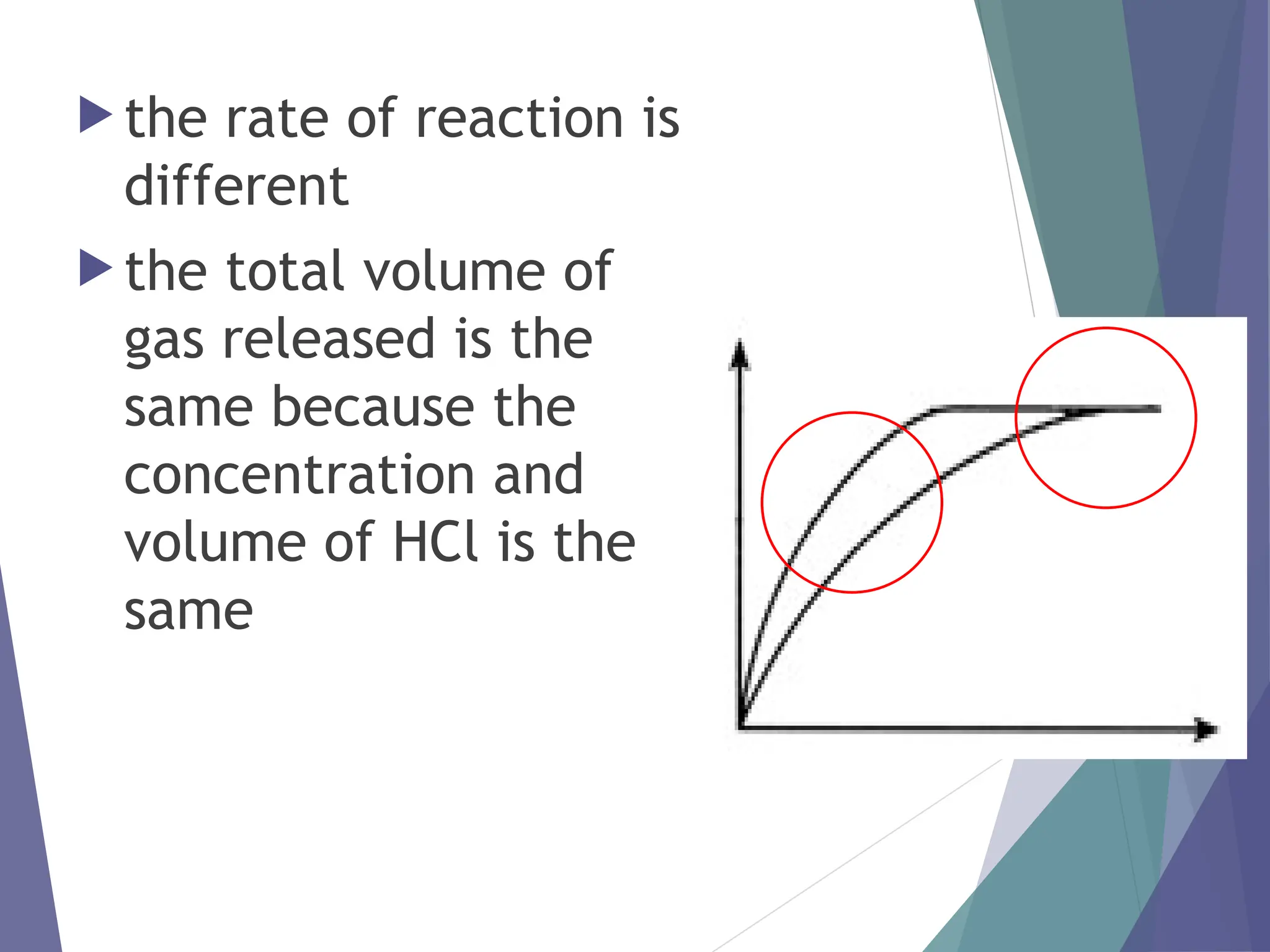
 the rate of reaction is
different
 the total volume of
gas released is the
same because the
concentration and
volume of HCl is the
same
Effect of concentration on
rate of reaction
 When the concentration of
reactant increases, the rate of
reaction become higher
 For example when Sodium thiosulphate reacts with
sulphuric acid, it produce sodium sulphate, sulphur,
sulphur dioxide and water
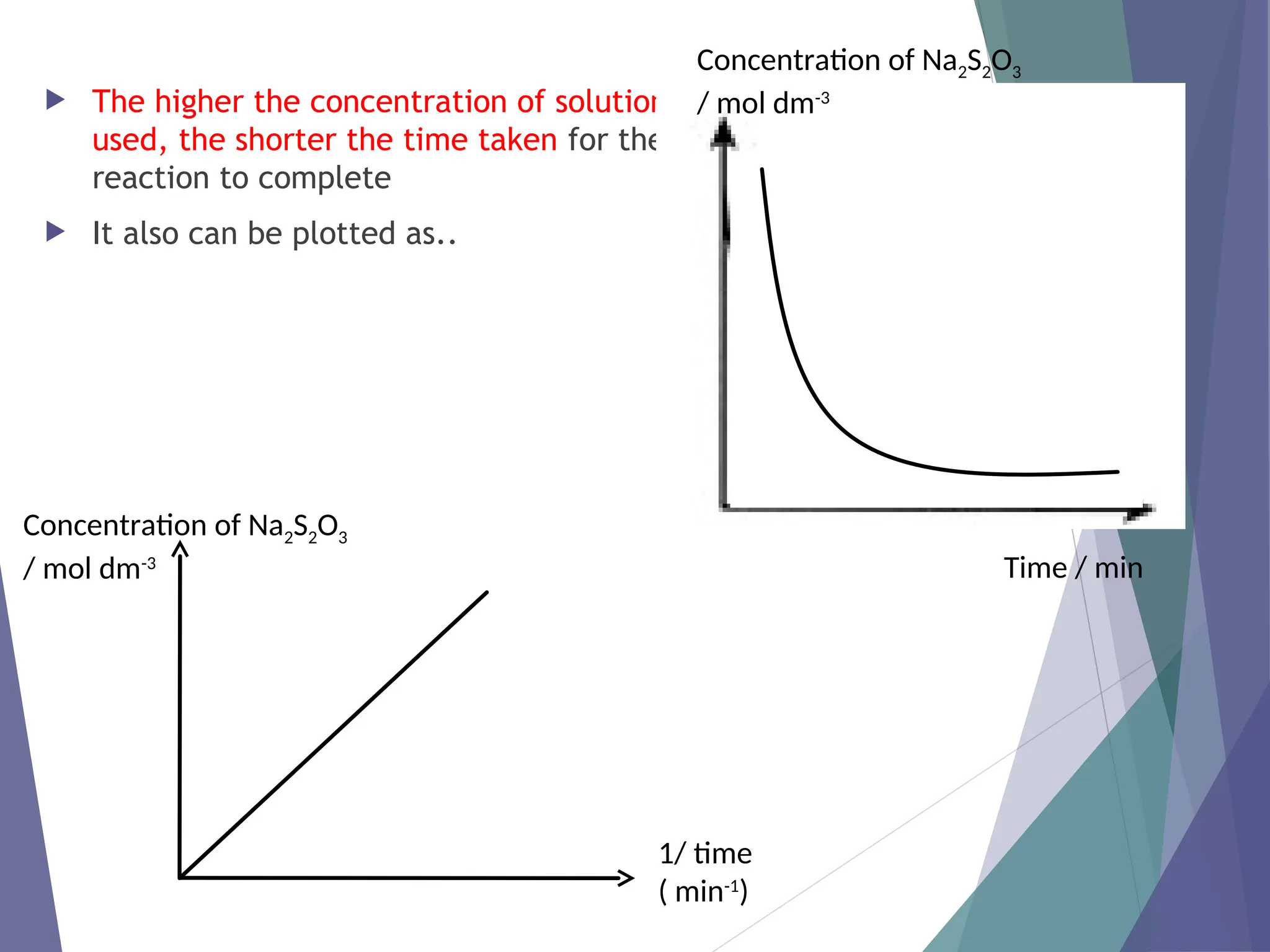
 The higher the concentration of solution
used, the shorter the time taken for the
reaction to complete
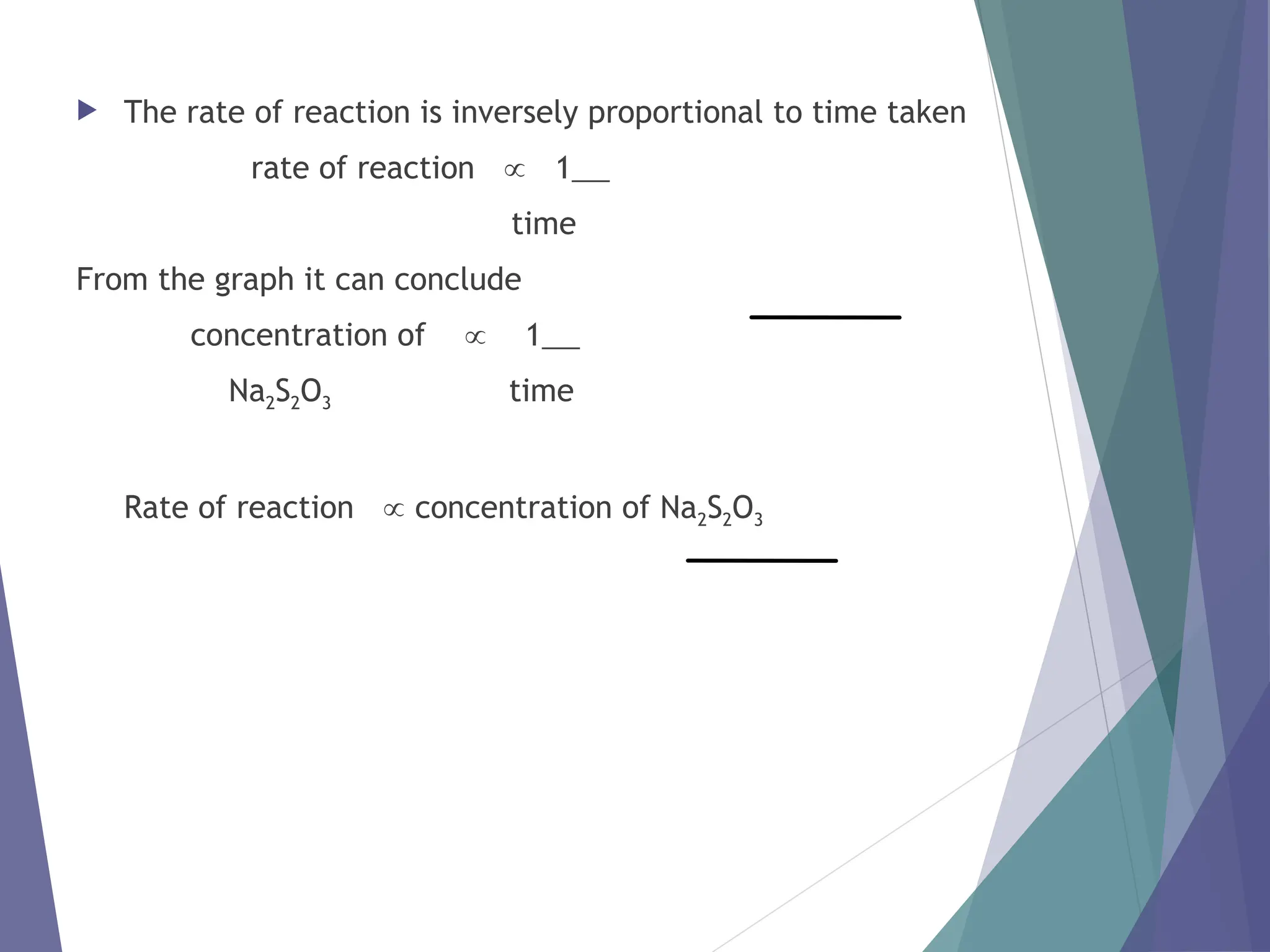
 It also can be plotted as..
Concentration of Na2S2O3
/ mol dm-3
Time / min
Concentration of Na2S2O3
/ mol dm-3
1/ time
( min-1
)
 The rate of reaction is inversely proportional to time taken
rate of reaction  1
time
From the graph it can conclude
concentration of  1
Na2S2O3 time
Rate of reaction  concentration of Na2S2O3
Effect of temperature on
rate of reaction
 When the temperature of reactant increases, the
rate of reaction become higher
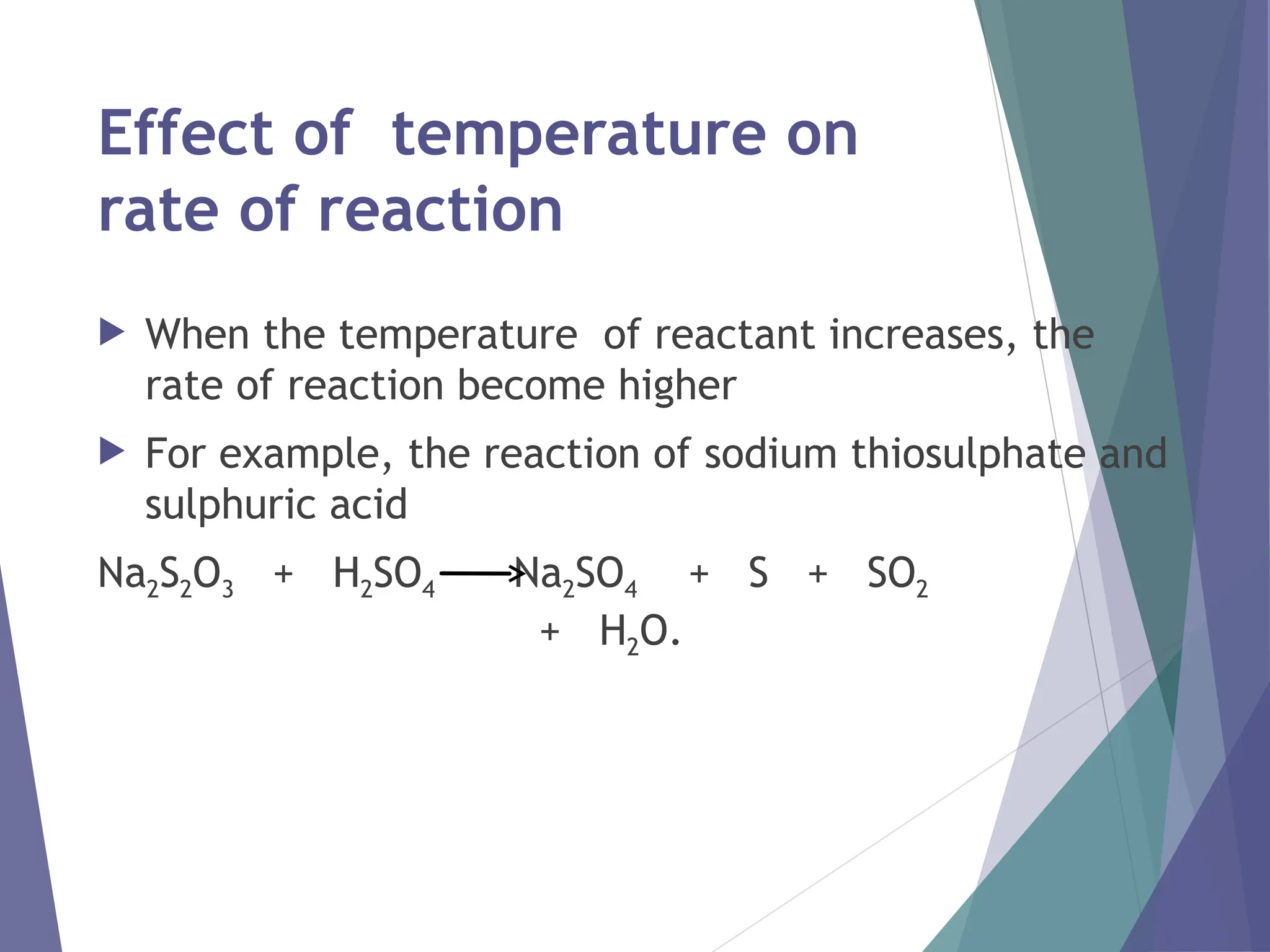
 For example, the reaction of sodium thiosulphate and
sulphuric acid
Na2S2O3 + H2SO4 Na2SO4 + S + SO2
+ H2O.
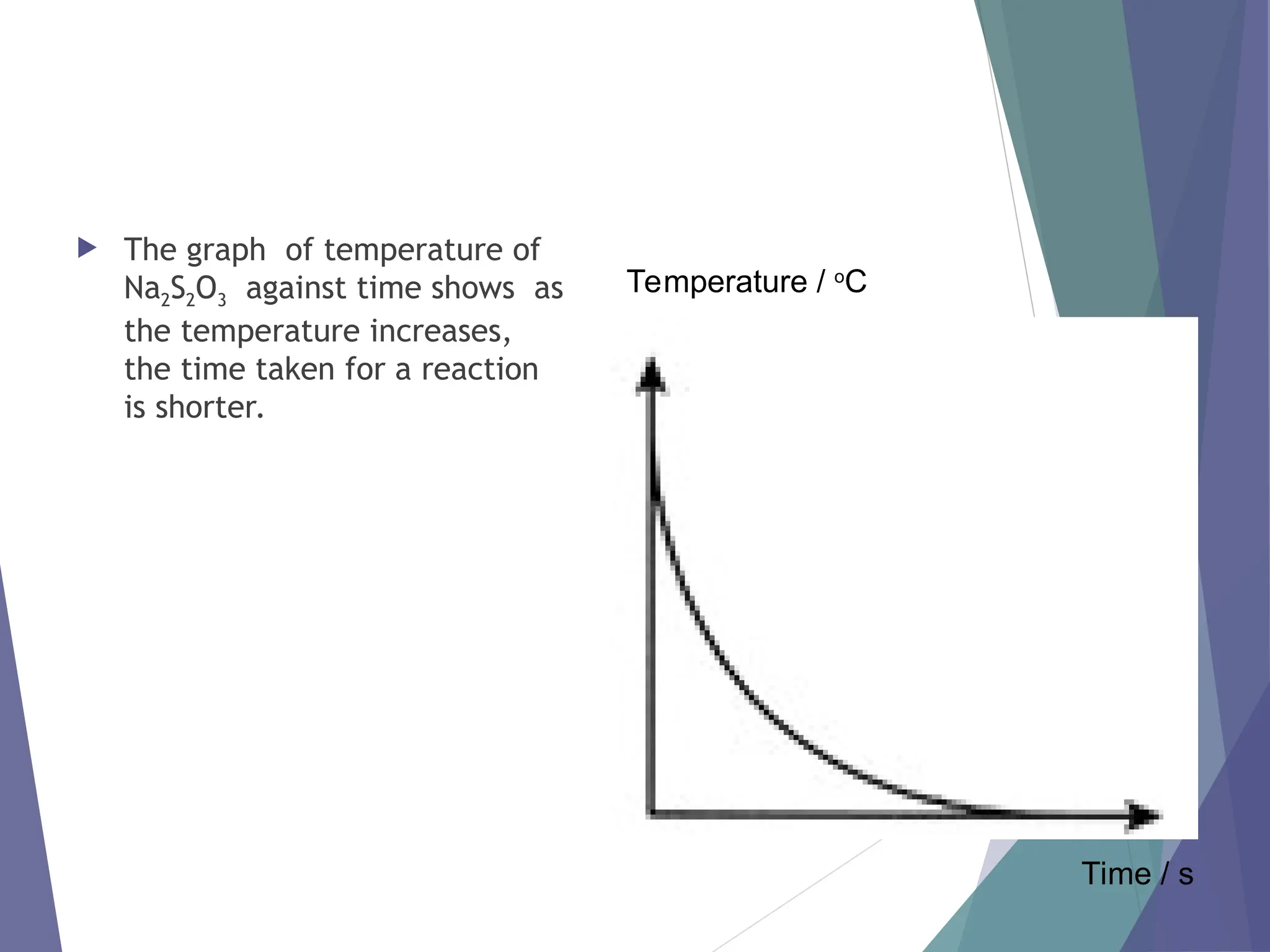
 The graph of temperature of
Na2S2O3 against time shows as
the temperature increases,
the time taken for a reaction
is shorter.
Temperature / o
C
Time / s
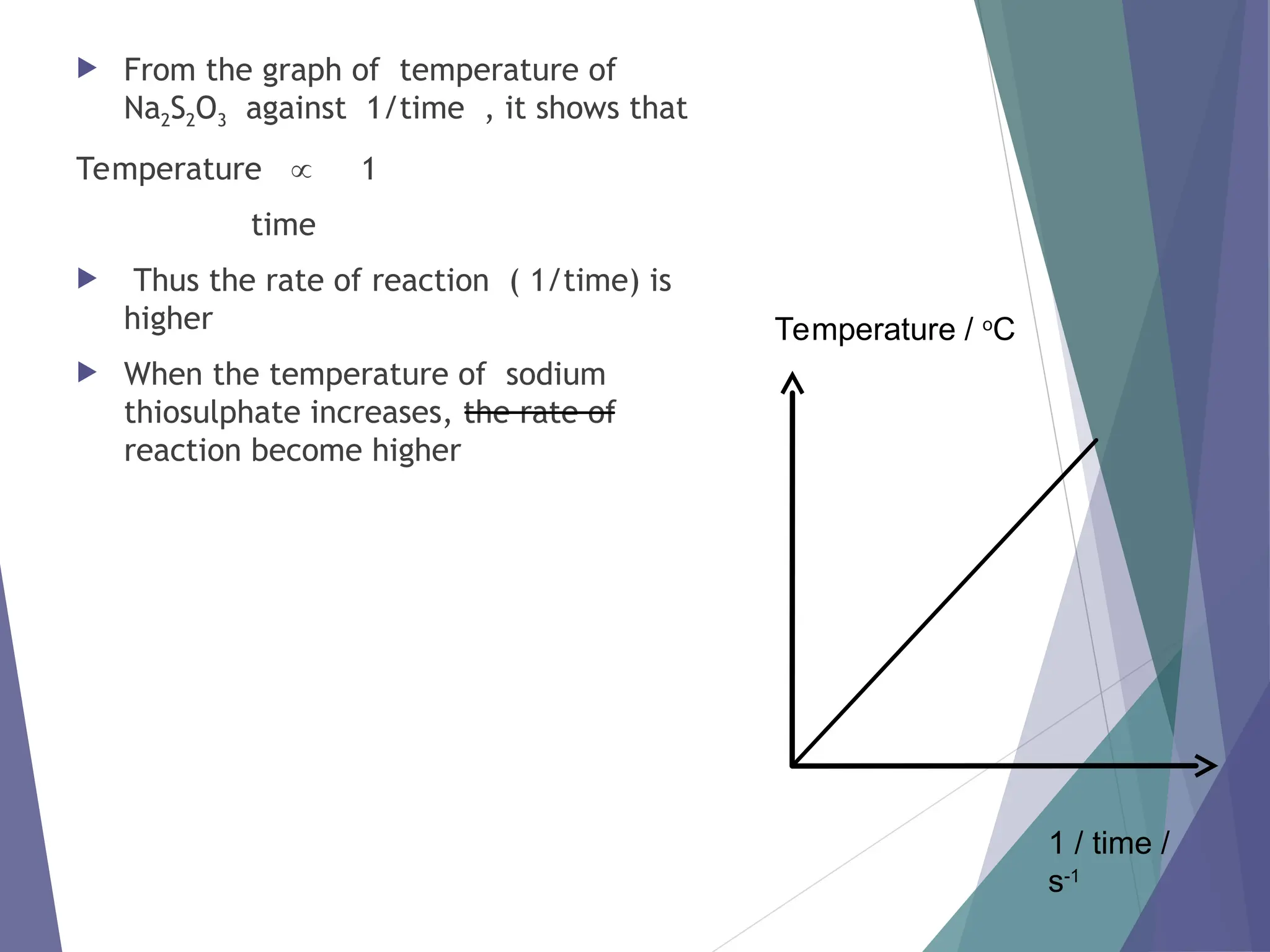
 From the graph of temperature of
Na2S2O3 against 1/time , it shows that
Temperature  1
time
 Thus the rate of reaction ( 1/time) is
higher
 When the temperature of sodium
thiosulphate increases, the rate of
reaction become higher
Temperature / o
C
1 / time /
s-1
Effect of catalyst on rate of
reaction
 A catalyst is a substance which alter the rate of a
chemical reaction while it remains chemically
unchanged at the end of the reaction. It lowers the
activation energy
 Positive catalyst increase the rate of reaction whereas
negative catalyst called inhibitor lower the rate of
reaction
• In the presence of catalyst , a collision needs
lesser energy to react successfully. As more
collisions become successful, the reaction will
be faster
• Special characteristic of a catalyst
1. Only a small amount of catalyst is needed to
achieve a big change in the rate. Increasing the
amount of catalyst used generally will
increase the rate of reaction
2. Catalyst alter the rate of reaction but the
amount of product formed remain unchanged
with or without the catalyst
3. Catalyst is specific in its action. It can only catalyst a particular
reaction but not other example
– Iron powder in Haber process
– Vanadium (V) oxide in contact process
– Manganese (IV) oxide in the decomposition of hydrogen peroxide
4. Most catalyst are transition element or compound such as iron,
copper(II) sulphate
5. Catalyst remain unchanged during the reaction.
6. The mass and chemical composition of the catalyst
remain the same before and after the reaction
7. Catalyst may undergo physical changes eg from
crystal to powder
8. Powdered catalyst is more effective than lump
catalyst
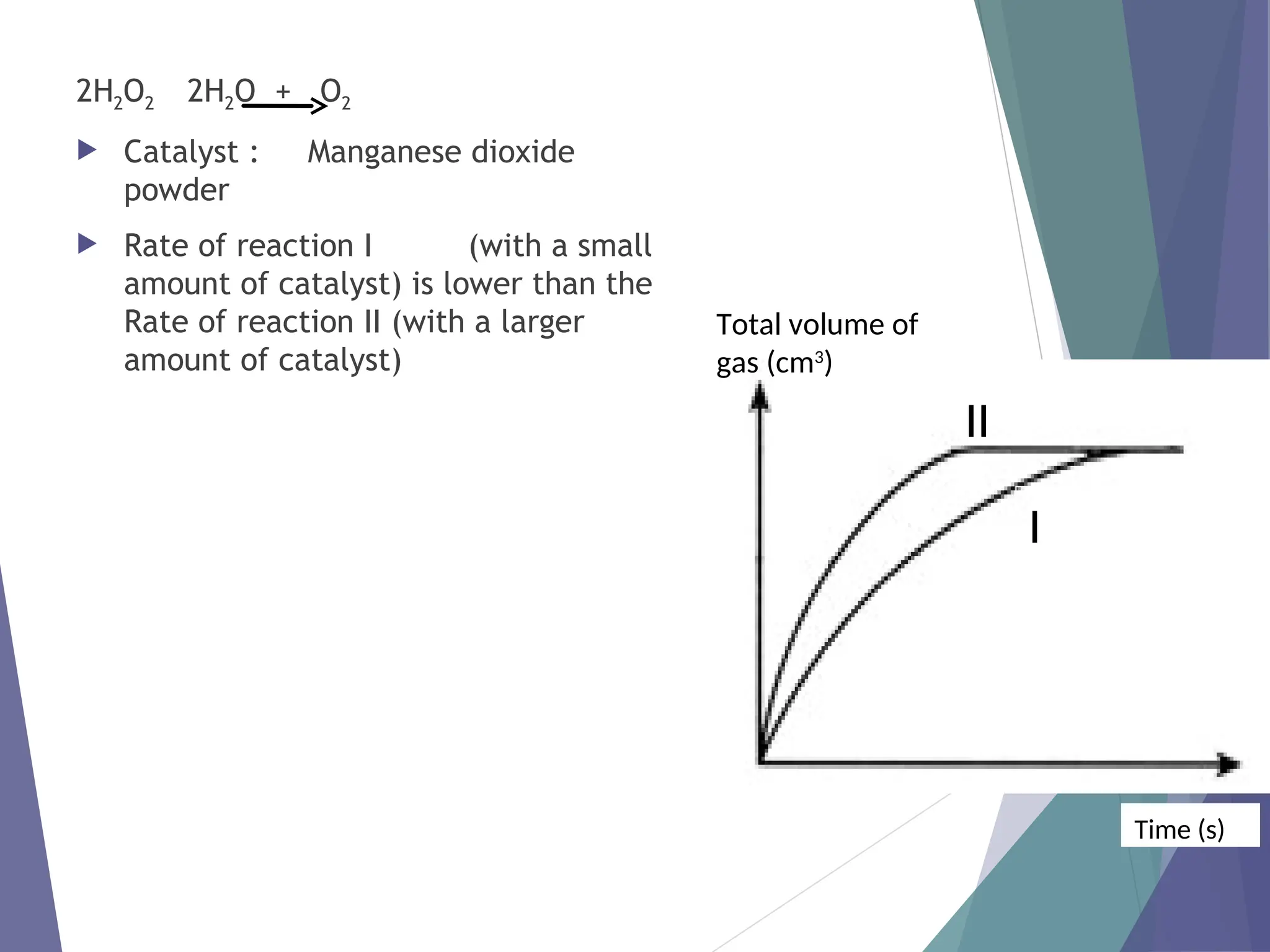
2H2O2 2H2O + O2
 Catalyst : Manganese dioxide
powder
 Rate of reaction I (with a small
amount of catalyst) is lower than the
Rate of reaction II (with a larger
amount of catalyst)
I
II
Total volume of
gas (cm3
)
Time (s)
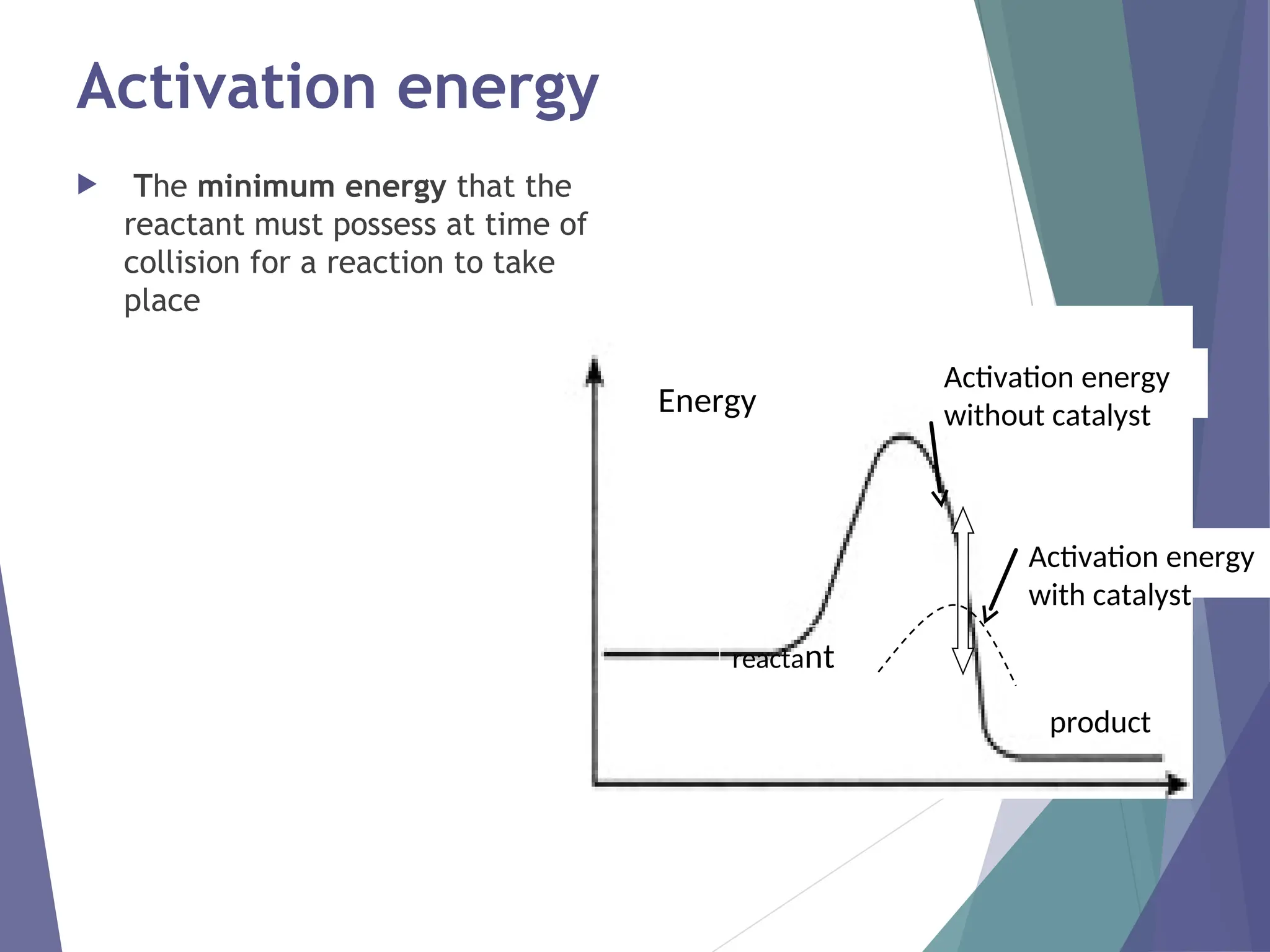
Activation energy
 The minimum energy that the
reactant must possess at time of
collision for a reaction to take
place
Energy
reactant
product
Activation energy
without catalyst
Activation energy
with catalyst
Effect of pressure on rate
of reaction
 The rate of reaction will be effected by a change of
pressure if the reaction involves gaseous reactant
 The higher the pressure the higher the rate of reaction
Content, images, text, etc. used belong to
the rightful owner. No copyright
infringement intended.

G10 Science Q4- Week 7-8- Factors Affecting Chemical Reaction.ppt

  • 1.
  • 2.
    S10MT - IVh- j -24 Explain how the factors affecting rates of chemical reactions are applied in food preservation and materials production, control of fire, pollution, and corrosion
  • 3.
    The rate ofreaction depends on the five factors below  Total surface area of solid reactant  Temperature of reactant  Concentration of reactant  Use of catalyst  Pressure of gaseous reactant
  • 4.
    Effect of totalsurface area on rate of reaction  For a fixed mass of solid reactant, the smaller the size of the reactant, the larger the total surface area thus the higher the rate of reaction  For example : powdered zinc will react faster with acid than granulated zinc  Powdered zinc has larger total surface area compared to granulated zinc.  Thus its rate of reaction is higher
  • 5.
    10 cm 10 cm 10cm 1 cm 1 cm 10 cm x 10 cm x 6 x 1 cube = 600 cm2 1 cm x 1 cm x 6 x 1000 cubes = 6000 cm2
  • 6.
    Effect of totalsurface area on rate of reaction  the gradient of curve at t second for powdered zinc is higher than granulated zinc  rate of reaction of powdered zinc is higher  Because the total surface area is bigger than in granulated zinc Volume of gas/cm3 Time/min II I t
  • 7.
     the rateof reaction is different  the total volume of gas released is the same because the concentration and volume of HCl is the same
  • 8.
    Effect of concentrationon rate of reaction  When the concentration of reactant increases, the rate of reaction become higher  For example when Sodium thiosulphate reacts with sulphuric acid, it produce sodium sulphate, sulphur, sulphur dioxide and water
  • 9.
     The higherthe concentration of solution used, the shorter the time taken for the reaction to complete  It also can be plotted as.. Concentration of Na2S2O3 / mol dm-3 Time / min Concentration of Na2S2O3 / mol dm-3 1/ time ( min-1 )
  • 10.
     The rateof reaction is inversely proportional to time taken rate of reaction  1 time From the graph it can conclude concentration of  1 Na2S2O3 time Rate of reaction  concentration of Na2S2O3
  • 11.
    Effect of temperatureon rate of reaction  When the temperature of reactant increases, the rate of reaction become higher  For example, the reaction of sodium thiosulphate and sulphuric acid Na2S2O3 + H2SO4 Na2SO4 + S + SO2 + H2O.
  • 12.
     The graphof temperature of Na2S2O3 against time shows as the temperature increases, the time taken for a reaction is shorter. Temperature / o C Time / s
  • 13.
     From thegraph of temperature of Na2S2O3 against 1/time , it shows that Temperature  1 time  Thus the rate of reaction ( 1/time) is higher  When the temperature of sodium thiosulphate increases, the rate of reaction become higher Temperature / o C 1 / time / s-1
  • 14.
    Effect of catalyston rate of reaction  A catalyst is a substance which alter the rate of a chemical reaction while it remains chemically unchanged at the end of the reaction. It lowers the activation energy  Positive catalyst increase the rate of reaction whereas negative catalyst called inhibitor lower the rate of reaction
  • 15.
    • In thepresence of catalyst , a collision needs lesser energy to react successfully. As more collisions become successful, the reaction will be faster • Special characteristic of a catalyst 1. Only a small amount of catalyst is needed to achieve a big change in the rate. Increasing the amount of catalyst used generally will increase the rate of reaction 2. Catalyst alter the rate of reaction but the amount of product formed remain unchanged with or without the catalyst
  • 16.
    3. Catalyst isspecific in its action. It can only catalyst a particular reaction but not other example – Iron powder in Haber process – Vanadium (V) oxide in contact process – Manganese (IV) oxide in the decomposition of hydrogen peroxide 4. Most catalyst are transition element or compound such as iron, copper(II) sulphate 5. Catalyst remain unchanged during the reaction.
  • 17.
    6. The massand chemical composition of the catalyst remain the same before and after the reaction 7. Catalyst may undergo physical changes eg from crystal to powder 8. Powdered catalyst is more effective than lump catalyst
  • 18.
    2H2O2 2H2O +O2  Catalyst : Manganese dioxide powder  Rate of reaction I (with a small amount of catalyst) is lower than the Rate of reaction II (with a larger amount of catalyst) I II Total volume of gas (cm3 ) Time (s)
  • 19.
    Activation energy  Theminimum energy that the reactant must possess at time of collision for a reaction to take place Energy reactant product Activation energy without catalyst Activation energy with catalyst
  • 20.
    Effect of pressureon rate of reaction  The rate of reaction will be effected by a change of pressure if the reaction involves gaseous reactant  The higher the pressure the higher the rate of reaction
  • 21.
    Content, images, text,etc. used belong to the rightful owner. No copyright infringement intended.