Factors Affecting the Rate of
Reaction
Faktor-Faktor Yang
Mempengaruhi Kadar Tindak
Balas
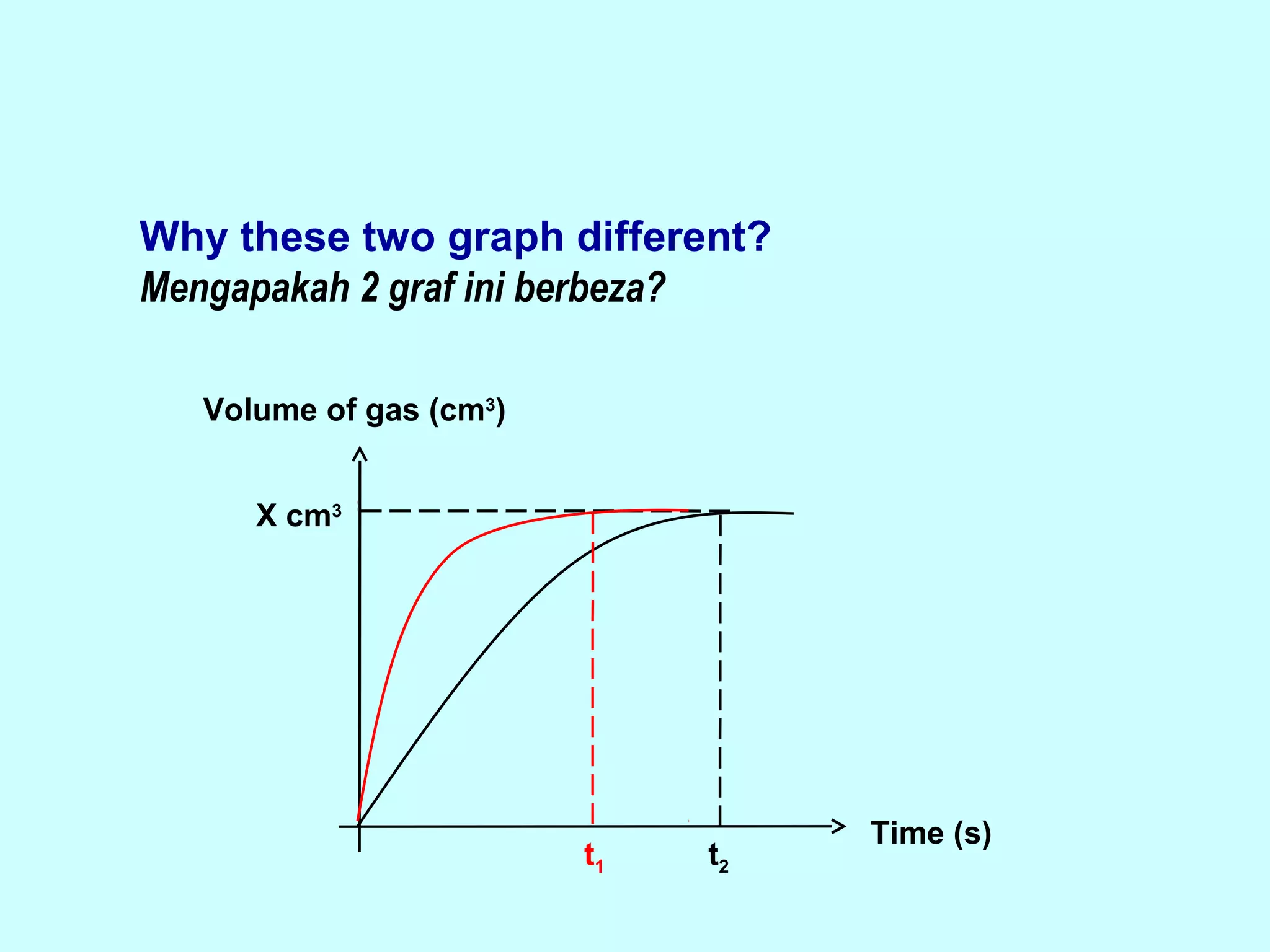
Why these two graph different?
Mengapakah 2 graf ini berbeza?
Volume of gas (cm3)
X cm3

t1

t2

Time (s)
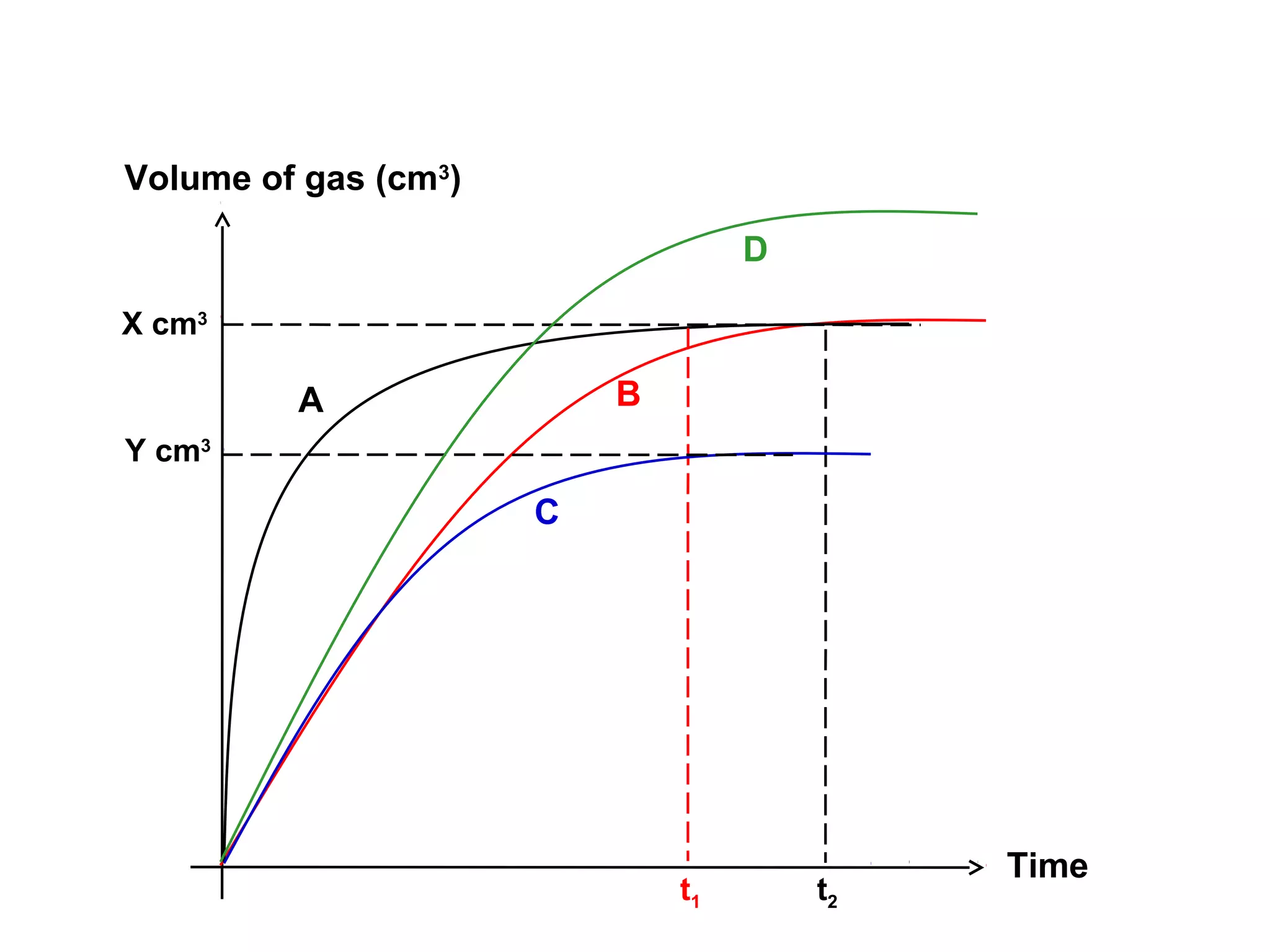
Volume of gas (cm3)
D
X cm3

B

A
Y cm3

C

t1

t2

Time
Factors Affecting the Rate of
Reaction
 Total surface area of solid
reactant
Jumlah luas permukaan bahan
 Concentration of reactant
Kepekatan bahan
 Temperature of reactant
Suhu bahan
 Use of catalyst
Penggunaan pemangkin
 Pressure of gaseous reactant
Tekanan gas bahan
Effect of total surface area of solid reactant
on the rate of reaction
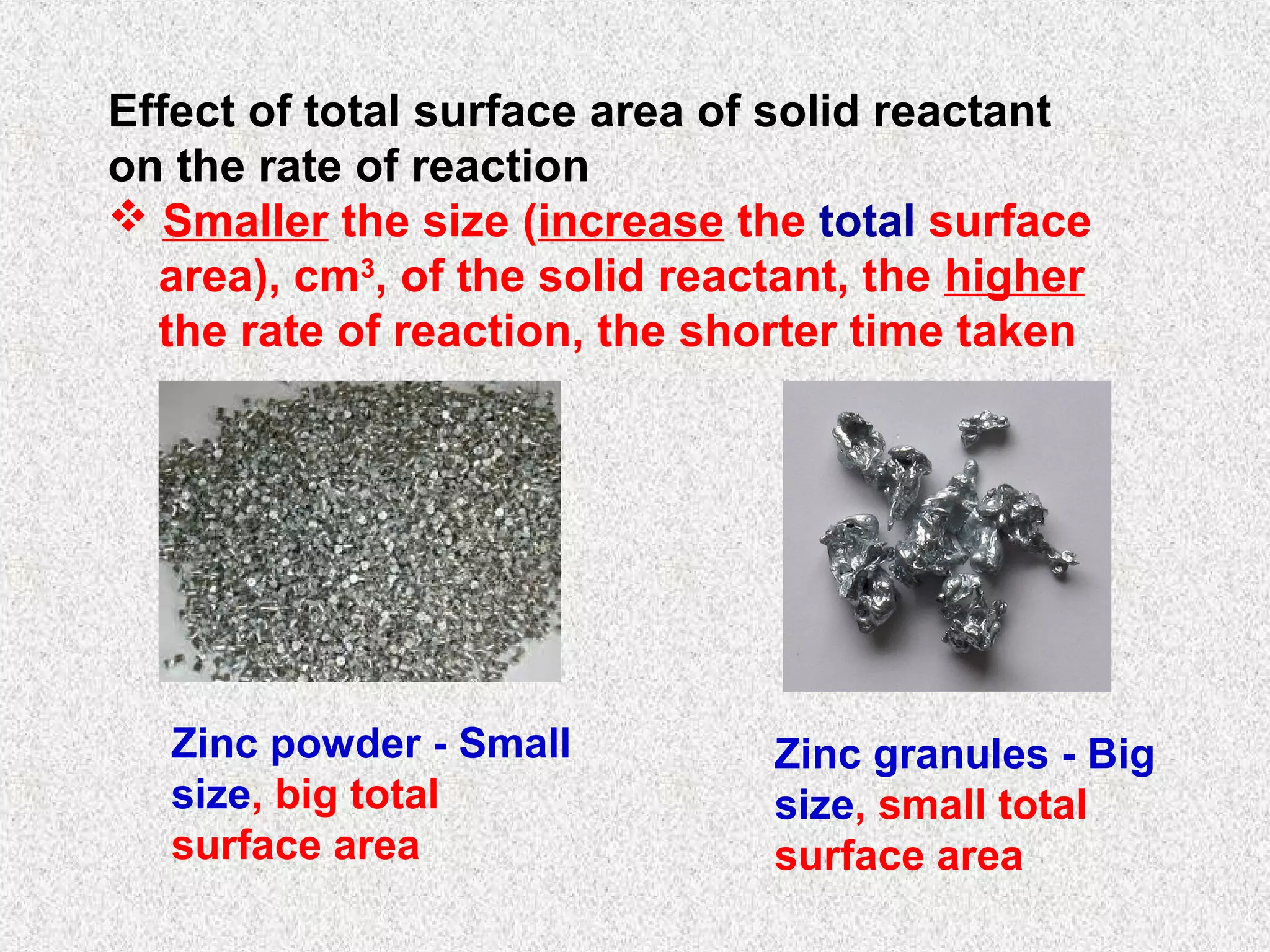
 Smaller the size (increase the total surface
area), cm3, of the solid reactant, the higher
the rate of reaction, the shorter time taken

Zinc powder - Small
size, big total
surface area

Zinc granules - Big
size, small total
surface area
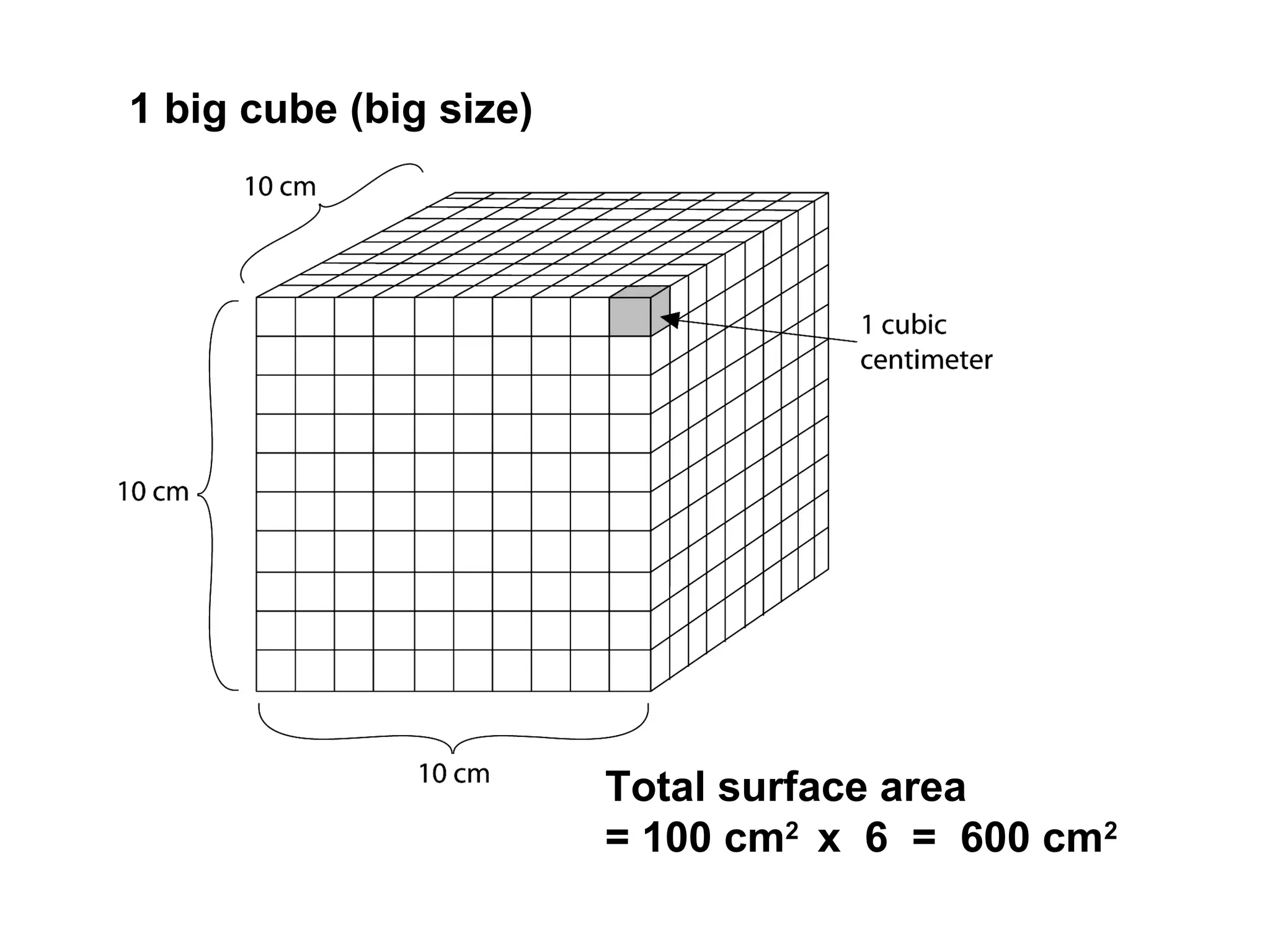
1 big cube (big size)

Total surface area
= 100 cm2 x 6 = 600 cm2
1 big cube (big size)

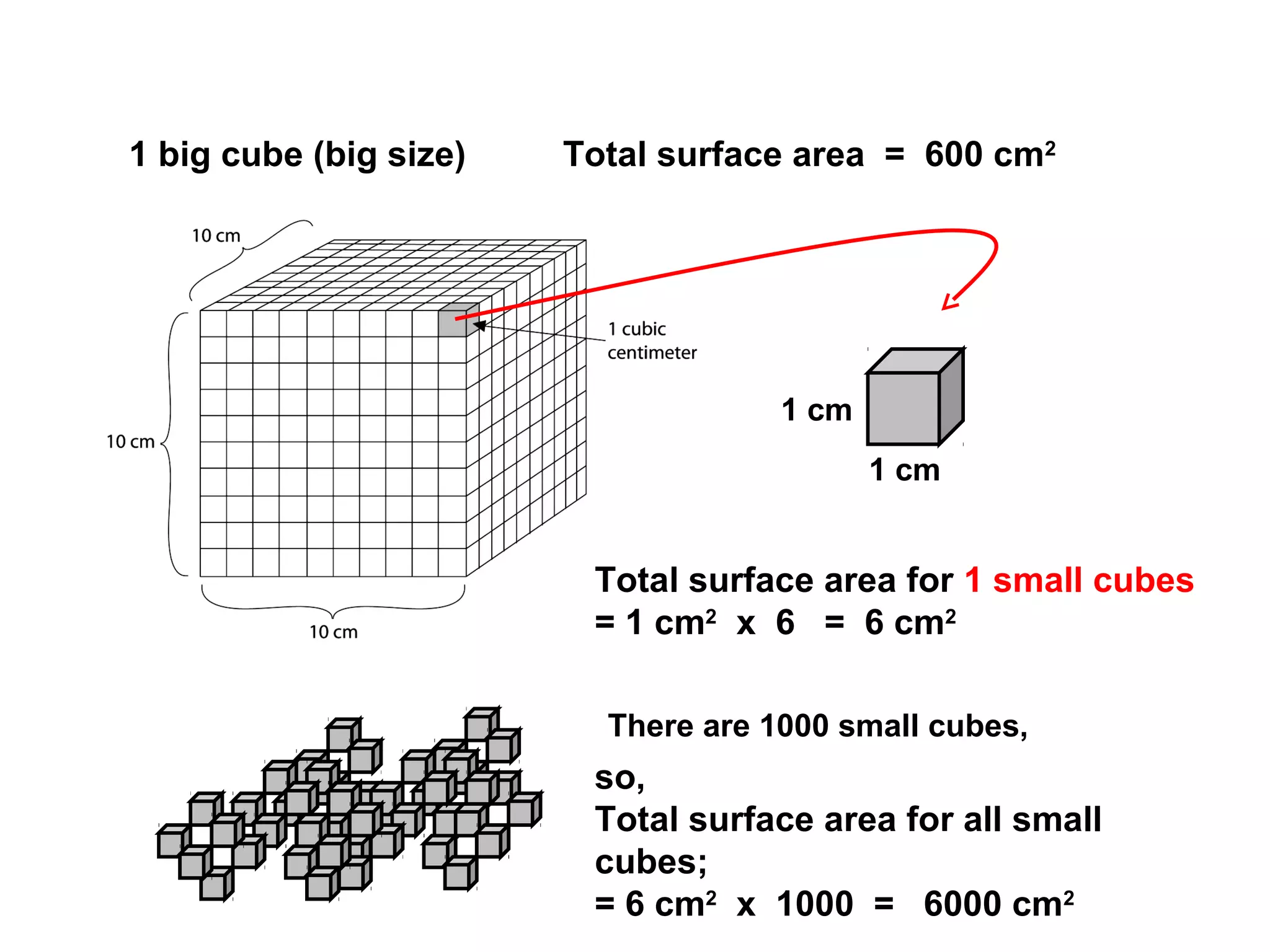
Total surface area = 600 cm2

1 cm
1 cm

Total surface area for 1 small cubes
= 1 cm2 x 6 = 6 cm2
There are 1000 small cubes,

so,
Total surface area for all small
cubes;
= 6 cm2 x 1000 = 6000 cm2
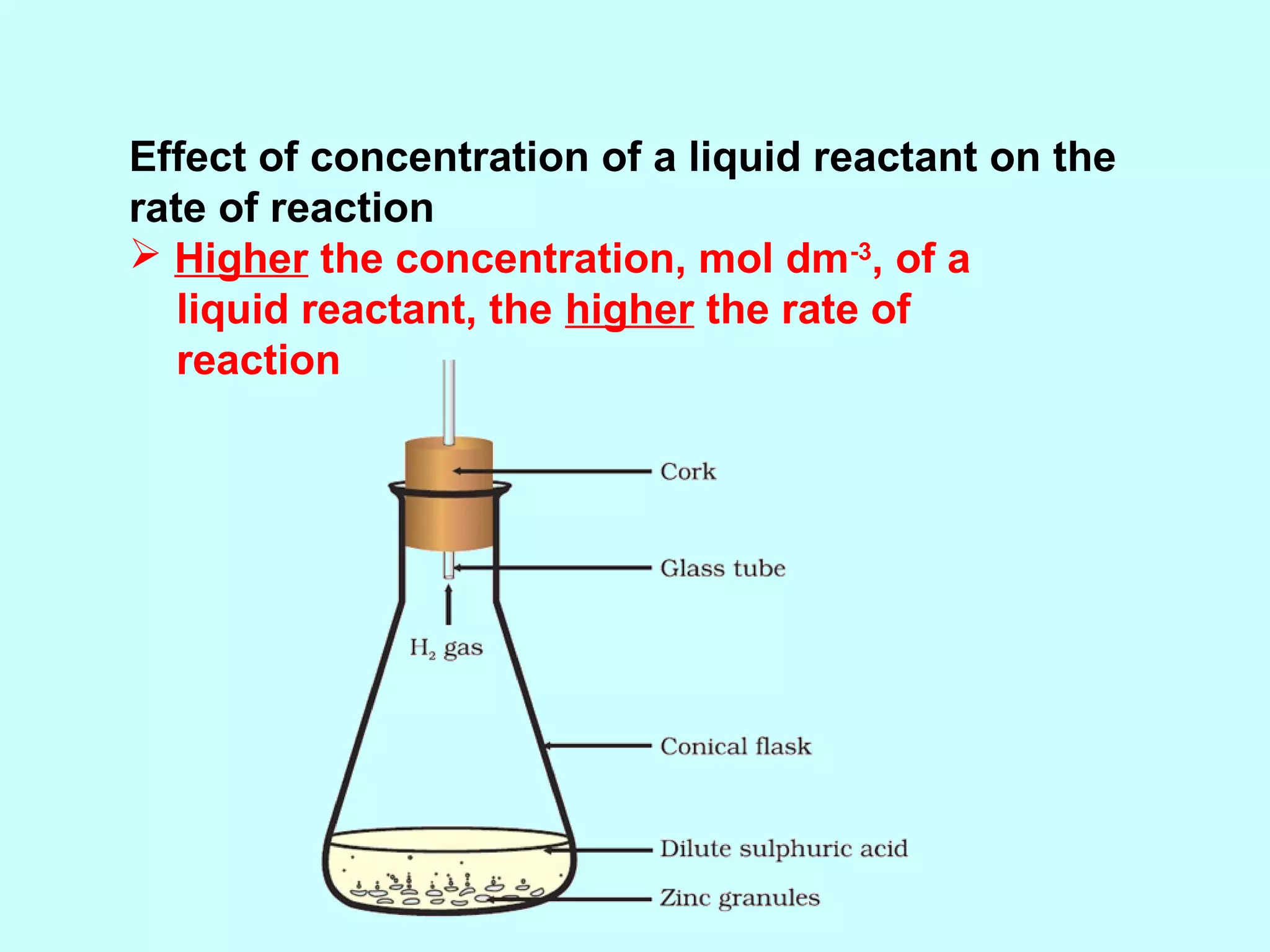
Effect of concentration of a liquid reactant on the
rate of reaction
 Higher the concentration, mol dm-3, of a
liquid reactant, the higher the rate of
reaction
Effect of temperature on the rate of
reaction
 Increase in temperature, the higher the
rate of reaction.
Effect of pressure on the rate of reaction
 Increase in pressure, the higher the
rate of reaction
Effect of catalyst on the rate of
reaction
 Alters the rate of reaction
 It is specific in its action. It can only
catalyse
a particular reaction
 Does not change the quantity of
products
formed
 Only small amount of catalyst is
needed to
increases the rate of reaction. (An
increase in
Factors Affecting the Rate of
Reaction and Graph
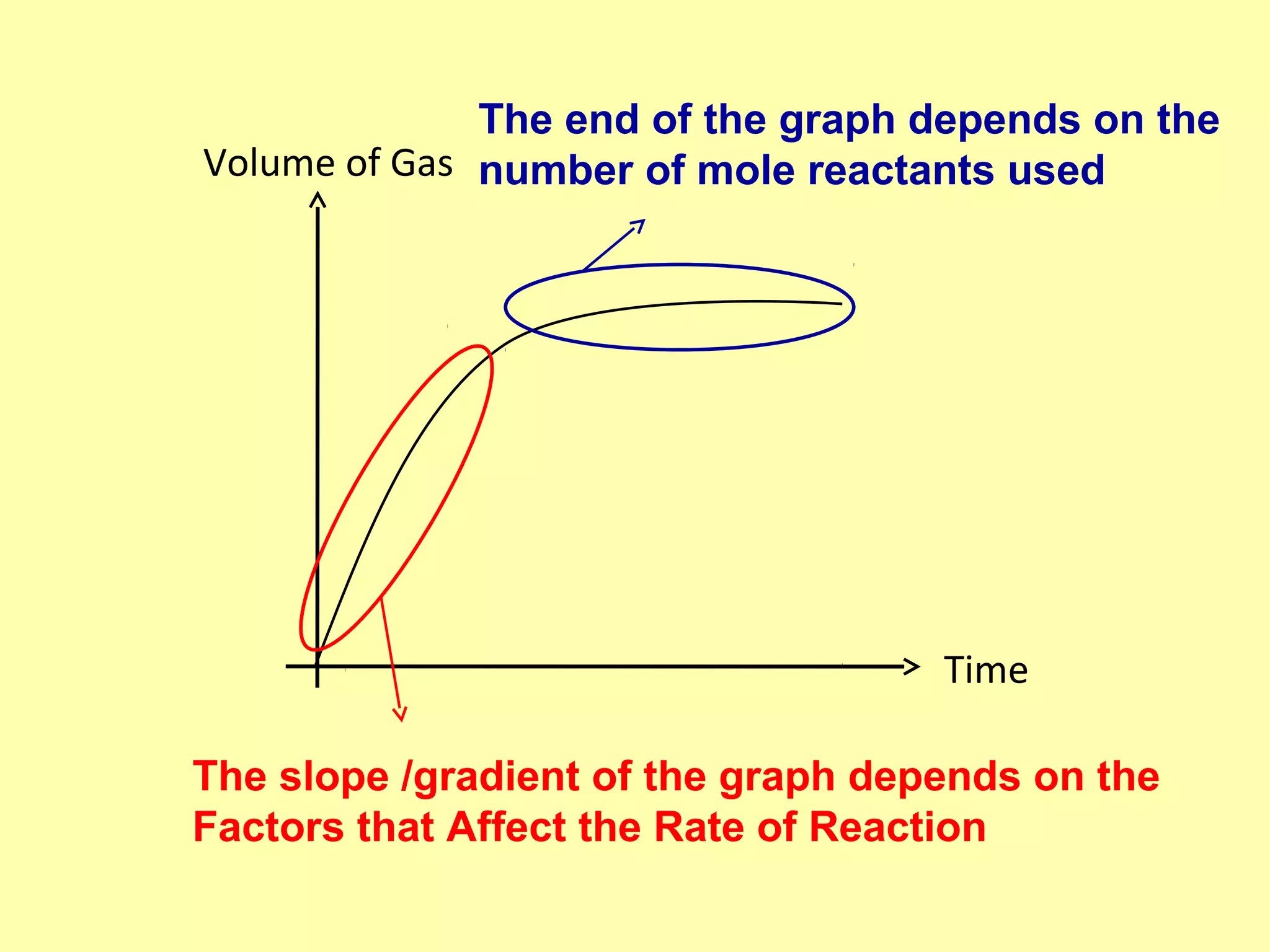
The end of the graph depends on the
Volume of Gas number of mole reactants used

Time
The slope /gradient of the graph depends on the
Factors that Affect the Rate of Reaction
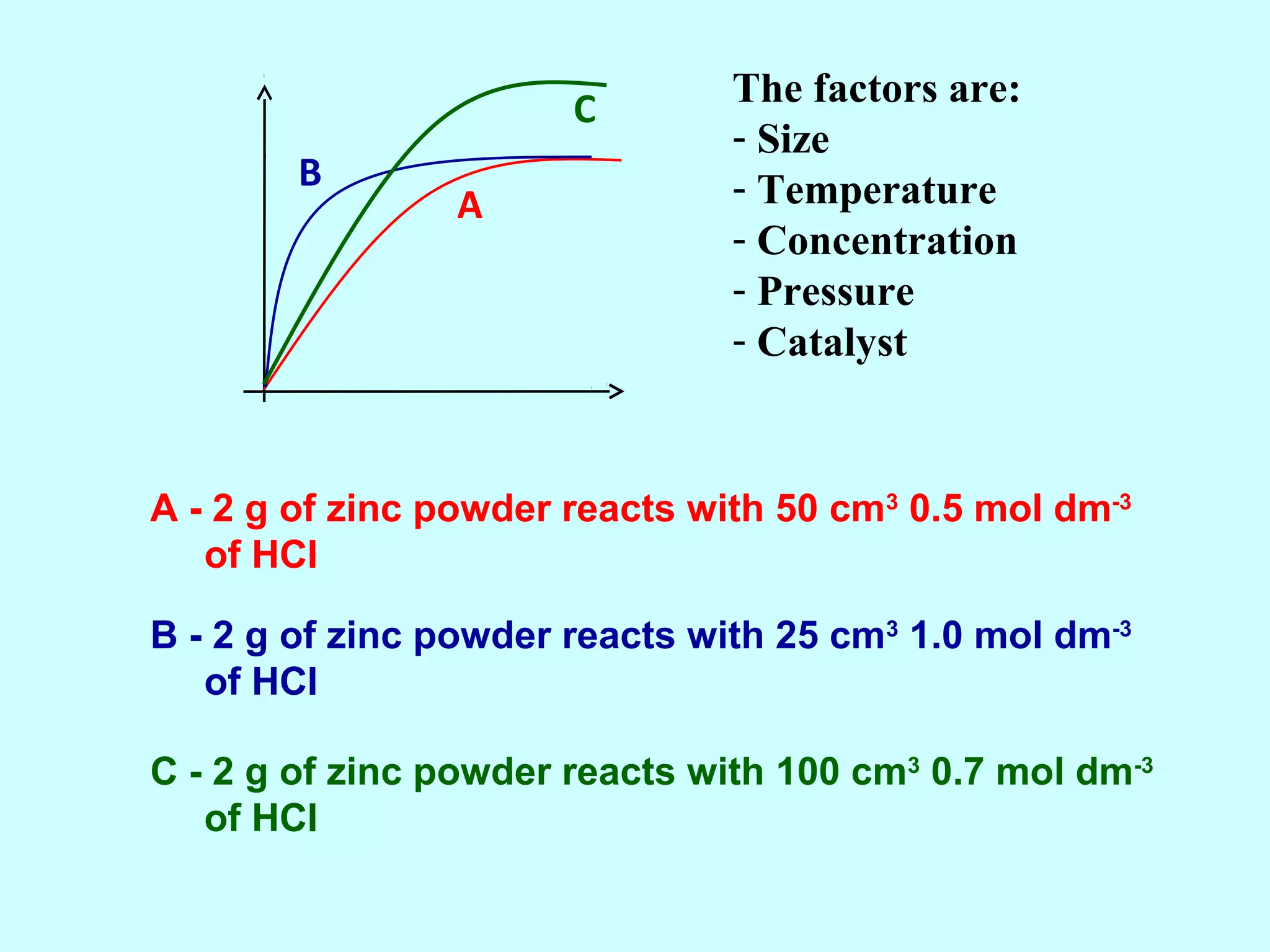
C
B

A

The factors are:
- Size
- Temperature
- Concentration
- Pressure
- Catalyst

A - 2 g of zinc powder reacts with 50 cm3 0.5 mol dm-3
of HCl
B - 2 g of zinc powder reacts with 25 cm3 1.0 mol dm-3
of HCl
C - 2 g of zinc powder reacts with 100 cm3 0.7 mol dm-3
of HCl
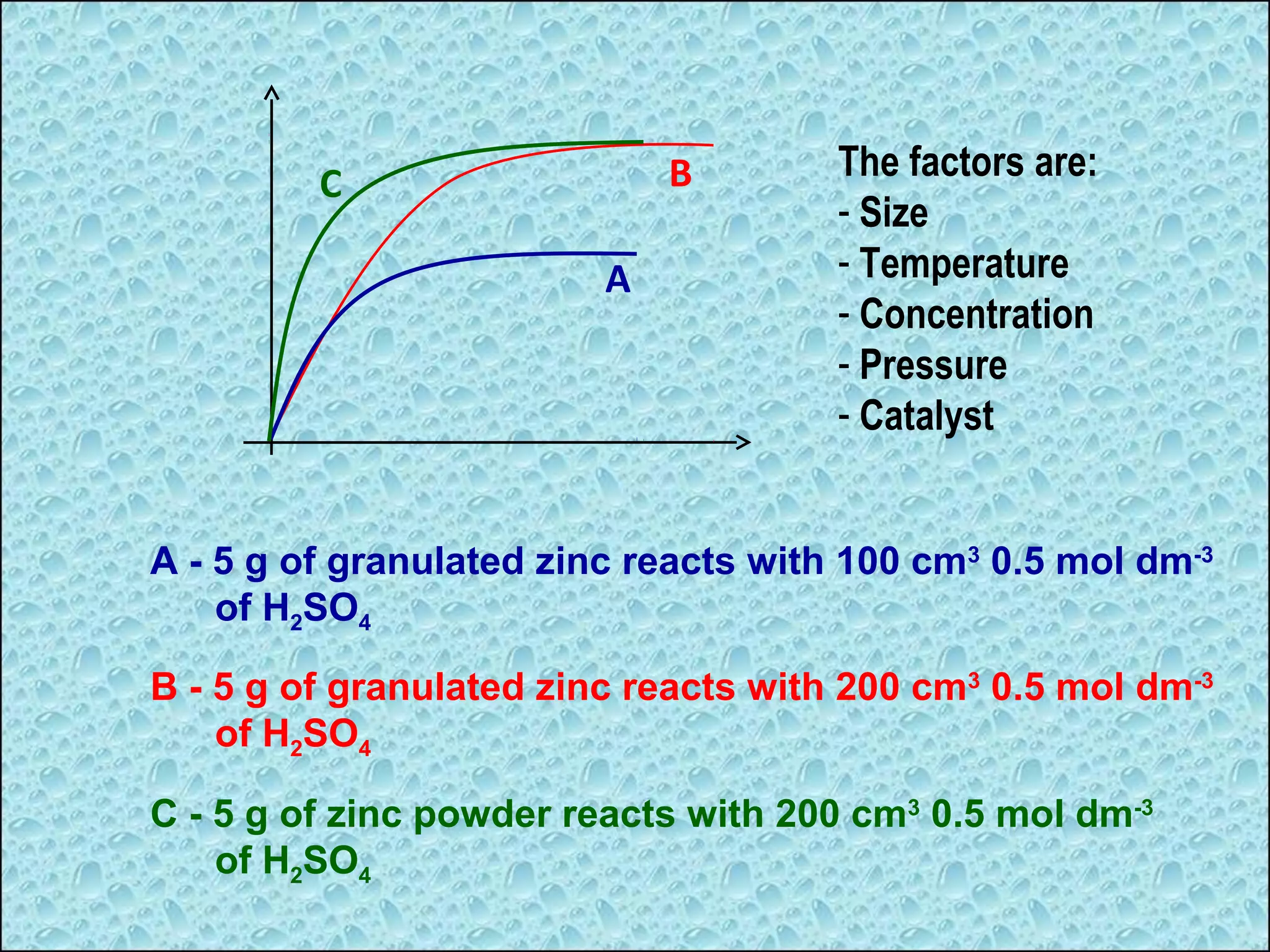
B

C
A

The factors are:
- Size
- Temperature
- Concentration
- Pressure
- Catalyst

A - 5 g of granulated zinc reacts with 100 cm3 0.5 mol dm-3
of H2SO4
B - 5 g of granulated zinc reacts with 200 cm3 0.5 mol dm-3
of H2SO4
C - 5 g of zinc powder reacts with 200 cm3 0.5 mol dm-3
of H2SO4
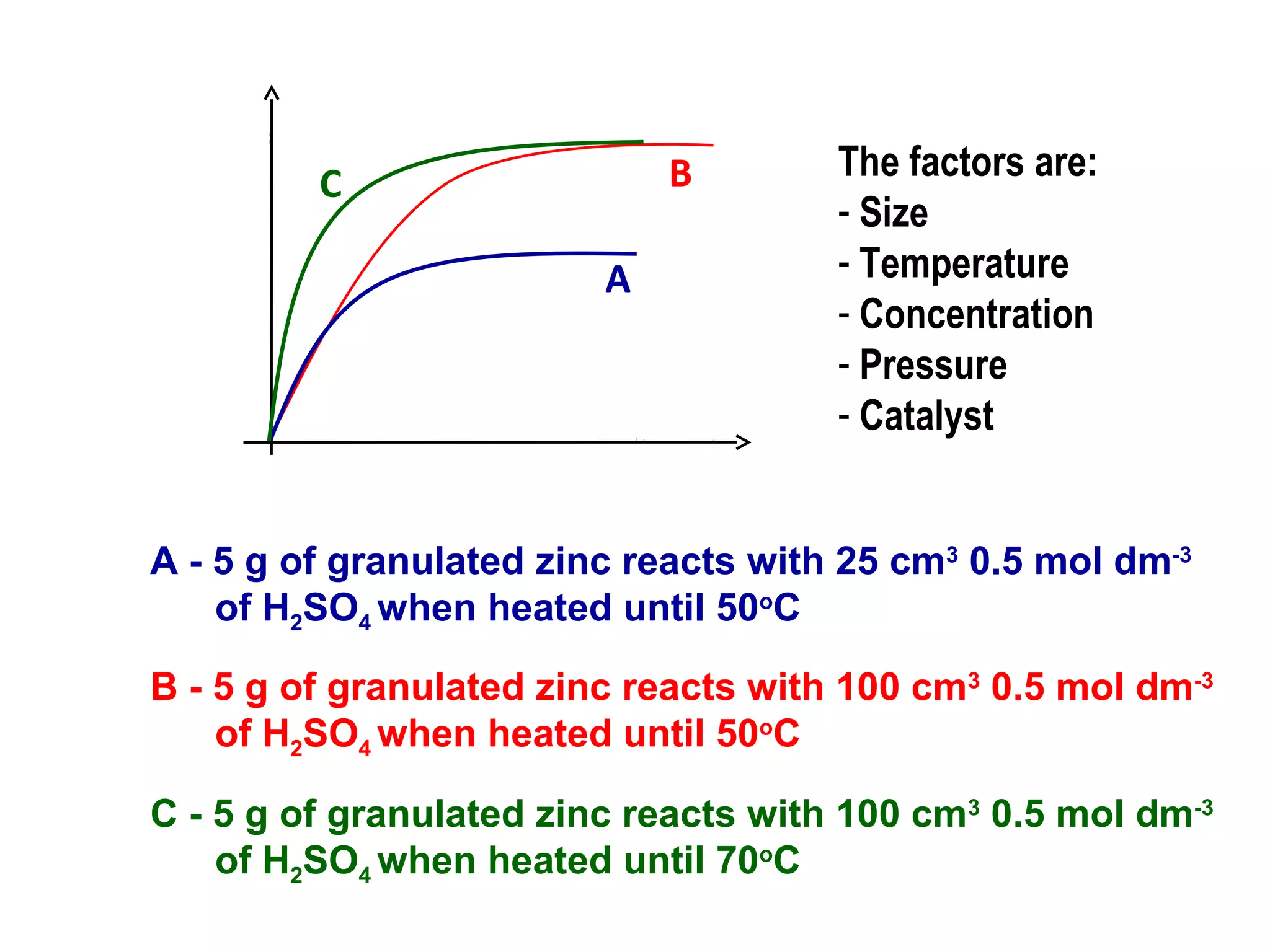
B

C
A

The factors are:
- Size
- Temperature
- Concentration
- Pressure
- Catalyst

A - 5 g of granulated zinc reacts with 25 cm3 0.5 mol dm-3
of H2SO4 when heated until 50oC
B - 5 g of granulated zinc reacts with 100 cm3 0.5 mol dm-3
of H2SO4 when heated until 50oC
C - 5 g of granulated zinc reacts with 100 cm3 0.5 mol dm-3
of H2SO4 when heated until 70oC

Rorppt2

  • 1.
    Factors Affecting theRate of Reaction Faktor-Faktor Yang Mempengaruhi Kadar Tindak Balas
  • 2.
    Why these twograph different? Mengapakah 2 graf ini berbeza? Volume of gas (cm3) X cm3 t1 t2 Time (s)
  • 3.
    Volume of gas(cm3) D X cm3 B A Y cm3 C t1 t2 Time
  • 4.
    Factors Affecting theRate of Reaction  Total surface area of solid reactant Jumlah luas permukaan bahan  Concentration of reactant Kepekatan bahan  Temperature of reactant Suhu bahan  Use of catalyst Penggunaan pemangkin  Pressure of gaseous reactant Tekanan gas bahan
  • 5.
    Effect of totalsurface area of solid reactant on the rate of reaction  Smaller the size (increase the total surface area), cm3, of the solid reactant, the higher the rate of reaction, the shorter time taken Zinc powder - Small size, big total surface area Zinc granules - Big size, small total surface area
  • 6.
    1 big cube(big size) Total surface area = 100 cm2 x 6 = 600 cm2
  • 7.
    1 big cube(big size) Total surface area = 600 cm2 1 cm 1 cm Total surface area for 1 small cubes = 1 cm2 x 6 = 6 cm2 There are 1000 small cubes, so, Total surface area for all small cubes; = 6 cm2 x 1000 = 6000 cm2
  • 8.
    Effect of concentrationof a liquid reactant on the rate of reaction  Higher the concentration, mol dm-3, of a liquid reactant, the higher the rate of reaction
  • 9.
    Effect of temperatureon the rate of reaction  Increase in temperature, the higher the rate of reaction. Effect of pressure on the rate of reaction  Increase in pressure, the higher the rate of reaction
  • 10.
    Effect of catalyst onthe rate of reaction  Alters the rate of reaction  It is specific in its action. It can only catalyse a particular reaction  Does not change the quantity of products formed  Only small amount of catalyst is needed to increases the rate of reaction. (An increase in
  • 11.
    Factors Affecting theRate of Reaction and Graph
  • 12.
    The end ofthe graph depends on the Volume of Gas number of mole reactants used Time The slope /gradient of the graph depends on the Factors that Affect the Rate of Reaction
  • 13.
    C B A The factors are: -Size - Temperature - Concentration - Pressure - Catalyst A - 2 g of zinc powder reacts with 50 cm3 0.5 mol dm-3 of HCl B - 2 g of zinc powder reacts with 25 cm3 1.0 mol dm-3 of HCl C - 2 g of zinc powder reacts with 100 cm3 0.7 mol dm-3 of HCl
  • 14.
    B C A The factors are: -Size - Temperature - Concentration - Pressure - Catalyst A - 5 g of granulated zinc reacts with 100 cm3 0.5 mol dm-3 of H2SO4 B - 5 g of granulated zinc reacts with 200 cm3 0.5 mol dm-3 of H2SO4 C - 5 g of zinc powder reacts with 200 cm3 0.5 mol dm-3 of H2SO4
  • 15.
    B C A The factors are: -Size - Temperature - Concentration - Pressure - Catalyst A - 5 g of granulated zinc reacts with 25 cm3 0.5 mol dm-3 of H2SO4 when heated until 50oC B - 5 g of granulated zinc reacts with 100 cm3 0.5 mol dm-3 of H2SO4 when heated until 50oC C - 5 g of granulated zinc reacts with 100 cm3 0.5 mol dm-3 of H2SO4 when heated until 70oC