Human Resource Management
By Prof. Jayalakshmi
Introduction to
Human Resource Management
Learnito Study Series for Business Students
Find notes, curated videos, MCQs, case studies and solved university papers at
www.learnito.com
HRM Introduction - Contents
• Definition
• Meaning of HRM
• Core Elements of HRM
• Objectives of HRM
• Functions of HRM
• Process of HRM
• Role of HRM
• Roles and duties of HR Manager’s
www.learnito.com HRM 2
Meaning of HRM
• According to Dessler (2008) the policies and practices involved in carrying
out the “people” or human resource aspects of a management position,
including recruiting, screening, training, rewarding, and appraising
comprises of HRM.
• In simple words, HRM is a process of making the efficient and effective use
of human resources so that the set goals are achieved.
• HRM can be defined as a process of procuring, developing and maintaining
competent human resources in the organization so that the goals of an
organization are achieved in an effective and efficient manner.
• HRM is an art of managing people at work in such a manner that they give
their best to the organization for achieving its set goals.
www.learnito.com HRM 3
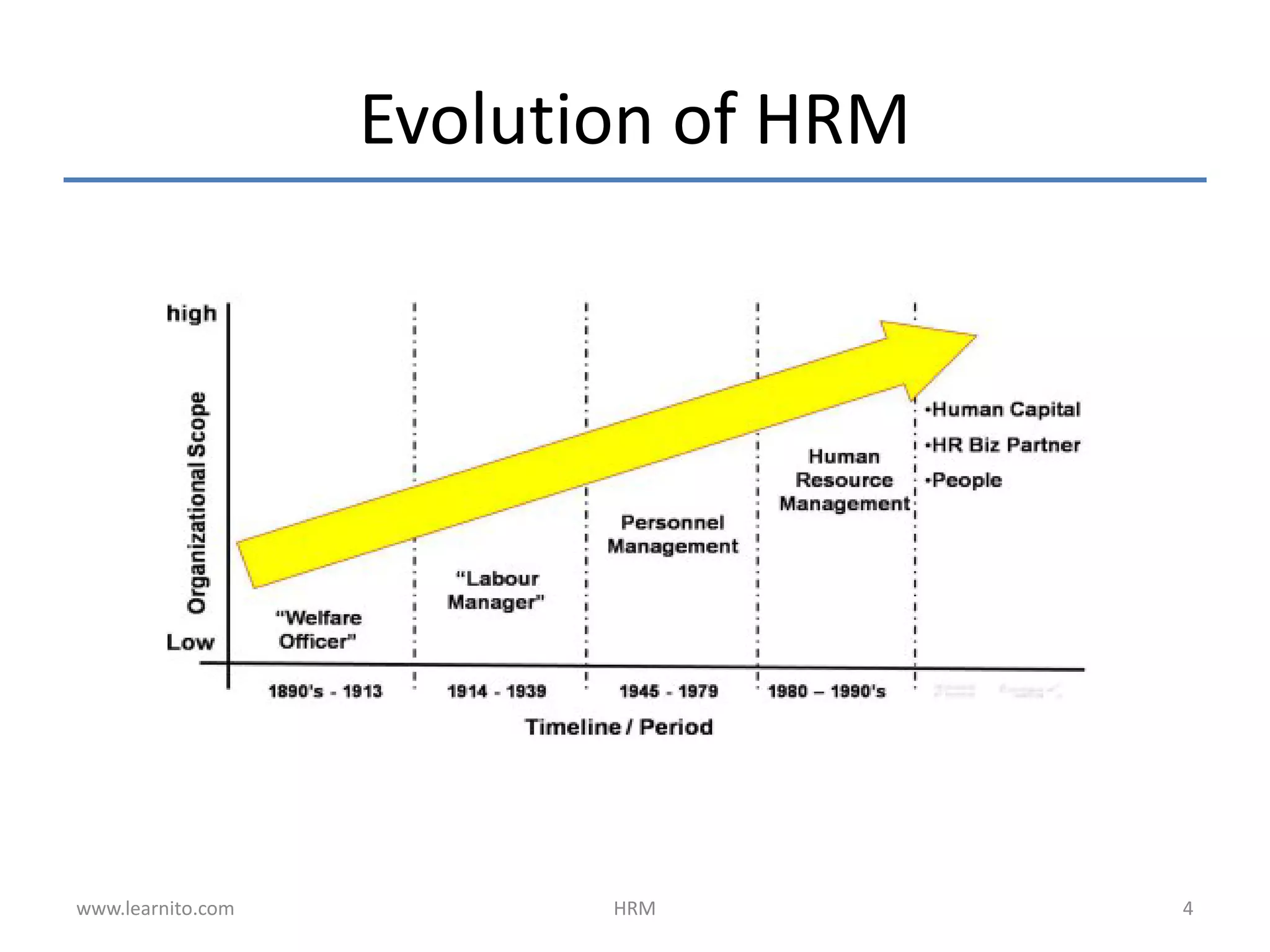
Evolution of HRM
www.learnito.com HRM 4
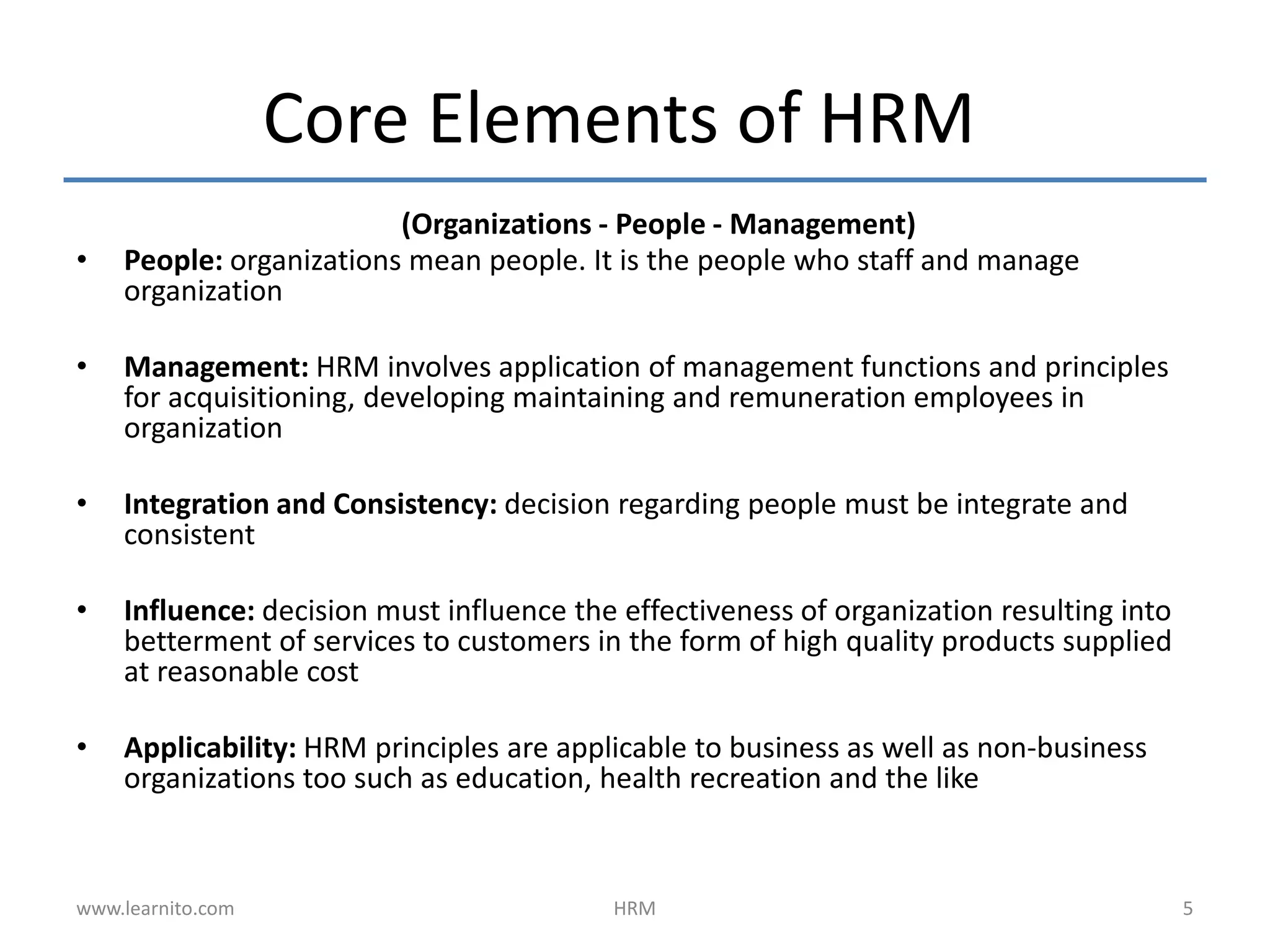
Core Elements of HRM
(Organizations - People - Management)
• People: organizations mean people. It is the people who staff and manage
organization
• Management: HRM involves application of management functions and principles
for acquisitioning, developing maintaining and remuneration employees in
organization
• Integration and Consistency: decision regarding people must be integrate and
consistent
• Influence: decision must influence the effectiveness of organization resulting into
betterment of services to customers in the form of high quality products supplied
at reasonable cost
• Applicability: HRM principles are applicable to business as well as non-business
organizations too such as education, health recreation and the like
www.learnito.com HRM 5
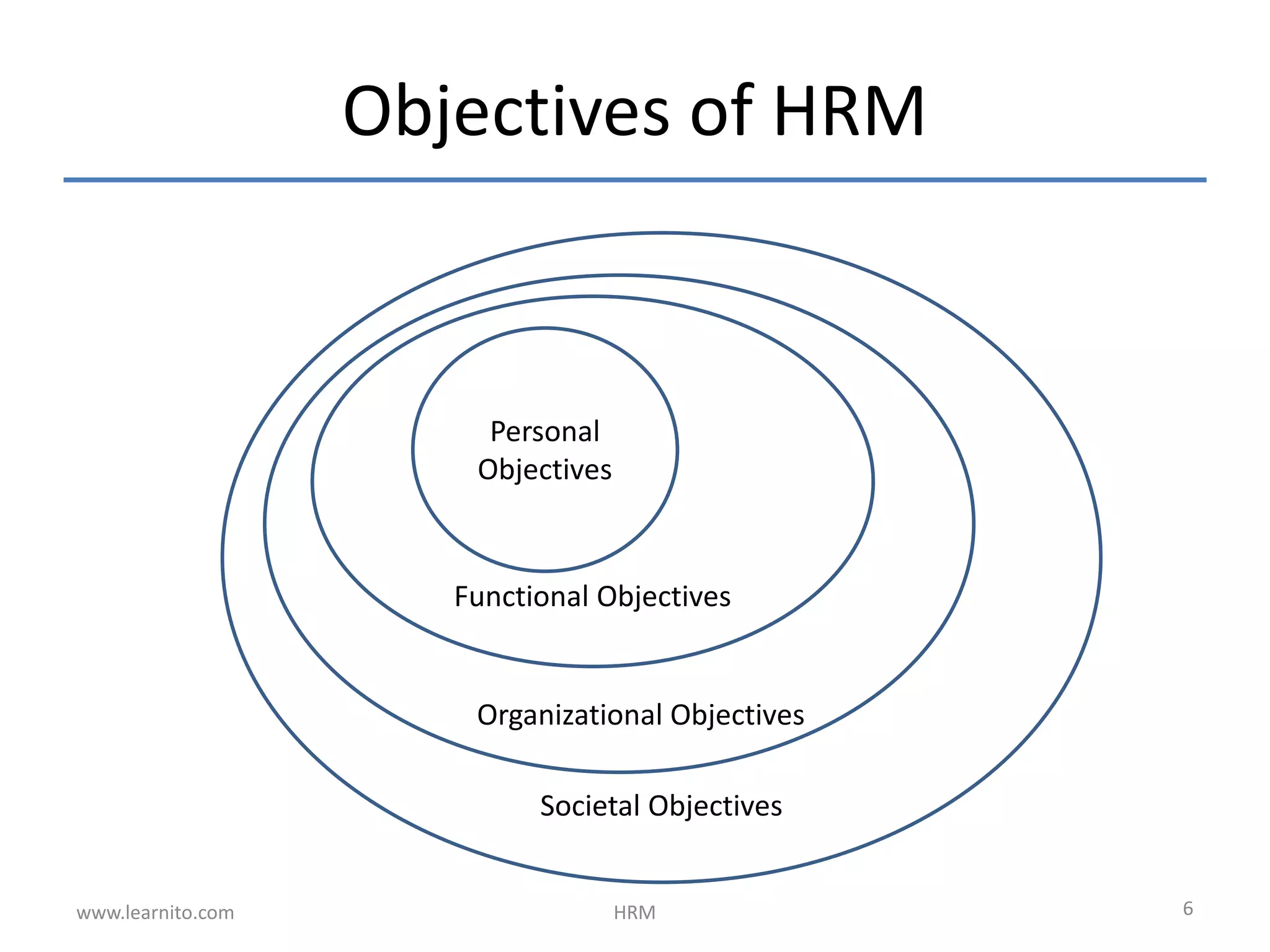
Objectives of HRM
Personal
Objectives
Functional Objectives
Organizational Objectives
Societal Objectives
HRM 6www.learnito.com
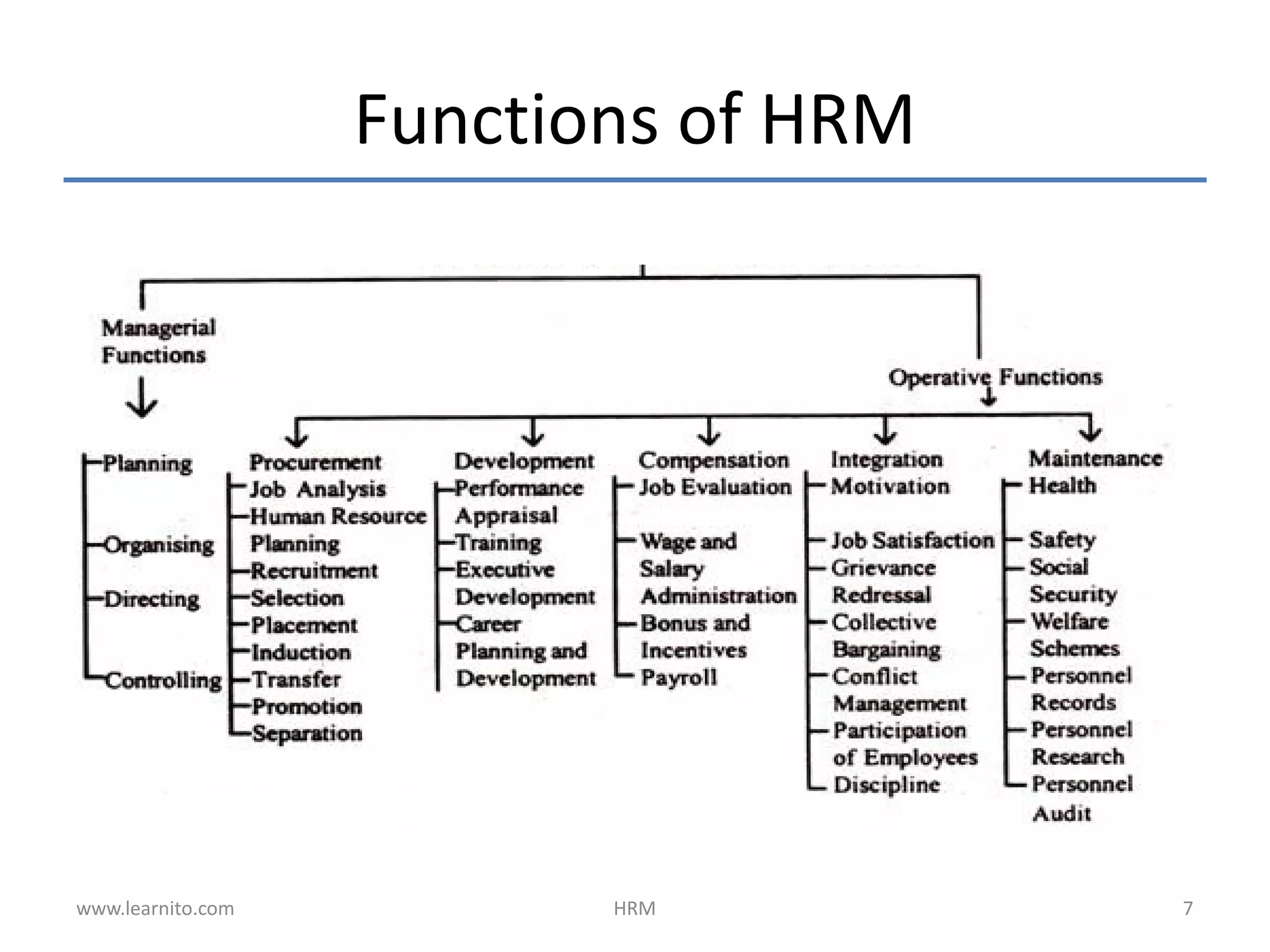
Functions of HRM
www.learnito.com HRM 7
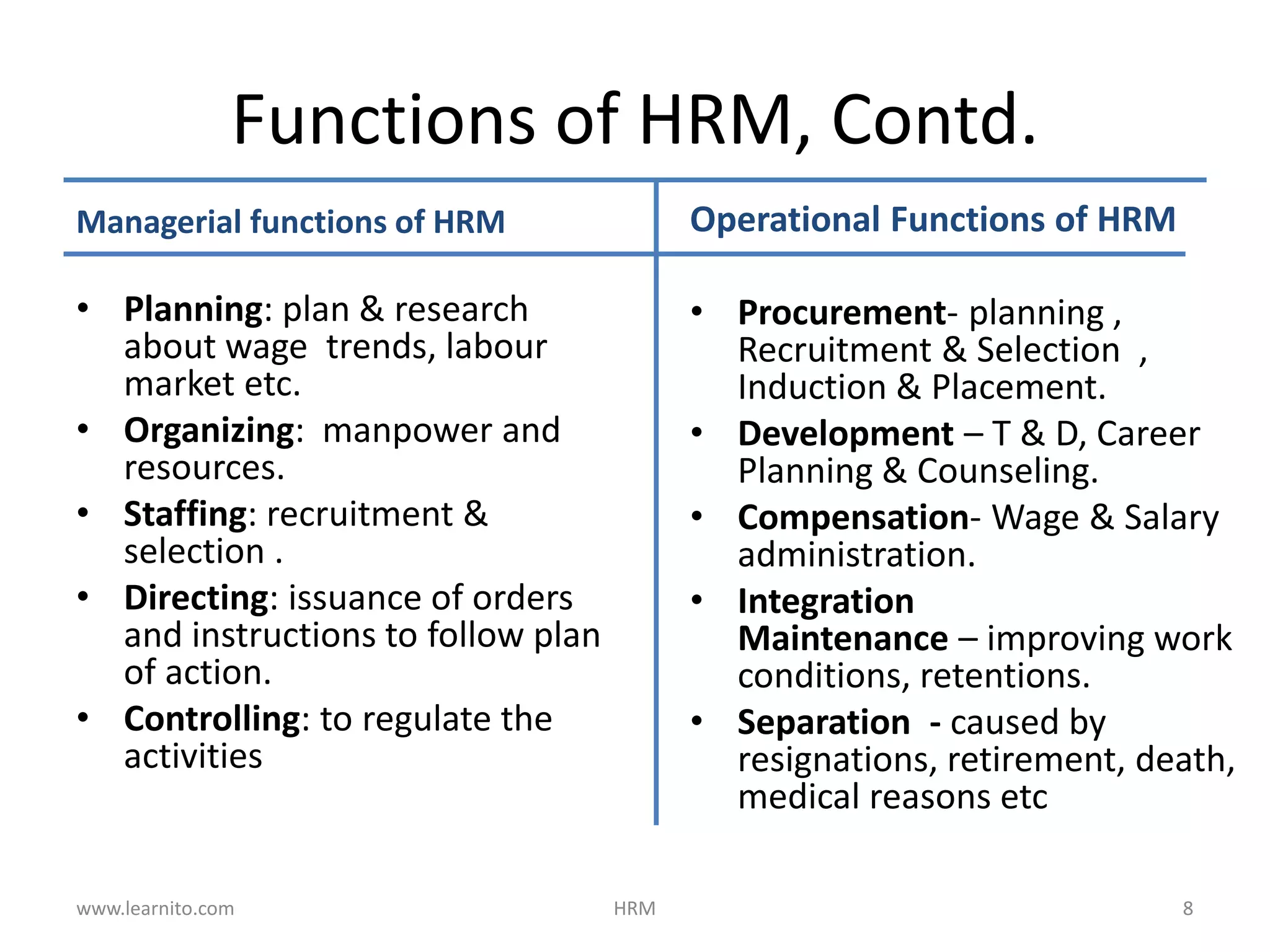
Functions of HRM, Contd.
Managerial functions of HRM
• Planning: plan & research
about wage trends, labour
market etc.
• Organizing: manpower and
resources.
• Staffing: recruitment &
selection .
• Directing: issuance of orders
and instructions to follow plan
of action.
• Controlling: to regulate the
activities
Operational Functions of HRM
• Procurement- planning ,
Recruitment & Selection ,
Induction & Placement.
• Development – T & D, Career
Planning & Counseling.
• Compensation- Wage & Salary
administration.
• Integration
Maintenance – improving work
conditions, retentions.
• Separation - caused by
resignations, retirement, death,
medical reasons etc
www.learnito.com HRM 8
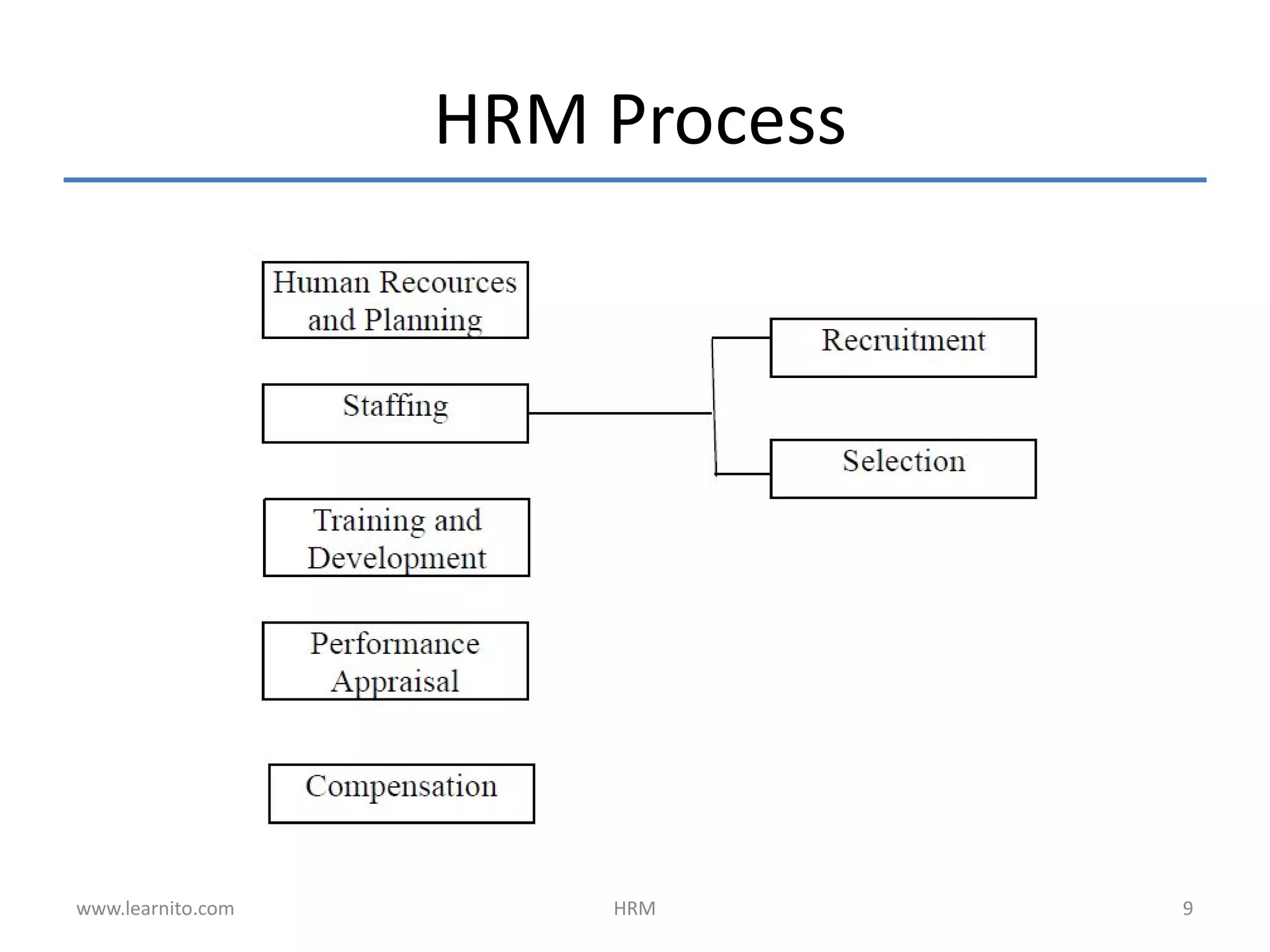
HRM Process
www.learnito.com HRM 9
Role of HR Managers
• Humanitarian Role: Enhancement of Human & Non Human resources
• Counsellor: Consultations to employees about marital, health, mental,
physical and career problems
• Management: Maximization of people to achieve organizational goal
• Mediator: Role of peacemaker. Resolving disputes, conflicts between
individuals and groups.
• Spokesman: To represent of the company because he/she has better overall
picture of his company’s operations
• Problem Solver: Solving problems of overall human resource management
and long-term organizational planning
• Change Agent: Introducing and implementing institutional changes and
installing organizational development programs
www.learnito.com HRM 10
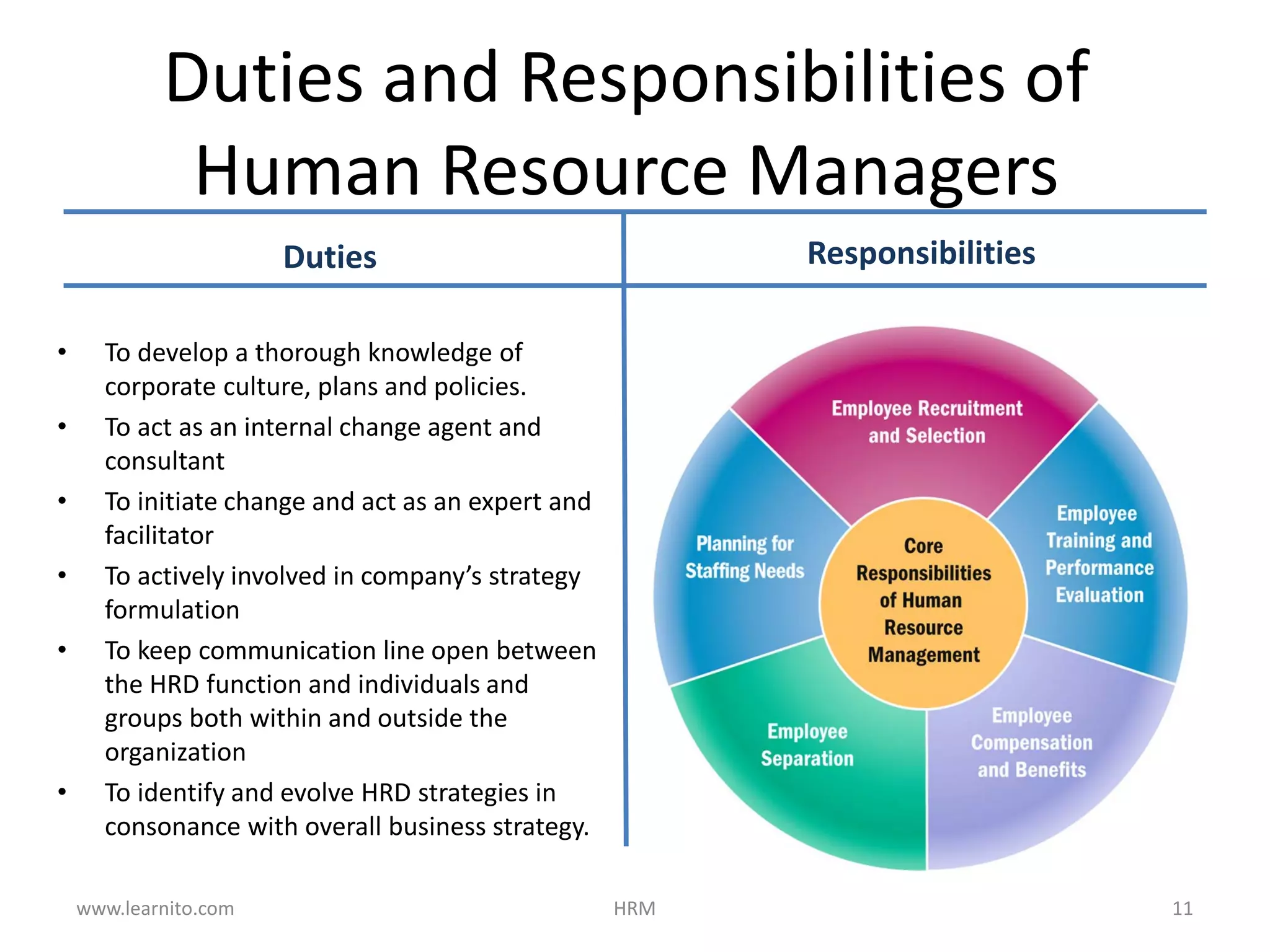
Duties and Responsibilities of
Human Resource Managers
Duties
• To develop a thorough knowledge of
corporate culture, plans and policies.
• To act as an internal change agent and
consultant
• To initiate change and act as an expert and
facilitator
• To actively involved in company’s strategy
formulation
• To keep communication line open between
the HRD function and individuals and
groups both within and outside the
organization
• To identify and evolve HRD strategies in
consonance with overall business strategy.
Responsibilities
www.learnito.com HRM 11
HRM Techniques
1. Employee Engagement Surveys
2. Employee Satisfaction Tools
3. Empowerment Tools & Techniques
4. Strategic Human Resource Management
5. Organizational Commitment Evaluation
6. Key Performance Indicators for HR
7. Employee Satisfaction Survey
8. HR Auditing
9. HR Effectiveness Evaluation
10. Competency-based Interviews
11. Employee Development Plan
12. Career Management Tools
13. Employee Performance Management
HRM 12www.learnito.com
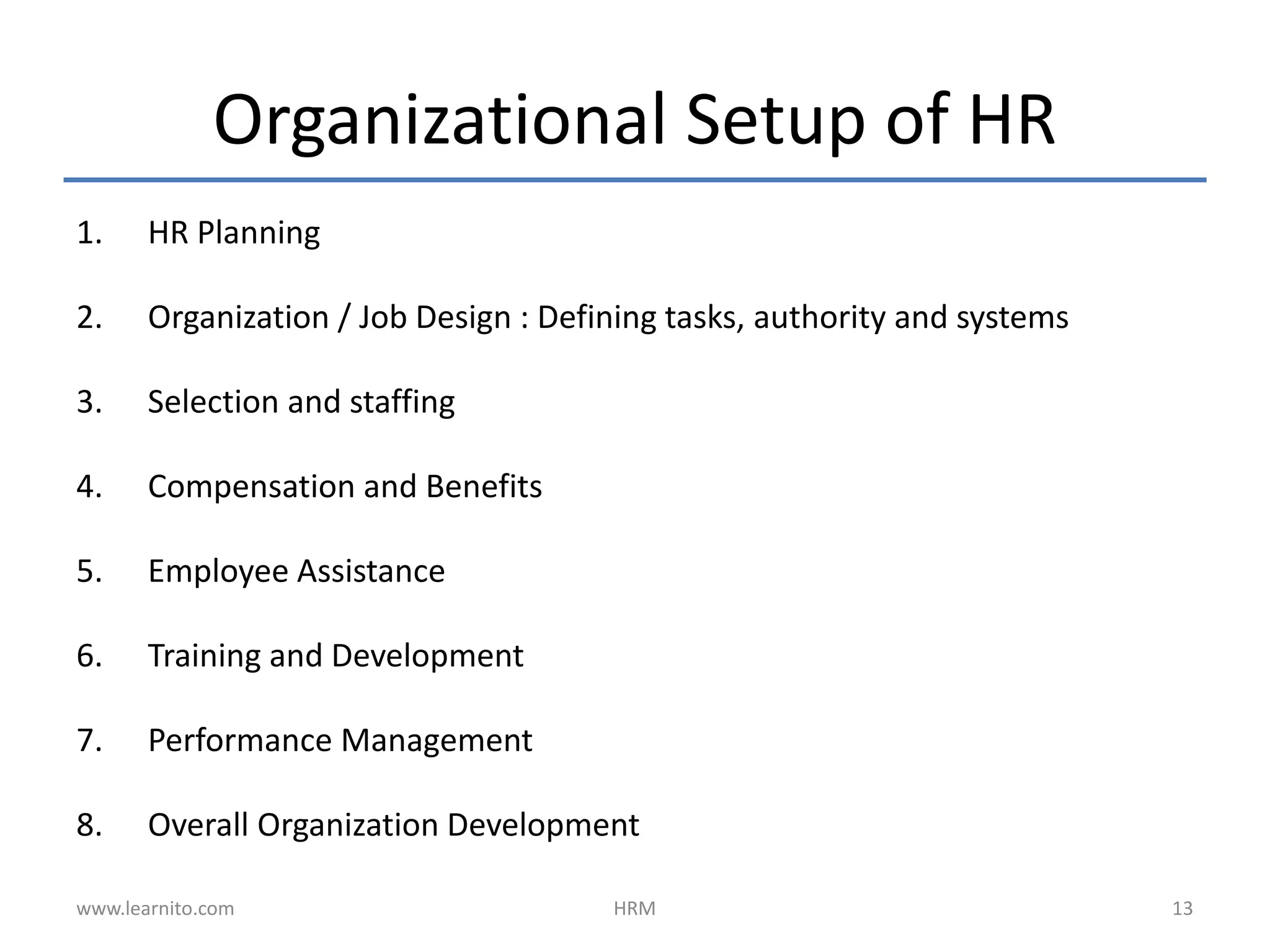
Organizational Setup of HR
1. HR Planning
2. Organization / Job Design : Defining tasks, authority and systems
3. Selection and staffing
4. Compensation and Benefits
5. Employee Assistance
6. Training and Development
7. Performance Management
8. Overall Organization Development
www.learnito.com HRM 13
Learnito Study Series for Business Students
Find notes, curated videos, MCQs, case studies and solved
university papers at www.learnito.com

Introduction to Human Resource Management

  • 1.
    Human Resource Management ByProf. Jayalakshmi Introduction to Human Resource Management Learnito Study Series for Business Students Find notes, curated videos, MCQs, case studies and solved university papers at www.learnito.com
  • 2.
    HRM Introduction -Contents • Definition • Meaning of HRM • Core Elements of HRM • Objectives of HRM • Functions of HRM • Process of HRM • Role of HRM • Roles and duties of HR Manager’s www.learnito.com HRM 2
  • 3.
    Meaning of HRM •According to Dessler (2008) the policies and practices involved in carrying out the “people” or human resource aspects of a management position, including recruiting, screening, training, rewarding, and appraising comprises of HRM. • In simple words, HRM is a process of making the efficient and effective use of human resources so that the set goals are achieved. • HRM can be defined as a process of procuring, developing and maintaining competent human resources in the organization so that the goals of an organization are achieved in an effective and efficient manner. • HRM is an art of managing people at work in such a manner that they give their best to the organization for achieving its set goals. www.learnito.com HRM 3
  • 4.
  • 5.
    Core Elements ofHRM (Organizations - People - Management) • People: organizations mean people. It is the people who staff and manage organization • Management: HRM involves application of management functions and principles for acquisitioning, developing maintaining and remuneration employees in organization • Integration and Consistency: decision regarding people must be integrate and consistent • Influence: decision must influence the effectiveness of organization resulting into betterment of services to customers in the form of high quality products supplied at reasonable cost • Applicability: HRM principles are applicable to business as well as non-business organizations too such as education, health recreation and the like www.learnito.com HRM 5
  • 6.
    Objectives of HRM Personal Objectives FunctionalObjectives Organizational Objectives Societal Objectives HRM 6www.learnito.com
  • 7.
  • 8.
    Functions of HRM,Contd. Managerial functions of HRM • Planning: plan & research about wage trends, labour market etc. • Organizing: manpower and resources. • Staffing: recruitment & selection . • Directing: issuance of orders and instructions to follow plan of action. • Controlling: to regulate the activities Operational Functions of HRM • Procurement- planning , Recruitment & Selection , Induction & Placement. • Development – T & D, Career Planning & Counseling. • Compensation- Wage & Salary administration. • Integration Maintenance – improving work conditions, retentions. • Separation - caused by resignations, retirement, death, medical reasons etc www.learnito.com HRM 8
  • 9.
  • 10.
    Role of HRManagers • Humanitarian Role: Enhancement of Human & Non Human resources • Counsellor: Consultations to employees about marital, health, mental, physical and career problems • Management: Maximization of people to achieve organizational goal • Mediator: Role of peacemaker. Resolving disputes, conflicts between individuals and groups. • Spokesman: To represent of the company because he/she has better overall picture of his company’s operations • Problem Solver: Solving problems of overall human resource management and long-term organizational planning • Change Agent: Introducing and implementing institutional changes and installing organizational development programs www.learnito.com HRM 10
  • 11.
    Duties and Responsibilitiesof Human Resource Managers Duties • To develop a thorough knowledge of corporate culture, plans and policies. • To act as an internal change agent and consultant • To initiate change and act as an expert and facilitator • To actively involved in company’s strategy formulation • To keep communication line open between the HRD function and individuals and groups both within and outside the organization • To identify and evolve HRD strategies in consonance with overall business strategy. Responsibilities www.learnito.com HRM 11
  • 12.
    HRM Techniques 1. EmployeeEngagement Surveys 2. Employee Satisfaction Tools 3. Empowerment Tools & Techniques 4. Strategic Human Resource Management 5. Organizational Commitment Evaluation 6. Key Performance Indicators for HR 7. Employee Satisfaction Survey 8. HR Auditing 9. HR Effectiveness Evaluation 10. Competency-based Interviews 11. Employee Development Plan 12. Career Management Tools 13. Employee Performance Management HRM 12www.learnito.com
  • 13.
    Organizational Setup ofHR 1. HR Planning 2. Organization / Job Design : Defining tasks, authority and systems 3. Selection and staffing 4. Compensation and Benefits 5. Employee Assistance 6. Training and Development 7. Performance Management 8. Overall Organization Development www.learnito.com HRM 13
  • 14.
    Learnito Study Seriesfor Business Students Find notes, curated videos, MCQs, case studies and solved university papers at www.learnito.com