FACTORS
       FACTORS AFFECTING HUMAN
                    AFFECTING
       RESOURCE MANAGEMENT
              HUMAN RESOURCE PLANNING
          BY:-
            JAGJIT SINGH PANESAR
            PANKAJ MISHRA


BY:-
       PANKAJ MISHRA
       JAGJIT SINGH PANESAR
HRP
   Means-
       Assessment of HR requirements
       Time & stages of requirements

   Right person ---Of Right type ---In Right number

   Definition – HRP is defined as the process by which
    management determines how an organization
    should move from its current manpower position to
    its desired manpower position.

   HRP is also called manpower planning, personnel
    planning or employment planning .
FACTORS AFFECTING HRP

   Type & strategy of organization

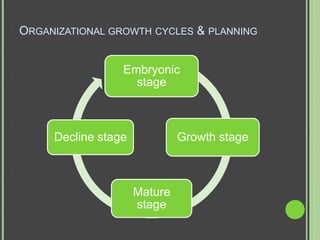
   Organizational growth cycles & planning

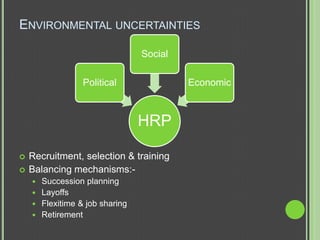
   Environmental uncertainties

   Type & quality of information

   Time horizons

   Labour market

   Outsourcing
TYPE & STRATEGY OF ORGANIZATION

   Type of organization
     Production process involved
     Number & type of staff needed
     Supervisory &/or managerial personnel required


   Strategy of organization
       Organization’s HR needs
         Growth - employees hired
         Mergers - layoffs
ORGANIZATIONAL GROWTH CYCLES & PLANNING


                 Embryonic
                   stage


     Decline stage            Growth stage


                     Mature
                     stage
ENVIRONMENTAL UNCERTAINTIES

                                Social

                 Political               Economic


                                HRP

   Recruitment, selection & training
   Balancing mechanisms:-
     Succession planning
     Layoffs
     Flexitime & job sharing
     Retirement
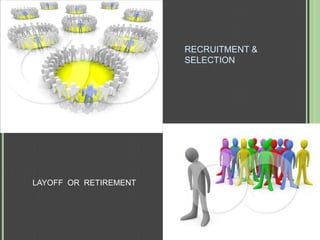
RECRUITMENT &
                       SELECTION


LAYOFF OR RETIREMENT
TYPE & QUALITY OF INFORMATION


   Forecasting

   Well developed job-analysis information

   HRIS
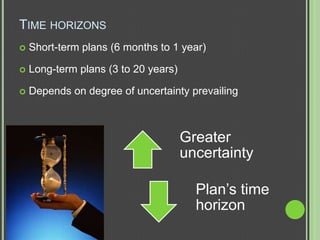
TIME HORIZONS
   Short-term plans (6 months to 1 year)

   Long-term plans (3 to 20 years)

   Depends on degree of uncertainty prevailing


                                      Greater
                                      uncertainty

                                        Plan’s time
                                        horizon
LABOUR MARKET

   Means people with skills & abilities that can be
    tapped as & when the need arises

   Shortages may occur

   Considerations about labour supply:-
     Population
     Demand of goods & services
     Nature of production technology
     Employability of the people
OUTSOURCING


   Sub-contracting

   Mainly done of non-critical activities

   Surplus labour
Factors Affecting Human Resource Planning

Factors Affecting Human Resource Planning

  • 1.
    FACTORS FACTORS AFFECTING HUMAN AFFECTING RESOURCE MANAGEMENT HUMAN RESOURCE PLANNING  BY:-  JAGJIT SINGH PANESAR  PANKAJ MISHRA BY:- PANKAJ MISHRA JAGJIT SINGH PANESAR
  • 2.
    HRP  Means-  Assessment of HR requirements  Time & stages of requirements  Right person ---Of Right type ---In Right number  Definition – HRP is defined as the process by which management determines how an organization should move from its current manpower position to its desired manpower position.  HRP is also called manpower planning, personnel planning or employment planning .
  • 3.
    FACTORS AFFECTING HRP  Type & strategy of organization  Organizational growth cycles & planning  Environmental uncertainties  Type & quality of information  Time horizons  Labour market  Outsourcing
  • 4.
    TYPE & STRATEGYOF ORGANIZATION  Type of organization  Production process involved  Number & type of staff needed  Supervisory &/or managerial personnel required  Strategy of organization  Organization’s HR needs  Growth - employees hired  Mergers - layoffs
  • 5.
    ORGANIZATIONAL GROWTH CYCLES& PLANNING Embryonic stage Decline stage Growth stage Mature stage
  • 6.
    ENVIRONMENTAL UNCERTAINTIES Social Political Economic HRP  Recruitment, selection & training  Balancing mechanisms:-  Succession planning  Layoffs  Flexitime & job sharing  Retirement
  • 7.
    RECRUITMENT & SELECTION LAYOFF OR RETIREMENT
  • 8.
    TYPE & QUALITYOF INFORMATION  Forecasting  Well developed job-analysis information  HRIS
  • 9.
    TIME HORIZONS  Short-term plans (6 months to 1 year)  Long-term plans (3 to 20 years)  Depends on degree of uncertainty prevailing Greater uncertainty Plan’s time horizon
  • 10.
    LABOUR MARKET  Means people with skills & abilities that can be tapped as & when the need arises  Shortages may occur  Considerations about labour supply:-  Population  Demand of goods & services  Nature of production technology  Employability of the people
  • 11.
    OUTSOURCING  Sub-contracting  Mainly done of non-critical activities  Surplus labour