1
2
3
4
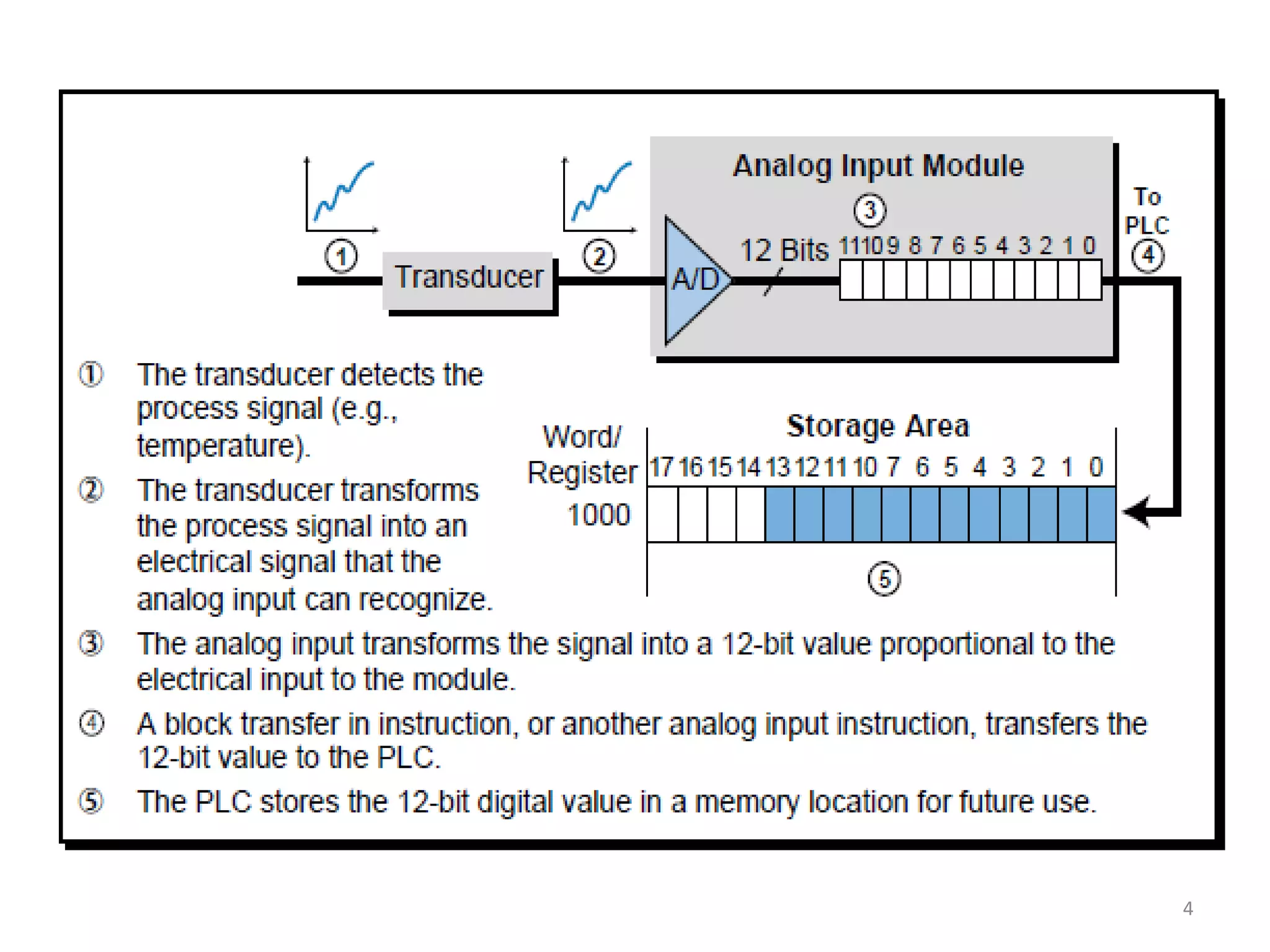
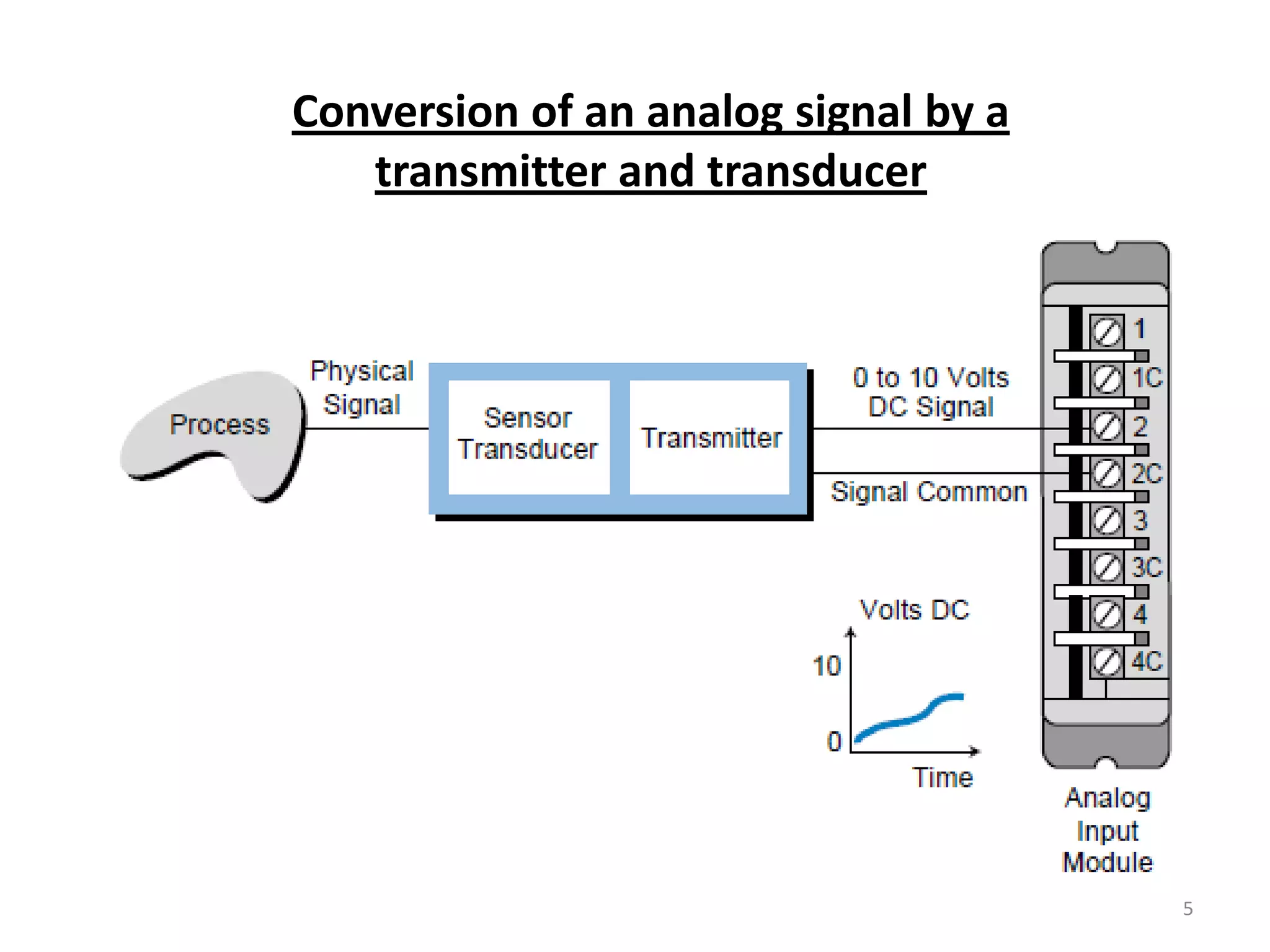
Conversion of an analog signal by a
   transmitter and transducer


                                      5
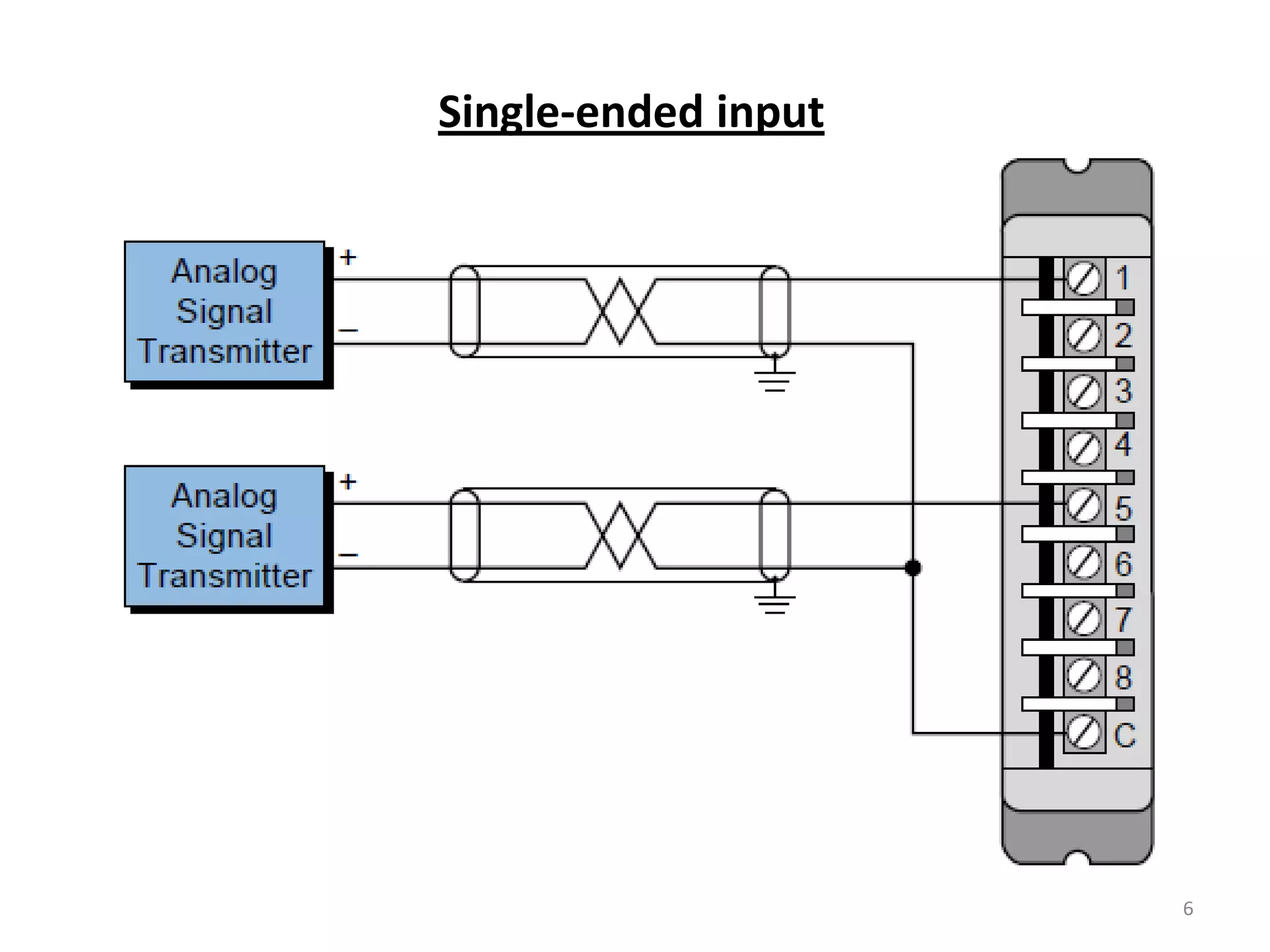
Single-ended input


                     6
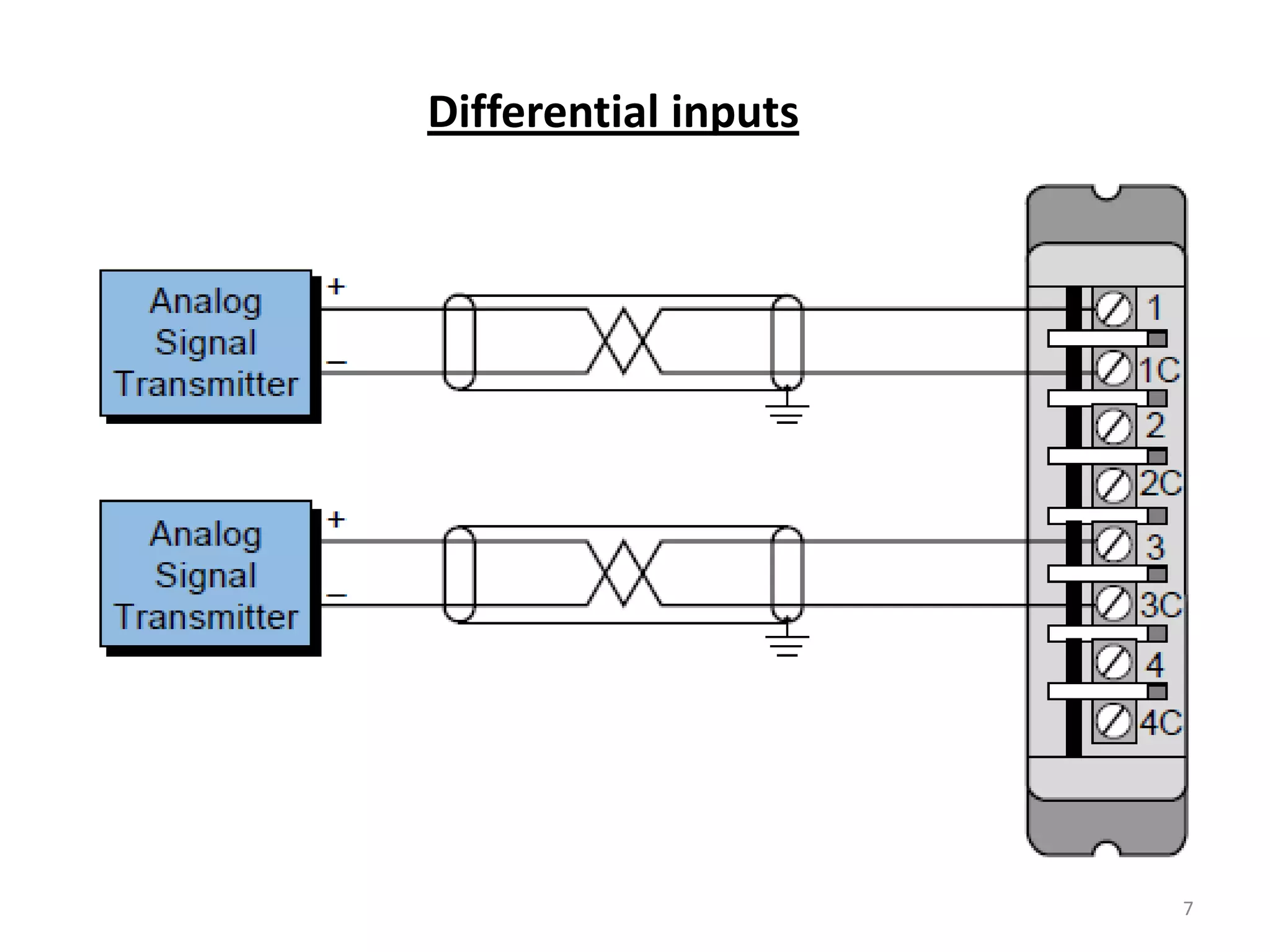
Differential inputs


                      7
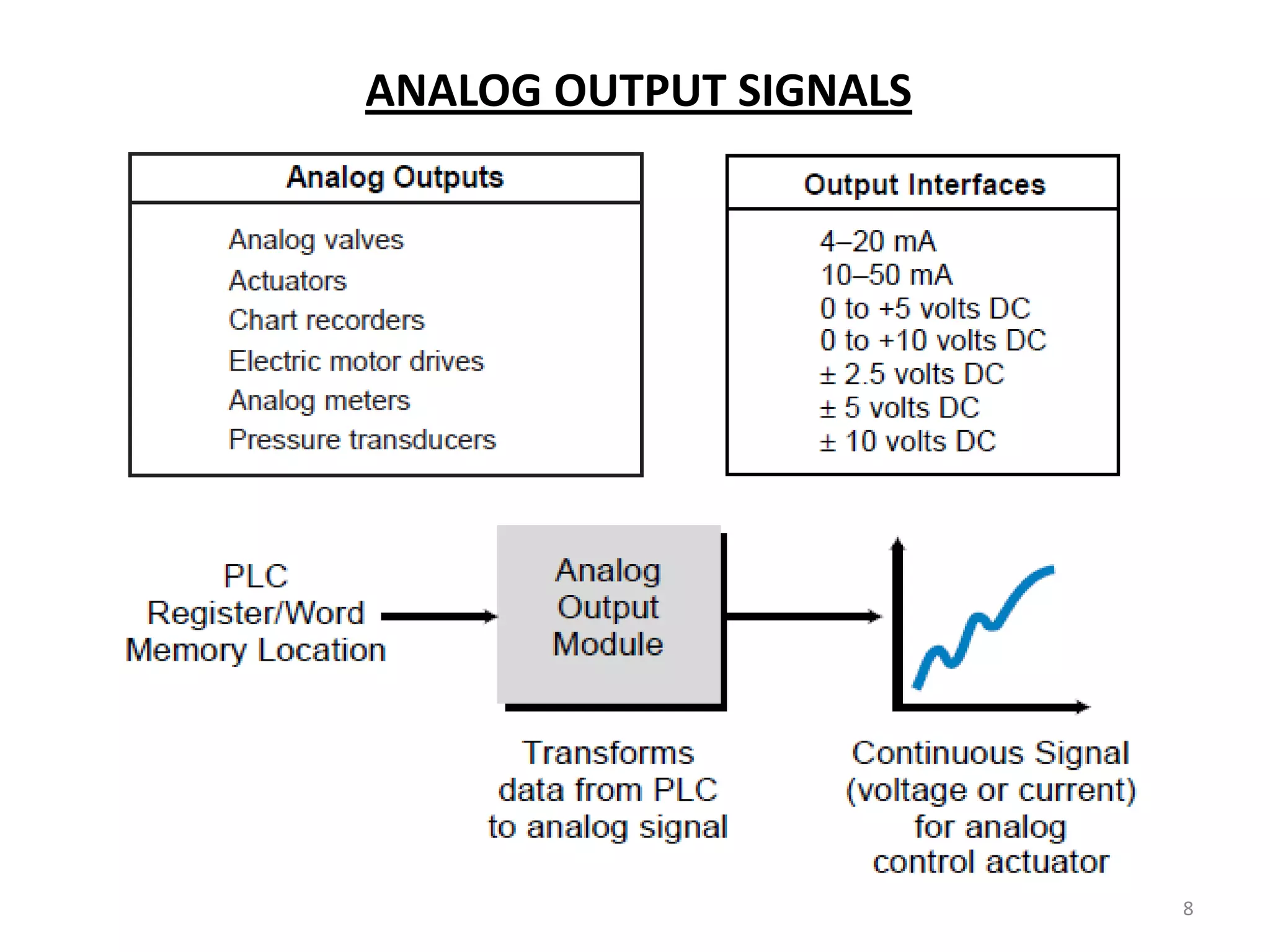
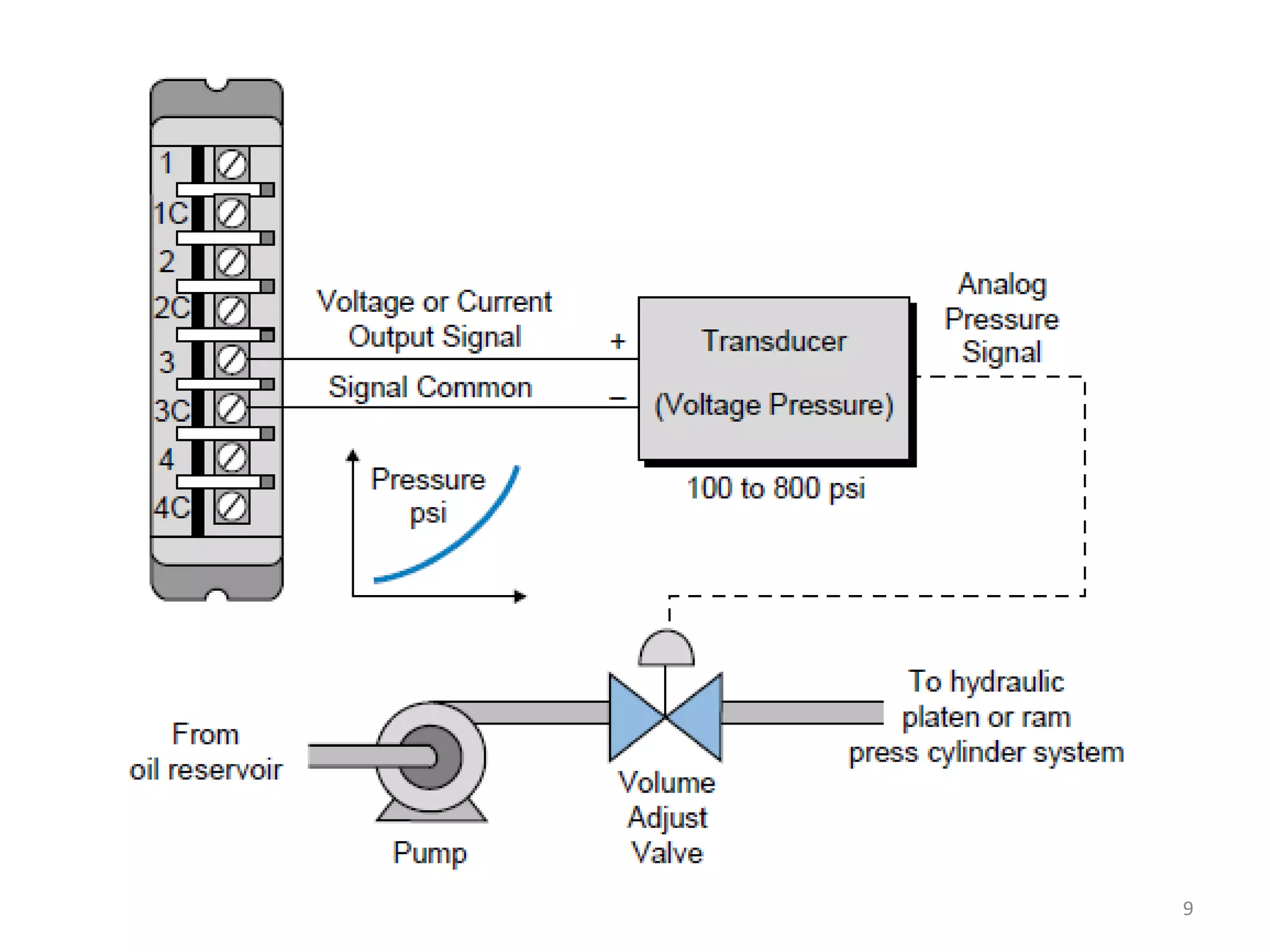
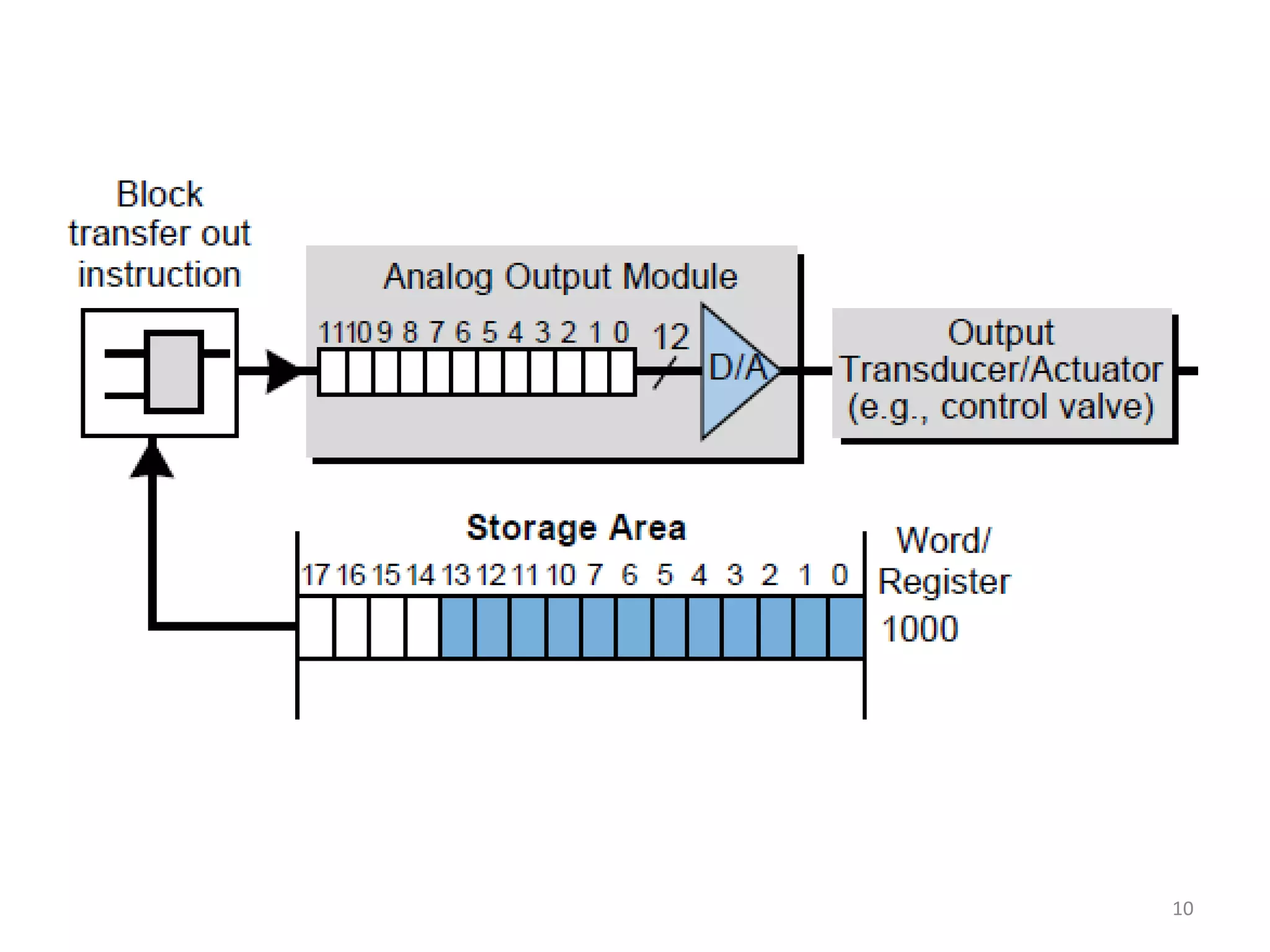
ANALOG OUTPUT SIGNALS


                        8
9
10
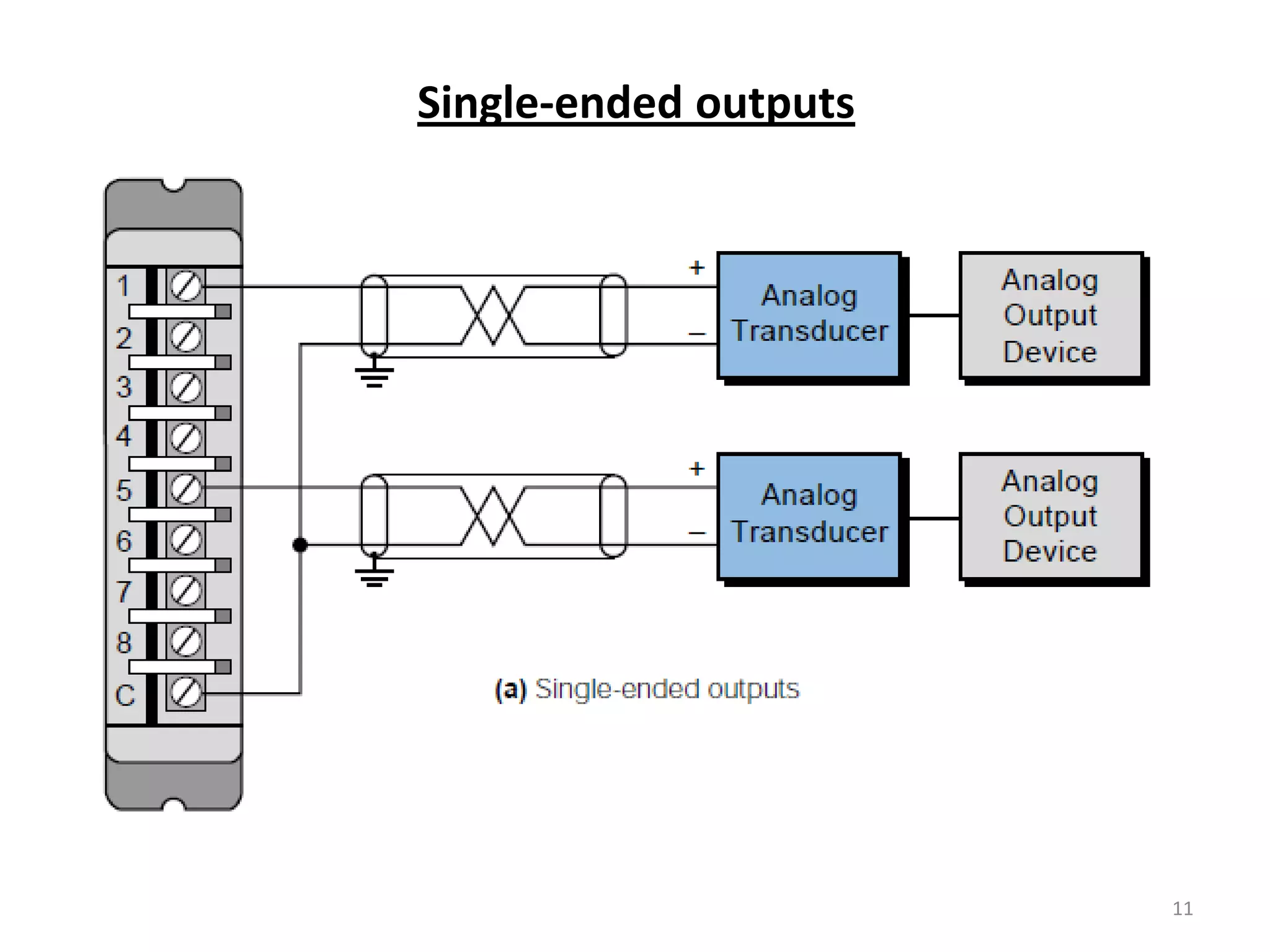
Single-ended outputs


                       11
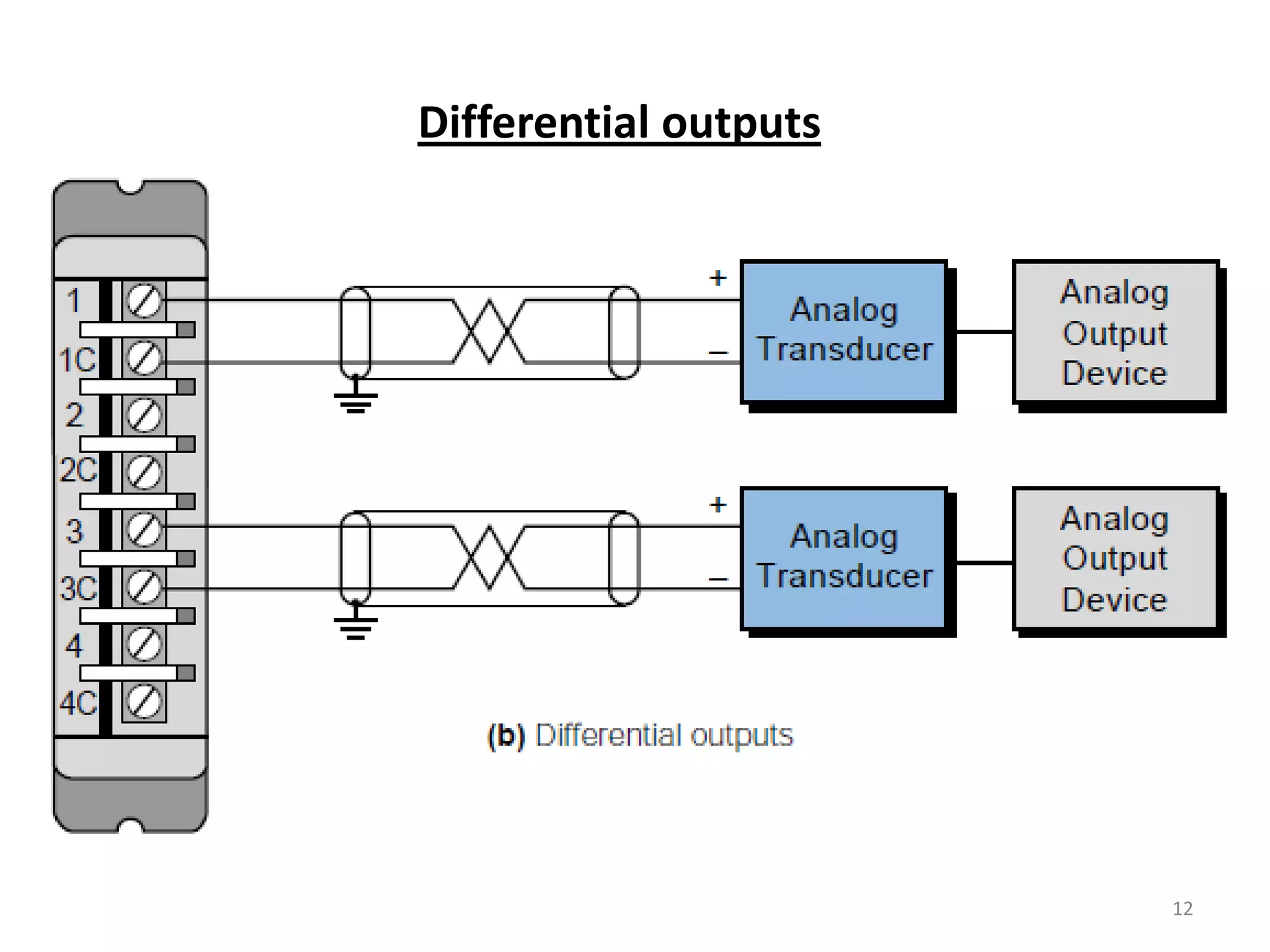
Differential outputs


                       12
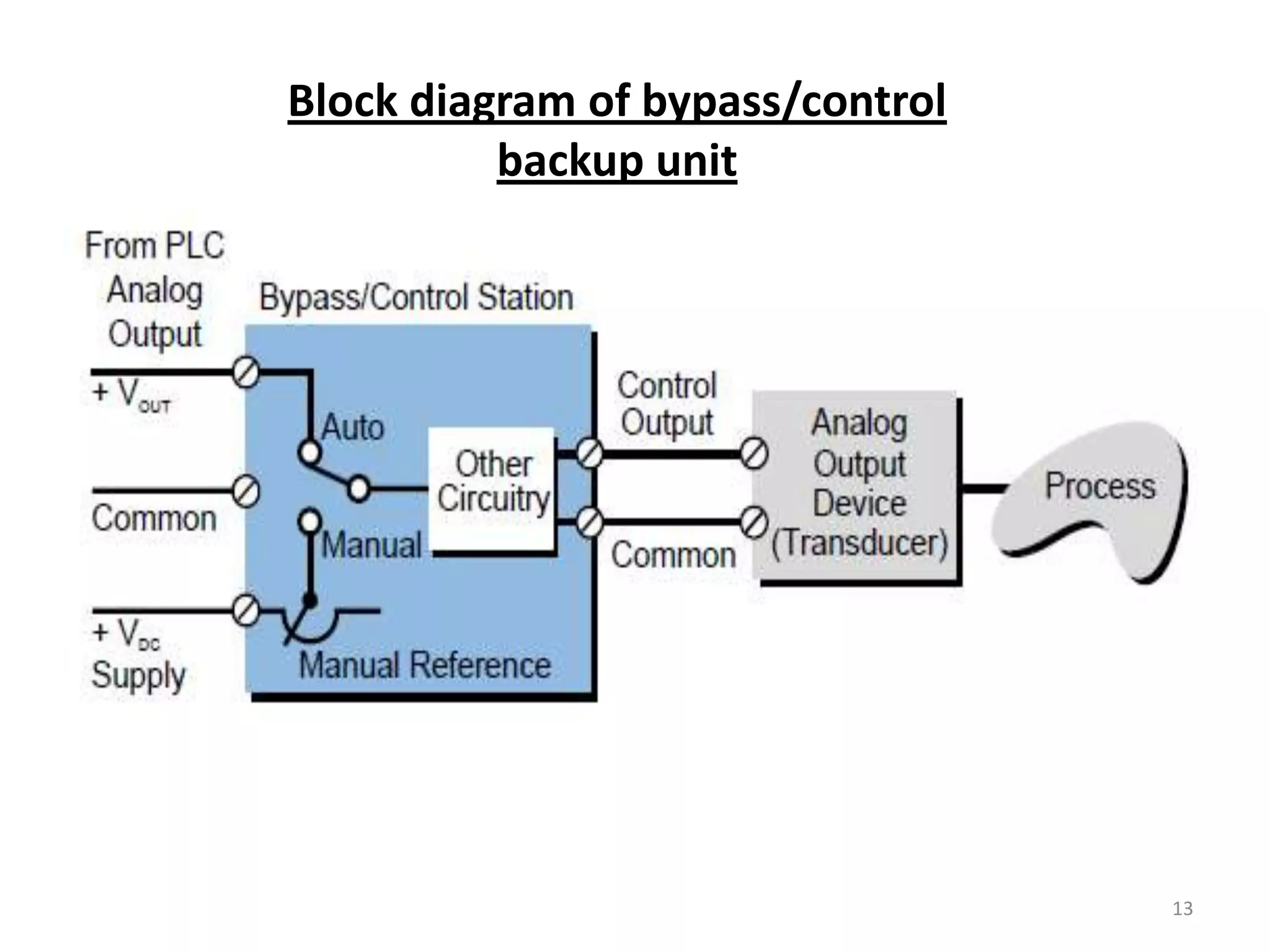
Block diagram of bypass/control
          backup unit


                                  13
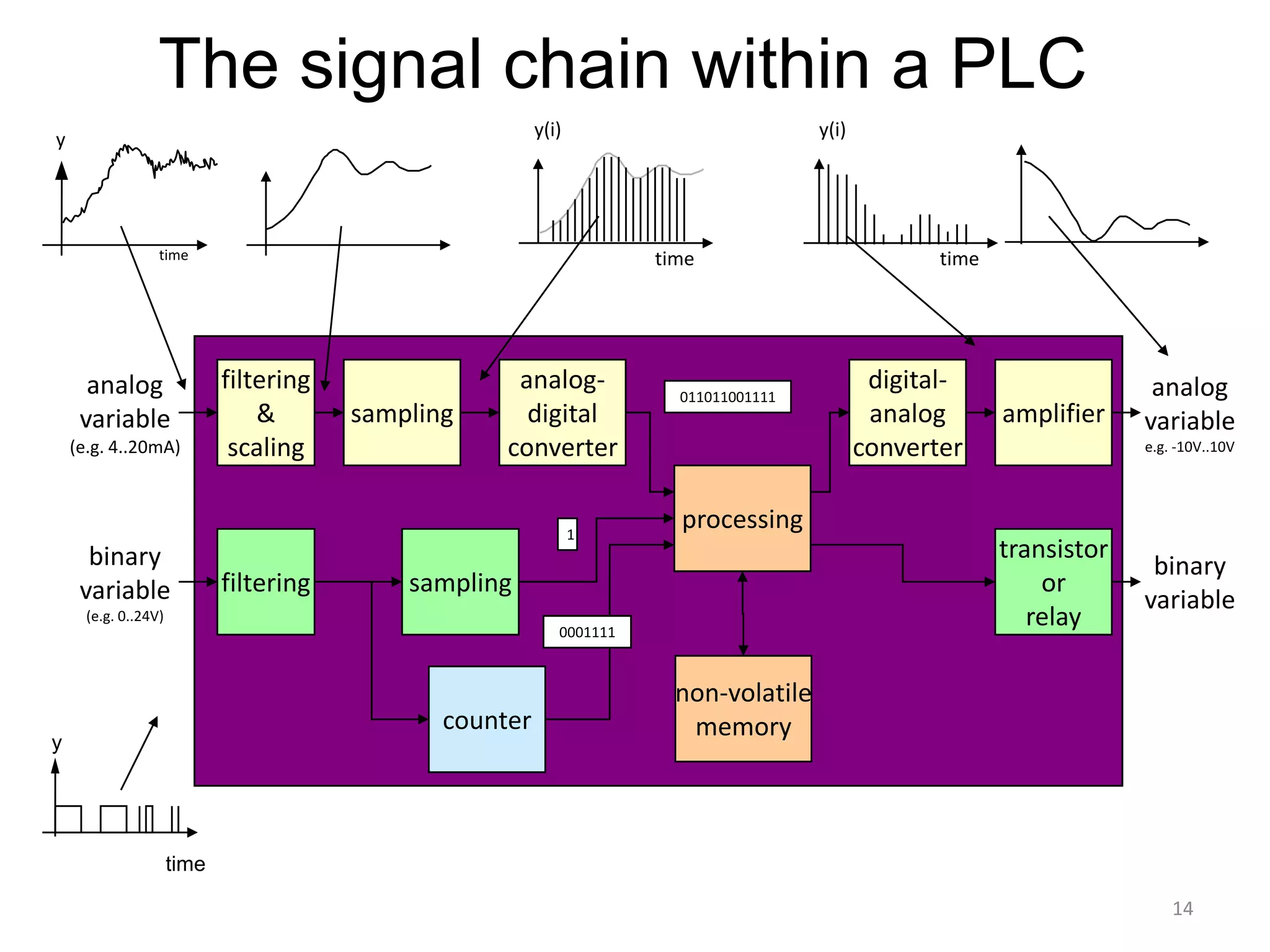
The signal chain within a PLC
y                                                         y(i)                          y(i)


                  time                                                 time                           time


      analog                 filtering                analog-            011011001111
                                                                                                digital-                   analog
     variable                    &       sampling      digital                                  analog       amplifier    variable
    (e.g. 4..20mA)            scaling                converter                                 converter                  e.g. -10V..10V


                                                                 1
                                                                         processing
      binary                                                                                                 transistor
                                                                                                                           binary
     variable                filtering       sampling                                                            or
                                                                                                                          variable
      (e.g. 0..24V)
                                                             0001111
                                                                                                                relay

                                                                         non-volatile
                                                counter                   memory
y


                      time

                                                                                                                              14
15
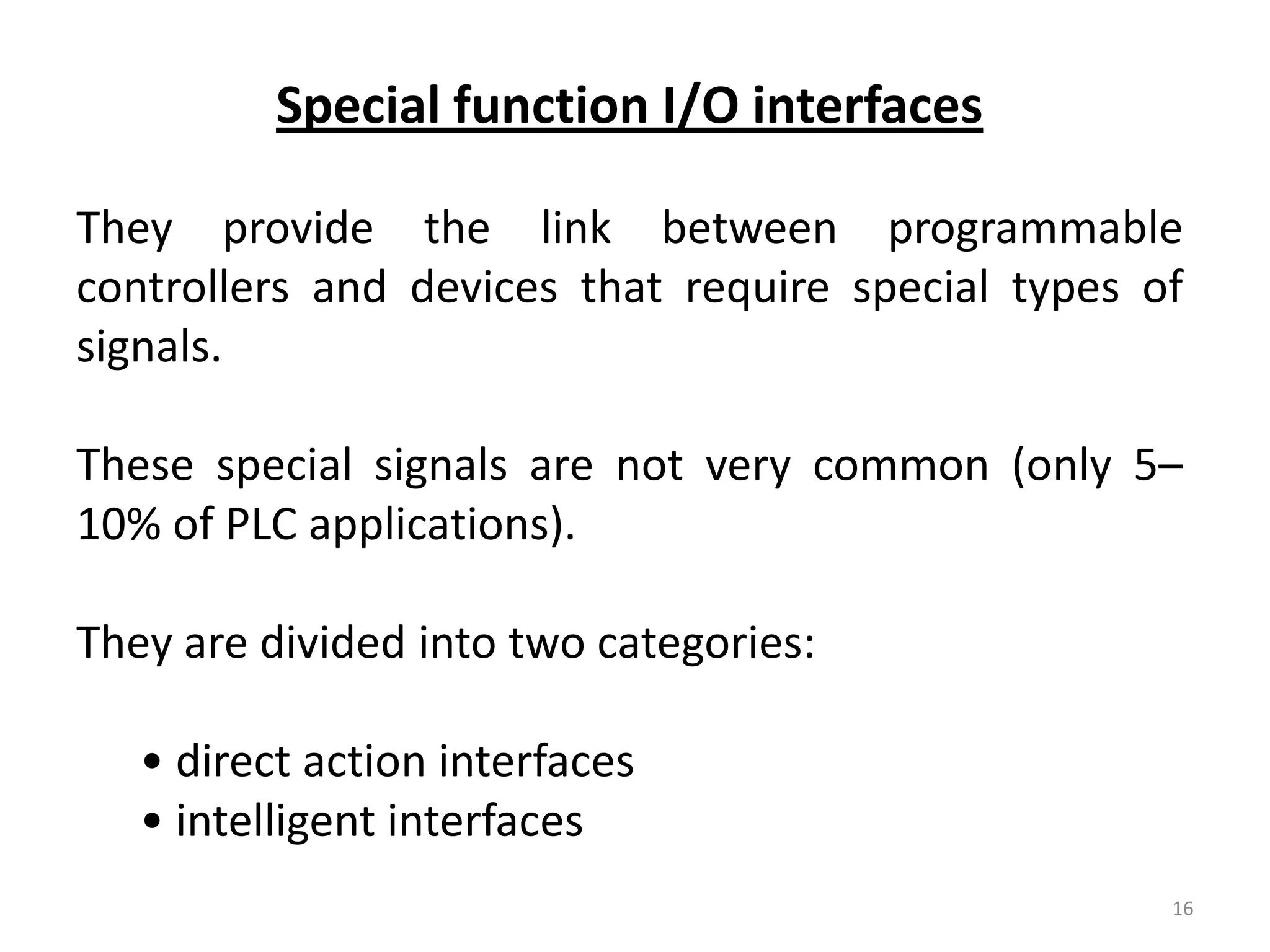
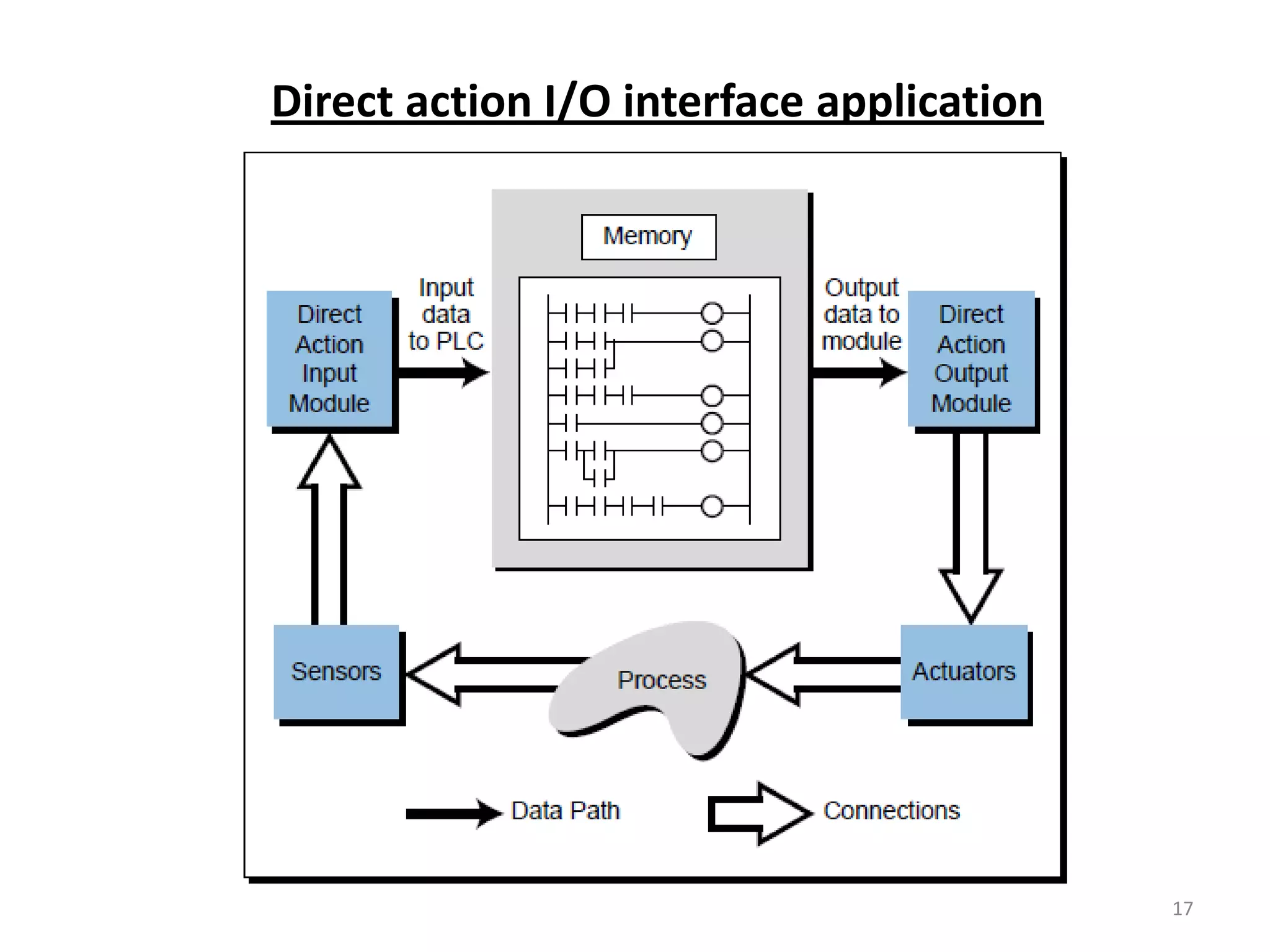
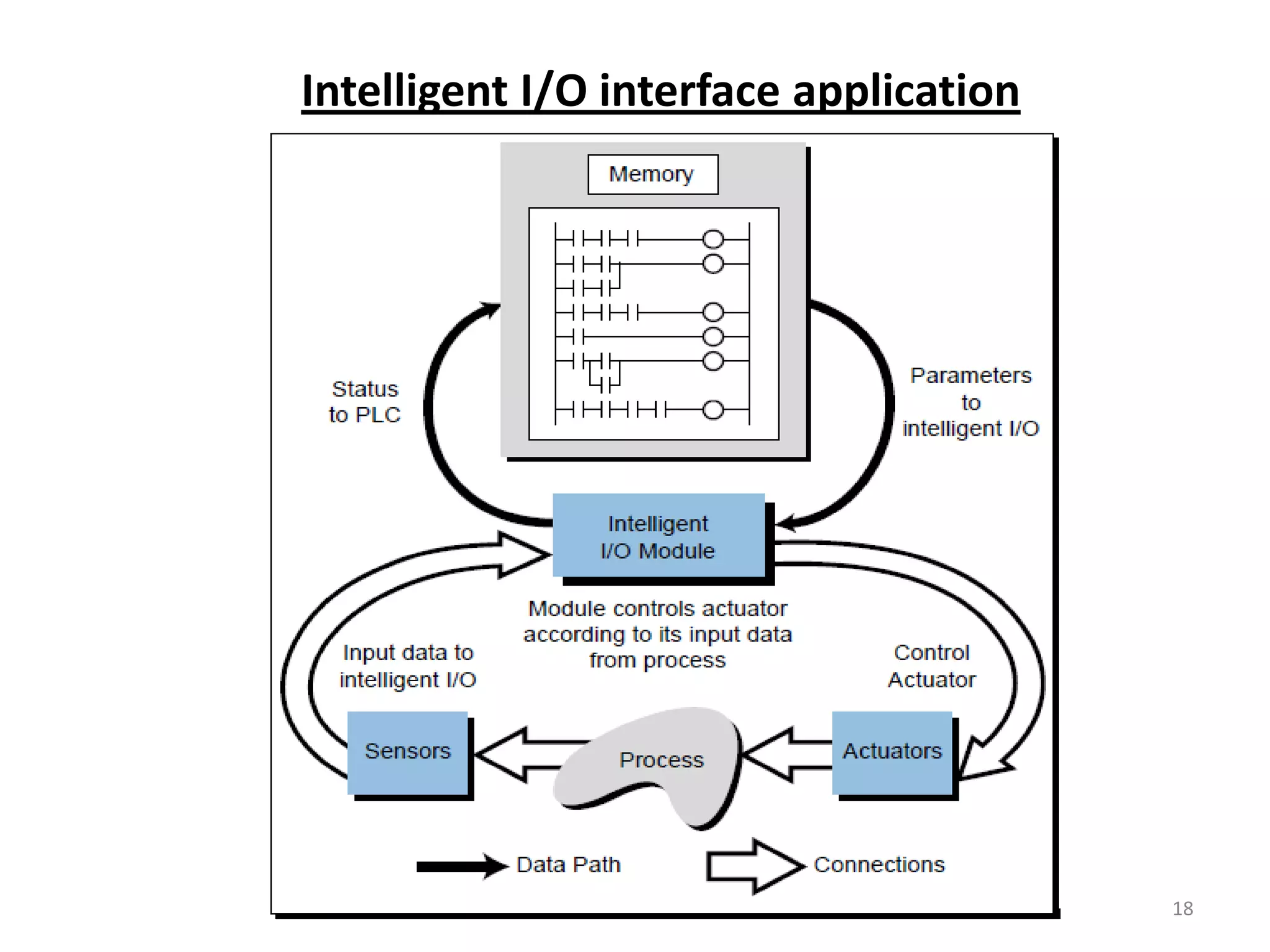
Special function I/O interfaces
They provide the link between programmable
controllers and devices that require special types of
signals.

These special signals are not very common (only 5–
10% of PLC applications).

They are divided into two categories:

   • direct action interfaces
   • intelligent interfaces
                                                    16
Direct action I/O interface application


                                          17
Intelligent I/O interface application


                                        18
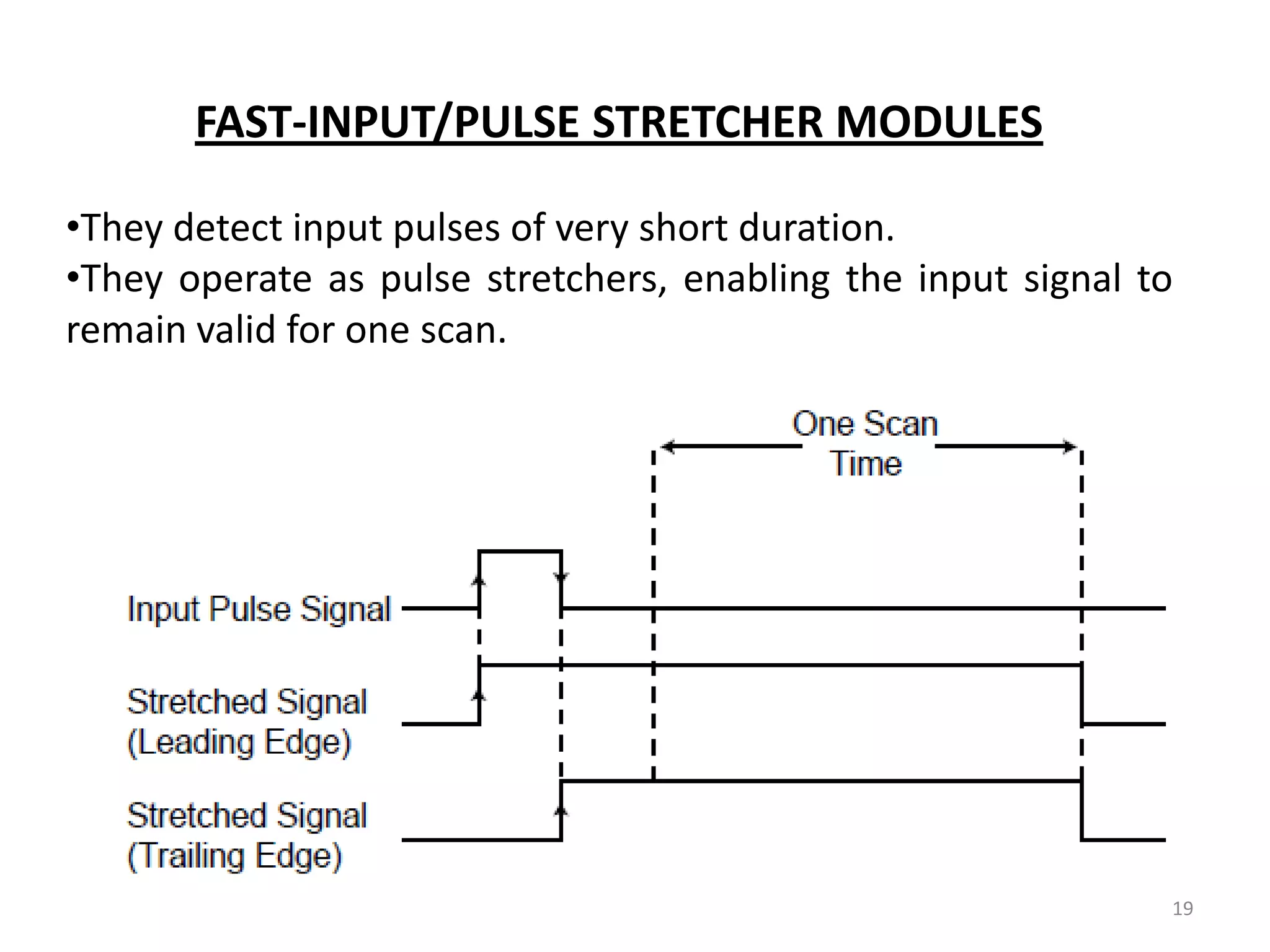
FAST-INPUT/PULSE STRETCHER MODULES

•They detect input pulses of very short duration.
•They operate as pulse stretchers, enabling the input signal to
remain valid for one scan.


                                                              19
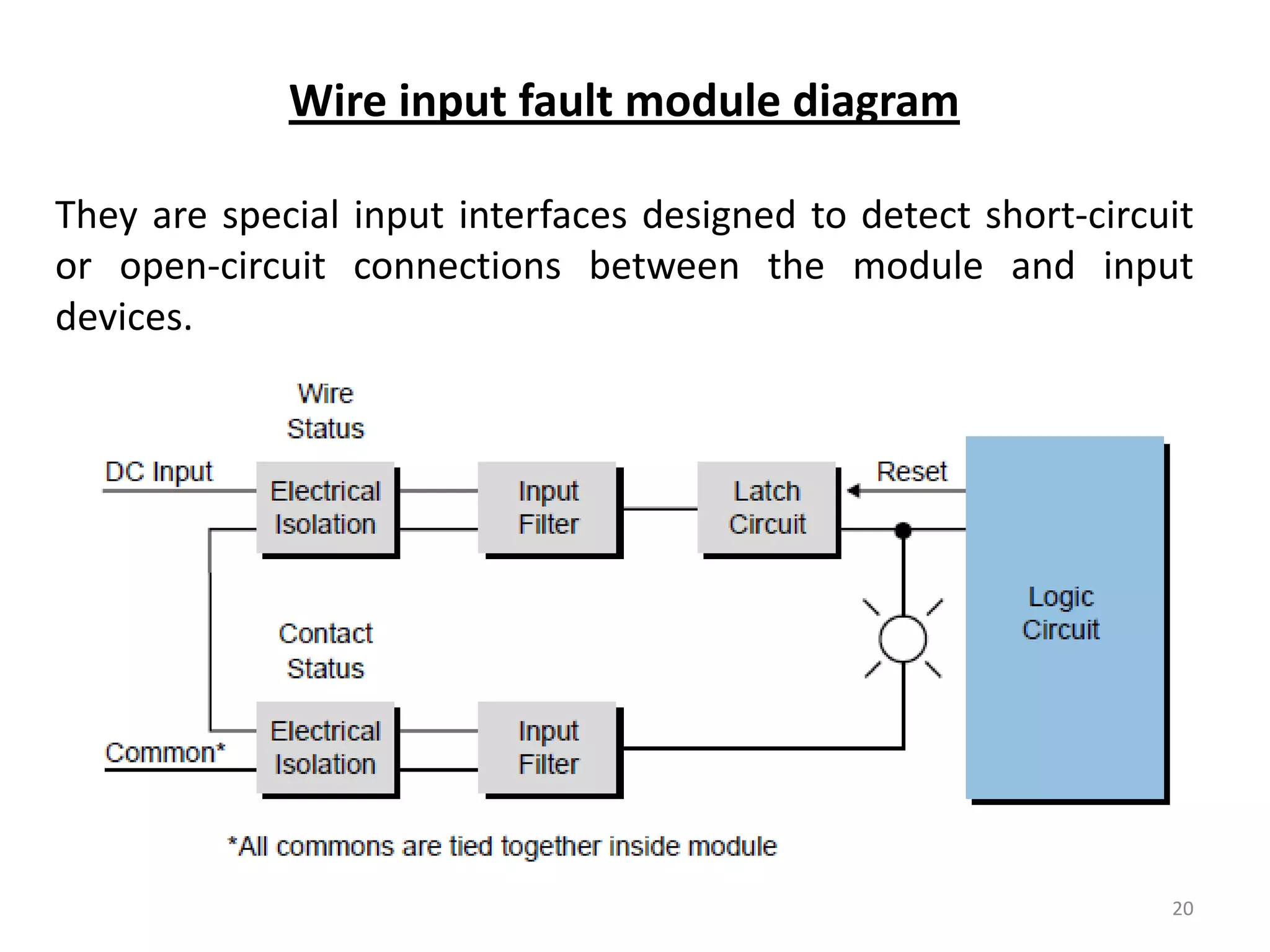
Wire input fault module diagram

They are special input interfaces designed to detect short-circuit
or open-circuit connections between the module and input
devices.


                                                                20
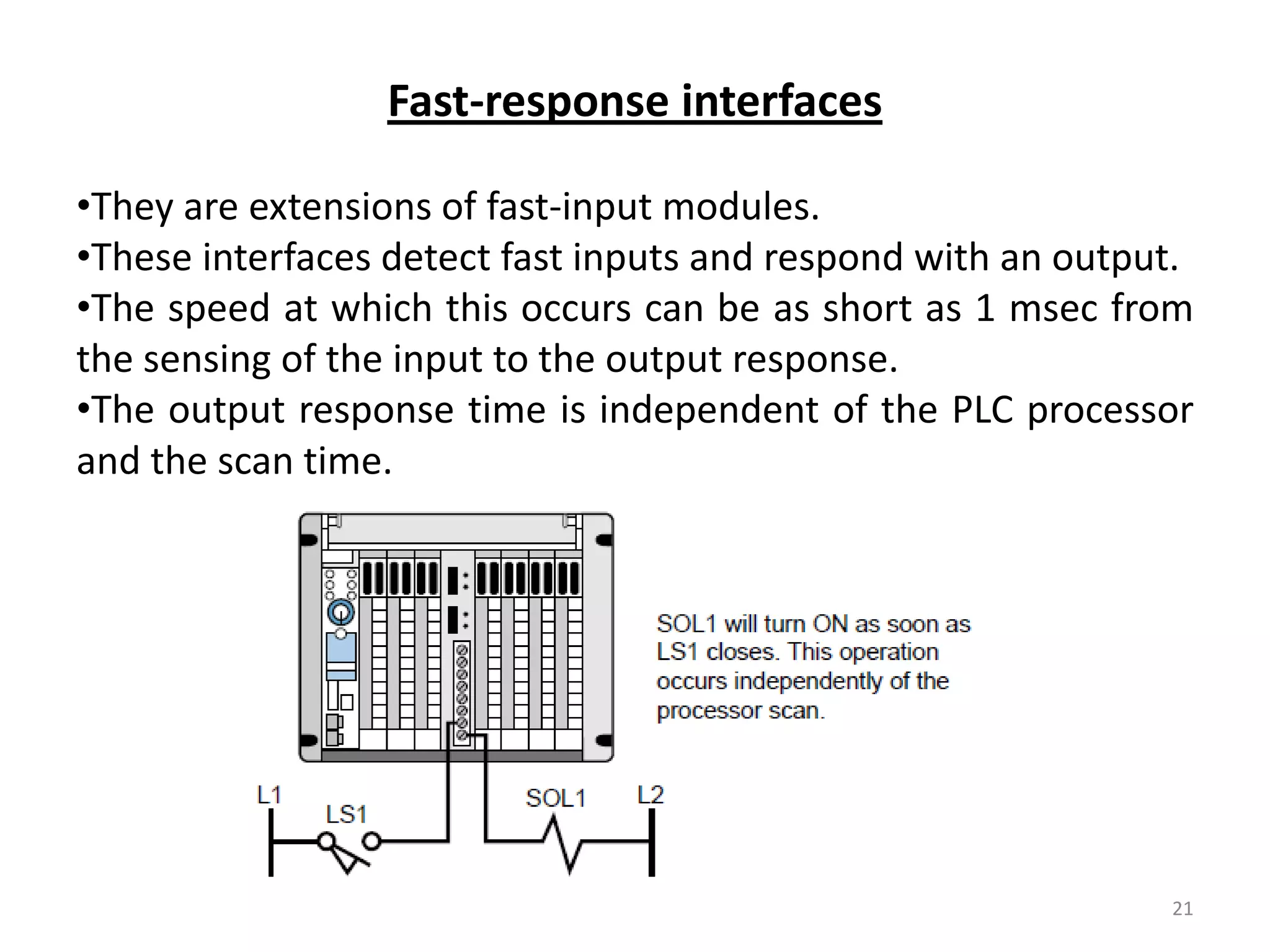
Fast-response interfaces

•They are extensions of fast-input modules.
•These interfaces detect fast inputs and respond with an output.
•The speed at which this occurs can be as short as 1 msec from
the sensing of the input to the output response.
•The output response time is independent of the PLC processor
and the scan time.


                                                              21
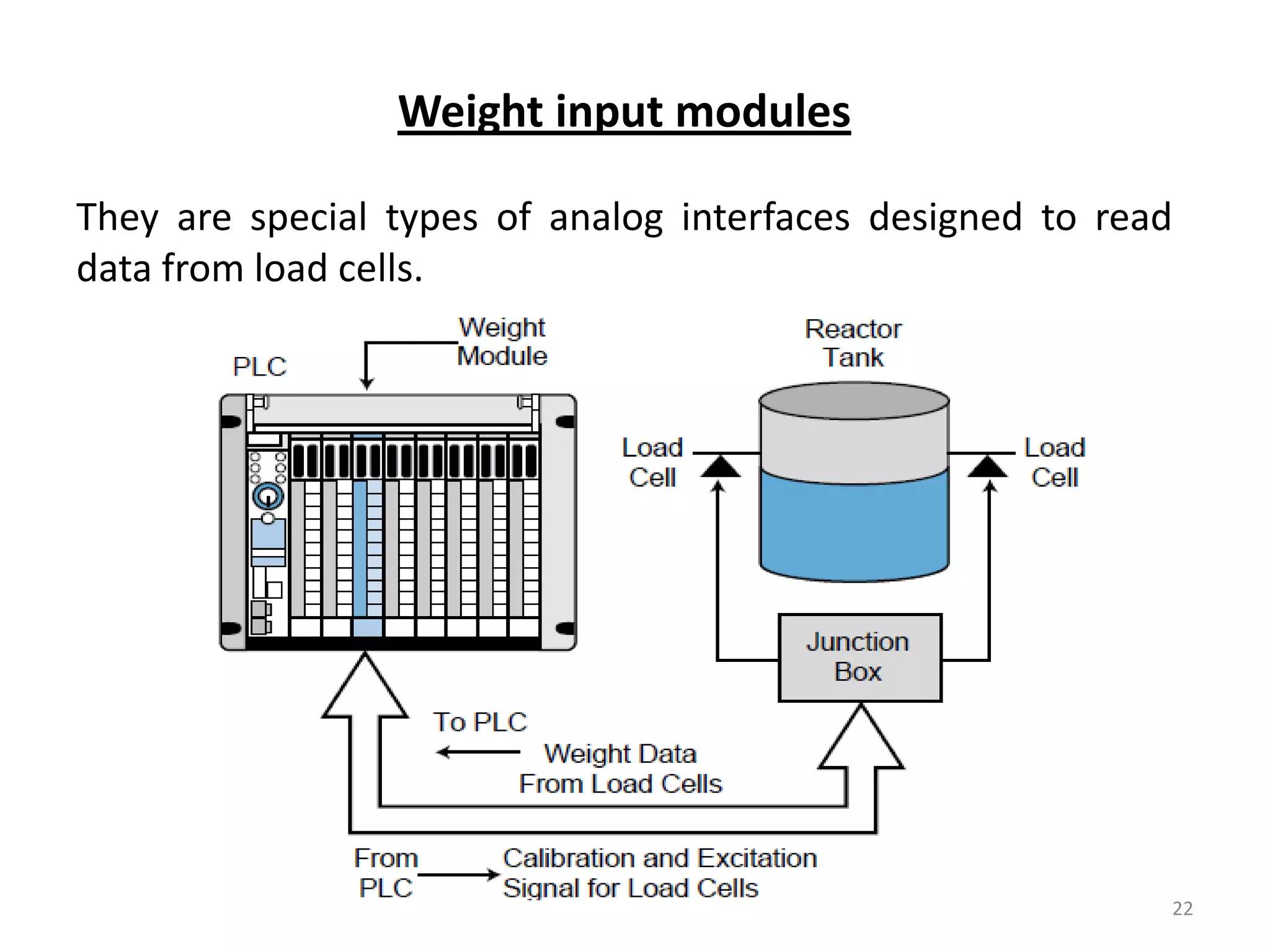
Weight input modules

They are special types of analog interfaces designed to read
data from load cells.


                                                           22
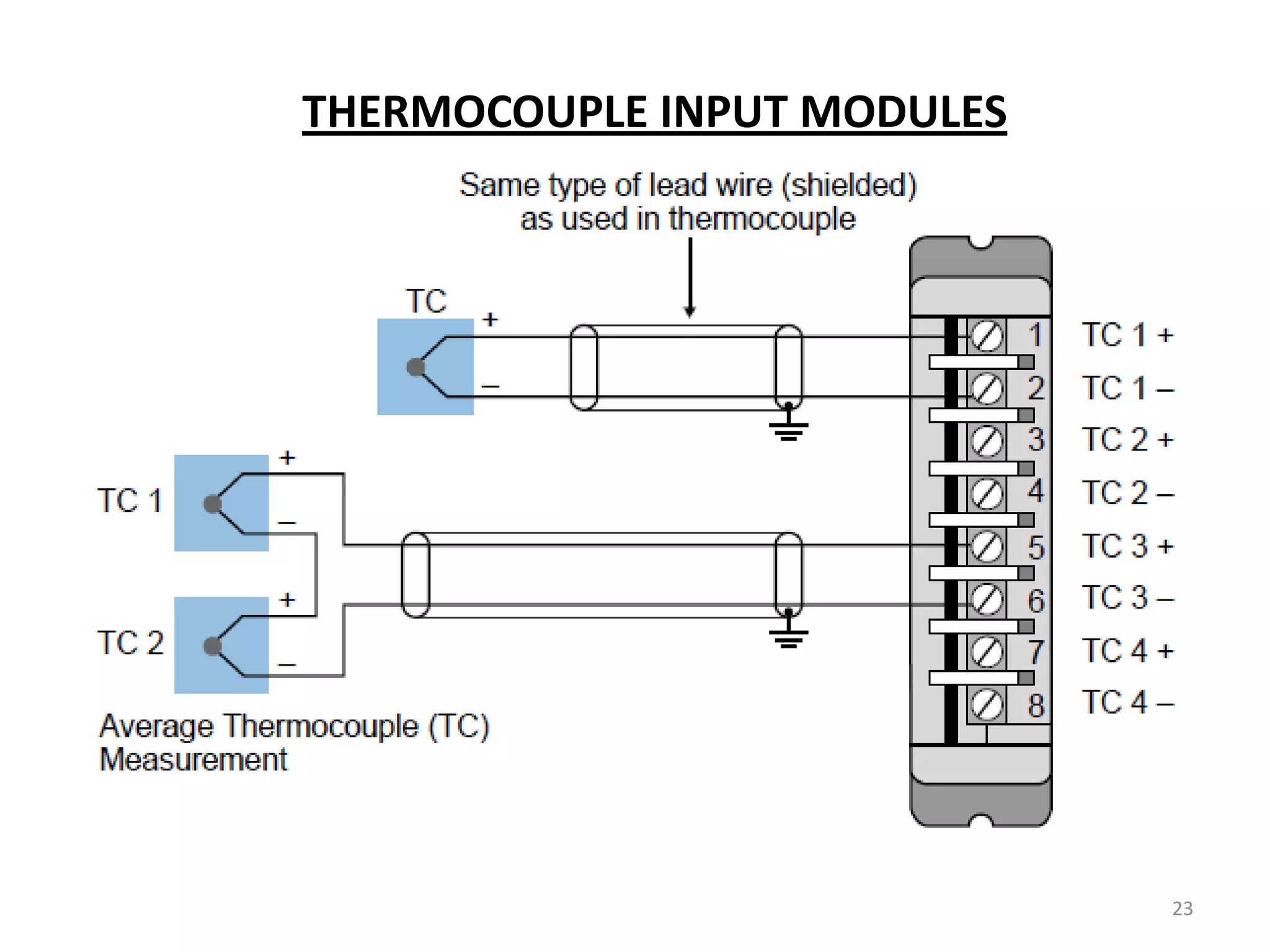
THERMOCOUPLE INPUT MODULES


                             23
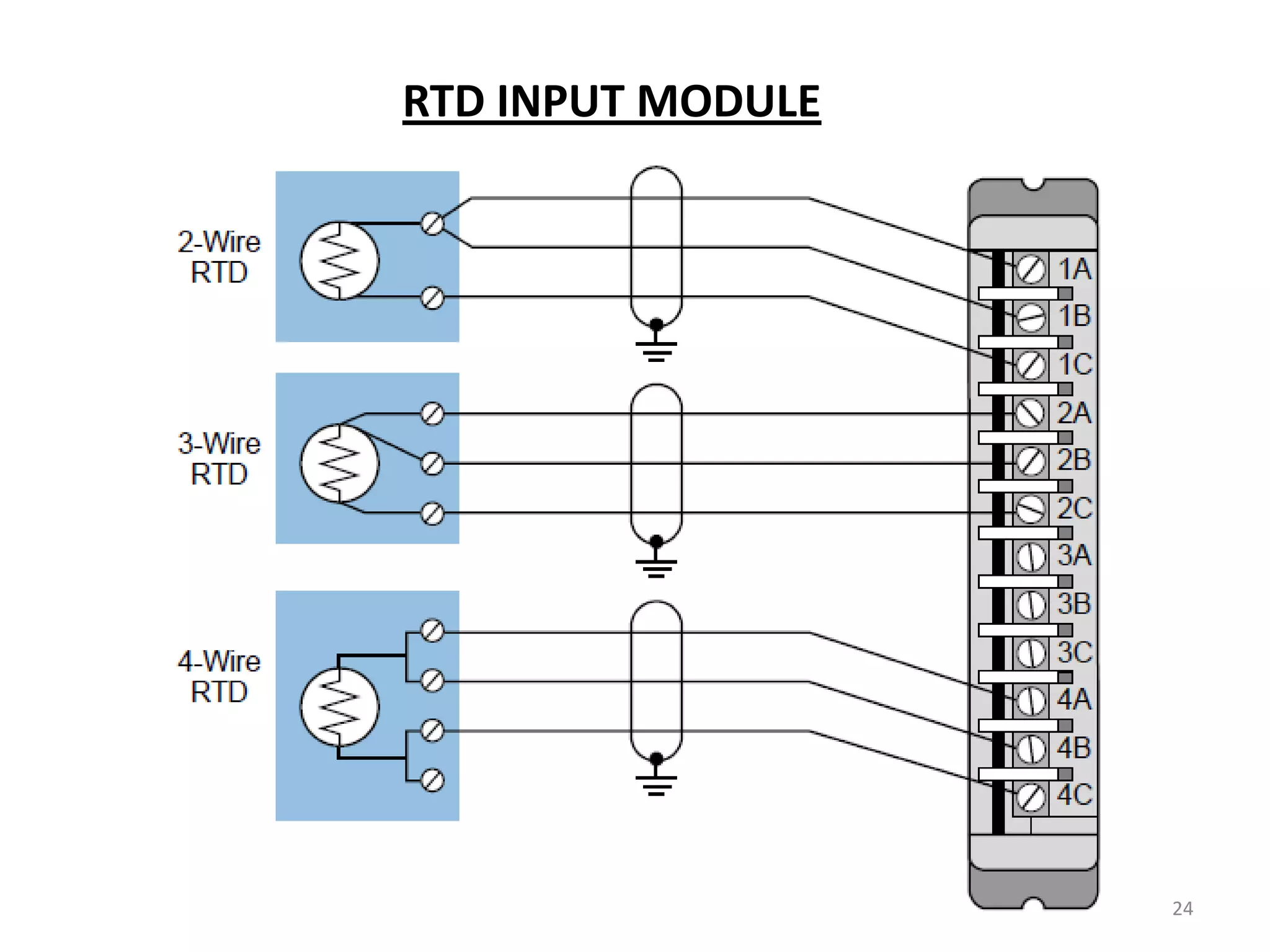
RTD INPUT MODULE


                   24
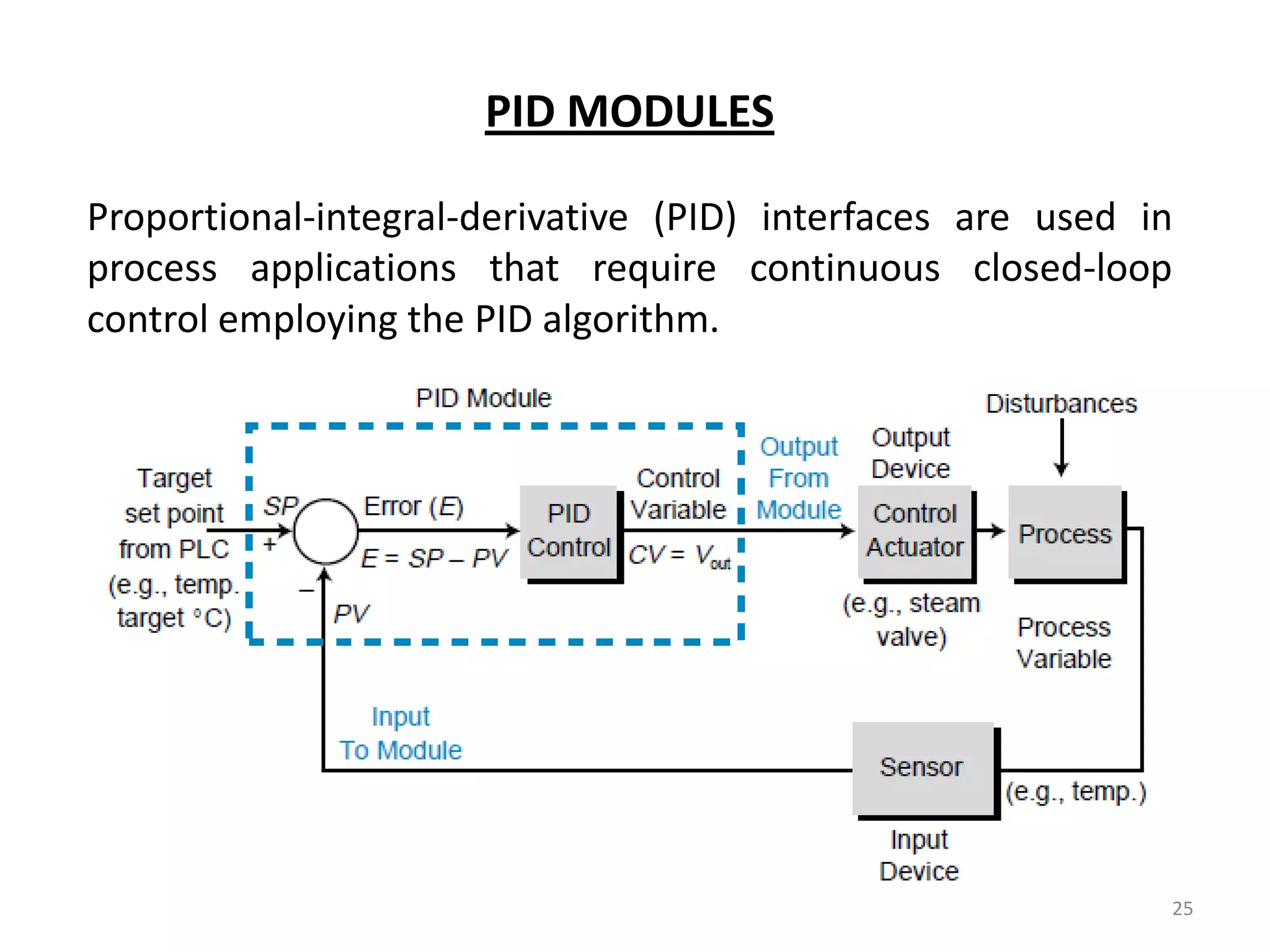
PID MODULES

Proportional-integral-derivative (PID) interfaces are used in
process applications that require continuous closed-loop
control employing the PID algorithm.


                                                            25
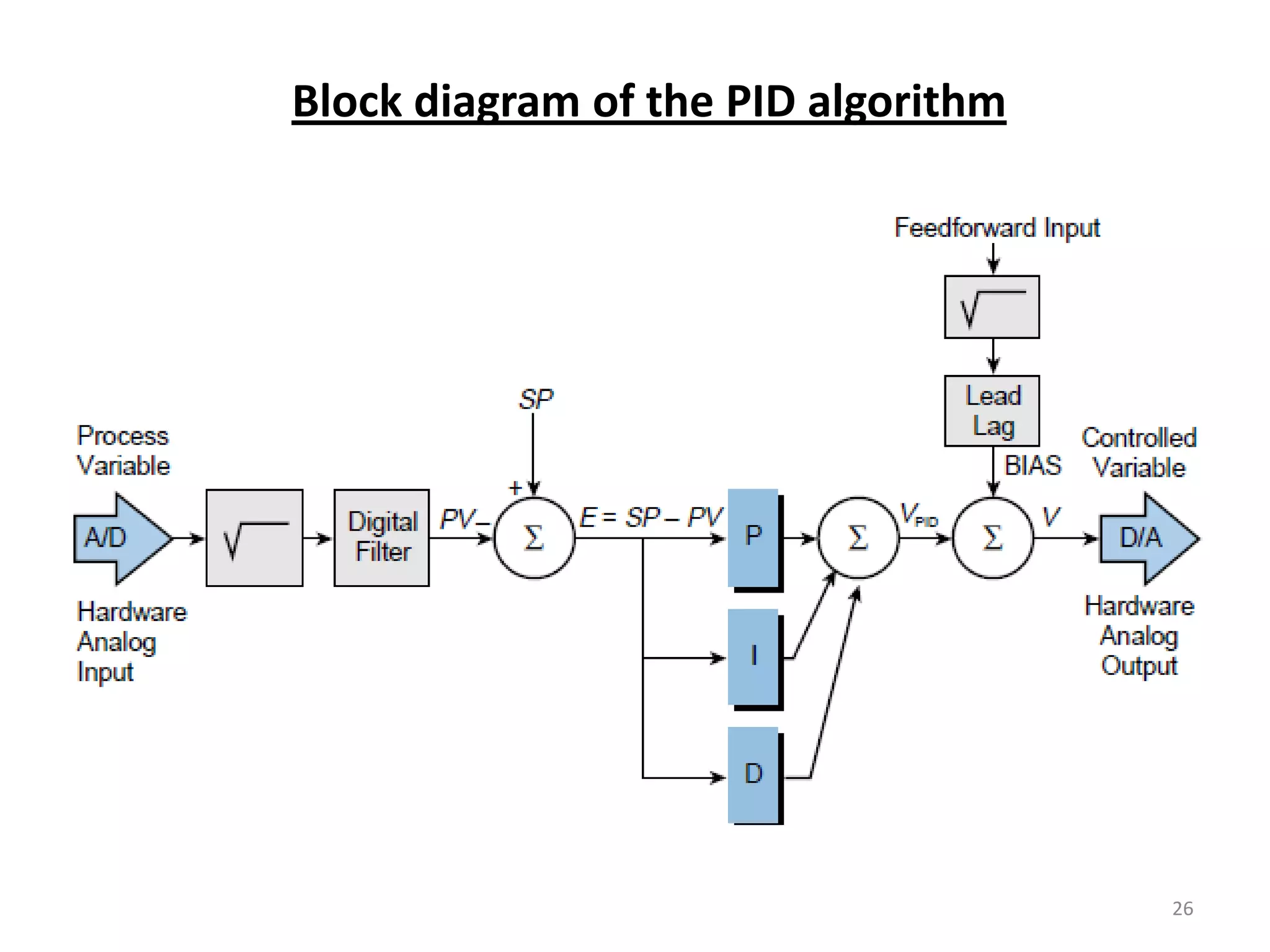
Block diagram of the PID algorithm


                                     26
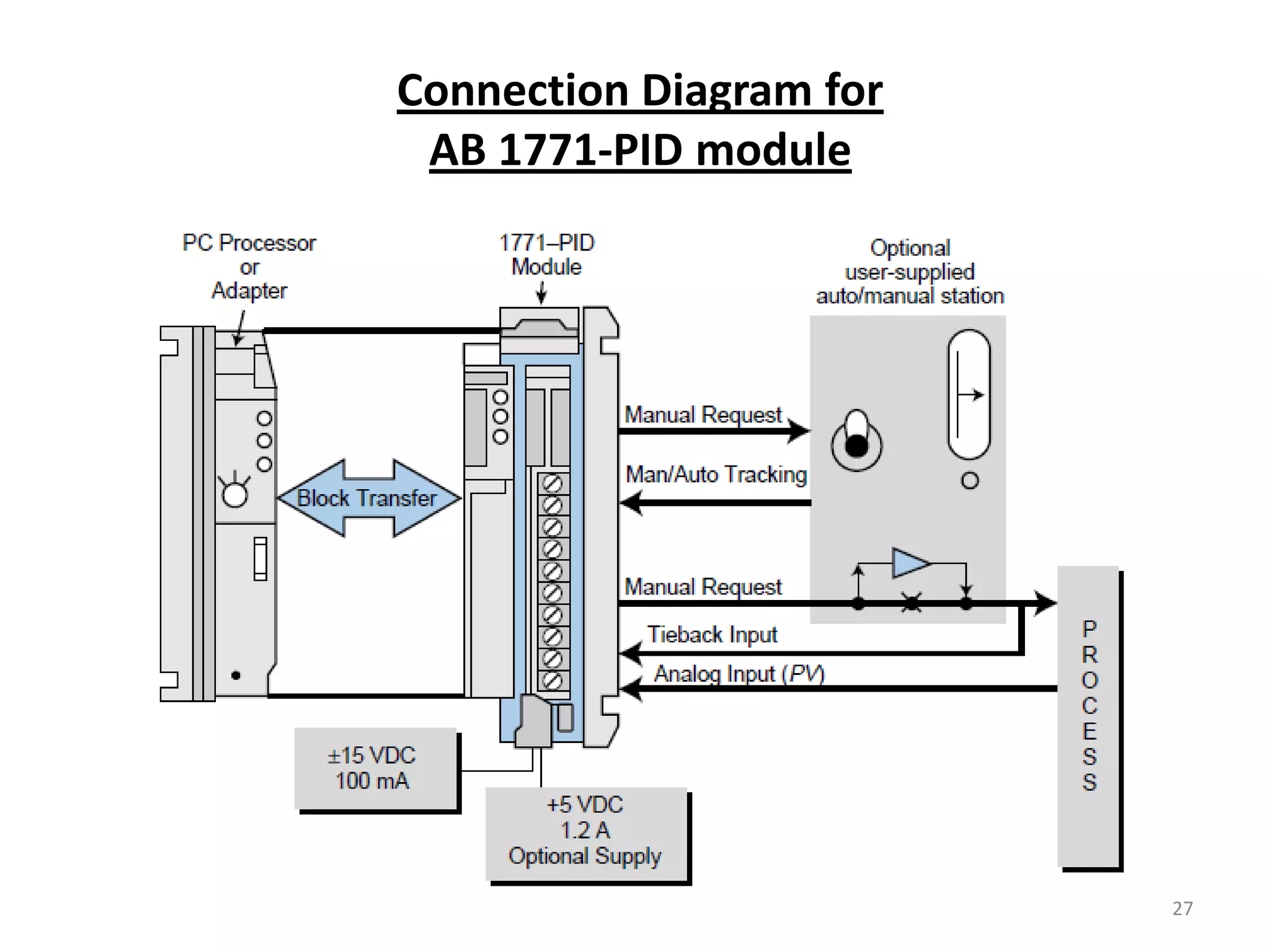
Connection Diagram for
 AB 1771-PID module


                         27
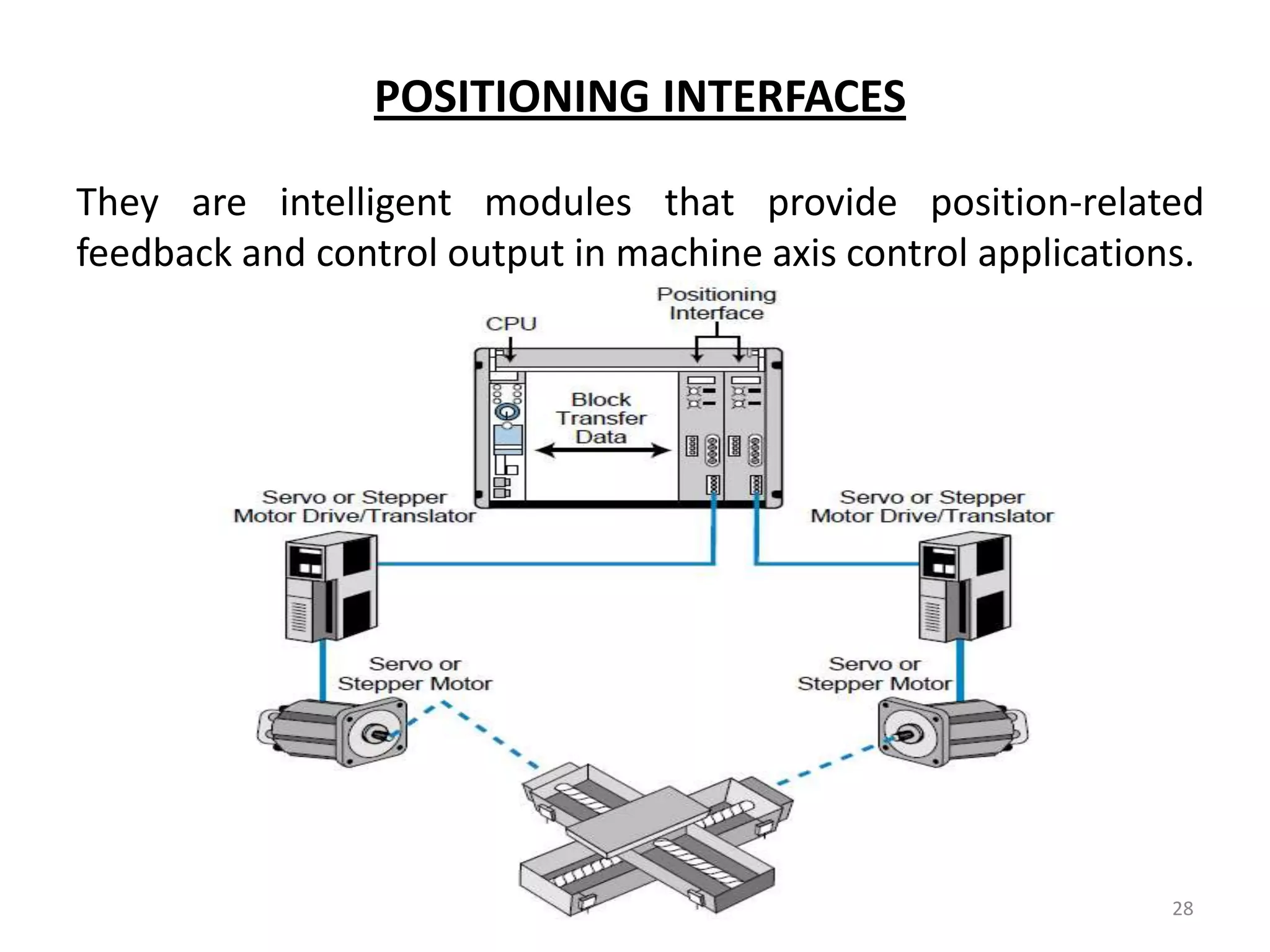
POSITIONING INTERFACES

They are intelligent modules that provide position-related
feedback and control output in machine axis control applications.


                                                               28
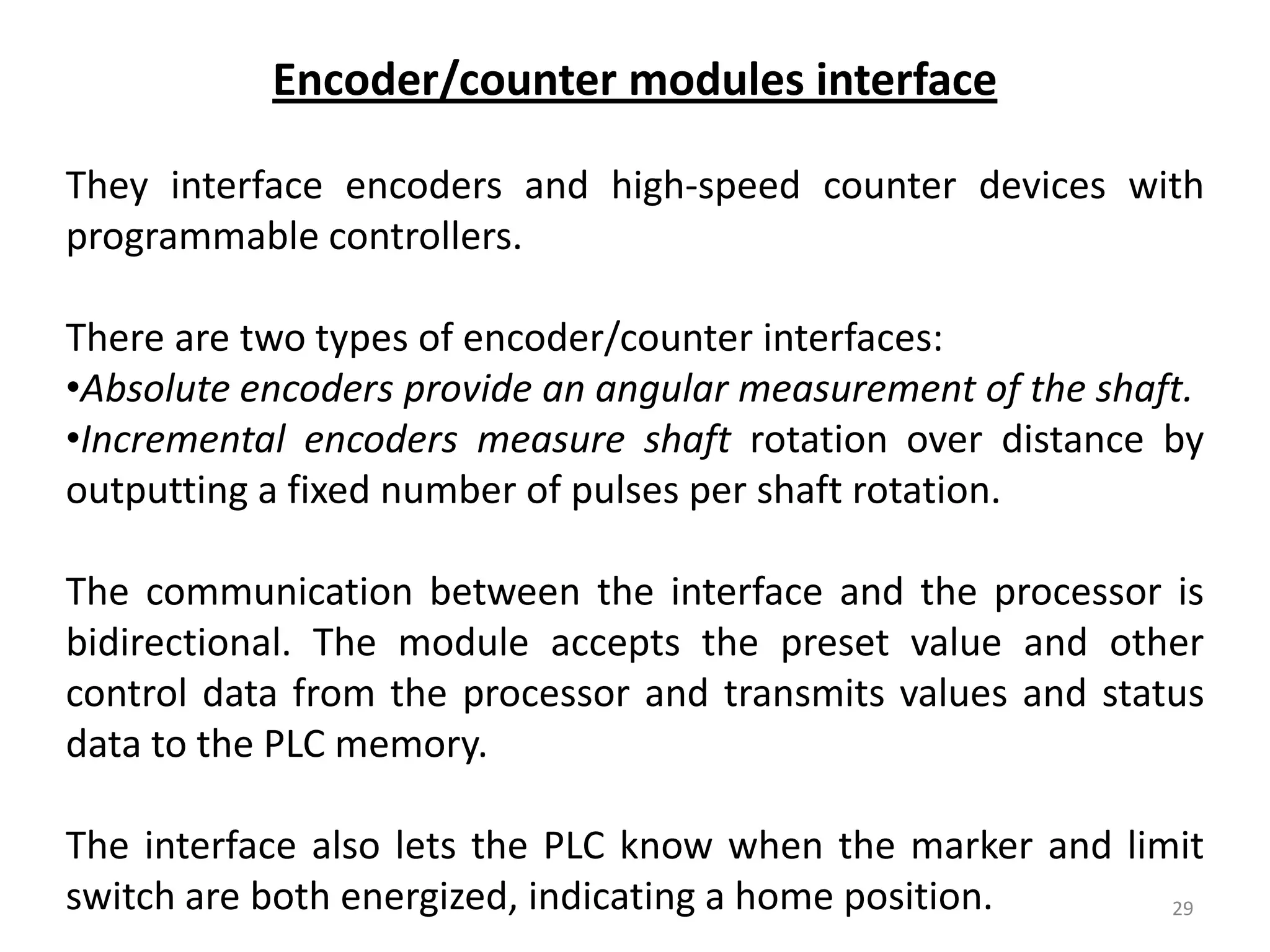
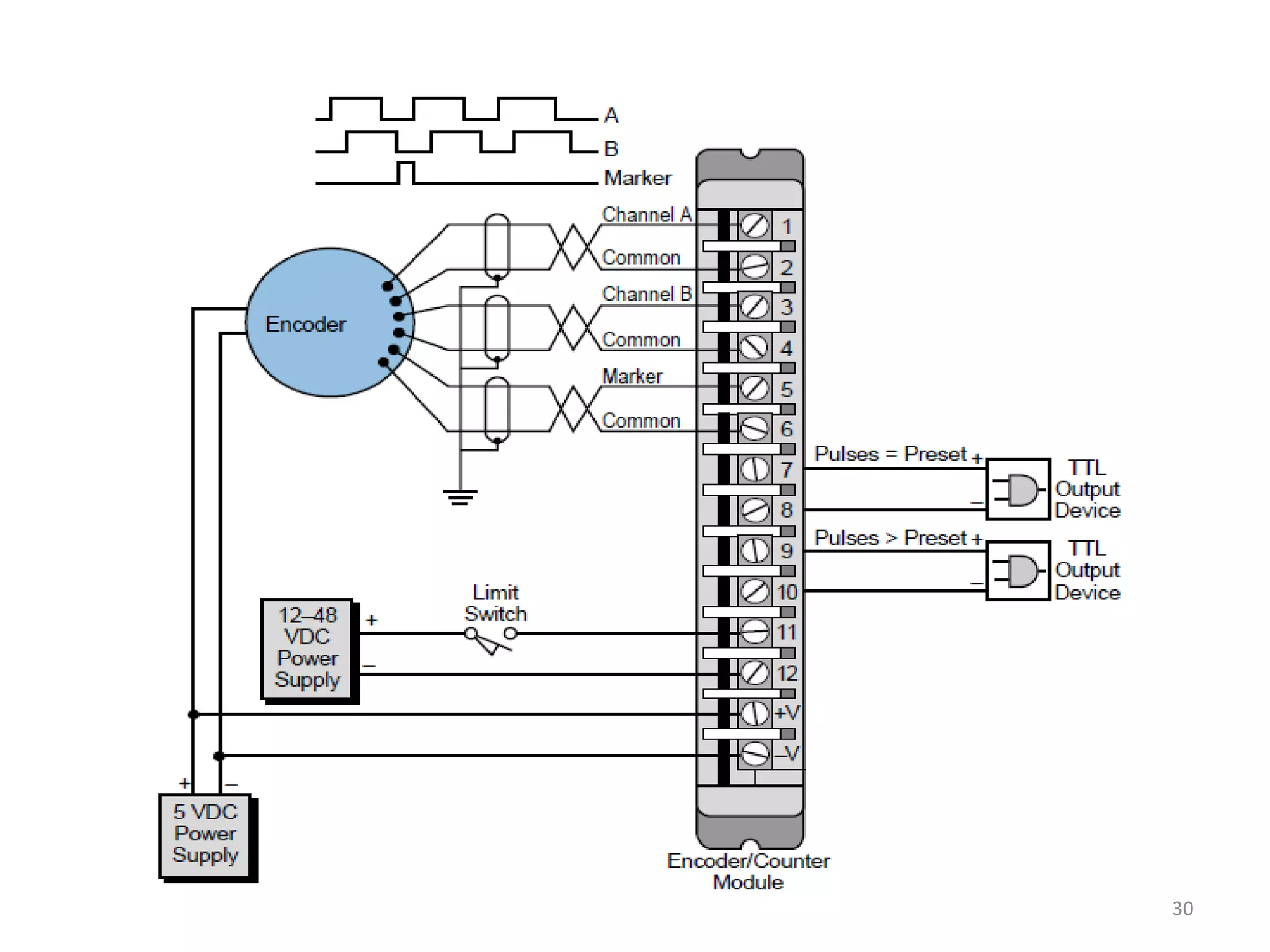
Encoder/counter modules interface

They interface encoders and high-speed counter devices with
programmable controllers.

There are two types of encoder/counter interfaces:
•Absolute encoders provide an angular measurement of the shaft.
•Incremental encoders measure shaft rotation over distance by
outputting a fixed number of pulses per shaft rotation.

The communication between the interface and the processor is
bidirectional. The module accepts the preset value and other
control data from the processor and transmits values and status
data to the PLC memory.

The interface also lets the PLC know when the marker and limit
switch are both energized, indicating a home position.      29
30
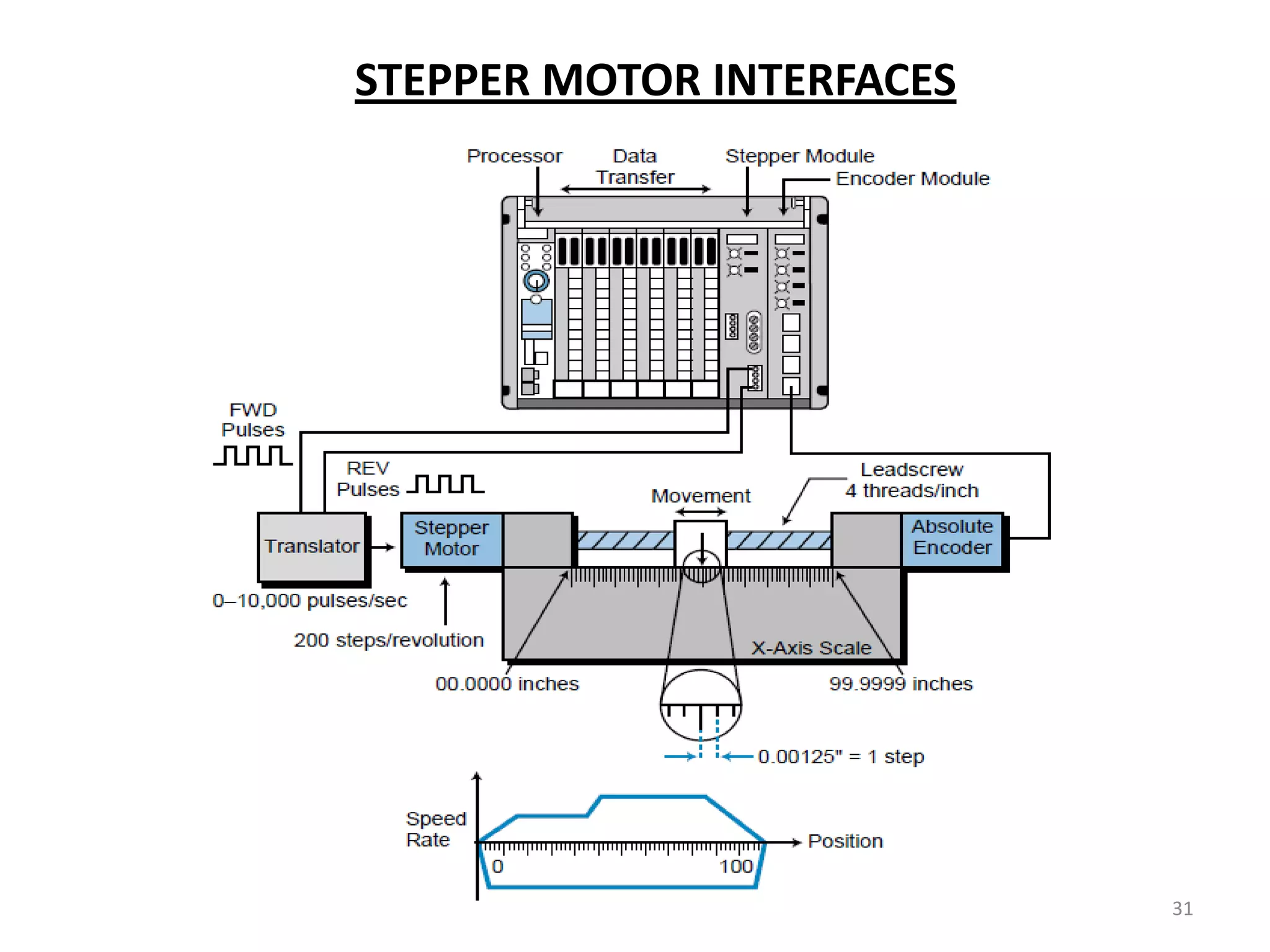
STEPPER MOTOR INTERFACES


                           31
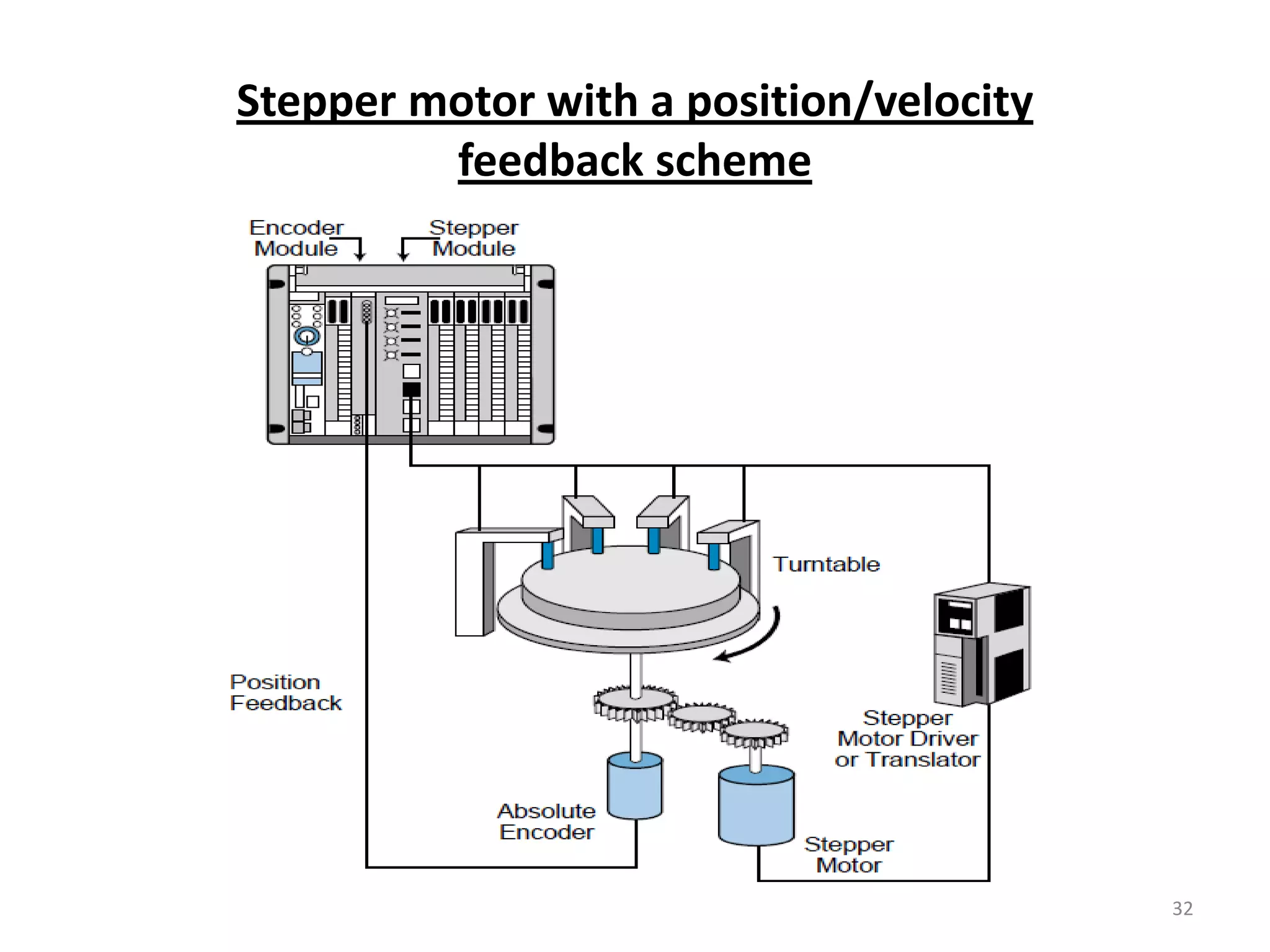
Stepper motor with a position/velocity
         feedback scheme


                                         32
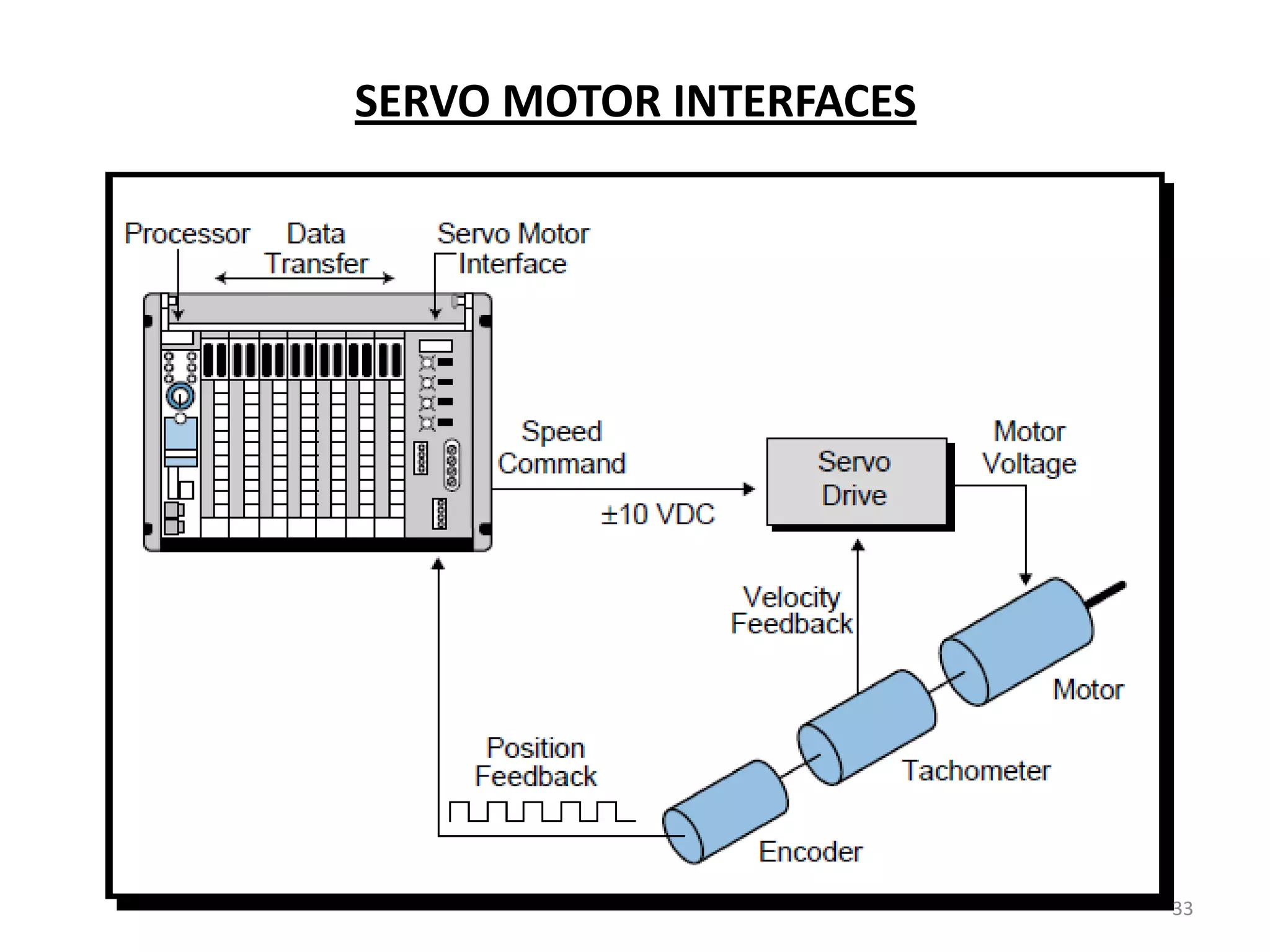
SERVO MOTOR INTERFACES


                         33
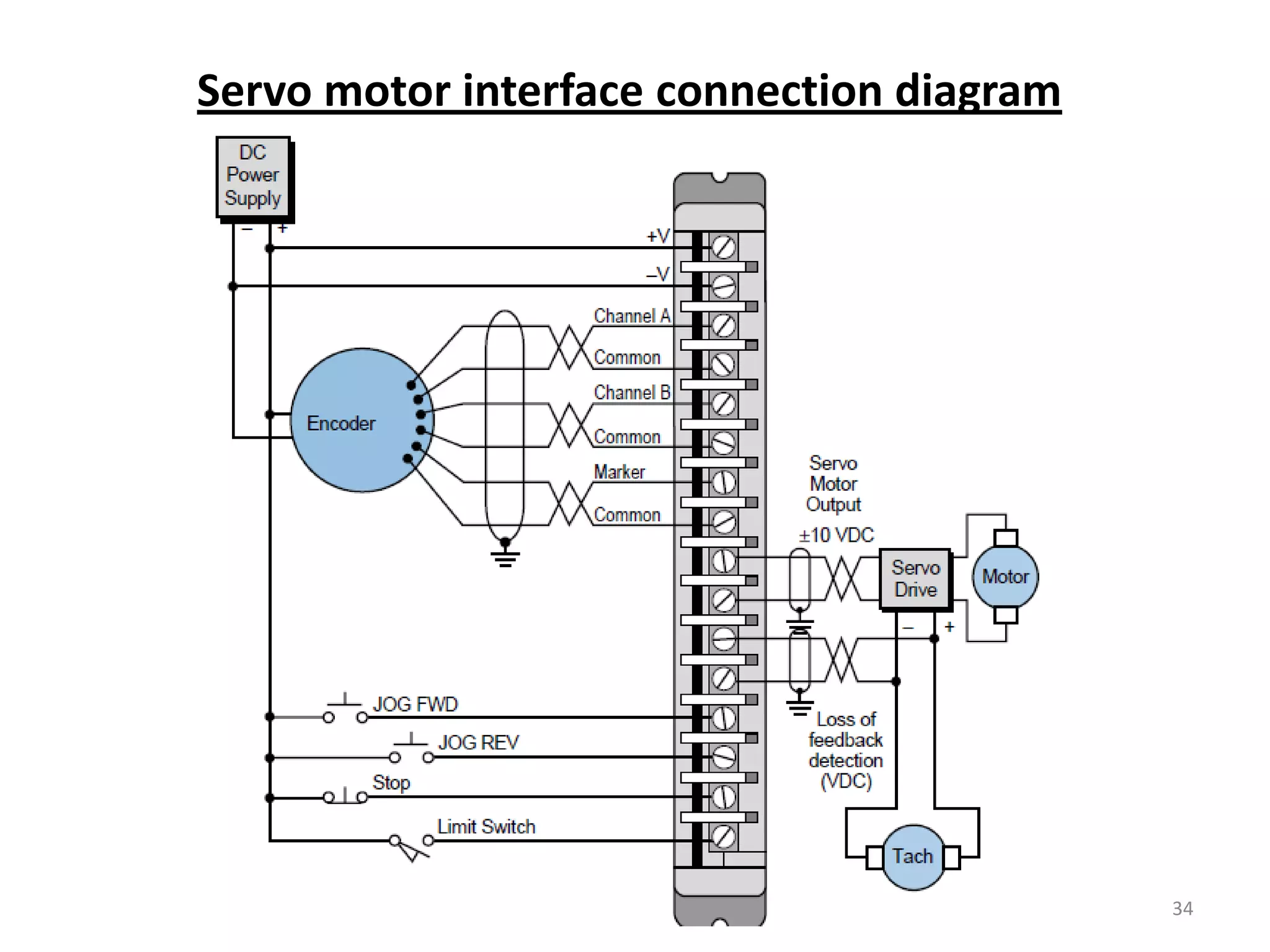
Servo motor interface connection diagram


                                           34
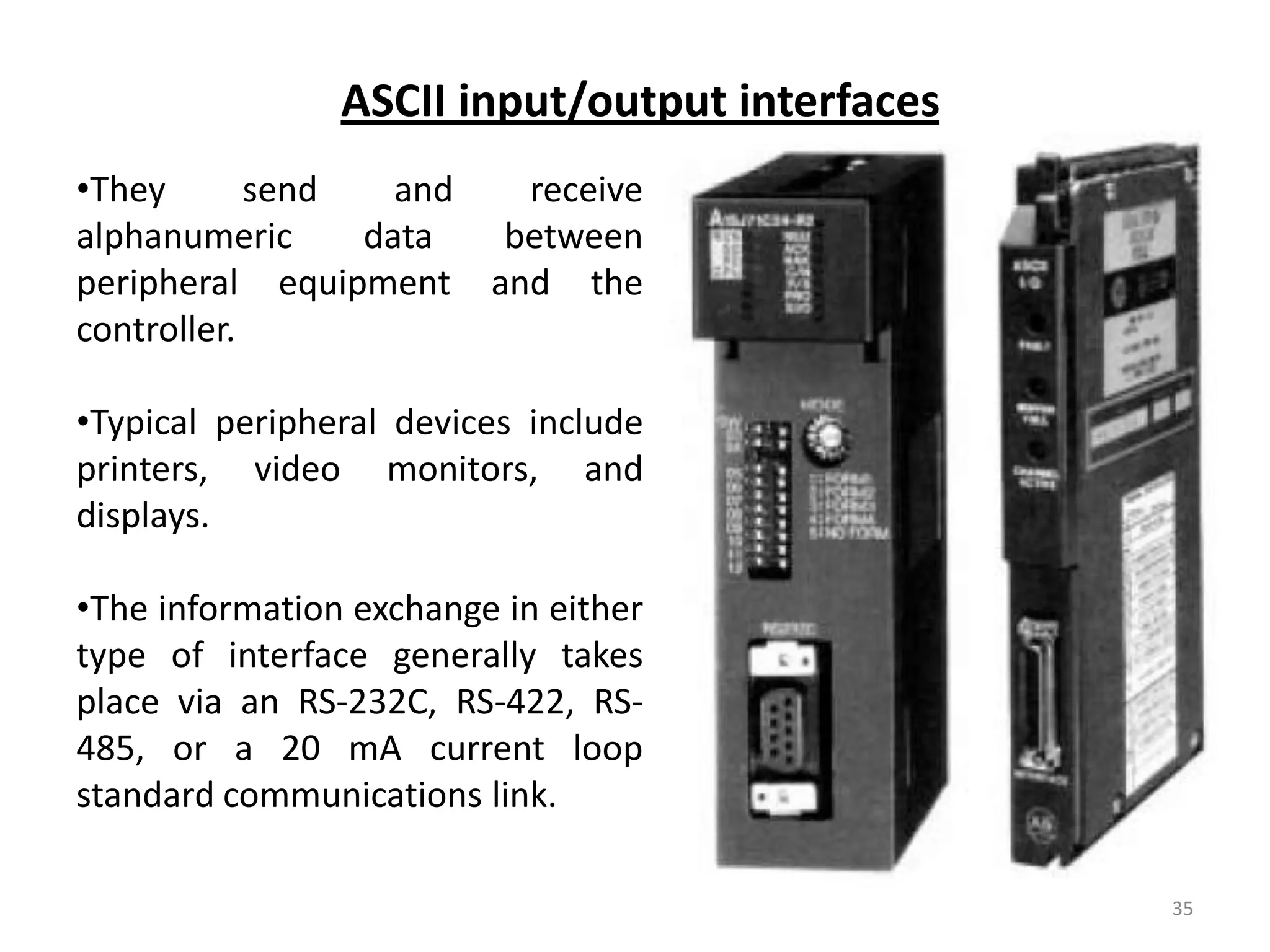
ASCII input/output interfaces
•They       send   and  receive
alphanumeric     data  between
peripheral equipment and the
controller.

•Typical peripheral devices include
printers, video monitors, and
displays.

•The information exchange in either
type of interface generally takes
place via an RS-232C, RS-422, RS-
485, or a 20 mA current loop
standard communications link.

                                                35
COMPUTER MODULES—BASIC modules

•They also referred to as data-processing modules, are
intelligent I/O interfaces capable of performing
computational tasks without burdening the PLC
processor’s computing time.

•In contrast to other intelligent I/O interfaces, such as
servo controls, a BASIC module does not actually
command or control specific field devices.

•It complements the performance of the PLC system.

                                                       36
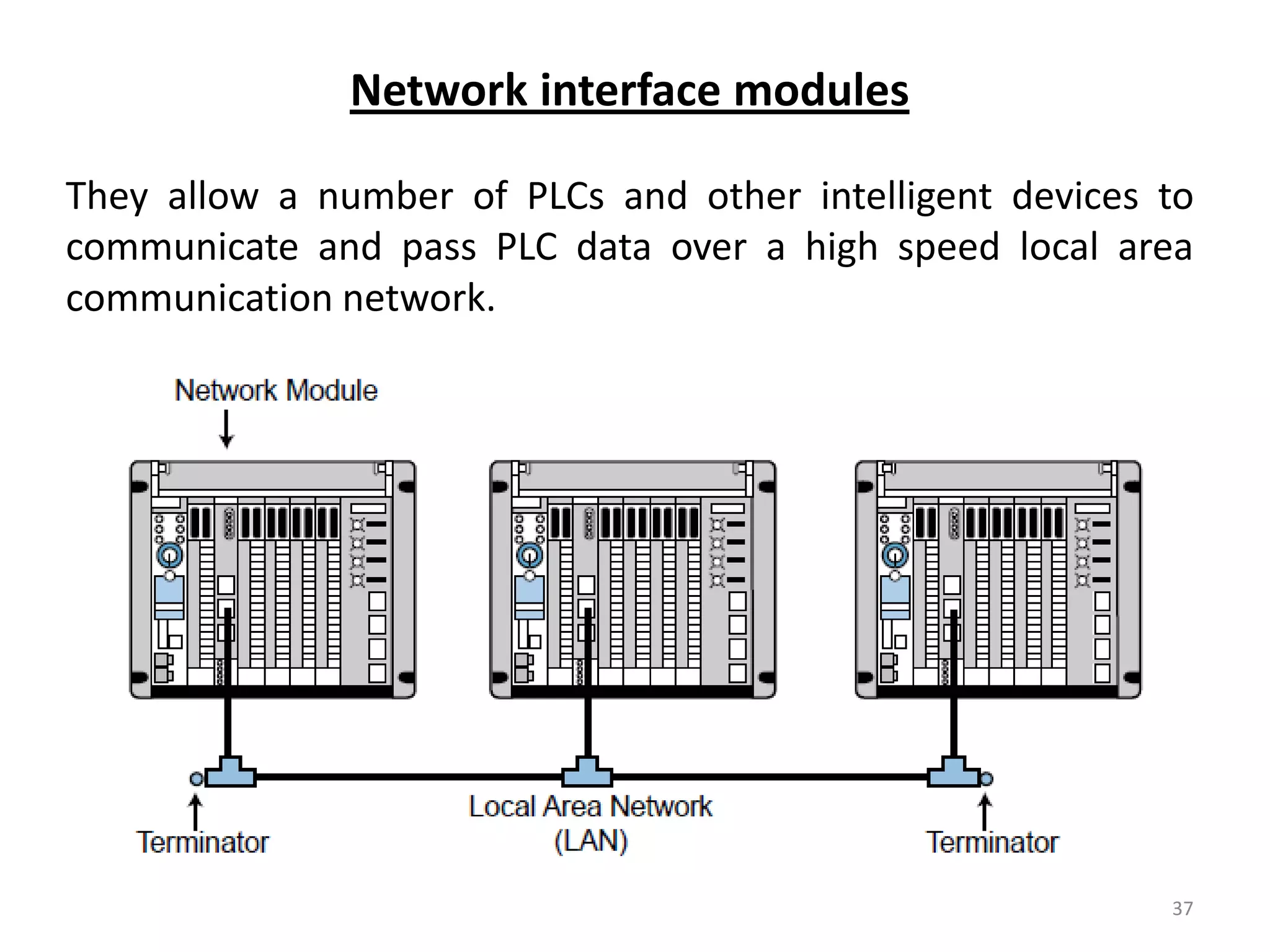
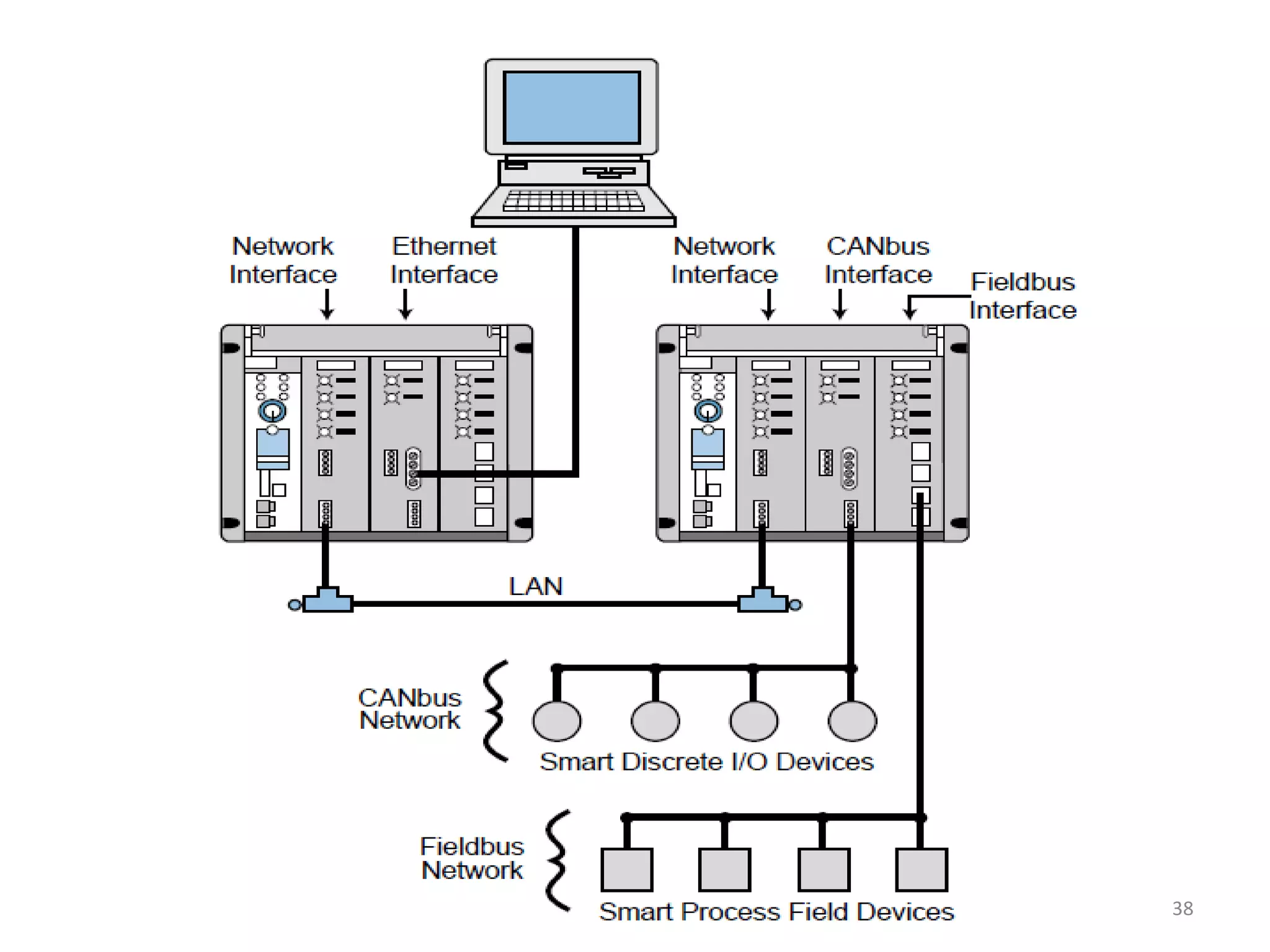
Network interface modules

They allow a number of PLCs and other intelligent devices to
communicate and pass PLC data over a high speed local area
communication network.


                                                          37
38
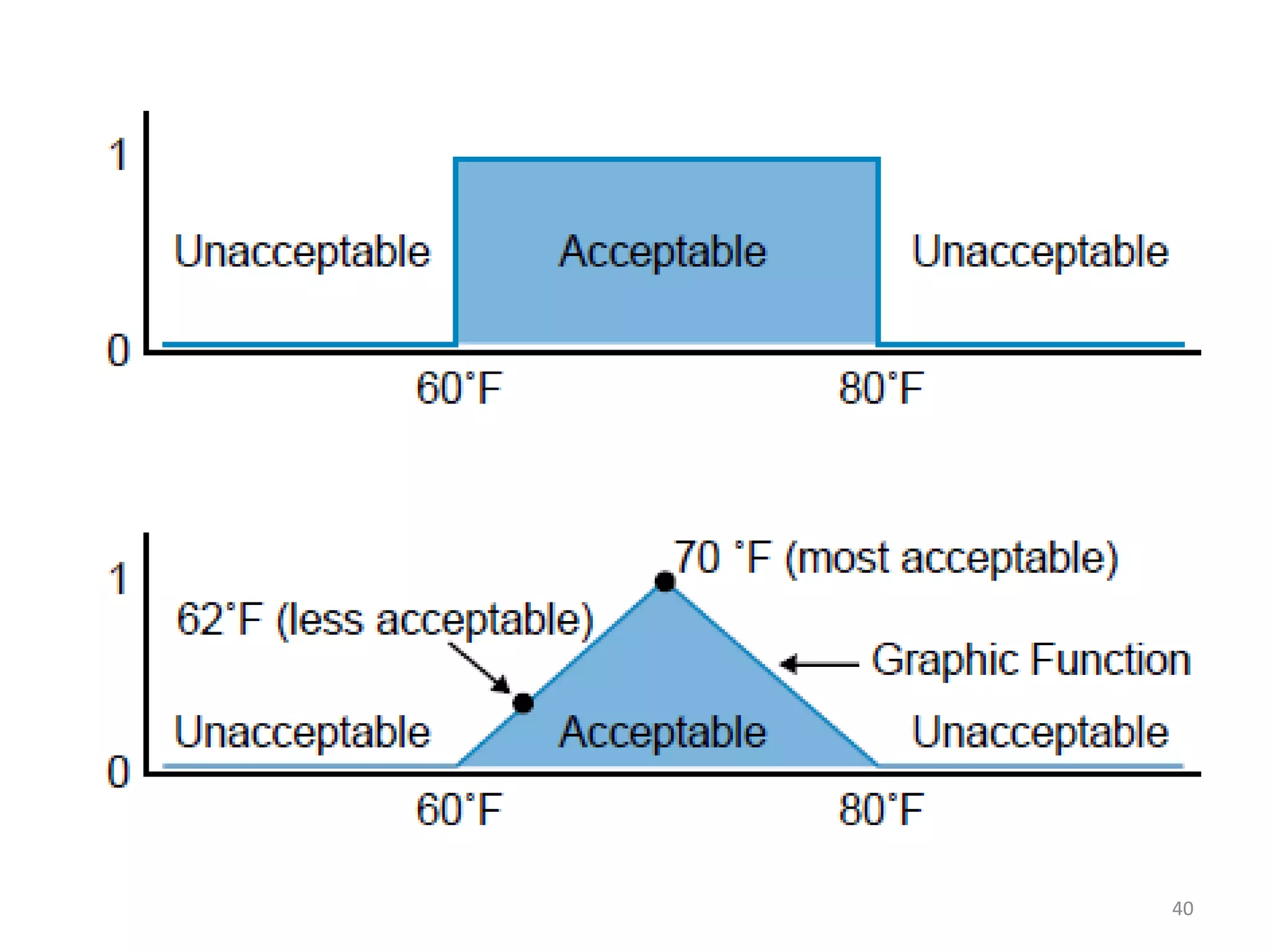
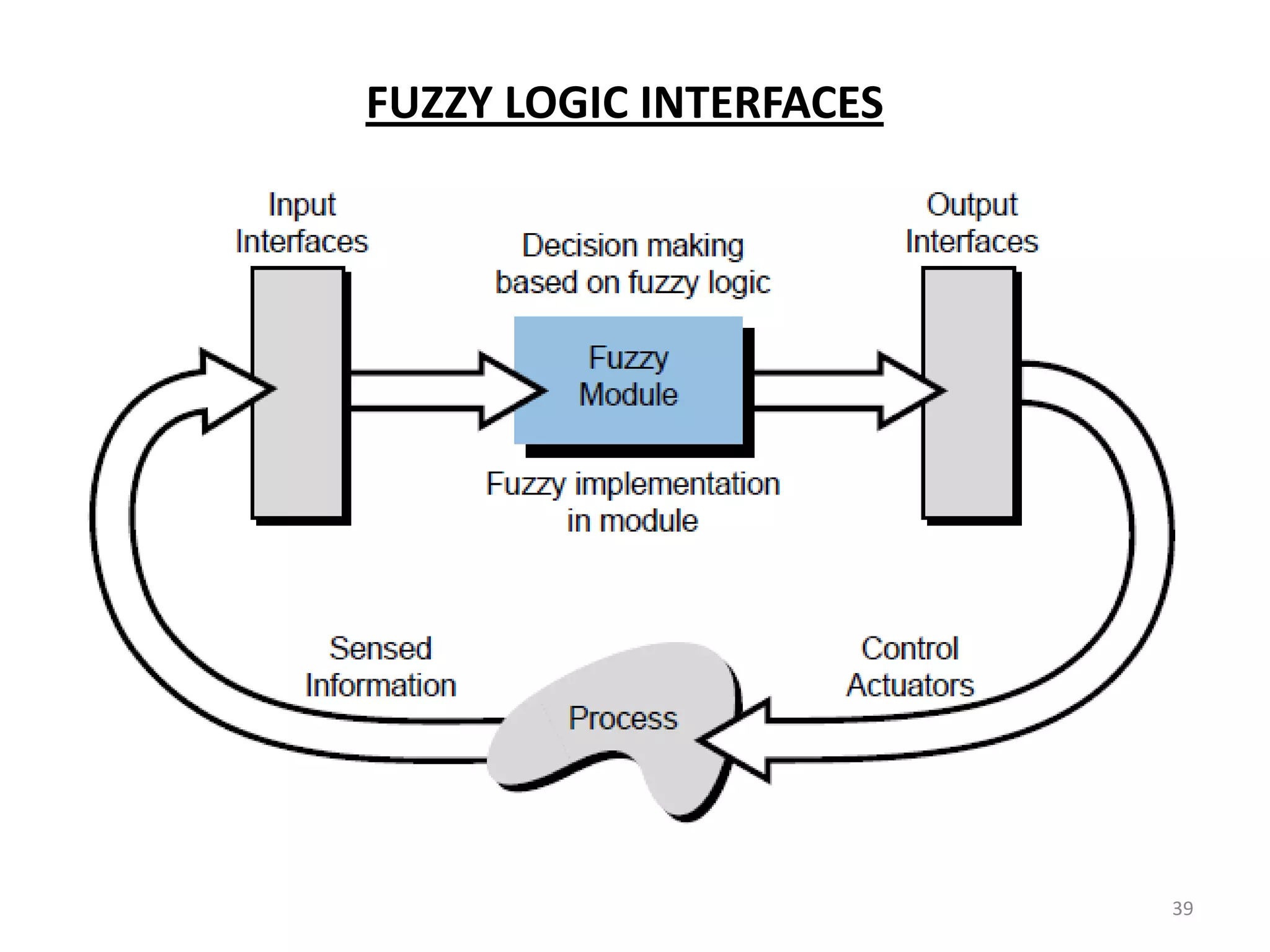
FUZZY LOGIC INTERFACES


                         39
40
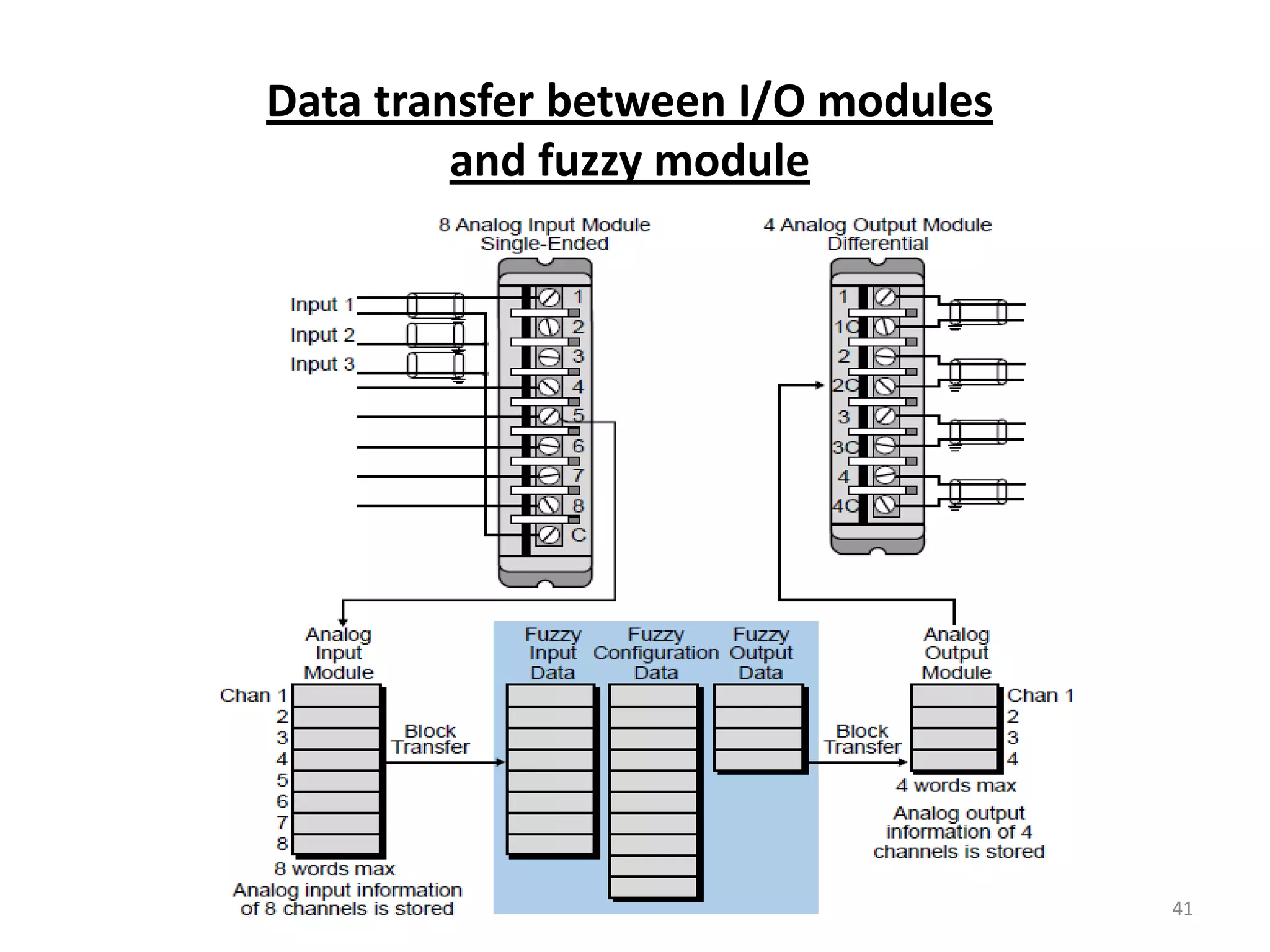
Data transfer between I/O modules
         and fuzzy module


                                    41
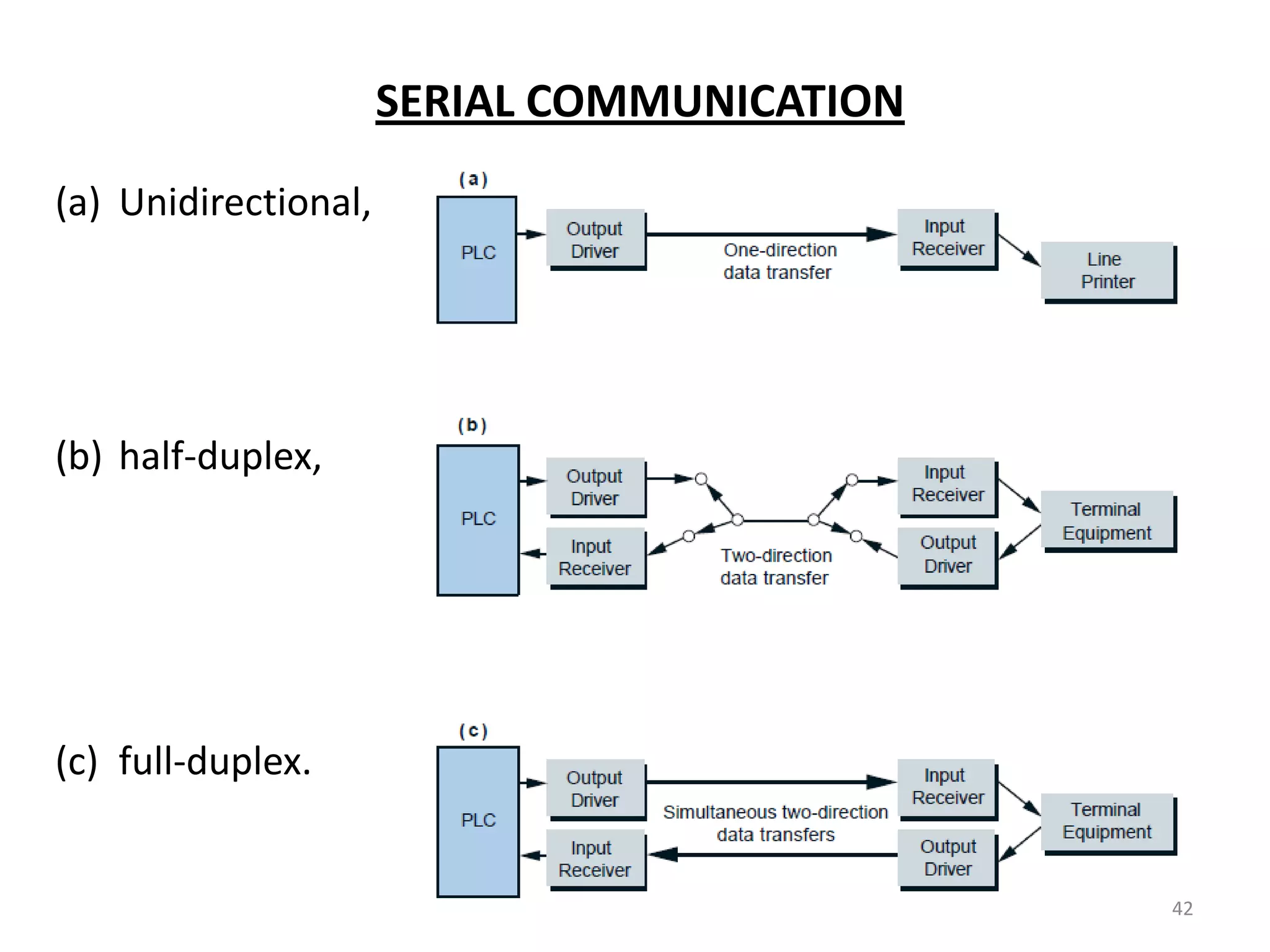
SERIAL COMMUNICATION

(a) Unidirectional,


(b) half-duplex,


(c) full-duplex.


                                             42

Plc (analog and special io)

  • 1.
  • 2.
  • 3.
  • 4.
  • 5.
    Conversion of ananalog signal by a transmitter and transducer 5
  • 6.
  • 7.
  • 8.
  • 9.
  • 10.
  • 11.
  • 12.
  • 13.
    Block diagram ofbypass/control backup unit 13
  • 14.
    The signal chainwithin a PLC y y(i) y(i) time time time analog filtering analog- 011011001111 digital- analog variable & sampling digital analog amplifier variable (e.g. 4..20mA) scaling converter converter e.g. -10V..10V 1 processing binary transistor binary variable filtering sampling or variable (e.g. 0..24V) 0001111 relay non-volatile counter memory y time 14
  • 15.
  • 16.
    Special function I/Ointerfaces They provide the link between programmable controllers and devices that require special types of signals. These special signals are not very common (only 5– 10% of PLC applications). They are divided into two categories: • direct action interfaces • intelligent interfaces 16
  • 17.
    Direct action I/Ointerface application 17
  • 18.
  • 19.
    FAST-INPUT/PULSE STRETCHER MODULES •Theydetect input pulses of very short duration. •They operate as pulse stretchers, enabling the input signal to remain valid for one scan. 19
  • 20.
    Wire input faultmodule diagram They are special input interfaces designed to detect short-circuit or open-circuit connections between the module and input devices. 20
  • 21.
    Fast-response interfaces •They areextensions of fast-input modules. •These interfaces detect fast inputs and respond with an output. •The speed at which this occurs can be as short as 1 msec from the sensing of the input to the output response. •The output response time is independent of the PLC processor and the scan time. 21
  • 22.
    Weight input modules Theyare special types of analog interfaces designed to read data from load cells. 22
  • 23.
  • 24.
  • 25.
    PID MODULES Proportional-integral-derivative (PID)interfaces are used in process applications that require continuous closed-loop control employing the PID algorithm. 25
  • 26.
    Block diagram ofthe PID algorithm 26
  • 27.
    Connection Diagram for AB 1771-PID module 27
  • 28.
    POSITIONING INTERFACES They areintelligent modules that provide position-related feedback and control output in machine axis control applications. 28
  • 29.
    Encoder/counter modules interface Theyinterface encoders and high-speed counter devices with programmable controllers. There are two types of encoder/counter interfaces: •Absolute encoders provide an angular measurement of the shaft. •Incremental encoders measure shaft rotation over distance by outputting a fixed number of pulses per shaft rotation. The communication between the interface and the processor is bidirectional. The module accepts the preset value and other control data from the processor and transmits values and status data to the PLC memory. The interface also lets the PLC know when the marker and limit switch are both energized, indicating a home position. 29
  • 30.
  • 31.
  • 32.
    Stepper motor witha position/velocity feedback scheme 32
  • 33.
  • 34.
    Servo motor interfaceconnection diagram 34
  • 35.
    ASCII input/output interfaces •They send and receive alphanumeric data between peripheral equipment and the controller. •Typical peripheral devices include printers, video monitors, and displays. •The information exchange in either type of interface generally takes place via an RS-232C, RS-422, RS- 485, or a 20 mA current loop standard communications link. 35
  • 36.
    COMPUTER MODULES—BASIC modules •Theyalso referred to as data-processing modules, are intelligent I/O interfaces capable of performing computational tasks without burdening the PLC processor’s computing time. •In contrast to other intelligent I/O interfaces, such as servo controls, a BASIC module does not actually command or control specific field devices. •It complements the performance of the PLC system. 36
  • 37.
    Network interface modules Theyallow a number of PLCs and other intelligent devices to communicate and pass PLC data over a high speed local area communication network. 37
  • 38.
  • 39.
  • 40.
  • 41.
    Data transfer betweenI/O modules and fuzzy module 41
  • 42.
    SERIAL COMMUNICATION (a) Unidirectional, (b)half-duplex, (c) full-duplex. 42