Electricity and Circuits

     Physical Science
      Mrs. Neistadt
*Electricity
• *What is electricity?
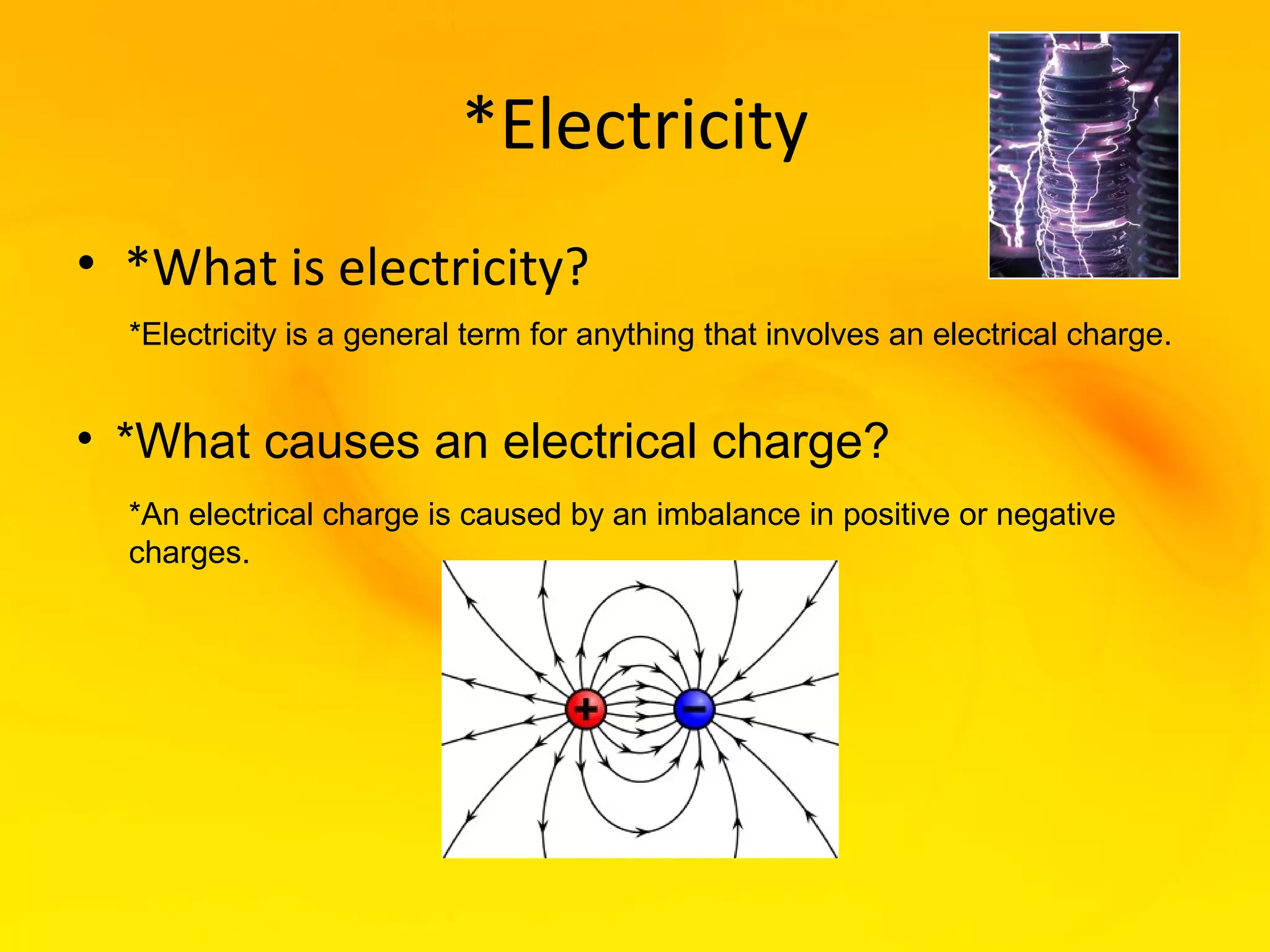
  *Electricity is a general term for anything that involves an electrical charge.


• *What causes an electrical charge?
  *An electrical charge is caused by an imbalance in positive or negative
  charges.
Electricity and Circuits
• *What is an electrical circuit?
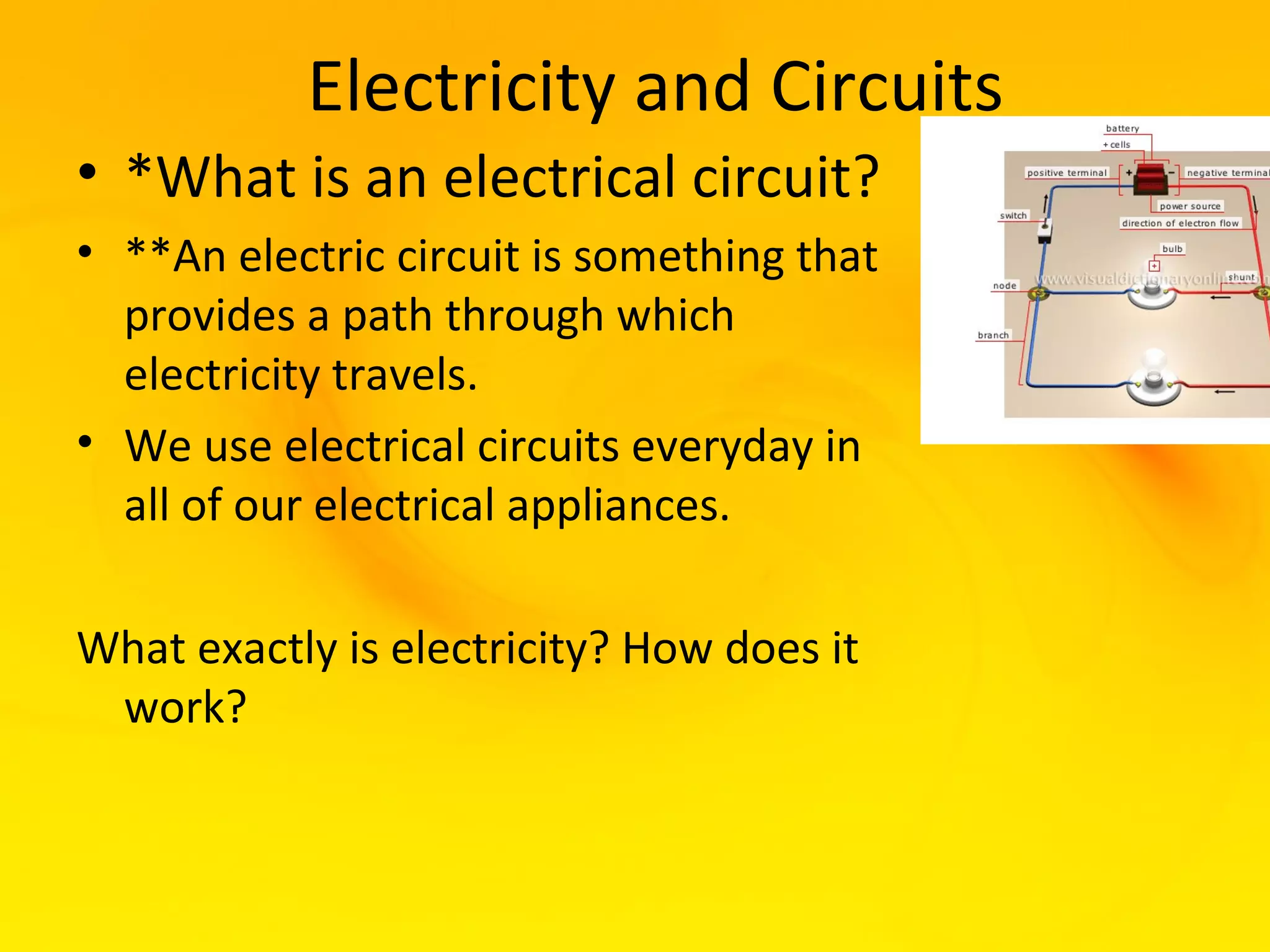
• **An electric circuit is something that
  provides a path through which
  electricity travels.
• We use electrical circuits everyday in
  all of our electrical appliances.

What exactly is electricity? How does it
 work?
What is electricity?
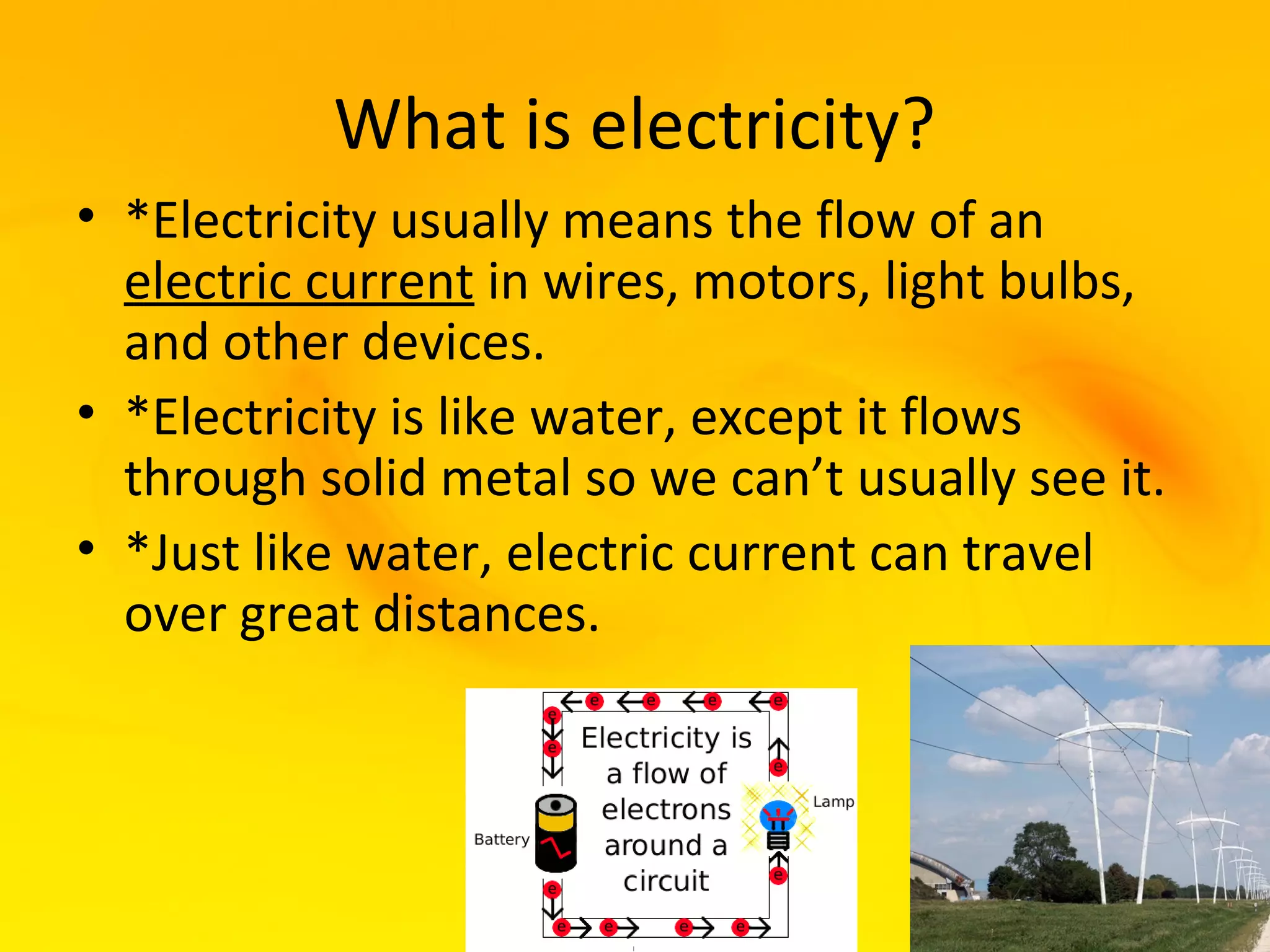
• *Electricity usually means the flow of an
  electric current in wires, motors, light bulbs,
  and other devices.
• *Electricity is like water, except it flows
  through solid metal so we can’t usually see it.
• *Just like water, electric current can travel
  over great distances.
What are examples of an electric circuit?
• An electric circuit is something that provides a path
  through which electricity travels.

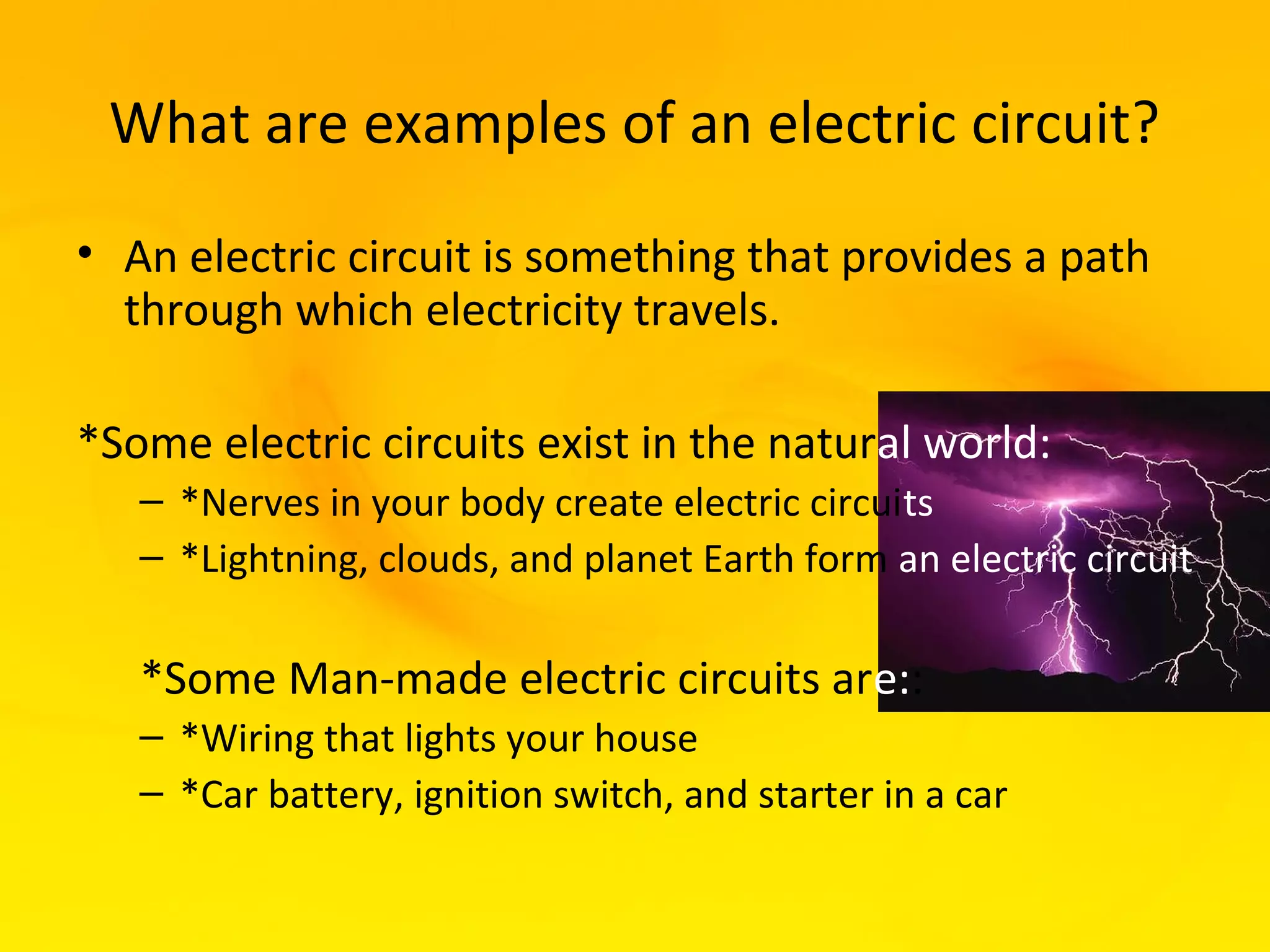
*Some electric circuits exist in the natural world:
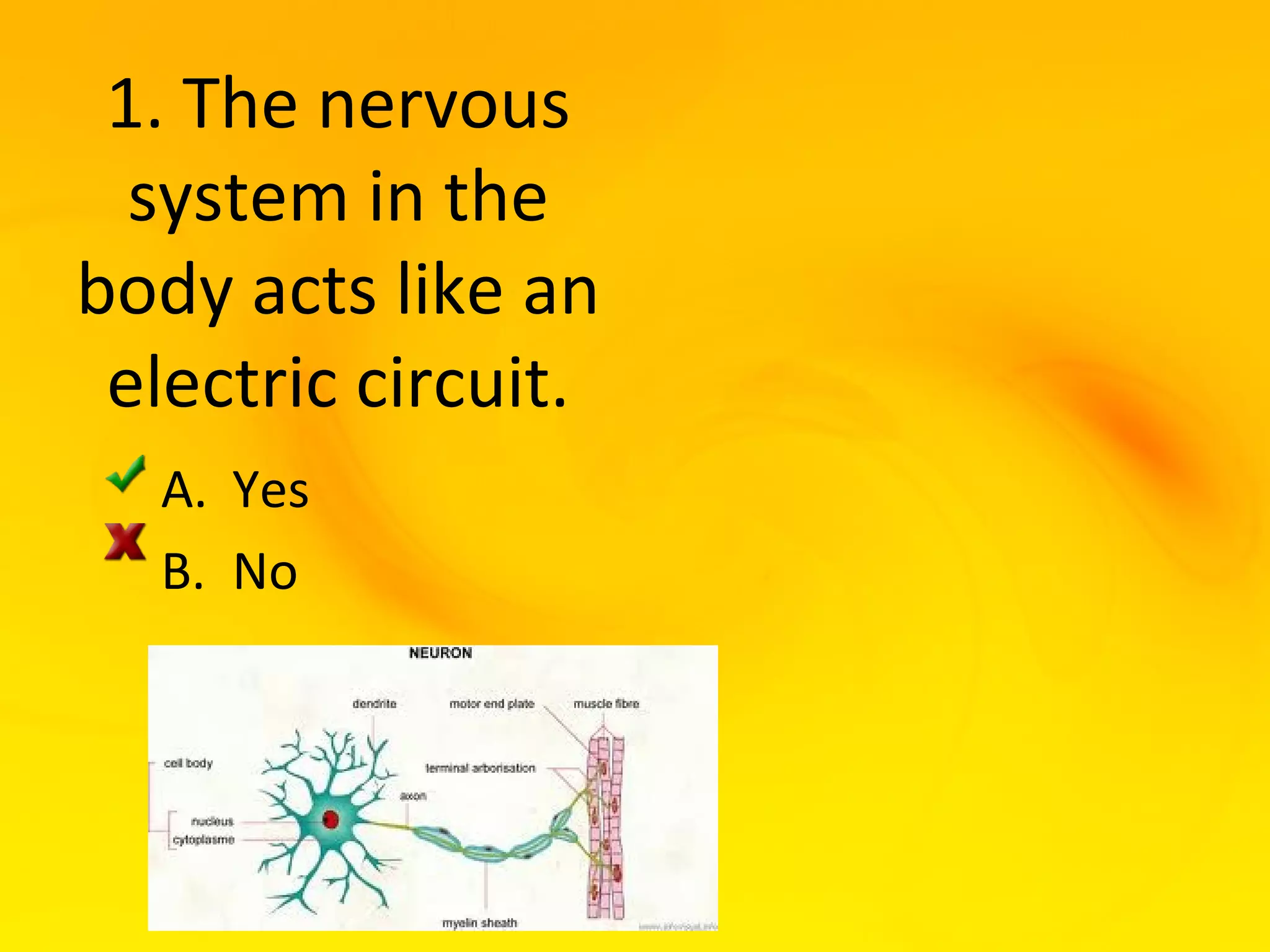
   – *Nerves in your body create electric circuits
   – *Lightning, clouds, and planet Earth form an electric circuit

   *Some Man-made electric circuits are::
   – *Wiring that lights your house
   – *Car battery, ignition switch, and starter in a car
1. The nervous
  system in the
body acts like an
 electric circuit.
  A. Yes
  B. No
2. Which of these is NOT
   an electric circuit?
A. The wiring the lights your
     house.
B. Lightning, clouds, planet Earth
C. Water flowing through pipes
[Default] a house.
     in
[MC Any]
[MC All]
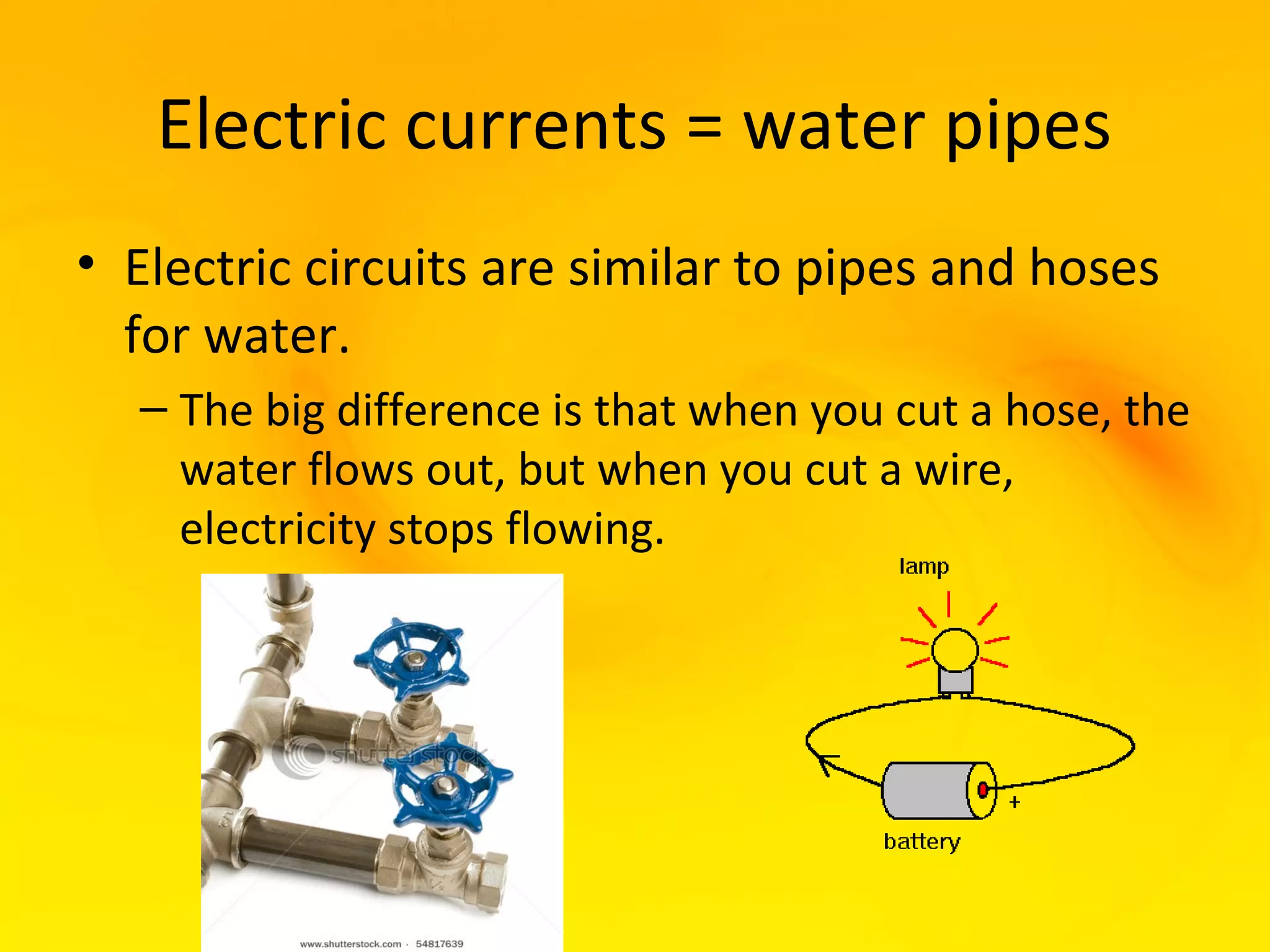
Electric currents = water pipes
• Electric circuits are similar to pipes and hoses
  for water.
  – The big difference is that when you cut a hose, the
    water flows out, but when you cut a wire,
    electricity stops flowing.
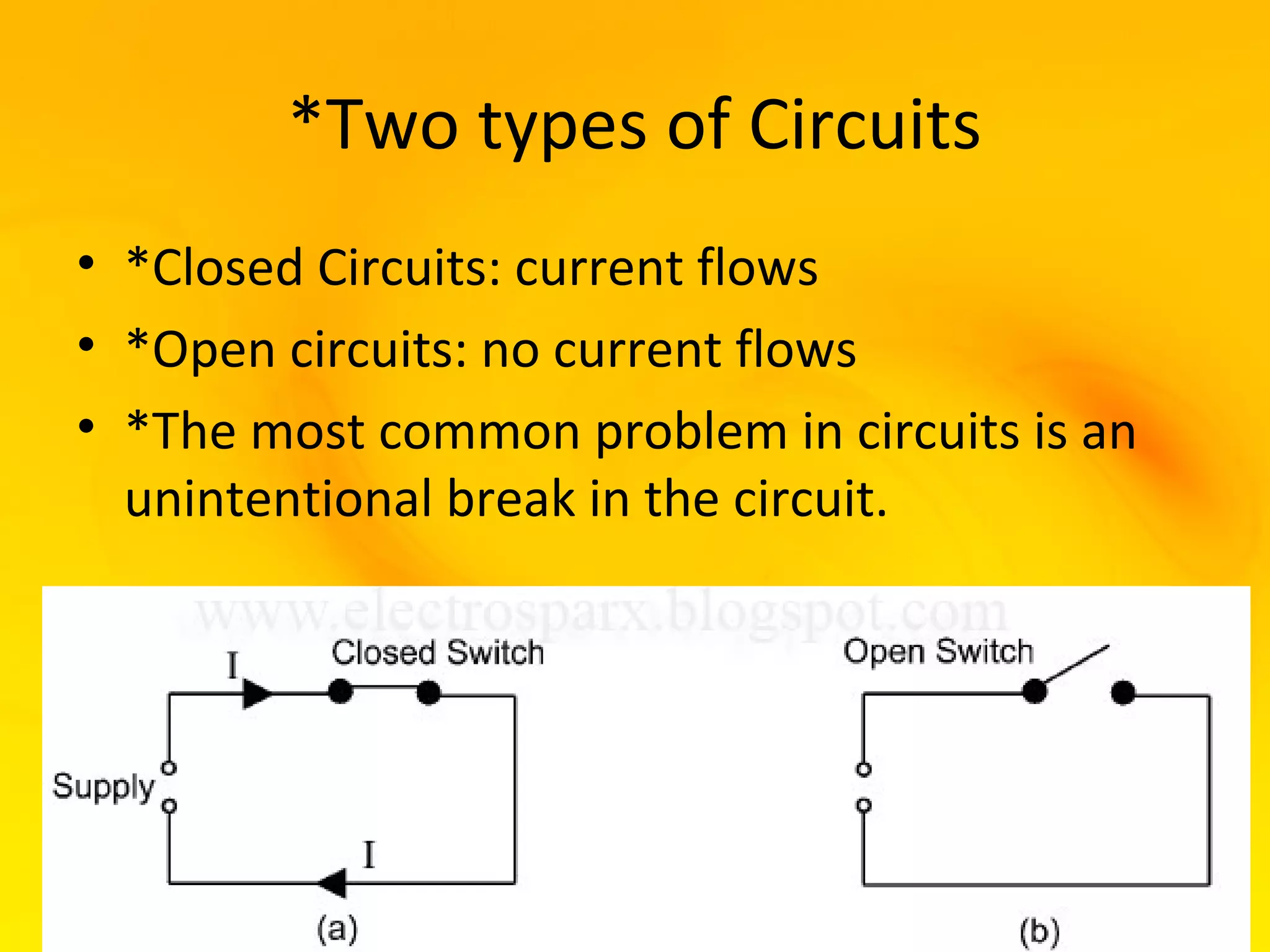
*Two types of Circuits
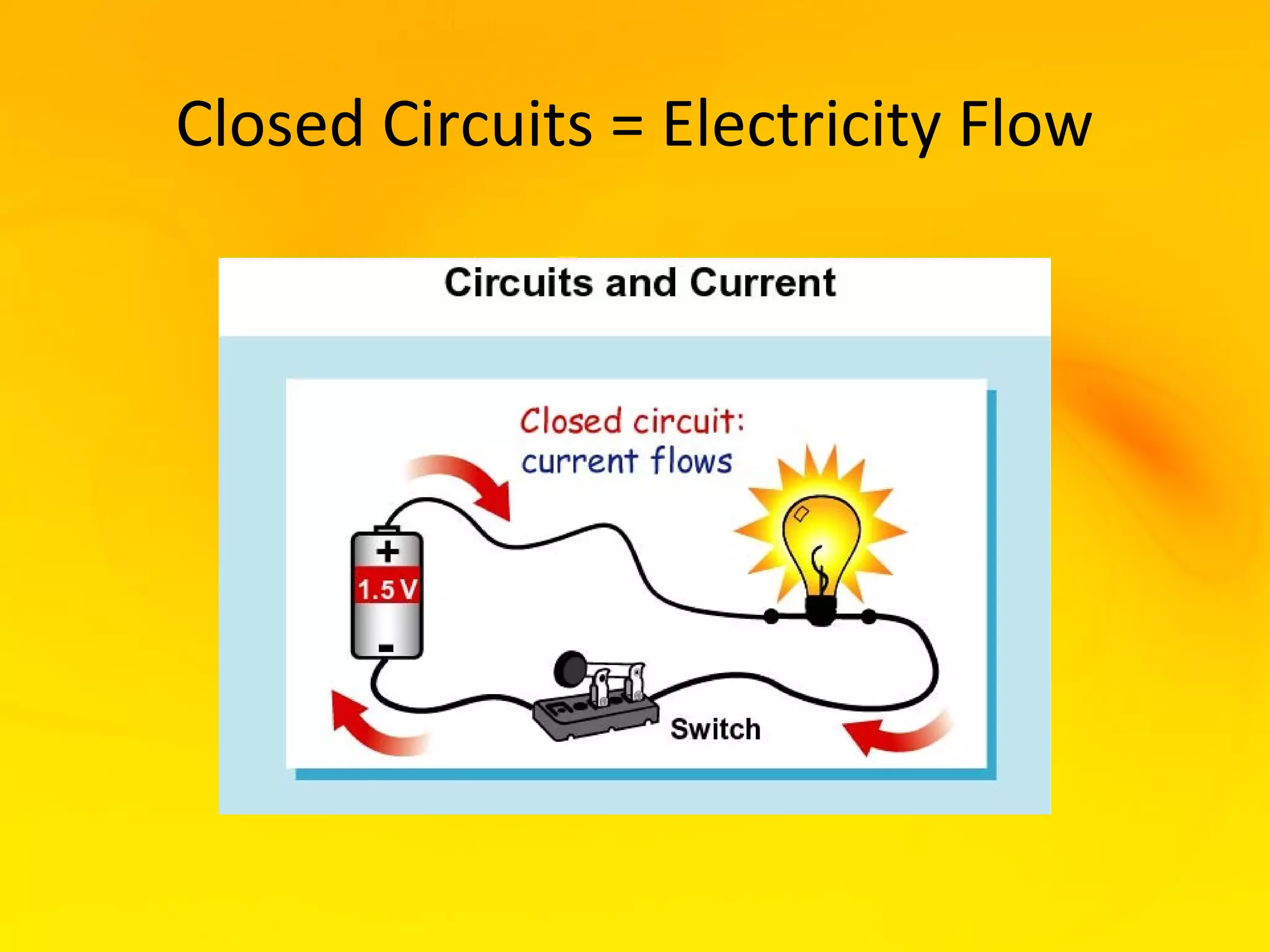
• *Closed Circuits: current flows
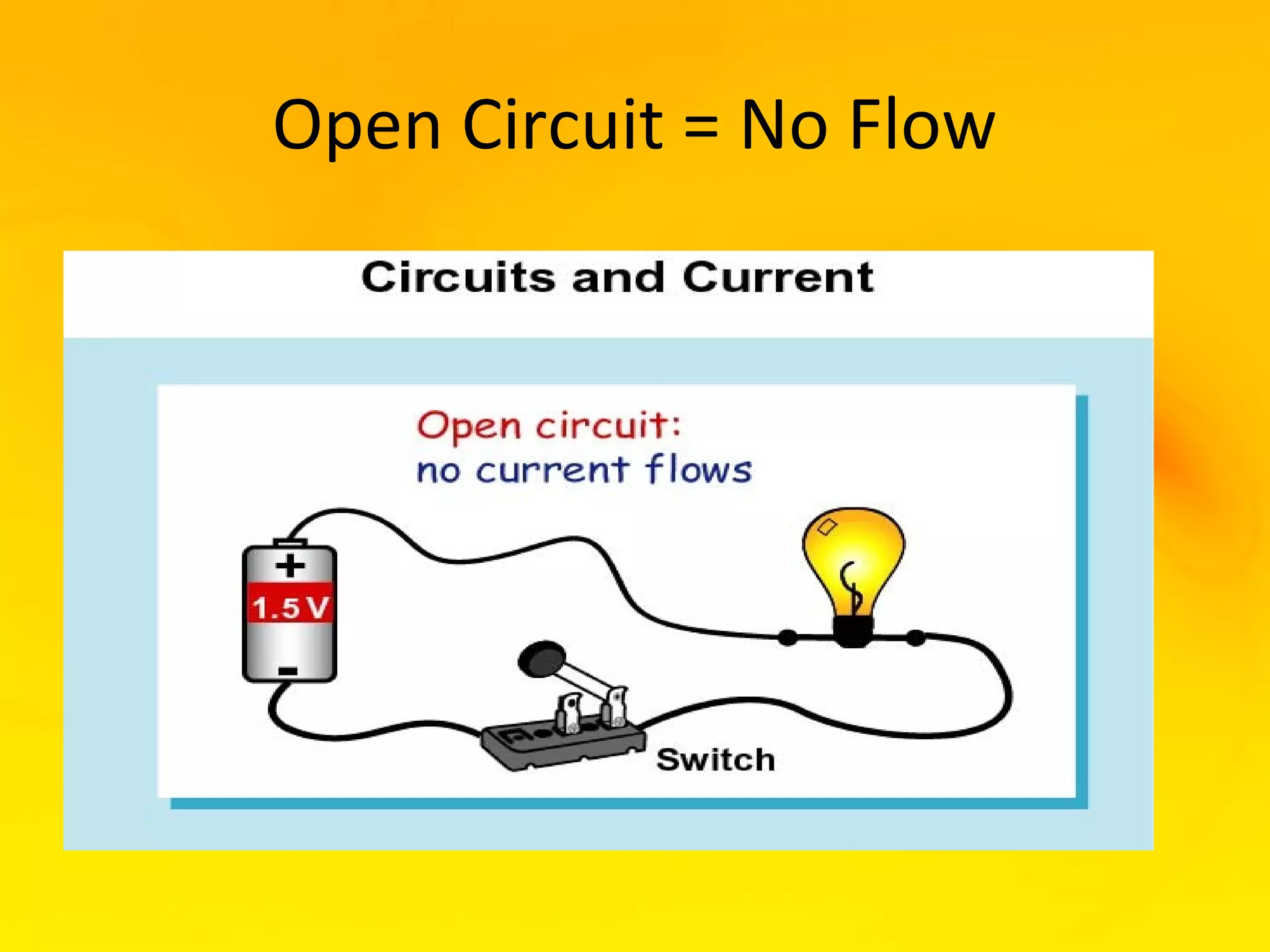
• *Open circuits: no current flows
• *The most common problem in circuits is an
  unintentional break in the circuit.
3. When a current is
broken, where does
 the electricity go?
A. It spills out onto the ground.
B. The current stops, electrical currents only
     flow in closed circuits.
[Default]
[MC Any]
C. All] floats off into space.
[MC It
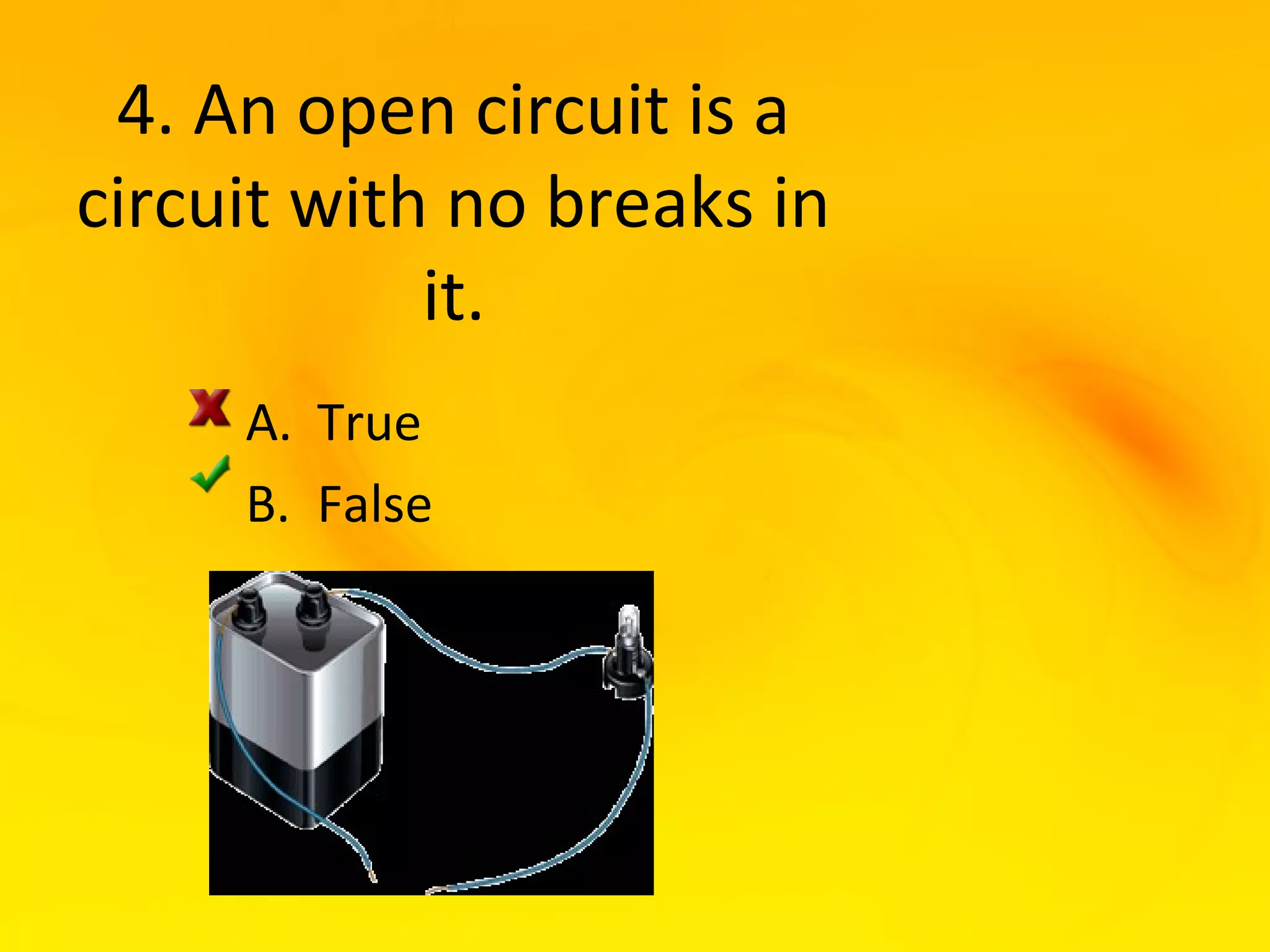
4. An open circuit is a
circuit with no breaks in
            it.
     A. True
     B. False
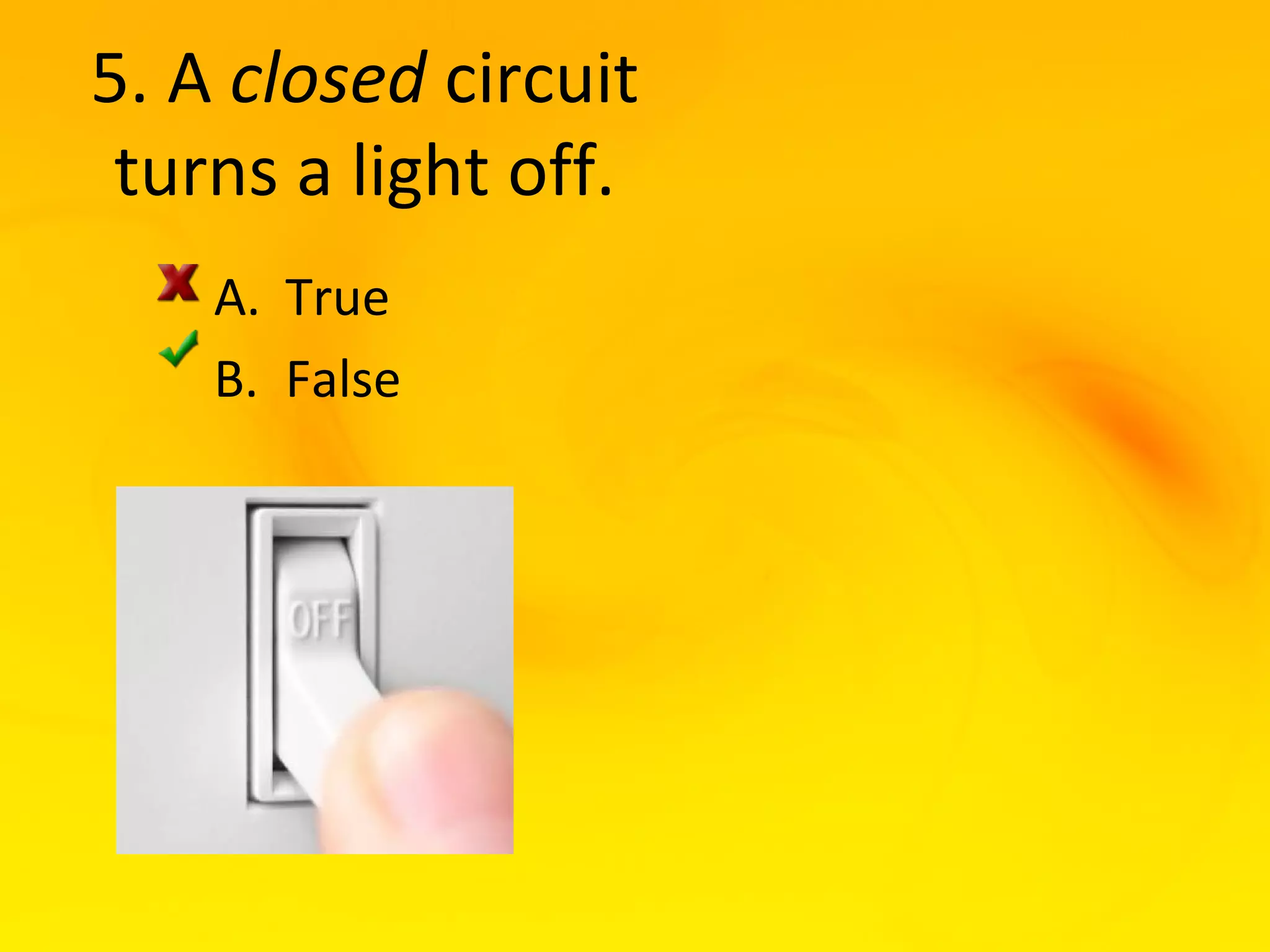
5. A closed circuit
 turns a light off.
    A. True
    B. False
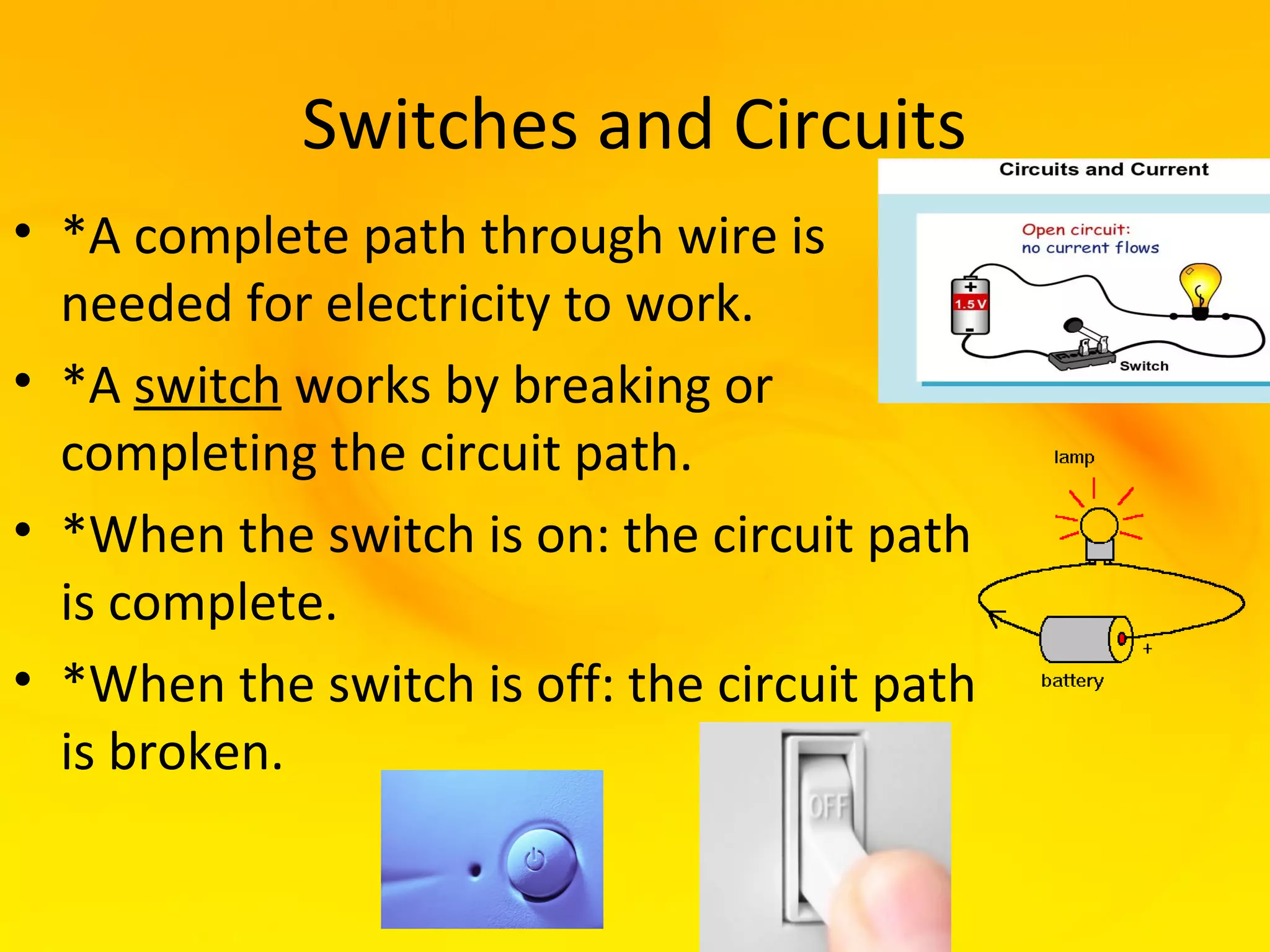
Switches and Circuits
• *A complete path through wire is
  needed for electricity to work.
• *A switch works by breaking or
  completing the circuit path.
• *When the switch is on: the circuit path
  is complete.
• *When the switch is off: the circuit path
  is broken.
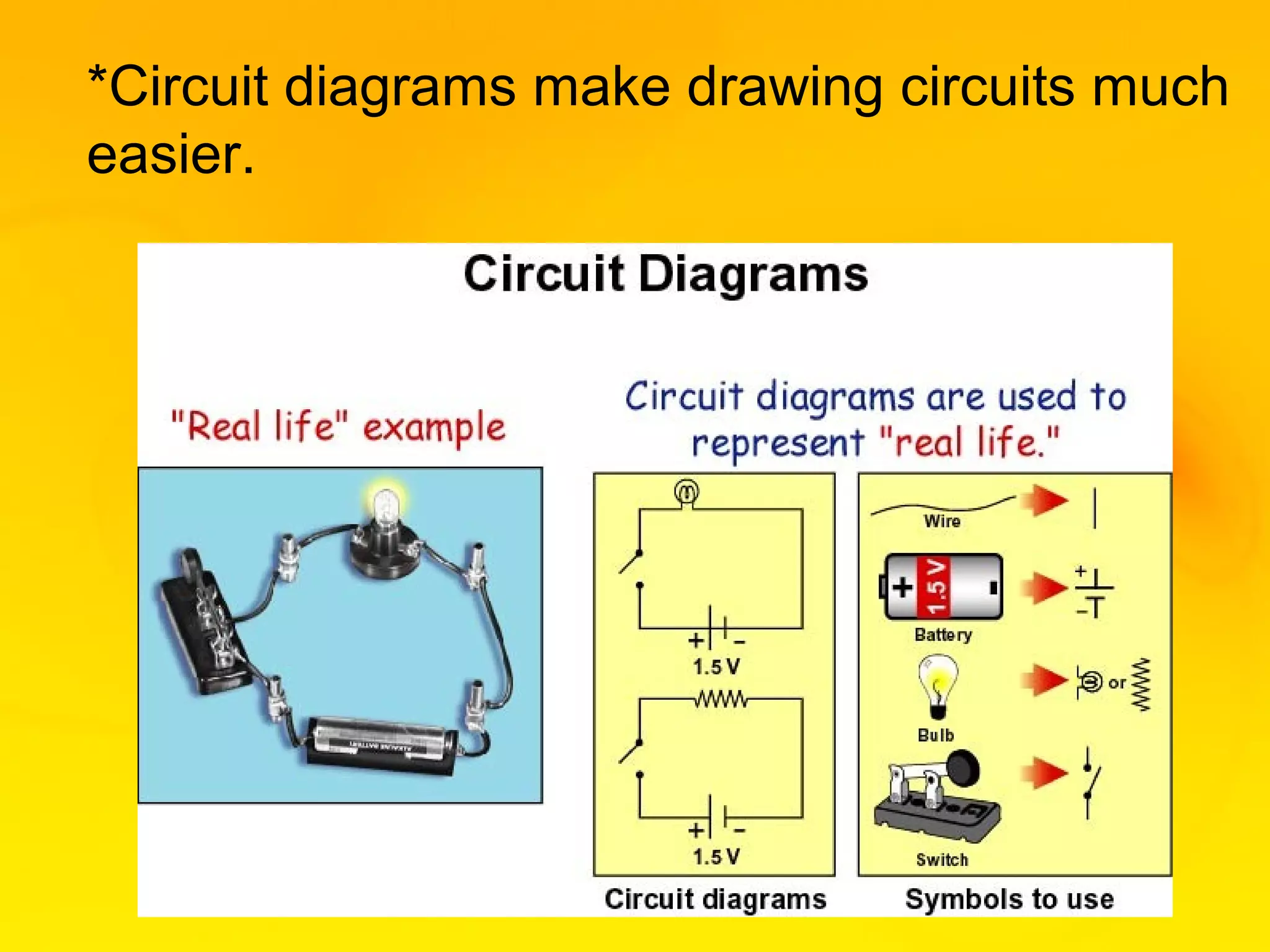
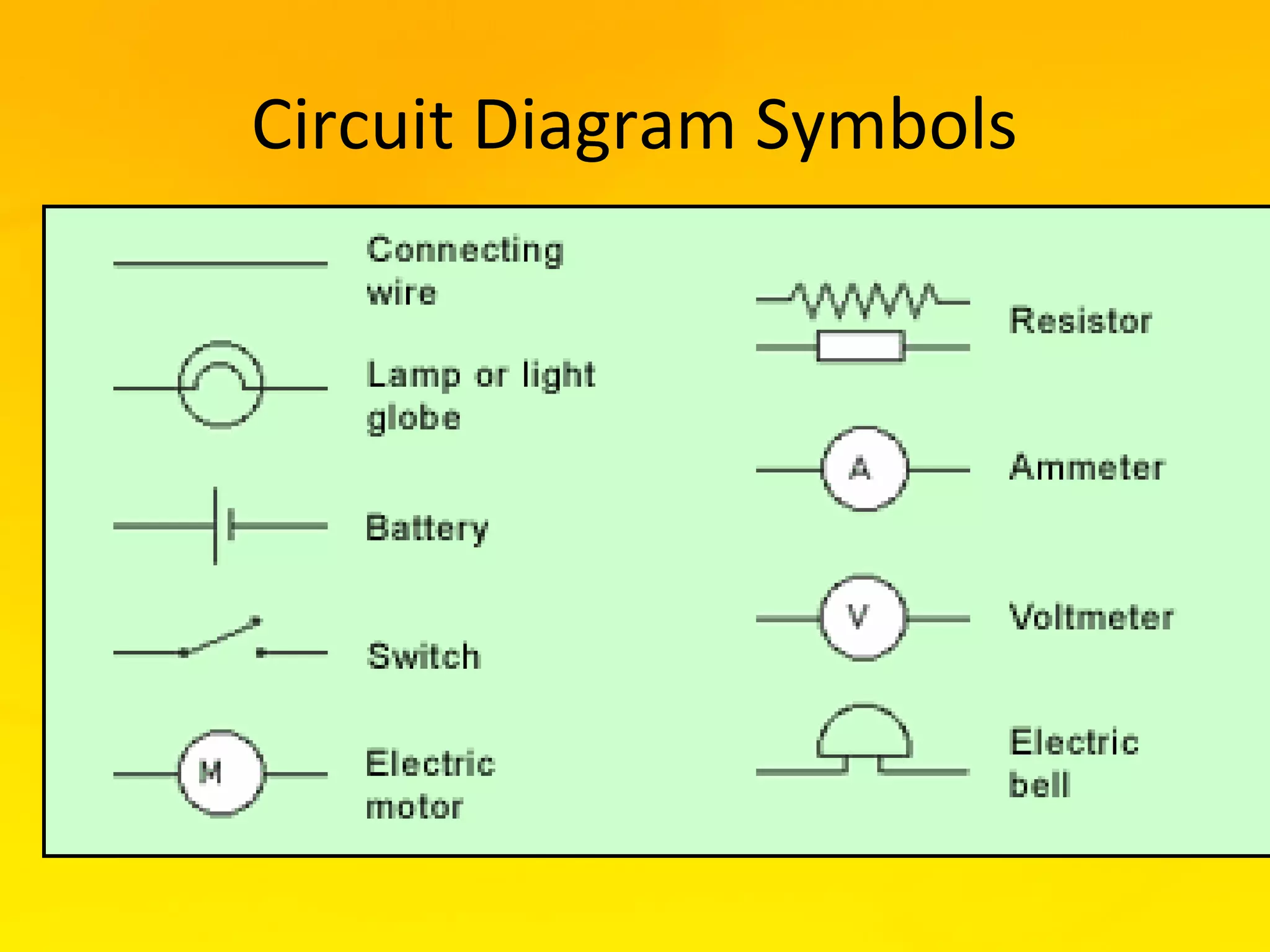
*Circuit diagrams make drawing circuits much
easier.
Closed Circuits = Electricity Flow
Open Circuit = No Flow
Circuit Diagram Symbols
Answer in your own words:
1. On your paper, create a drawing of an electric
   circuit using the symbols found on page 109.
2. What is a closed circuit?
3. What is an open circuit?
4. If you compare an electrical circuit to a system that
   carries water, what would the water pipes
   represent?
Summarize:
Now that you’ve learned a little more about electrical
   circuits, answer the original question again: What is
   an electrical circuit? Answer in your own words.
Electricity and Circuits
         Part II
     Physical Science
      Mrs. Neistadt
Bellwork Questions:
1. What is Static Electricity?
2. When have you experienced static
   electricity?

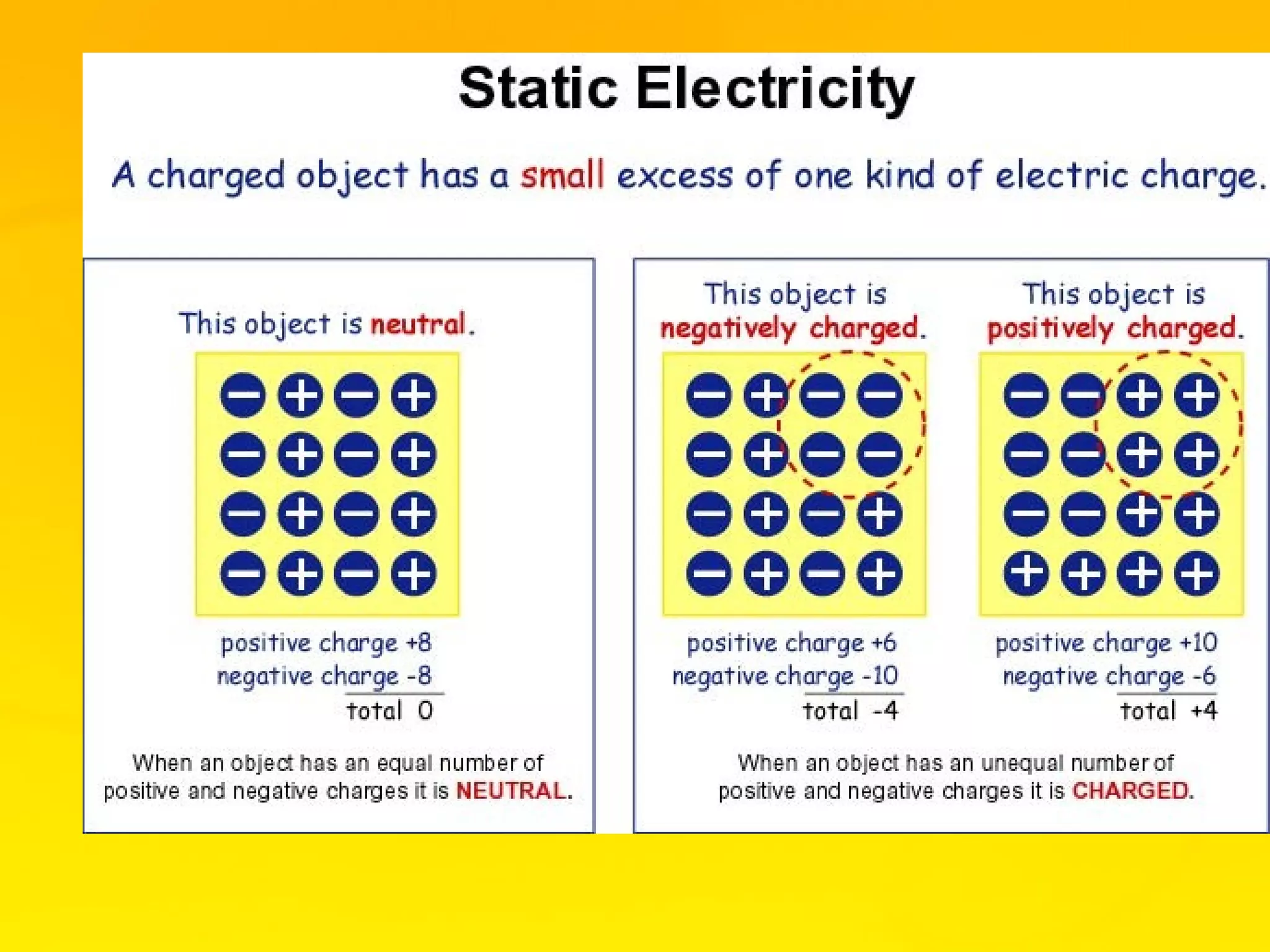
**Static Electricity- a build up of either positive
   or negative charge; consists of isolated
   motionless charges, like those produced by
   friction.
   Examples: brushing hair; cat fur; socks on
   carpet; clothes from the dryer…
Review Questions:
1. If you compare an electrical circuit to a
   system that carries water, what would the
   water pipes represent?

2. Is a closed circuit on or off?

3. A circuit with the switch turned to the OFF
   position or a circuit with any break is called
   an open or closed circuit?
History
• The study and using of electricity is relatively
  new: scientists only began understanding
  electricity in the late 1800s.
• Scientists first believed electricity was caused
  by two fluids in an object.
• They now know that it is not fluid, but positive
  and negative charges of an electrical energy in
  an object.
More history
• *Electric charge is a fundamental property of
  matter that comes in two forms.

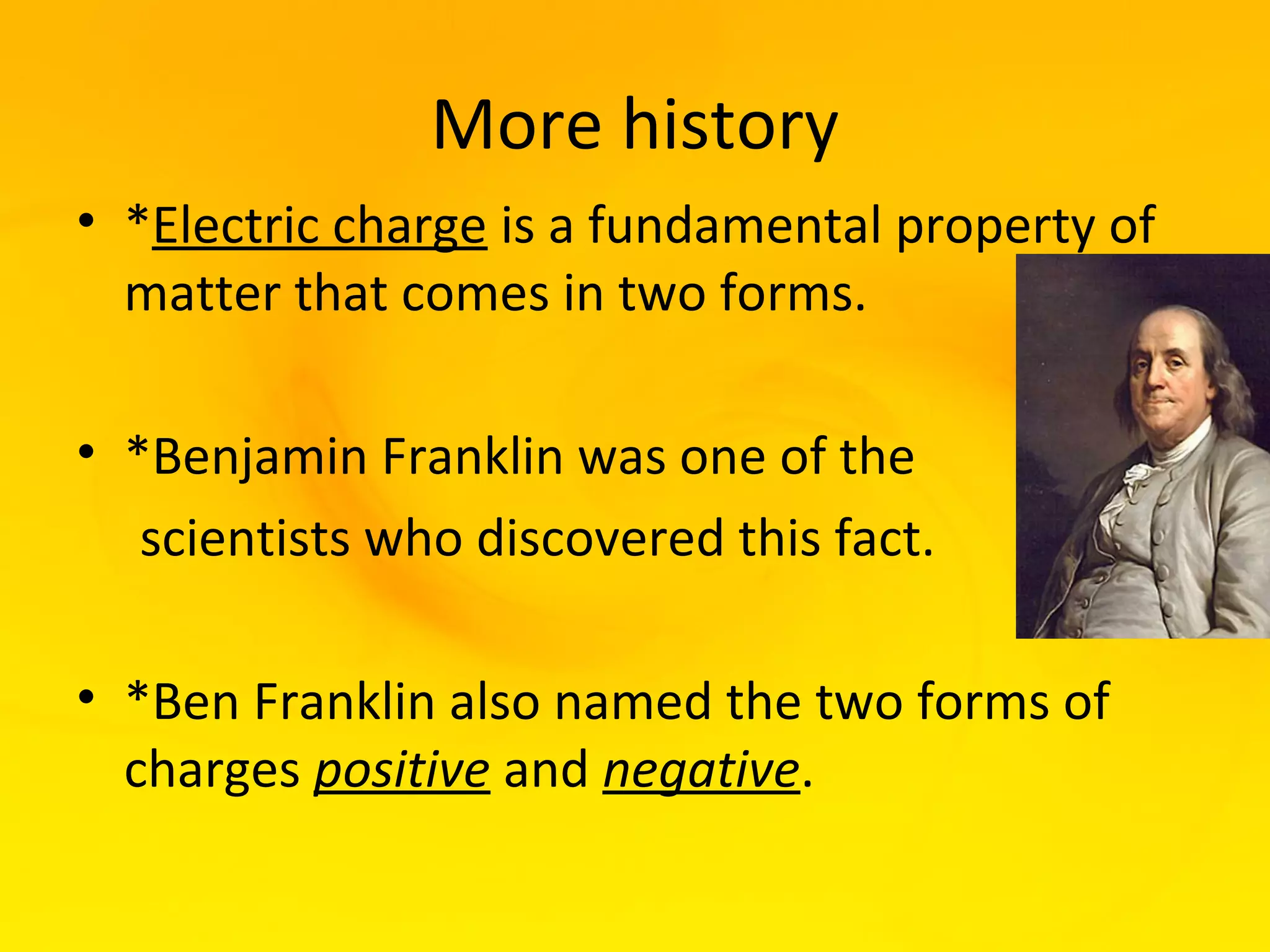
• *Benjamin Franklin was one of the
   scientists who discovered this fact.

• *Ben Franklin also named the two forms of
  charges positive and negative.
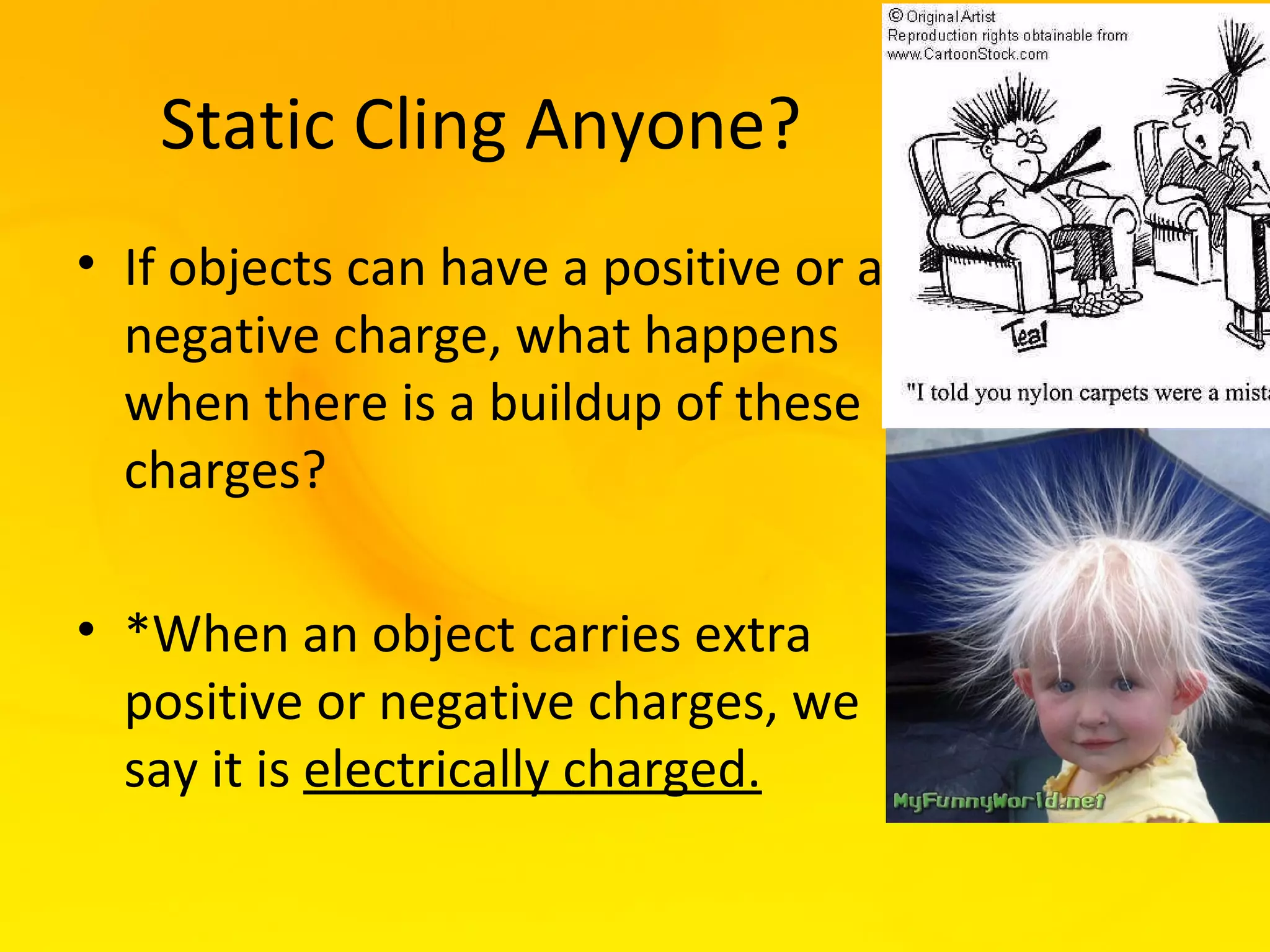
Static Cling Anyone?
• If objects can have a positive or a
  negative charge, what happens
  when there is a buildup of these
  charges?

• *When an object carries extra
  positive or negative charges, we
  say it is electrically charged.
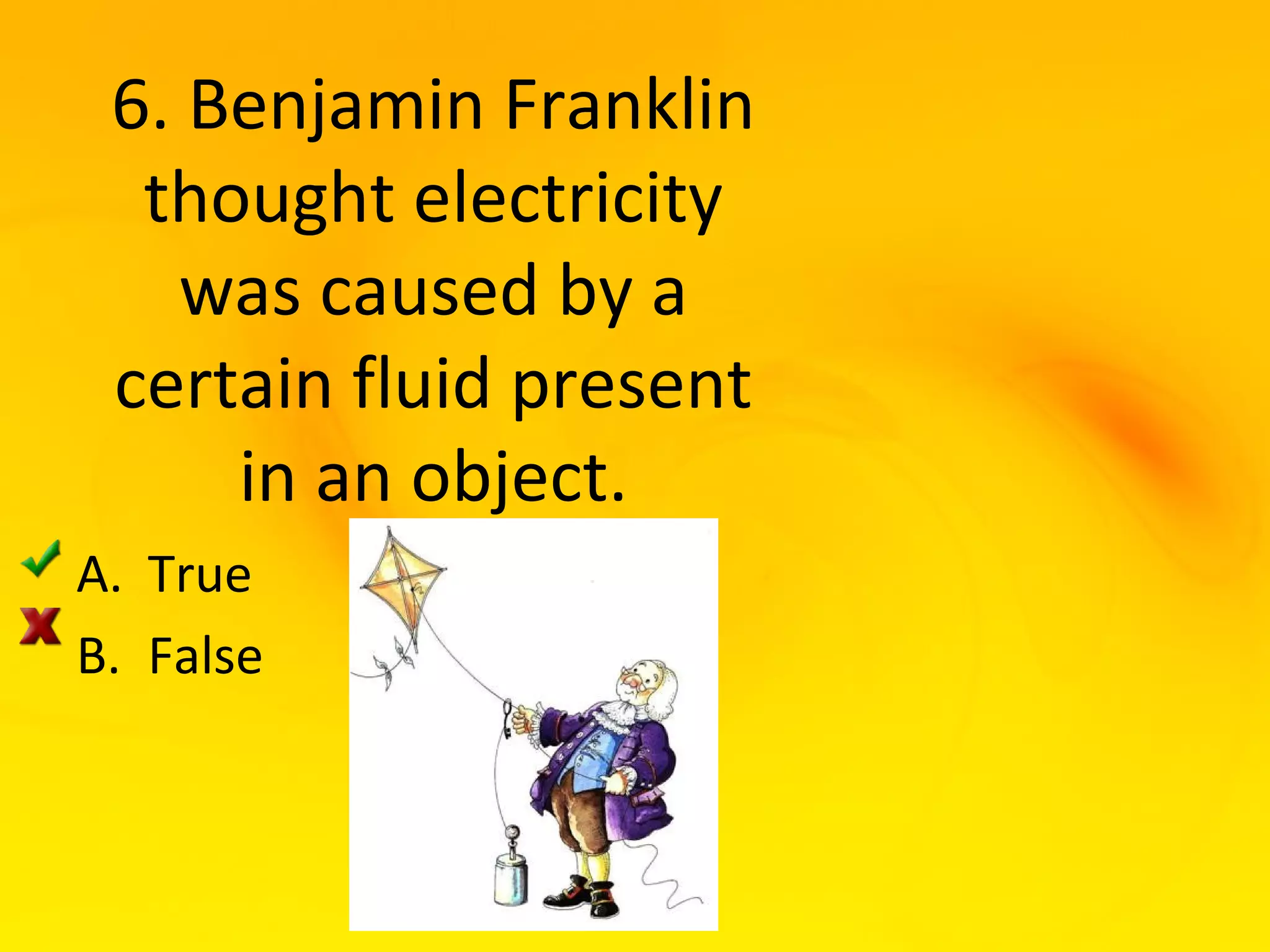
6. Benjamin Franklin
  thought electricity
   was caused by a
 certain fluid present
     in an object.
A. True
B. False
Charges
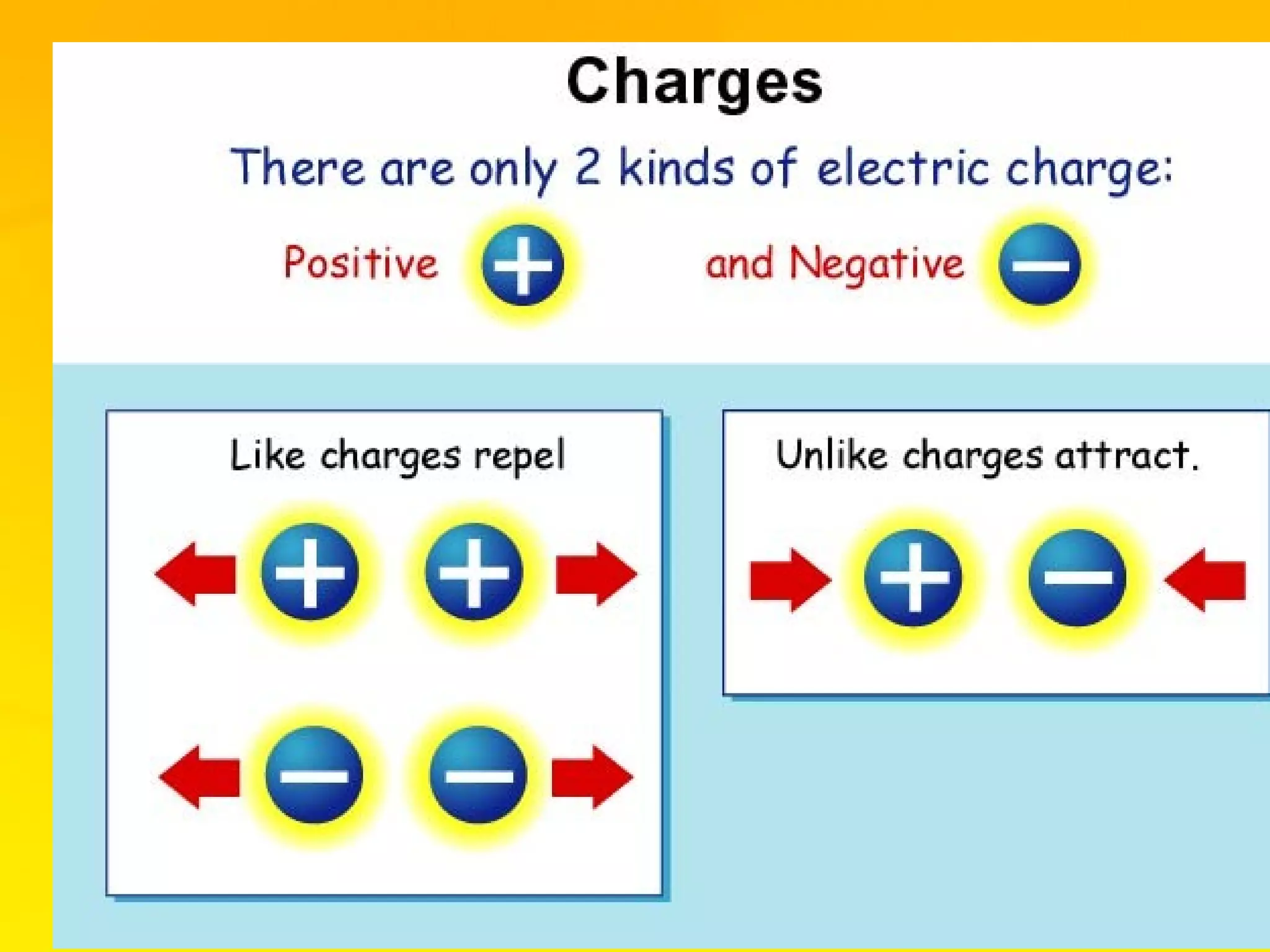
• *Like charges (+,+) (-,-) repel each other
• *Unlike charges (+,-) attract
• *An object that has equal positive and
  negative charges is called: electrically neutral

• *This property of matter, Charge, gives rise to
  both electricity and magnetism.
Practice Questions:
1. Positive electric charges:
a. attract both positive charges and negative charges
b. Repel both positive charges and negative charges
c. Attract positive charges and repel negative charges
d. Repel positive charges and attract negative charges


2. Electric charge is:
a.   Caused by two fluids, as described by Benjamin Franklin
b.   Present in metals only
c.   A fundamental property of matter that comes in two forms
d.   Found only in non-living material
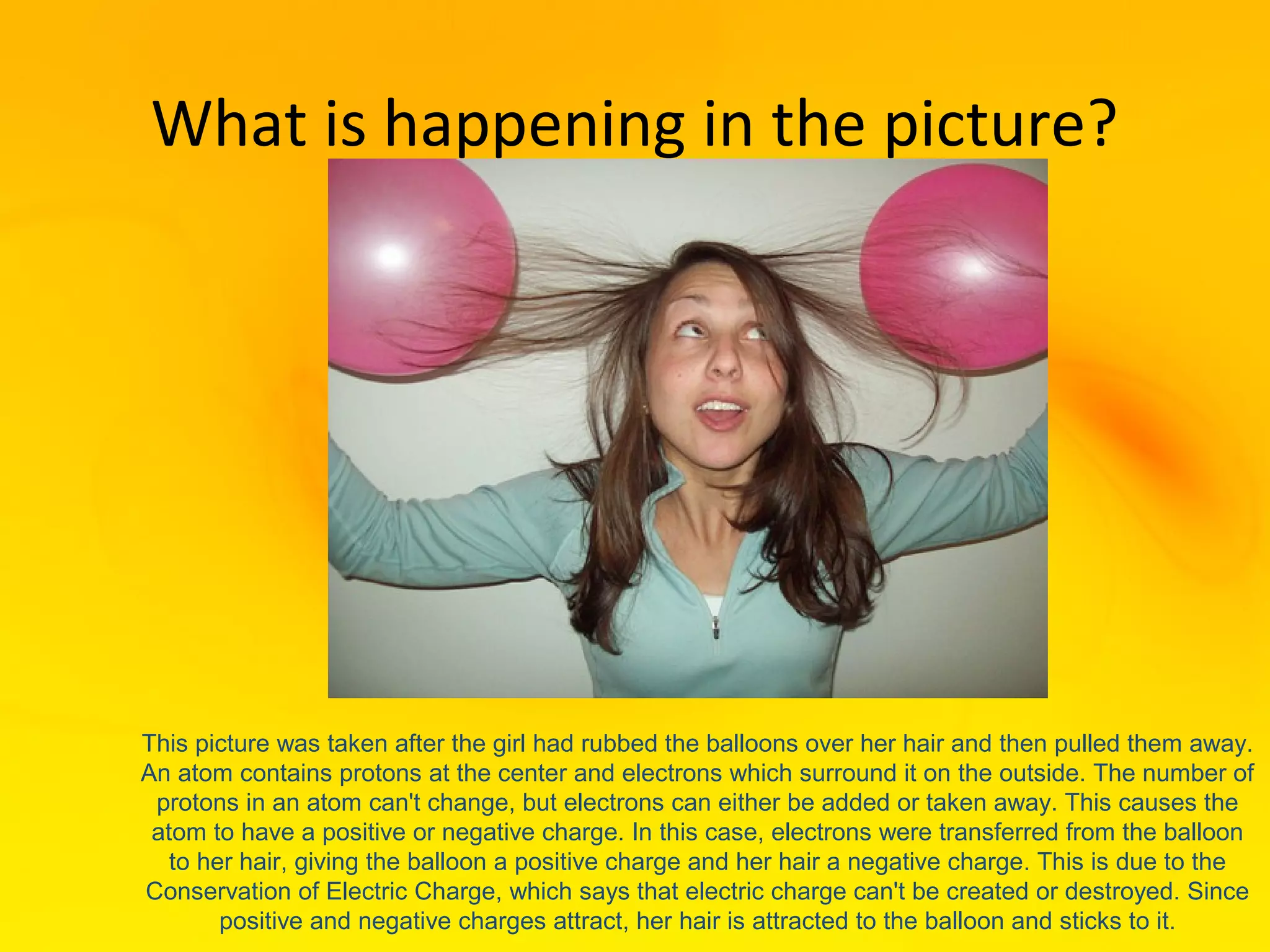
What is happening in the picture?


This picture was taken after the girl had rubbed the balloons over her hair and then pulled them away.
An atom contains protons at the center and electrons which surround it on the outside. The number of
 protons in an atom can't change, but electrons can either be added or taken away. This causes the
 atom to have a positive or negative charge. In this case, electrons were transferred from the balloon
   to her hair, giving the balloon a positive charge and her hair a negative charge. This is due to the
Conservation of Electric Charge, which says that electric charge can't be created or destroyed. Since
        positive and negative charges attract, her hair is attracted to the balloon and sticks to it.
Balloon Questions
Answer on your paper:
1. How did the balloons get stuck to the board?
2. What did rubbing do to the balloons?
3. Why do you think balloons will stick better
   on a very cold winter day than on a rainy
   day?
4. Can the balloons stick to the walls forever?
Answer on your paper:
• Complete Concept Review Questions
• #1-11 on page 115 of your text
• Please turn in

Electricity and circuits

  • 1.
    Electricity and Circuits Physical Science Mrs. Neistadt
  • 2.
    *Electricity • *What iselectricity? *Electricity is a general term for anything that involves an electrical charge. • *What causes an electrical charge? *An electrical charge is caused by an imbalance in positive or negative charges.
  • 3.
    Electricity and Circuits •*What is an electrical circuit? • **An electric circuit is something that provides a path through which electricity travels. • We use electrical circuits everyday in all of our electrical appliances. What exactly is electricity? How does it work?
  • 4.
    What is electricity? •*Electricity usually means the flow of an electric current in wires, motors, light bulbs, and other devices. • *Electricity is like water, except it flows through solid metal so we can’t usually see it. • *Just like water, electric current can travel over great distances.
  • 5.
    What are examplesof an electric circuit? • An electric circuit is something that provides a path through which electricity travels. *Some electric circuits exist in the natural world: – *Nerves in your body create electric circuits – *Lightning, clouds, and planet Earth form an electric circuit *Some Man-made electric circuits are:: – *Wiring that lights your house – *Car battery, ignition switch, and starter in a car
  • 6.
    1. The nervous system in the body acts like an electric circuit. A. Yes B. No
  • 7.
    2. Which ofthese is NOT an electric circuit? A. The wiring the lights your house. B. Lightning, clouds, planet Earth C. Water flowing through pipes [Default] a house. in [MC Any] [MC All]
  • 8.
    Electric currents =water pipes • Electric circuits are similar to pipes and hoses for water. – The big difference is that when you cut a hose, the water flows out, but when you cut a wire, electricity stops flowing.
  • 9.
    *Two types ofCircuits • *Closed Circuits: current flows • *Open circuits: no current flows • *The most common problem in circuits is an unintentional break in the circuit.
  • 10.
    3. When acurrent is broken, where does the electricity go? A. It spills out onto the ground. B. The current stops, electrical currents only flow in closed circuits. [Default] [MC Any] C. All] floats off into space. [MC It
  • 11.
    4. An opencircuit is a circuit with no breaks in it. A. True B. False
  • 12.
    5. A closedcircuit turns a light off. A. True B. False
  • 13.
    Switches and Circuits •*A complete path through wire is needed for electricity to work. • *A switch works by breaking or completing the circuit path. • *When the switch is on: the circuit path is complete. • *When the switch is off: the circuit path is broken.
  • 14.
    *Circuit diagrams makedrawing circuits much easier.
  • 15.
    Closed Circuits =Electricity Flow
  • 16.
  • 17.
  • 18.
    Answer in yourown words: 1. On your paper, create a drawing of an electric circuit using the symbols found on page 109. 2. What is a closed circuit? 3. What is an open circuit? 4. If you compare an electrical circuit to a system that carries water, what would the water pipes represent? Summarize: Now that you’ve learned a little more about electrical circuits, answer the original question again: What is an electrical circuit? Answer in your own words.
  • 19.
    Electricity and Circuits Part II Physical Science Mrs. Neistadt
  • 20.
    Bellwork Questions: 1. Whatis Static Electricity? 2. When have you experienced static electricity? **Static Electricity- a build up of either positive or negative charge; consists of isolated motionless charges, like those produced by friction. Examples: brushing hair; cat fur; socks on carpet; clothes from the dryer…
  • 21.
    Review Questions: 1. Ifyou compare an electrical circuit to a system that carries water, what would the water pipes represent? 2. Is a closed circuit on or off? 3. A circuit with the switch turned to the OFF position or a circuit with any break is called an open or closed circuit?
  • 22.
    History • The studyand using of electricity is relatively new: scientists only began understanding electricity in the late 1800s. • Scientists first believed electricity was caused by two fluids in an object. • They now know that it is not fluid, but positive and negative charges of an electrical energy in an object.
  • 23.
    More history • *Electriccharge is a fundamental property of matter that comes in two forms. • *Benjamin Franklin was one of the scientists who discovered this fact. • *Ben Franklin also named the two forms of charges positive and negative.
  • 24.
    Static Cling Anyone? •If objects can have a positive or a negative charge, what happens when there is a buildup of these charges? • *When an object carries extra positive or negative charges, we say it is electrically charged.
  • 25.
    6. Benjamin Franklin thought electricity was caused by a certain fluid present in an object. A. True B. False
  • 27.
    Charges • *Like charges(+,+) (-,-) repel each other • *Unlike charges (+,-) attract • *An object that has equal positive and negative charges is called: electrically neutral • *This property of matter, Charge, gives rise to both electricity and magnetism.
  • 29.
    Practice Questions: 1. Positiveelectric charges: a. attract both positive charges and negative charges b. Repel both positive charges and negative charges c. Attract positive charges and repel negative charges d. Repel positive charges and attract negative charges 2. Electric charge is: a. Caused by two fluids, as described by Benjamin Franklin b. Present in metals only c. A fundamental property of matter that comes in two forms d. Found only in non-living material
  • 30.
    What is happeningin the picture? This picture was taken after the girl had rubbed the balloons over her hair and then pulled them away. An atom contains protons at the center and electrons which surround it on the outside. The number of protons in an atom can't change, but electrons can either be added or taken away. This causes the atom to have a positive or negative charge. In this case, electrons were transferred from the balloon to her hair, giving the balloon a positive charge and her hair a negative charge. This is due to the Conservation of Electric Charge, which says that electric charge can't be created or destroyed. Since positive and negative charges attract, her hair is attracted to the balloon and sticks to it.
  • 31.
    Balloon Questions Answer onyour paper: 1. How did the balloons get stuck to the board? 2. What did rubbing do to the balloons? 3. Why do you think balloons will stick better on a very cold winter day than on a rainy day? 4. Can the balloons stick to the walls forever?
  • 32.
    Answer on yourpaper: • Complete Concept Review Questions • #1-11 on page 115 of your text • Please turn in