Light and Sound
                  In this unit:

1)   Properties of light
2)   Reflection
3)   Colours
4)   Refraction
5)   Properties of sound
6)   Hearing
Part 1 – Properties of Light

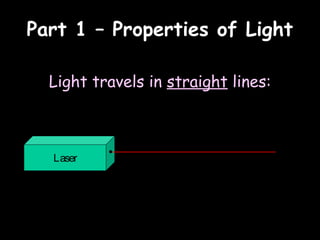
  Light travels in straight lines:


  Laser
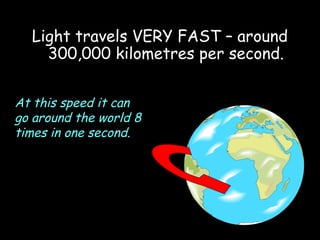
Light travels VERY FAST – around
    300,000 kilometres per second.


At this speed it can
go around the world 8
times in one second.
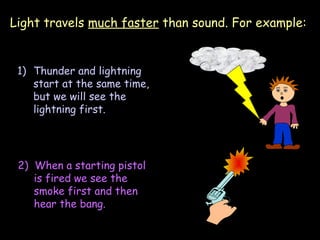
Light travels much faster than sound. For example:


 1) Thunder and lightning
    start at the same time,
    but we will see the
    lightning first.


 2) When a starting pistol
    is fired we see the
    smoke first and then
    hear the bang.
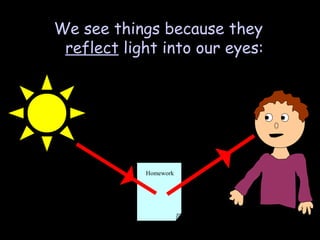
We see things because they
 reflect light into our eyes:


            Homework
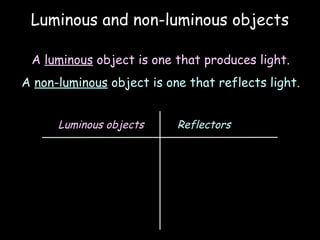
Luminous and non-luminous objects

 A luminous object is one that produces light.
A non-luminous object is one that reflects light.


      Luminous objects     Reflectors
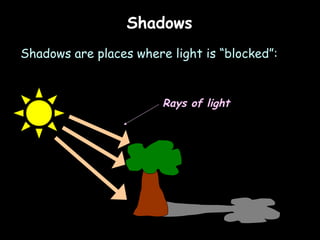
Shadows
Shadows are places where light is “blocked”:


                        Rays of light
Properties of Light summary

1) Light travels in straight lines
2) Light travels much faster than sound
3) We see things because they reflect light
   into our eyes
4) Shadows are formed when light is blocked
   by an object
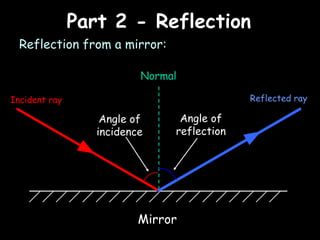
Part 2 - Reflection
  Reflection from a mirror:

                          Normal

Incident ray                                Reflected ray

                   Angle of     Angle of
                  incidence    reflection


                          Mirror
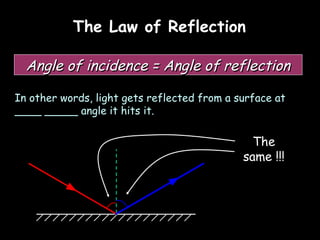
The Law of Reflection

  Angle of incidence = Angle of reflection

In other words, light gets reflected from a surface at
____ _____ angle it hits it.

                                               The
                                             same !!!
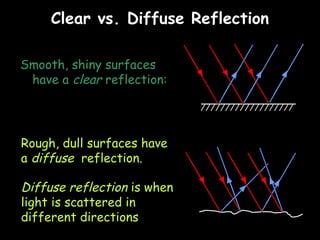
Clear vs. Diffuse Reflection

Smooth, shiny surfaces
 have a clear reflection:


Rough, dull surfaces have
a diffuse reflection.

Diffuse reflection is when
light is scattered in
different directions
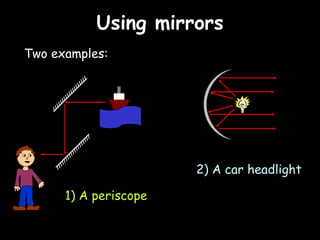
Using mirrors
Two examples:


                       2) A car headlight

      1) A periscope
Colour
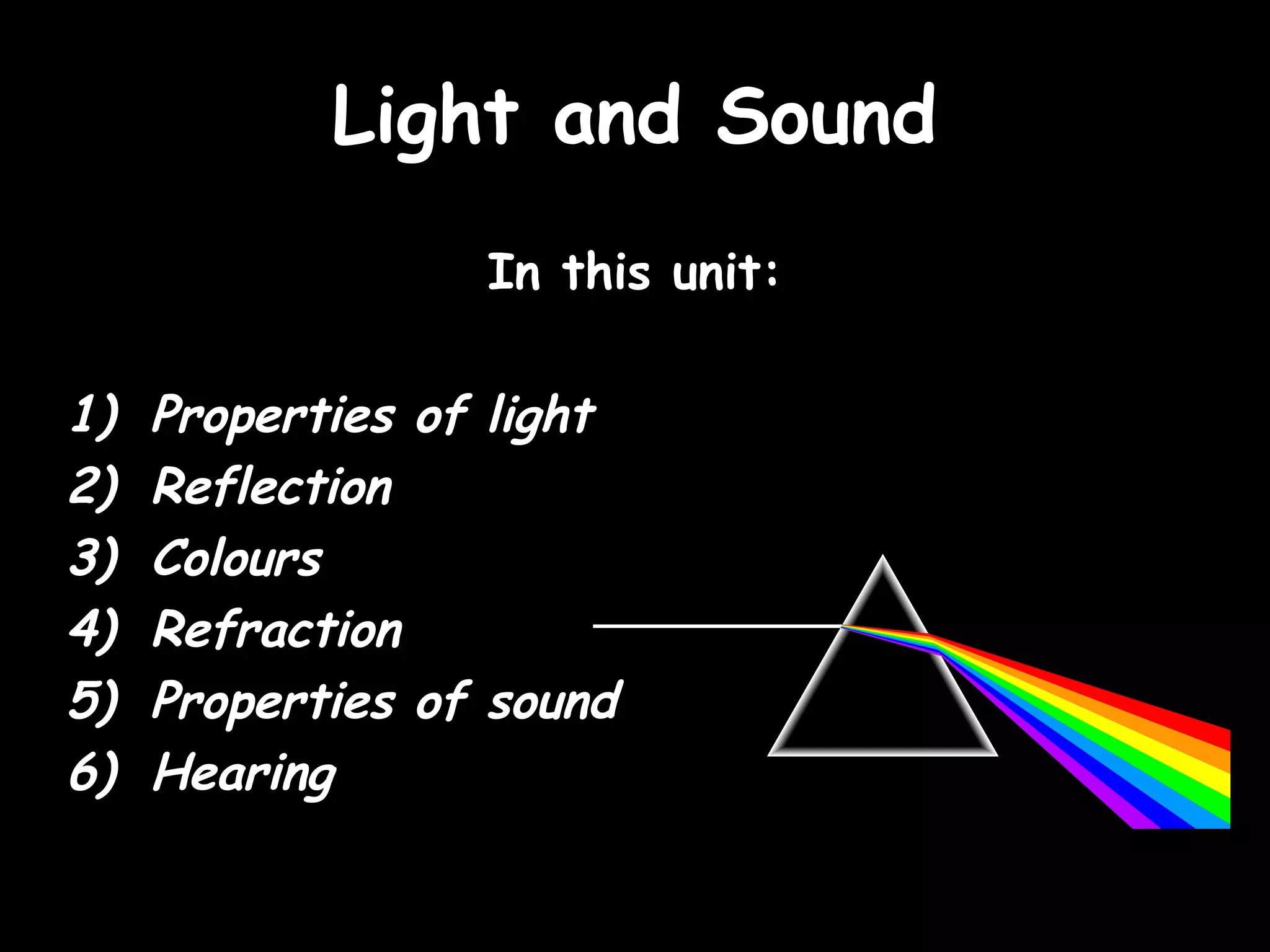
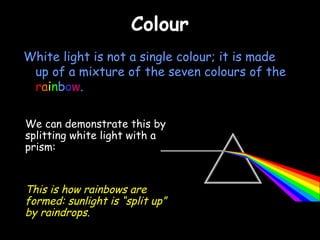
White light is not a single colour; it is made
 up of a mixture of the seven colours of the
 rainbow.

We can demonstrate this by
splitting white light with a
prism:


This is how rainbows are
formed: sunlight is “split up”
by raindrops.
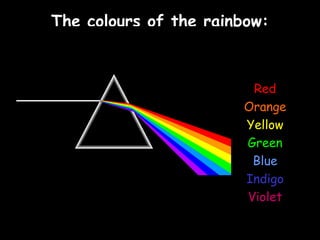
The colours of the rainbow:


                        Red
                       Orange
                       Yellow
                       Green
                        Blue
                       Indigo
                       Violet
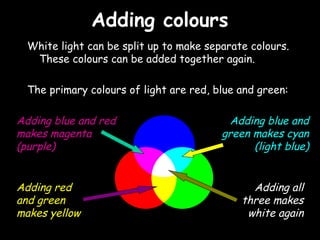
Adding colours
  White light can be split up to make separate colours.
   These colours can be added together again.

  The primary colours of light are red, blue and green:

Adding blue and red                       Adding blue and
makes magenta                            green makes cyan
(purple)                                       (light blue)


Adding red                                     Adding all
and green                                    three makes
makes yellow                                  white again
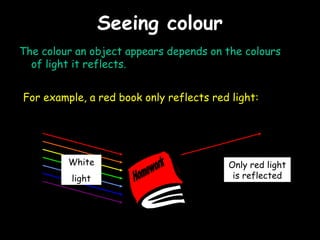
Seeing colour
The colour an object appears depends on the colours
  of light it reflects.


For example, a red book only reflects red light:


         White                           Only red light
          light                           is reflected
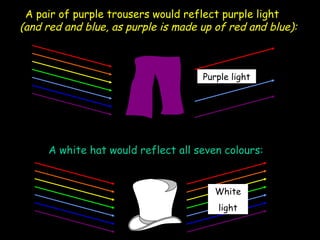
A pair of purple trousers would reflect purple light
(and red and blue, as purple is made up of red and blue):


                                     Purple light


     A white hat would reflect all seven colours:


                                        White
                                        light
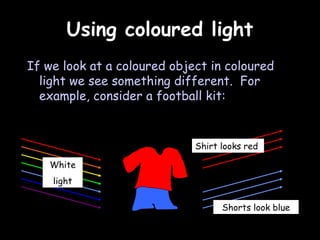
Using coloured light
If we look at a coloured object in coloured
  light we see something different. For
  example, consider a football kit:


                             Shirt looks red

   White
    light

                                   Shorts look blue
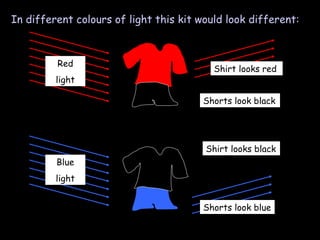
In different colours of light this kit would look different:


         Red
                                          Shirt looks red
         light

                                       Shorts look black


                                        Shirt looks black
         Blue
         light


                                       Shorts look blue
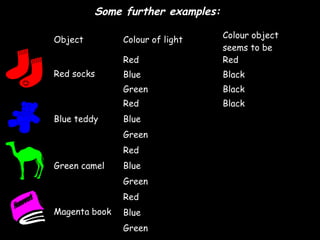
Some further examples:

                                  Colour object
Object         Colour of light
                                  seems to be
               Red                Red
Red socks      Blue               Black
               Green              Black
               Red                Black
Blue teddy     Blue
               Green
               Red
Green camel    Blue
               Green
               Red
Magenta book   Blue
               Green
Using filters
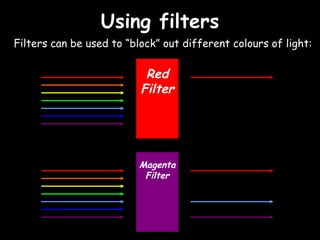
Filters can be used to “block” out different colours of light:

                           Red
                          Filter


                          Magenta
                           Filter
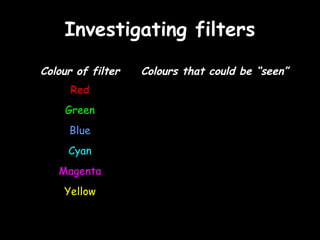
Investigating filters
Colour of filter   Colours that could be “seen”
      Red
     Green
     Blue
     Cyan
   Magenta
    Yellow
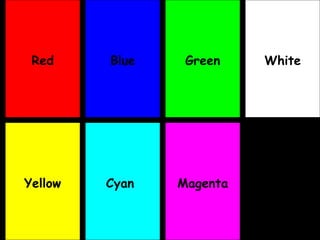
Red     Blue    Green    White


Yellow   Cyan   Magenta
Refraction

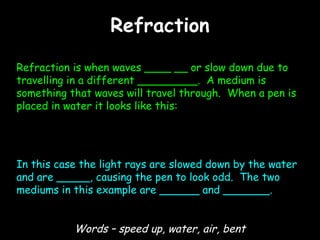
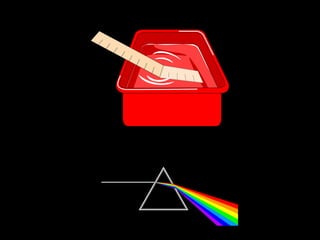
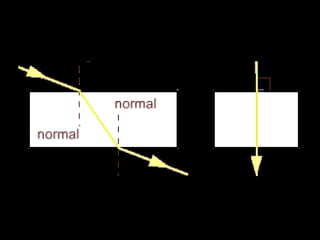
Refraction is when waves ____ __ or slow down due to
travelling in a different _________. A medium is
something that waves will travel through. When a pen is
placed in water it looks like this:


In this case the light rays are slowed down by the water
and are _____, causing the pen to look odd. The two
mediums in this example are ______ and _______.


           Words – speed up, water, air, bent
Sound – The basics
We hear things when they vibrate.


If something vibrates with a high frequency (vibrates very
______) we say it has a _____ pitch.
If something vibrates with a low frequency (vibrates
______) we say it has a ____ pitch.


The lowest frequency I could hear was…


             Words – slowly, low, high, quickly
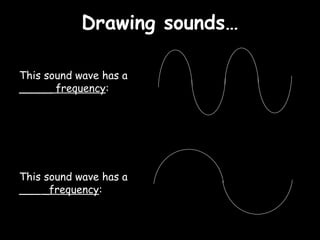
Drawing sounds…

This sound wave has a
_____ frequency:


This sound wave has a
___ _frequency:
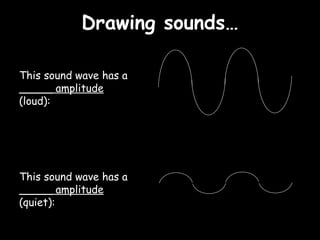
Drawing sounds…

This sound wave has a
_____ amplitude
(loud):


This sound wave has a
_____ amplitude
(quiet):
Hearing problems

Our hearing range can be damaged by several
  things:


1) Too much ear wax!
2) Damage to the auditory nerve
3) Illness or infections
4) Old age (not like Mr Richards)
Other sound effects…

Like light, sound can be…


1) Reflected – sound reflections are called
   ______.
2) Refracted – this is why you might sound
   strange if you try talking underwater
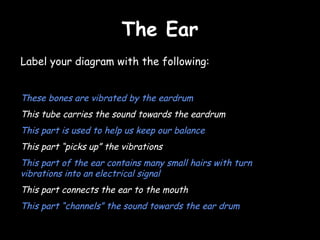
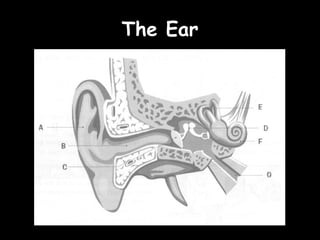
The Ear
Label your diagram with the following:


These bones are vibrated by the eardrum
This tube carries the sound towards the eardrum
This part is used to help us keep our balance
This part “picks up” the vibrations
This part of the ear contains many small hairs with turn
vibrations into an electrical signal
This part connects the ear to the mouth
This part “channels” the sound towards the ear drum
The Ear

Light presentation

  • 1.
    Light and Sound In this unit: 1) Properties of light 2) Reflection 3) Colours 4) Refraction 5) Properties of sound 6) Hearing
  • 2.
    Part 1 –Properties of Light Light travels in straight lines: Laser
  • 3.
    Light travels VERYFAST – around 300,000 kilometres per second. At this speed it can go around the world 8 times in one second.
  • 4.
    Light travels muchfaster than sound. For example: 1) Thunder and lightning start at the same time, but we will see the lightning first. 2) When a starting pistol is fired we see the smoke first and then hear the bang.
  • 5.
    We see thingsbecause they reflect light into our eyes: Homework
  • 6.
    Luminous and non-luminousobjects A luminous object is one that produces light. A non-luminous object is one that reflects light. Luminous objects Reflectors
  • 7.
    Shadows Shadows are placeswhere light is “blocked”: Rays of light
  • 8.
    Properties of Lightsummary 1) Light travels in straight lines 2) Light travels much faster than sound 3) We see things because they reflect light into our eyes 4) Shadows are formed when light is blocked by an object
  • 9.
    Part 2 -Reflection Reflection from a mirror: Normal Incident ray Reflected ray Angle of Angle of incidence reflection Mirror
  • 10.
    The Law ofReflection Angle of incidence = Angle of reflection In other words, light gets reflected from a surface at ____ _____ angle it hits it. The same !!!
  • 11.
    Clear vs. DiffuseReflection Smooth, shiny surfaces have a clear reflection: Rough, dull surfaces have a diffuse reflection. Diffuse reflection is when light is scattered in different directions
  • 12.
    Using mirrors Two examples: 2) A car headlight 1) A periscope
  • 13.
    Colour White light isnot a single colour; it is made up of a mixture of the seven colours of the rainbow. We can demonstrate this by splitting white light with a prism: This is how rainbows are formed: sunlight is “split up” by raindrops.
  • 14.
    The colours ofthe rainbow: Red Orange Yellow Green Blue Indigo Violet
  • 15.
    Adding colours White light can be split up to make separate colours. These colours can be added together again. The primary colours of light are red, blue and green: Adding blue and red Adding blue and makes magenta green makes cyan (purple) (light blue) Adding red Adding all and green three makes makes yellow white again
  • 16.
    Seeing colour The colouran object appears depends on the colours of light it reflects. For example, a red book only reflects red light: White Only red light light is reflected
  • 17.
    A pair ofpurple trousers would reflect purple light (and red and blue, as purple is made up of red and blue): Purple light A white hat would reflect all seven colours: White light
  • 18.
    Using coloured light Ifwe look at a coloured object in coloured light we see something different. For example, consider a football kit: Shirt looks red White light Shorts look blue
  • 19.
    In different coloursof light this kit would look different: Red Shirt looks red light Shorts look black Shirt looks black Blue light Shorts look blue
  • 20.
    Some further examples: Colour object Object Colour of light seems to be Red Red Red socks Blue Black Green Black Red Black Blue teddy Blue Green Red Green camel Blue Green Red Magenta book Blue Green
  • 21.
    Using filters Filters canbe used to “block” out different colours of light: Red Filter Magenta Filter
  • 22.
    Investigating filters Colour offilter Colours that could be “seen” Red Green Blue Cyan Magenta Yellow
  • 23.
    Red Blue Green White Yellow Cyan Magenta
  • 24.
    Refraction Refraction is whenwaves ____ __ or slow down due to travelling in a different _________. A medium is something that waves will travel through. When a pen is placed in water it looks like this: In this case the light rays are slowed down by the water and are _____, causing the pen to look odd. The two mediums in this example are ______ and _______. Words – speed up, water, air, bent
  • 27.
    Sound – Thebasics We hear things when they vibrate. If something vibrates with a high frequency (vibrates very ______) we say it has a _____ pitch. If something vibrates with a low frequency (vibrates ______) we say it has a ____ pitch. The lowest frequency I could hear was… Words – slowly, low, high, quickly
  • 28.
    Drawing sounds… This soundwave has a _____ frequency: This sound wave has a ___ _frequency:
  • 29.
    Drawing sounds… This soundwave has a _____ amplitude (loud): This sound wave has a _____ amplitude (quiet):
  • 30.
    Hearing problems Our hearingrange can be damaged by several things: 1) Too much ear wax! 2) Damage to the auditory nerve 3) Illness or infections 4) Old age (not like Mr Richards)
  • 31.
    Other sound effects… Likelight, sound can be… 1) Reflected – sound reflections are called ______. 2) Refracted – this is why you might sound strange if you try talking underwater
  • 32.
    The Ear Label yourdiagram with the following: These bones are vibrated by the eardrum This tube carries the sound towards the eardrum This part is used to help us keep our balance This part “picks up” the vibrations This part of the ear contains many small hairs with turn vibrations into an electrical signal This part connects the ear to the mouth This part “channels” the sound towards the ear drum
  • 33.