natural
Electricity and
inventions
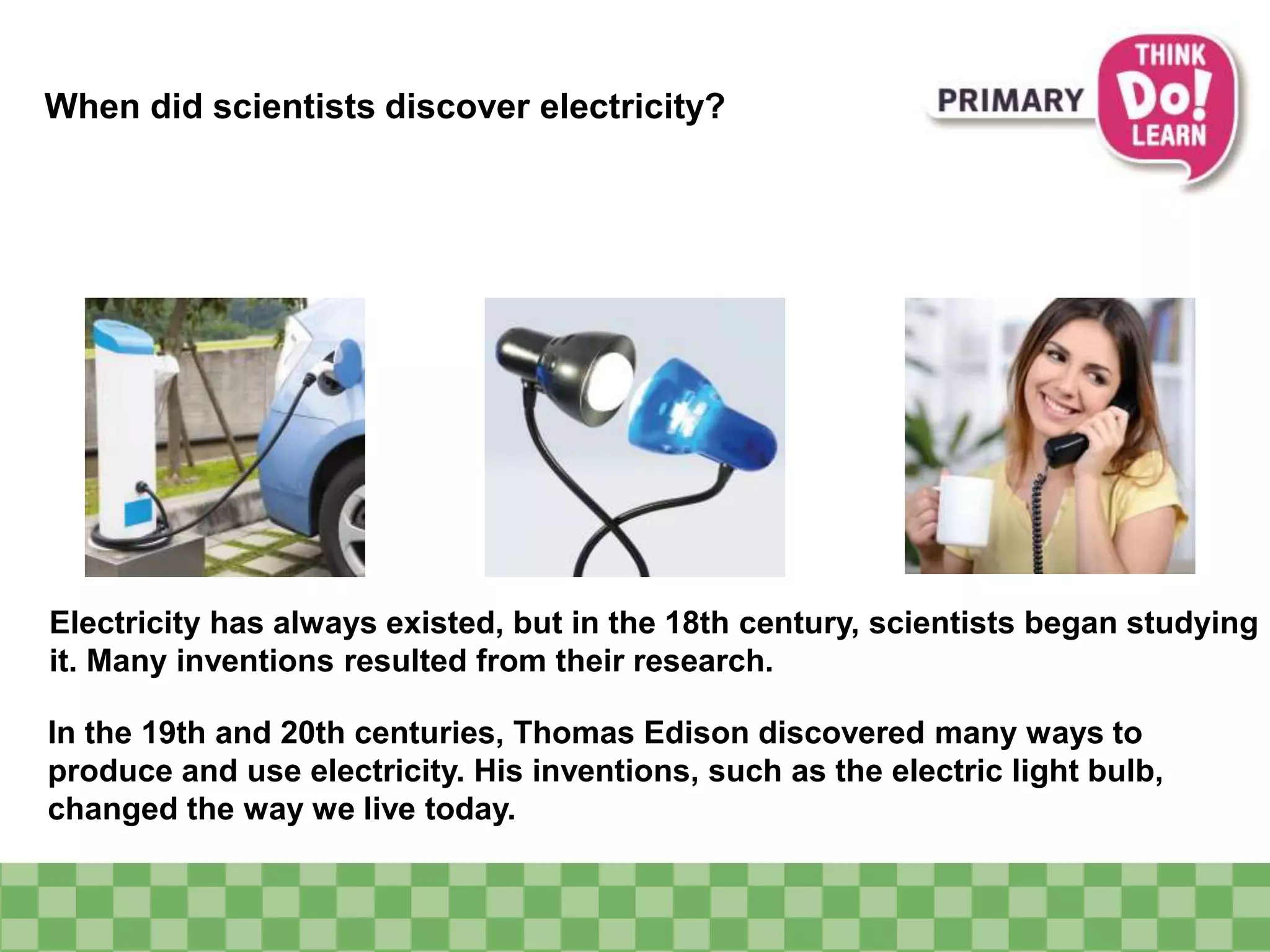
Electricity has always existed, but in the 18th century, scientists began studying
it. Many inventions resulted from their research.
When did scientists discover electricity?
In the 19th and 20th centuries, Thomas Edison discovered many ways to
produce and use electricity. His inventions, such as the electric light bulb,
changed the way we live today.
What’s electricity?
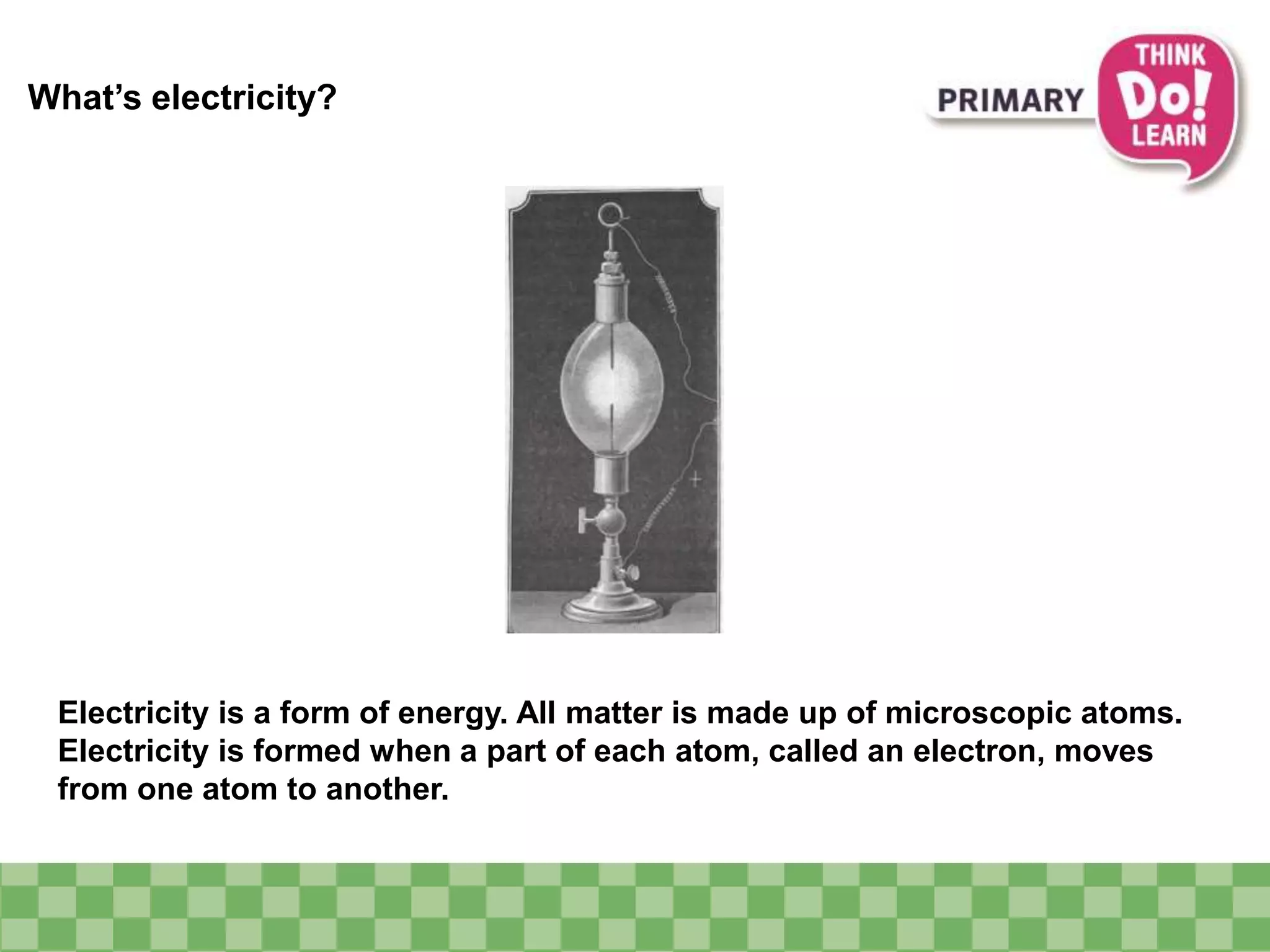
Electricity is a form of energy. All matter is made up of microscopic atoms.
Electricity is formed when a part of each atom, called an electron, moves
from one atom to another.
What’s an atom made up of?
The nucleus is made up of protons and
neutrons. The protons have a positive
electric charge.
The electrons revolve around
the nucleus. They have a
negative electric charge.
Static electricity is the movement of electrons between two materials.
Rubbing the balloon causes the electrons to move from the hair to
the balloon. The balloon becomes negatively charged and the hair
becomes positively charged. They attract so your hair stands on end.
What’s static electricity?
What’s electric current?
Electric current is the movement, or flow, of electrons between
atoms.
Some types of matter have electrons that move easily from one atom to
another. We call these electrical conductors, because electricity can flow
easily through them. Metals are an example of electrical conductors.
What are electrical conductors?
Electricity and magnetism
When electric current flows through wires, a magnetic field is produced.
This happens because negatively charged electrons are moving through
the wire.
Simple circuit Series circuit Parallel circuit
What are the different types of circuits?
An electric circuit is a closed loop or circle. We need circuits because
electricity will only flow if the circuit is closed. Electric circuits can be found
in every machine that uses electricity.
How do we represent electrical circuits?
By using symbols, we can
easily identify the
components and the type
of circuit.
Light
bulb or
lamp
Switch
‘on’
Switch
‘off’
Wire
Battery
How does electricity get to our homes?
From the fuse box, the electricity
travels through wires to all the
light switches and sockets in our
home.
Electricity is generated in power
stations. From the power station, the
electricity travels along big cables to
our homes. At the place where
electricity enters our house, there is a
fuse box.
Before scientists discovered how to use electricity, people used
candles or gas to light their homes. They cooked and heated water
over a fire.
What would life be like without electricity?
Thomas Edison was an American inventor. In 1879, he invented the first
light bulb that produced light for a long period of time. He also invented
the phonograph, a machine that recorded sound and the kinetoscope, the
first motion picture camera.
Who was Thomas Edison?
What have we learnt?
series
circuit
parallel
circuit
The three types of circuits are...
simple
circuit
What have we learnt?
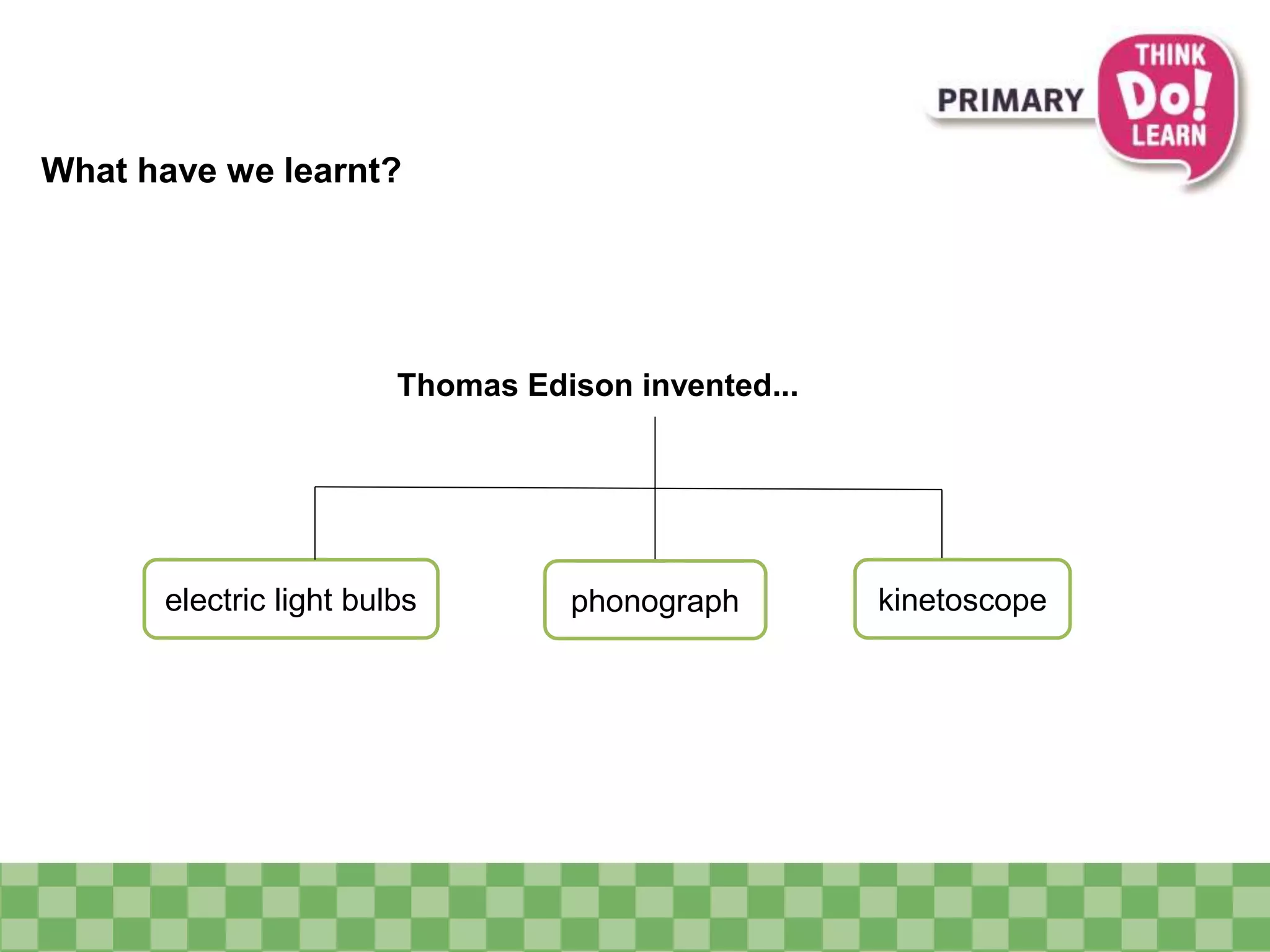
phonograph kinetoscopeelectric light bulbs
Thomas Edison invented...

Electricity and inventions

  • 1.
  • 2.
    Electricity has alwaysexisted, but in the 18th century, scientists began studying it. Many inventions resulted from their research. When did scientists discover electricity? In the 19th and 20th centuries, Thomas Edison discovered many ways to produce and use electricity. His inventions, such as the electric light bulb, changed the way we live today.
  • 3.
    What’s electricity? Electricity isa form of energy. All matter is made up of microscopic atoms. Electricity is formed when a part of each atom, called an electron, moves from one atom to another.
  • 4.
    What’s an atommade up of? The nucleus is made up of protons and neutrons. The protons have a positive electric charge. The electrons revolve around the nucleus. They have a negative electric charge.
  • 5.
    Static electricity isthe movement of electrons between two materials. Rubbing the balloon causes the electrons to move from the hair to the balloon. The balloon becomes negatively charged and the hair becomes positively charged. They attract so your hair stands on end. What’s static electricity?
  • 6.
    What’s electric current? Electriccurrent is the movement, or flow, of electrons between atoms.
  • 7.
    Some types ofmatter have electrons that move easily from one atom to another. We call these electrical conductors, because electricity can flow easily through them. Metals are an example of electrical conductors. What are electrical conductors?
  • 8.
    Electricity and magnetism Whenelectric current flows through wires, a magnetic field is produced. This happens because negatively charged electrons are moving through the wire.
  • 9.
    Simple circuit Seriescircuit Parallel circuit What are the different types of circuits? An electric circuit is a closed loop or circle. We need circuits because electricity will only flow if the circuit is closed. Electric circuits can be found in every machine that uses electricity.
  • 10.
    How do werepresent electrical circuits? By using symbols, we can easily identify the components and the type of circuit. Light bulb or lamp Switch ‘on’ Switch ‘off’ Wire Battery
  • 11.
    How does electricityget to our homes? From the fuse box, the electricity travels through wires to all the light switches and sockets in our home. Electricity is generated in power stations. From the power station, the electricity travels along big cables to our homes. At the place where electricity enters our house, there is a fuse box.
  • 12.
    Before scientists discoveredhow to use electricity, people used candles or gas to light their homes. They cooked and heated water over a fire. What would life be like without electricity?
  • 13.
    Thomas Edison wasan American inventor. In 1879, he invented the first light bulb that produced light for a long period of time. He also invented the phonograph, a machine that recorded sound and the kinetoscope, the first motion picture camera. Who was Thomas Edison?
  • 14.
    What have welearnt? series circuit parallel circuit The three types of circuits are... simple circuit
  • 15.
    What have welearnt? phonograph kinetoscopeelectric light bulbs Thomas Edison invented...