Chapter 25: Evolution
Biology: Mrs. Neistadt
Changes Over Time:
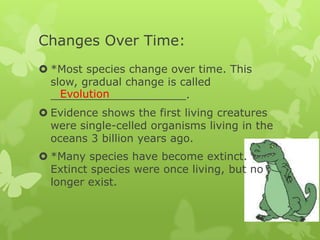
 *Most species change over time. This
  slow, gradual change is called
    Evolution
  ____________________.
 Evidence shows the first living creatures
  were single-celled organisms living in the
  oceans 3 billion years ago.
 *Many species have become extinct.
  Extinct species were once living, but no
  longer exist.
Jean Baptist Lamarck

 In the 1800s scientists were studying and
  discovering __Fossils .
 A fossil is the remains of an organism that
  lived long ago.
 Jean Baptist Lamarck proposed one of the
  first theories of evolution.
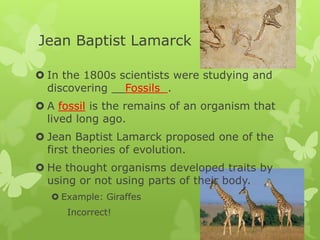
 He thought organisms developed traits by
  using or not using parts of their body.
   Example: Giraffes
     Incorrect!
Charles Darwin

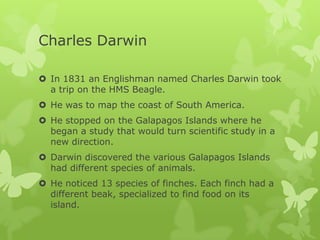
 In 1831 an Englishman named Charles Darwin took
  a trip on the HMS Beagle.
 He was to map the coast of South America.
 He stopped on the Galapagos Islands where he
  began a study that would turn scientific study in a
  new direction.
 Darwin discovered the various Galapagos Islands
  had different species of animals.
 He noticed 13 species of finches. Each finch had a
  different beak, specialized to find food on its
  island.
Charles Darwin
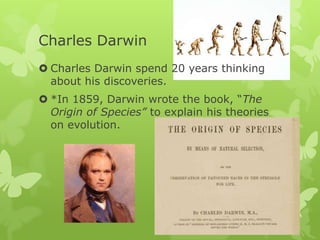
 Charles Darwin spend 20 years thinking
  about his discoveries.
 *In 1859, Darwin wrote the book, “The
  Origin of Species” to explain his theories
  on evolution.
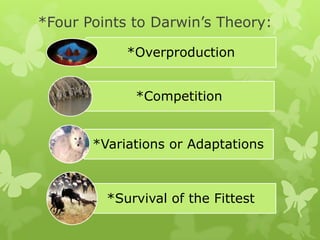
*Four Points to Darwin’s Theory:

            *Overproduction


             *Competition


       *Variations or Adaptations


         *Survival of the Fittest
Charles Darwin
Genetic Variations:


 Darwin did not know HOW genetic traits
  were passed on.
 *A gene pool is the combined genetic
  information of all members of a
  population.
 By studying the gene pool of a
  population, scientists can see how
  variations in traits are passed to offspring.
*Events That Can Cause
Evolution:
  *Natural
  Selection
                  *Evolution can
                 only occur when
 *Mutation       an event causes
                  changes in the
                    gene pool.
*Genetic Drift
Natural Selection

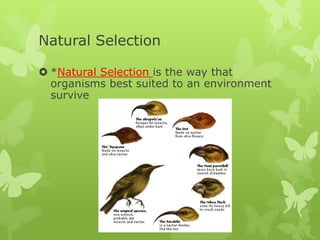
 *Natural Selection is the way that
  organisms best suited to an environment
  survive
Mutation

 *Mutation: If a mutation is harmful the
  organism may die before passing on the
  gene. If the mutation is helpful, the
  organisms live and pass the gene on.
Genetic Drift

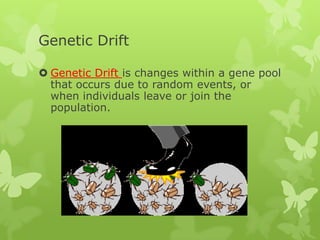
 Genetic Drift is changes within a gene pool
  that occurs due to random events, or
  when individuals leave or join the
  population.
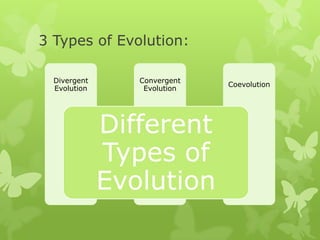
3 Types of Evolution:

  Divergent      Convergent
                              Coevolution
  Evolution       Evolution


              Different
              Types of
              Evolution
Your turn…


Create a graphic organizer to
 Compare the 3 types of evolution:
  Divergent
  Convergent
  Coevolution


  Use Internet research and/or your
   textbook Pg398 to help you.

Introduction to Theory of Evolution

  • 1.
  • 2.
    Changes Over Time: *Most species change over time. This slow, gradual change is called Evolution ____________________.  Evidence shows the first living creatures were single-celled organisms living in the oceans 3 billion years ago.  *Many species have become extinct. Extinct species were once living, but no longer exist.
  • 3.
    Jean Baptist Lamarck In the 1800s scientists were studying and discovering __Fossils .  A fossil is the remains of an organism that lived long ago.  Jean Baptist Lamarck proposed one of the first theories of evolution.  He thought organisms developed traits by using or not using parts of their body.  Example: Giraffes Incorrect!
  • 4.
    Charles Darwin  In1831 an Englishman named Charles Darwin took a trip on the HMS Beagle.  He was to map the coast of South America.  He stopped on the Galapagos Islands where he began a study that would turn scientific study in a new direction.  Darwin discovered the various Galapagos Islands had different species of animals.  He noticed 13 species of finches. Each finch had a different beak, specialized to find food on its island.
  • 5.
    Charles Darwin  CharlesDarwin spend 20 years thinking about his discoveries.  *In 1859, Darwin wrote the book, “The Origin of Species” to explain his theories on evolution.
  • 6.
    *Four Points toDarwin’s Theory: *Overproduction *Competition *Variations or Adaptations *Survival of the Fittest
  • 7.
  • 8.
    Genetic Variations:  Darwindid not know HOW genetic traits were passed on.  *A gene pool is the combined genetic information of all members of a population.  By studying the gene pool of a population, scientists can see how variations in traits are passed to offspring.
  • 9.
    *Events That CanCause Evolution: *Natural Selection *Evolution can only occur when *Mutation an event causes changes in the gene pool. *Genetic Drift
  • 10.
    Natural Selection  *NaturalSelection is the way that organisms best suited to an environment survive
  • 11.
    Mutation  *Mutation: Ifa mutation is harmful the organism may die before passing on the gene. If the mutation is helpful, the organisms live and pass the gene on.
  • 12.
    Genetic Drift  GeneticDrift is changes within a gene pool that occurs due to random events, or when individuals leave or join the population.
  • 13.
    3 Types ofEvolution: Divergent Convergent Coevolution Evolution Evolution Different Types of Evolution
  • 14.
    Your turn… Create agraphic organizer to Compare the 3 types of evolution: Divergent Convergent Coevolution Use Internet research and/or your textbook Pg398 to help you.