The foundation of 
good decision making 
Dr Andrew Hirst Room 9339 1
What are you trying to achieve? 
• True consensus 
• Group harmony 
• Quick and timely decisions
Lecture structure 
• The manager as a decision maker 
• Types of decision making 
• Decision making process 
• Practical solutions
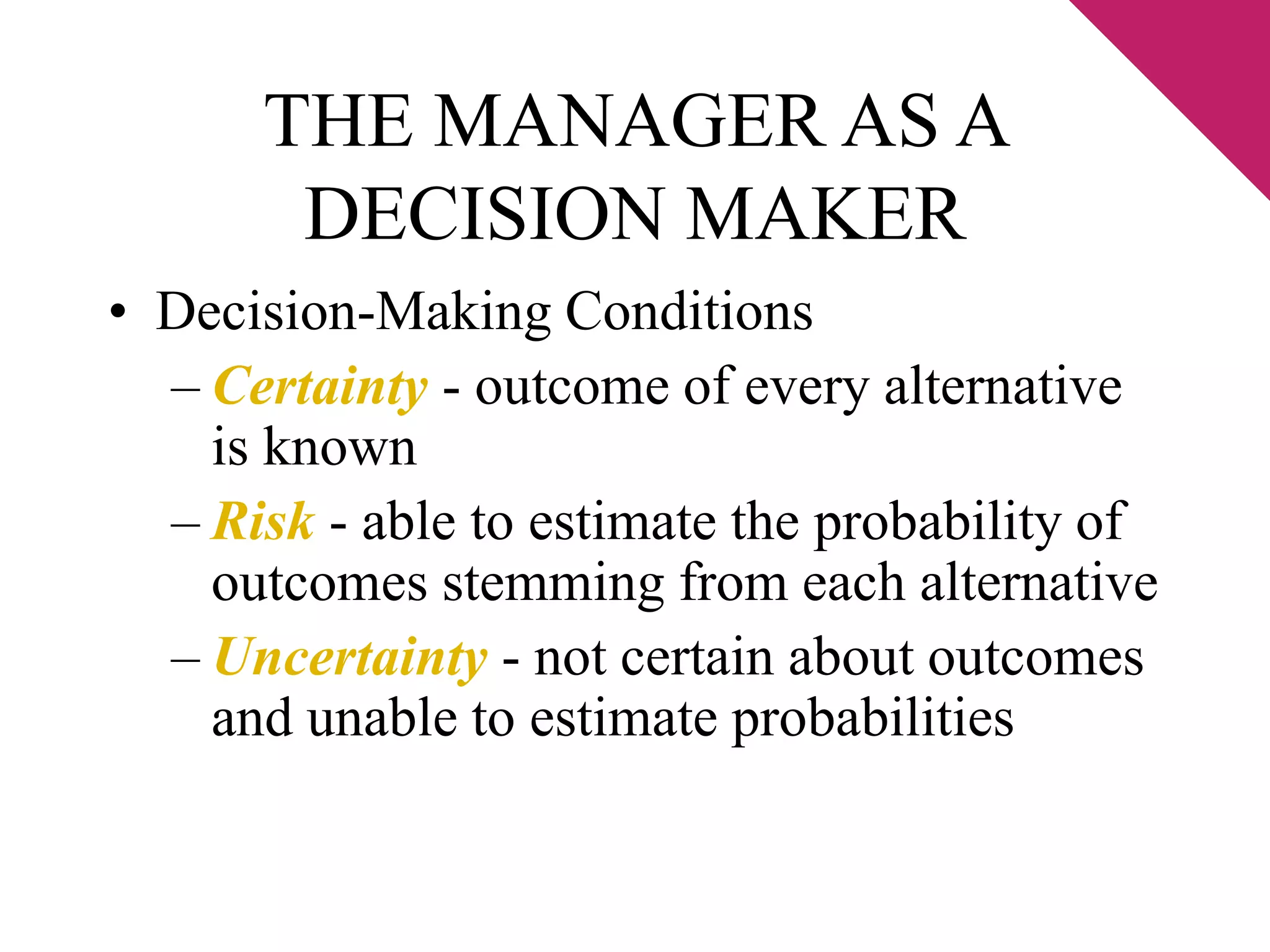
THE MANAGER AS A 
DECISION MAKER 
• Decision-Making Conditions 
– Certainty - outcome of every alternative 
is known 
– Risk - able to estimate the probability of 
outcomes stemming from each alternative 
– Uncertainty - not certain about outcomes 
and unable to estimate probabilities
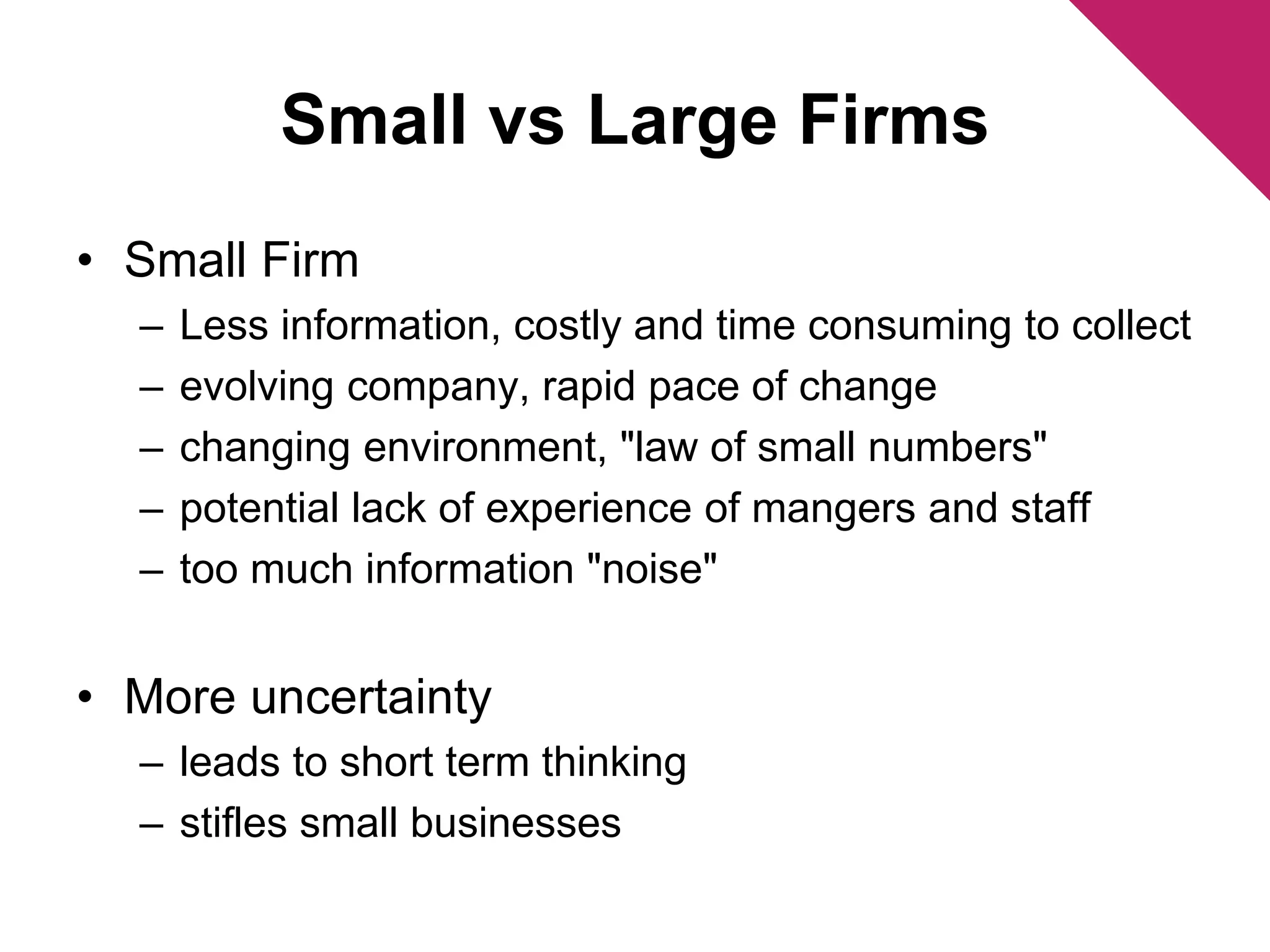
Small vs Large Firms 
• Small Firm 
– Less information, costly and time consuming to collect 
– evolving company, rapid pace of change 
– changing environment, "law of small numbers" 
– potential lack of experience of mangers and staff 
– too much information "noise" 
• More uncertainty 
– leads to short term thinking 
– stifles small businesses
THE MANAGER AS 
DECISION MAKER (continued) 
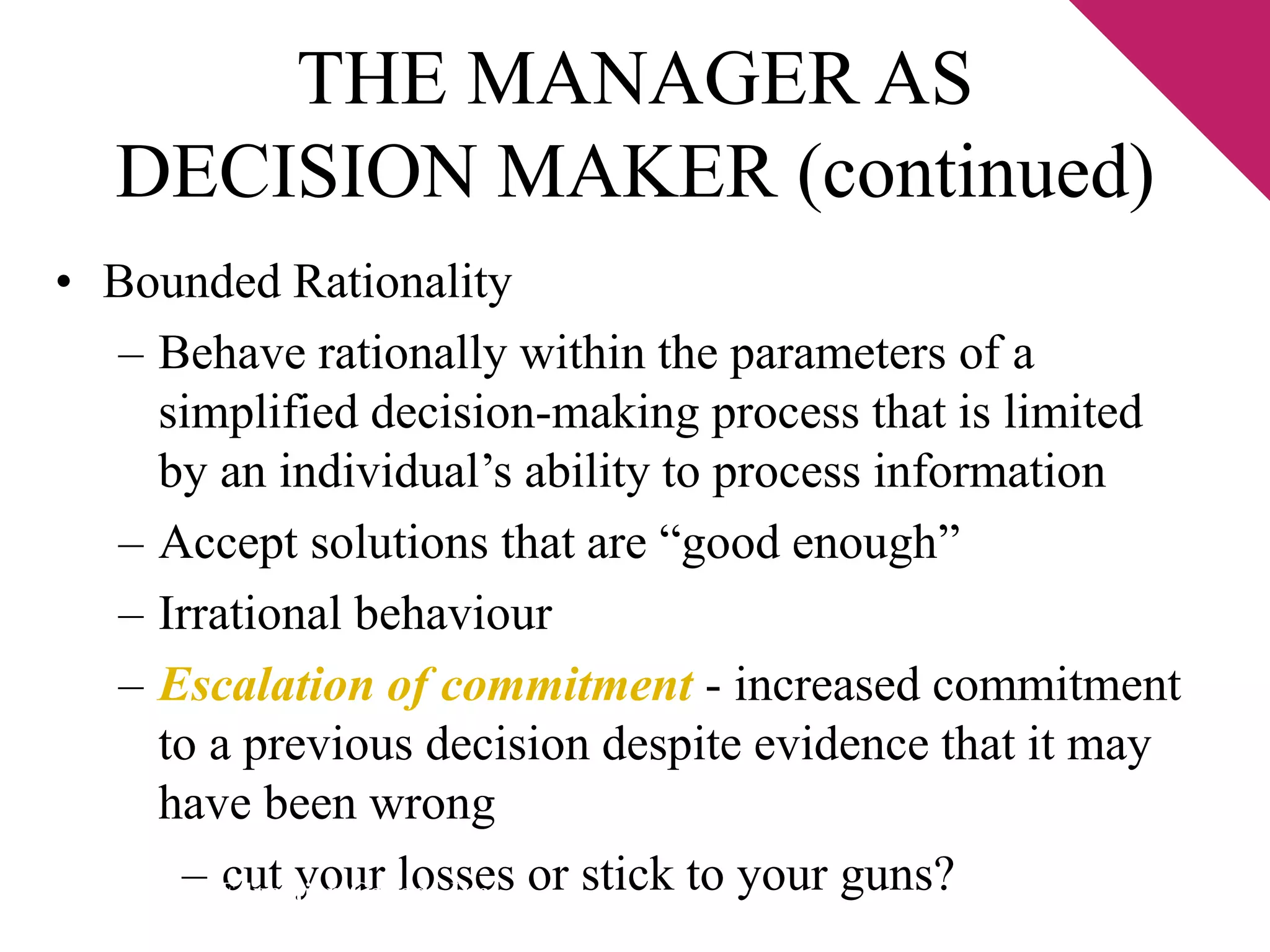
• Bounded Rationality 
– Behave rationally within the parameters of a 
simplified decision-making process that is limited 
by an individual’s ability to process information 
– Accept solutions that are “good enough” 
– Irrational behaviour 
– Escalation of commitment - increased commitment 
to a previous decision despite evidence that it may 
have been wrong 
– cut your losses or stick to your guns? © 2003 Pearson Education Canada Inc.
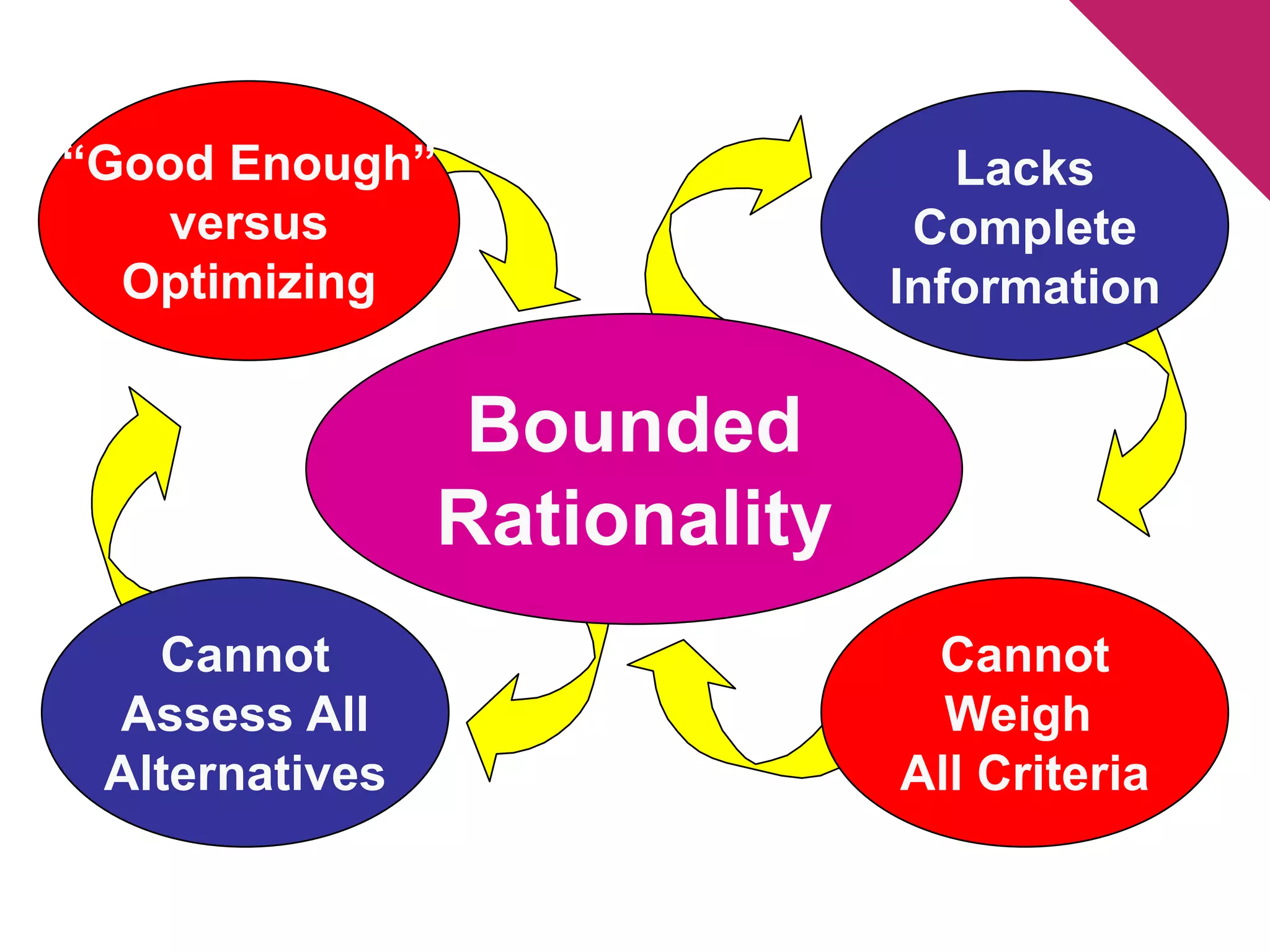
“Good Enough” 
versus 
Optimizing 
Lacks 
Complete 
Information 
Cannot 
Assess All 
Alternatives 
Cannot 
Weigh 
All Criteria 
Bounded 
Rationality
THE MANAGER AS 
DECISION MAKER (continued) 
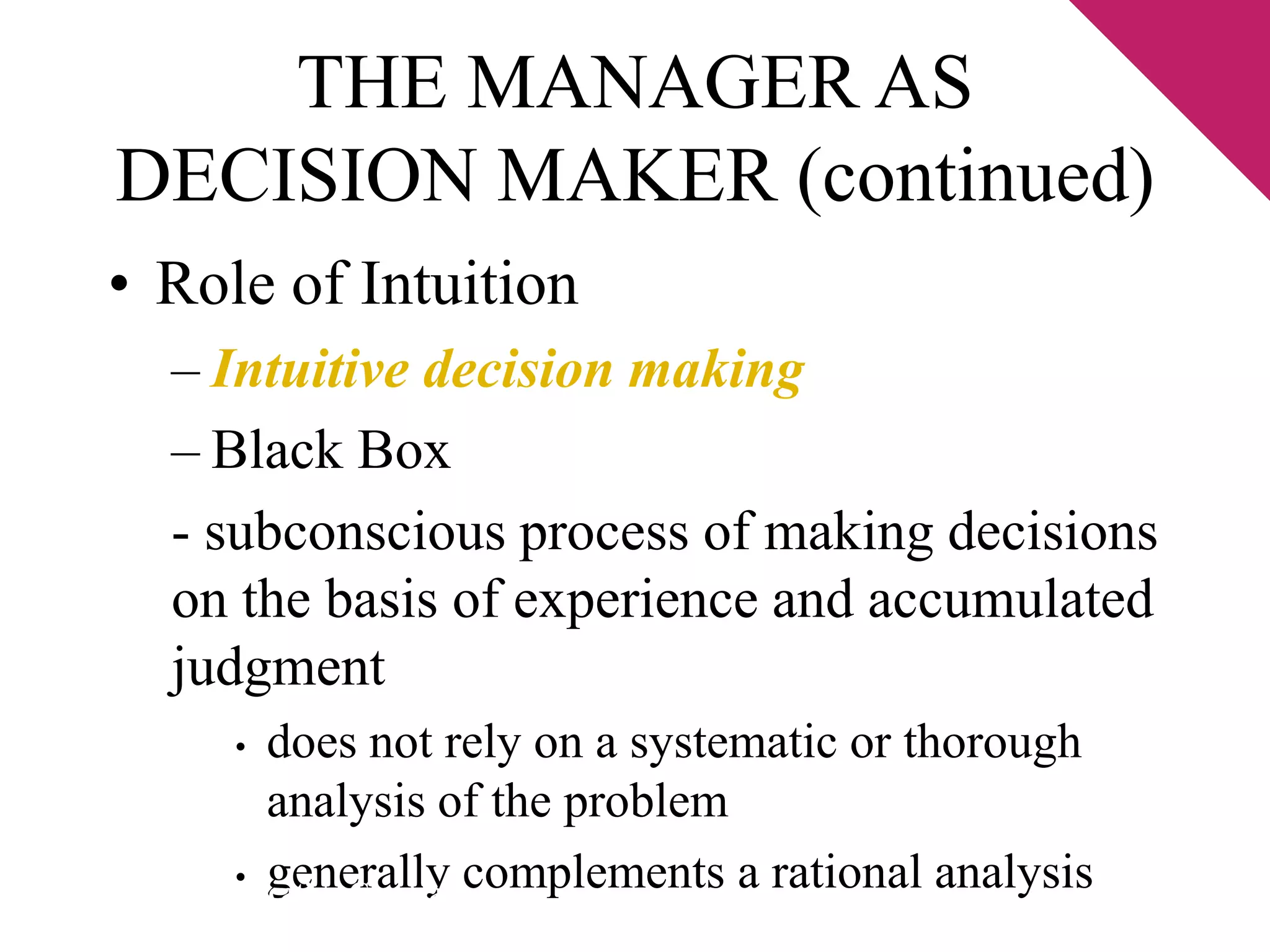
• Role of Intuition 
– Intuitive decision making 
– Black Box 
- subconscious process of making decisions 
on the basis of experience and accumulated 
judgment 
• does not rely on a systematic or thorough 
analysis of the problem 
• generally complements a rational analysis © 2003 Pearson Education Canada Inc.
Gut feel 
• +100 Million Brain cells in the gut 
• When you die the gut keeps working for a time 
• More brain cells in your gut than in a cats head 
• Enteric Nervous System 
– Vagus Nerves connect to the brain 
• Part of our emotional system 
TED lecture: Heribert Watzke: The brain in our gut
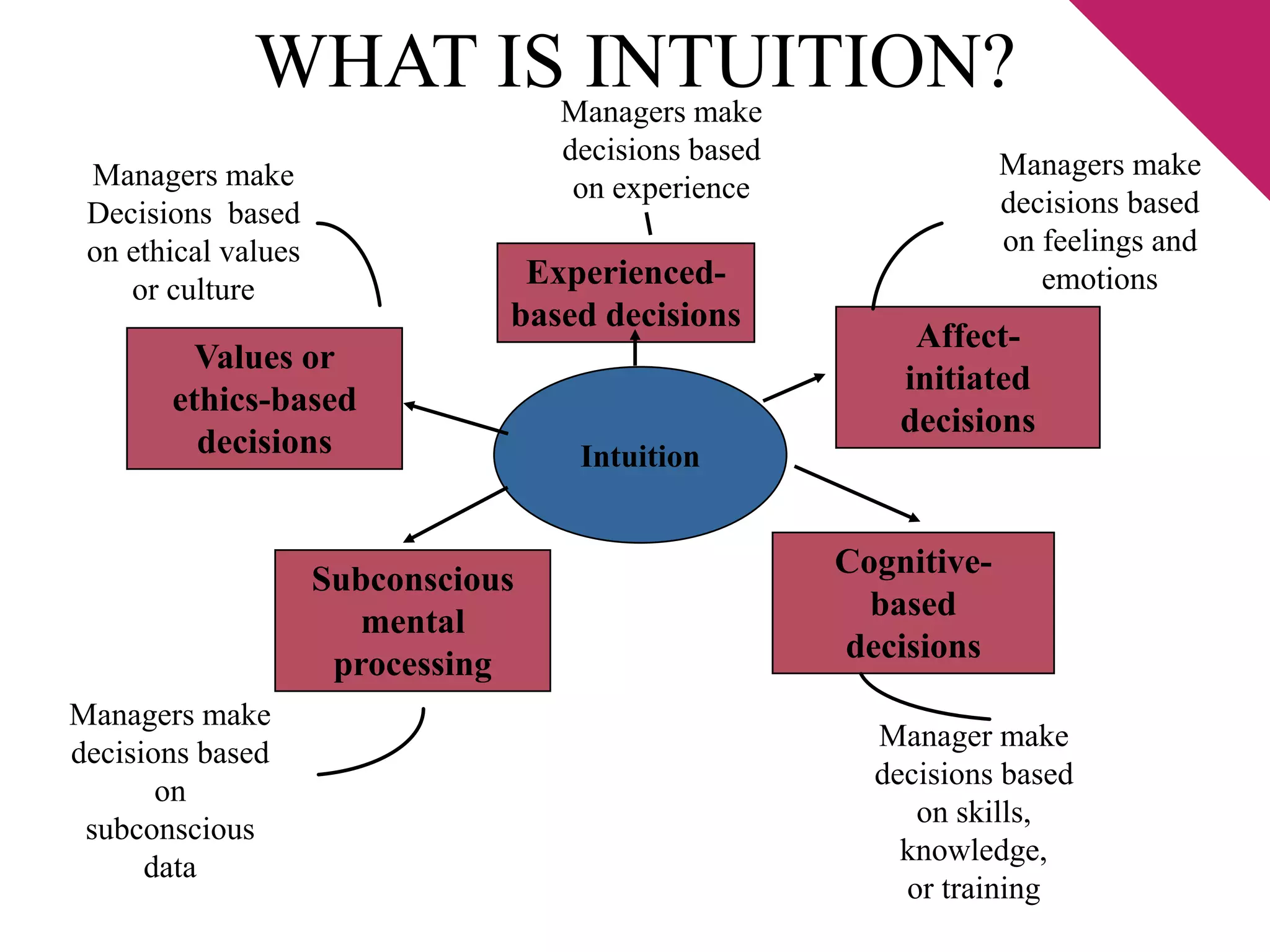
WHAT IS INTUITION? 
Managers make 
decisions based 
on experience 
Managers make 
decisions based 
on feelings and 
emotions 
Managers make 
Decisions based 
on ethical values 
or culture 
Managers make 
decisions based 
on 
subconscious 
data 
Manager make 
decisions based 
on skills, 
knowledge, 
or training 
Intuition 
Affect-initiated 
decisions 
Experienced-based 
decisions 
Values or 
ethics-based 
decisions 
Subconscious 
mental 
processing 
Cognitive-based 
decisions
Two great films 
• 12 Angry Men (1957) 
– Courtroom classic. One man goes against the other 
11 jurors. One question, is he guilty? Examination of 
inner prejudice, emotion and ulterior motives in 
decision making. 
• Moneyball (2011) 
– Conflict between considered wisdom (gut feel or 
intuition) and data analysis 
– Need to think differently 
• Lack of money and past experience 
• Economic model based on ON BASE AVERAGE not 
conventional wisdom of RUNS
What can help us make 
decisions? 
Models 
Processes
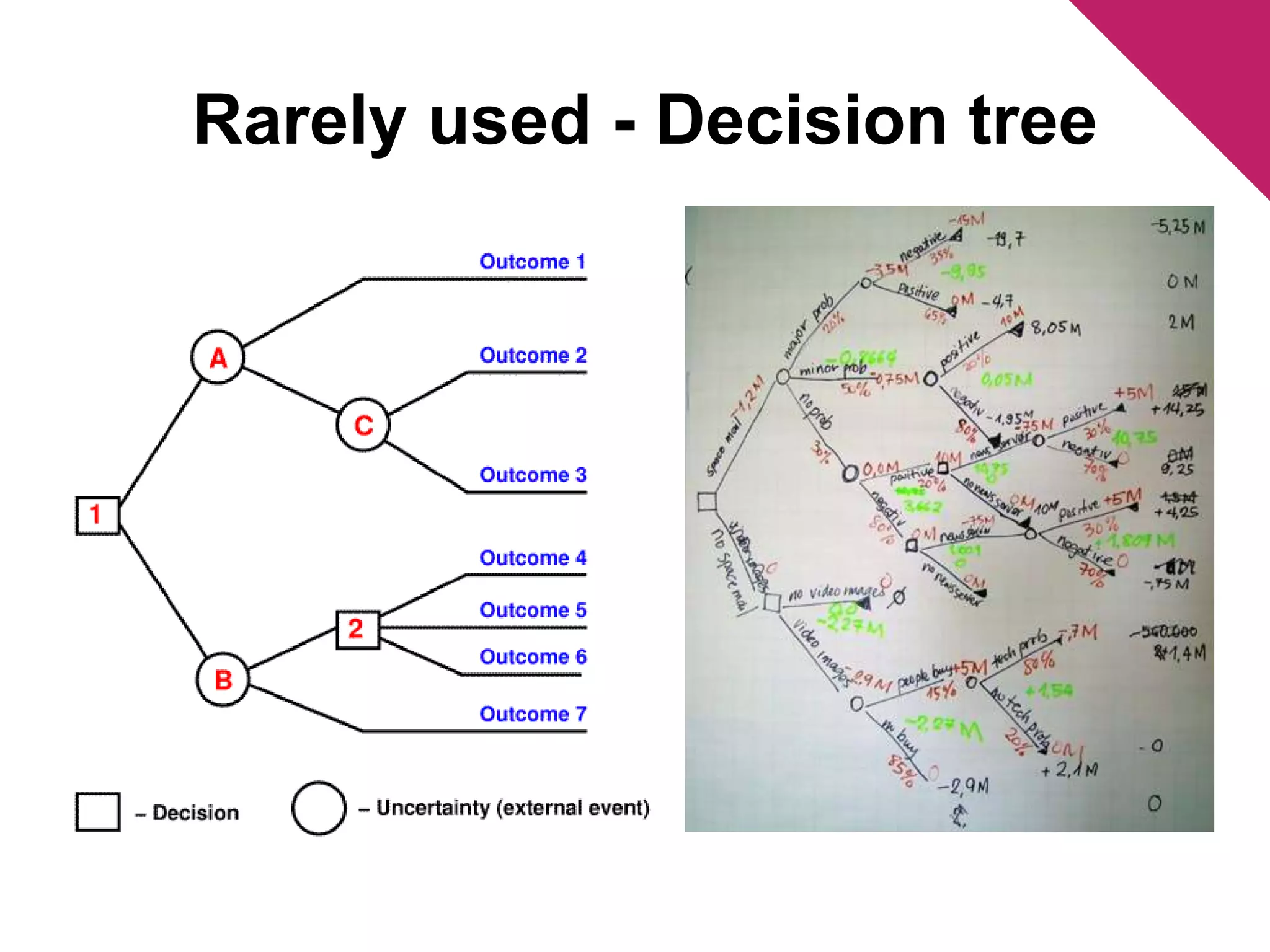
Rarely used - Decision tree
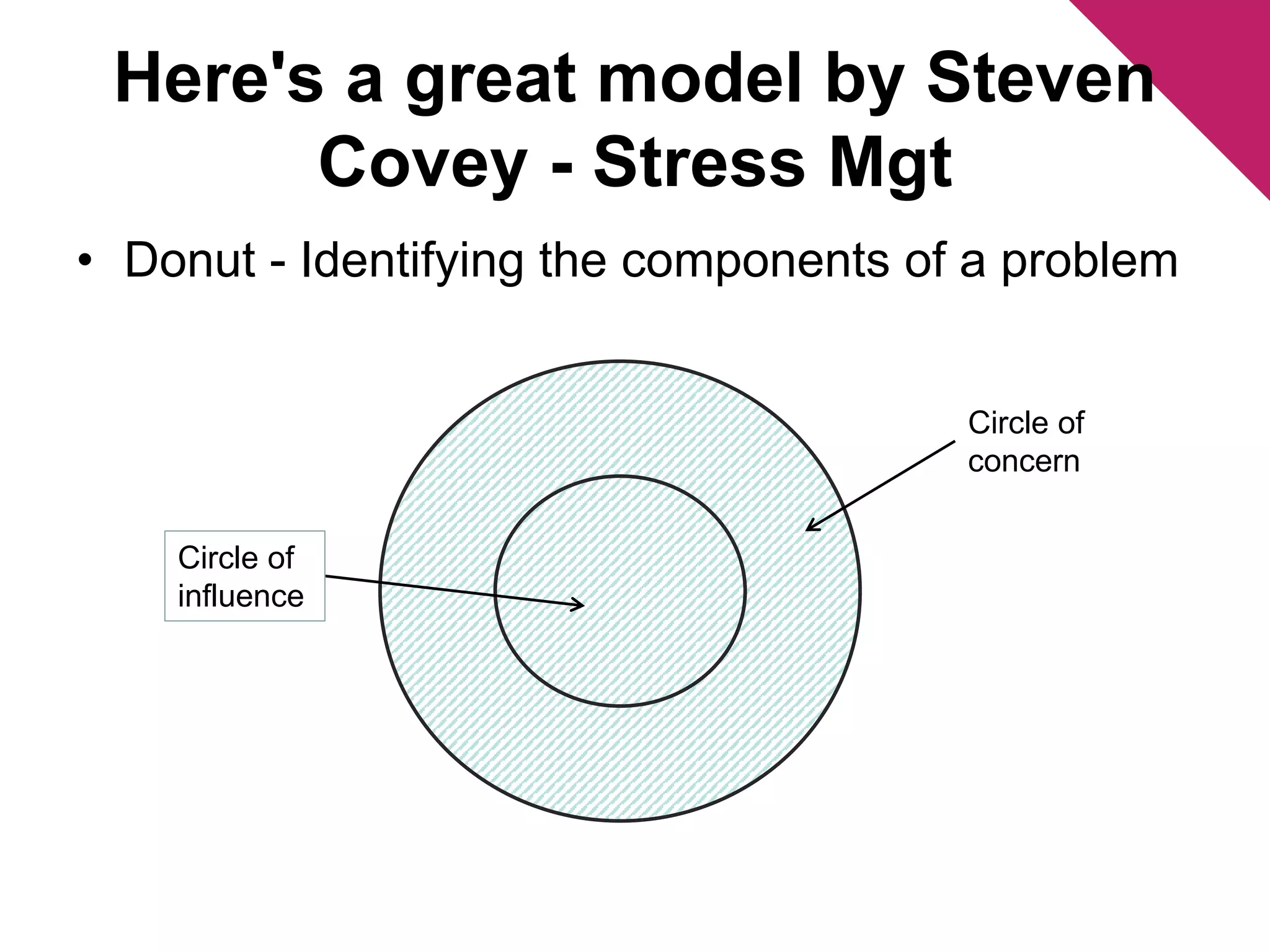
Here's a great model by Steven 
Covey - Stress Mgt 
• Donut - Identifying the components of a problem 
Circle of 
influence 
Circle of 
concern
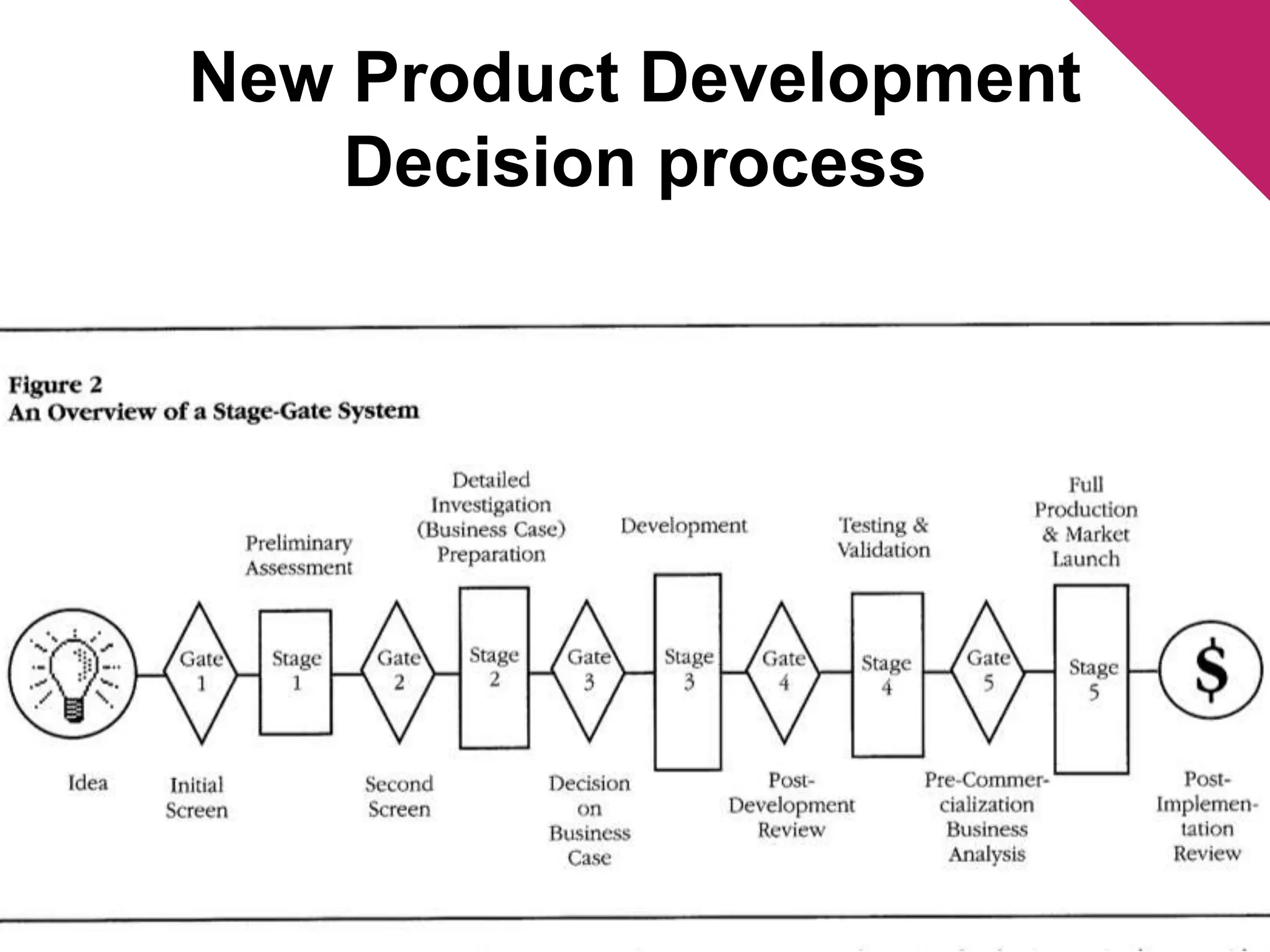
New Product Development 
Decision process
Decision making Styles 
Questionnaire
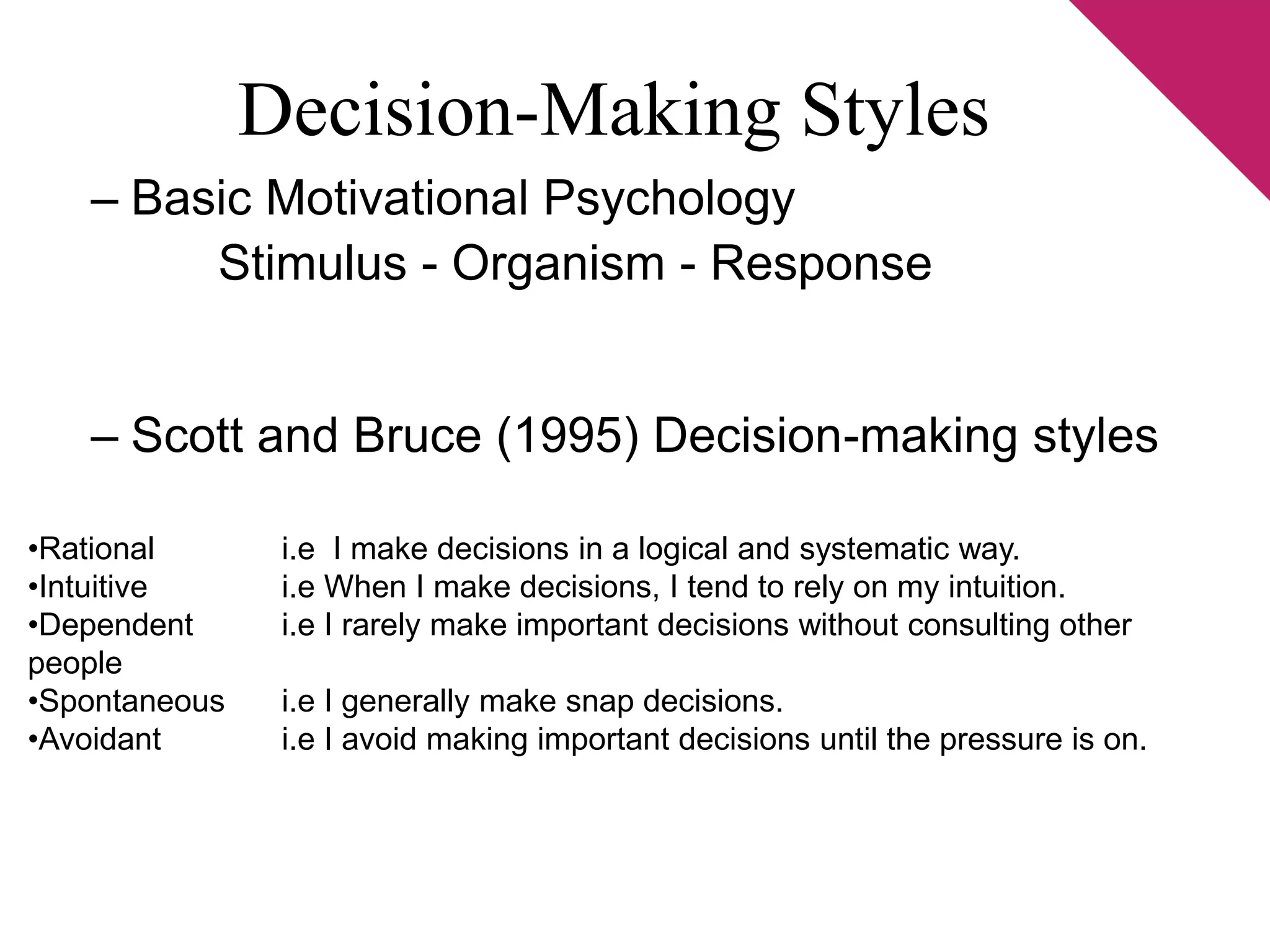
Decision-Making Styles 
– Basic Motivational Psychology 
Stimulus - Organism - Response 
– Scott and Bruce (1995) Decision-making styles 
•Rational i.e I make decisions in a logical and systematic way. 
•Intuitive i.e When I make decisions, I tend to rely on my intuition. 
•Dependent i.e I rarely make important decisions without consulting other 
people 
•Spontaneous i.e I generally make snap decisions. 
•Avoidant i.e I avoid making important decisions until the pressure is on.
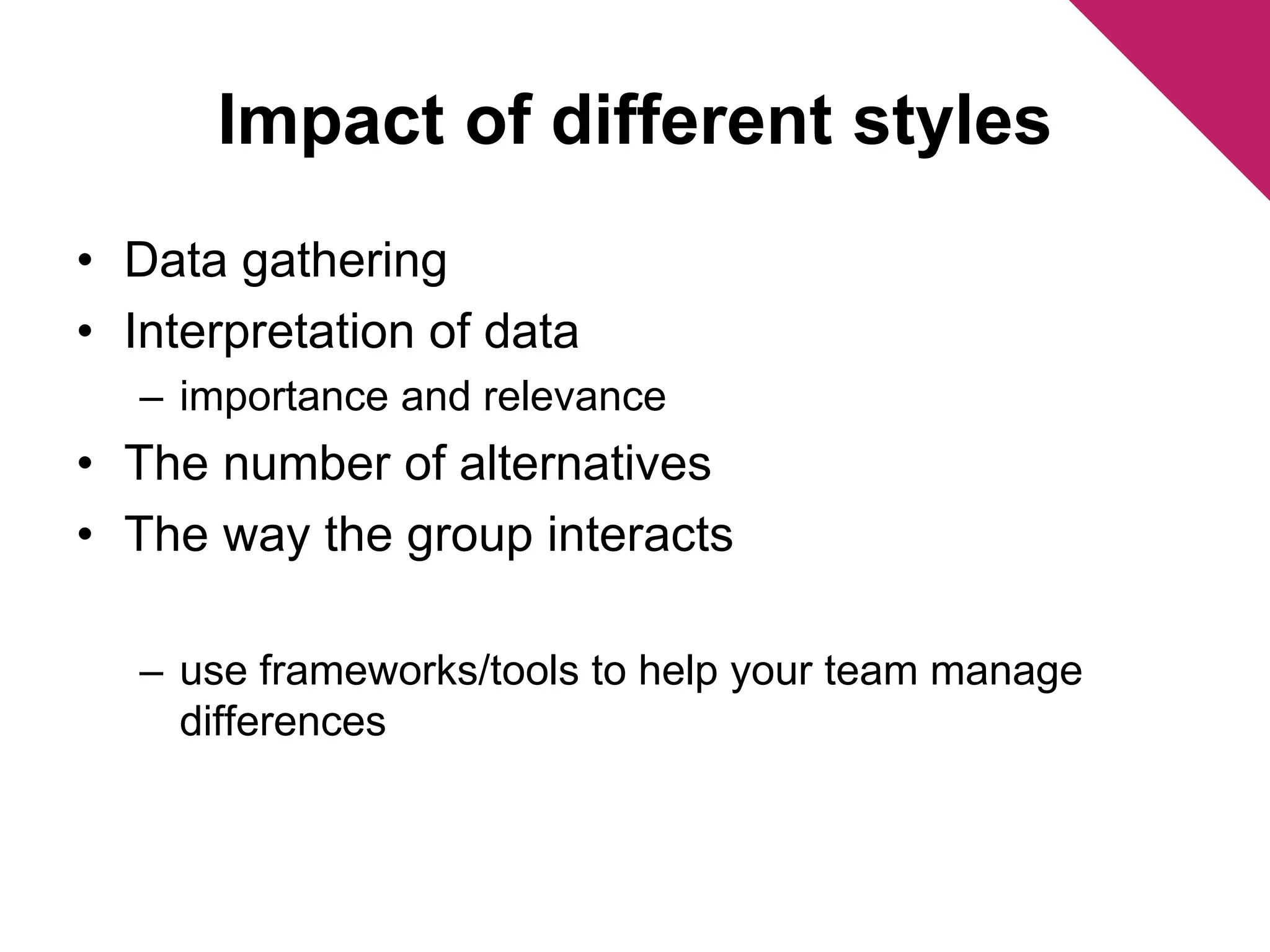
Impact of different styles 
• Data gathering 
• Interpretation of data 
– importance and relevance 
• The number of alternatives 
• The way the group interacts 
– use frameworks/tools to help your team manage 
differences
The group decision making 
process
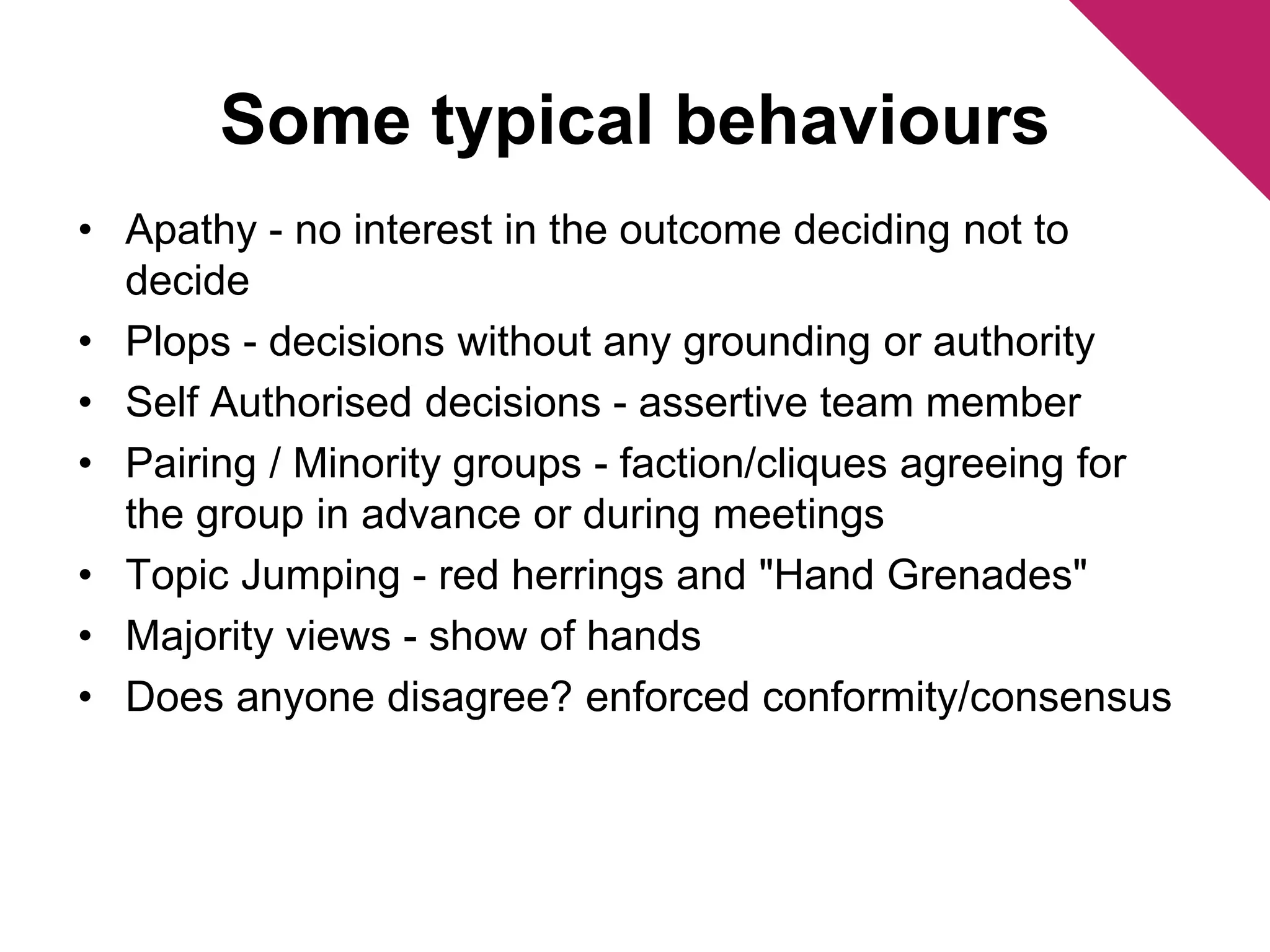
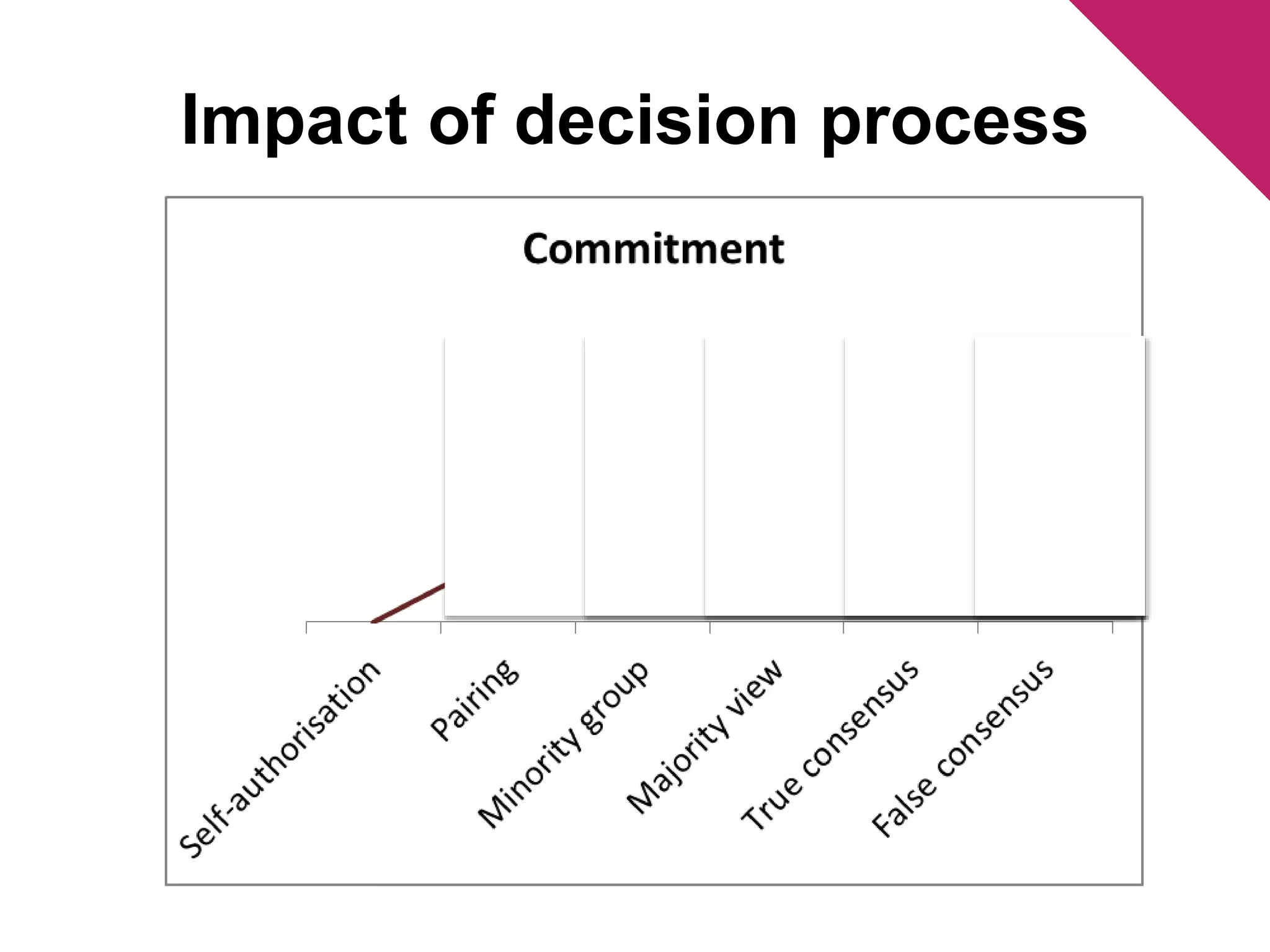
Some typical behaviours 
• Apathy - no interest in the outcome deciding not to 
decide 
• Plops - decisions without any grounding or authority 
• Self Authorised decisions - assertive team member 
• Pairing / Minority groups - faction/cliques agreeing for 
the group in advance or during meetings 
• Topic Jumping - red herrings and "Hand Grenades" 
• Majority views - show of hands 
• Does anyone disagree? enforced conformity/consensus
Impact of decision process
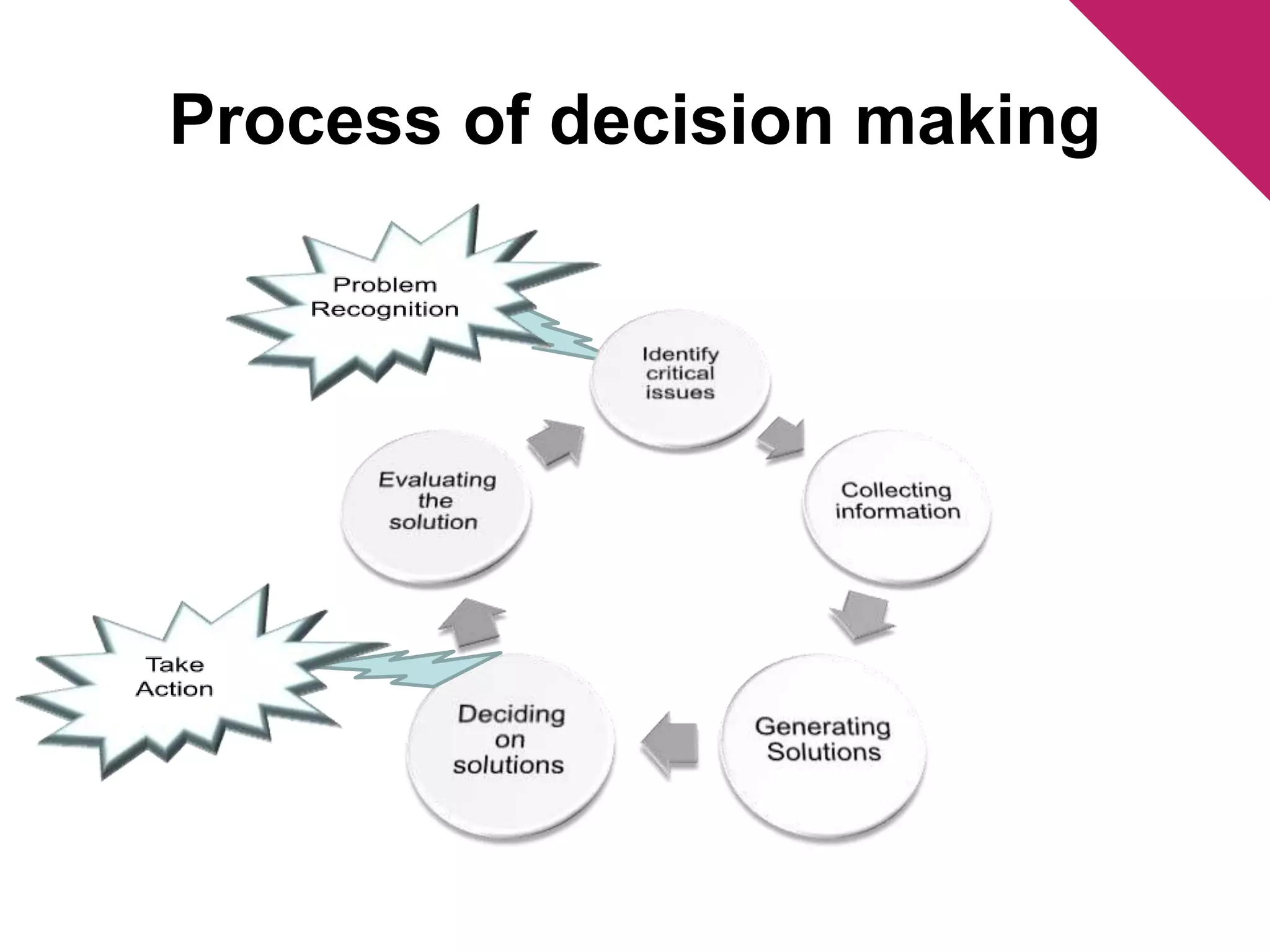
Process of decision making
Practical Solutions 
• Structure meetings and record outcomes 
• Follow the 80% rule - be action orientated 
– on time and about right is better than late and perfect 
• Avoid arguing - presents ideas clearly and logically 
• You don't need to win - seek consensus or what is 
acceptable 
• Don't avoid conflict - be suspicious of easy agreements 
• Avoid conflict avoidance - majority voting, averages, coin 
flips 
• Involve everyone 
• Stay focused - make one decision at a time 
• Remember that everyone is a leader in the team take 
responsibility!
Summary 
• Using Intuition can be a great way to make 
decisions 
– Quick and easy to do 
– BUT... 
• mindful of current experience 
• distractions 
• black box process 
• Models and frameworks can be great too 
– Consistent and transparent 
– evidence suggest it leads to better decisions
Reading 
• Effective teambuilding by John Adair 
• Watch 12 angry men (1957), Moneyball (2011) 
• Scott and Bruce 1995 
• Dane and Pratt 2007 
• See reading list

Fundamentals of Decision Making

  • 1.
    The foundation of good decision making Dr Andrew Hirst Room 9339 1
  • 2.
    What are youtrying to achieve? • True consensus • Group harmony • Quick and timely decisions
  • 3.
    Lecture structure •The manager as a decision maker • Types of decision making • Decision making process • Practical solutions
  • 4.
    THE MANAGER ASA DECISION MAKER • Decision-Making Conditions – Certainty - outcome of every alternative is known – Risk - able to estimate the probability of outcomes stemming from each alternative – Uncertainty - not certain about outcomes and unable to estimate probabilities
  • 5.
    Small vs LargeFirms • Small Firm – Less information, costly and time consuming to collect – evolving company, rapid pace of change – changing environment, "law of small numbers" – potential lack of experience of mangers and staff – too much information "noise" • More uncertainty – leads to short term thinking – stifles small businesses
  • 6.
    THE MANAGER AS DECISION MAKER (continued) • Bounded Rationality – Behave rationally within the parameters of a simplified decision-making process that is limited by an individual’s ability to process information – Accept solutions that are “good enough” – Irrational behaviour – Escalation of commitment - increased commitment to a previous decision despite evidence that it may have been wrong – cut your losses or stick to your guns? © 2003 Pearson Education Canada Inc.
  • 7.
    “Good Enough” versus Optimizing Lacks Complete Information Cannot Assess All Alternatives Cannot Weigh All Criteria Bounded Rationality
  • 8.
    THE MANAGER AS DECISION MAKER (continued) • Role of Intuition – Intuitive decision making – Black Box - subconscious process of making decisions on the basis of experience and accumulated judgment • does not rely on a systematic or thorough analysis of the problem • generally complements a rational analysis © 2003 Pearson Education Canada Inc.
  • 9.
    Gut feel •+100 Million Brain cells in the gut • When you die the gut keeps working for a time • More brain cells in your gut than in a cats head • Enteric Nervous System – Vagus Nerves connect to the brain • Part of our emotional system TED lecture: Heribert Watzke: The brain in our gut
  • 10.
    WHAT IS INTUITION? Managers make decisions based on experience Managers make decisions based on feelings and emotions Managers make Decisions based on ethical values or culture Managers make decisions based on subconscious data Manager make decisions based on skills, knowledge, or training Intuition Affect-initiated decisions Experienced-based decisions Values or ethics-based decisions Subconscious mental processing Cognitive-based decisions
  • 11.
    Two great films • 12 Angry Men (1957) – Courtroom classic. One man goes against the other 11 jurors. One question, is he guilty? Examination of inner prejudice, emotion and ulterior motives in decision making. • Moneyball (2011) – Conflict between considered wisdom (gut feel or intuition) and data analysis – Need to think differently • Lack of money and past experience • Economic model based on ON BASE AVERAGE not conventional wisdom of RUNS
  • 12.
    What can helpus make decisions? Models Processes
  • 13.
    Rarely used -Decision tree
  • 14.
    Here's a greatmodel by Steven Covey - Stress Mgt • Donut - Identifying the components of a problem Circle of influence Circle of concern
  • 15.
    New Product Development Decision process
  • 16.
    Decision making Styles Questionnaire
  • 17.
    Decision-Making Styles –Basic Motivational Psychology Stimulus - Organism - Response – Scott and Bruce (1995) Decision-making styles •Rational i.e I make decisions in a logical and systematic way. •Intuitive i.e When I make decisions, I tend to rely on my intuition. •Dependent i.e I rarely make important decisions without consulting other people •Spontaneous i.e I generally make snap decisions. •Avoidant i.e I avoid making important decisions until the pressure is on.
  • 18.
    Impact of differentstyles • Data gathering • Interpretation of data – importance and relevance • The number of alternatives • The way the group interacts – use frameworks/tools to help your team manage differences
  • 19.
    The group decisionmaking process
  • 20.
    Some typical behaviours • Apathy - no interest in the outcome deciding not to decide • Plops - decisions without any grounding or authority • Self Authorised decisions - assertive team member • Pairing / Minority groups - faction/cliques agreeing for the group in advance or during meetings • Topic Jumping - red herrings and "Hand Grenades" • Majority views - show of hands • Does anyone disagree? enforced conformity/consensus
  • 21.
  • 22.
  • 23.
    Practical Solutions •Structure meetings and record outcomes • Follow the 80% rule - be action orientated – on time and about right is better than late and perfect • Avoid arguing - presents ideas clearly and logically • You don't need to win - seek consensus or what is acceptable • Don't avoid conflict - be suspicious of easy agreements • Avoid conflict avoidance - majority voting, averages, coin flips • Involve everyone • Stay focused - make one decision at a time • Remember that everyone is a leader in the team take responsibility!
  • 24.
    Summary • UsingIntuition can be a great way to make decisions – Quick and easy to do – BUT... • mindful of current experience • distractions • black box process • Models and frameworks can be great too – Consistent and transparent – evidence suggest it leads to better decisions
  • 25.
    Reading • Effectiveteambuilding by John Adair • Watch 12 angry men (1957), Moneyball (2011) • Scott and Bruce 1995 • Dane and Pratt 2007 • See reading list