

Fundamental Concepts in Decision
Making – Managerial Economics
JITHIN K THOMAS
Fundamental Concepts in Decision
Making
• Incremental Reasoning
• Opportunity Cost
• Contribution
• Time Perspective
• Time Value of Money and
• Risk and Uncertainty
Incremental Reasoning
• Most important
• Most frequently used
• Incremental Reasoning involves estimating the
impact of decision alternatives.
Incremental Reasoning
• Basic Concepts in Incremental Reasoning are:
• Incremental Cost
– Change in total cost due to change in level of
output
• Incremental Revenue
– Change in total revenue due to change in level of
output
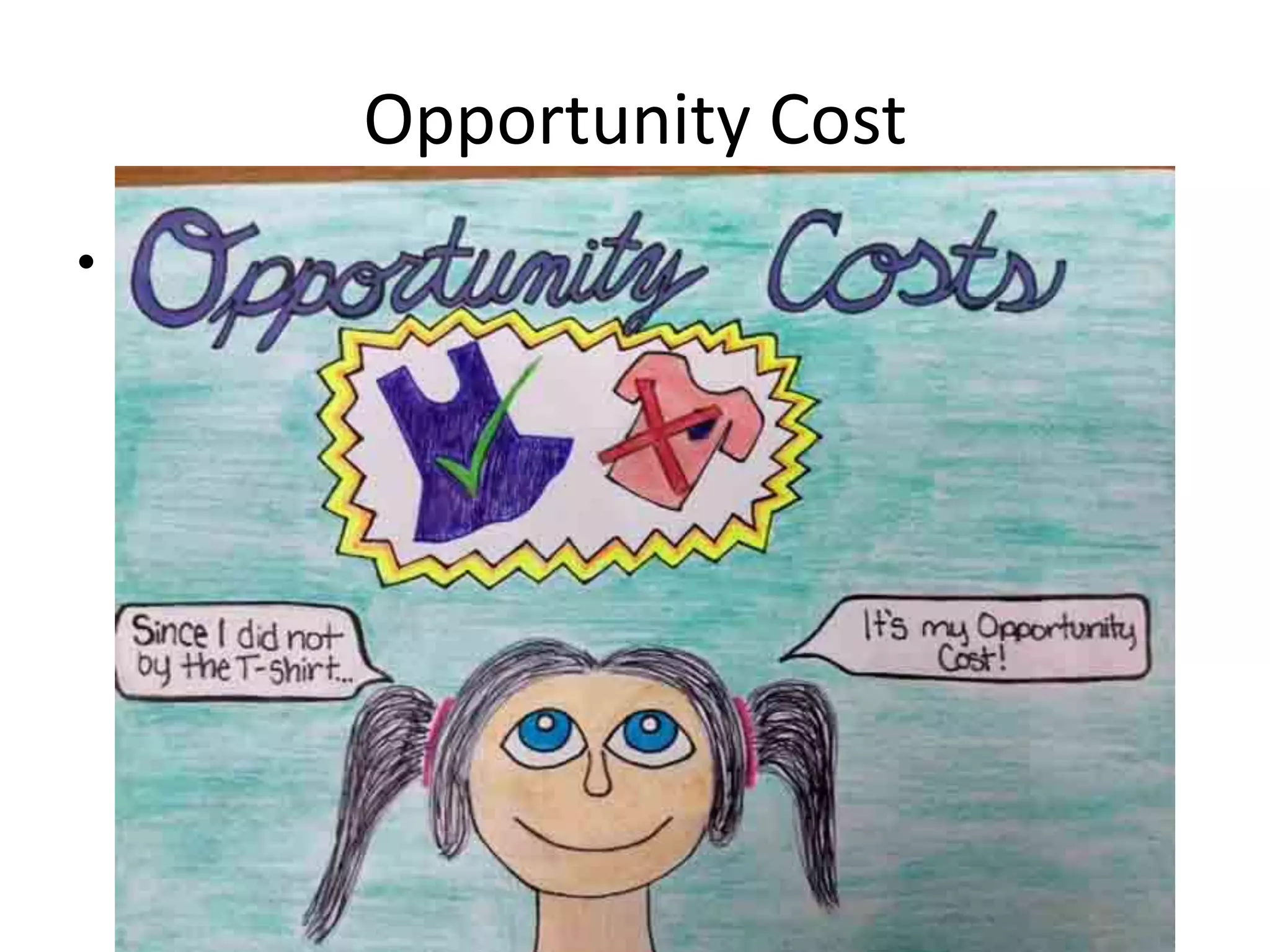
Opportunity Cost
• Opportunity Cost is the benefit or revenue
foregone by perusing one course of action
rather than another.
– Opportunity Cost of the funds in ones own
business is the amount of interest which could
have been earned had these funds been invested
in the next best channel of investment
– The opportunity cost of using an idle machine is
zero
Contribution
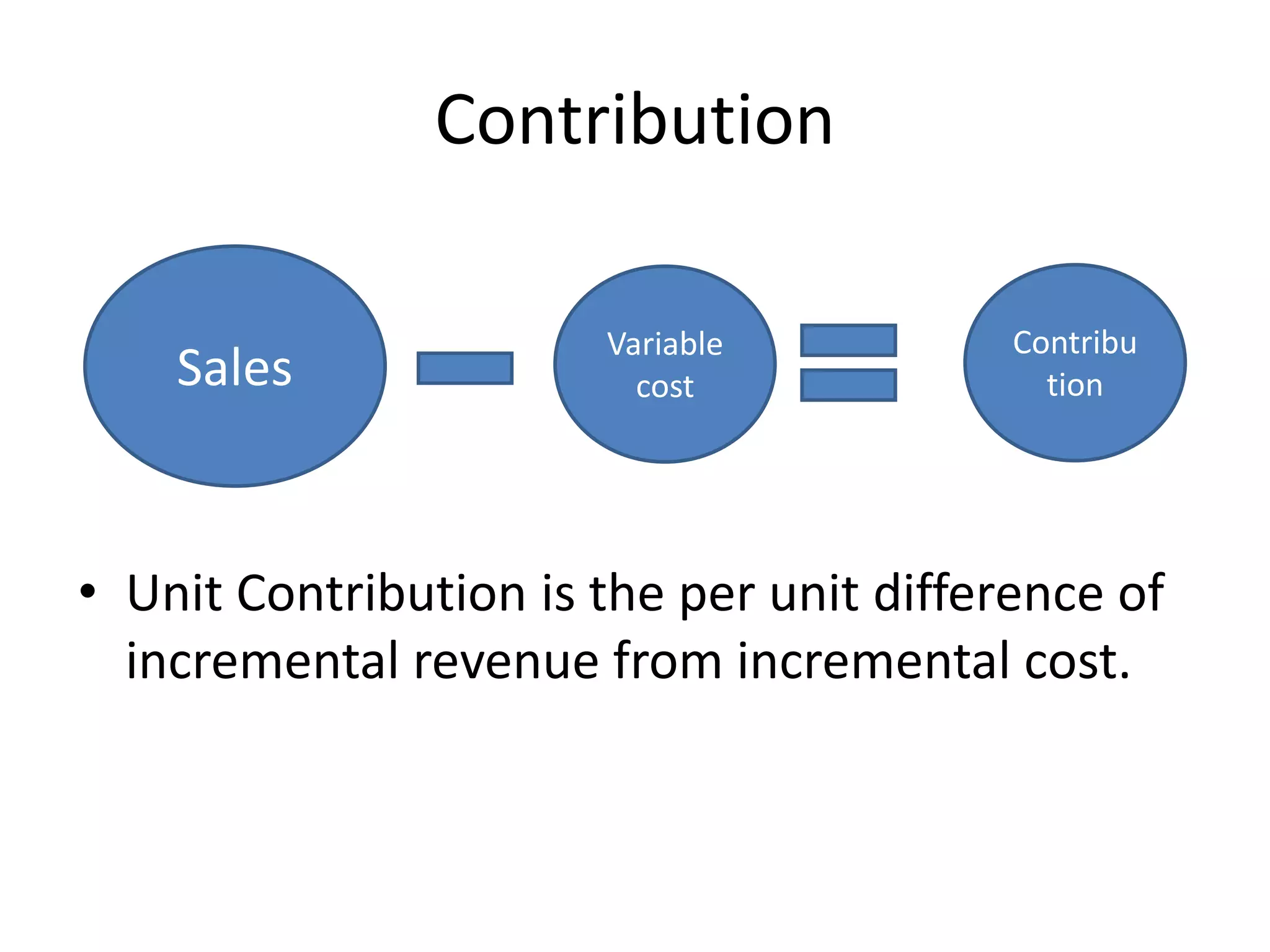
• Unit Contribution is the per unit difference of
incremental revenue from incremental cost.
Sales
Variable
cost
Contribu
tion
Time Perspective
• Economics
– Short Run
• Period within which some of the inputs cannot be
altered.
– Long Run
• Period within which all the inputs can be altered.
Time Perspective
• Managerial Economics
– Short period - immediate future
– Long period – remote future
– A decision should take into account both the short
run and long run effects on revenue and cost so as
to maintain a right balance between long run and
short run perspective.
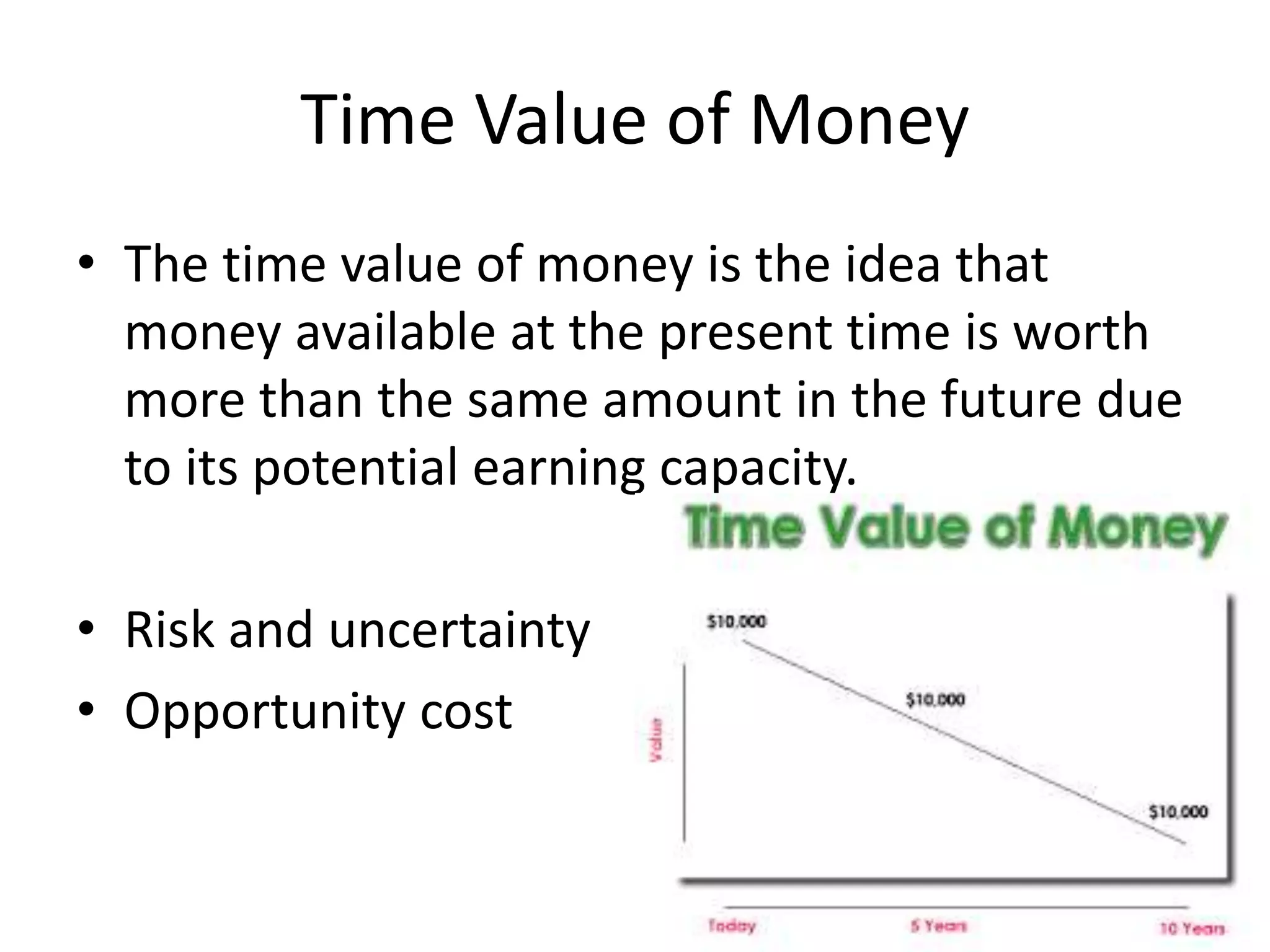
Time Value of Money
• The time value of money is the idea that
money available at the present time is worth
more than the same amount in the future due
to its potential earning capacity.
• Risk and uncertainty
• Opportunity cost
Risk and Uncertainty
• In the book ‘The Personal MBA’ – Josh Kaufman
writes
– Risk are known unknowns. If you’re planning to pick
up a friend from the airport, the probability that their
flight will arrive several hours late is a Risk – you know
in advance that the arrival time can change, so you
plan accordingly. Uncertainty are unknown
unknowns. You may be late picking up your friend
from the airport because a meteorite demolishes your
car an hour before you planned to leave for the
airport. Who could predict that? You can’t reliably
predict the future based on the past events in the face
of Uncertainty
Fundamental Concepts in Decision Making – Managerial Economics

Fundamental Concepts in Decision Making – Managerial Economics

  • 1.
    Fundamental Concepts inDecision Making – Managerial Economics JITHIN K THOMAS
  • 2.
    Fundamental Concepts inDecision Making • Incremental Reasoning • Opportunity Cost • Contribution • Time Perspective • Time Value of Money and • Risk and Uncertainty
  • 3.
    Incremental Reasoning • Mostimportant • Most frequently used • Incremental Reasoning involves estimating the impact of decision alternatives.
  • 4.
    Incremental Reasoning • BasicConcepts in Incremental Reasoning are: • Incremental Cost – Change in total cost due to change in level of output • Incremental Revenue – Change in total revenue due to change in level of output
  • 5.
    Opportunity Cost • OpportunityCost is the benefit or revenue foregone by perusing one course of action rather than another. – Opportunity Cost of the funds in ones own business is the amount of interest which could have been earned had these funds been invested in the next best channel of investment – The opportunity cost of using an idle machine is zero
  • 6.
    Contribution • Unit Contributionis the per unit difference of incremental revenue from incremental cost. Sales Variable cost Contribu tion
  • 7.
    Time Perspective • Economics –Short Run • Period within which some of the inputs cannot be altered. – Long Run • Period within which all the inputs can be altered.
  • 8.
    Time Perspective • ManagerialEconomics – Short period - immediate future – Long period – remote future – A decision should take into account both the short run and long run effects on revenue and cost so as to maintain a right balance between long run and short run perspective.
  • 9.
    Time Value ofMoney • The time value of money is the idea that money available at the present time is worth more than the same amount in the future due to its potential earning capacity. • Risk and uncertainty • Opportunity cost
  • 10.
    Risk and Uncertainty •In the book ‘The Personal MBA’ – Josh Kaufman writes – Risk are known unknowns. If you’re planning to pick up a friend from the airport, the probability that their flight will arrive several hours late is a Risk – you know in advance that the arrival time can change, so you plan accordingly. Uncertainty are unknown unknowns. You may be late picking up your friend from the airport because a meteorite demolishes your car an hour before you planned to leave for the airport. Who could predict that? You can’t reliably predict the future based on the past events in the face of Uncertainty