Anatomy and physiology is the study of the human body.
Anatomy is concerned with the structure of a part. For
example, the stomach is a J-shaped, pouch like organ
The stomach wall has thick folds, which disappear
as the stomach expands to increase its capacity.
Physiology is concerned with the function of a part. For example, the
stomach temporarily stores food, secretes digestive juices, and
passes on partially digested food to the small intestine.
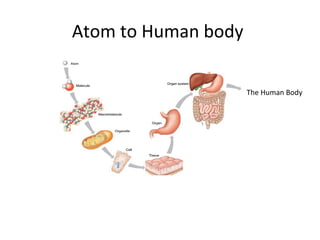
Atom to Human body
The Human Body
Anatomical position
When describing parts of the
body, it is often important to
refer to their relative positions.
Anatomic position:a person standing erect with the
feet facing forward, arms
hanging to the sides, and palms
facing forward with the thumbs
to the outside is an Anatomical
position
Directional terms have been
developed to facilitate such
references.
Anatomical Position
1.In the anatomical position, the palms are facing towards the
feet.
TRUE
FALSE
2. The anatomical position was created to ____________
A. annoy anatomy students
B. be a standard reference for the body
C. help physiotherapists to understand anatomy
D. describe the pose that people take when they sleep
3. A person can sit in the anatomical position.
TRUE
FALSE
Directional terms.
Directional terms tell us where body parts are located with reference to the body in
anatomical position.
Directional terms
Directional terms are used to describe the location of one
body part in relation to another
Anterior(ventral) means that a body part is located toward
the front. The windpipe (trachea) is anterior to the
esophagus.
Posterior(dorsal) means that a body part is located toward
the back. The heart is posterior to the rib cage
Directional terms 1
Superior means that a body part is located
above another part, or toward the head. The
face is superior to the neck.
Inferior means that a body part is below
another part, or toward the feet. The navel is
inferior to the chin
Directional terms 2
Medial means that a body part is nearer than
another part to an imaginary midline of the
body. The bridge of the nose is medial to the
eyes.
Lateral means that a body part is farther away
from the midline. The eyes are lateral to the
nose.
Directional terms 3
Proximal means that a body part is
closer to the point of attachment or
closer to the trunk. The elbow is
proximal to the hand.
Distal means that a body part is farther
from the point of attachment or farther
from the trunk or torso. The hand is
distal to the elbow.
Directional terms 4
Superficial(external) means that a body part
is located near the surface. The skin is
superficial to the muscles.
Deep(internal) means that the body part is
located away from the surface. The intestines
are deep to the spine.
Directional terms 5
Central means that a body part is situated at the
center of the body or an organ. The central
nervous system is located along the main axis of
the body.
Peripheral means that a body part is situated
away from the center of the body or an organ.
The peripheral nervous system is located outside
the central nervous system
Regions of the Body
The human body can be divided into

1axial portions

Head, Neck, and Trunk
(Thorax, Abdomen, and Pelvis)
2. Appendicular portions.
(the limbs— the upper limbs and the lower limbs.)
The scientific name for each region is followed by the common name for that region. For
example, the cephalic region is commonly called the head
A frontal plane, also called a coronal plane, is made at right angles to the
midline and divides the body into anterior and posterior parts.
A sagittal plane passes from front to back and divides the body into right and left portions. If
the plane passes through the midline, it is a mid sagittal or medial plane.
A transverse plane passes horizontally, dividing the body into superior and inferior parts
Body Cavities
Internal organs are located within
dorsal and ventral cavities .
The dorsal cavity contains the
brain in the cranial cavity and the
spinal cord in the spinal cavity
(canal).The uppermost ventral
space, the thoracic cavity , is
separated from the abdominal
cavity by the diaphragm. There is
no anatomical separation between
the abdominal cavity and the
pelvic cavity , which together
make up the abdomino pelvic
cavity.The large membrane that
lines the abdomino pelvic cavity
and covers the organs within it is
the peritoneum
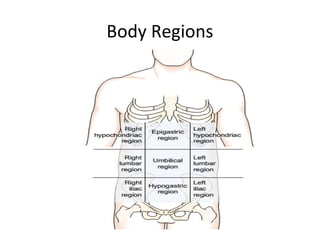
Body Regions
Key Terms
abdominal cavity : The large ventral cavity below the diaphragm and above the
pelvic cavity
abdominopelvic cavity: The large ventral cavity between the diaphragm and pelvis
that includes the abdominal and pelvic cavities
anatomic position : Standard position for anatomical studies, in which the body is
erect and facing forward, the arms are at the sides with palms forward, and the feet
are parallel
cranial cavity : The dorsal cavity that contains the brain
Diaphragm : The muscle that separates the thoracic from the abdominal cavity
frontal (coronal) plane: Plane of section that separates the body into anterior (front)
and
posterior (back) portions
pelvic cavity : The ventral cavity that is below the abdominal cavity
Key terms
Peritoneum : The large serous membrane that lines the
abdomino pelvic cavity and covers the organs within it
sagittal plane : Plane that divides the body into right and
left portions
spinal cavity (canal) : Dorsal cavity that contains the
spinal cord
thoracic cavity : The ventral cavity above the diaphragm;
the chest cavity
transverse (horizontal) plane : Plane that divides the
body into superior (upper) and inferior (lower) portions

Body directions- regions -planes

  • 1.
    Anatomy and physiologyis the study of the human body. Anatomy is concerned with the structure of a part. For example, the stomach is a J-shaped, pouch like organ The stomach wall has thick folds, which disappear as the stomach expands to increase its capacity. Physiology is concerned with the function of a part. For example, the stomach temporarily stores food, secretes digestive juices, and passes on partially digested food to the small intestine.
  • 2.
    Atom to Humanbody The Human Body
  • 3.
    Anatomical position When describingparts of the body, it is often important to refer to their relative positions. Anatomic position:a person standing erect with the feet facing forward, arms hanging to the sides, and palms facing forward with the thumbs to the outside is an Anatomical position Directional terms have been developed to facilitate such references.
  • 4.
    Anatomical Position 1.In theanatomical position, the palms are facing towards the feet. TRUE FALSE 2. The anatomical position was created to ____________ A. annoy anatomy students B. be a standard reference for the body C. help physiotherapists to understand anatomy D. describe the pose that people take when they sleep 3. A person can sit in the anatomical position. TRUE FALSE
  • 5.
    Directional terms. Directional termstell us where body parts are located with reference to the body in anatomical position.
  • 6.
    Directional terms Directional termsare used to describe the location of one body part in relation to another Anterior(ventral) means that a body part is located toward the front. The windpipe (trachea) is anterior to the esophagus. Posterior(dorsal) means that a body part is located toward the back. The heart is posterior to the rib cage
  • 7.
    Directional terms 1 Superiormeans that a body part is located above another part, or toward the head. The face is superior to the neck. Inferior means that a body part is below another part, or toward the feet. The navel is inferior to the chin
  • 8.
    Directional terms 2 Medialmeans that a body part is nearer than another part to an imaginary midline of the body. The bridge of the nose is medial to the eyes. Lateral means that a body part is farther away from the midline. The eyes are lateral to the nose.
  • 9.
    Directional terms 3 Proximalmeans that a body part is closer to the point of attachment or closer to the trunk. The elbow is proximal to the hand. Distal means that a body part is farther from the point of attachment or farther from the trunk or torso. The hand is distal to the elbow.
  • 10.
    Directional terms 4 Superficial(external)means that a body part is located near the surface. The skin is superficial to the muscles. Deep(internal) means that the body part is located away from the surface. The intestines are deep to the spine.
  • 11.
    Directional terms 5 Centralmeans that a body part is situated at the center of the body or an organ. The central nervous system is located along the main axis of the body. Peripheral means that a body part is situated away from the center of the body or an organ. The peripheral nervous system is located outside the central nervous system
  • 12.
    Regions of theBody The human body can be divided into 1axial portions Head, Neck, and Trunk (Thorax, Abdomen, and Pelvis) 2. Appendicular portions. (the limbs— the upper limbs and the lower limbs.) The scientific name for each region is followed by the common name for that region. For example, the cephalic region is commonly called the head
  • 15.
    A frontal plane,also called a coronal plane, is made at right angles to the midline and divides the body into anterior and posterior parts. A sagittal plane passes from front to back and divides the body into right and left portions. If the plane passes through the midline, it is a mid sagittal or medial plane. A transverse plane passes horizontally, dividing the body into superior and inferior parts
  • 16.
    Body Cavities Internal organsare located within dorsal and ventral cavities . The dorsal cavity contains the brain in the cranial cavity and the spinal cord in the spinal cavity (canal).The uppermost ventral space, the thoracic cavity , is separated from the abdominal cavity by the diaphragm. There is no anatomical separation between the abdominal cavity and the pelvic cavity , which together make up the abdomino pelvic cavity.The large membrane that lines the abdomino pelvic cavity and covers the organs within it is the peritoneum
  • 17.
  • 18.
    Key Terms abdominal cavity: The large ventral cavity below the diaphragm and above the pelvic cavity abdominopelvic cavity: The large ventral cavity between the diaphragm and pelvis that includes the abdominal and pelvic cavities anatomic position : Standard position for anatomical studies, in which the body is erect and facing forward, the arms are at the sides with palms forward, and the feet are parallel cranial cavity : The dorsal cavity that contains the brain Diaphragm : The muscle that separates the thoracic from the abdominal cavity frontal (coronal) plane: Plane of section that separates the body into anterior (front) and posterior (back) portions pelvic cavity : The ventral cavity that is below the abdominal cavity
  • 19.
    Key terms Peritoneum :The large serous membrane that lines the abdomino pelvic cavity and covers the organs within it sagittal plane : Plane that divides the body into right and left portions spinal cavity (canal) : Dorsal cavity that contains the spinal cord thoracic cavity : The ventral cavity above the diaphragm; the chest cavity transverse (horizontal) plane : Plane that divides the body into superior (upper) and inferior (lower) portions