HUMAN ANATOMY
submitted by-
Ambika bagora
(RN)
DEFINITION-
 ANATOMY is a science that deals with the structures
of the body and the relationship of various parts to
each other. A knowledge of these structures is
necessary to understand their functions.
The arrangement of various parts of the
body may be-
 SYMMETRICAL-
Their arrangement on the right side and left side are similar
e.g. Limbs, Eye, Ear, Lungs etc.
 ASSYMMETRICAL-
Having two sides or halves that are not the same called
Asymmetrical. e.g. Spleen, Liver etc.
 The study of human body is done in anatomical
position. In this position, the body is erect, the head
is facing forward, arms by the sides and palms of hand
facing forwards.
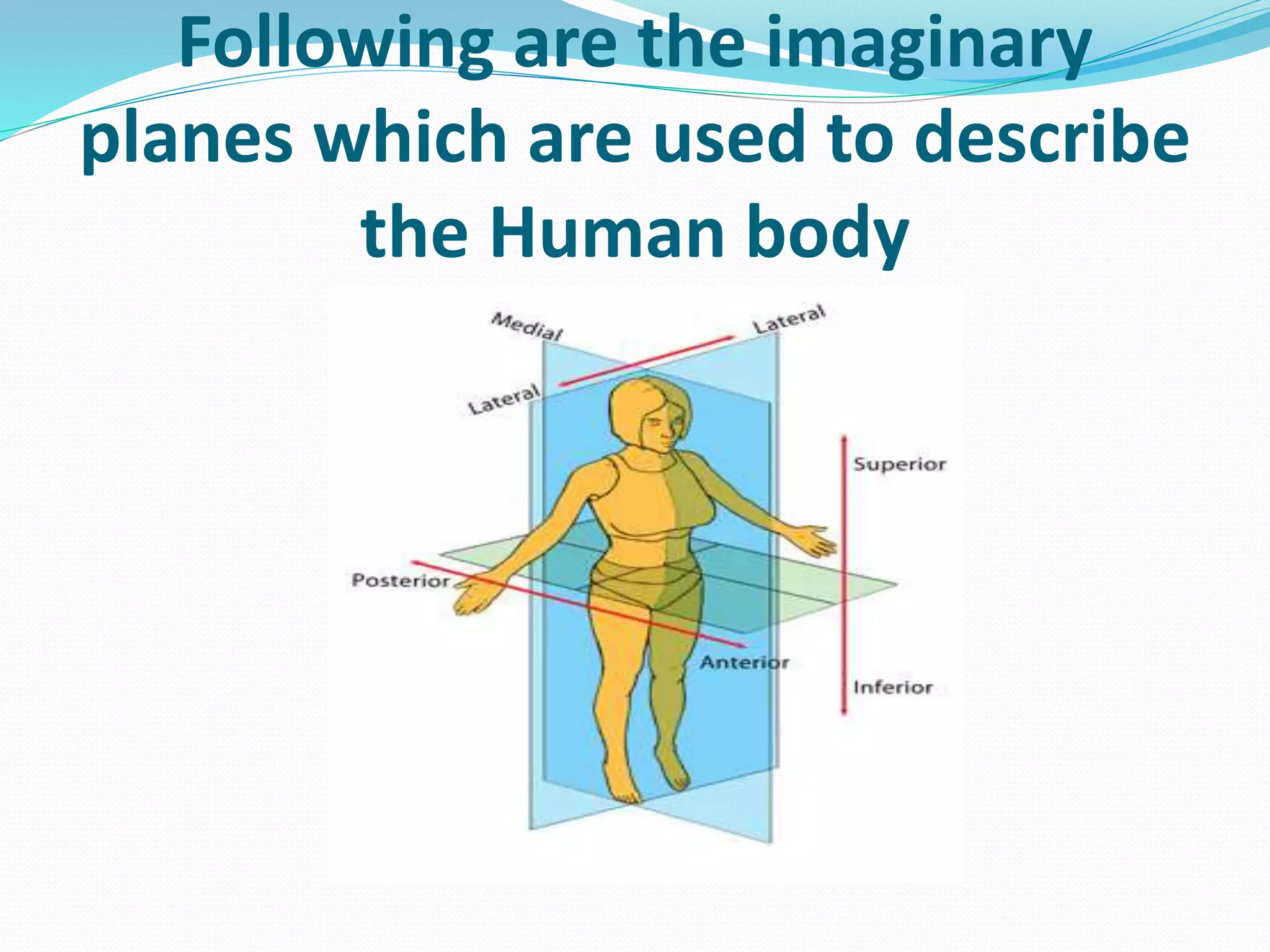
Following are the imaginary
planes which are used to describe
the Human body
 Median line (mid saggital plane)- The plane which
divides the body into two halves.
 Medial- Nearer to median line.
 Lateral- Away from the median line.
 Superior- Nearer to the head.
 Inferior- Nearer to the foot.
 Anterior- Nearer to the front surface of the body.
 Posterior- Nearer to the back surface of the body.
 Proximal- Nearer to the origin of the structure.
 Distal- Away from the origin of the structure.
The subject matter of Anatomy
includes-
 Cytology study of cells.
 Osteology study of bones.
 Arthrology study of joints.
 Myeology study of muscles.
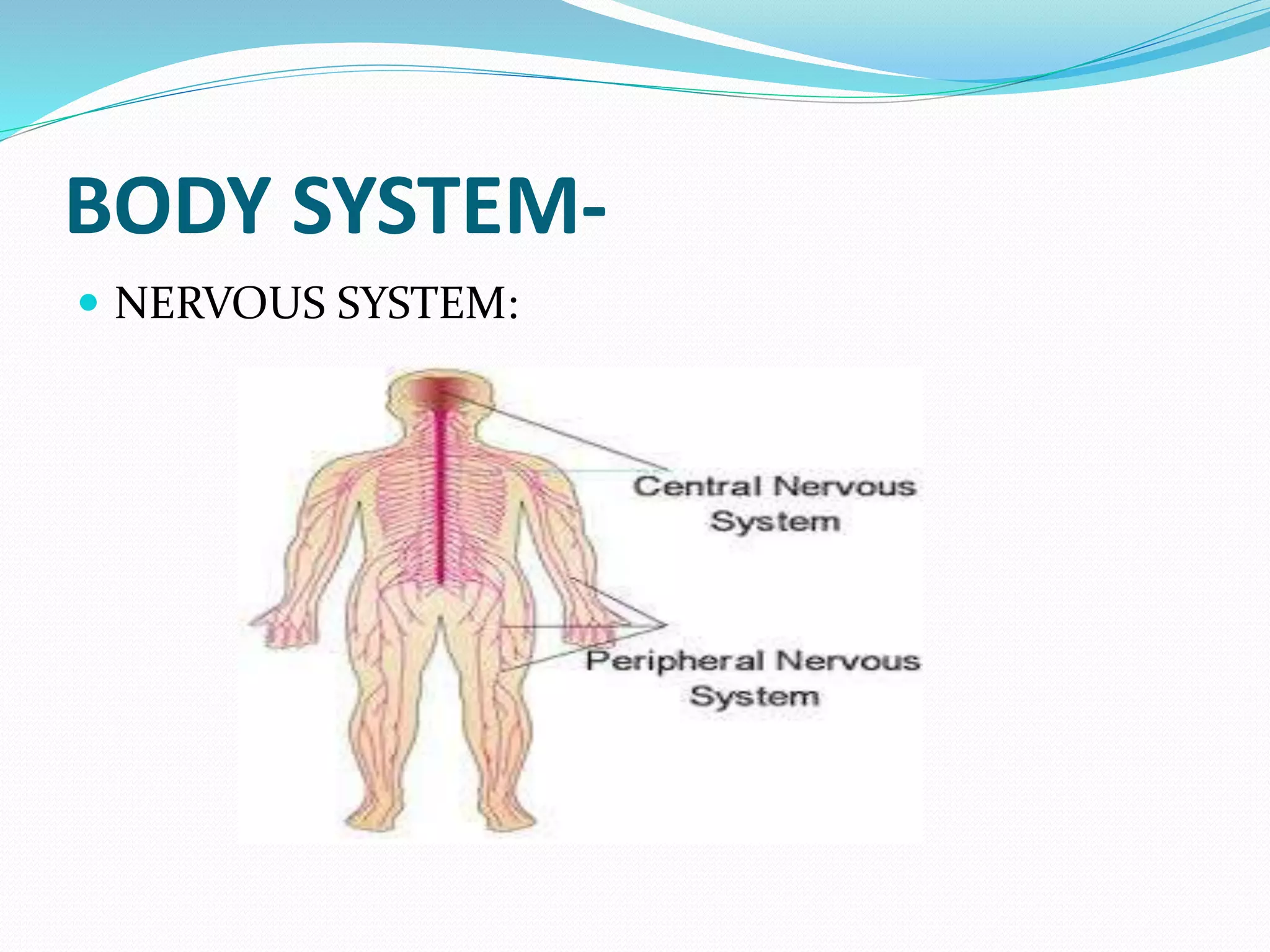
 Neurology study of nervous system.
BODY SYSTEM-
 NERVOUS SYSTEM:
 CARDIOVASCULAR SYSTEM-
 RESPIRATORY SYSTEM-
DIGESTIVE SYSTEM-
MUSCULO-SKELETAL SYSTEM:
EXCRETORY SYSTEM:
Topic started on-19/05/2018
Topic end on- 21/05/2018
Practice paper-
1. Basic unit of Human body-
a. Cell
b. Tissue
2. Not present in Human body-
a. Haemoglobin
b. Chlorophyll
3. Normal anatomical position is-
a. Person standing, facing forward
b. Person sitting, facing backward
4. Symmetrical arrangement on the right side and left
side are-
a. Similar
b. dissimilar
5. Osteology is study of-
a. Muscle
b. Bone
6. Neurology is study of-
a. Digestive system
b. Nervous system
7. Medial is –
a. Away from midline
b. Nearer to midlines
8. Posterior is-
a. Nearer to the back surface
b. Nearer to the front surface
9. Superior is –
a. Nearer to the head
b. Nearer to the foot
10. Cardiovascular system consist of-
a. Lungs, alveoli
b. Heart, blood vessels
Human anatomy 1

Human anatomy 1

  • 1.
  • 2.
    DEFINITION-  ANATOMY isa science that deals with the structures of the body and the relationship of various parts to each other. A knowledge of these structures is necessary to understand their functions.
  • 3.
    The arrangement ofvarious parts of the body may be-  SYMMETRICAL- Their arrangement on the right side and left side are similar e.g. Limbs, Eye, Ear, Lungs etc.
  • 4.
     ASSYMMETRICAL- Having twosides or halves that are not the same called Asymmetrical. e.g. Spleen, Liver etc.
  • 6.
     The studyof human body is done in anatomical position. In this position, the body is erect, the head is facing forward, arms by the sides and palms of hand facing forwards.
  • 7.
    Following are theimaginary planes which are used to describe the Human body
  • 8.
     Median line(mid saggital plane)- The plane which divides the body into two halves.  Medial- Nearer to median line.  Lateral- Away from the median line.  Superior- Nearer to the head.
  • 9.
     Inferior- Nearerto the foot.  Anterior- Nearer to the front surface of the body.  Posterior- Nearer to the back surface of the body.  Proximal- Nearer to the origin of the structure.  Distal- Away from the origin of the structure.
  • 10.
    The subject matterof Anatomy includes-  Cytology study of cells.  Osteology study of bones.  Arthrology study of joints.  Myeology study of muscles.  Neurology study of nervous system.
  • 11.
  • 12.
  • 13.
  • 14.
  • 15.
  • 16.
  • 17.
  • 18.
    Practice paper- 1. Basicunit of Human body- a. Cell b. Tissue 2. Not present in Human body- a. Haemoglobin b. Chlorophyll
  • 19.
    3. Normal anatomicalposition is- a. Person standing, facing forward b. Person sitting, facing backward 4. Symmetrical arrangement on the right side and left side are- a. Similar b. dissimilar
  • 20.
    5. Osteology isstudy of- a. Muscle b. Bone 6. Neurology is study of- a. Digestive system b. Nervous system
  • 21.
    7. Medial is– a. Away from midline b. Nearer to midlines 8. Posterior is- a. Nearer to the back surface b. Nearer to the front surface
  • 22.
    9. Superior is– a. Nearer to the head b. Nearer to the foot 10. Cardiovascular system consist of- a. Lungs, alveoli b. Heart, blood vessels