



What is learning?
Link
Your thoughts 
http://www.flickr.com/photos/91903883@N00/2385264019
What is your learning (and teaching) philosophy? 
How do you think people learn? 
- 40 minute reflection/writing
Reading of texts: 
Reading 1: Carlile, O., & Jordan, A. (2012). Learning. In J. Arthur & A. Peterson (Eds.), The Routledge Companion to Education (pp. 97-106). London: Routledge 
Reading 2: Hewitt, D. (2010). How do people learn? In J. Arthur & I. Davies (Eds.), Education Studies Textbook (pp. 107-120). Abingdon, Oxon: Routledge
Some thoughts on learning…
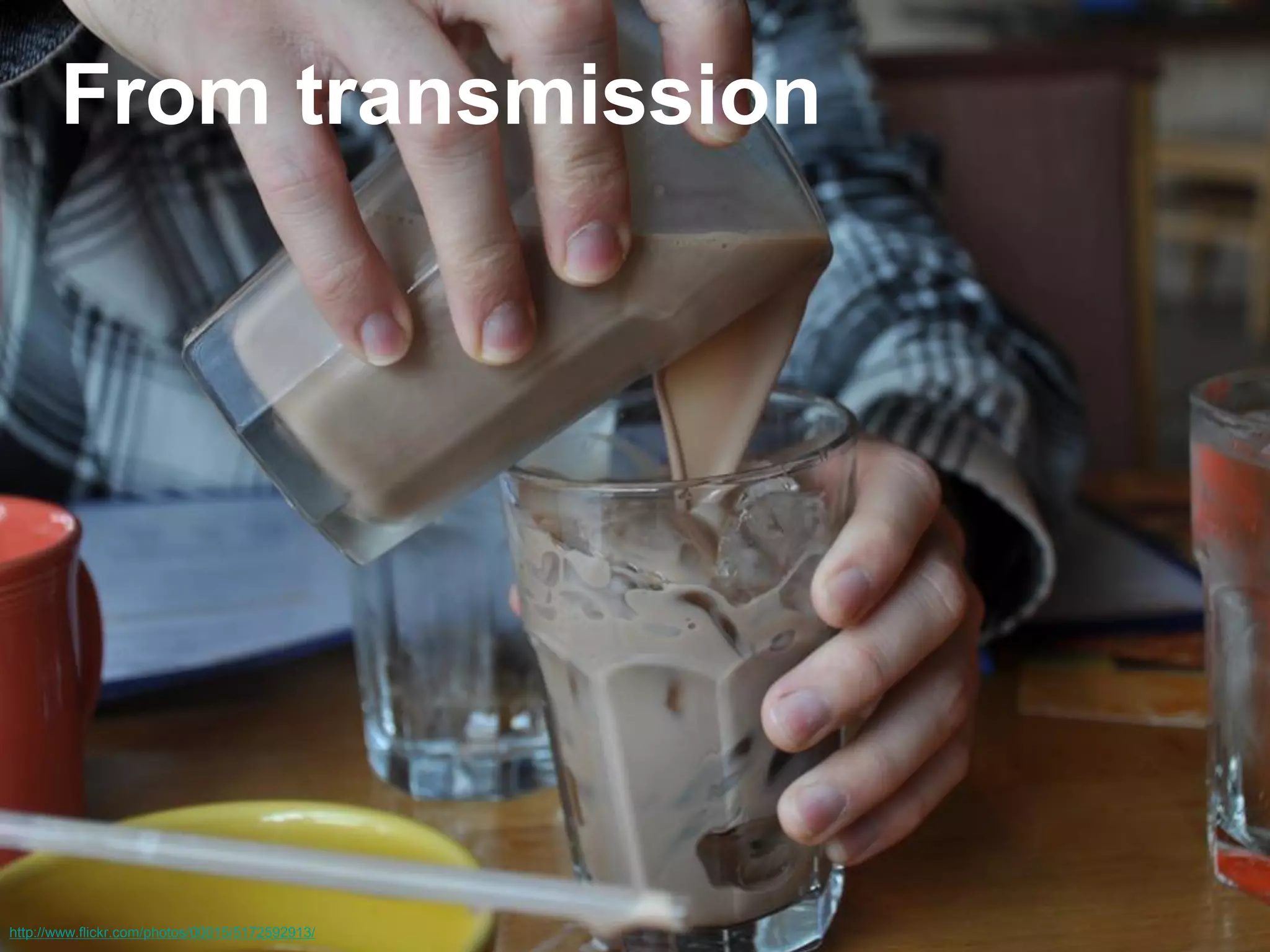
From transmission 
http://www.flickr.com/photos/00015/5172592913/
To construction 
https://www.flickr.com/photos/65315936@N00/11229262523
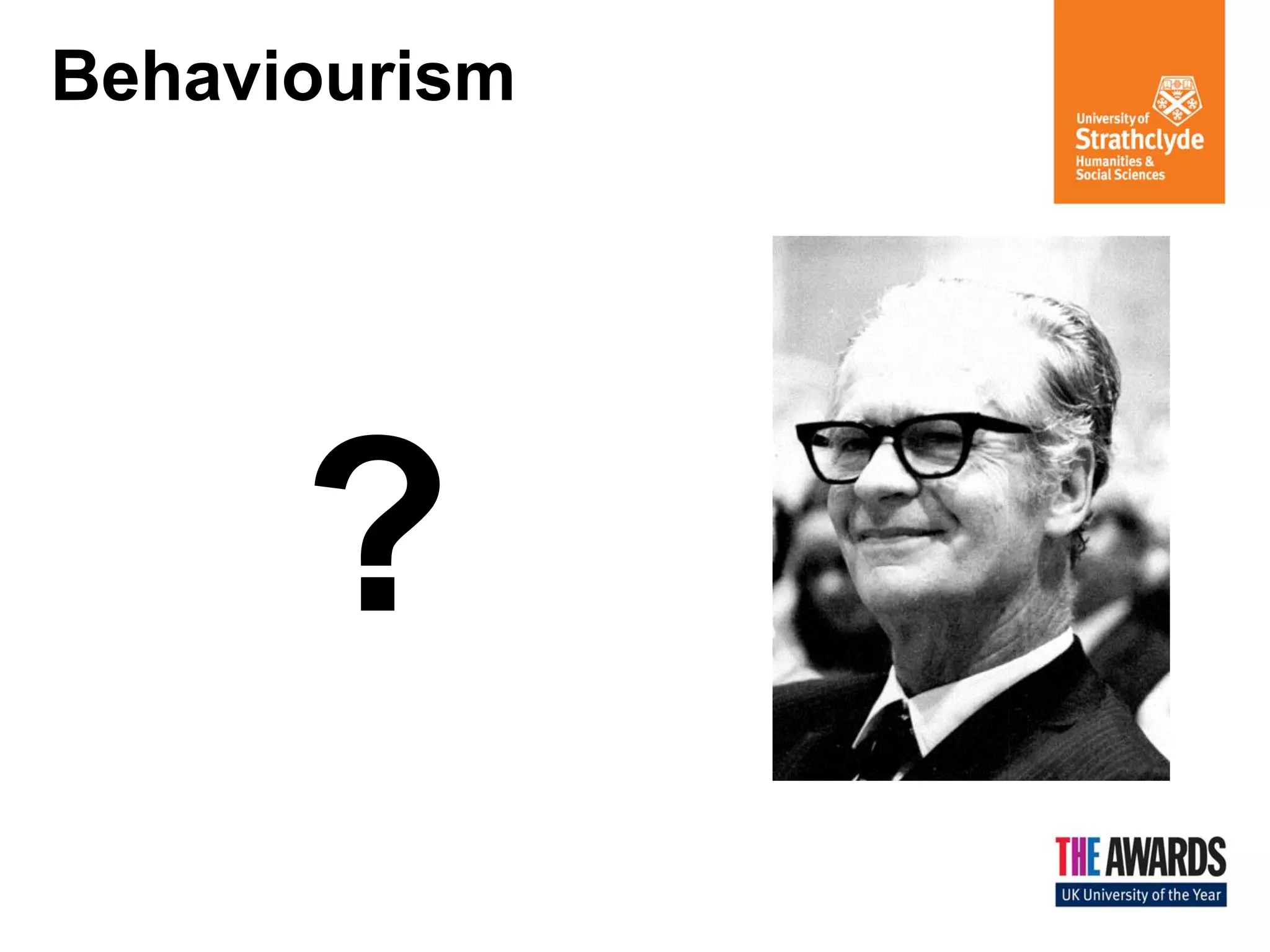
Behaviourism 
?
Classical conditioning 
Behaviourism focuses on observable behaviours 
Learning is an acquisition of new behaviour through conditioning. 
Stimulus-response 
Learner is passive - clean slate 
Uses reinforcement techniques (positive and negative; withdrawal or application of stimuli)
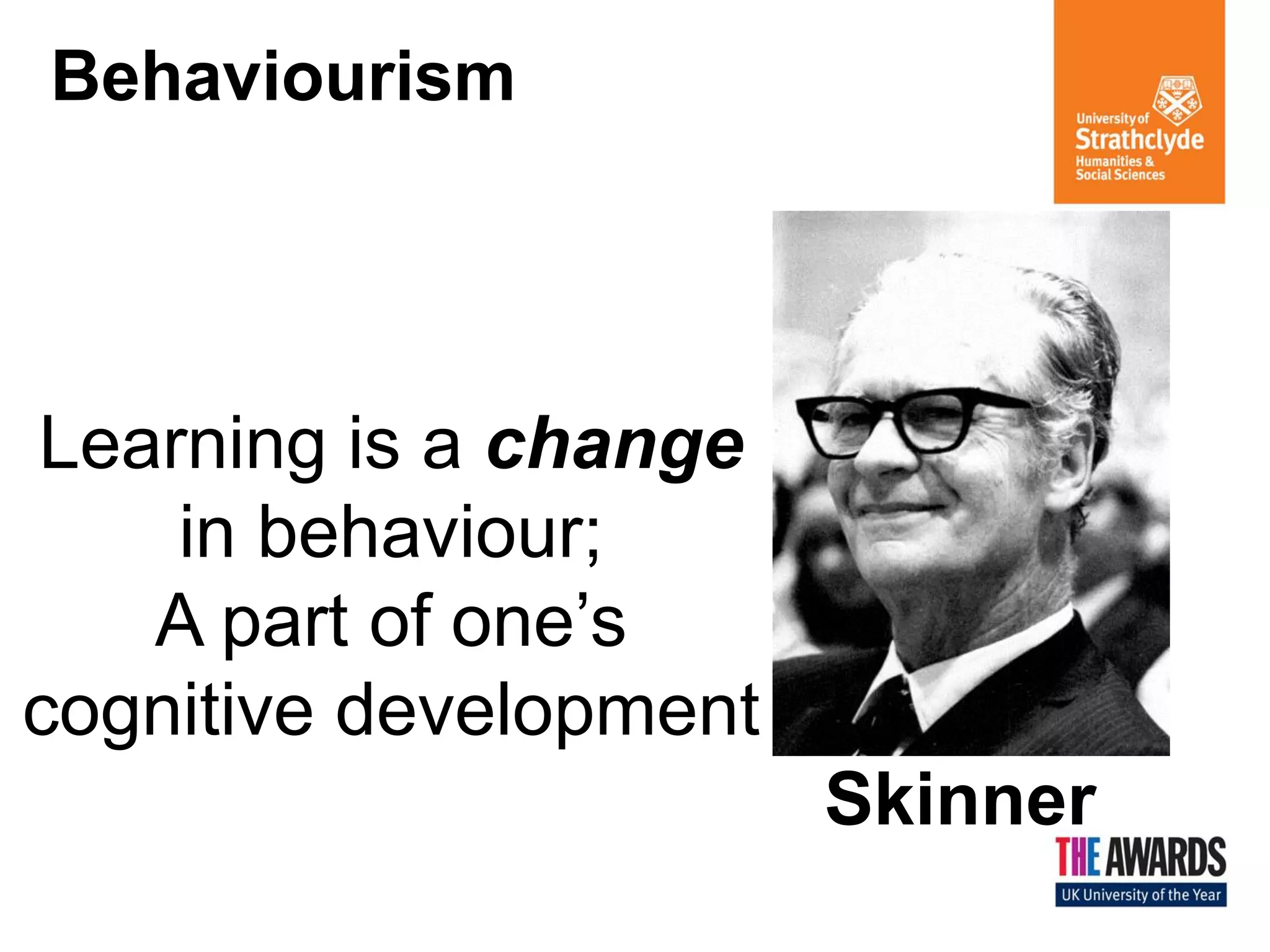
Behaviourism 
Learning is a change in behaviour; 
A part of one’s cognitive development 
Skinner
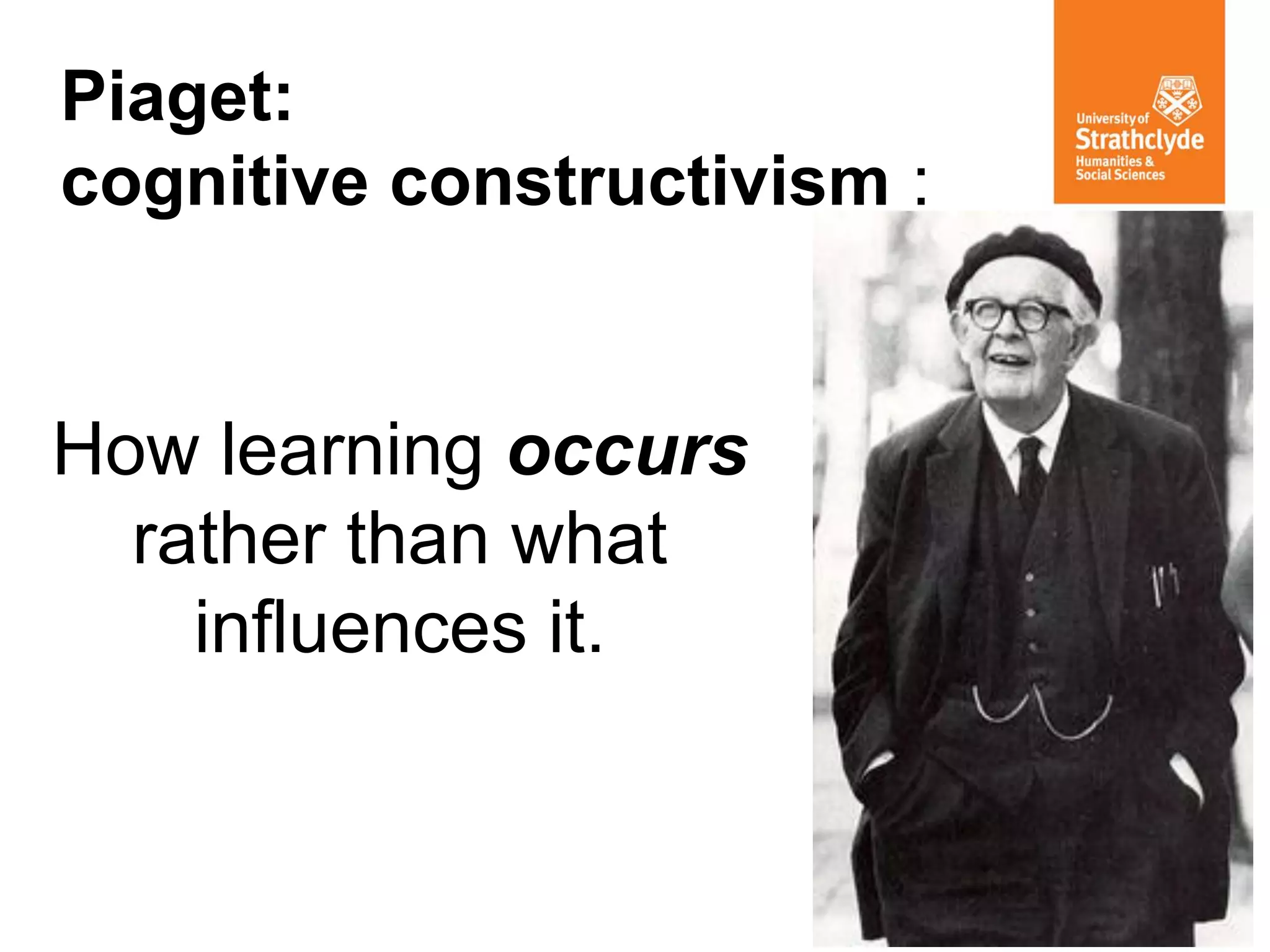
Piaget: cognitive constructivism : 
How learning occurs rather than what influences it.
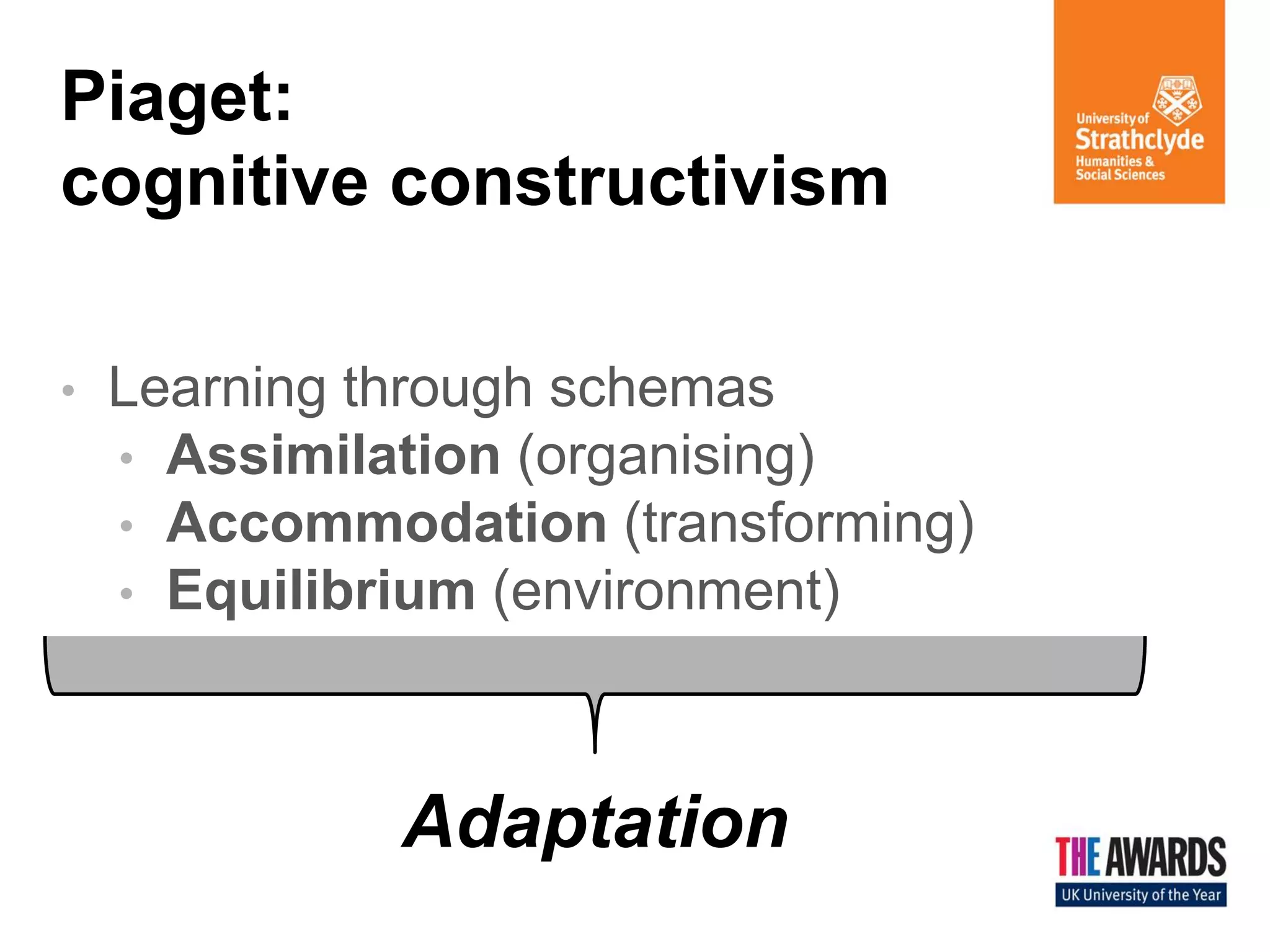
Piaget: cognitive constructivism 
•Learning through schemas 
•Assimilation (organising) 
•Accommodation (transforming) 
•Equilibrium (environment) 
Adaptation
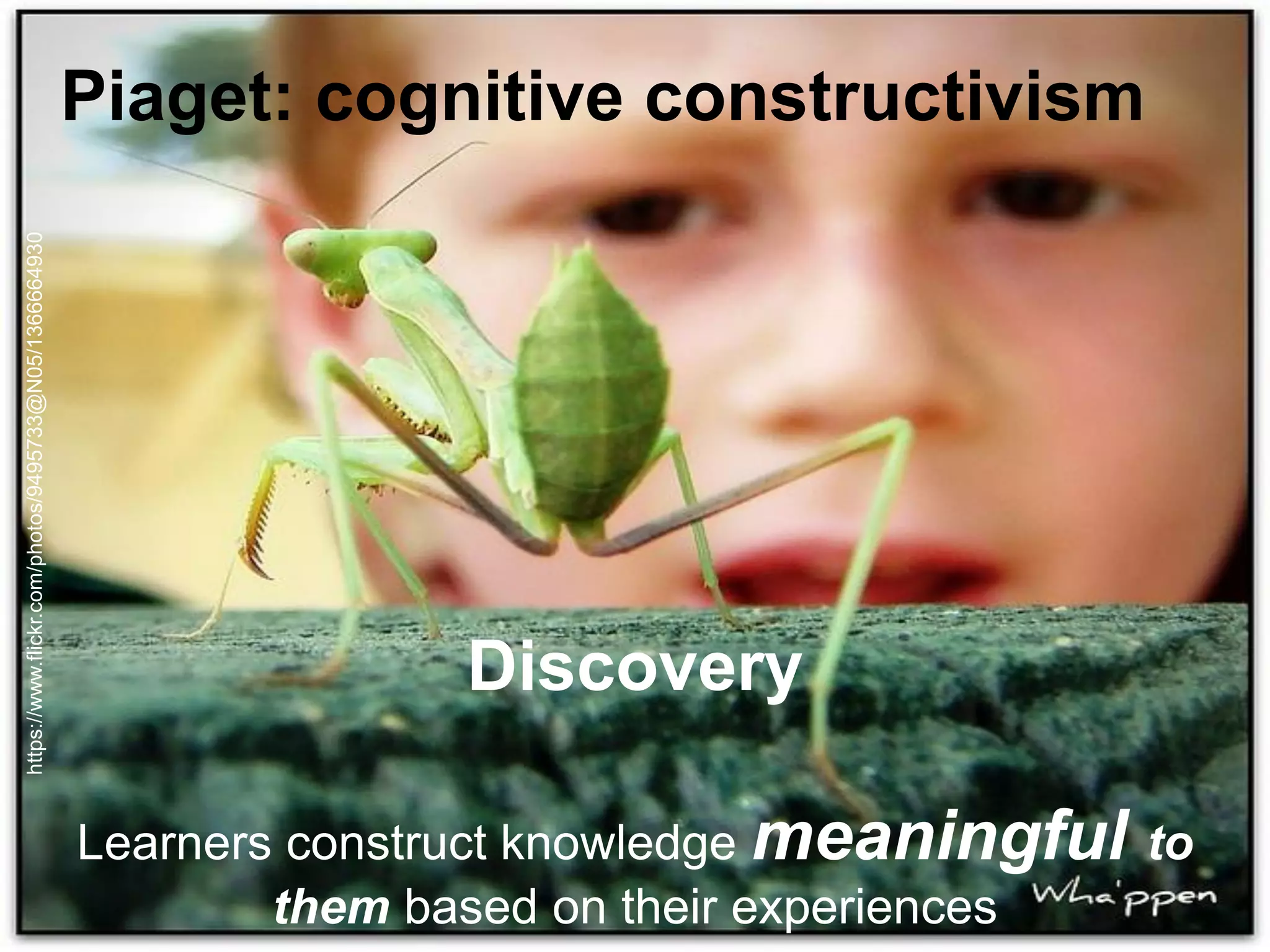
Piaget: cognitive constructivism 
Discovery Learners construct knowledge meaningful to them based on their experiences 
https://www.flickr.com/photos/9495733@N05/1366664930
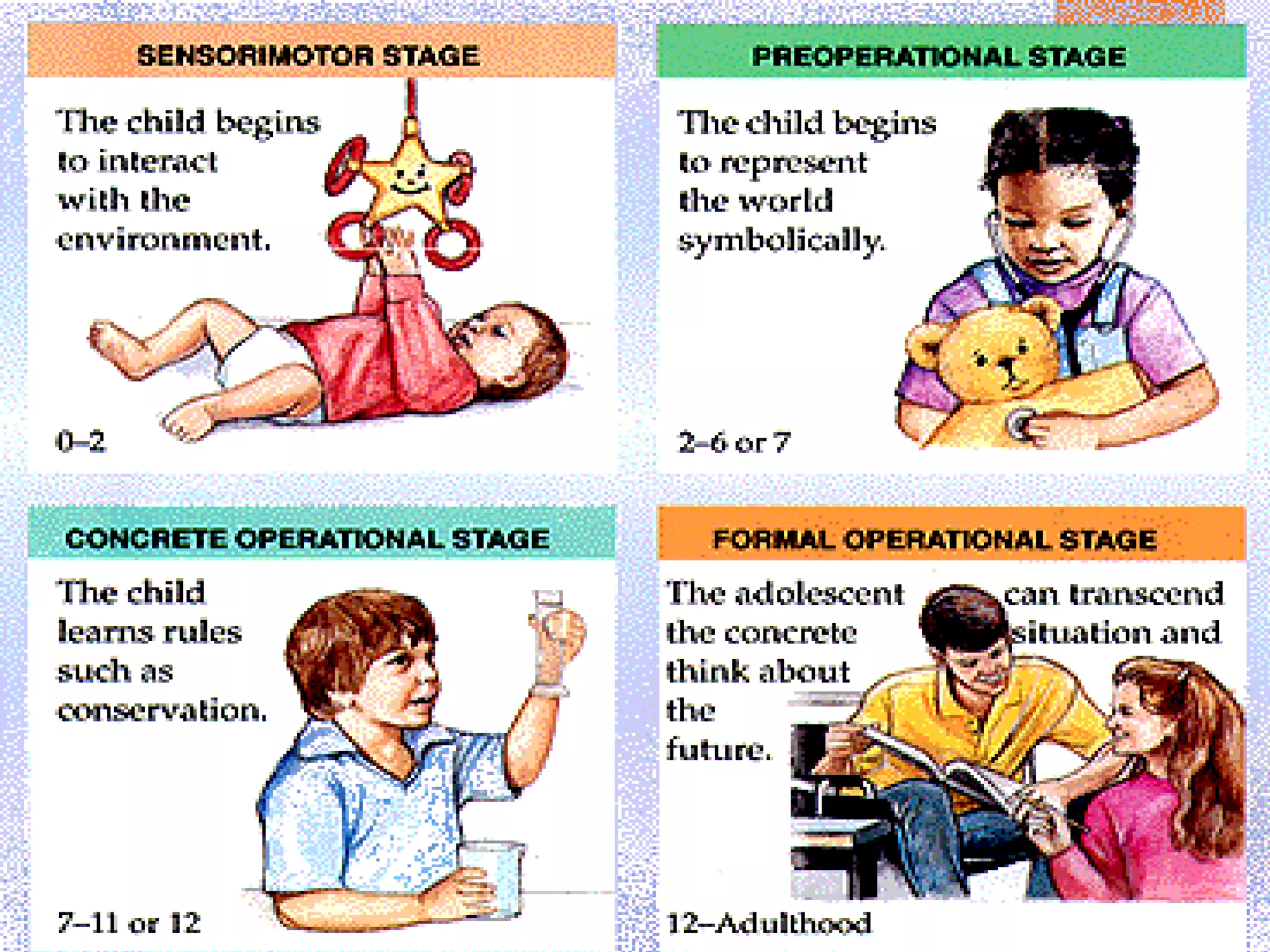
Piaget: stages of cognitive development
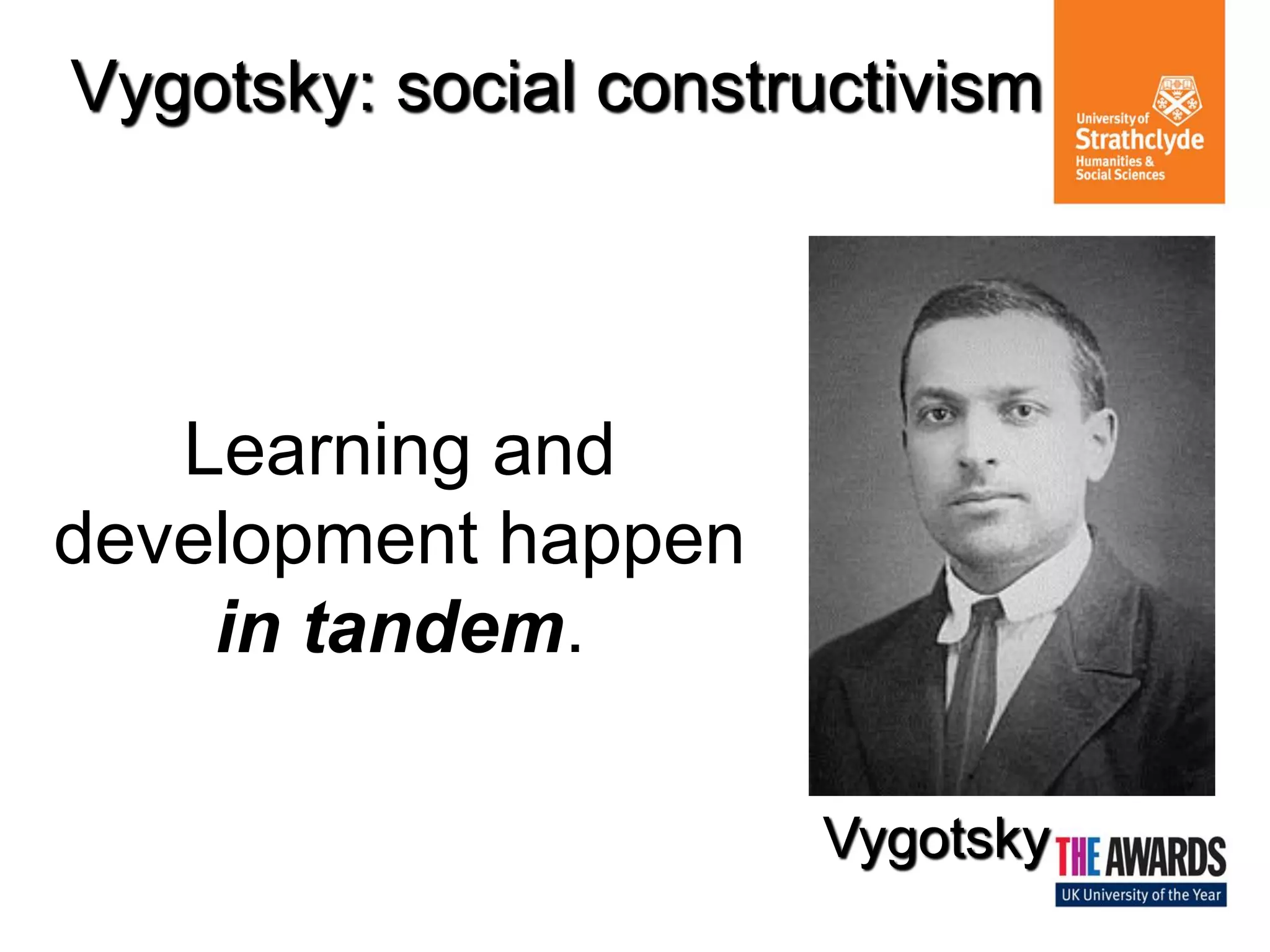
Vygotsky: social constructivism 
Learning and development happen in tandem. 
Vygotsky
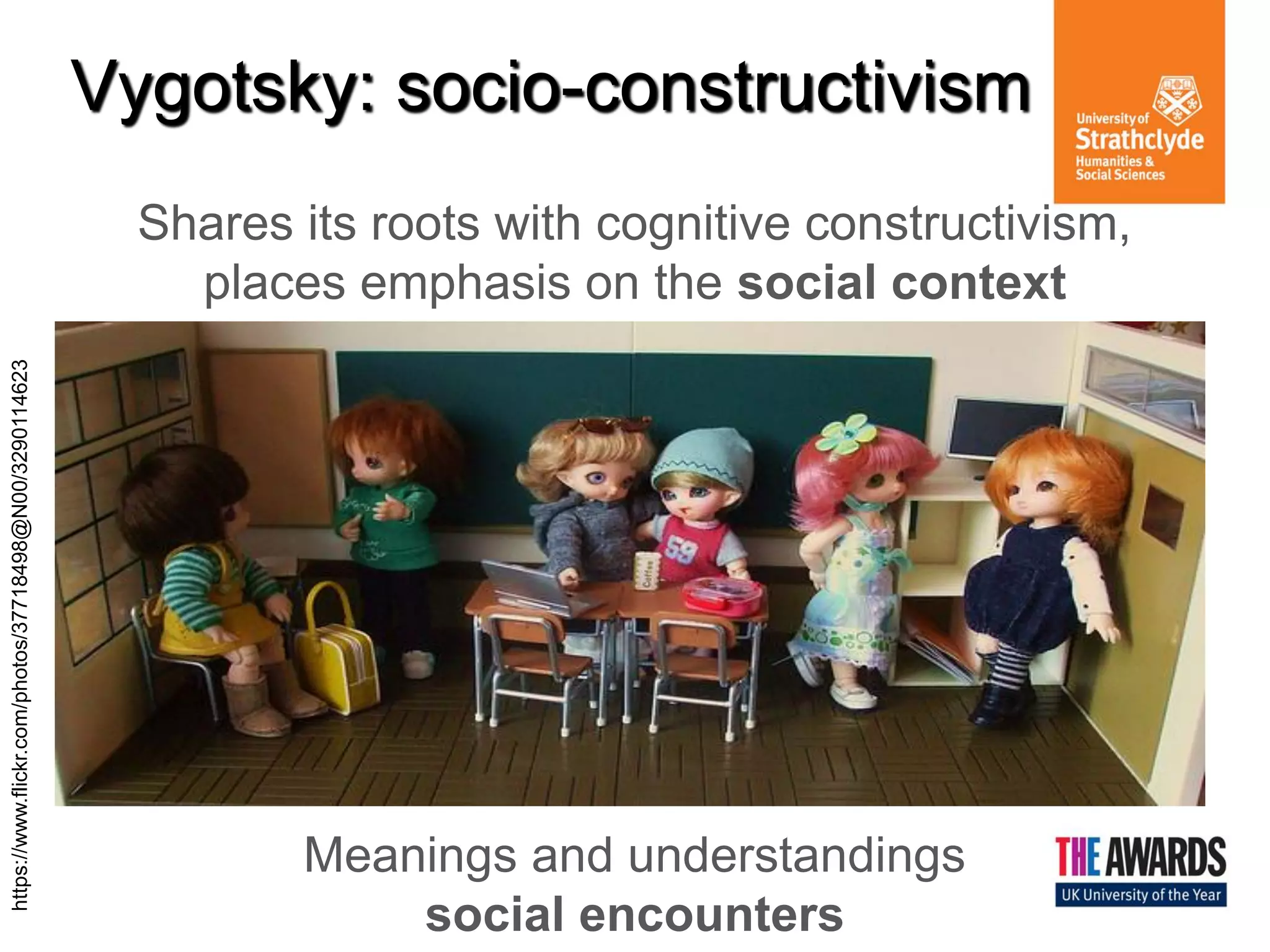
Vygotsky: socio-constructivism 
Shares its roots with cognitive constructivism, places emphasis on the social context Meanings and understandings social encounters 
https://www.flickr.com/photos/37718498@N00/3290114623
Vygotsky: socio-constructivism 
Culture gives the child the cognitive tools needed for development Learning/ development is a social, collaborative activity 
https://www.flickr.com/photos/35660391@N08/4049052627
Vygotsky: socio-constructivism 
The learner is an active meaning-maker 
https://www.flickr.com/photos/84894254@N03/14946578055
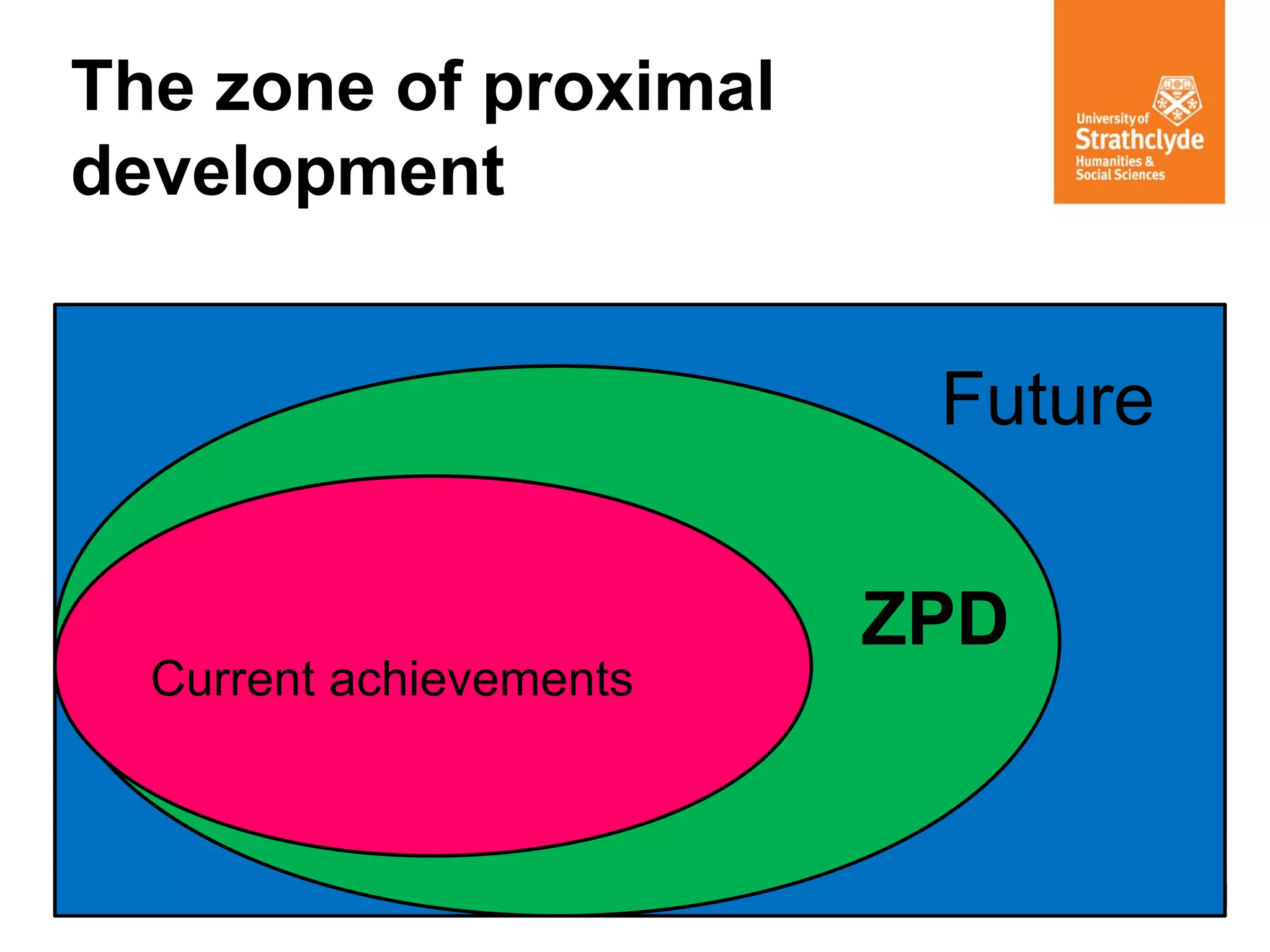
The zone of proximal development 
Current achievements 
ZPD 
Future
The zone of proximal development is the distance between the actual development level as determined by independent problem solving and the level of potential development as determined through problem solving under adult guidance or in collaboration with more capable peers. (Vygotsky, 1978)
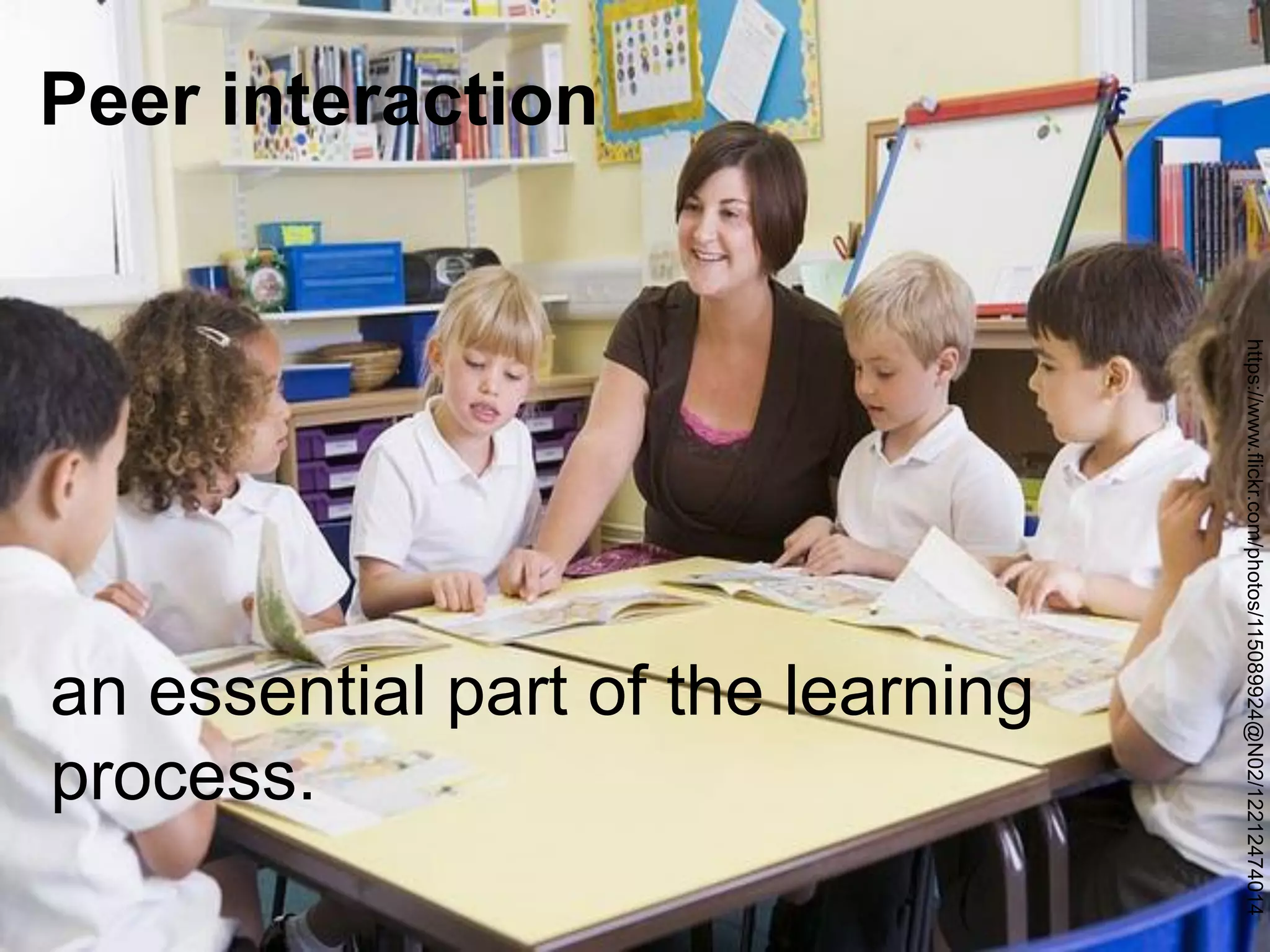
an essential part of the learning process. 
Peer interaction 
https://www.flickr.com/photos/115089924@N02/12212474014
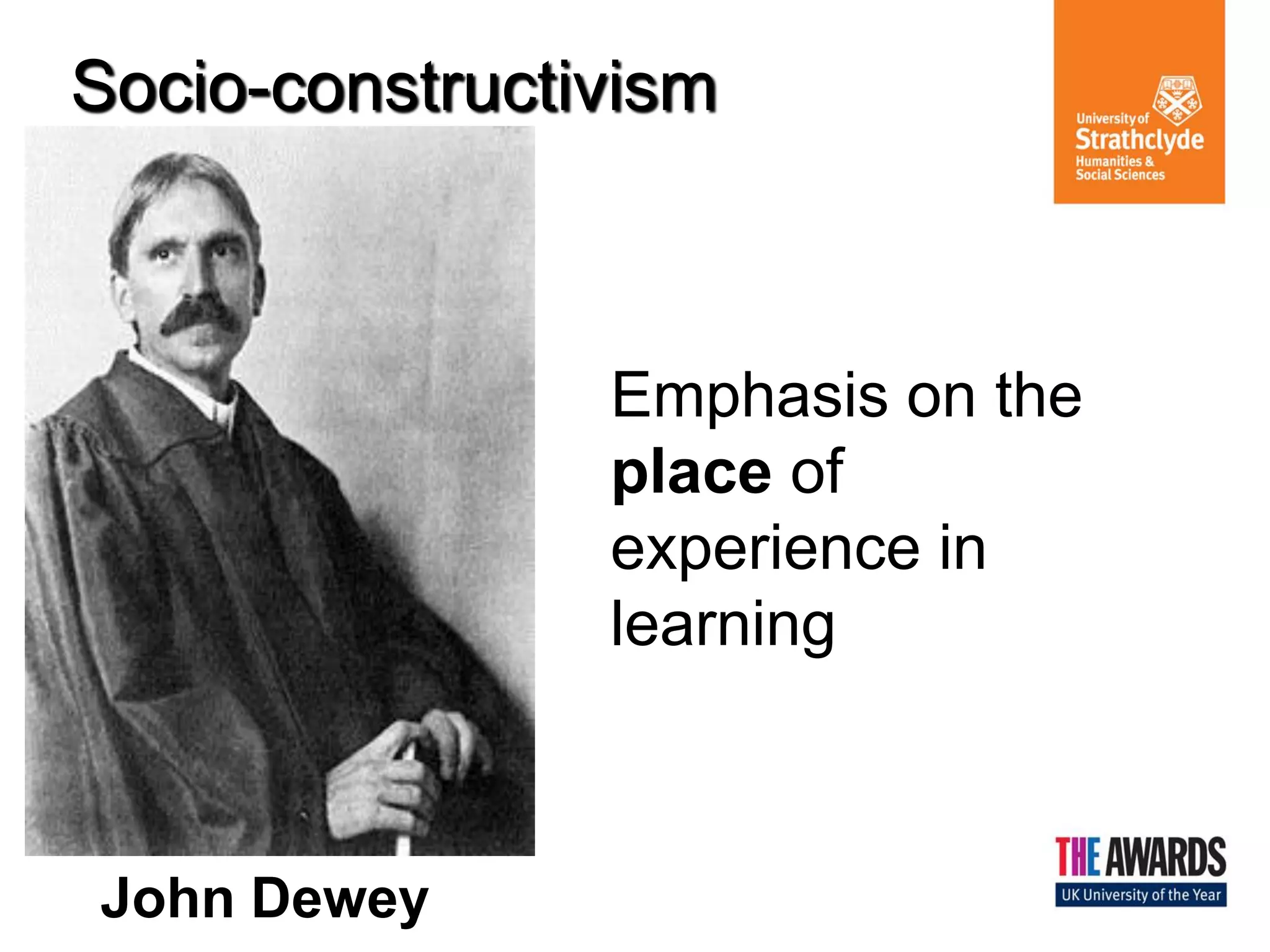
Socio-constructivism 
Emphasis on the place of experience in learning 
John Dewey
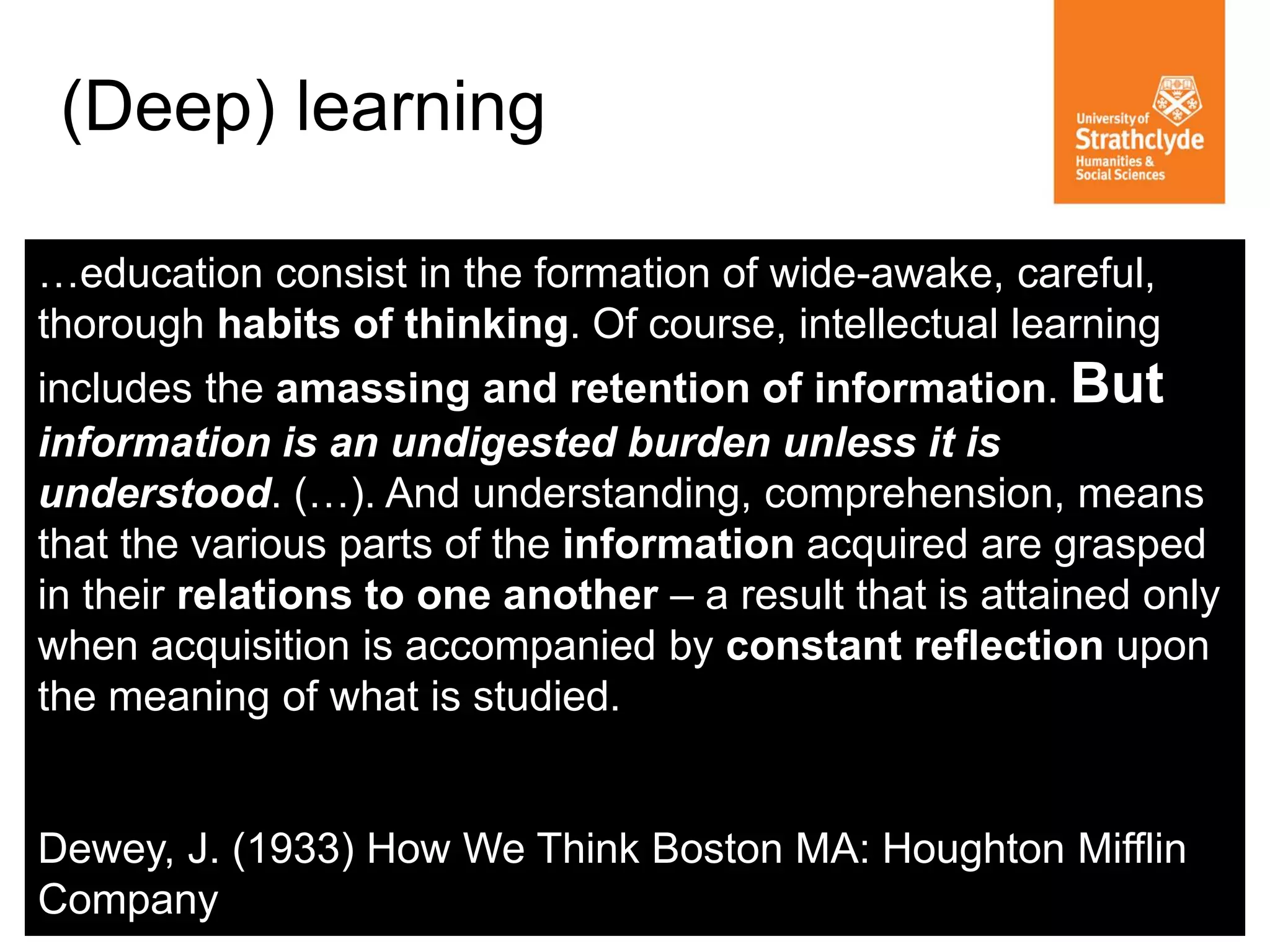
(Deep) learning 
…education consist in the formation of wide-awake, careful, thorough habits of thinking. Of course, intellectual learning includes the amassing and retention of information. But information is an undigested burden unless it is understood. (…). And understanding, comprehension, means that the various parts of the information acquired are grasped in their relations to one another – a result that is attained only when acquisition is accompanied by constant reflection upon the meaning of what is studied. Dewey, J. (1933) How We Think Boston MA: Houghton Mifflin Company
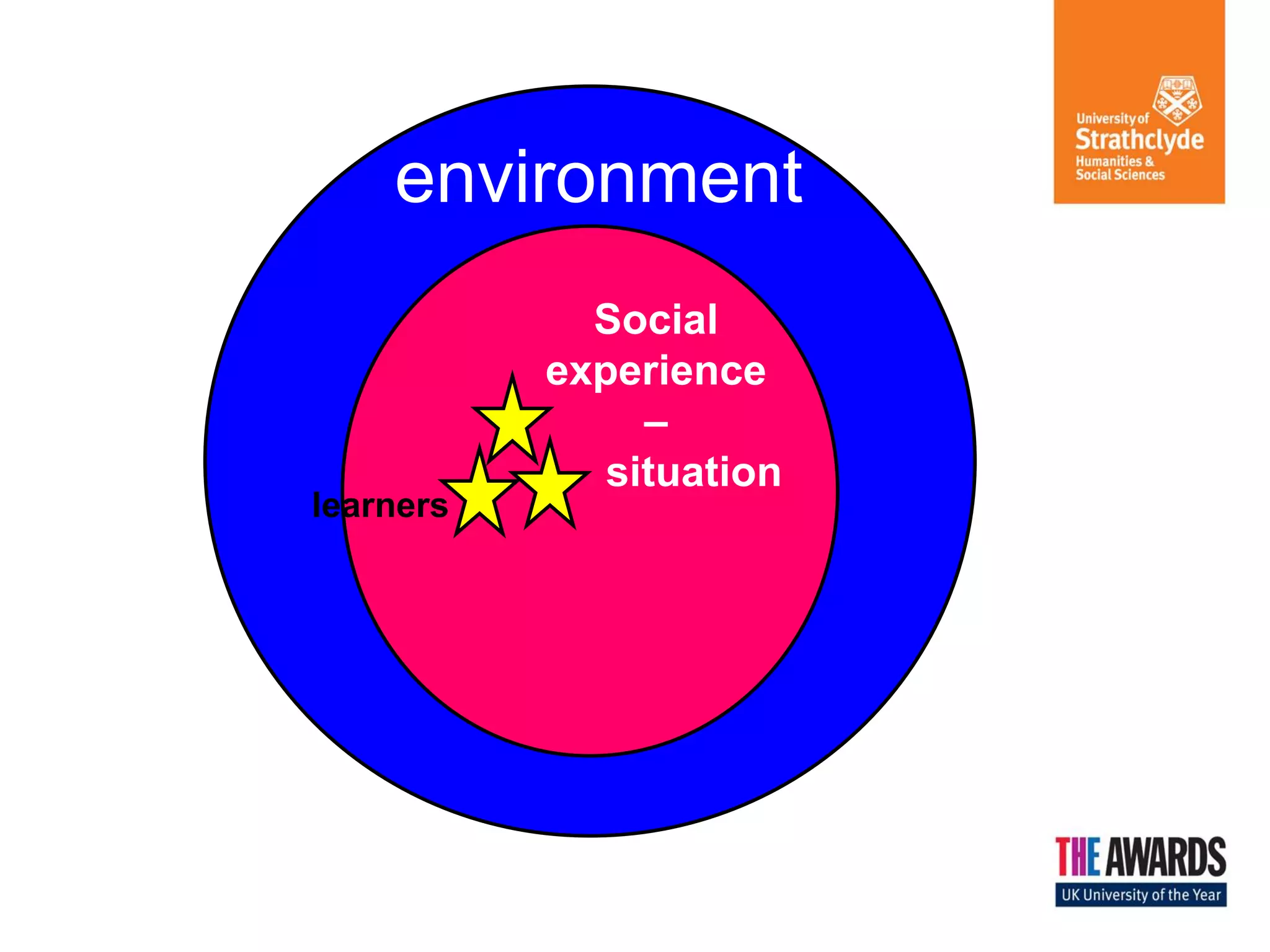
environment 
Social experience – situation 
learners
Other points of interest
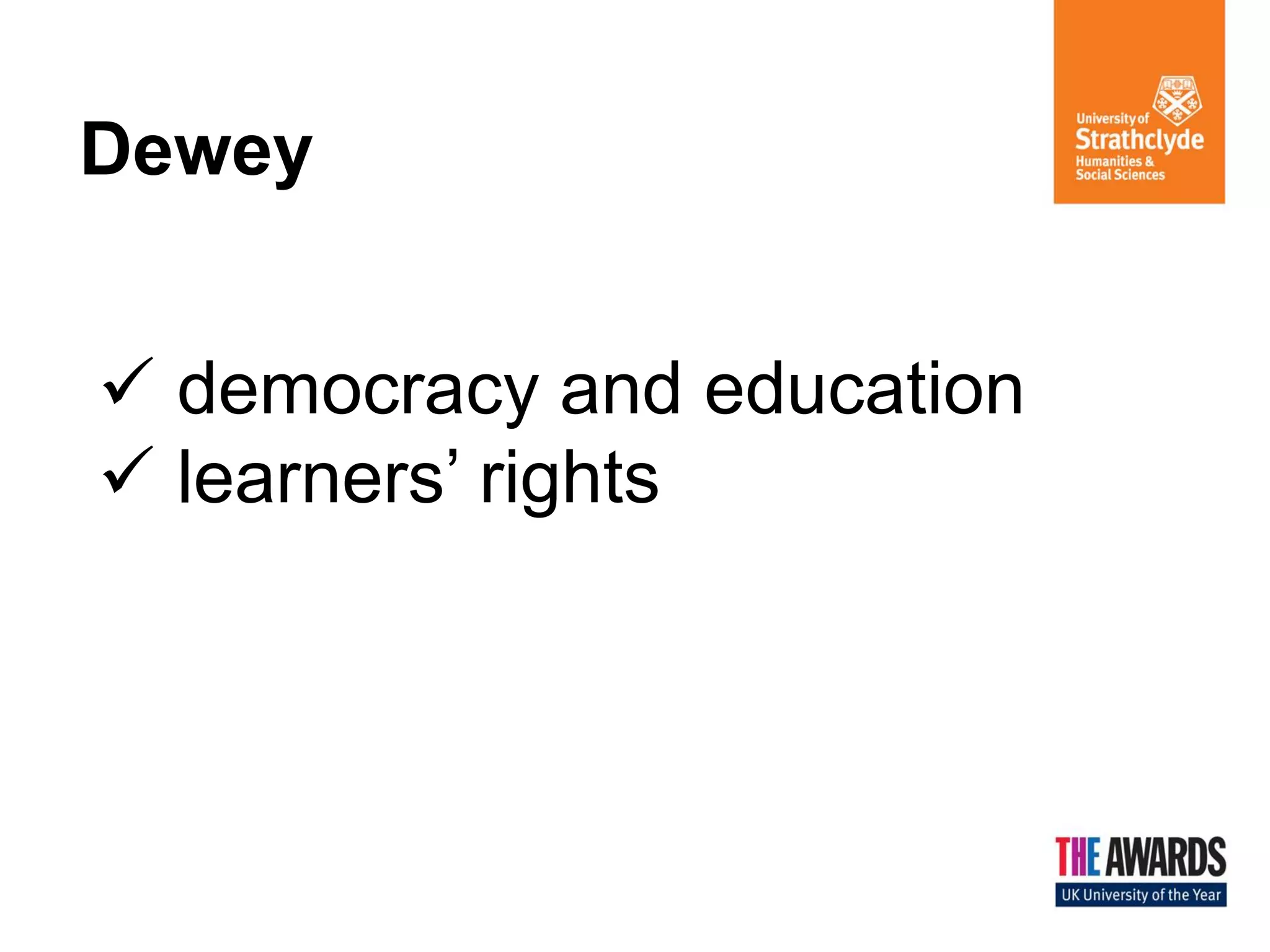
Dewey 
democracy and education 
learners’ rights
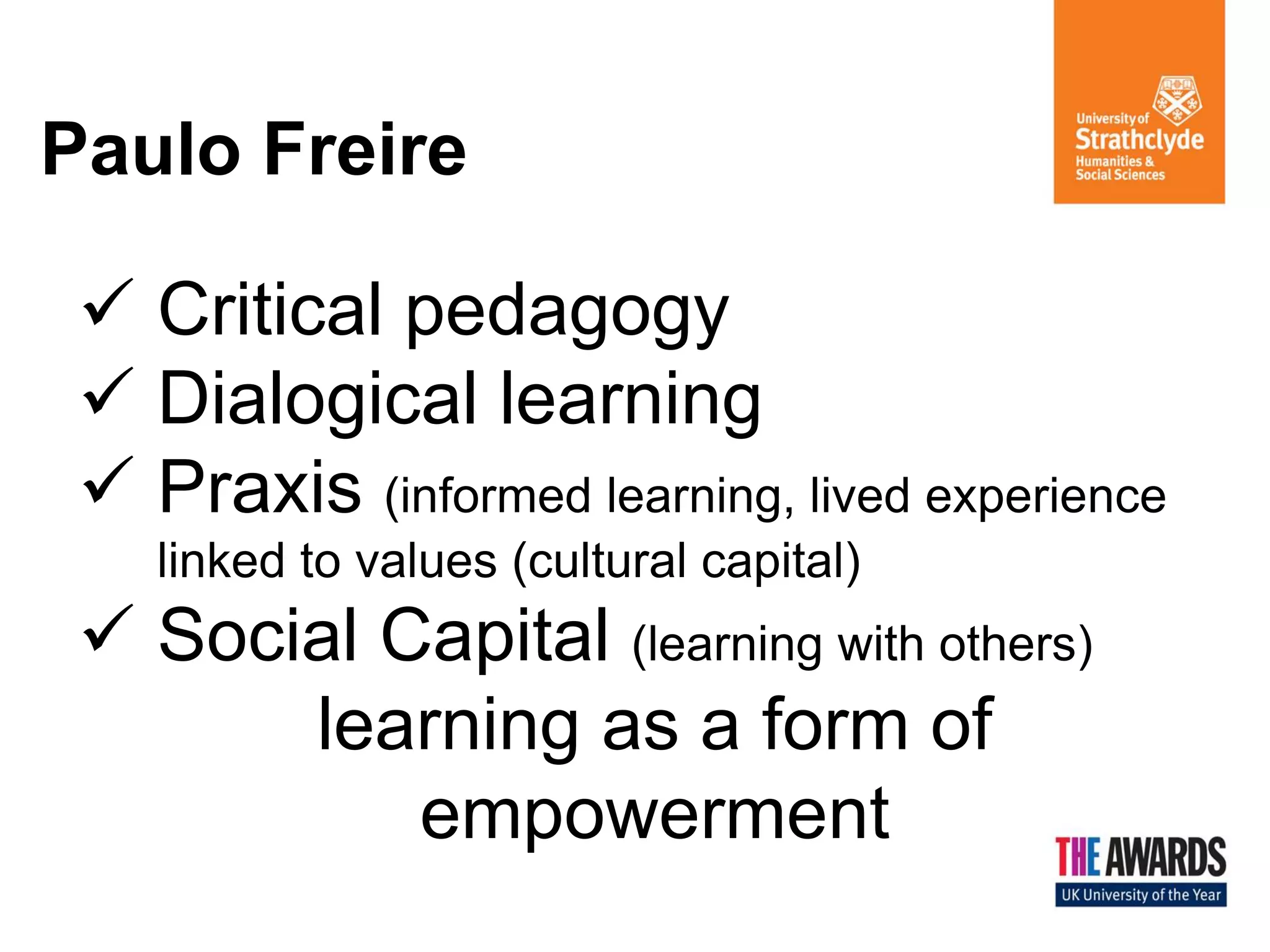
Paulo Freire 
Critical pedagogy 
Dialogical learning 
Praxis (informed learning, lived experience linked to values (cultural capital) 
Social Capital (learning with others) learning as a form of empowerment
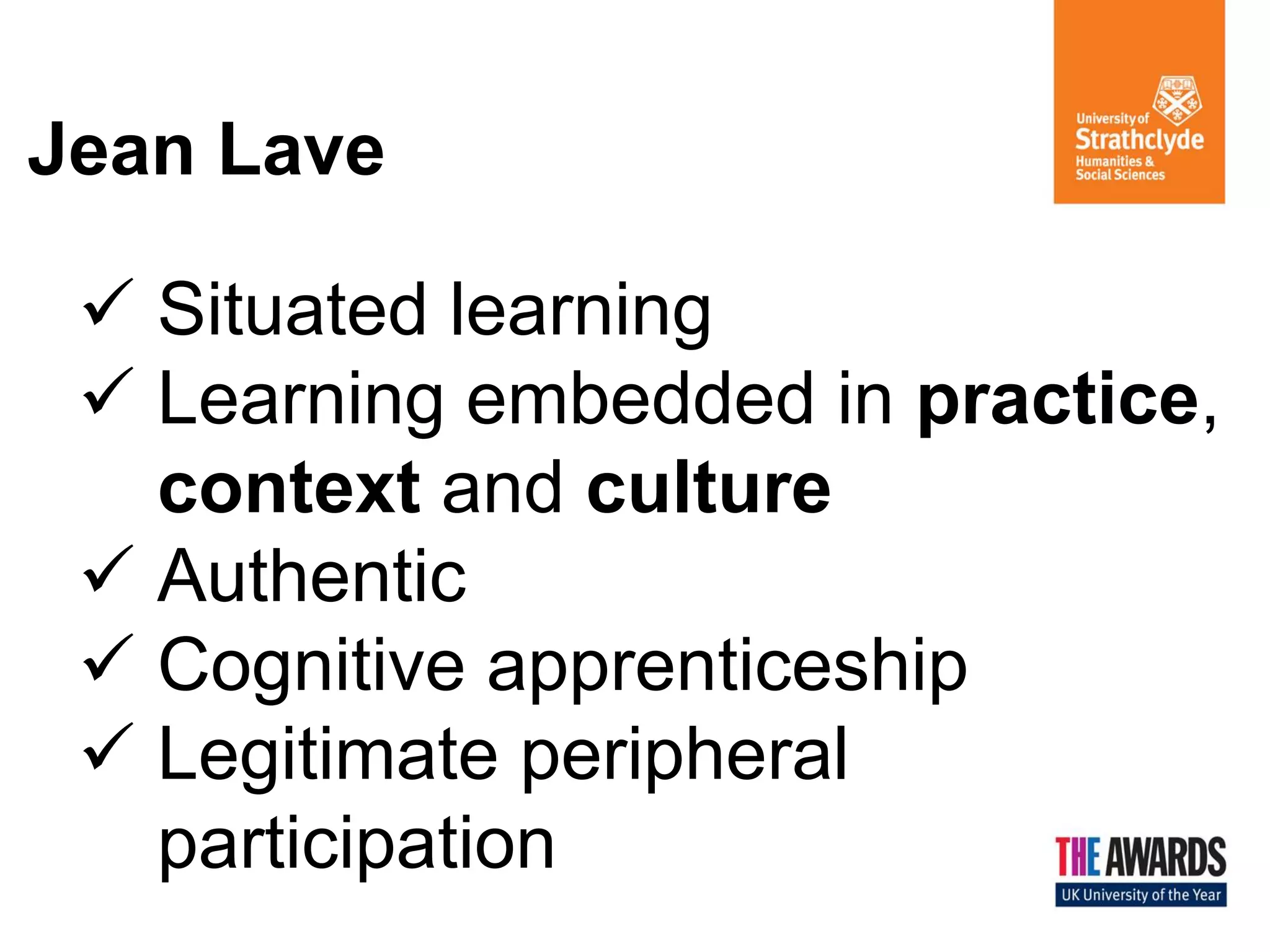
Jean Lave 
Situated learning 
Learning embedded in practice, context and culture 
Authentic 
Cognitive apprenticeship 
Legitimate peripheral participation
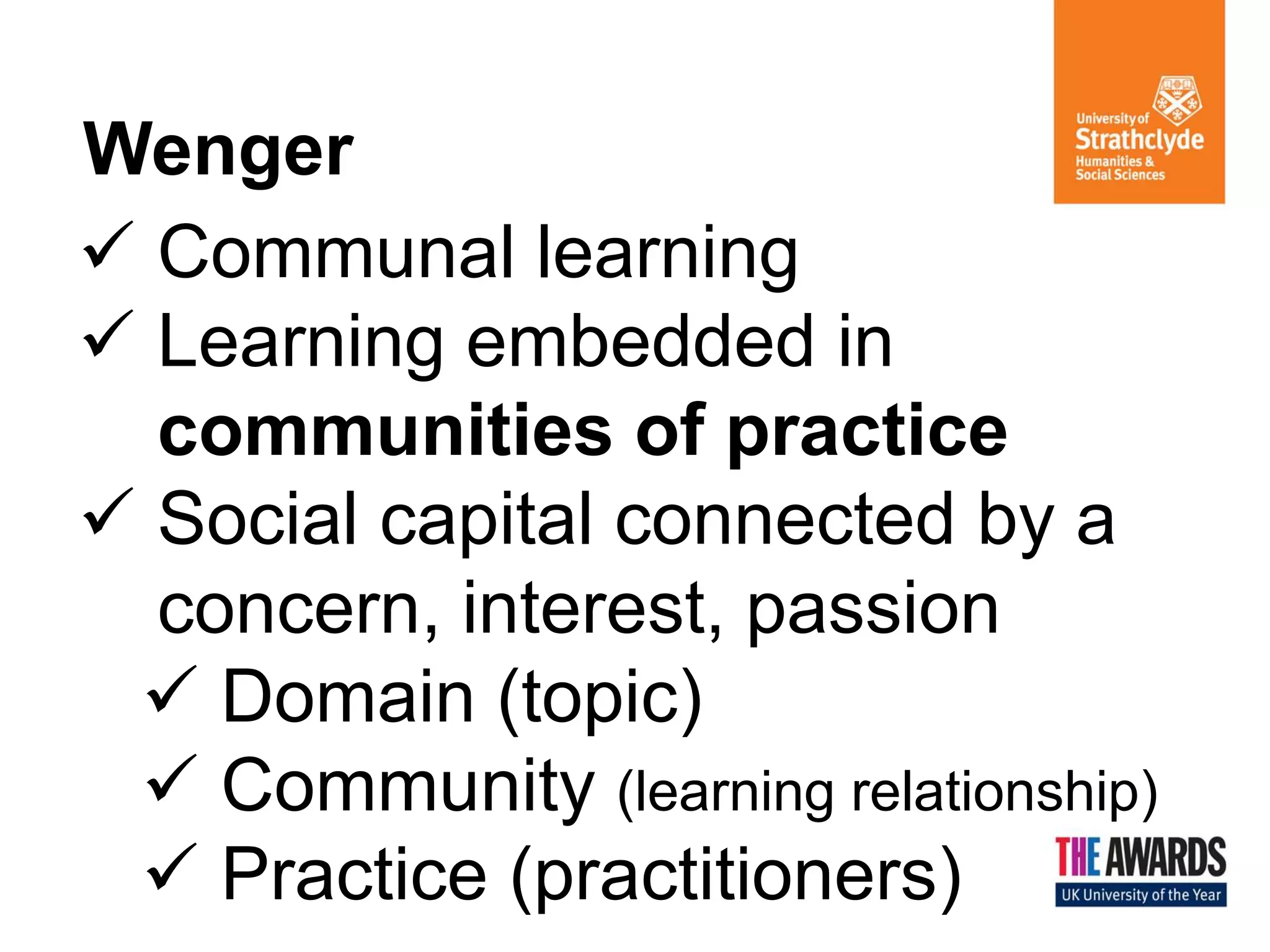
Wenger 
Communal learning 
Learning embedded in communities of practice 
Social capital connected by a concern, interest, passion 
Domain (topic) 
Community (learning relationship) 
Practice (practitioners)
References 
Lave, Jean (1988). Cognition in practice: mind, mathematics and culture in everyday life. New York: Cambridge University Press Wenger, Etienne and Richard McDermott, and William Snyder (2002) Cultivating communities of practice: a guide to managing knowledge. Cambridge, Mass.: Harvard Business School Press. Wenger, Etienne (1998). Communities of Practice: Learning, Meaning, and Identity. Cambridge: Cambridge University Press.

What is learning?

  • 2.
  • 3.
  • 4.
  • 5.
    What is yourlearning (and teaching) philosophy? How do you think people learn? - 40 minute reflection/writing
  • 6.
    Reading of texts: Reading 1: Carlile, O., & Jordan, A. (2012). Learning. In J. Arthur & A. Peterson (Eds.), The Routledge Companion to Education (pp. 97-106). London: Routledge Reading 2: Hewitt, D. (2010). How do people learn? In J. Arthur & I. Davies (Eds.), Education Studies Textbook (pp. 107-120). Abingdon, Oxon: Routledge
  • 7.
    Some thoughts onlearning…
  • 8.
  • 9.
  • 10.
  • 11.
    Classical conditioning Behaviourismfocuses on observable behaviours Learning is an acquisition of new behaviour through conditioning. Stimulus-response Learner is passive - clean slate Uses reinforcement techniques (positive and negative; withdrawal or application of stimuli)
  • 12.
    Behaviourism Learning isa change in behaviour; A part of one’s cognitive development Skinner
  • 13.
    Piaget: cognitive constructivism: How learning occurs rather than what influences it.
  • 14.
    Piaget: cognitive constructivism •Learning through schemas •Assimilation (organising) •Accommodation (transforming) •Equilibrium (environment) Adaptation
  • 15.
    Piaget: cognitive constructivism Discovery Learners construct knowledge meaningful to them based on their experiences https://www.flickr.com/photos/9495733@N05/1366664930
  • 16.
    Piaget: stages ofcognitive development
  • 17.
    Vygotsky: social constructivism Learning and development happen in tandem. Vygotsky
  • 18.
    Vygotsky: socio-constructivism Sharesits roots with cognitive constructivism, places emphasis on the social context Meanings and understandings social encounters https://www.flickr.com/photos/37718498@N00/3290114623
  • 19.
    Vygotsky: socio-constructivism Culturegives the child the cognitive tools needed for development Learning/ development is a social, collaborative activity https://www.flickr.com/photos/35660391@N08/4049052627
  • 20.
    Vygotsky: socio-constructivism Thelearner is an active meaning-maker https://www.flickr.com/photos/84894254@N03/14946578055
  • 21.
    The zone ofproximal development Current achievements ZPD Future
  • 22.
    The zone ofproximal development is the distance between the actual development level as determined by independent problem solving and the level of potential development as determined through problem solving under adult guidance or in collaboration with more capable peers. (Vygotsky, 1978)
  • 23.
    an essential partof the learning process. Peer interaction https://www.flickr.com/photos/115089924@N02/12212474014
  • 24.
    Socio-constructivism Emphasis onthe place of experience in learning John Dewey
  • 25.
    (Deep) learning …educationconsist in the formation of wide-awake, careful, thorough habits of thinking. Of course, intellectual learning includes the amassing and retention of information. But information is an undigested burden unless it is understood. (…). And understanding, comprehension, means that the various parts of the information acquired are grasped in their relations to one another – a result that is attained only when acquisition is accompanied by constant reflection upon the meaning of what is studied. Dewey, J. (1933) How We Think Boston MA: Houghton Mifflin Company
  • 26.
    environment Social experience– situation learners
  • 27.
  • 28.
    Dewey democracy andeducation learners’ rights
  • 29.
    Paulo Freire Criticalpedagogy Dialogical learning Praxis (informed learning, lived experience linked to values (cultural capital) Social Capital (learning with others) learning as a form of empowerment
  • 30.
    Jean Lave Situatedlearning Learning embedded in practice, context and culture Authentic Cognitive apprenticeship Legitimate peripheral participation
  • 31.
    Wenger Communal learning Learning embedded in communities of practice Social capital connected by a concern, interest, passion Domain (topic) Community (learning relationship) Practice (practitioners)
  • 32.
    References Lave, Jean(1988). Cognition in practice: mind, mathematics and culture in everyday life. New York: Cambridge University Press Wenger, Etienne and Richard McDermott, and William Snyder (2002) Cultivating communities of practice: a guide to managing knowledge. Cambridge, Mass.: Harvard Business School Press. Wenger, Etienne (1998). Communities of Practice: Learning, Meaning, and Identity. Cambridge: Cambridge University Press.