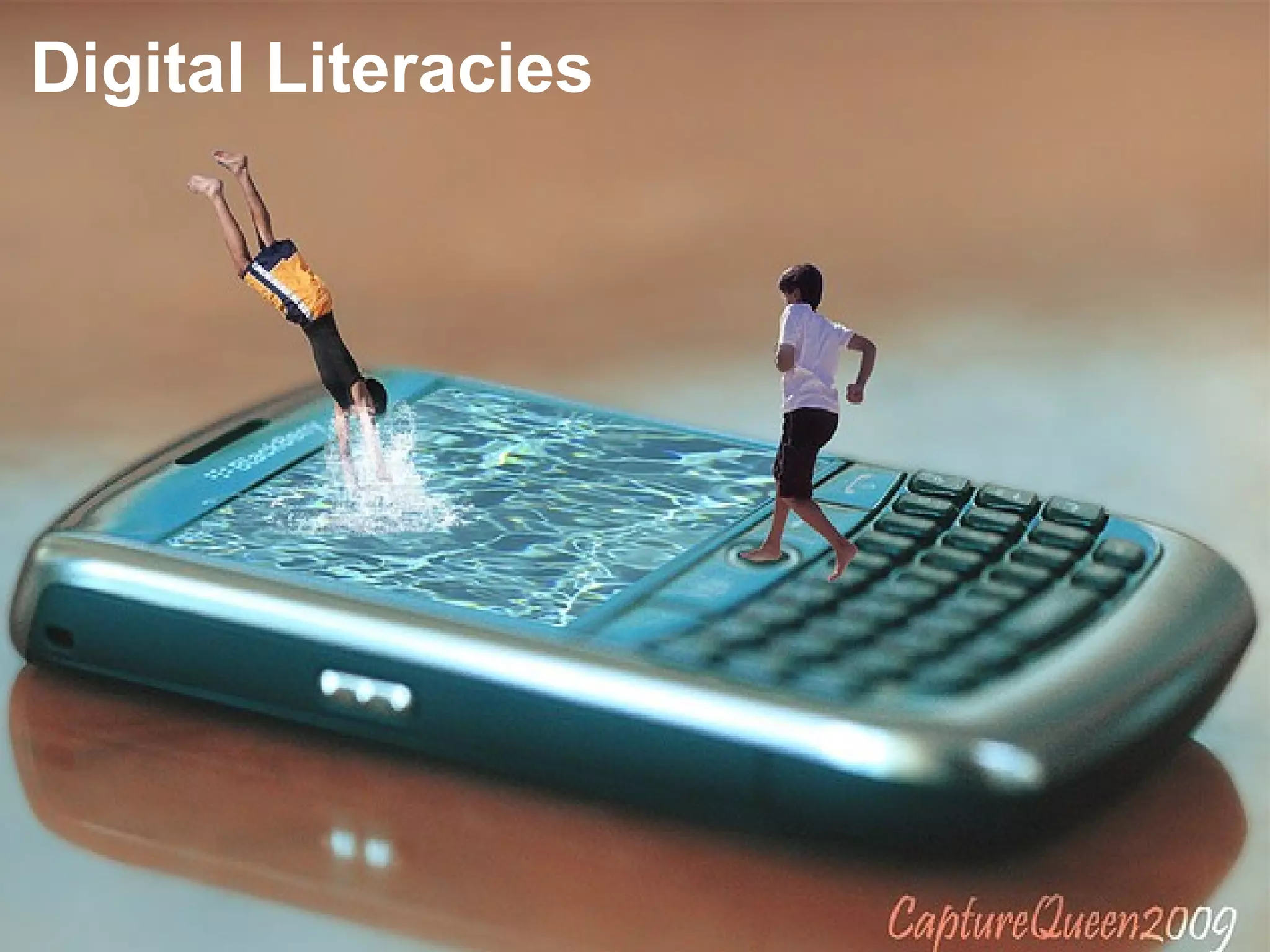
Digital Literacies
Discuss the readings 
http://www.flickr.com/photos/tearsandrain/
What most struck me about the 
chapter(s) for today was.......
The idea that I most take issue with 
in the chapter(s) is..........
The part of the chapter(s) that I felt 
made most sense to me was........
The part of the chapter(s) that I felt 
was most confusing was...............
The question that I'd most like to 
ask the author(s) about the 
chapter(s) is.........
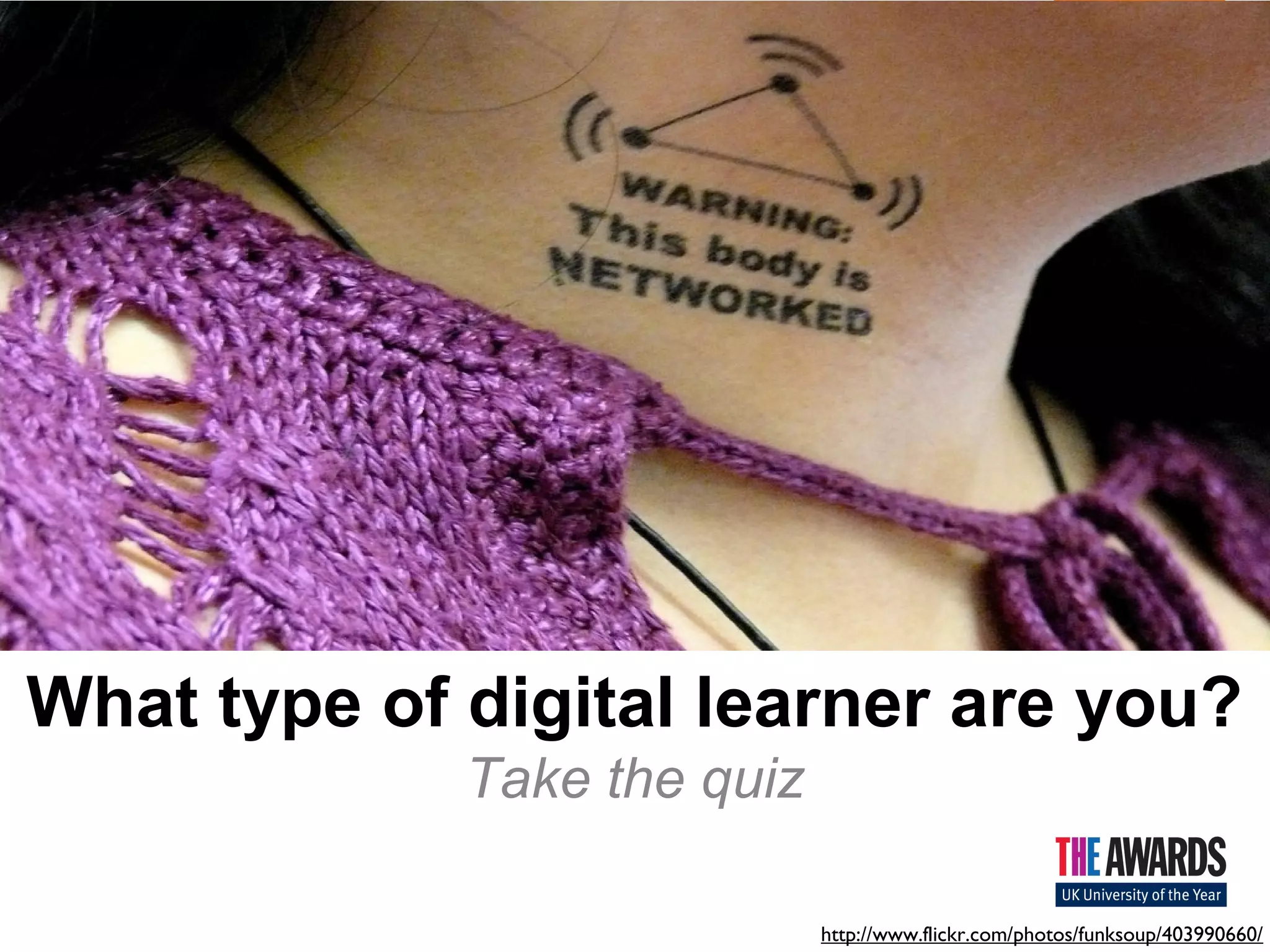
What type of digital learner are you? 
Take the quiz 
http://www.flickr.com/photos/funksoup/403990660/
Digital Literacies 
or 
Digital Fluencies?
Digital literacies defines those who exhibit a 
critical understanding and capability for 
living, learning, and working in the digital 
society. JISC, 2013
Padlet Exercise 
What 
technology do 
you need to 
thrive in the 
digital economy? 
What skills do 
you need to 
thrive in the 
digital economy?
Digital Literacies are 
social practices
Different, competing definitions of 
digital literacies
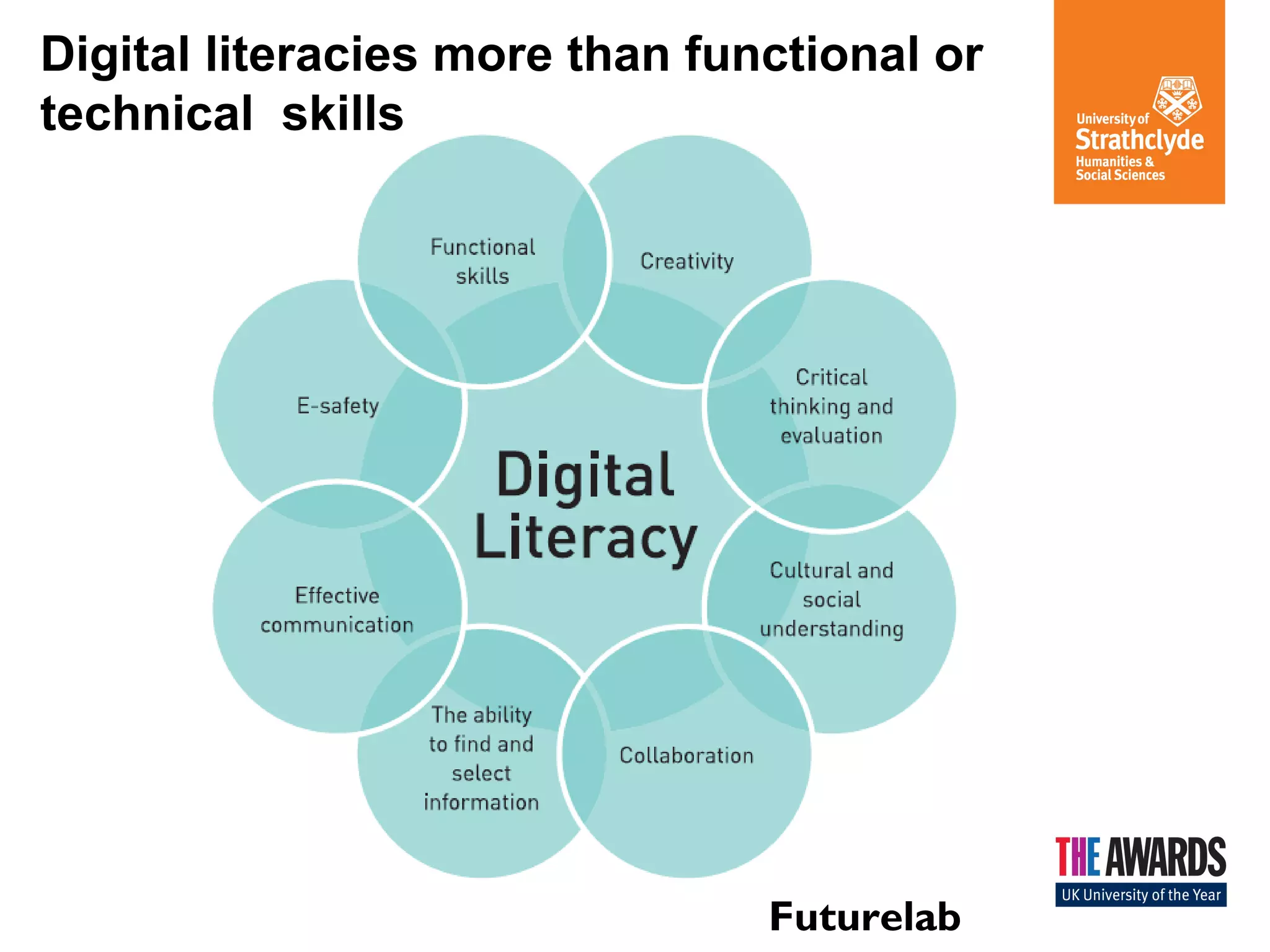
Digital literacies more than functional or 
technical skills 
Futurelab
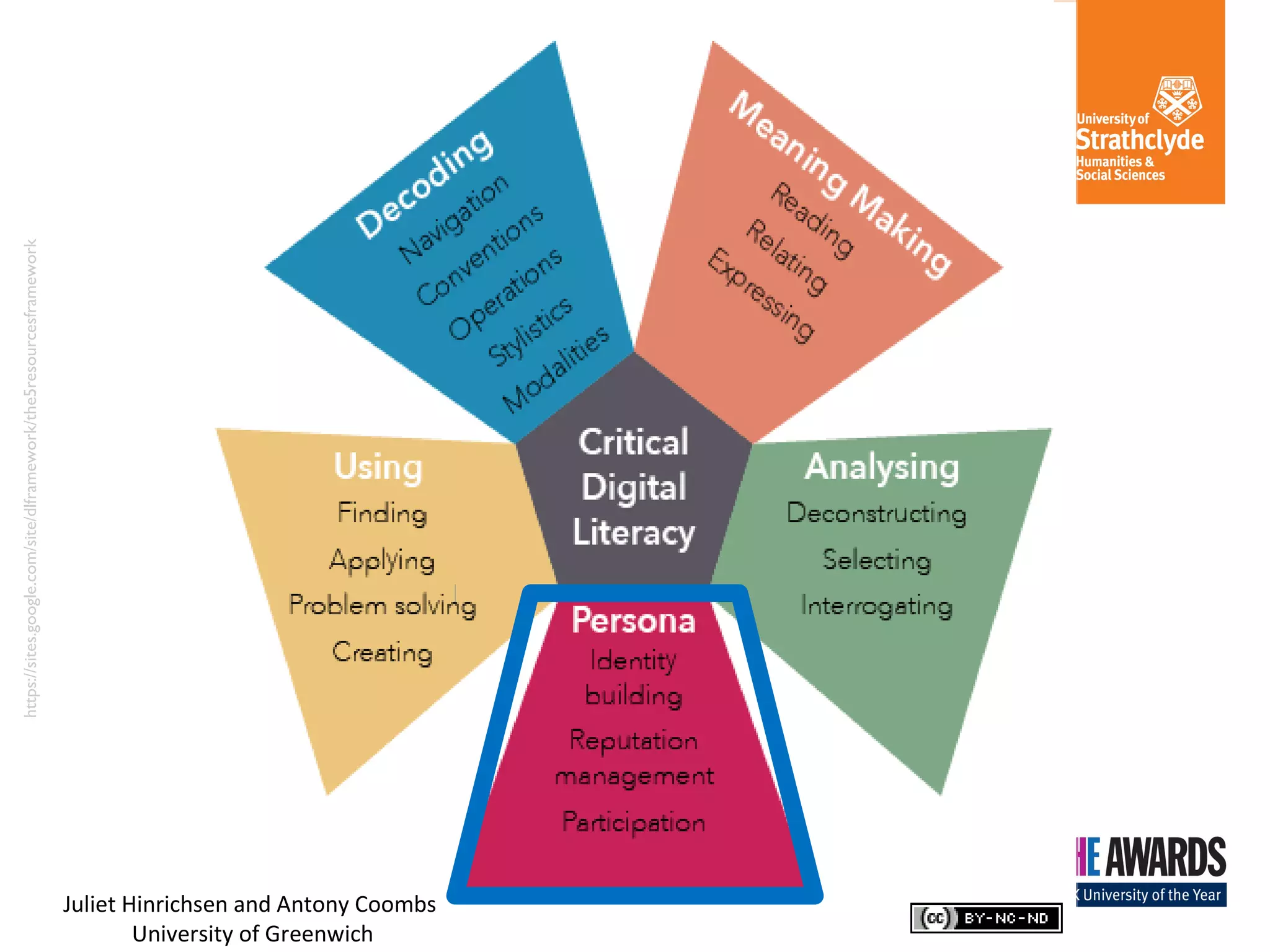
https://sites.google.com/site/dlframework/the5resourcesframework 
Juliet Hinrichsen and Antony Coombs 
University of Greenwich
5 key social practices
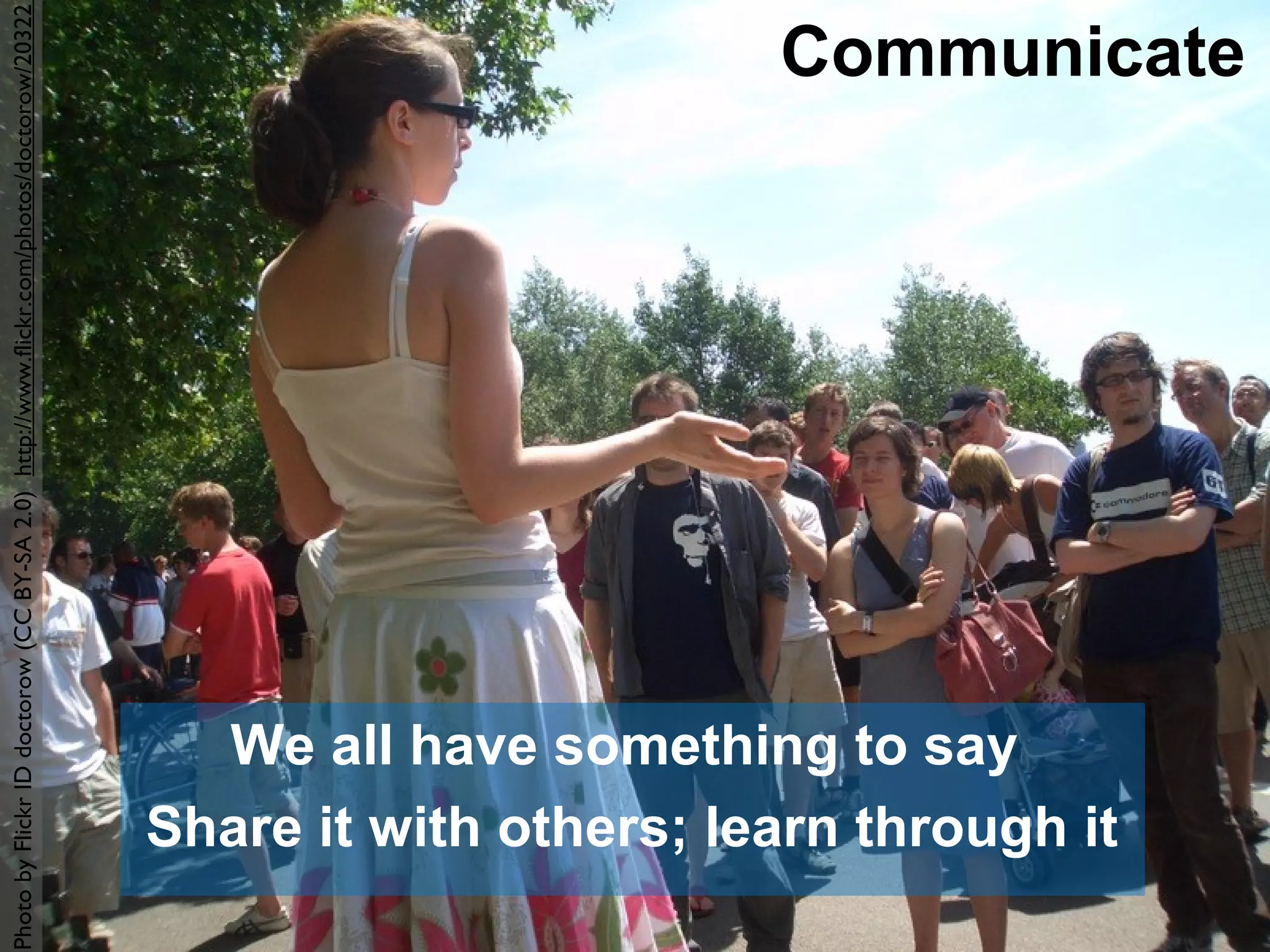
Photo by Flickr ID doctorow (CC BY-SA 2.0) http://www.flickr.com/photos/doctorow/20322100/ 
Communicate 
We all have something to say 
Share it with others; learn through it
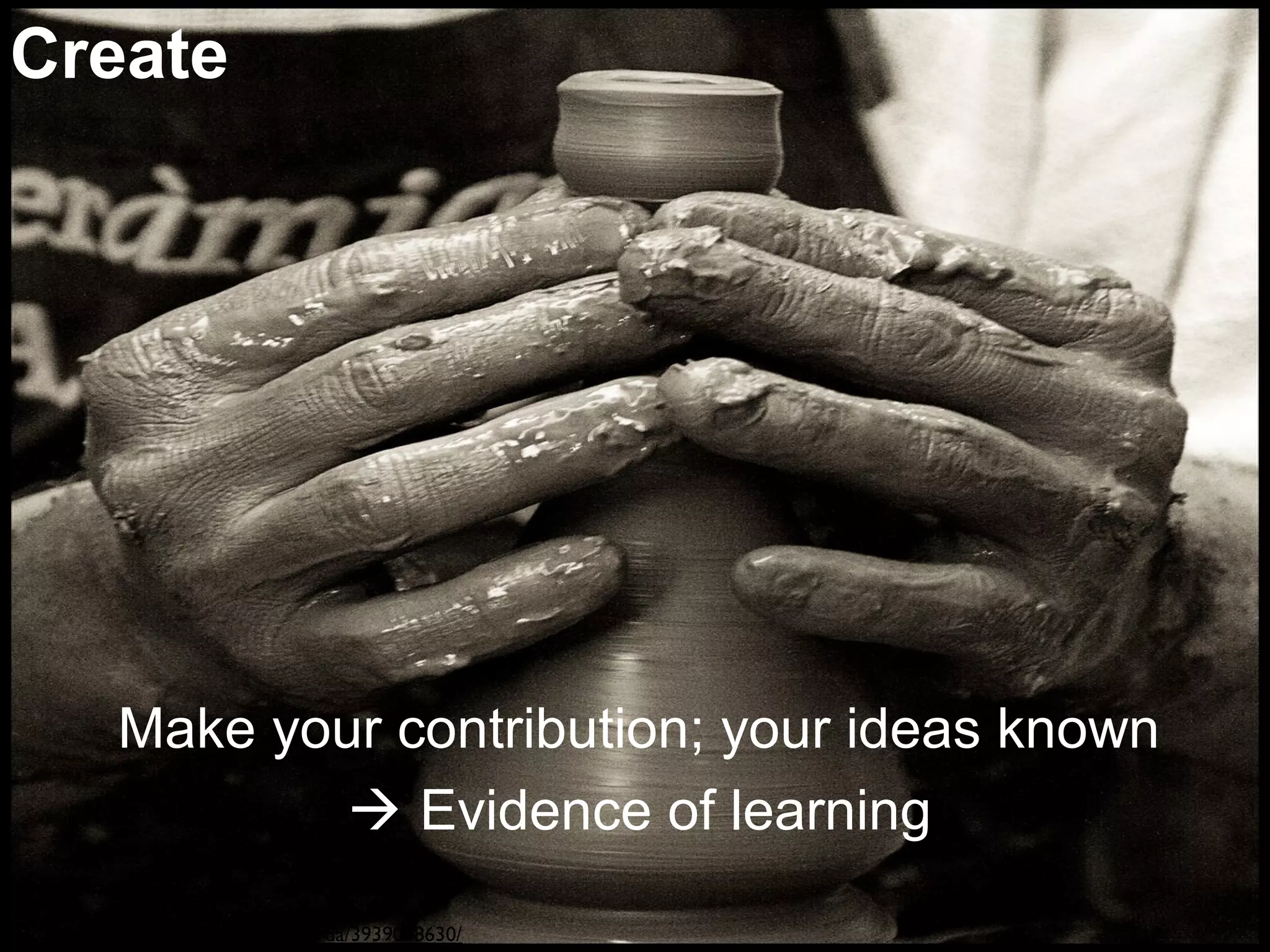
Create 
Make your contribution; your ideas known 
 Evidence of learning 
http://www.flickr.com/photos/danisarda/3939008630/
http://socialtheoryapplied.com
Evaluate and organise your resources 
Curate 
Photo by Flickr ID DailyCraft (CC BY NC ND 2.0) 
http://www.flickr.com/photos/annettepedrosian/1272886654/in/photostream/
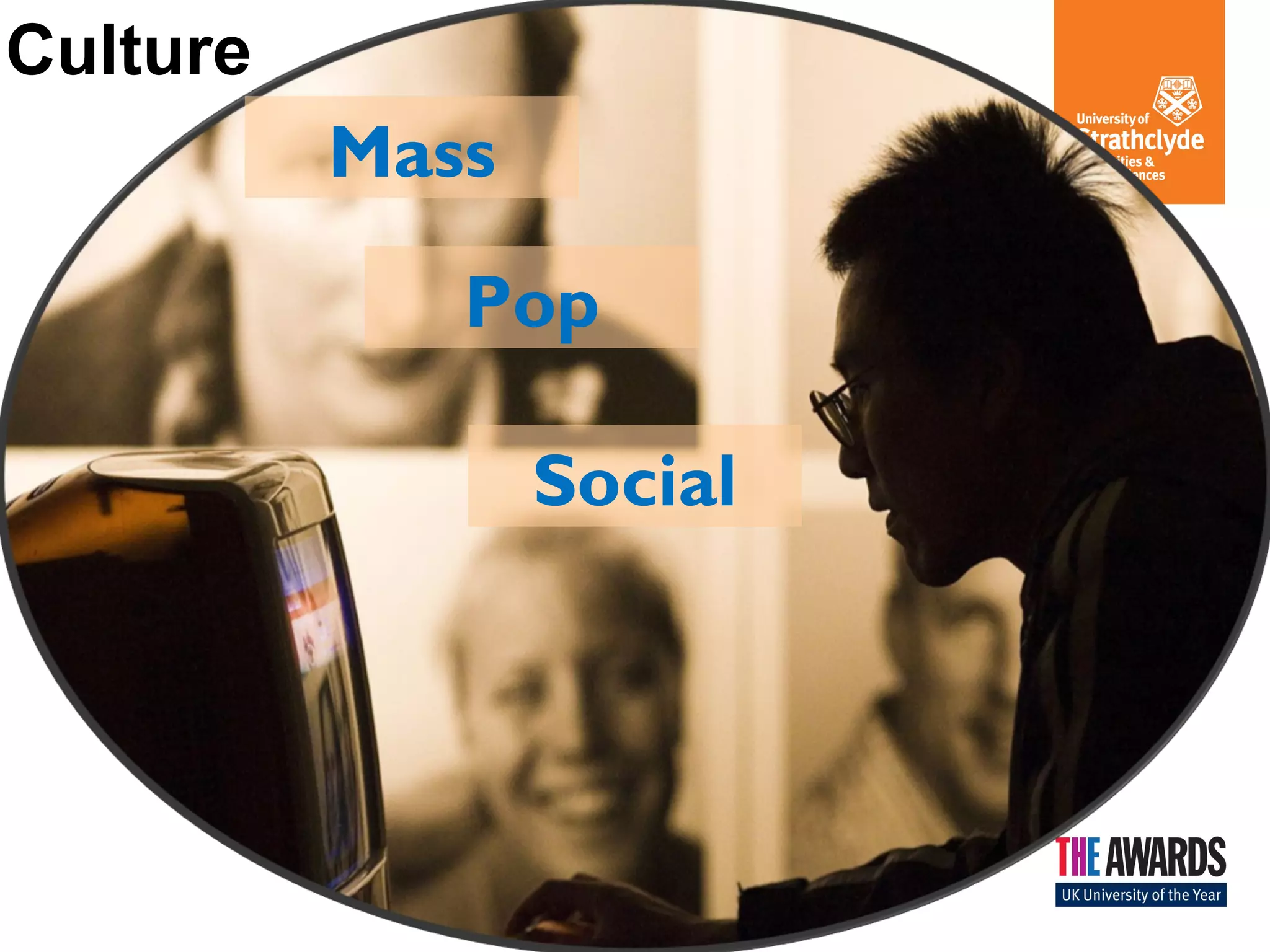
CCuullttuurree 
Mass 
Pop 
Social
BEing 
representing yourself online
Your thoughts 
http://www.flickr.com/photos/91903883@N00/2385264019
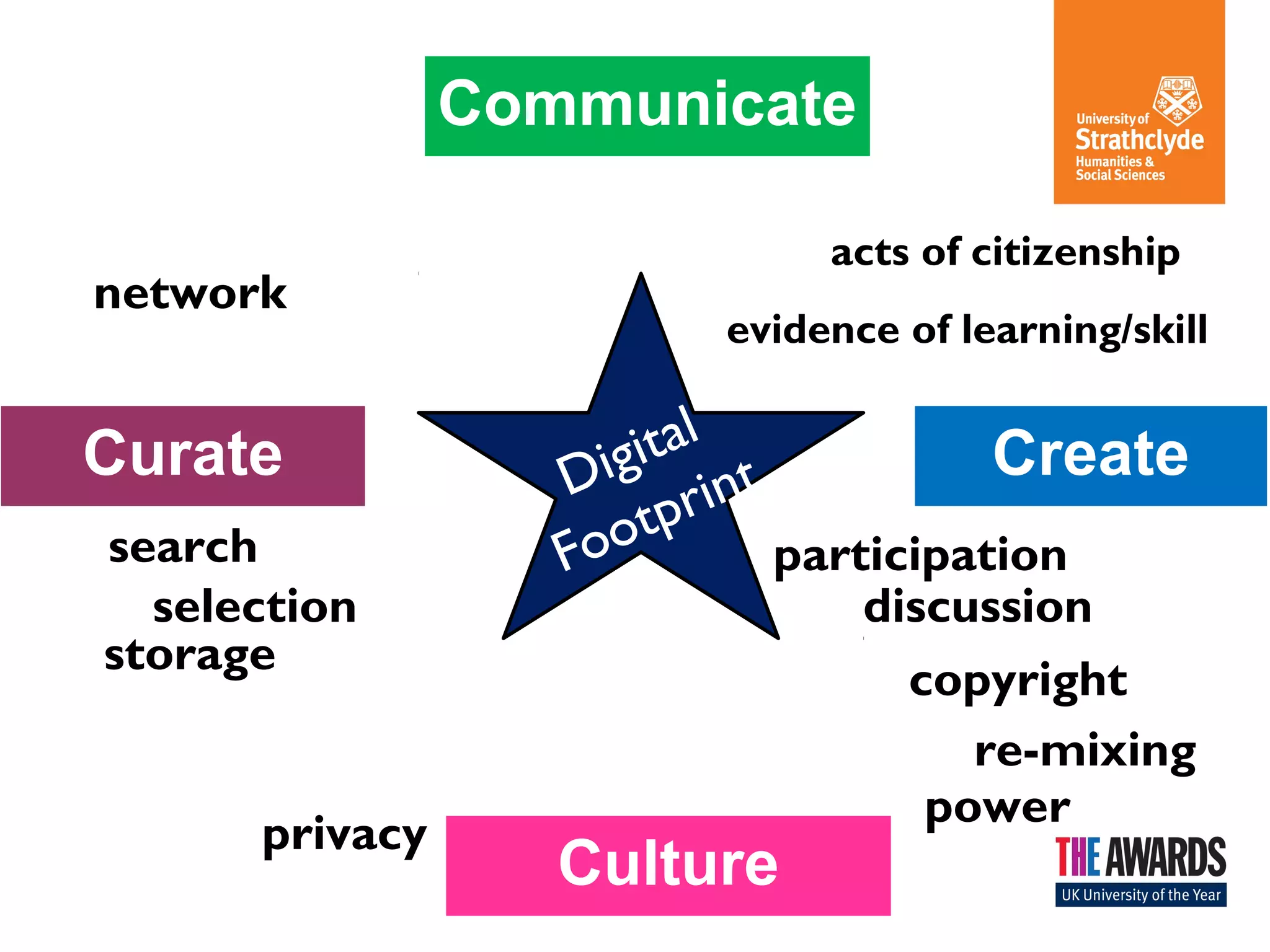
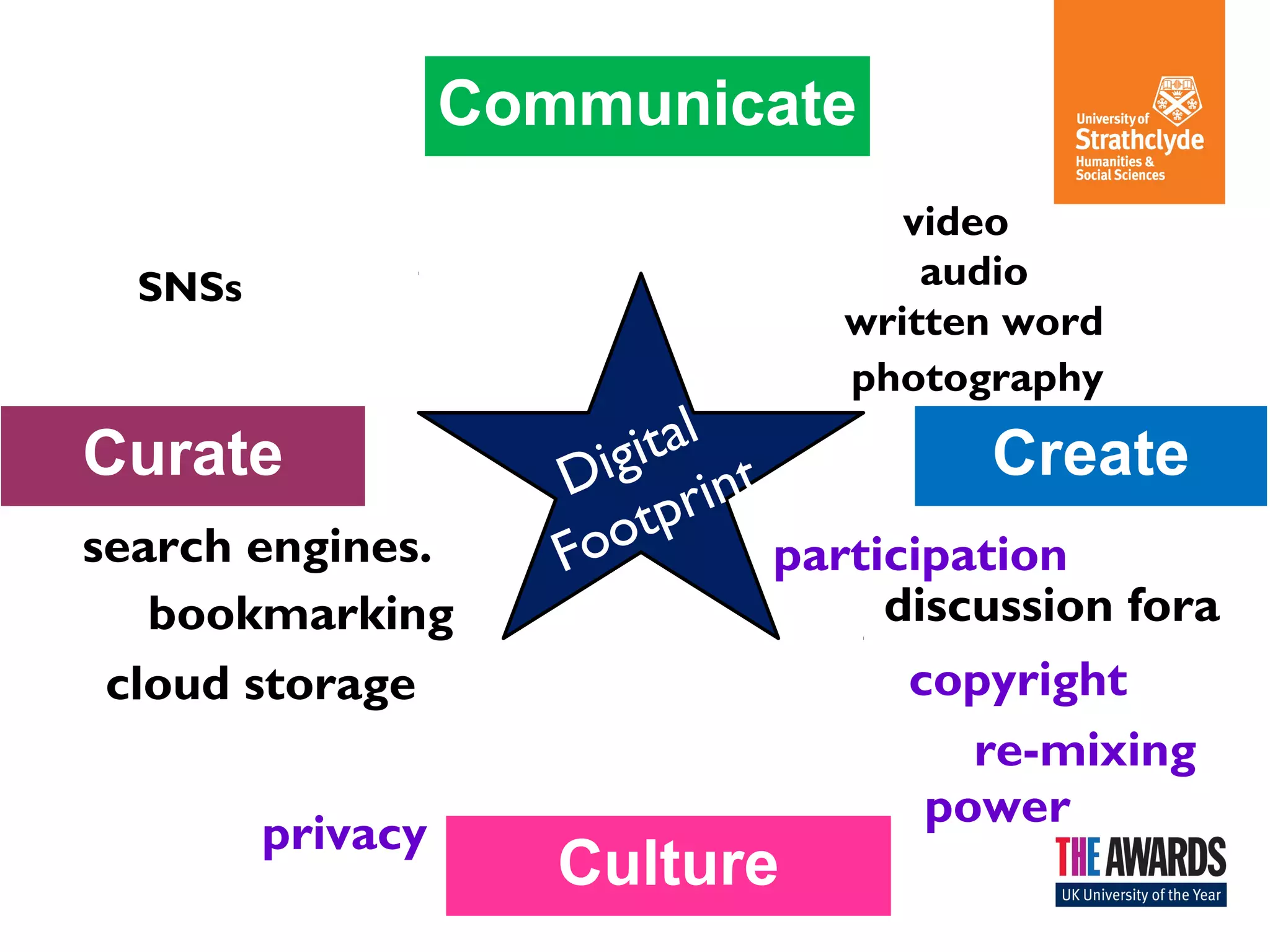
Communicate 
Digital 
Footprint 
acts of citizenship 
Curate Create 
participation 
Culture 
privacy 
copyright 
re-mixing 
selection 
power 
network 
storage 
evidence of learning/skill 
search 
discussion
Communicate 
Digital 
Footprint 
video 
Curate Create 
participation 
Culture 
privacy 
copyright 
re-mixing 
bookmarking 
power 
SNSs 
cloud storage 
audio 
search engines. 
written word 
photography 
discussion fora
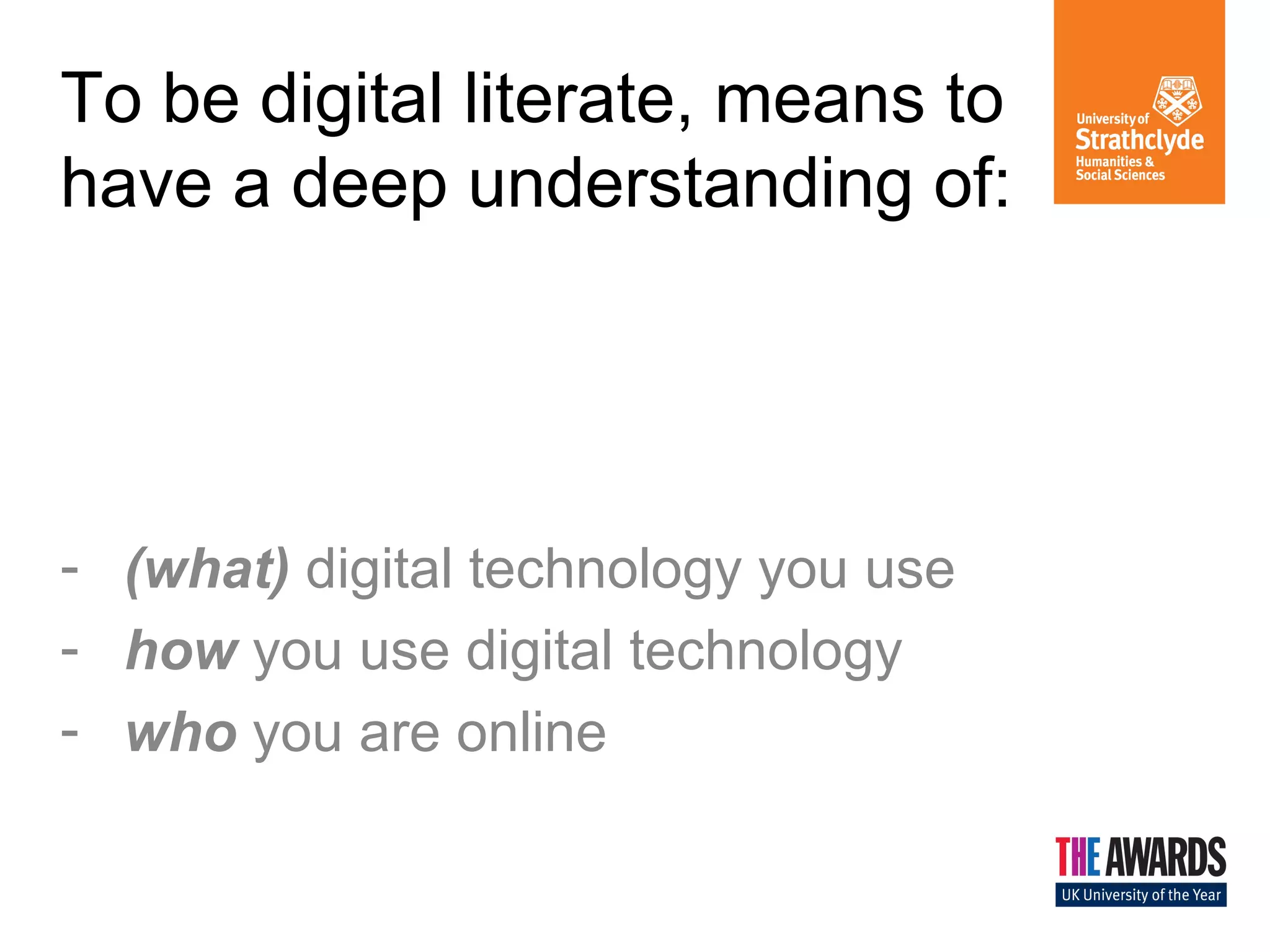
To be digital literate, means to 
have a deep understanding of: 
- (what) digital technology you use 
- how you use digital technology 
- who you are online
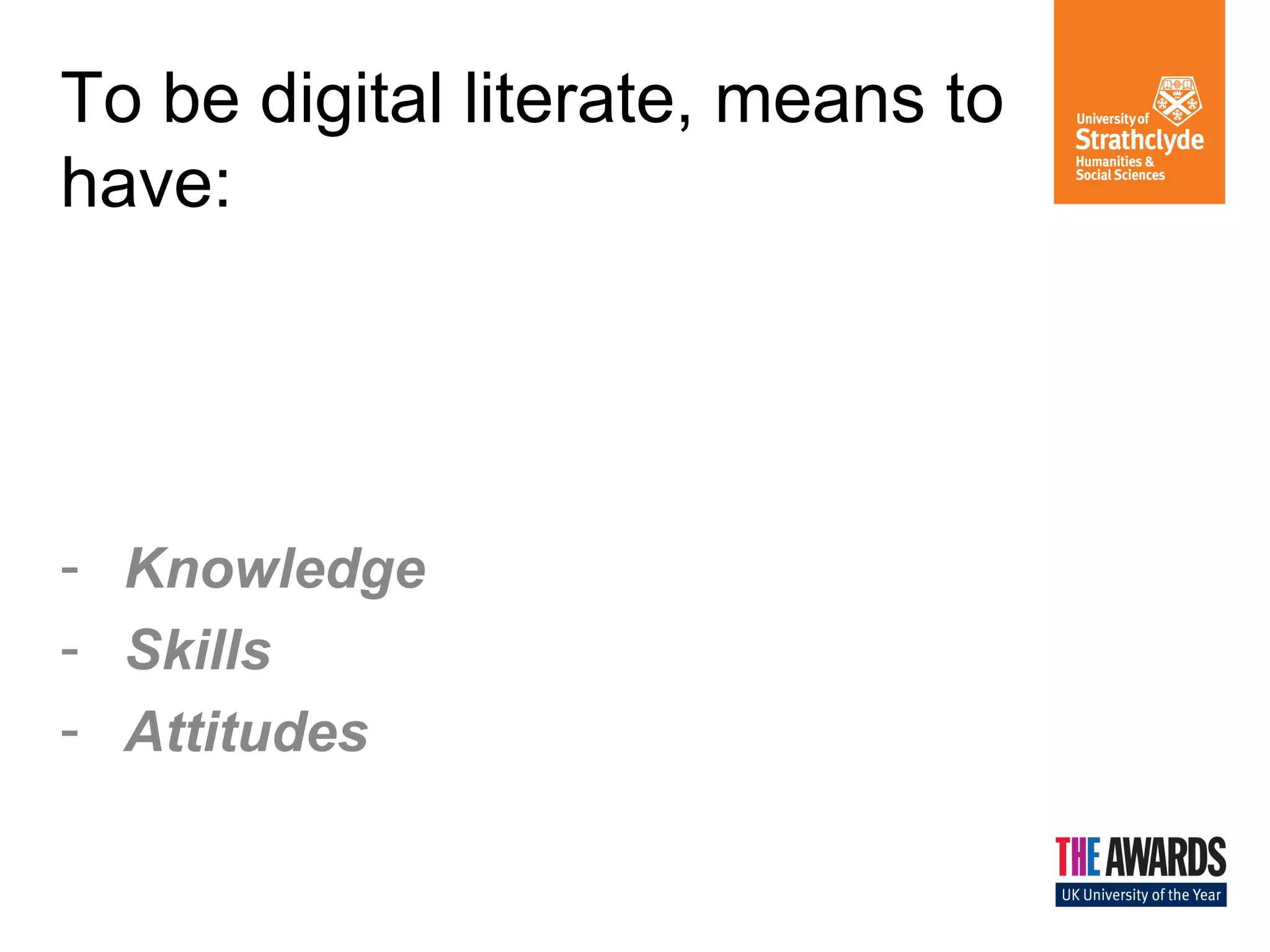
To be digital literate, means to 
have: 
- Knowledge 
- Skills 
- Attitudes
How can we integrate this in our 
(teaching) practice?
In groups choose of the 5 social 
practices 
- discuss it with the group 
- share tips / show examples 
- adjust your practice (if necessary) 
- Add main points of discussion to 
the wiki
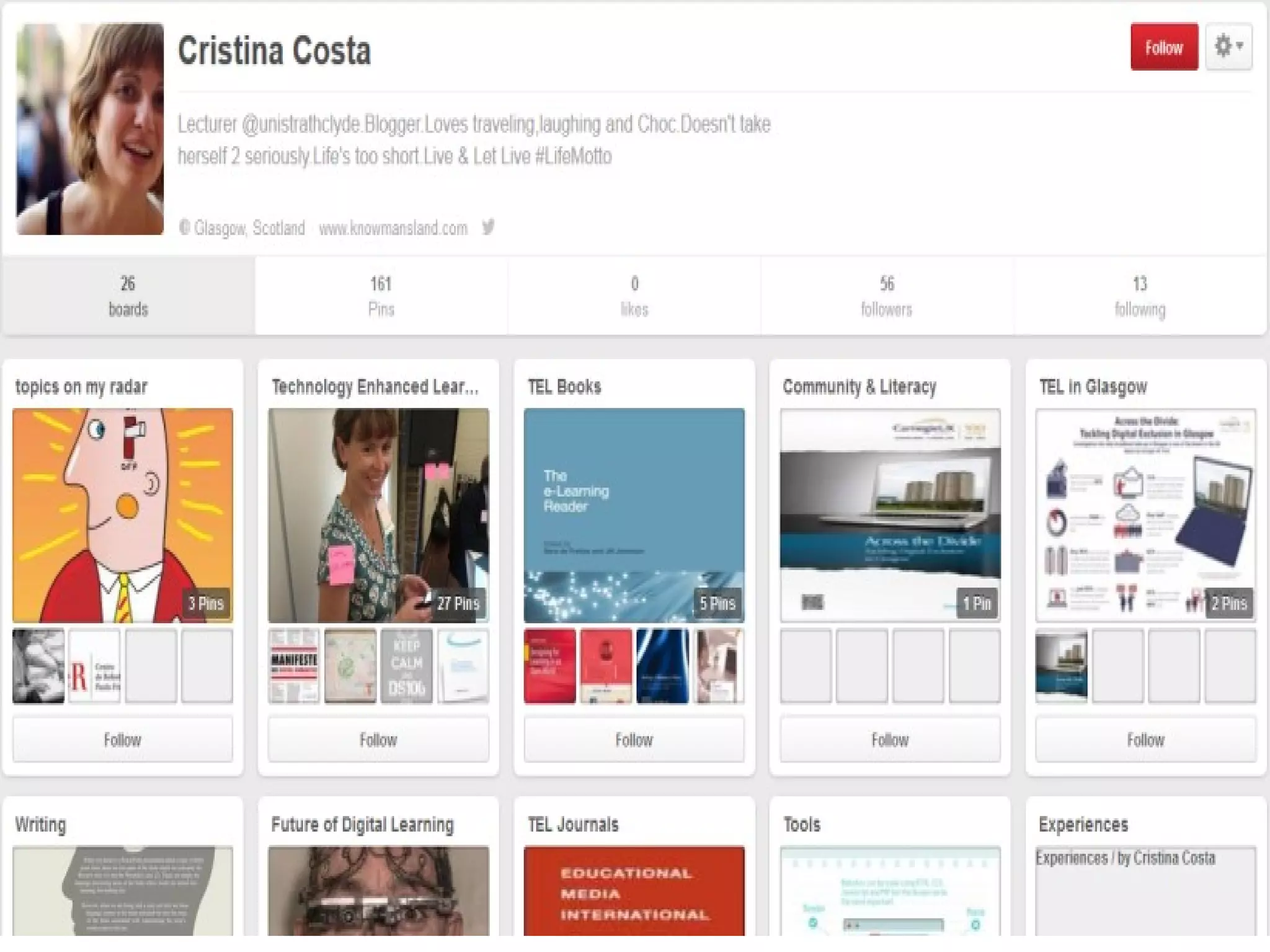
Example: 
How are you curating information 
you find online?
Digital literacies

Digital literacies

Editor's Notes

  • #11 How do we unpack this???
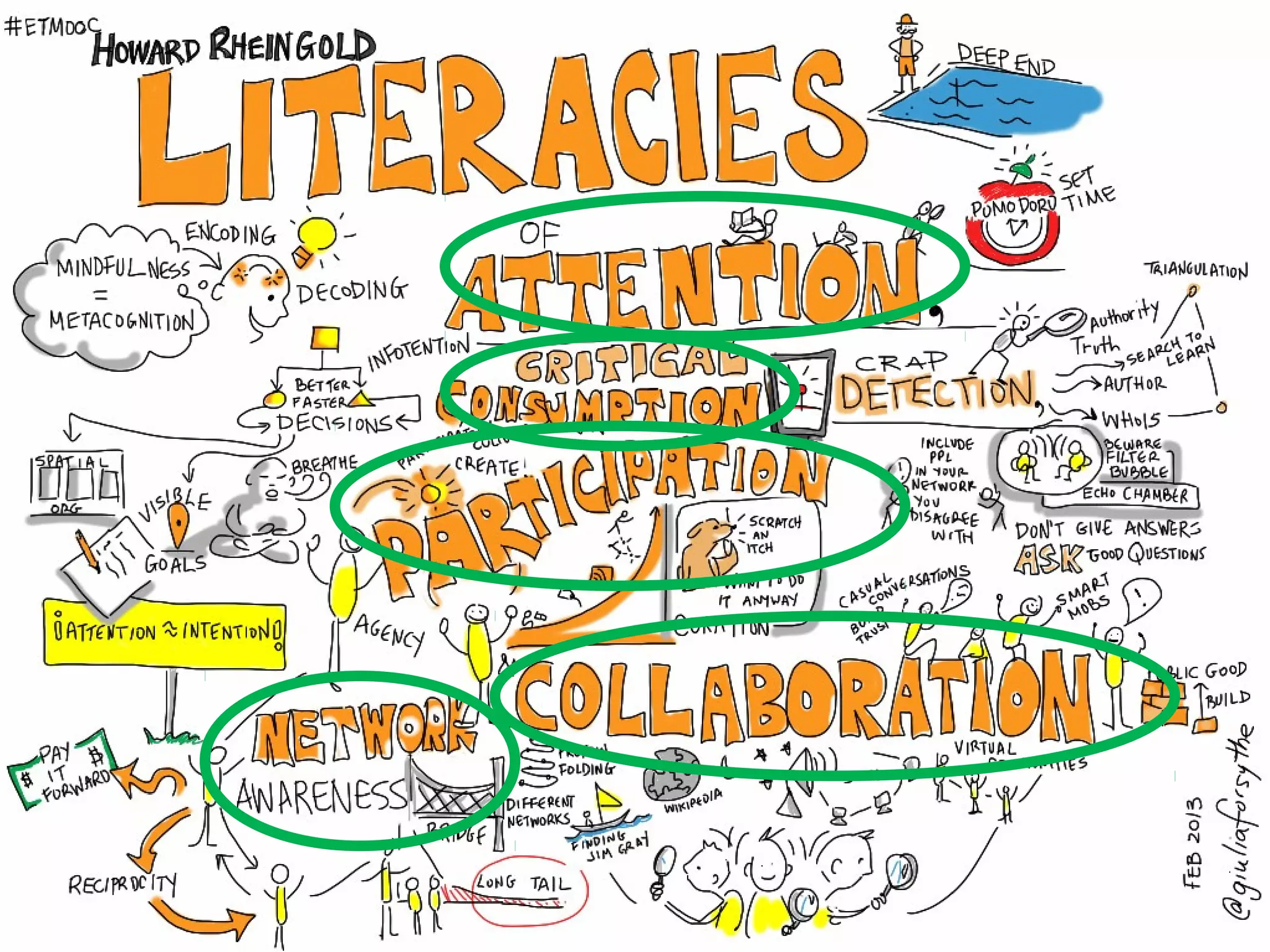
  • #16 Rheingold – 5 Web Literacies Metacognition (aware of our activity online) Attention  Awareness of attention curve and how you distribute this to diff media Participation  gives individuals a sense of belonging, of having an active and tangible input  practising active citizenship online. From consumer to producer Collaboration  working and learning with other people . Closely related to participation  leveraging collective intelligence Network Awareness  closely related to Global dimension of networks via digital technology “The technical networks amplify and extend the fundamental human capability of forming social networks” (Rheingold, 2010). Also about reputation management and networked individuality Critical Consumption  Knowing how to evaluate a source and making a educated guess about its origins and if it’s trustworthy
  • #17 In recognising the need to promote literacies for a world in transition, Hinrichsen and Coombs (2013) have developed a critical literacy framework mapping curriculum design into learner attributes. In doing so, they built on Luke and Freebody’s (2003) “Four Resource Model” that encapsulates a multi-literate requirement for reading through the use of the following roles: (1) Code breaker, (2) Meaning maker, (3) Text user and (4) Text critic by “adding a fifth resource, Persona, to accommodate the social and identity relations of the contemporary digital environment” (ibid, n/d) This resulted in the “Five Resource Framework”