Teaching and Learning 
With social media 
http://www.flickr.com/photos/slightlynorth/3470300872/in/photostream/ 
The need for a new 
habitus
http://www.flickr.com/photos/59217476@N00/7196460482
http://www.flickr.com/photos/funksoup/403990660/
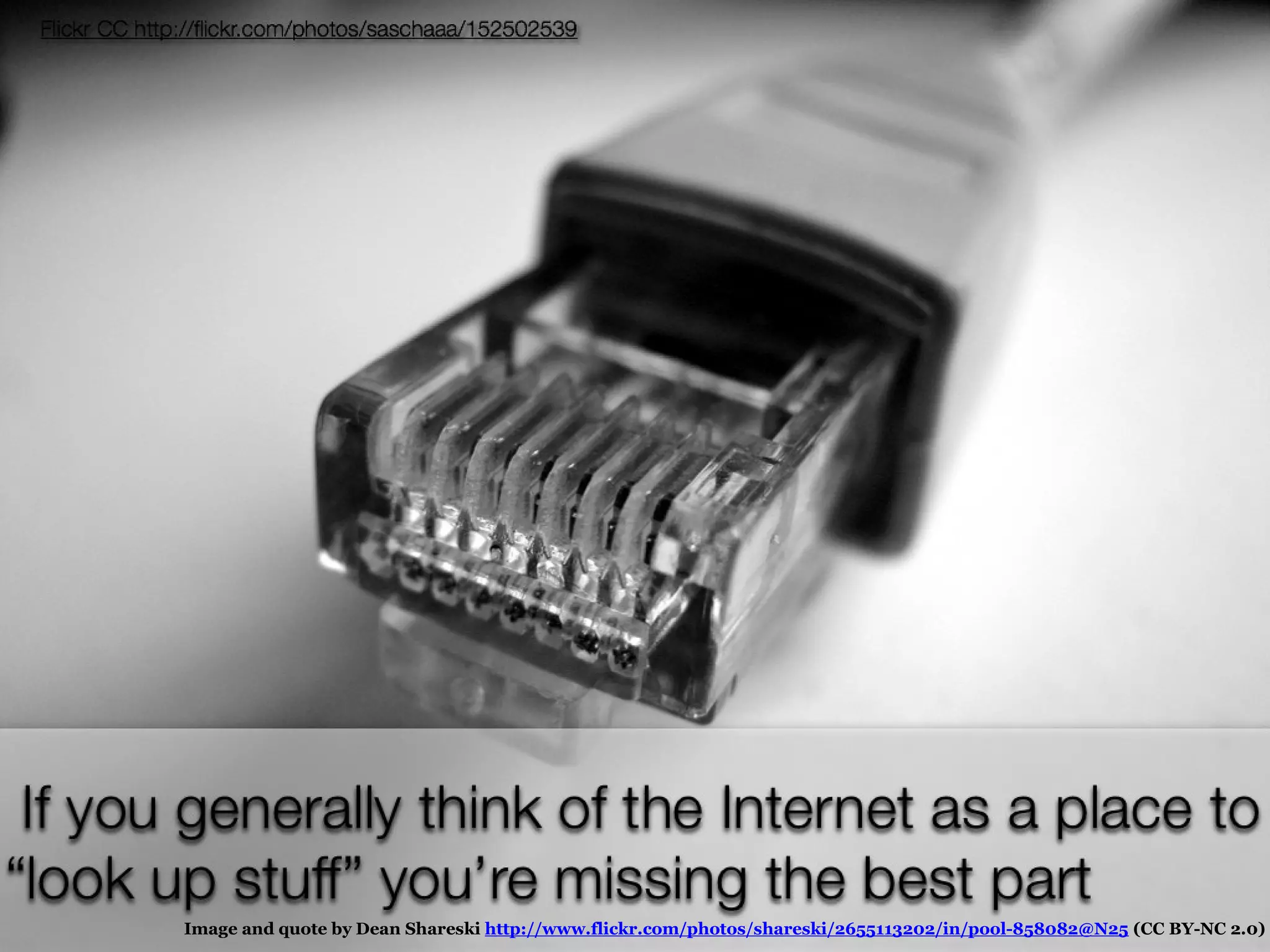
Image and quote by Dean Shareski http://www.flickr.com/photos/shareski/2655113202/in/pool-858082@N25 (CC BY-NC 2.0)
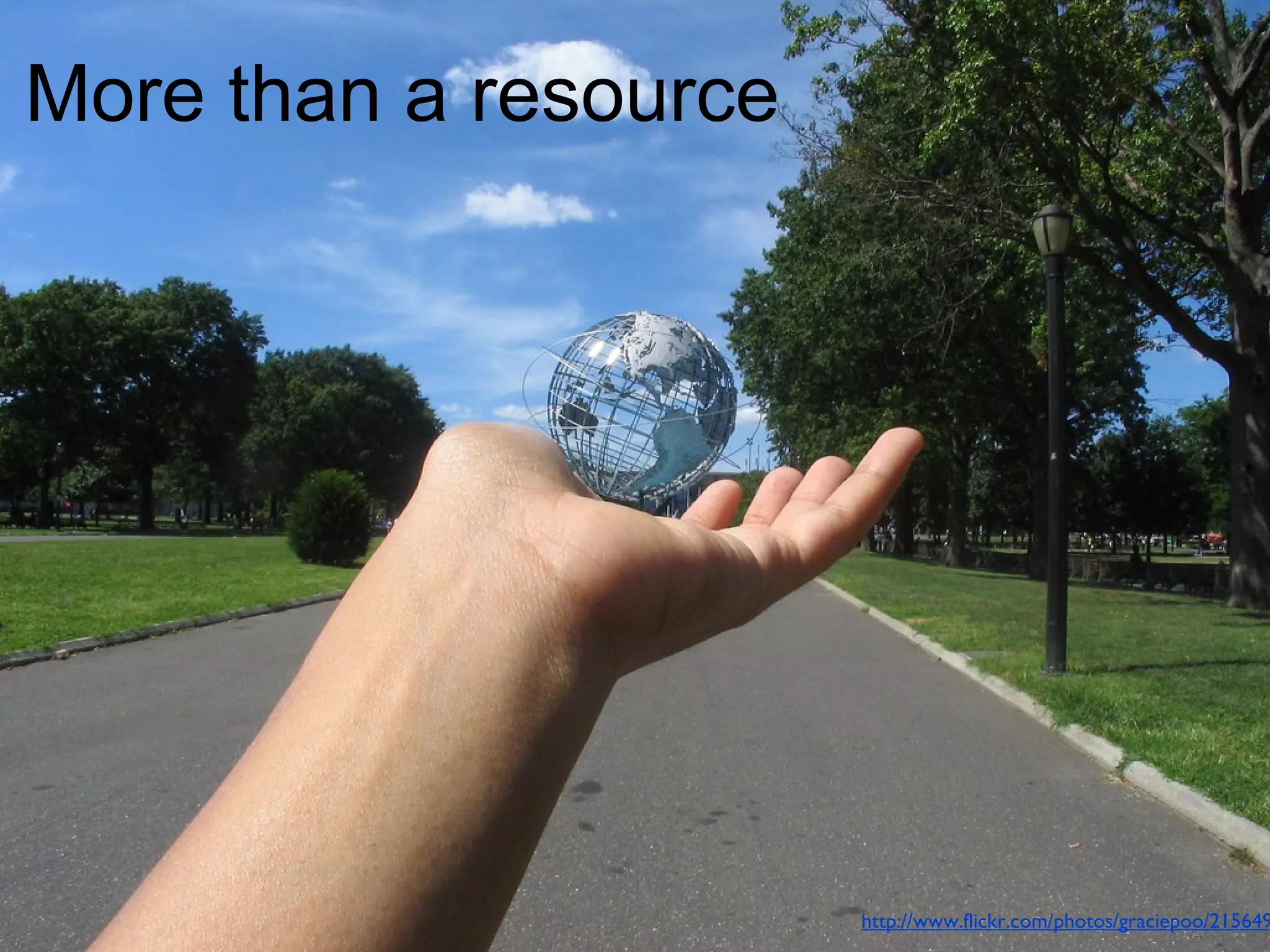
More than a resource 
http://www.flickr.com/photos/graciepoo/215649963/
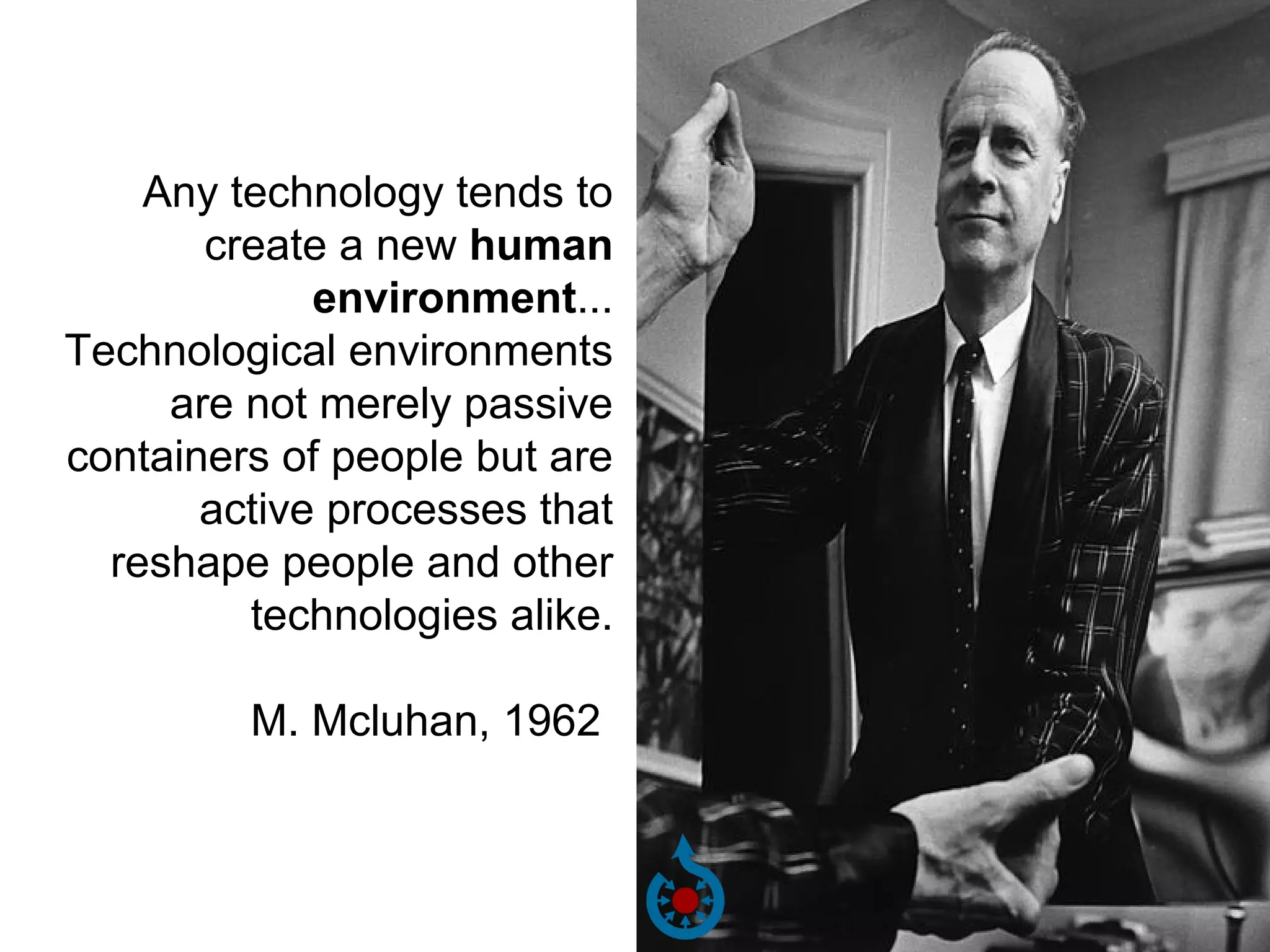
Any technology tends to 
create a new human 
environment... 
Technological environments 
are not merely passive 
containers of people but are 
active processes that 
reshape people and other 
technologies alike. 
M. Mcluhan, 1962
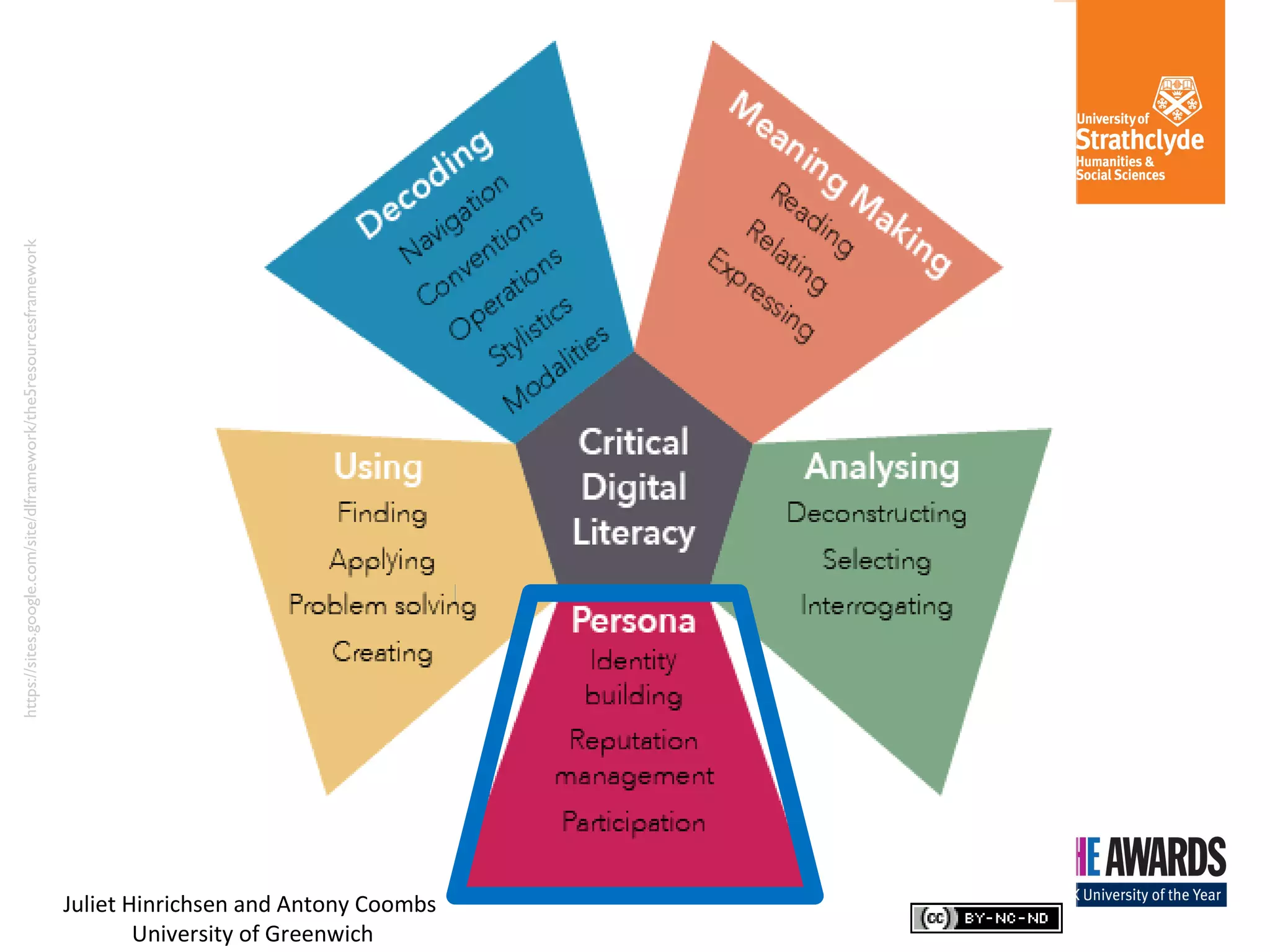
New literacies/fluencies
Digital literacies defines those who exhibit a 
critical understanding and capability for 
living, learning, and working in the digital 
society. JISC, 2013
https://sites.google.com/site/dlframework/the5resourcesframework 
Juliet Hinrichsen and Antony Coombs 
University of Greenwich
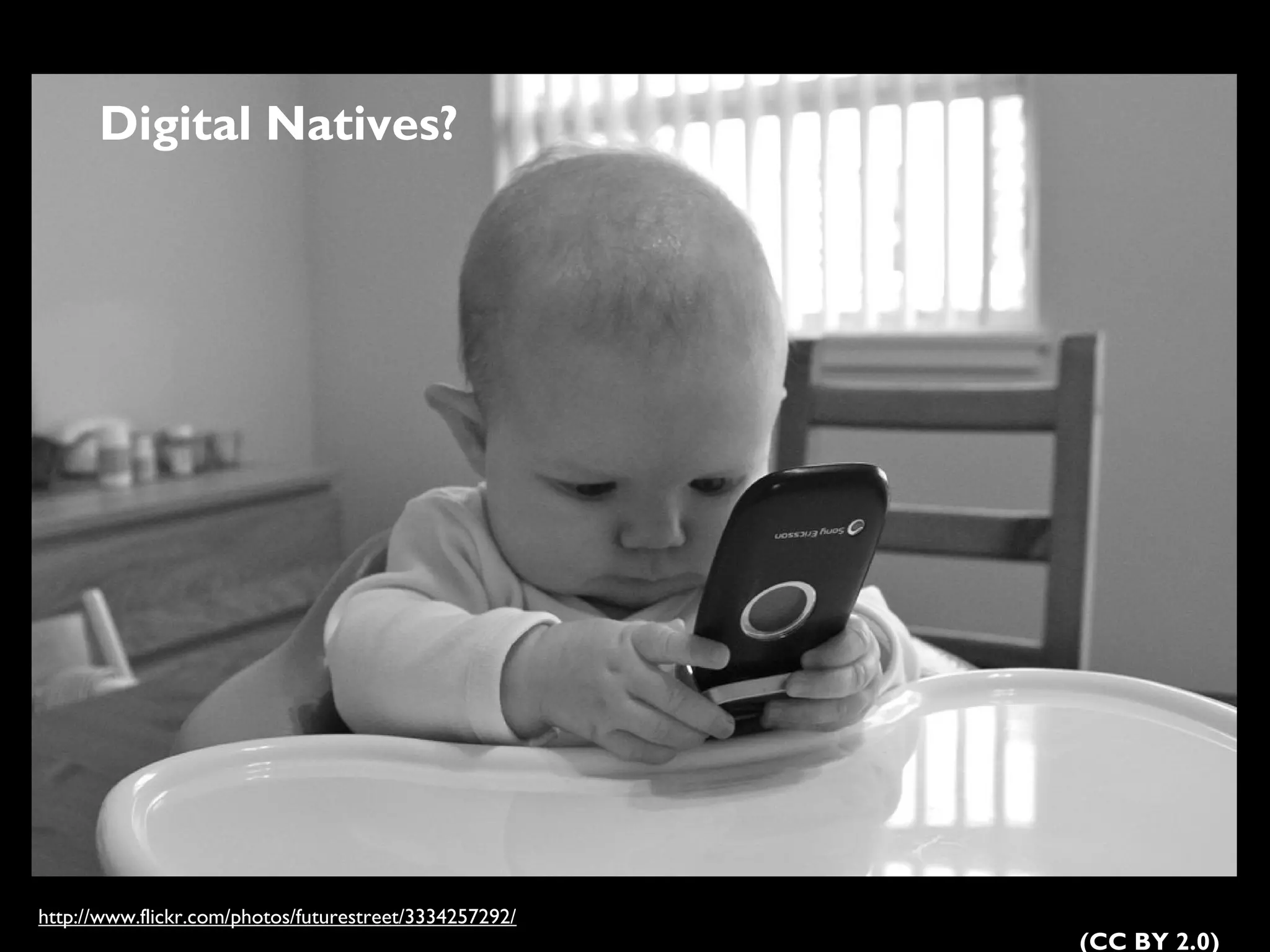
http://www.flickr.com/photos/futurestreet/3334257292/ 
(CC BY 2.0) 
Digital Natives?
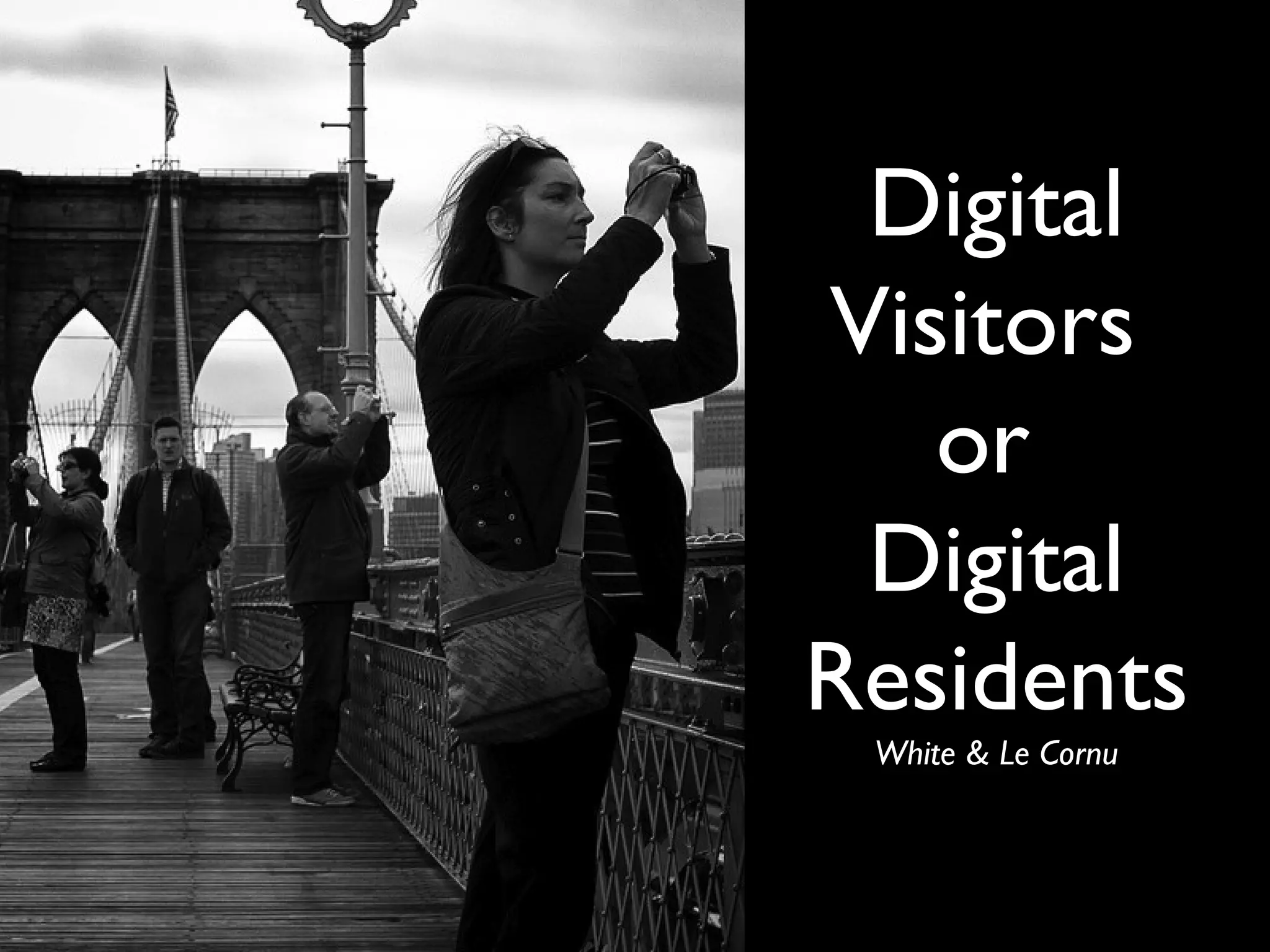
Digital 
Visitors 
or 
Digital 
Residents 
White & Le Cornu
“Learners do not appear ‘to see beyond’ 
the immediately obvious functionality of 
the technology and there is little evidence 
of transfer” 
Clark et al, 2008, p.68
“To possess the machines, 
[they] only need economic 
capital; to appropriate them 
and use them in accordance 
with their specific purpose 
[they] must have access to 
embodied cultural capital, 
either in person or by proxy” 
Pierre Bourdieu 
1986
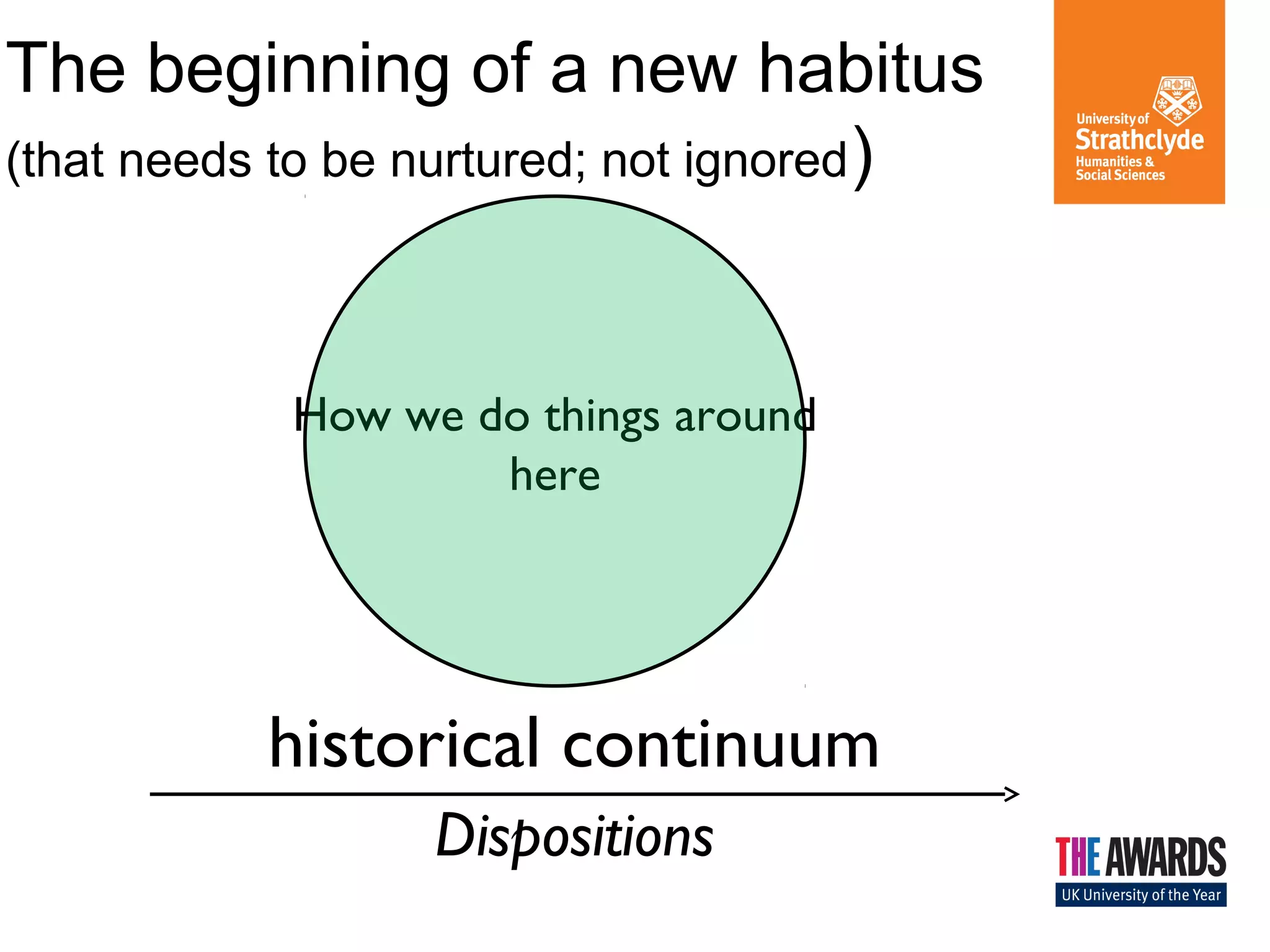
The beginning of a new habitus 
(that needs to be nurtured; not ignored) 
How we do things around 
here 
historical continuum 
Dispositions
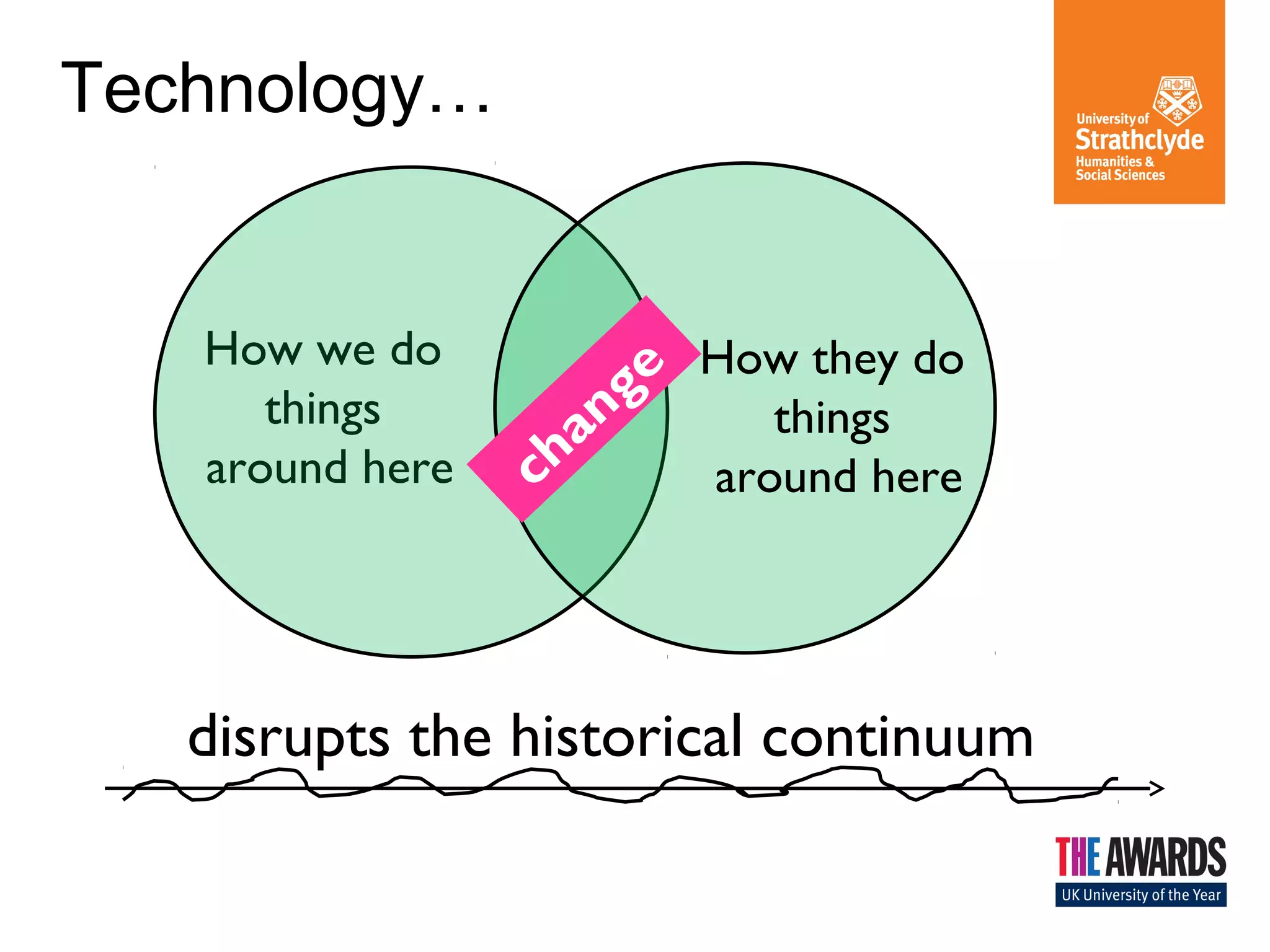
Technology… 
How we do 
things 
around here 
How they do 
things 
around here 
change 
disrupts the historical continuum
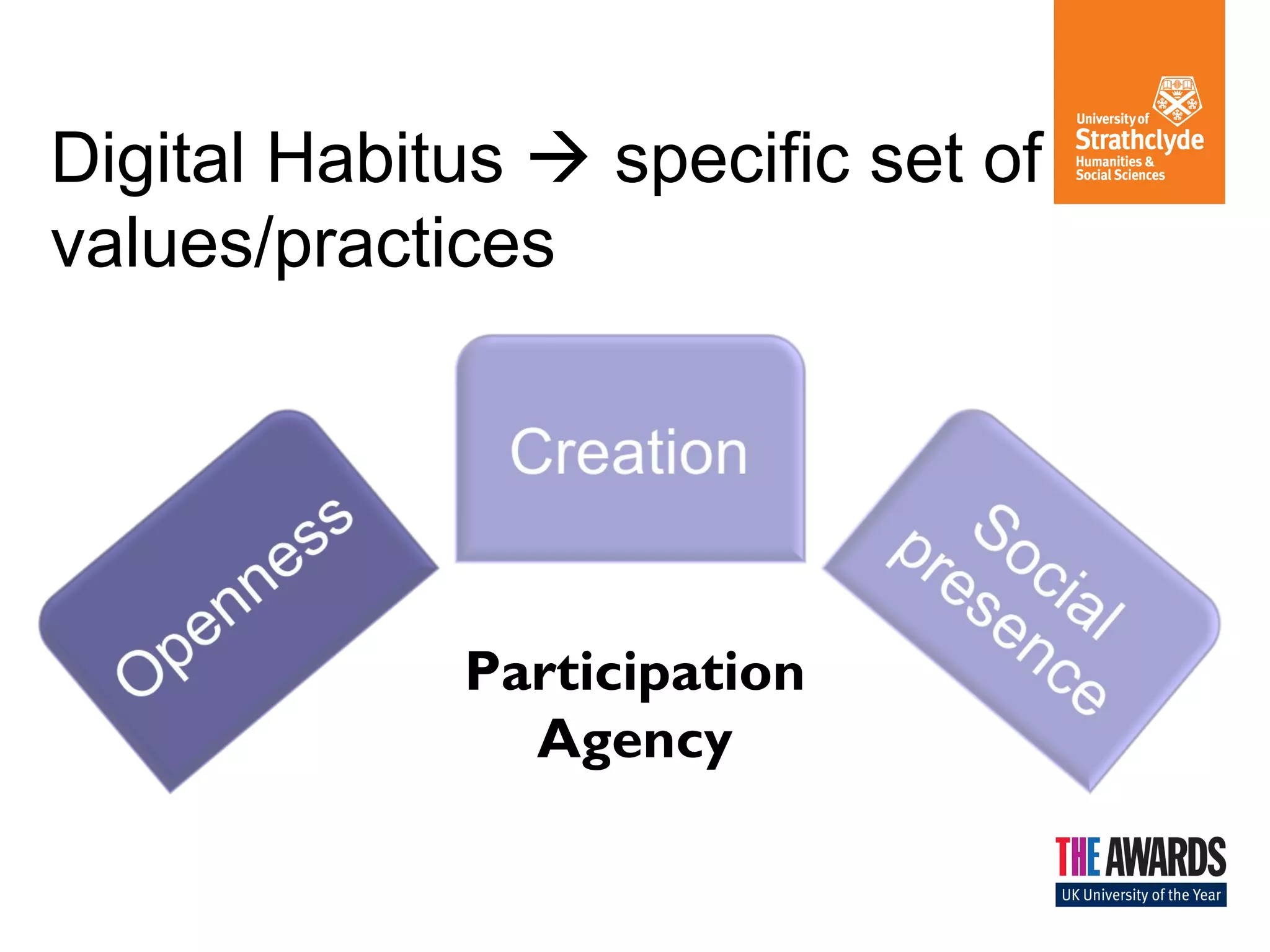
Digital Habitus  specific set of 
values/practices 
Participation 
Agency
Social Media is a Mindset!

Teaching and Learning with Social Media: The need for a new habitus

Editor's Notes

  • #2 that encourage
  • #3 Social media has created a new world that –in one way or another - affects us all
  • #4 And some people take it very seriously
  • #5 To the extent that affects some of us more than other – but in general we are all affected by it – it affects the way we work, shop, socialise, live And for that matter learn (but that is more outside the educational walls than inside And that has to do with the traditions and the habits – the history associated with the profession of both being a teacher and a learner !
  • #6 from the school walls into the world
  • #8 human interaction
  • #10 In recognising the need to promote literacies for a world in transition, Hinrichsen and Coombs (2013) have developed a critical literacy framework mapping curriculum design into learner attributes. In doing so, they built on Luke and Freebody’s (2003) “Four Resource Model” that encapsulates a multi-literate requirement for reading through the use of the following roles: (1) Code breaker, (2) Meaning maker, (3) Text user and (4) Text critic by “adding a fifth resource, Persona, to accommodate the social and identity relations of the contemporary digital environment” (ibid, n/d) This resulted in the “Five Resource Framework”