Designing for learning
‘in the digital world’
Building the Curriculum for Excellence
http://www.flickr.com/photos/stuckincustoms/6495437857
Curriculum for Excellence (CfE)
…challenges us to think differently
about the curriculum and it permits to
plan and act in new ways
A Curriculum for Excellence: Building the Curriculum 1 (p1)
Principles of
Curriculum
Design
http://www.flickr.com/photos/91903883@N00/2385264019
Challenge and Enjoyment
Personalisation and Choice
Progression and Depth
http://www.flickr.com/photos/thomashawk/148632756/
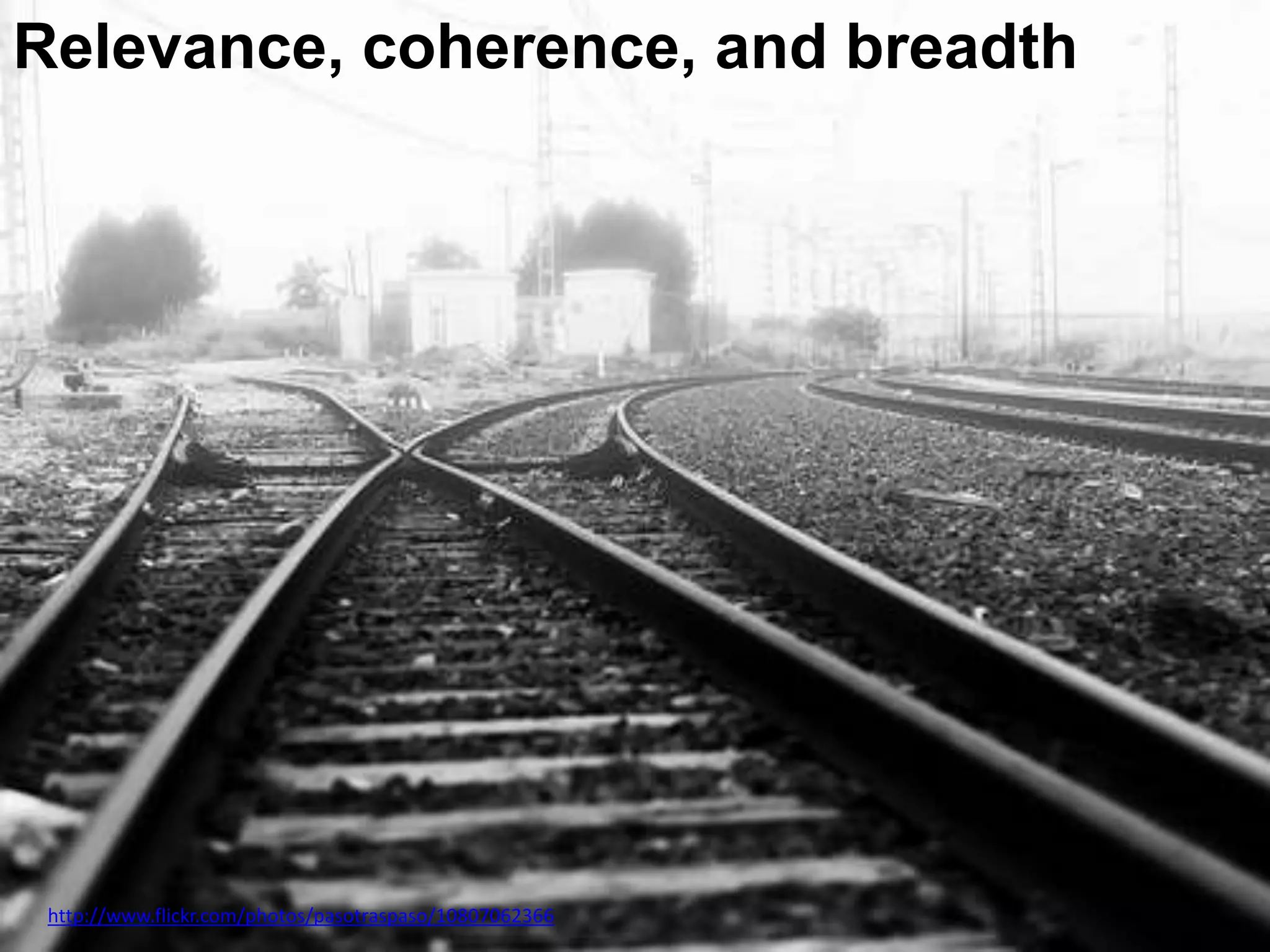
Relevance, coherence, and breadth
http://www.flickr.com/photos/pasotraspaso/10807062366
Learning should be made available in a
range of ways including interdisciplinary
learning and a range of opportunities
which ensure a broad approach, enabling,
for example, a coherent understanding of
environmental issues
Building the Curriculum 3. (p5)
How can technology help?
http://www.flickr.com/photos/dexxus/5003010775
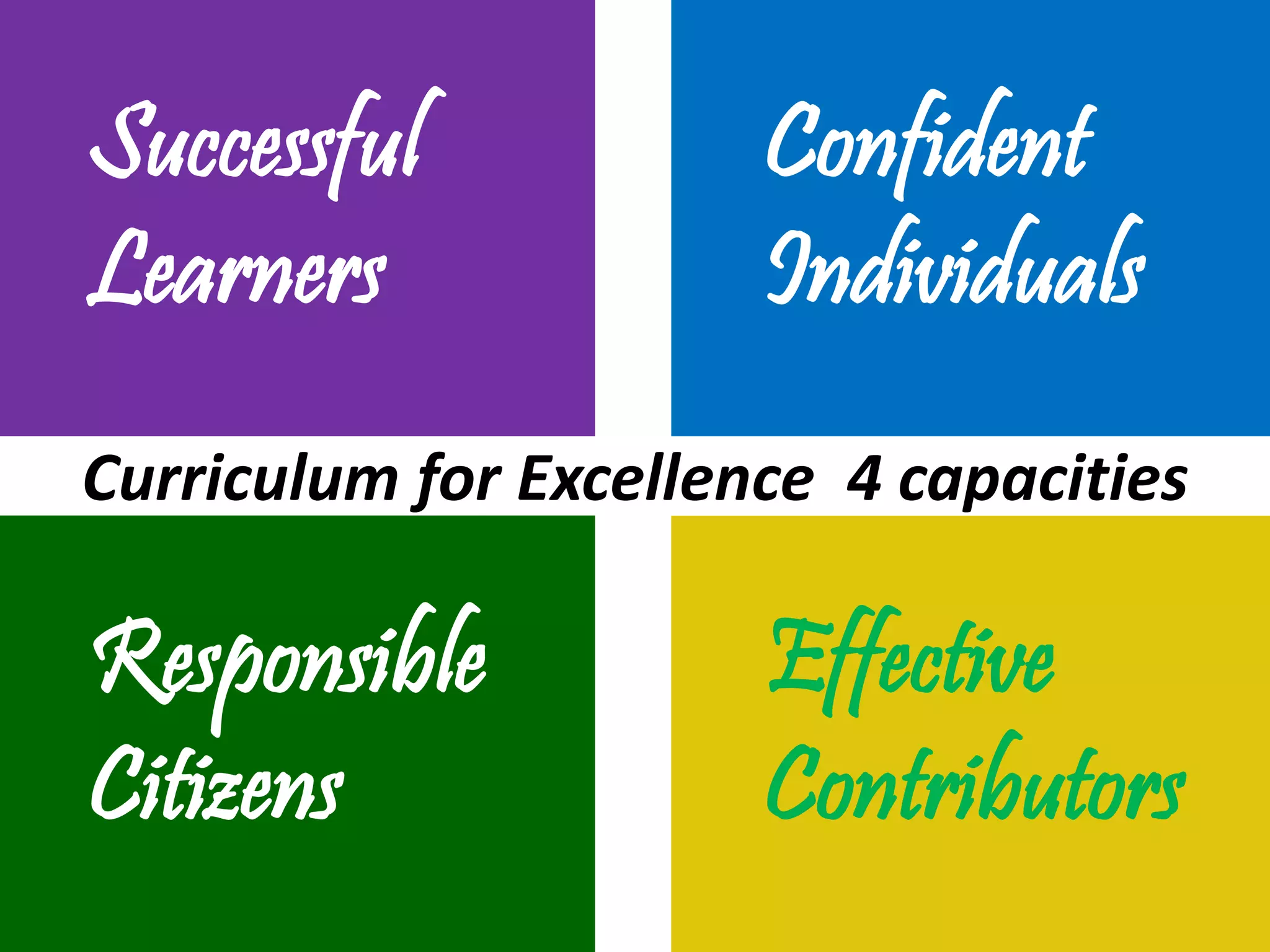
Successful
Learners
Confident
Individuals
Responsible
Citizens
Effective
Contributors
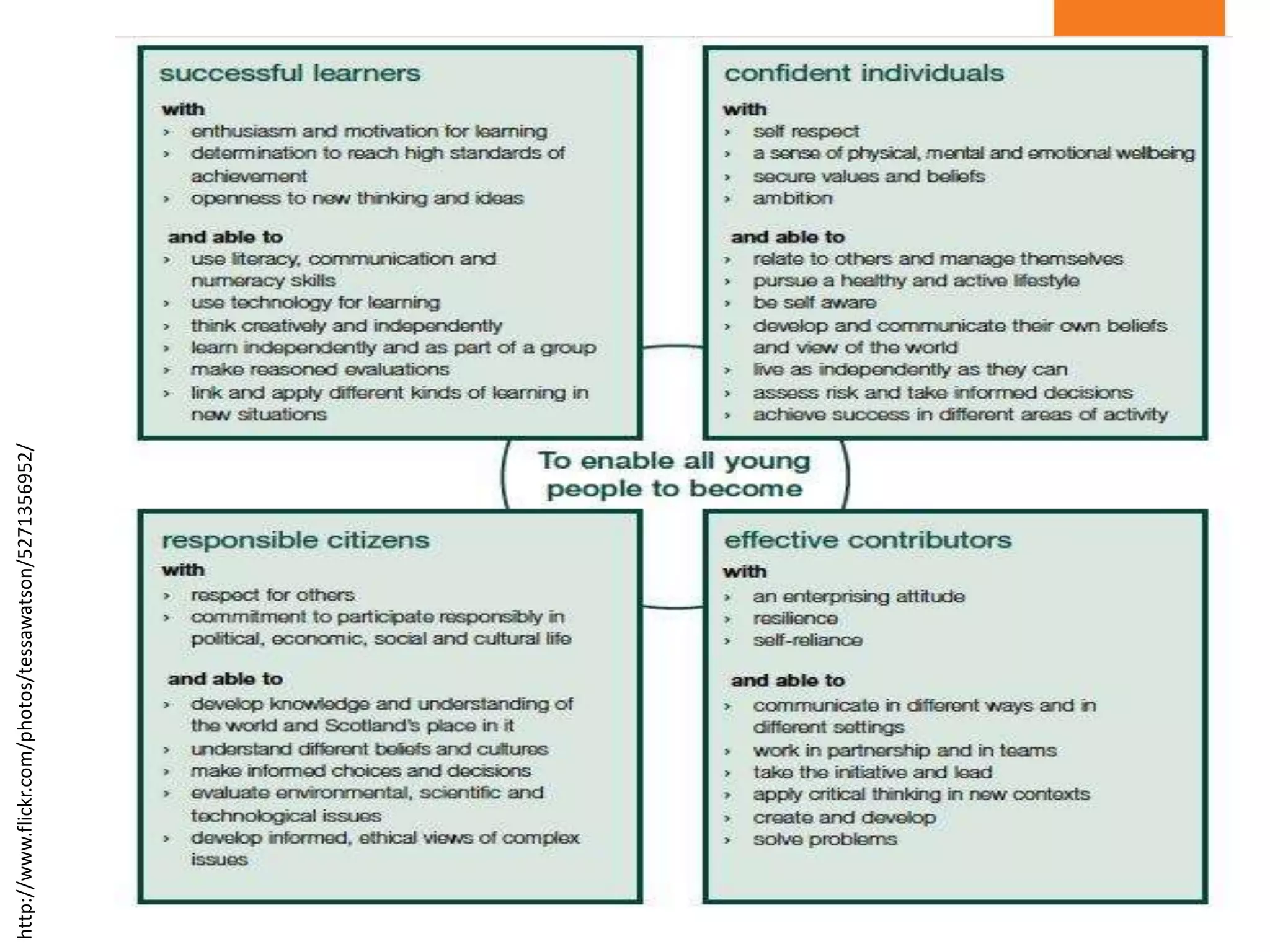
Curriculum for Excellence 4 capacities
http://www.flickr.com/photos/tessawatson/5271356952/
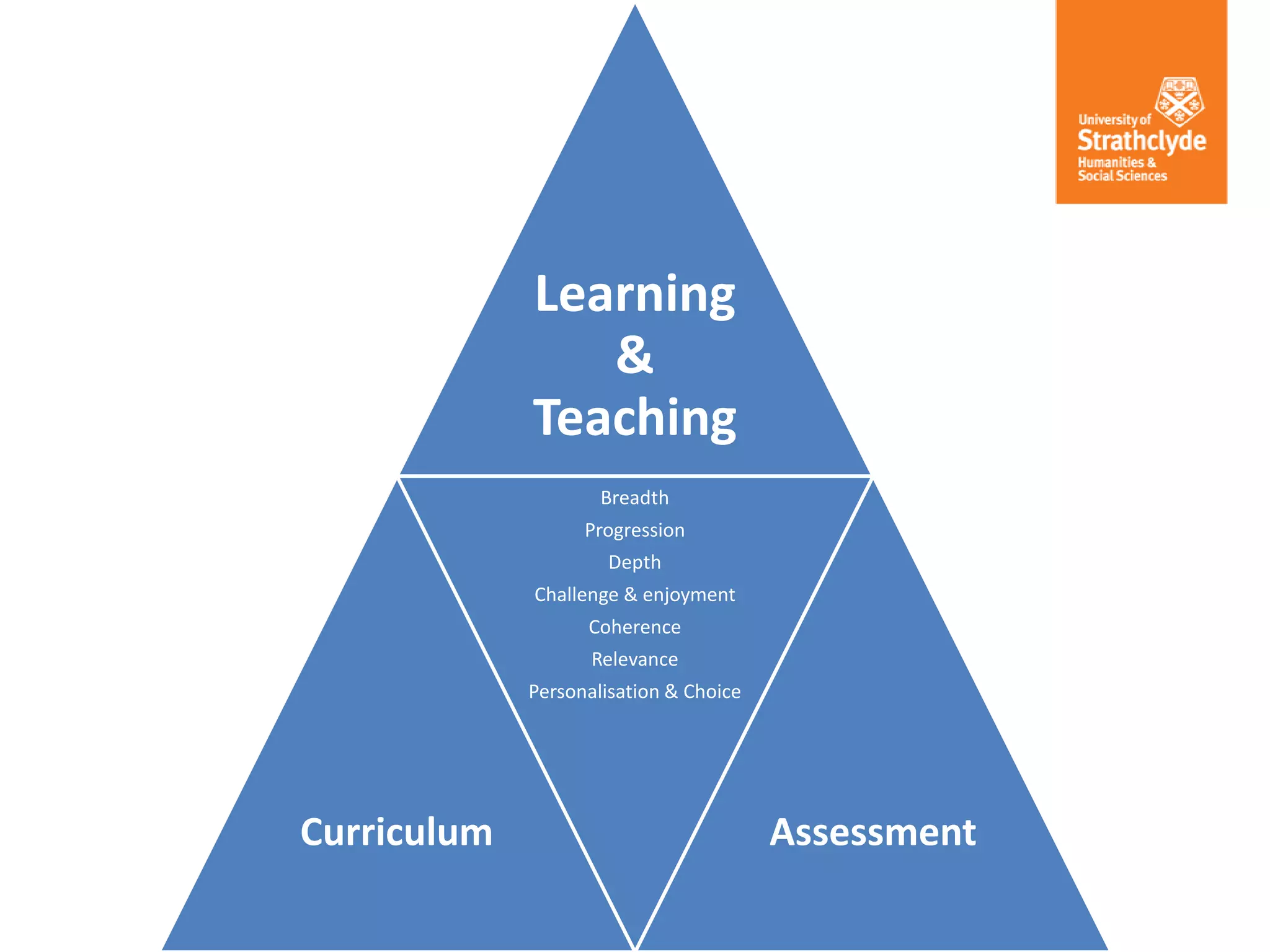
Learning
&
Teaching
Curriculum
Breadth
Progression
Depth
Challenge & enjoyment
Coherence
Relevance
Personalisation & Choice
Assessment
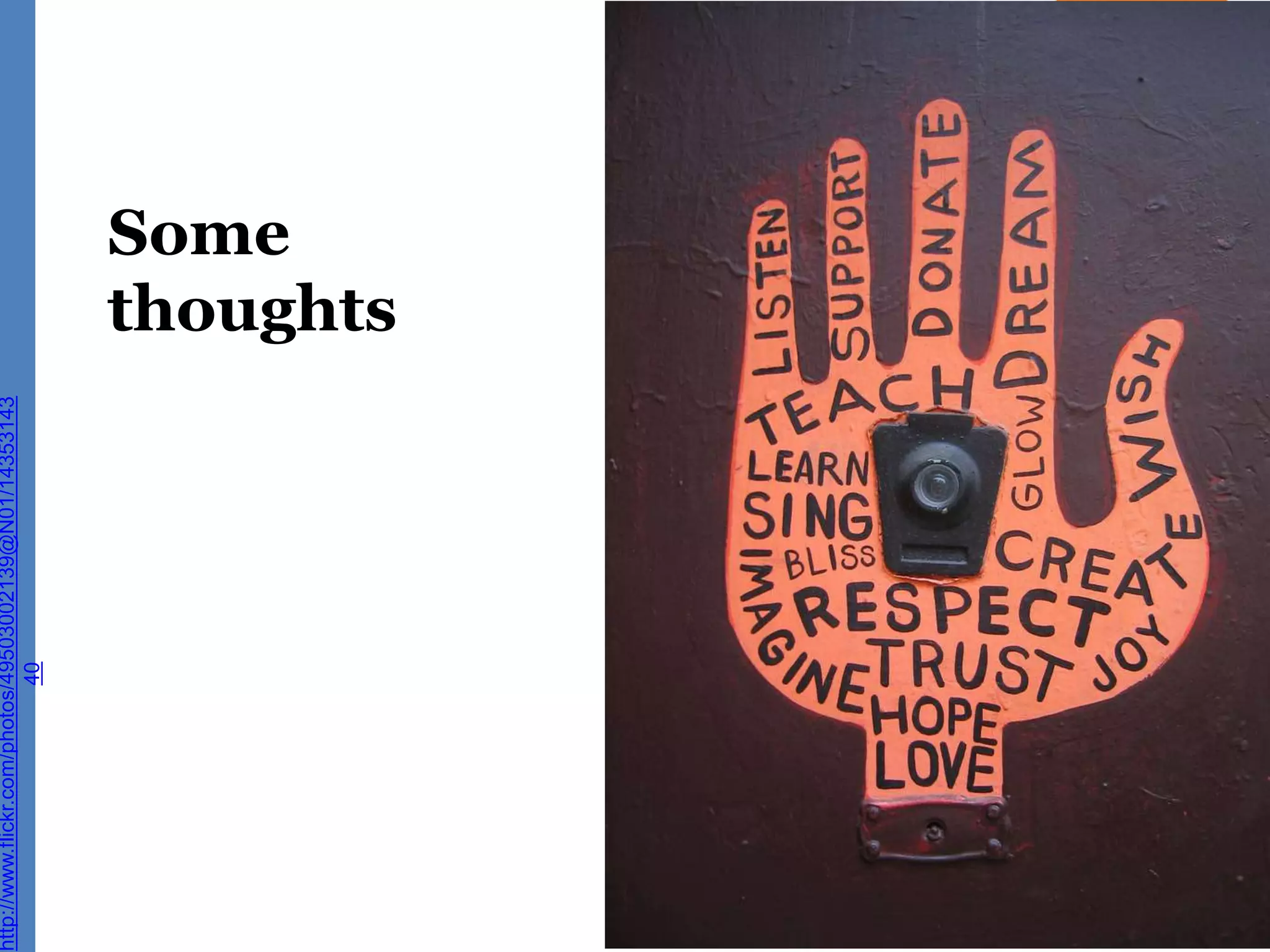
Some
thoughts
http://www.flickr.com/photos/49503002139@N01/14353143
40
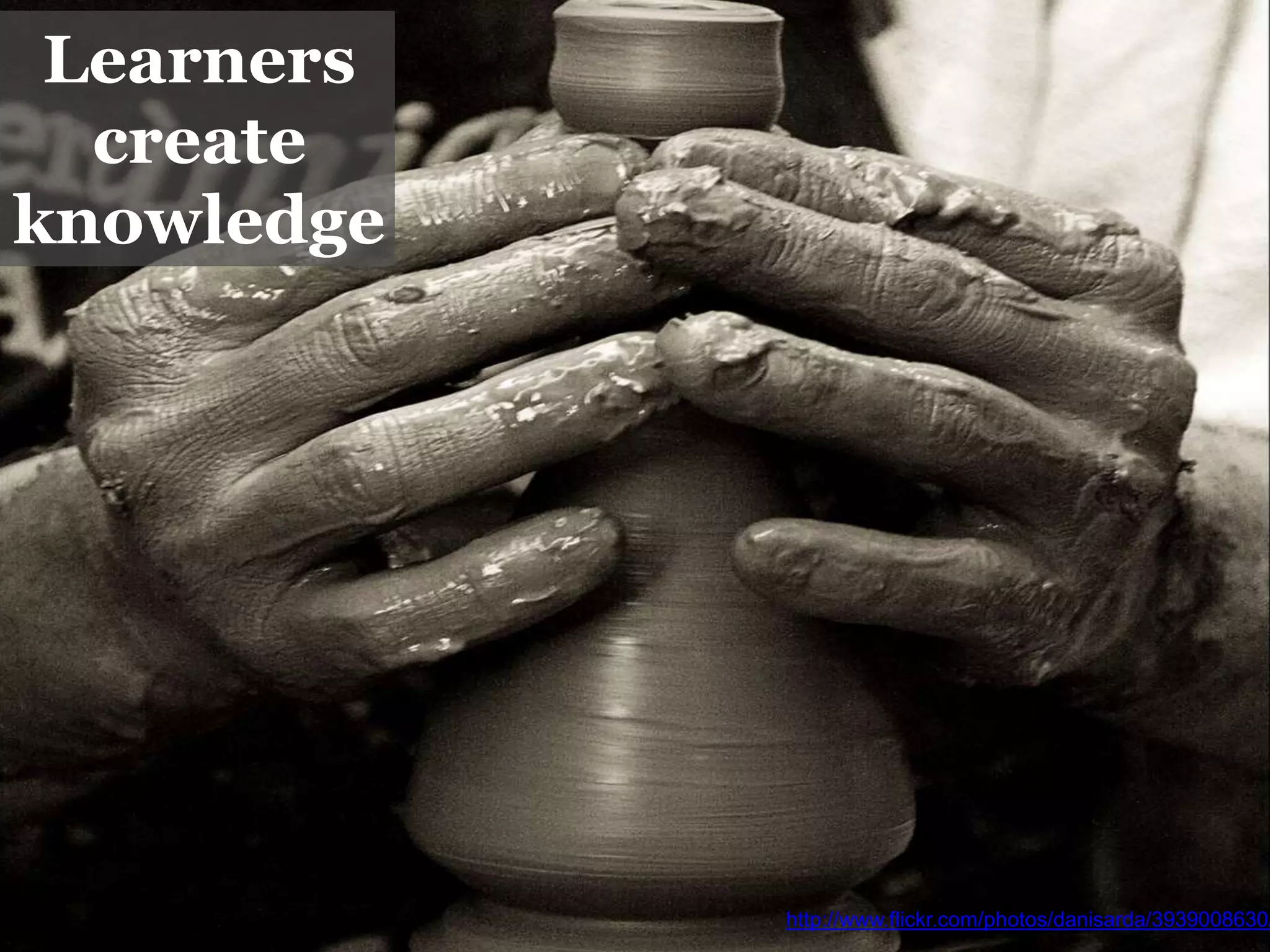
Learners
create
knowledge
http://www.flickr.com/photos/danisarda/3939008630/
14
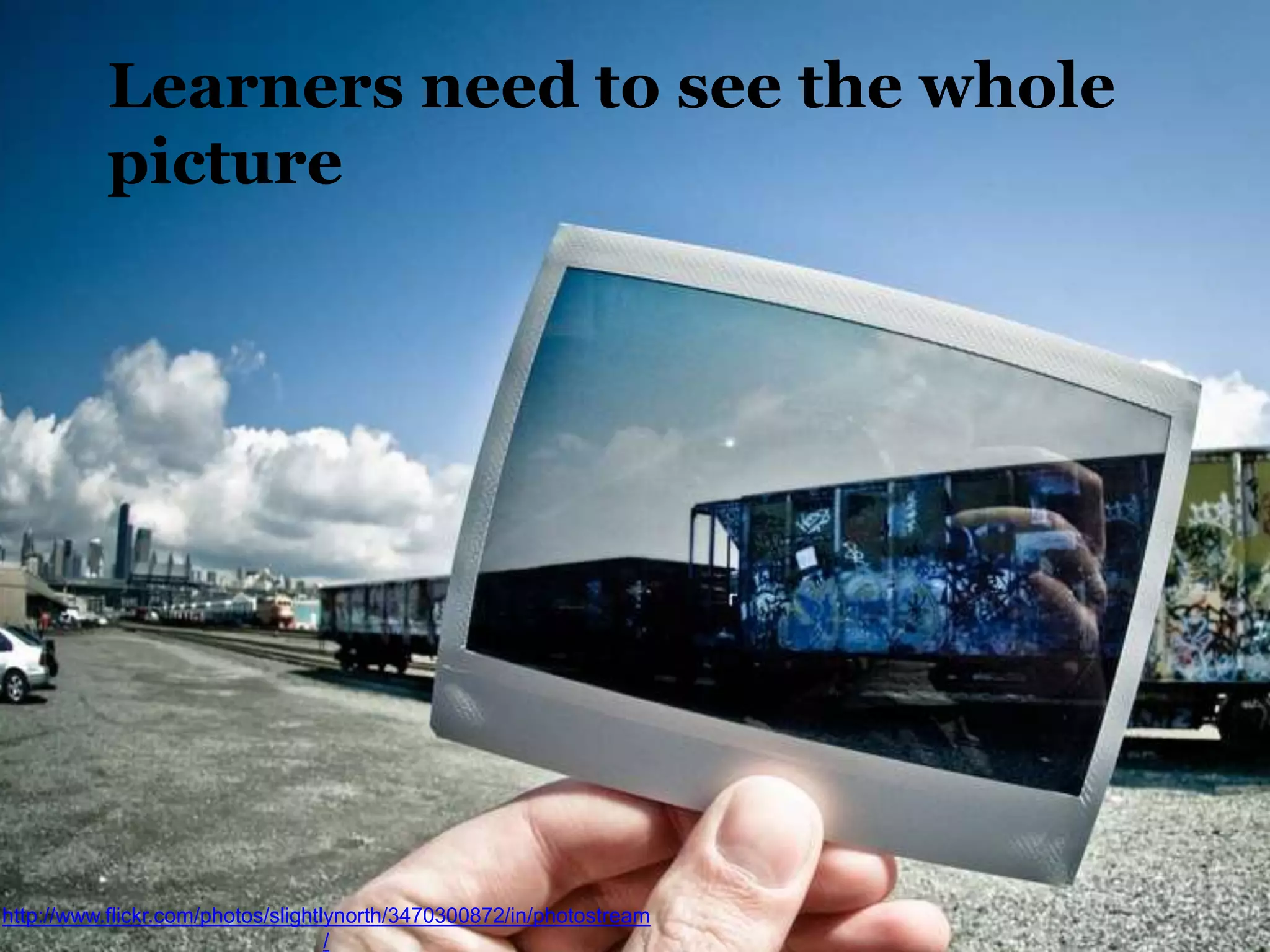
Learners need to see the whole
picture
http://www.flickr.com/photos/slightlynorth/3470300872/in/photostream
/
Learners are selectively negligent
Learners’ attention is limited
http://www.flickr.com/photos/zen/241745451/
Learners learn well when they take
responsibility for their learning
18
Learners have feelings!
Constructive alignment
1 2
1 – learners construct meaning through relevant learning activities -
-> creation(teaching as a catalyst for learning)
2 - what the teacher does to support learning
--> facilitation(of an environment for learning)
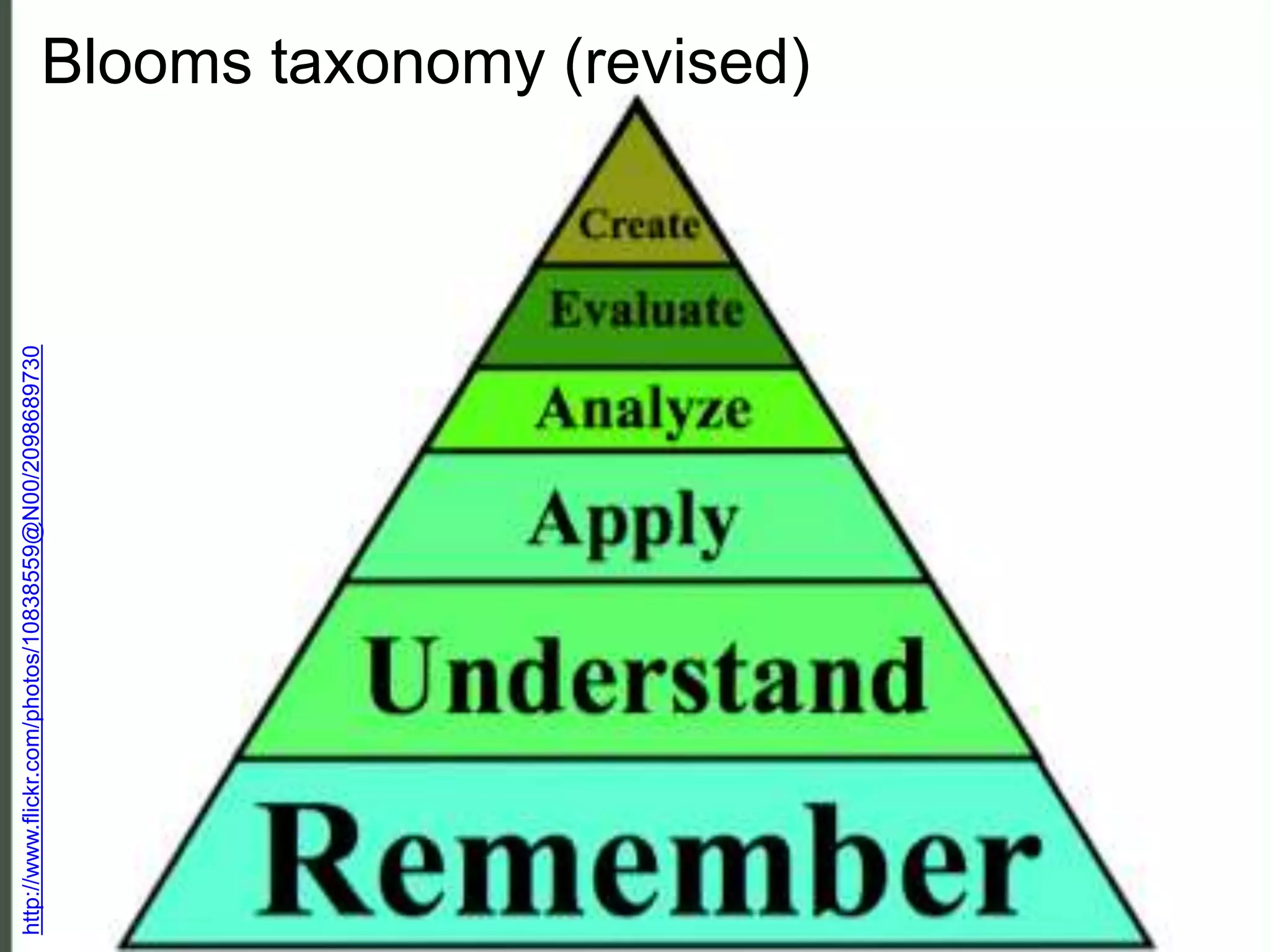
Blooms taxonomy (revised)
http://www.flickr.com/photos/10838559@N00/2098689730
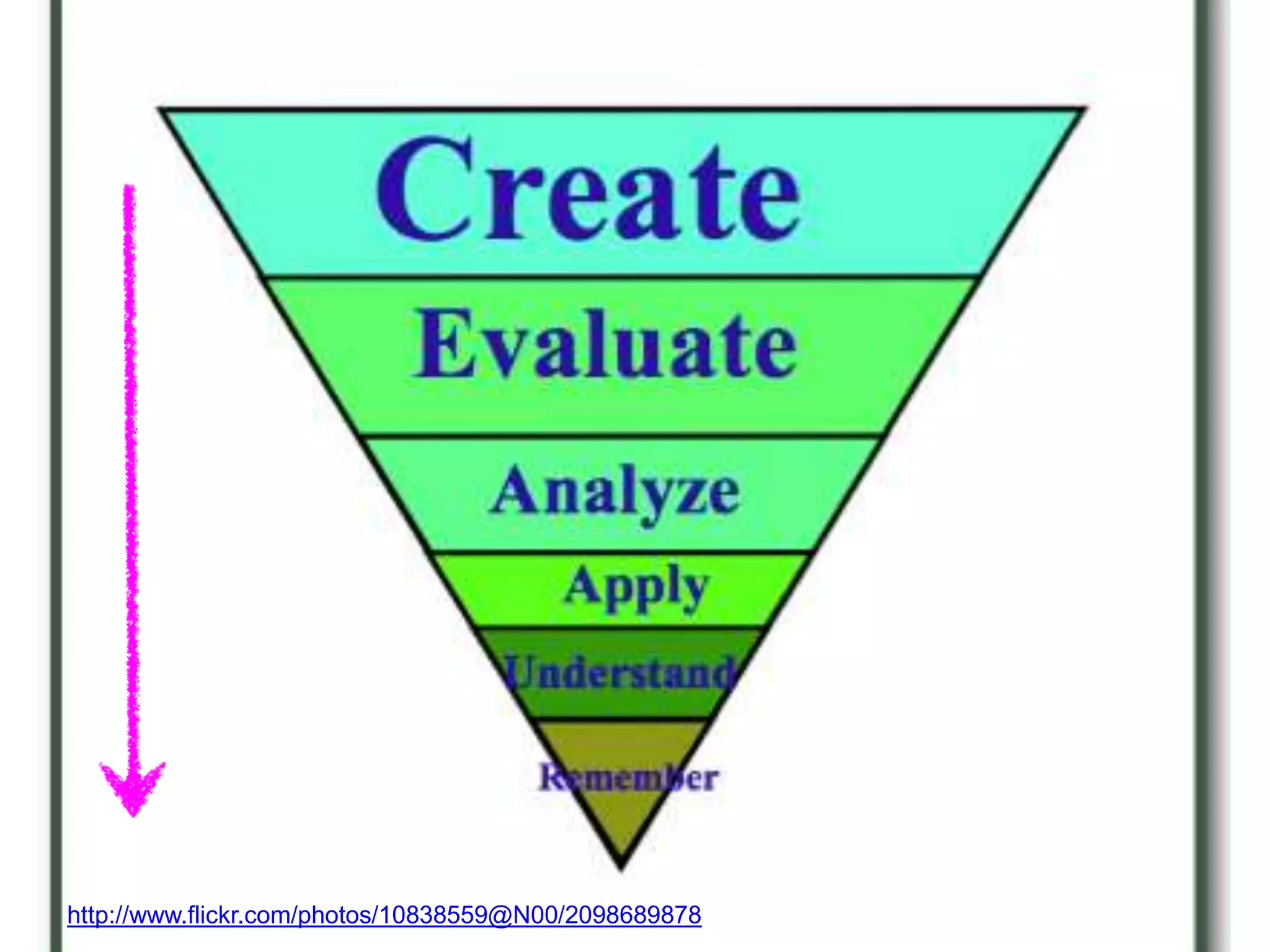
http://www.flickr.com/photos/10838559@N00/2098689878
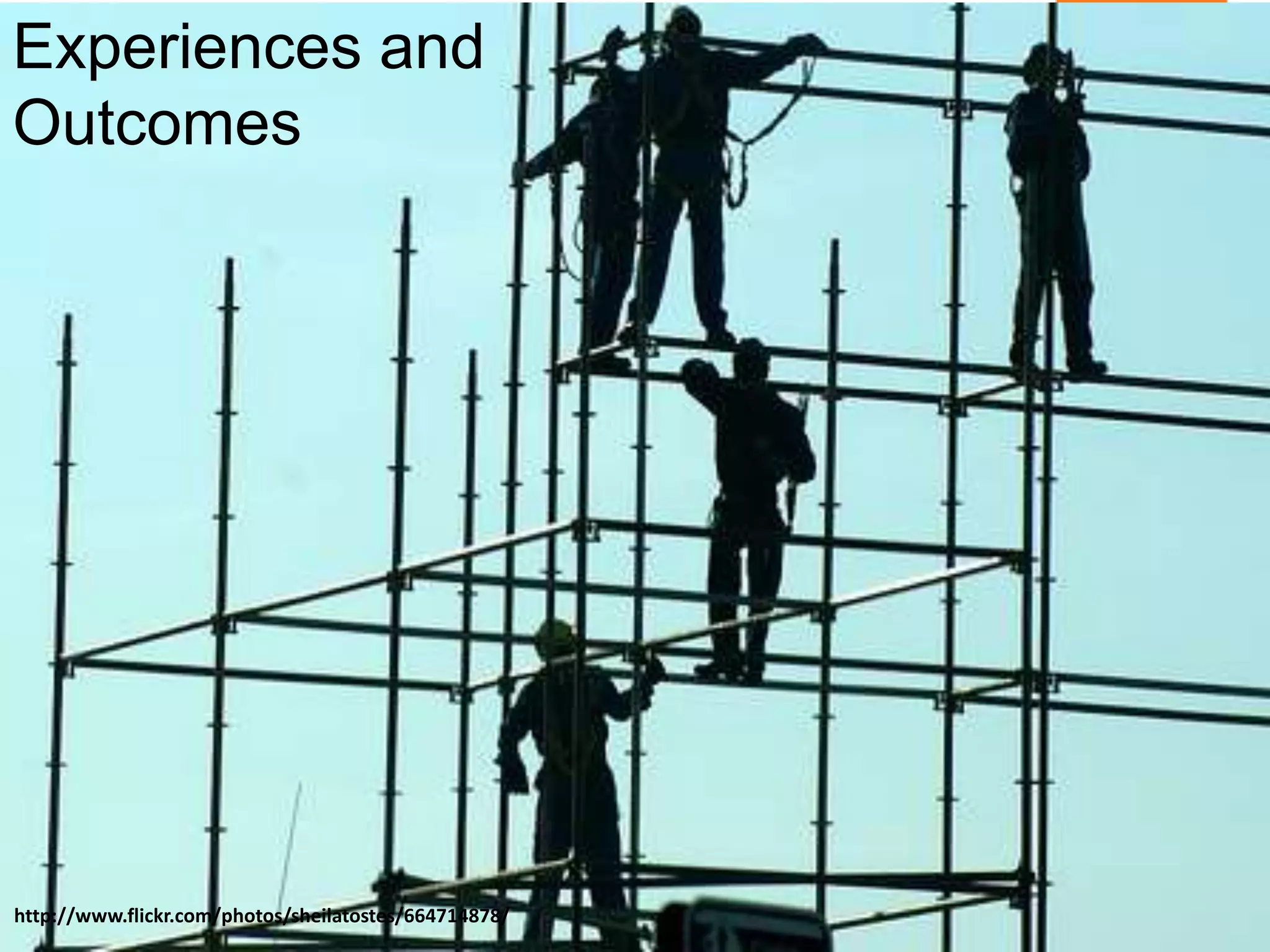
Experiences and
Outcomes
http://www.flickr.com/photos/sheilatostes/664714878/
Placing learning within a practical
context
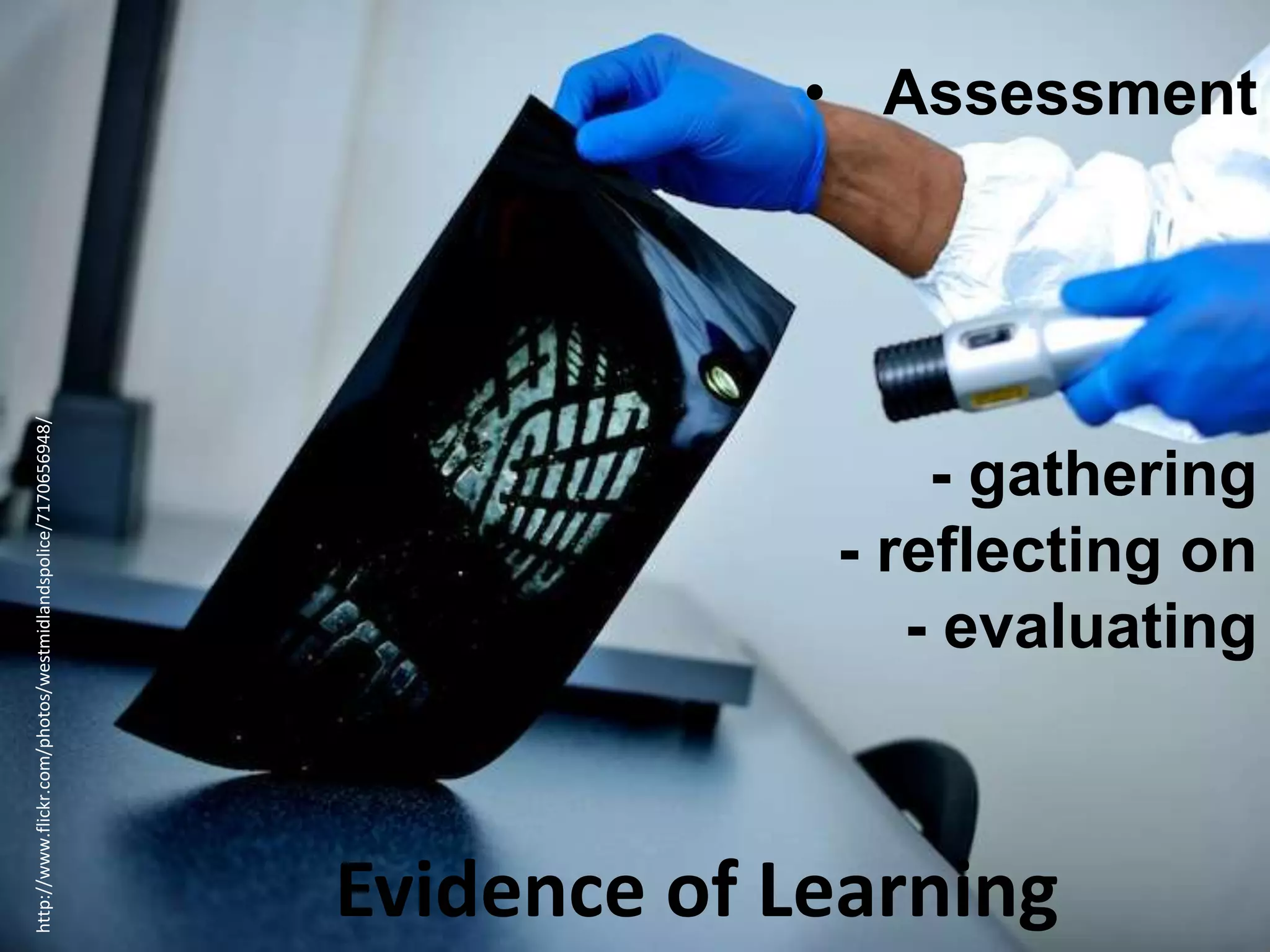
• Assessment
- gathering
- reflecting on
- evaluating
Evidence of Learning
http://www.flickr.com/photos/westmidlandspolice/7170656948/
How can technology help provide
evidence of learning?
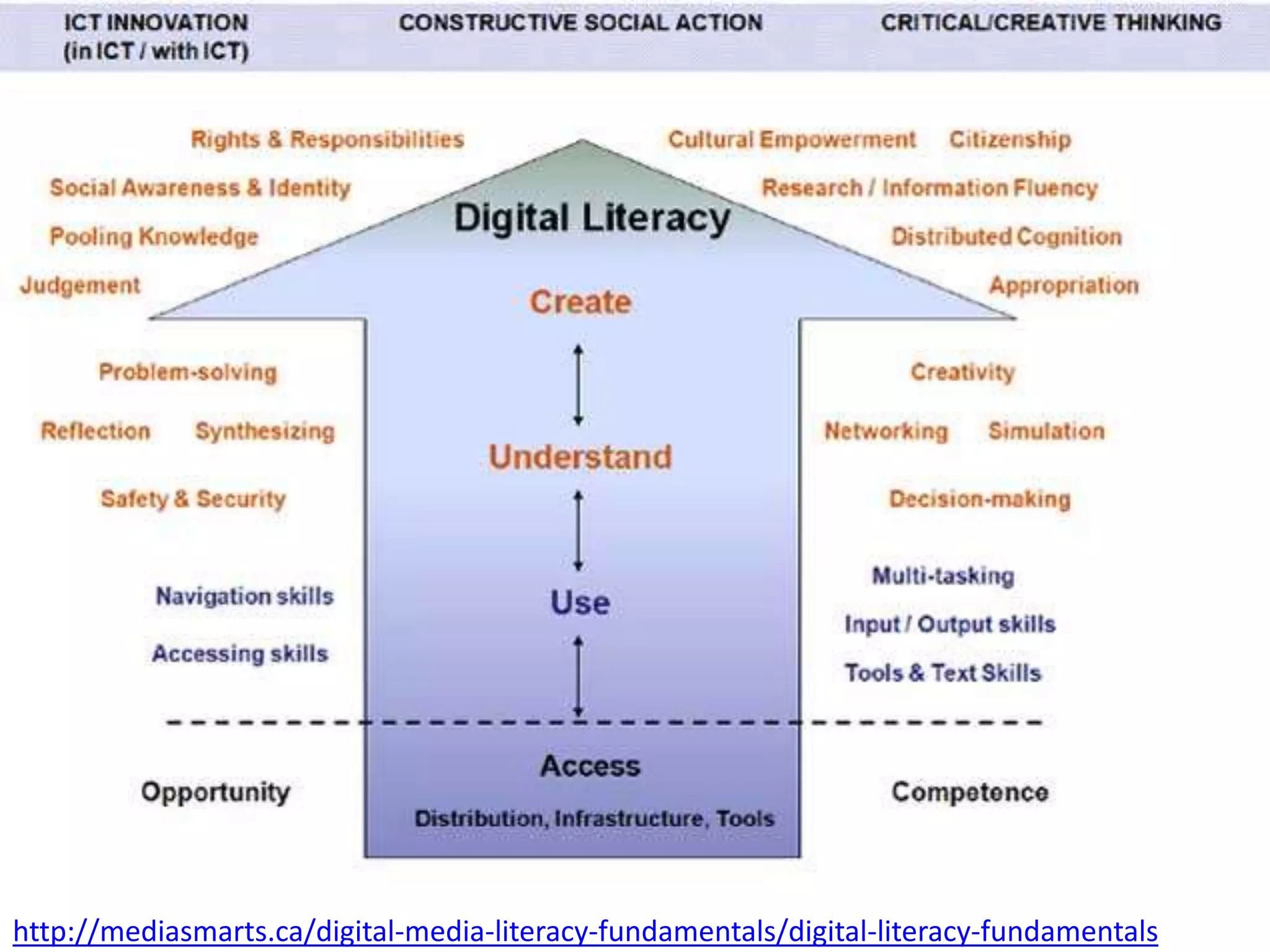
http://mediasmarts.ca/digital-media-literacy-fundamentals/digital-literacy-fundamentals
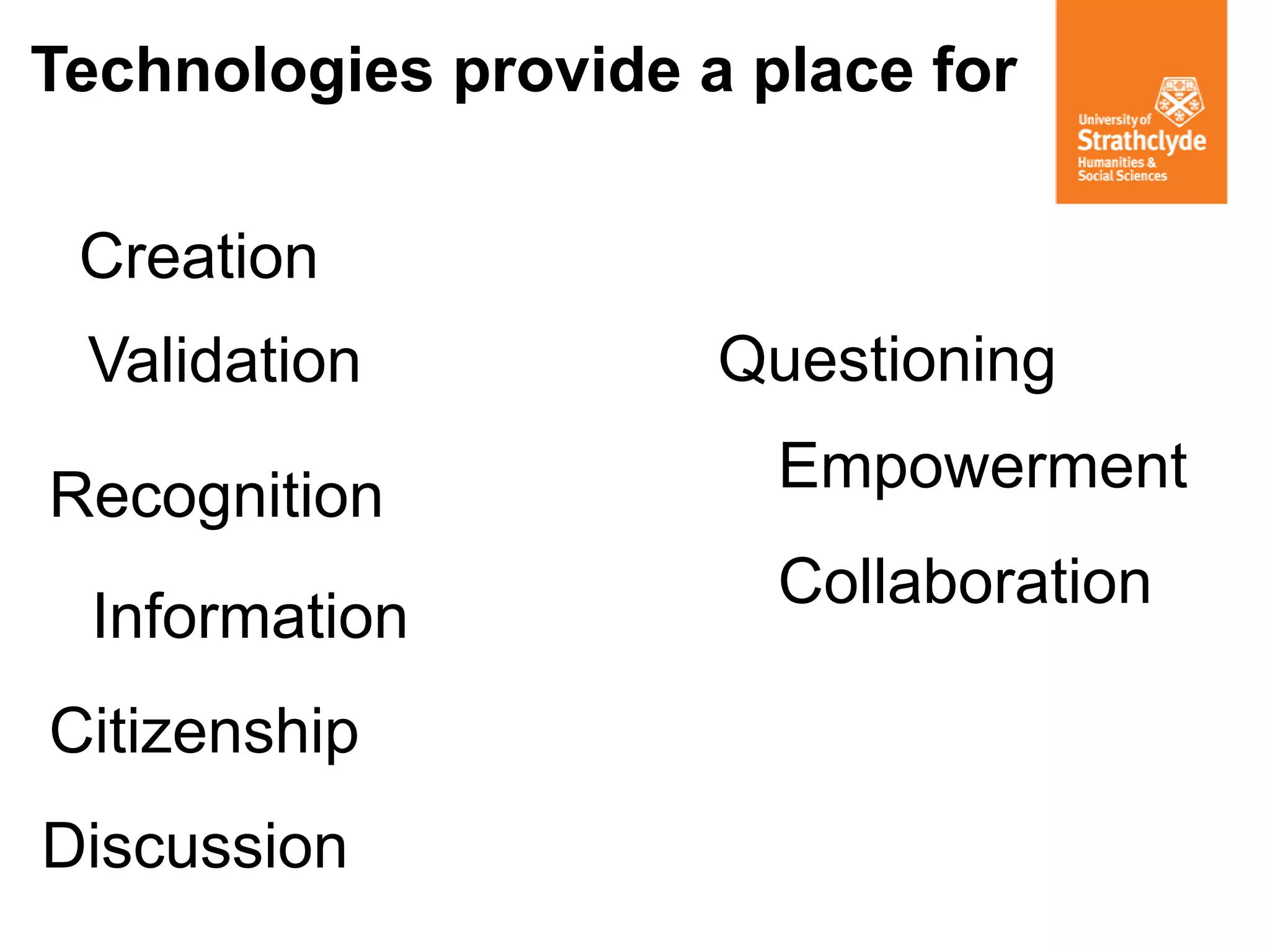
Technologies provide a place for
Discussion
Validation
Recognition
Citizenship
Information
Creation
Questioning
Empowerment
Collaboration
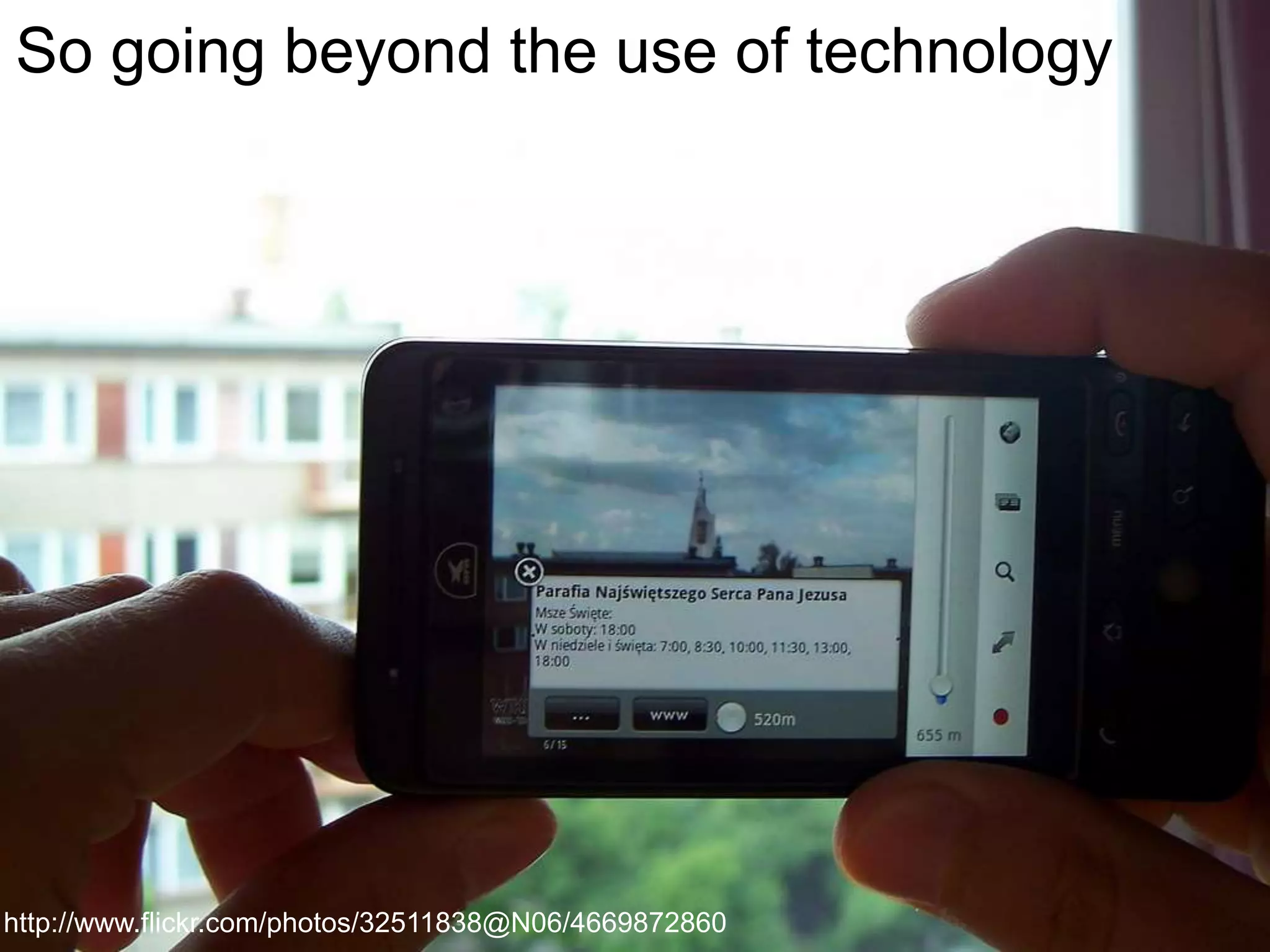
So going beyond the use of technology
http://www.flickr.com/photos/32511838@N06/4669872860
To promote creative and critical
thinking
What to
consider?
http://www.flickr.com/photos/91903883@N00/2385264019
What do you want learners to
achieve?
What do you want learners to
experience?
In the changing and complex social,
political and moral context of our
society
d to think interdisciplinary
Need to think beyond our own
experiences
The use of digital technologies in my
discipline is not possible!
… discuss
40
Examples from the classroom
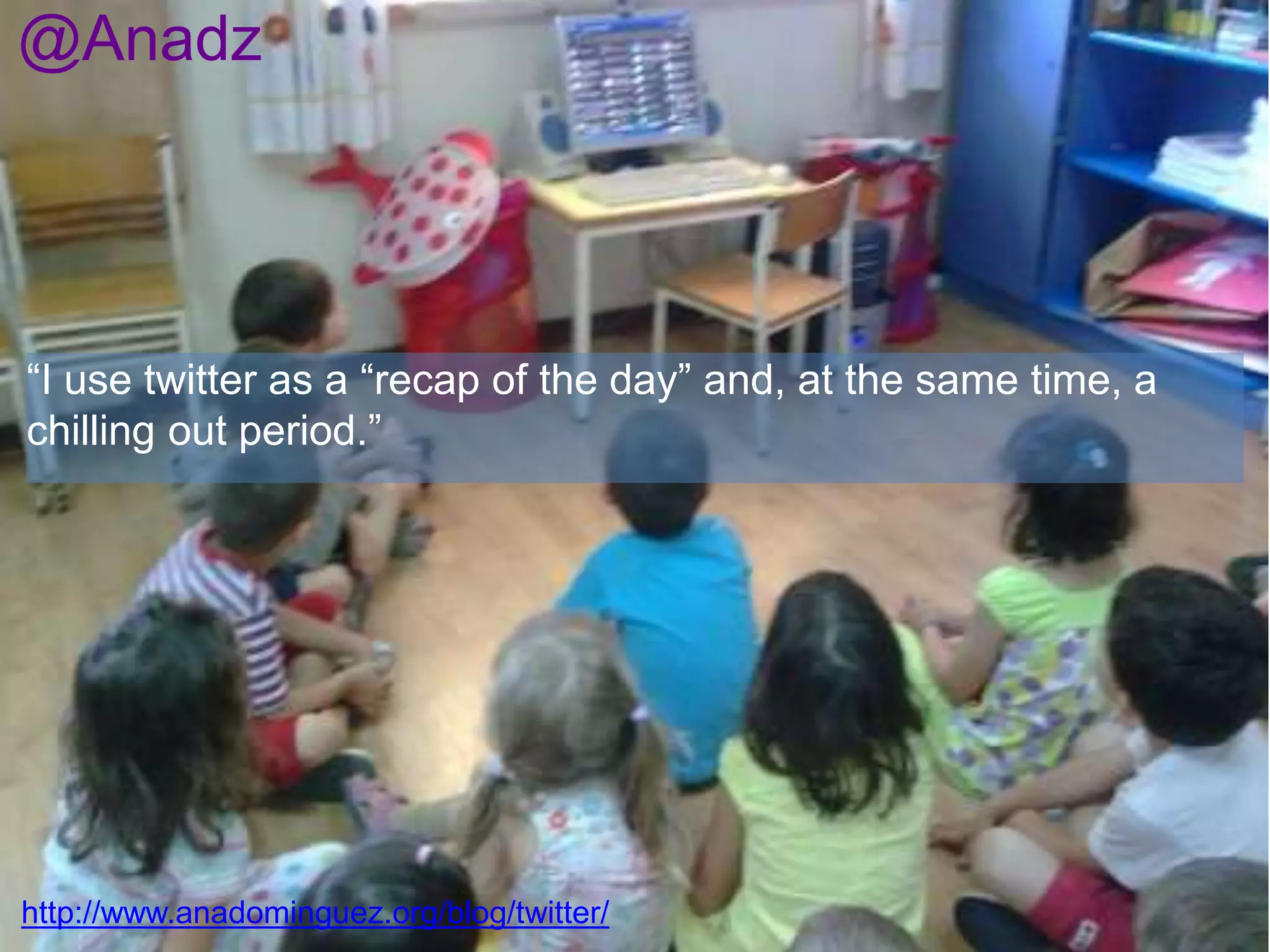
“I use twitter as a “recap of the day” and, at the same time, a
chilling out period.”
http://www.anadominguez.org/blog/twitter/
@Anadz
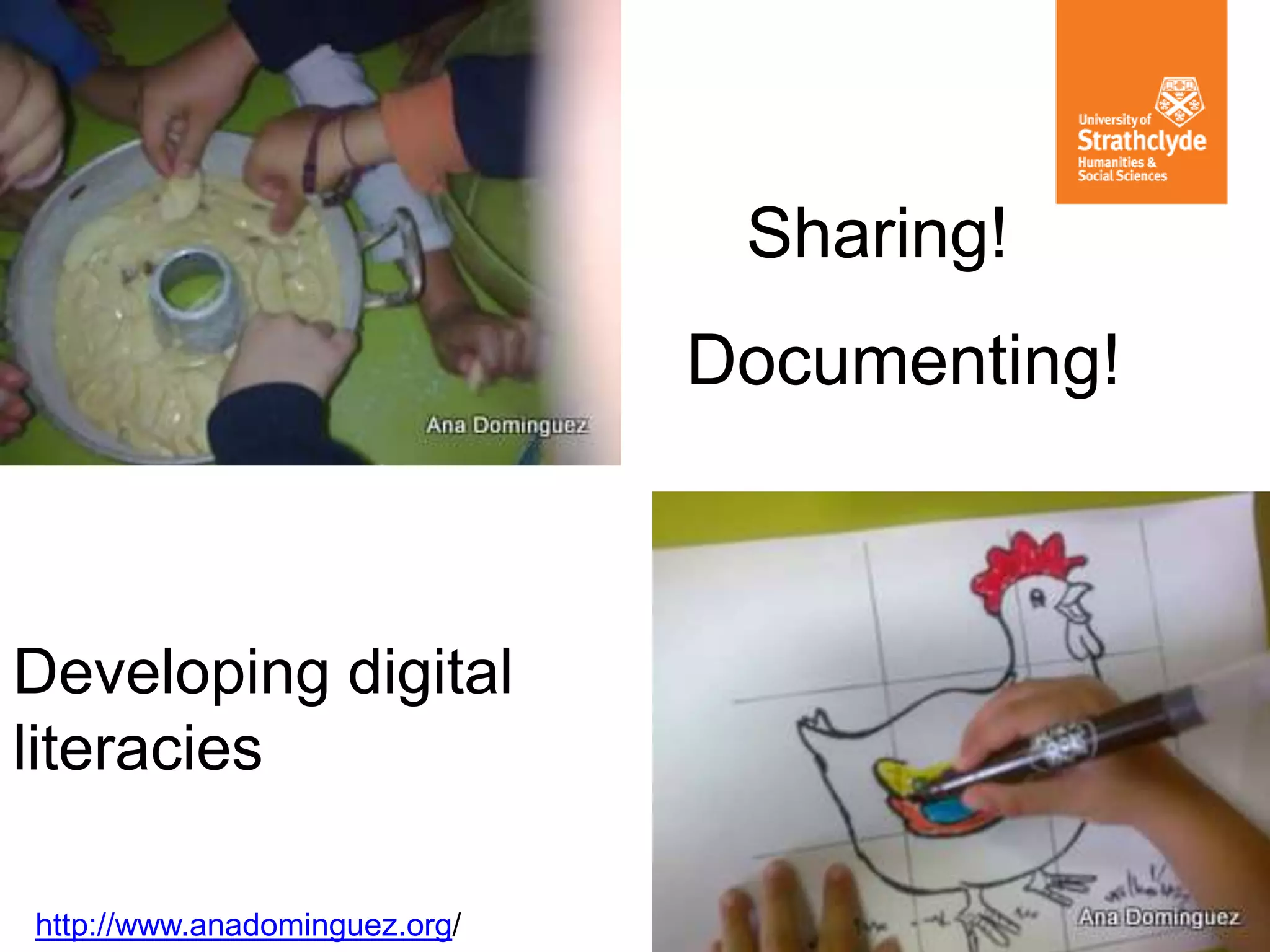
Developing digital
literacies
Sharing!
Documenting!
http://www.anadominguez.org/
Google Lit Trips: bringing stories to life
http://www.googlelittrips.org/ http://youtu.be/dkaQztcVWEA
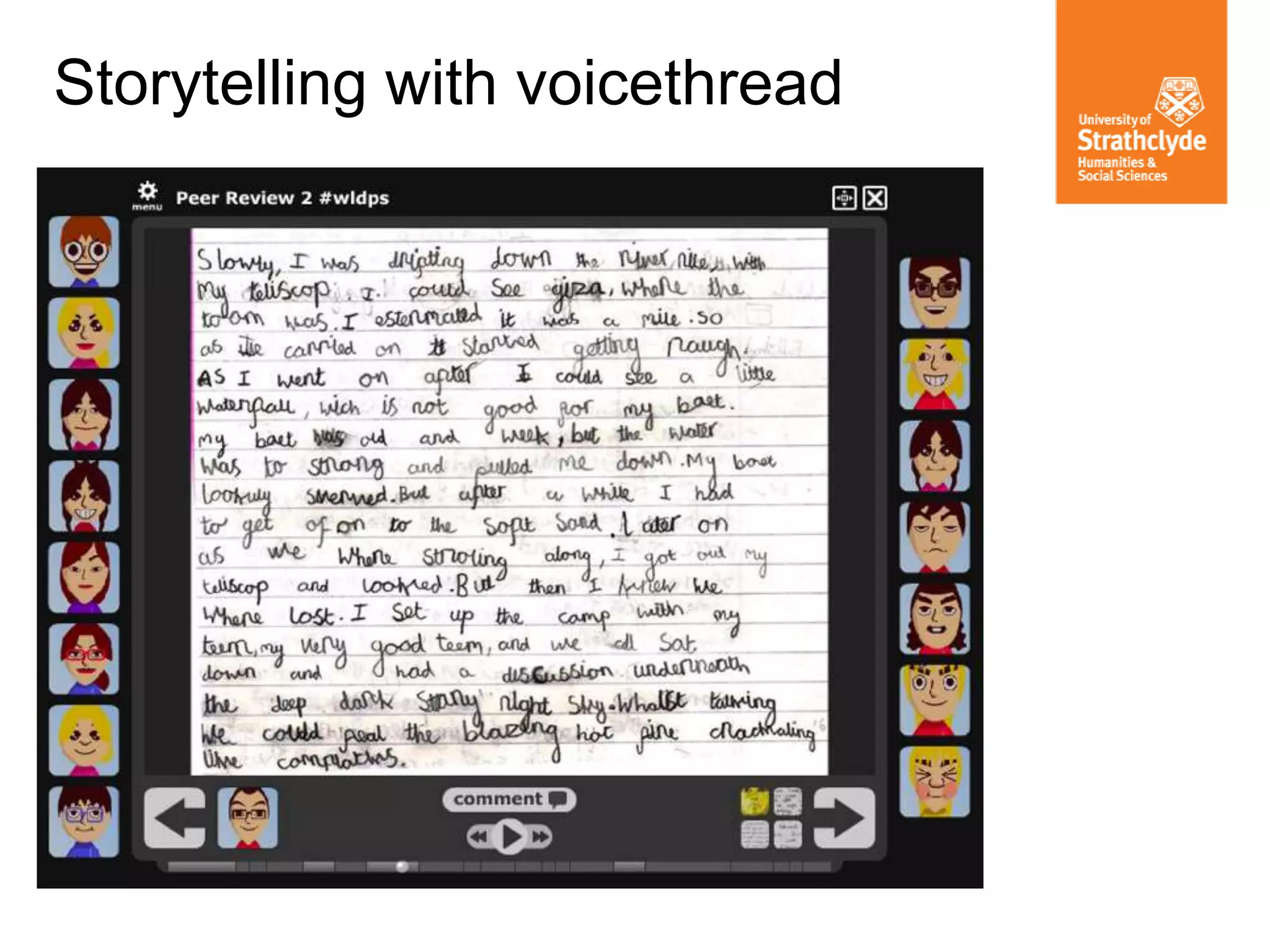
Storytelling with voicethread
the tourist guide
a webquesthttp://knowmansland.com/etivities/going_around_lisbon_tp.htm
Valentine’s day
An All-Skills Valentine Podcast

http://tinyurl.com/6t4nvnc
http://www.flickr.com/photos/40645538@N00/470038257
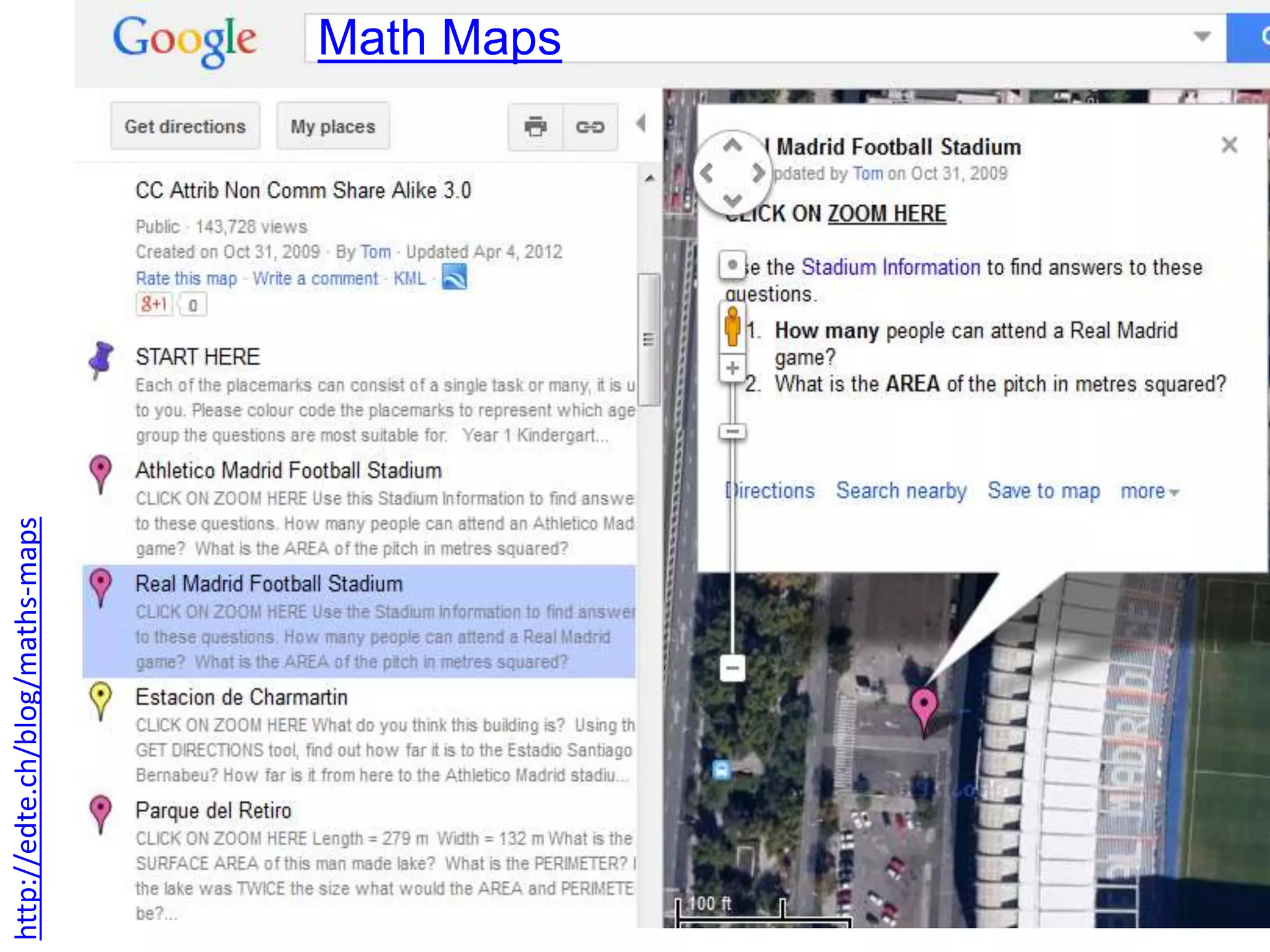
Math Mapshttp://edte.ch/blog/maths-maps
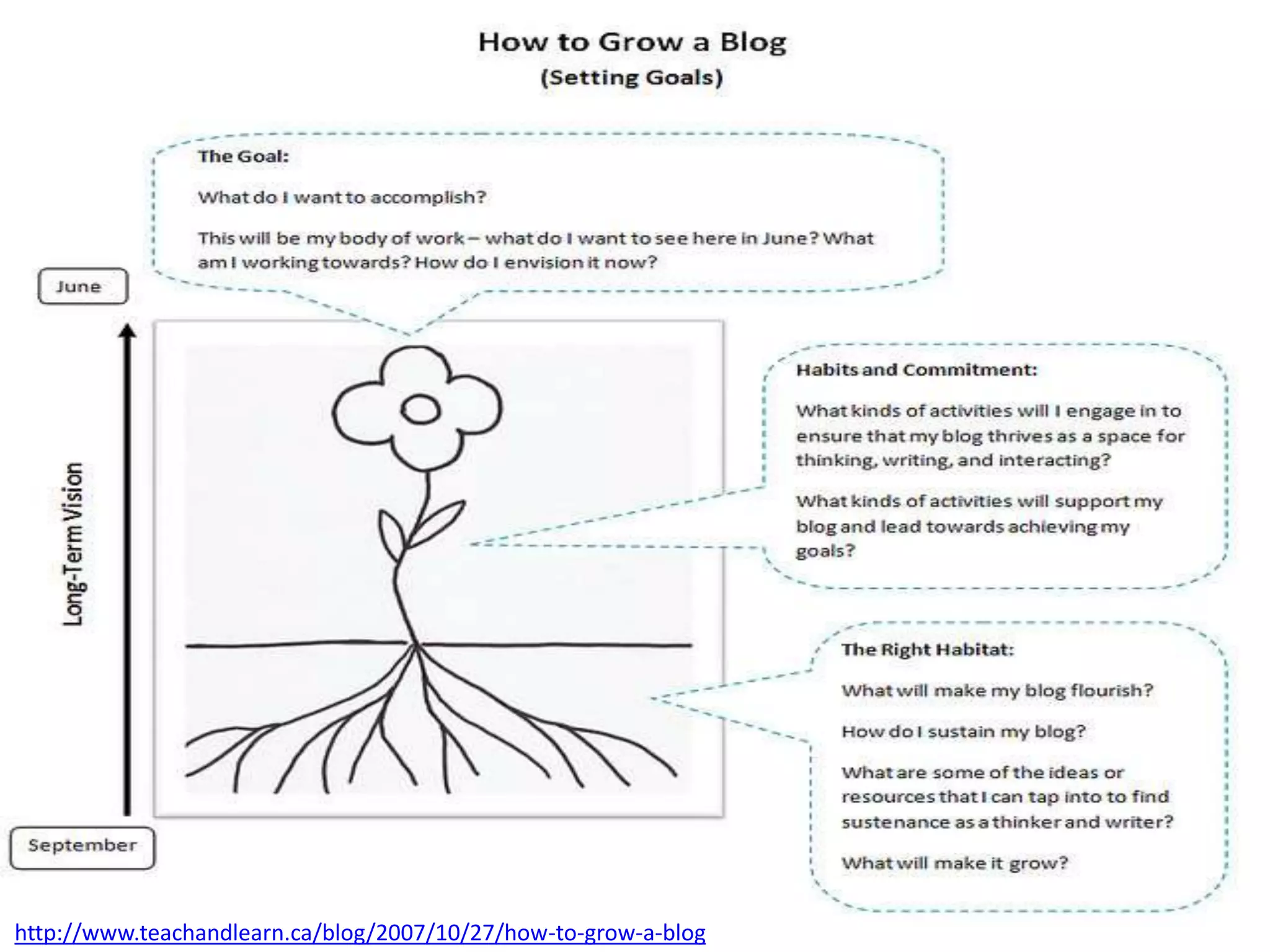
http://www.teachandlearn.ca/blog/2007/10/27/how-to-grow-a-blog
https://scratch.mit.edu
Inclusion: skyping Celeste
http://www.arisleyschool.org/Inclusion.mov
http://learningismessy.com/blog/?p=196
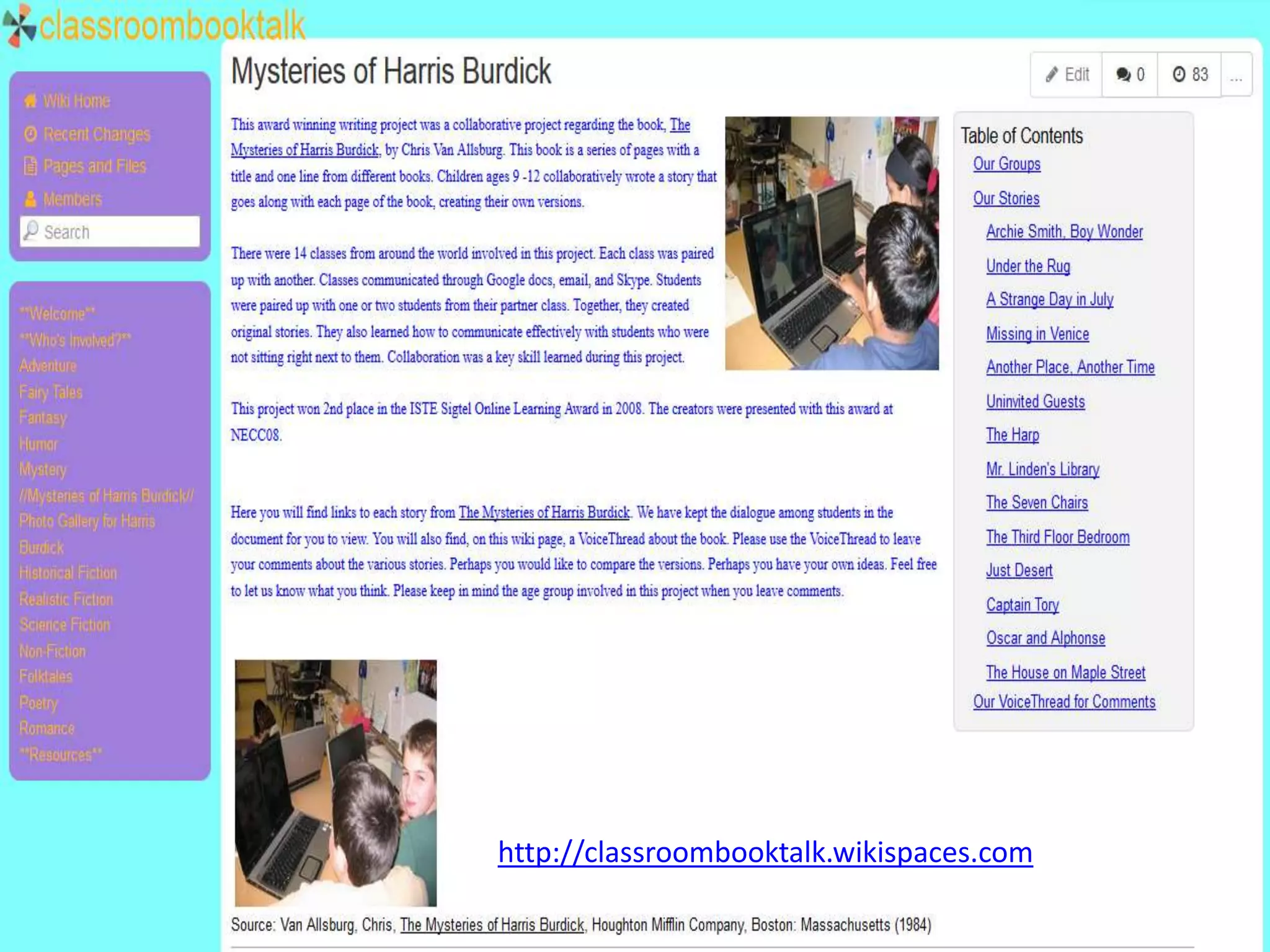
http://classroombooktalk.wikispaces.com
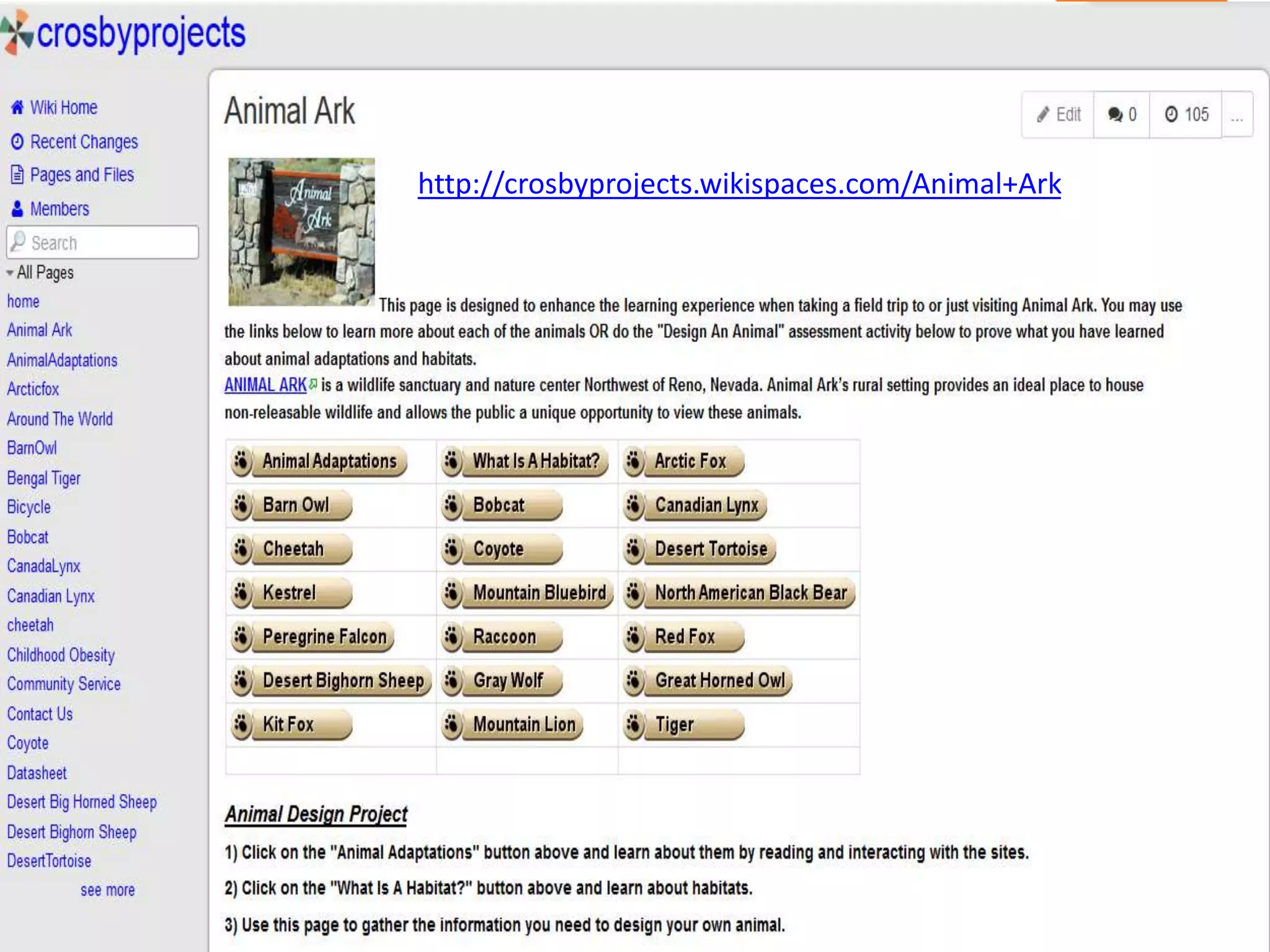
http://crosbyprojects.wikispaces.com/Animal+Ark
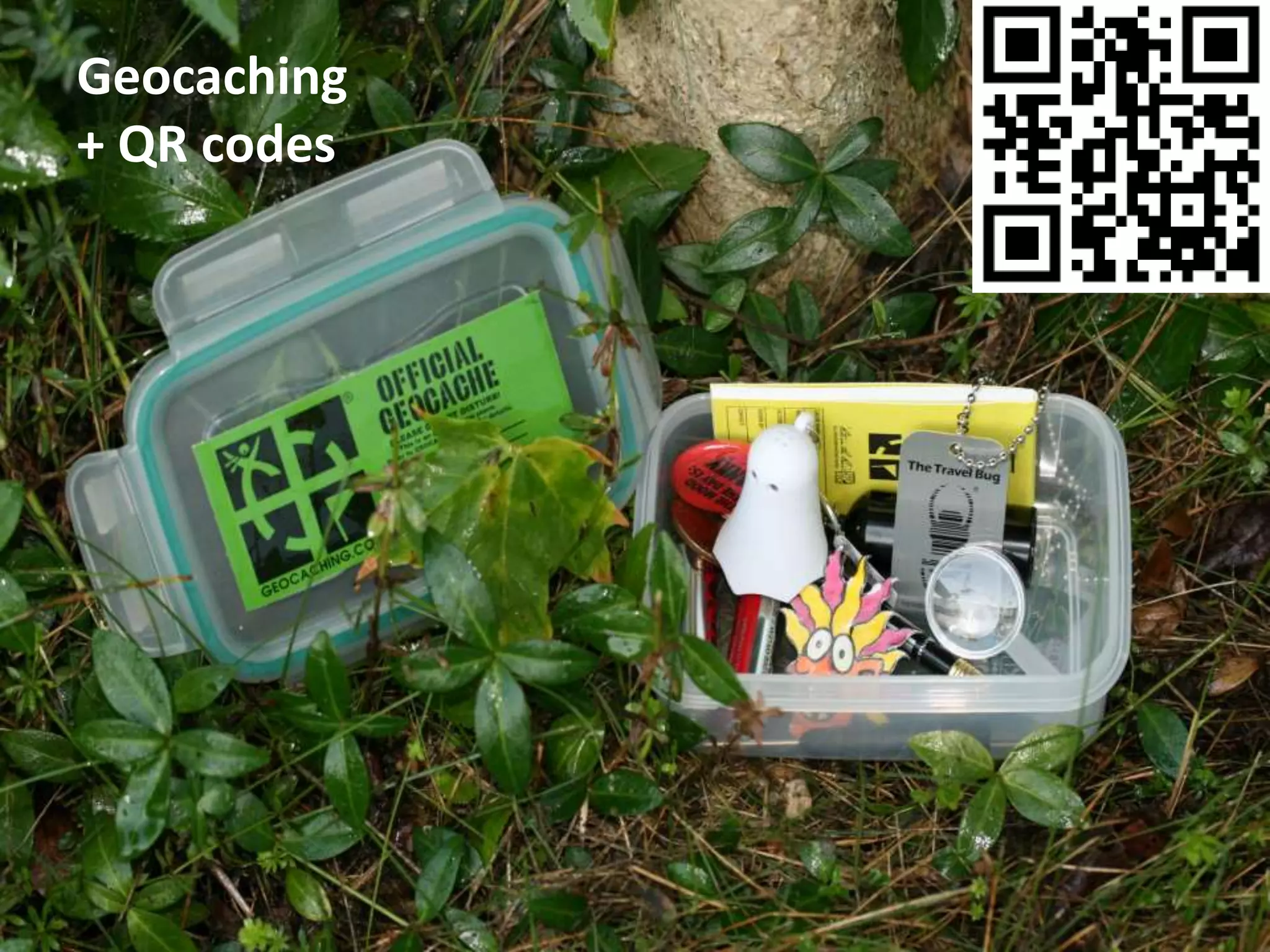
Geocaching
+ QR codes
£££
You’re not only challenging
children
to learning differently;
http://www.flickr.com/photos/21314760@N00/1583345201
you’re challenging
yourself!
Image and quote by Dean Shareski http://www.flickr.com/photos/shareski/2655113202/in/pool-858082@N25 (CC BY-NC 2.0)
59
The digital classroom is a mind-set!
• Gather Information on the wiki
• Form an opinion about the topic
(remember to use sources to back up your
point of view)
• Comment on Huw’s blogpost (link in
Myplace)
Search for information about the
digital natives debate
Dlld session2

Dlld session2

Editor's Notes

  • #2 The concepts here discussed are not new. The connection between them might however be a novelty to teaching and learning practices in a classroom context
  • #4 Able to exemplify the 4 capacities Sense of community with colleagues
  • #5 The environment for learning in pre-school settings promotes a high degree of challenge and enjoyment and personalisation and choice through planned opportunities to explore different activities, materials and contexts and imaginative, creative use of both indoor and outdoor learning environments. Learning within any particular activity will prompt different aspects of learning in individual ways for children. Approaches which involve children in planning and respond flexibly to their interests and needs also contribute to personalisation and choice.
  • #6 Learning activities in pre-school settings can provide rich opportunities for progression and depth of learning. The learning activities and environment should be planned and organised to offer opportunities to extend skills (for example language skills) and deepen understanding. Active learning will promote the development of logical and creative thinking and encourage a problem-solving approach. The adult role in supporting progression is very important. It will vary, sometimes observing and supporting, other times facilitating and skilfully intervening in, or extending, the activities and experiences to promote progression and learning in depth. Direct teaching and focused work with groups or individual children will help to develop specific skills and knowledge in particular areas of learning or to take account of additional support needs. The balance between selfdirected and adult-initiated learning opportunities needs to be carefully considered and monitored.
  • #7 Learning through a wide range of well-designed activities will also offer relevance, coherence and breadth. Activities will often build directly on what is familiar to the child and the local environment and events can be used to provide interesting, real-life contexts for learning. Learning in a variety of contexts supports and reinforces the development of numeracy, literacy and health and wellbeing across the curriculum. The experiences and outcomes at the early level can be used in suitable combinations to plan motivating and challenging activities. Taken together, as appropriate to the stage of development of each child, these activities should provide breadth of learning across the curriculum areas. Activities planned in this way and which build on what is familiar should enable children to make connections, give coherence to their learning and enable them to understand the relevance of what they are learning.
  • #8 Integrating diff dimensions to a learning situation
  • #13 talk to the person behind you - 3 minutes - what are powerful ideas in teaching
  • #20 The 'alignment' aspect refers to what the teacher does, which is to set up a learning environment that supports the learning activities appropriate to achieving the desired learning outcomes. The key is that the components in the teaching system, especially the teaching methods used and the assessment tasks, are aligned with the learning activities assumed in the intended outcomes. The learner is in a sense 'trapped', and finds it difficult to escape without learning what he or she is intended to learn.
  • #34 Able to exemplify the 4 capacities Sense of community with colleagues
  • #42 I use twitter as a “recap of the day” and, at the same time, a chilling out period. I sit in front of the computer we follow these rules: Everyone can and should speak. Children must raise their hands and wait their turn We listen carefully and give each one the necessary time to build their sentences. We cannot repeat sentences. We accept that one, two or three classmates may add details to the initial sentence. We introduce songs and chants. always read out what each student says. Every person who interacts with us on twitter is invited to “follow” us. http://www.anadominguez.org/blog/wp-content/uploads/2009/10/twitter-classroom.pdf
  • #59 changing assessment to support learning process the internet being a place for communication and