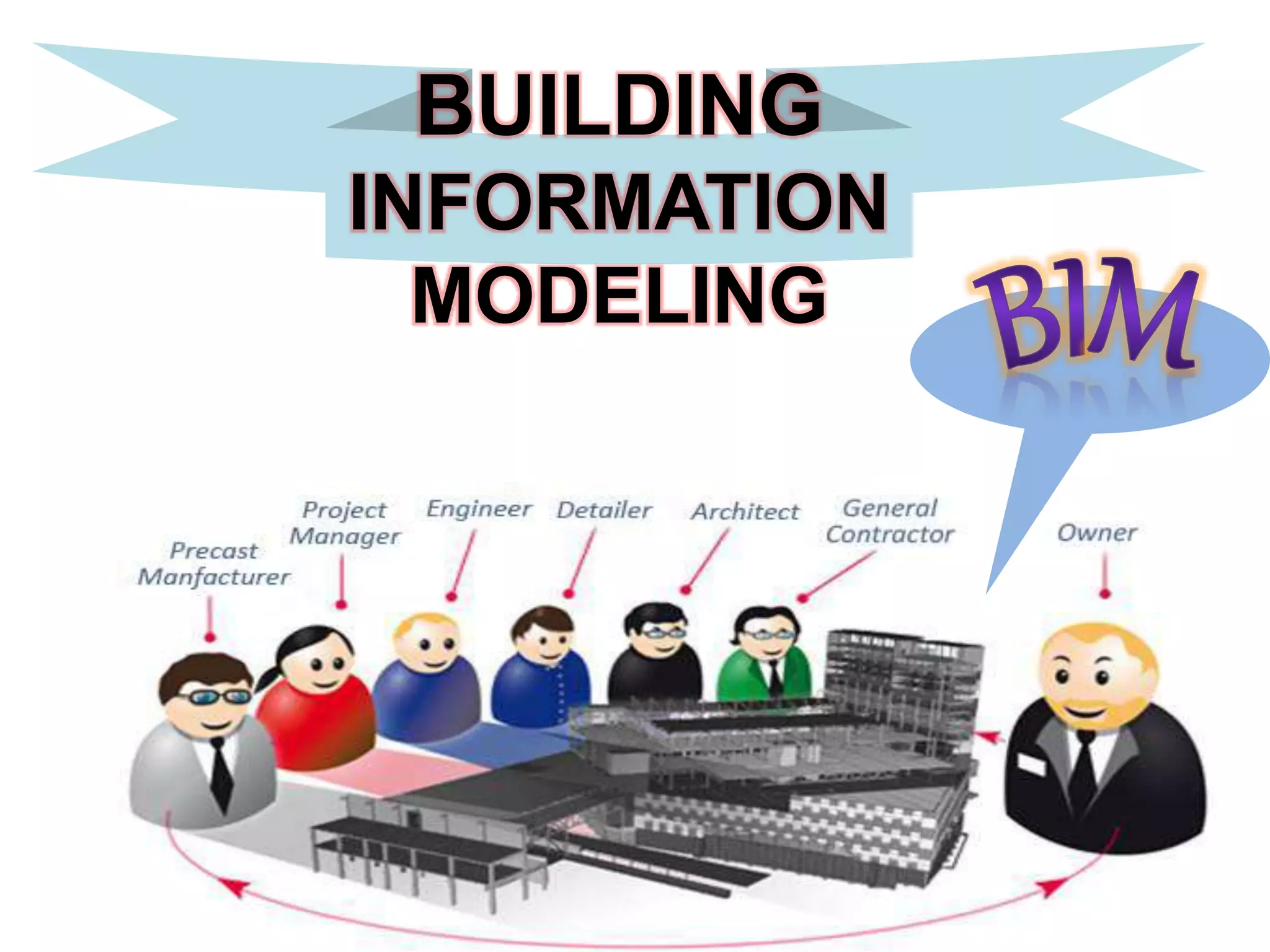
BUILDING
INFORMATION
MODELING
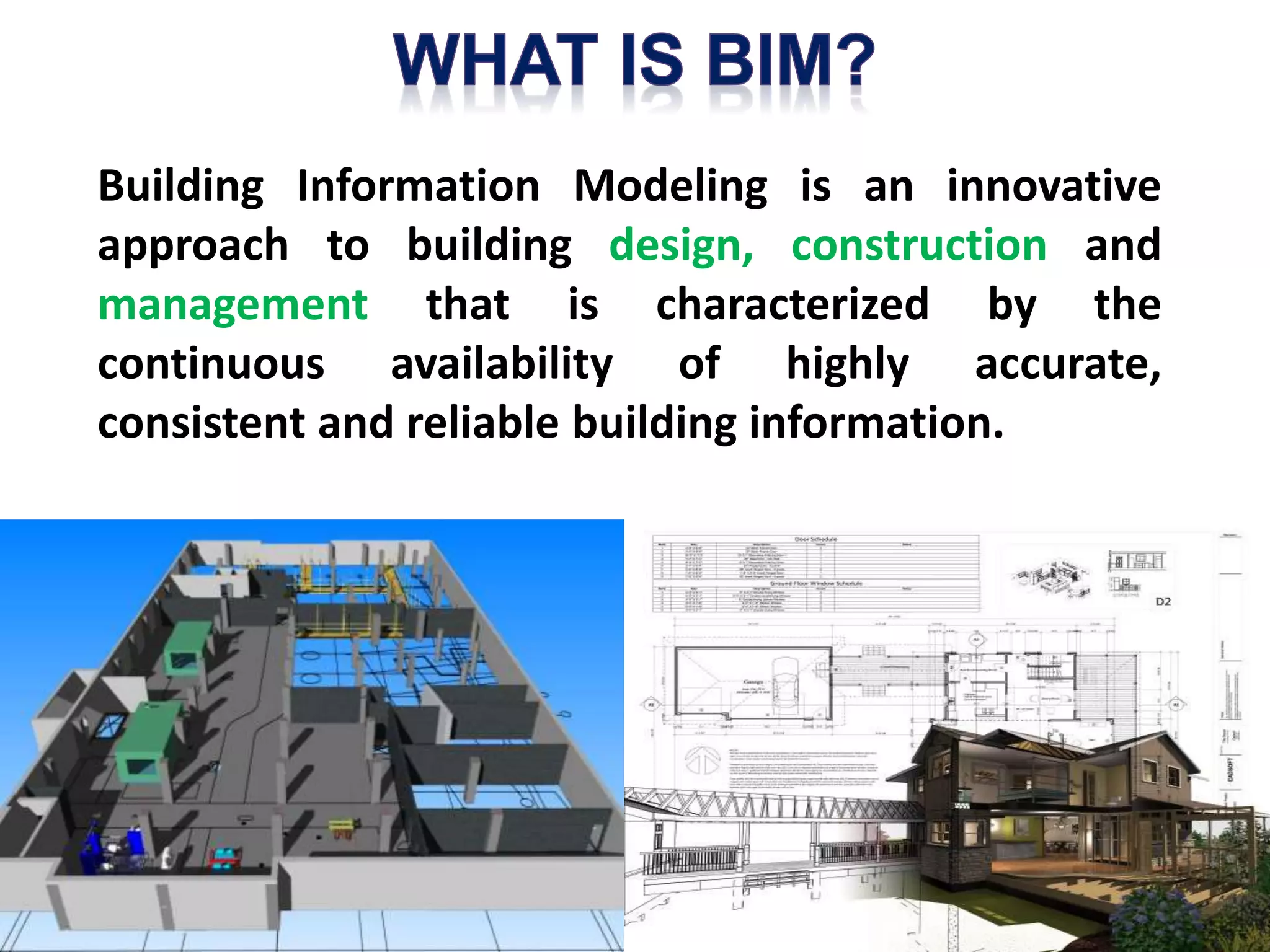
Image: University Mechanical
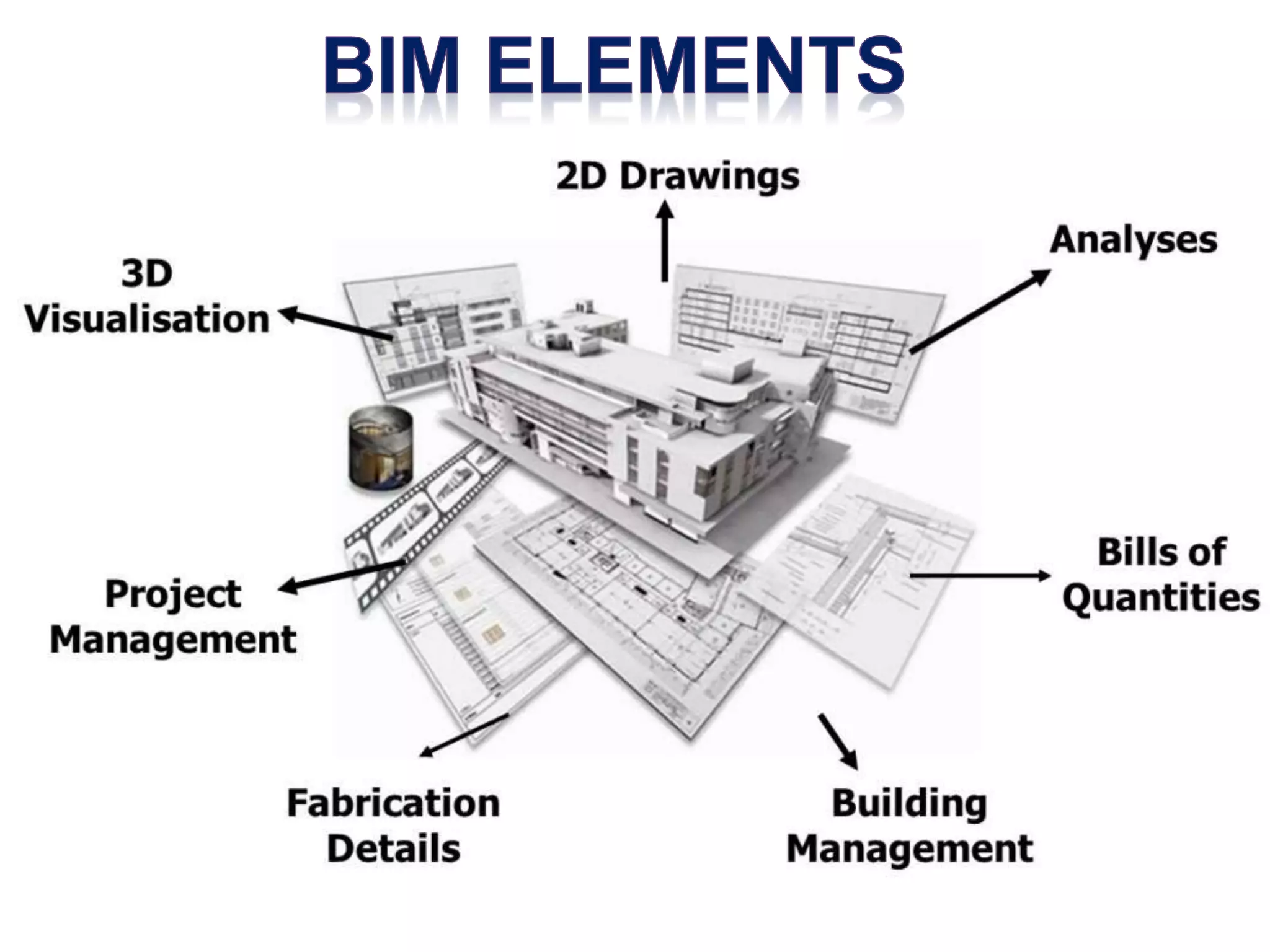
Building Information Modeling is an innovative
approach to building design, construction and
management that is characterized by the
continuous availability of highly accurate,
consistent and reliable building information.
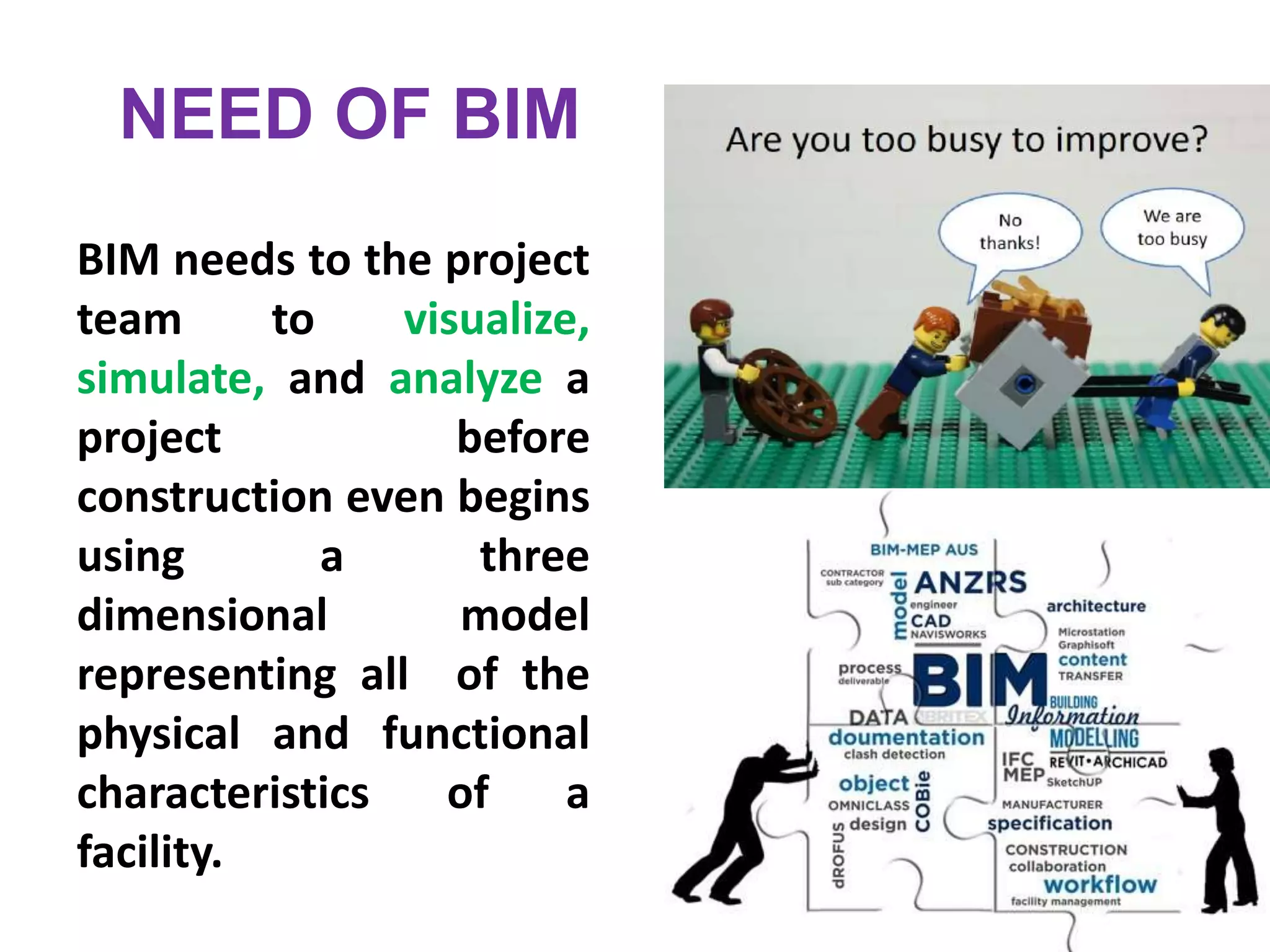
BIM needs to the project
team to visualize,
simulate, and analyze a
project before
construction even begins
using a three
dimensional model
representing all of the
physical and functional
characteristics of a
facility.
NEED OF BIM
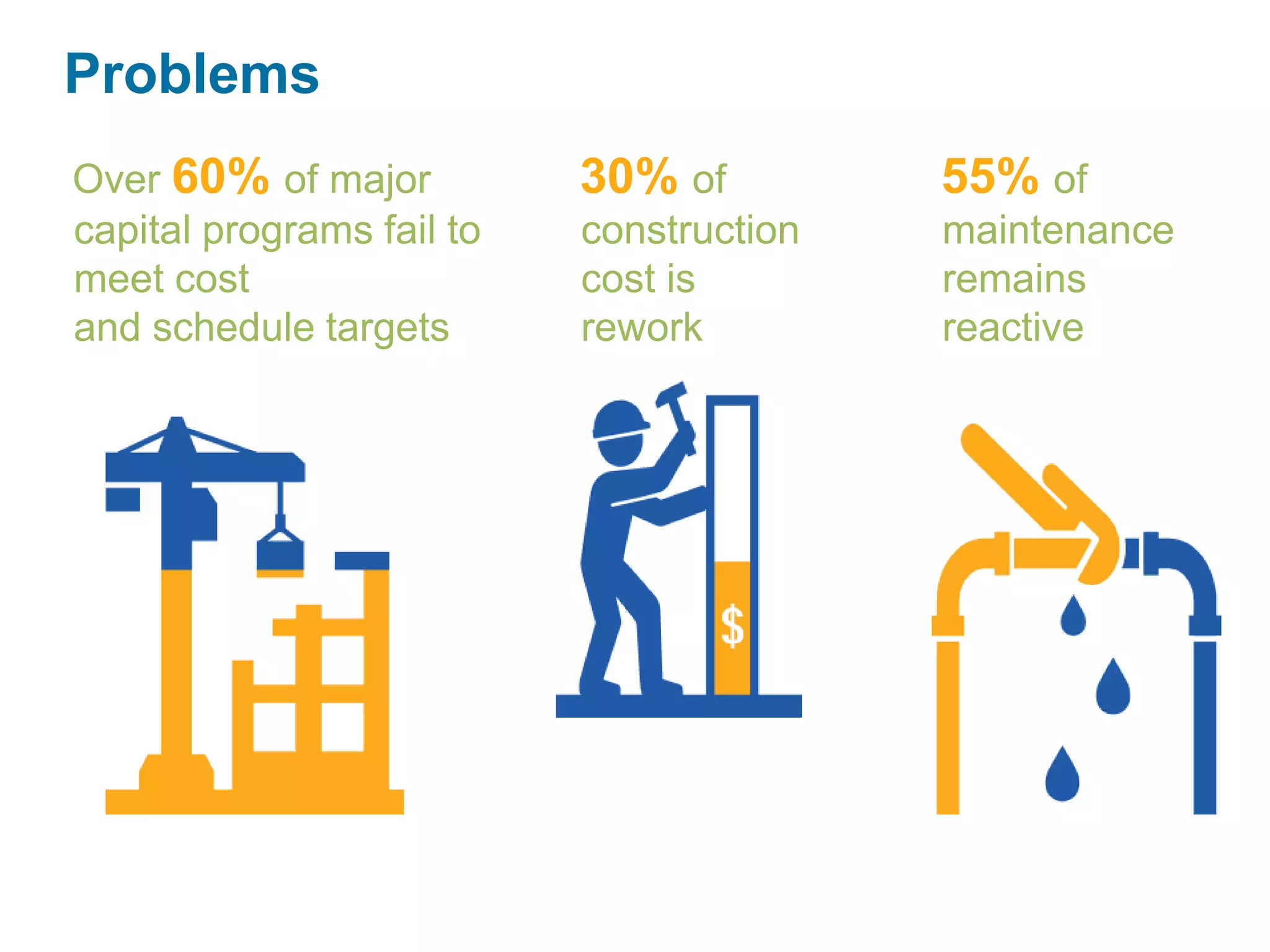
Problems
30% of
construction
cost is
rework
Over 60% of major
capital programs fail to
meet cost
and schedule targets
55% of
maintenance
remains
reactive
Uses 3D models
to capture,
explore, and
maintain
consistent and
coordinated
planning, design,
construction, and
operational data
Provides greater
project insight for
cost, schedule,
and
constructability
Uses and shares
the same
consistent data
whether you’re at
your desk or in the
field
Enables prompt
response to
change with
processes that are
smarter and faster
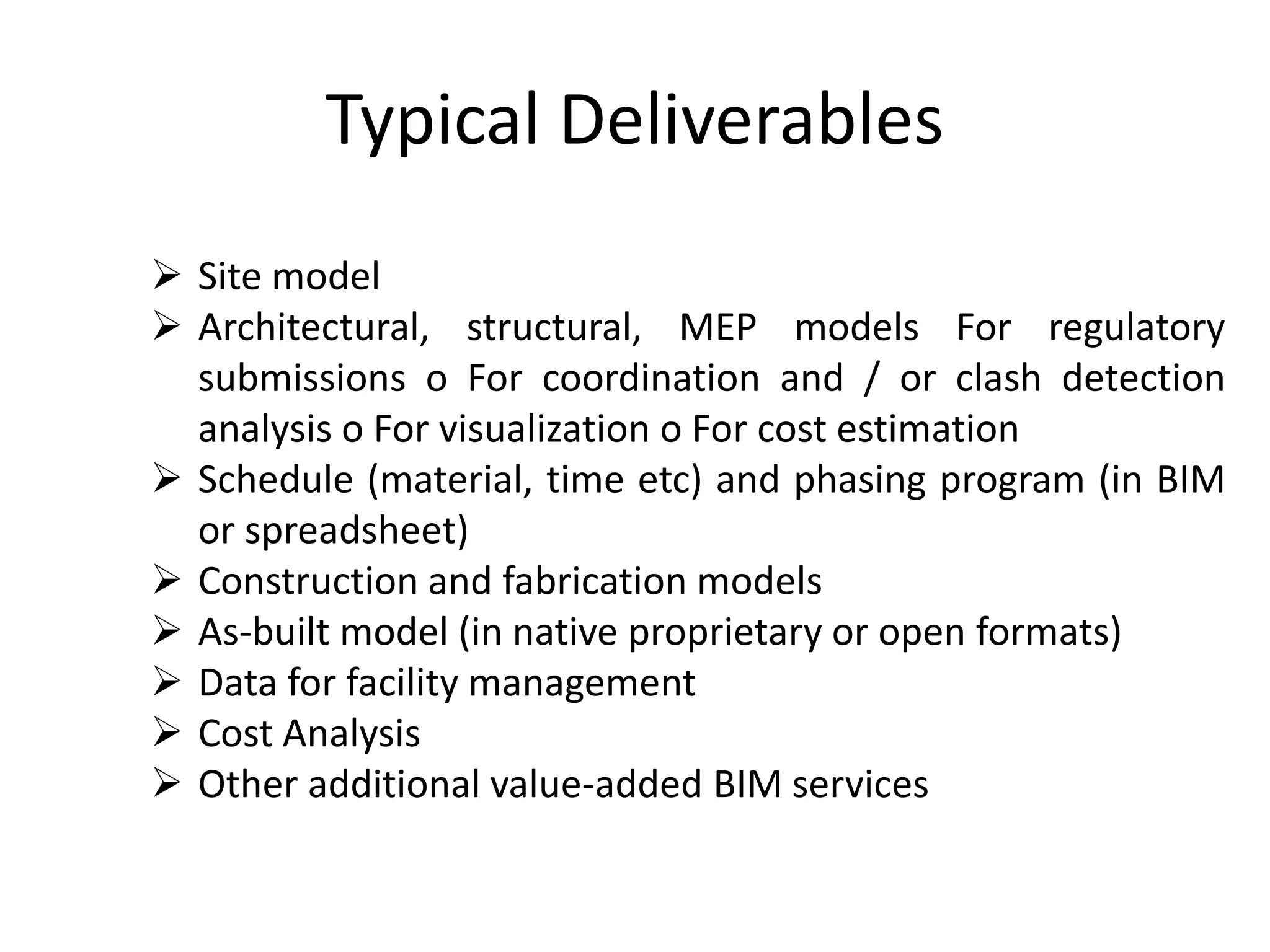
Typical Deliverables
 Site model
 Architectural, structural, MEP models For regulatory
submissions o For coordination and / or clash detection
analysis o For visualization o For cost estimation
 Schedule (material, time etc) and phasing program (in BIM
or spreadsheet)
 Construction and fabrication models
 As-built model (in native proprietary or open formats)
 Data for facility management
 Cost Analysis
 Other additional value-added BIM services
BENEFITS OF BIM
 Owners, designers and engineers get lower net costs
and risks
 First responders can make buildings safer
 Efficient monitoring lowers operating costs
 Better views of facilities lead to better decisions
 Realtors, appraisers, and bankers save money
 Regulations compliance costs are lower
 Subcontractors' costs and risks are reduced
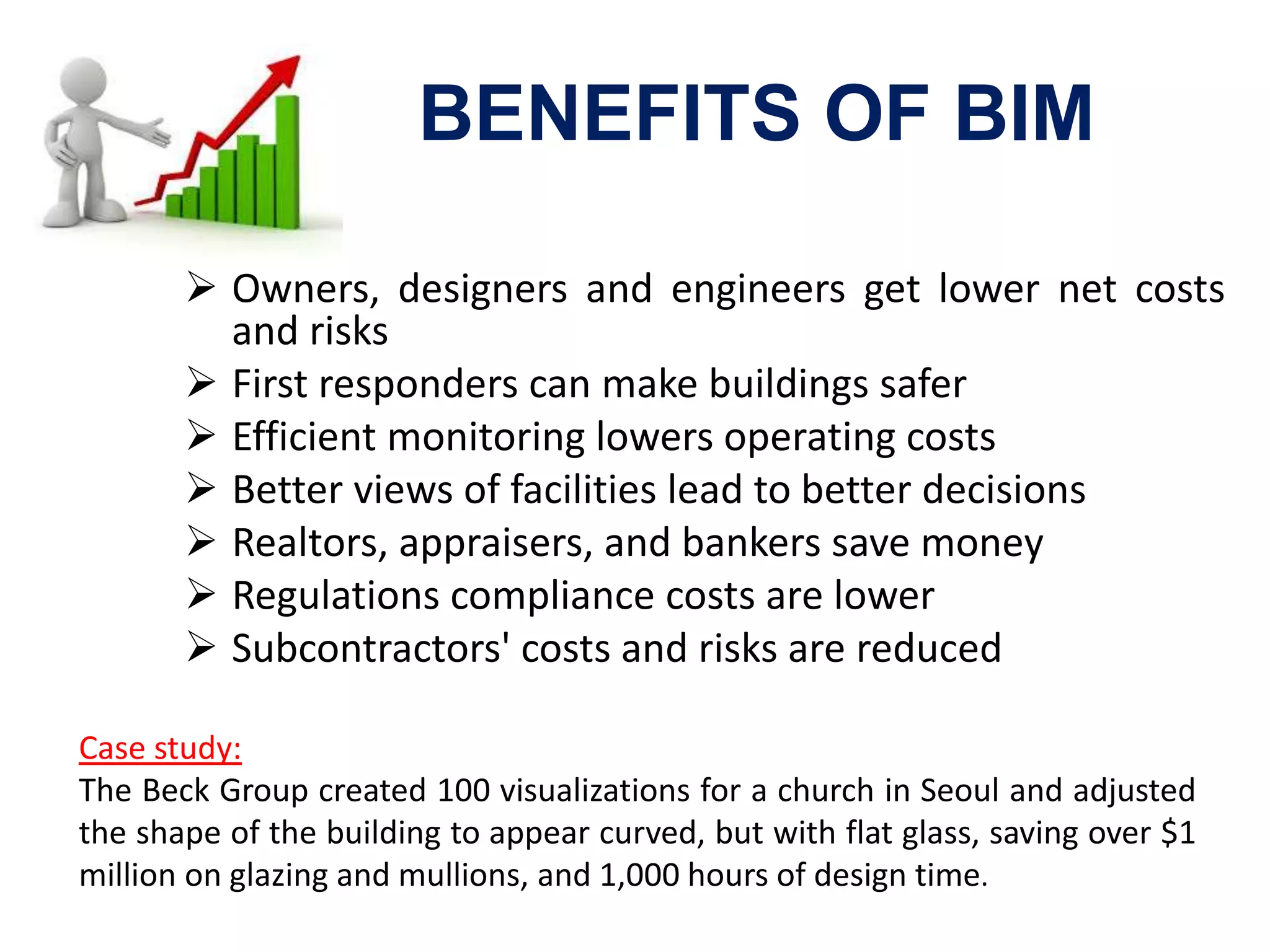
Case study:
The Beck Group created 100 visualizations for a church in Seoul and adjusted
the shape of the building to appear curved, but with flat glass, saving over $1
million on glazing and mullions, and 1,000 hours of design time.
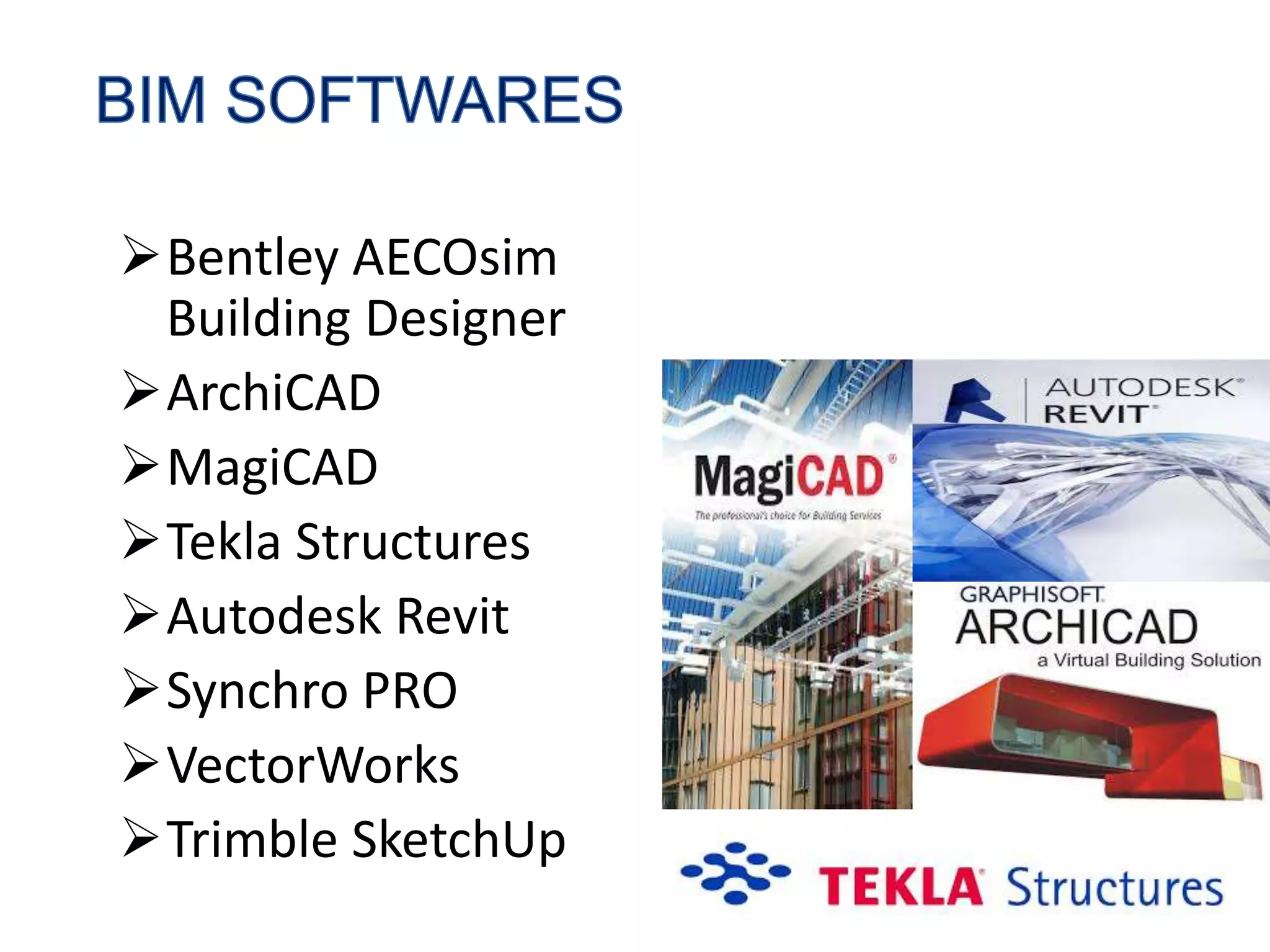
Bentley AECOsim
Building Designer
ArchiCAD
MagiCAD
Tekla Structures
Autodesk Revit
Synchro PRO
VectorWorks
Trimble SketchUp
When you design a building using [BIM] you
create an intelligent data model of the building
that can be used more effectively than standard
two-dimensional documents.
When you provide Building Product Models you
offer intelligent representations of your products
that are more valuable to your customers than
traditional product information which can provide
a competitive edge and help you get specified.
THANKING YOU
QUESTIONS ???

BIM - Building Information Model

  • 1.
  • 2.
    Image: University Mechanical BuildingInformation Modeling is an innovative approach to building design, construction and management that is characterized by the continuous availability of highly accurate, consistent and reliable building information.
  • 3.
    BIM needs tothe project team to visualize, simulate, and analyze a project before construction even begins using a three dimensional model representing all of the physical and functional characteristics of a facility. NEED OF BIM
  • 4.
    Problems 30% of construction cost is rework Over60% of major capital programs fail to meet cost and schedule targets 55% of maintenance remains reactive
  • 6.
    Uses 3D models tocapture, explore, and maintain consistent and coordinated planning, design, construction, and operational data Provides greater project insight for cost, schedule, and constructability Uses and shares the same consistent data whether you’re at your desk or in the field Enables prompt response to change with processes that are smarter and faster
  • 7.
    Typical Deliverables  Sitemodel  Architectural, structural, MEP models For regulatory submissions o For coordination and / or clash detection analysis o For visualization o For cost estimation  Schedule (material, time etc) and phasing program (in BIM or spreadsheet)  Construction and fabrication models  As-built model (in native proprietary or open formats)  Data for facility management  Cost Analysis  Other additional value-added BIM services
  • 8.
    BENEFITS OF BIM Owners, designers and engineers get lower net costs and risks  First responders can make buildings safer  Efficient monitoring lowers operating costs  Better views of facilities lead to better decisions  Realtors, appraisers, and bankers save money  Regulations compliance costs are lower  Subcontractors' costs and risks are reduced Case study: The Beck Group created 100 visualizations for a church in Seoul and adjusted the shape of the building to appear curved, but with flat glass, saving over $1 million on glazing and mullions, and 1,000 hours of design time.
  • 9.
    Bentley AECOsim Building Designer ArchiCAD MagiCAD TeklaStructures Autodesk Revit Synchro PRO VectorWorks Trimble SketchUp
  • 10.
    When you designa building using [BIM] you create an intelligent data model of the building that can be used more effectively than standard two-dimensional documents. When you provide Building Product Models you offer intelligent representations of your products that are more valuable to your customers than traditional product information which can provide a competitive edge and help you get specified.
  • 11.