CHAPTER 3
Section 3 Notes
The Geography of China
 The ancient Chinese called their land
“Zhongguo”---Middle Kingdom
 China was isolated by long distances and
physical barriers---the ancient Chinese
believed that China was the center of the
Earth and the sole source of civilization
The Geography of China
 Physical barriers---
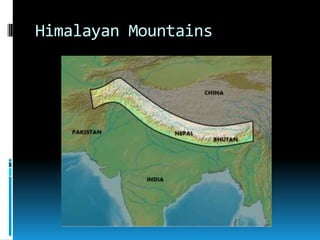
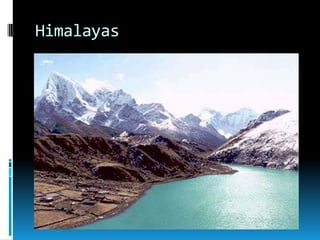
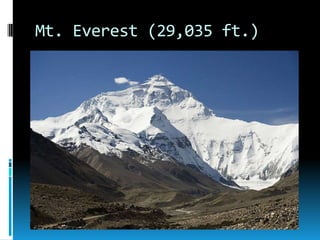
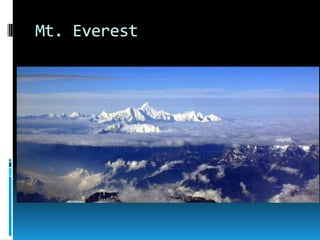
 West and Southwest---high mountain ranges
(Tien Shan and Himalayas)
 Southeast---thick jungles
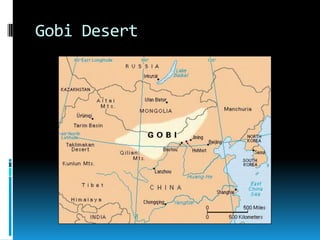
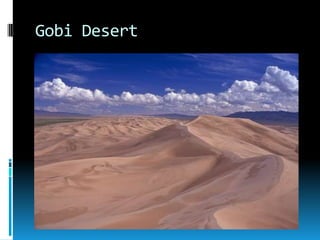
 North---Gobi desert
 East---Pacific Ocean
 All of these physical barriers helped to
contribute to Chinese isolation
Himalayan Mountains
Himalayas
Mt. Everest (29,035 ft.)
Mt. Everest
Gobi Desert
Gobi Desert
The Geography of China
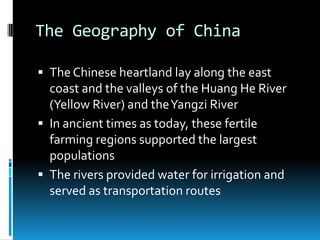
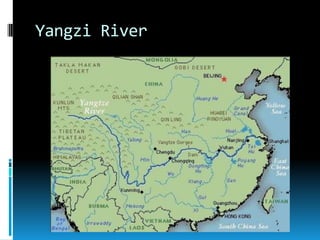
 The Chinese heartland lay along the east
coast and the valleys of the Huang He River
(Yellow River) and theYangzi River
 In ancient times as today, these fertile
farming regions supported the largest
populations
 The rivers provided water for irrigation and
served as transportation routes
Yangzi River
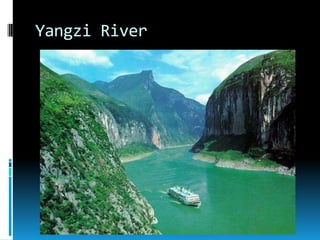
Yangzi River
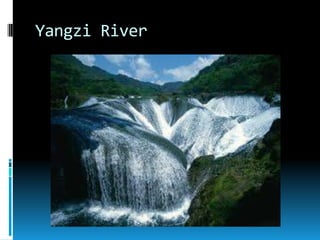
Yangzi River
Geography of China
 Beyond the heartland are the outlying
regions of Xinjiang, Mongolia, and Manchuria
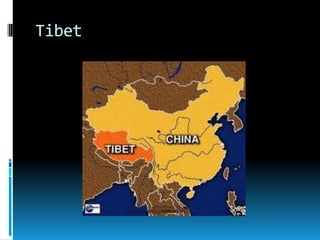
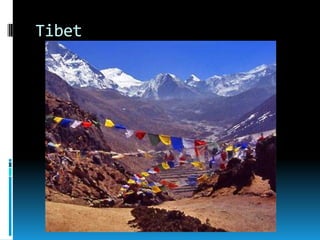
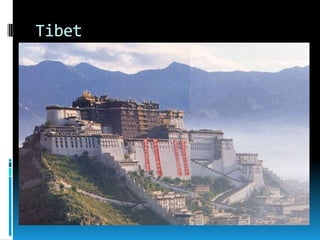
 China also extended its influence over the
Himalayan region ofTibet, which the Chinese
called Xizang
Tibet
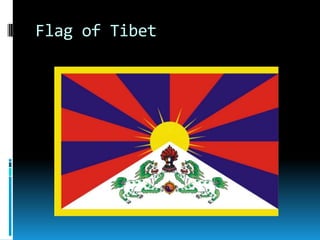
Flag of Tibet
Dalai Lama
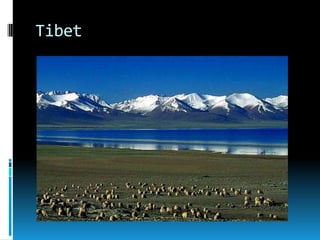
Tibet
Tibet
Tibet
Protests for a Free Tibet
The Geography of China
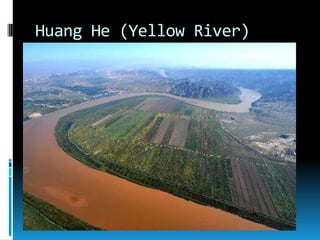
 Chinese history began in the Huang He
(Yellow River) valley, where Neolithic people
learned to farm
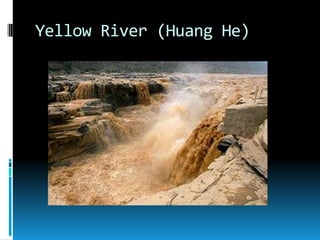
 The needed to control the flooding of the
river
 TheYellow River got its name from the loess
that it carries eastward from Siberia and
Mongolia
 Nicknamed the “River of Sorrows”
The Geography of China
 As loess settles to the river bottom, it raises
the water level
 Chinese peasants labored constantly to build
and repair dikes that kept the river from
overflowing
 If the dikes broke, flood waters burst over the
land, destroying crops and bringing mass
starvation
Huang He (Yellow River)
Yellow River (Huang He)
China Under the Shang
 The Shang dynasty ruled from 1650-1027BC
 Shang China probably more closely
resembled the city-states of Sumer than the
centralized government ruled by the
Egyptian pharaohs
 Shang society---royal
family, warriors, artisans and
merchants, peasants
Religious Beliefs
 Prayed to many gods and nature spirits
(polytheistic)
 The prayers of rulers and nobles to their
ancestors were thought to serve the
community as a whole, ensuring good
harvests or victory in war
 Many westerners saw this as “ancestor
worship”
Religious Beliefs
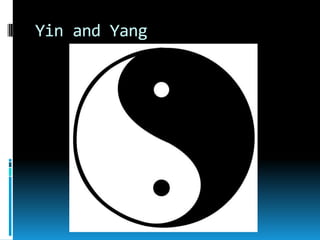
 The Chinese believed the universe reflected a
delicate balance between two forces, yin and
yang
 Yin was linked to Earth, darkness, and female
forces
 Yang stood for Heaven, light, and male forces
 The well-being of the universe depended on
maintaining balance between yin and yang
(they were not opposing forces)
Yin and Yang
System of Writing
 Writing, like religious beliefs, was an early
development that continued to influence
cultures in China throughout history
 The system used both pictographs and
ideographs
 Shang priests wrote on oracle bones
 The questions were addressed to the gods or the
spirit of an ancestor
 Priests heated the bone or shell until it cracked
and then interpreted the pattern of cracks to
provide answers or advice from the ancestors
System of Writing
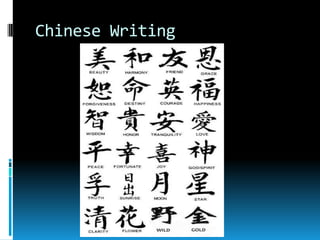
 Written Chinese took shape almost 4,000 years
ago and it evolved to include tens of thousands
of characters
 Each character represented a word or idea and
was made up of a number of different strokes
 The Chinese have simplified their writing over
the years
 Chinese is one of the most difficult languages to
learn---students must memorize over 10,000
characters to read a newspaper!!!
Chinese Writing
The Zhou Dynasty
 Battle-hardened Zhou people overthrew the
Shang dynasty
 Last from 1027-256BC
 Used the Mandate of Heaven idea to justify
their overthrow of the Shang
 Mandate of Heaven---rulers got the divine
right to rule from the gods---if a ruler was
cruel or unjust Heaven would withdraw its
support for the rulers
The Zhou Dynasty
 The Zhou rewarded their supporters by
granting them control over different regions
 China became a feudal state
 Feudalism---system of government in which
local lords governed their own lands but
owed military service and other forms of
support to the ruler
The Zhou Dynasty
 China’s economy grew
 Iron axes and ox-drawn iron plows replaced
stone, wood, and bronze tools allowing
farmers to be more productive
 New crops such as soybeans
 Began to use money, built new roads, built
new canals
 Economic expansion led to an increase in
population and territory
Chinese Achievements
 Calendar was composed of 365 ¼ days
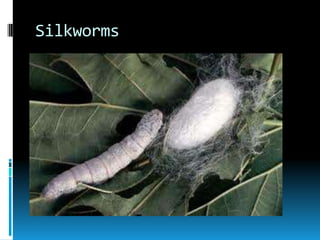
 By 1000BC, the Chinese had discovered how
to make silk thread from the cocoons of
silkworms
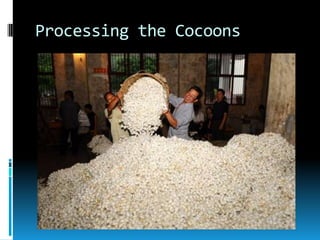
 Women did the laborious work of tending the
silkworms and processing the cocoons into
thread and weaving the threads into a
smooth cloth that was then dyed
 Only royalty and nobles could afford this silk
Silkworms
Processing the Cocoons
Spinning the Thread
Final Product (thread)
Chinese Achievements
 Silk became China’s most valuable export
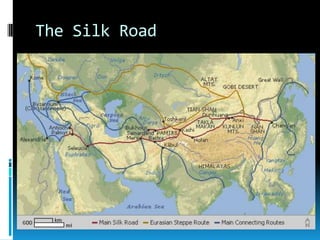
 The trade route that eventually linked China
and the Middle East became known as the
Silk Road
 To protect their control of this profitable
trade, the Chinese kept the process of silk-
making a secret
The Silk Road
Chinese Achievements
 Under the Zhou, the Chinese made the first
books
 They bound thin strips of wood or bamboo
together and then carefully drew characters
on the flat surface with a brush and ink
 Among the greatest Zhou works is the Book
of Songs---many of its poems describe such
events as planting, harvesting, praise kings
and describe court ceremonies, and also
includes sad love songs!!!

WH Chapter 3 Section 3 Notes

  • 1.
  • 2.
    The Geography ofChina  The ancient Chinese called their land “Zhongguo”---Middle Kingdom  China was isolated by long distances and physical barriers---the ancient Chinese believed that China was the center of the Earth and the sole source of civilization
  • 3.
    The Geography ofChina  Physical barriers---  West and Southwest---high mountain ranges (Tien Shan and Himalayas)  Southeast---thick jungles  North---Gobi desert  East---Pacific Ocean  All of these physical barriers helped to contribute to Chinese isolation
  • 4.
  • 5.
  • 6.
  • 7.
  • 8.
  • 9.
  • 10.
    The Geography ofChina  The Chinese heartland lay along the east coast and the valleys of the Huang He River (Yellow River) and theYangzi River  In ancient times as today, these fertile farming regions supported the largest populations  The rivers provided water for irrigation and served as transportation routes
  • 11.
  • 12.
  • 13.
  • 14.
    Geography of China Beyond the heartland are the outlying regions of Xinjiang, Mongolia, and Manchuria  China also extended its influence over the Himalayan region ofTibet, which the Chinese called Xizang
  • 15.
  • 16.
  • 17.
  • 18.
  • 19.
  • 20.
  • 21.
    Protests for aFree Tibet
  • 22.
    The Geography ofChina  Chinese history began in the Huang He (Yellow River) valley, where Neolithic people learned to farm  The needed to control the flooding of the river  TheYellow River got its name from the loess that it carries eastward from Siberia and Mongolia  Nicknamed the “River of Sorrows”
  • 23.
    The Geography ofChina  As loess settles to the river bottom, it raises the water level  Chinese peasants labored constantly to build and repair dikes that kept the river from overflowing  If the dikes broke, flood waters burst over the land, destroying crops and bringing mass starvation
  • 24.
  • 25.
  • 26.
    China Under theShang  The Shang dynasty ruled from 1650-1027BC  Shang China probably more closely resembled the city-states of Sumer than the centralized government ruled by the Egyptian pharaohs  Shang society---royal family, warriors, artisans and merchants, peasants
  • 27.
    Religious Beliefs  Prayedto many gods and nature spirits (polytheistic)  The prayers of rulers and nobles to their ancestors were thought to serve the community as a whole, ensuring good harvests or victory in war  Many westerners saw this as “ancestor worship”
  • 28.
    Religious Beliefs  TheChinese believed the universe reflected a delicate balance between two forces, yin and yang  Yin was linked to Earth, darkness, and female forces  Yang stood for Heaven, light, and male forces  The well-being of the universe depended on maintaining balance between yin and yang (they were not opposing forces)
  • 29.
  • 30.
    System of Writing Writing, like religious beliefs, was an early development that continued to influence cultures in China throughout history  The system used both pictographs and ideographs  Shang priests wrote on oracle bones  The questions were addressed to the gods or the spirit of an ancestor  Priests heated the bone or shell until it cracked and then interpreted the pattern of cracks to provide answers or advice from the ancestors
  • 31.
    System of Writing Written Chinese took shape almost 4,000 years ago and it evolved to include tens of thousands of characters  Each character represented a word or idea and was made up of a number of different strokes  The Chinese have simplified their writing over the years  Chinese is one of the most difficult languages to learn---students must memorize over 10,000 characters to read a newspaper!!!
  • 32.
  • 33.
    The Zhou Dynasty Battle-hardened Zhou people overthrew the Shang dynasty  Last from 1027-256BC  Used the Mandate of Heaven idea to justify their overthrow of the Shang  Mandate of Heaven---rulers got the divine right to rule from the gods---if a ruler was cruel or unjust Heaven would withdraw its support for the rulers
  • 34.
    The Zhou Dynasty The Zhou rewarded their supporters by granting them control over different regions  China became a feudal state  Feudalism---system of government in which local lords governed their own lands but owed military service and other forms of support to the ruler
  • 35.
    The Zhou Dynasty China’s economy grew  Iron axes and ox-drawn iron plows replaced stone, wood, and bronze tools allowing farmers to be more productive  New crops such as soybeans  Began to use money, built new roads, built new canals  Economic expansion led to an increase in population and territory
  • 36.
    Chinese Achievements  Calendarwas composed of 365 ¼ days  By 1000BC, the Chinese had discovered how to make silk thread from the cocoons of silkworms  Women did the laborious work of tending the silkworms and processing the cocoons into thread and weaving the threads into a smooth cloth that was then dyed  Only royalty and nobles could afford this silk
  • 37.
  • 38.
  • 39.
  • 40.
  • 41.
    Chinese Achievements  Silkbecame China’s most valuable export  The trade route that eventually linked China and the Middle East became known as the Silk Road  To protect their control of this profitable trade, the Chinese kept the process of silk- making a secret
  • 42.
  • 43.
    Chinese Achievements  Underthe Zhou, the Chinese made the first books  They bound thin strips of wood or bamboo together and then carefully drew characters on the flat surface with a brush and ink  Among the greatest Zhou works is the Book of Songs---many of its poems describe such events as planting, harvesting, praise kings and describe court ceremonies, and also includes sad love songs!!!