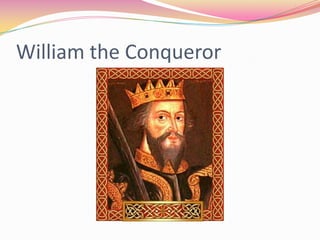
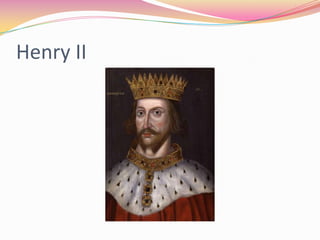
Feudal monarchs in Europe had limited power due to their reliance on vassals for military support, while nobles and the Church often had as much or more authority. In England, William the Conqueror strengthened royal power after his victory at the Battle of Hastings in 1066, when he became the first Norman king. His successor, William II, had a census conducted in 1086 known as the Domesday Book, which helped him and later English rulers establish efficient tax collection. Under King Henry II in the 12th century, England developed a common law system and early jury trials. In France, the Capetian dynasty established strong centralized royal authority over three centuries starting with Hugh Capet in 987.