Section 5 Notes
The Black Death
 The Plague started in Italy
 33% of people who contracted the disease died
 Black Death---really Bubonic Plague (as opposed to
Pneumonic Plague)
 The Black Death was spread by fleas on rats
 Yersinia pestis
 Epidemic---outbreak of a rapid-spreading disease
 At it’s height, the Black Death was killing 7,000 people
per day in Cairo, Egypt (more than the entire
population of Minersville per day)
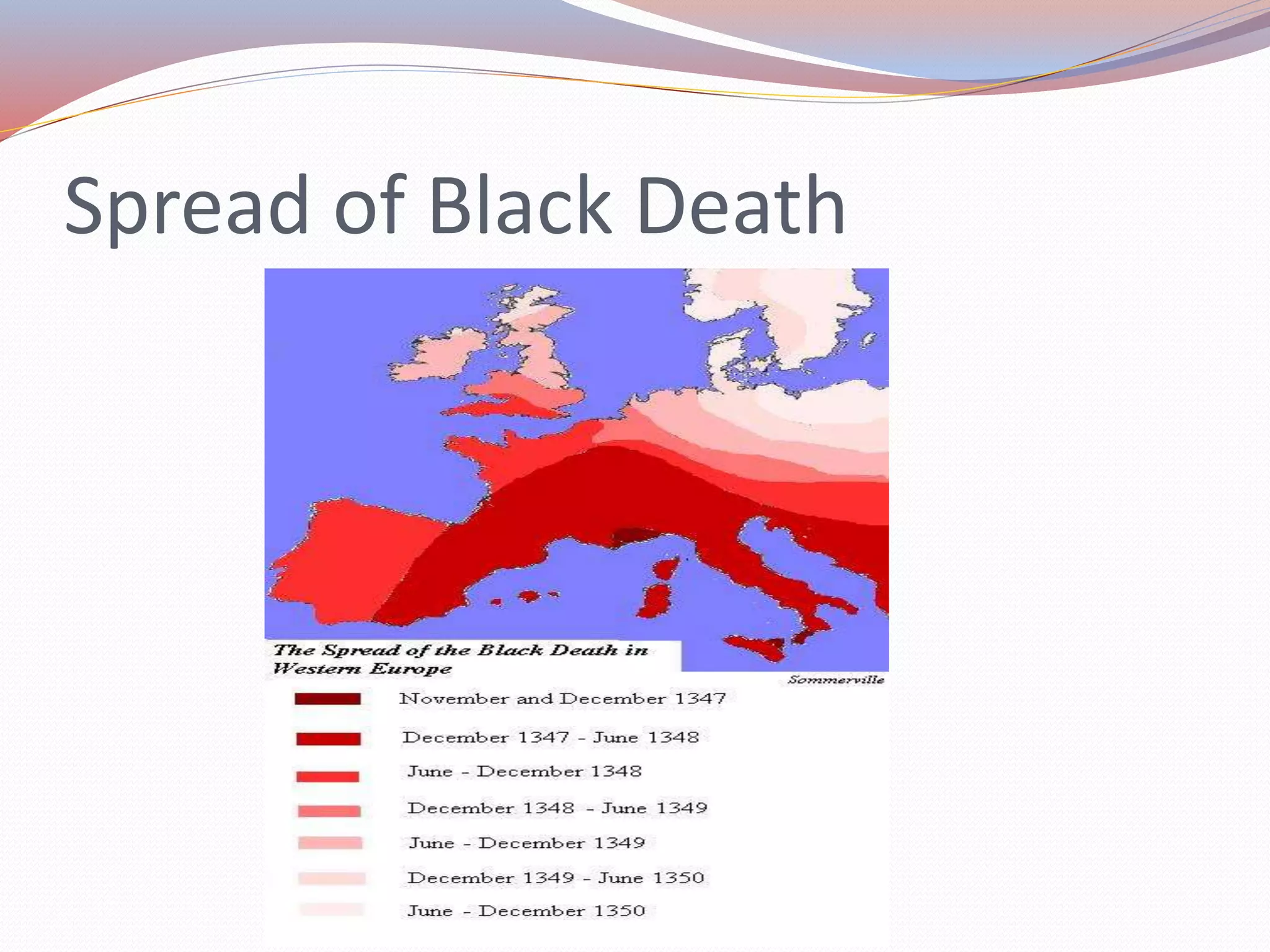
Spread of Black Death
Yersinia pestis
Rats and Fleas!!!
The Black Death
 The Black Death made society turn to magic and witchcraft
to try to cope with what was happening to them…Why???
 Eventually, Europeans began to blame Jewish people for the
outbreak of the Black Death (obviously this is ridiculous!!!)
 The Italian poet Boccaccio wrote The Decameron in which
he described the social decay he saw in Florence, Italy
during the Black Death…”and scarcely to be believed,
fathers and mothers were found to abandon their own
children…as if they had been strangers”
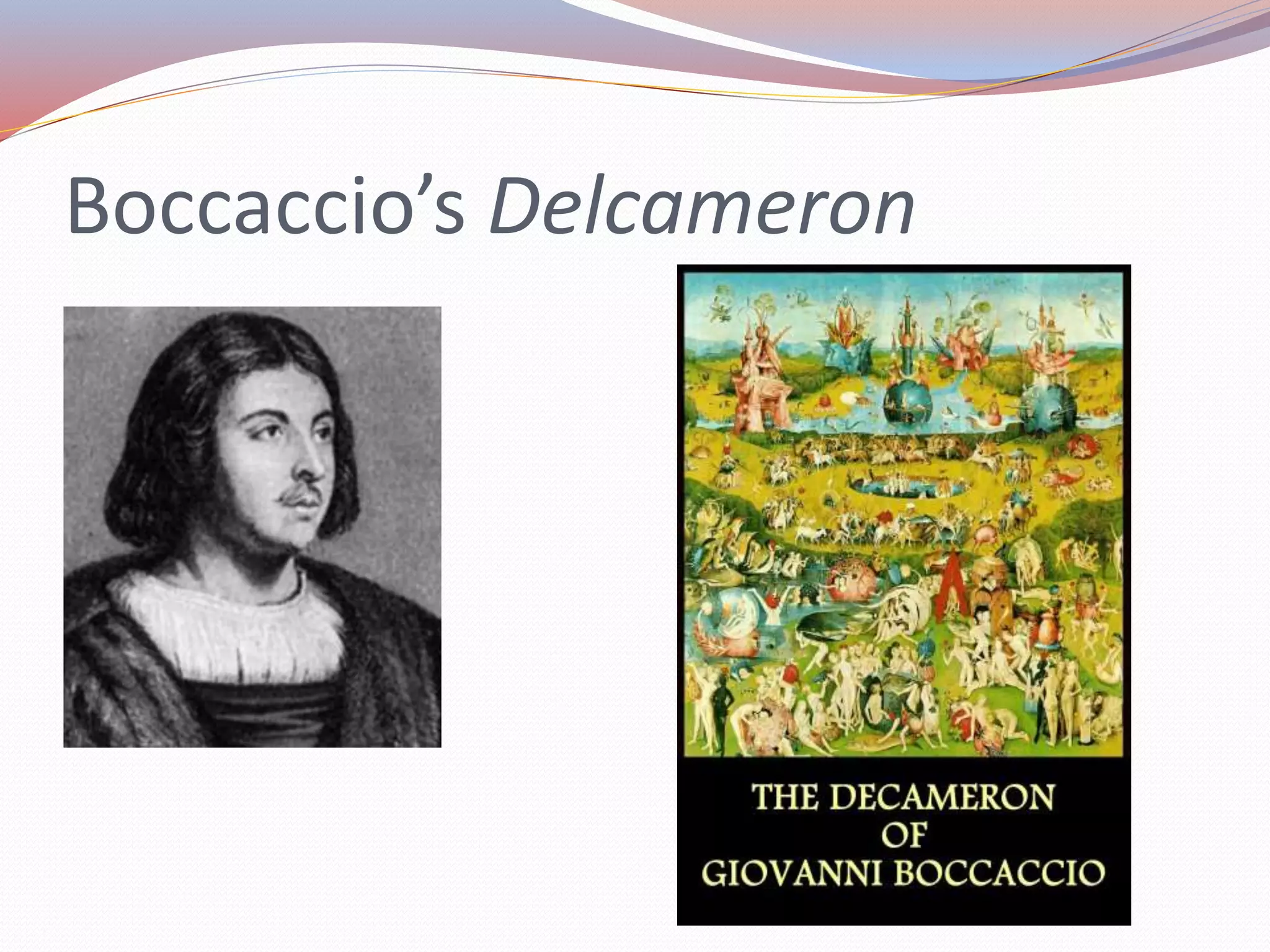
Boccaccio’s Delcameron
The Black Death
 Within hours of getting bitten, victims developed egg-
sized lumps under their arms (buboes)
 Black spots then appeared on their skin
 Spitting blood usually signified death was near
 Unsanitary conditions in towns and cities helped lead
to the quick spread of the plague (people threw
garbage and human waste into the streets)
 So many people were dying that gravediggers used
carts to collect all the corpses and buried victims in
mass graves…”Bring out your dead” was often called
out
Bubonic vs. Pneumonic Plague
Bubonic Plague Symptoms
Effects of Bubonic Plague
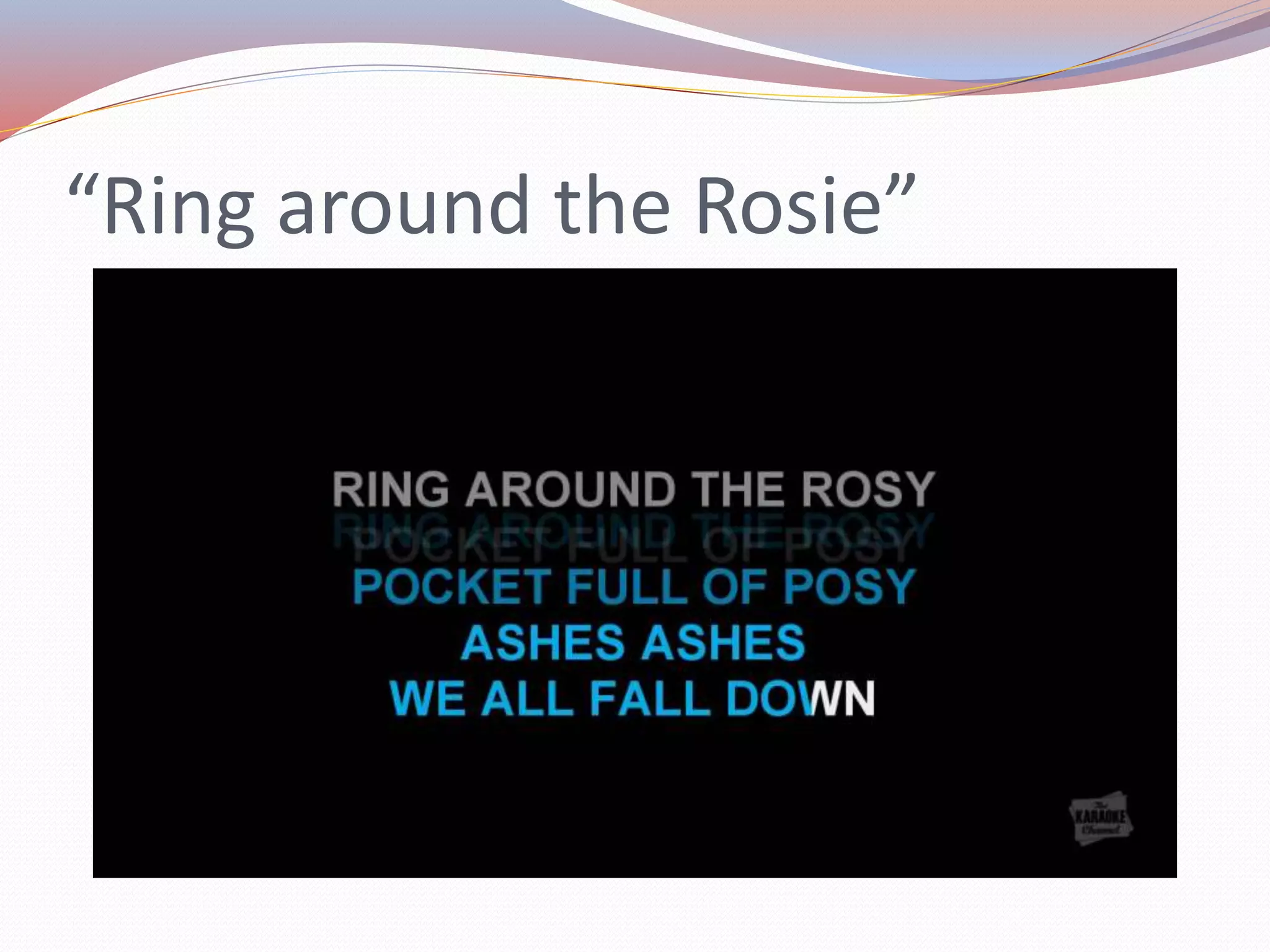
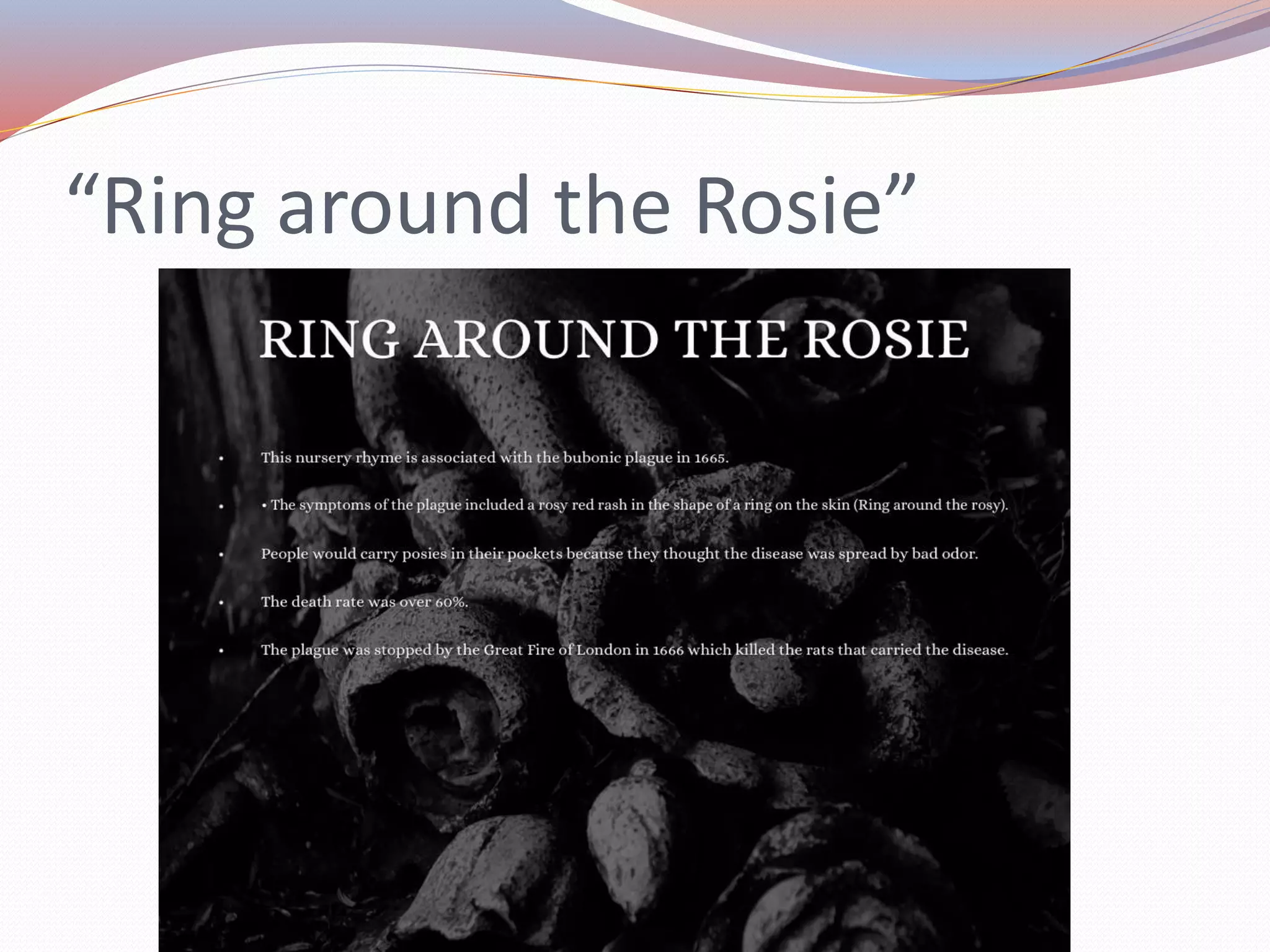
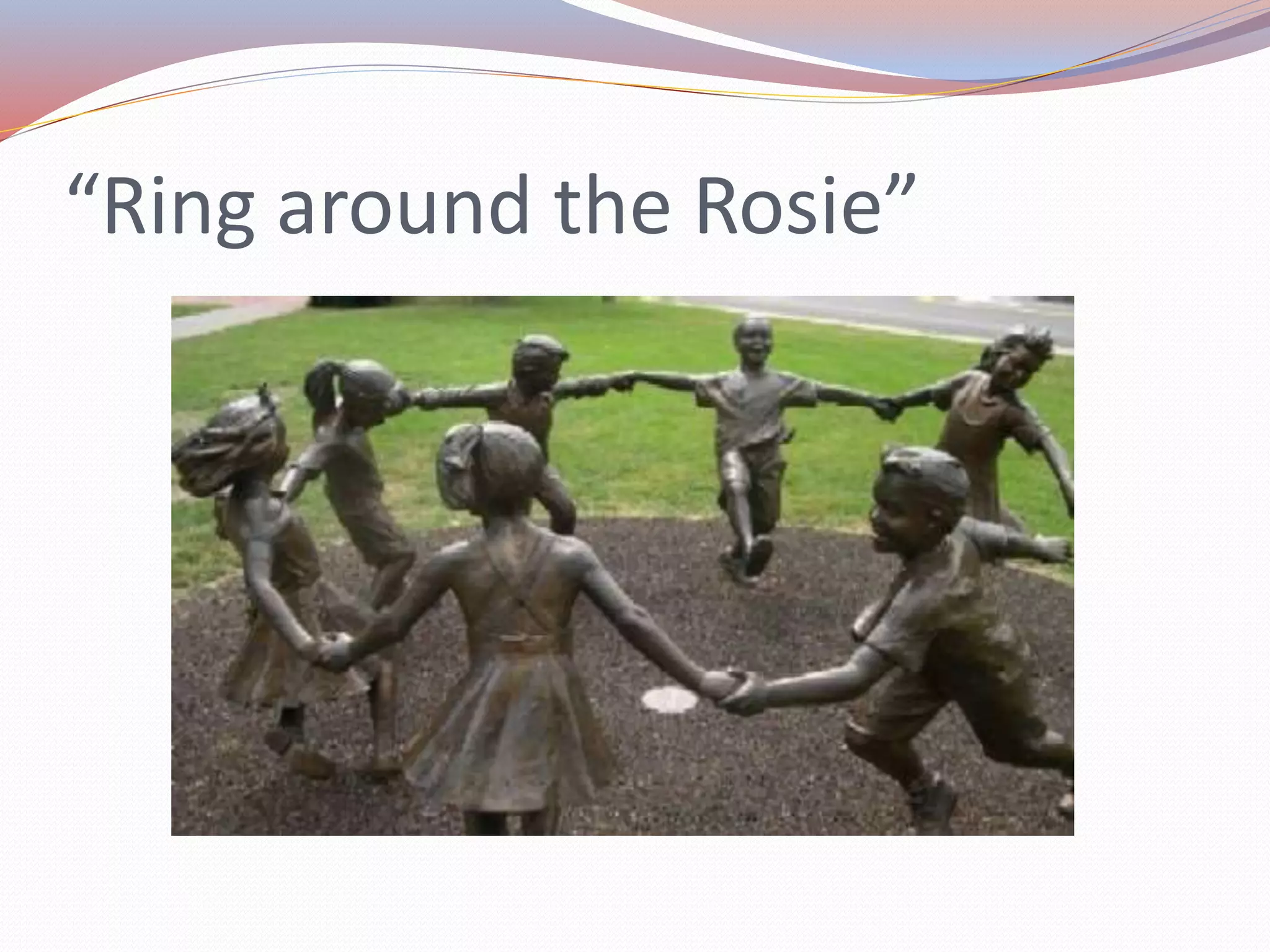
“Ring around the Rosie”
Death and the Economy
 The Black Death greatly affected the medieval economy
 As both workers and employers died, production began to
decline
 People who survived the Black Death demanded to be paid more
money to work
 This rise for labor led to inflation in the price of goods
 To stem the rise in wages, farmers converted croplands to sheep
raising
 Guilds limited apprenticeships, refused to accept new members,
and denied journeymen the chance to become masters
 Revolts sprung up all of Europe
 The plague spread both death and social unrest and it took
Western Europe 100+ years to fully recover from it
Upheaval in the Church
 Pope Clement V moved the papal court to Avignon
 Critics spoke out against the worldly, pleasure-loving
papacy and anticlergy feelings grew
 For a period of time, there were two popes---one in
Avignon in southern France and one in Rome
 This caused a schism in the Church
 Problem was not resolved 1417 when a Church council
at Constance finally ended the crisis
Upheaval in the Church
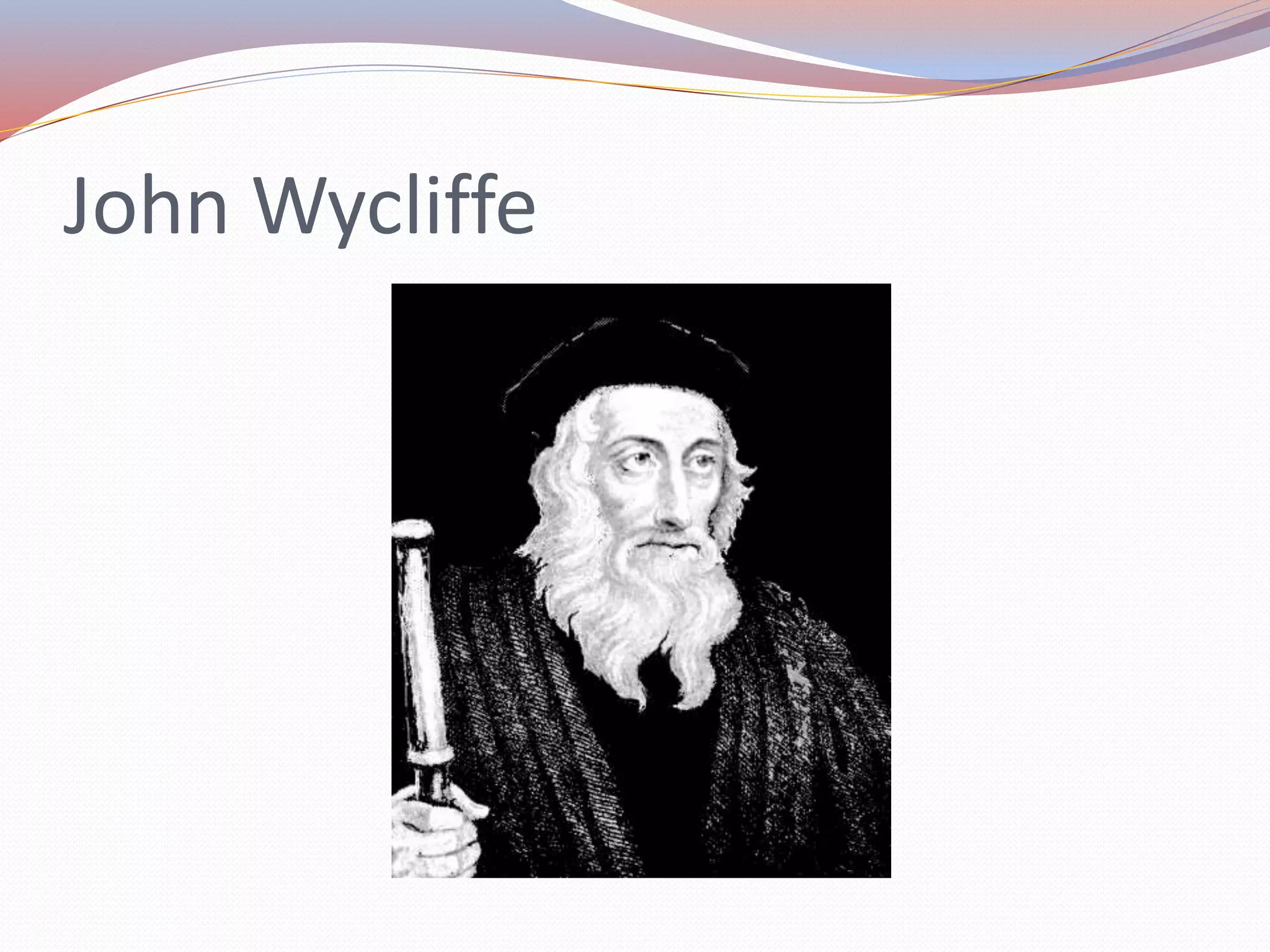
 John Wycliffe, an Oxford professor, began to attack
Church corruption
 Wycliffe said that the Bible not the Church was the
source of truth for Christians
 His followers began translating the Bible into English
so that people could read it for themselves and not
have to rely on the clergy to read it
John Wycliffe
Upheaval in the Church
 Wycliffe’s ideas spread to Bohemia (today’s Czech
Republic) where Jan Hus began leading calls for
reforming the Church
 The Church got angry and began persecuting Wycliffe
and suppressing the Hussites
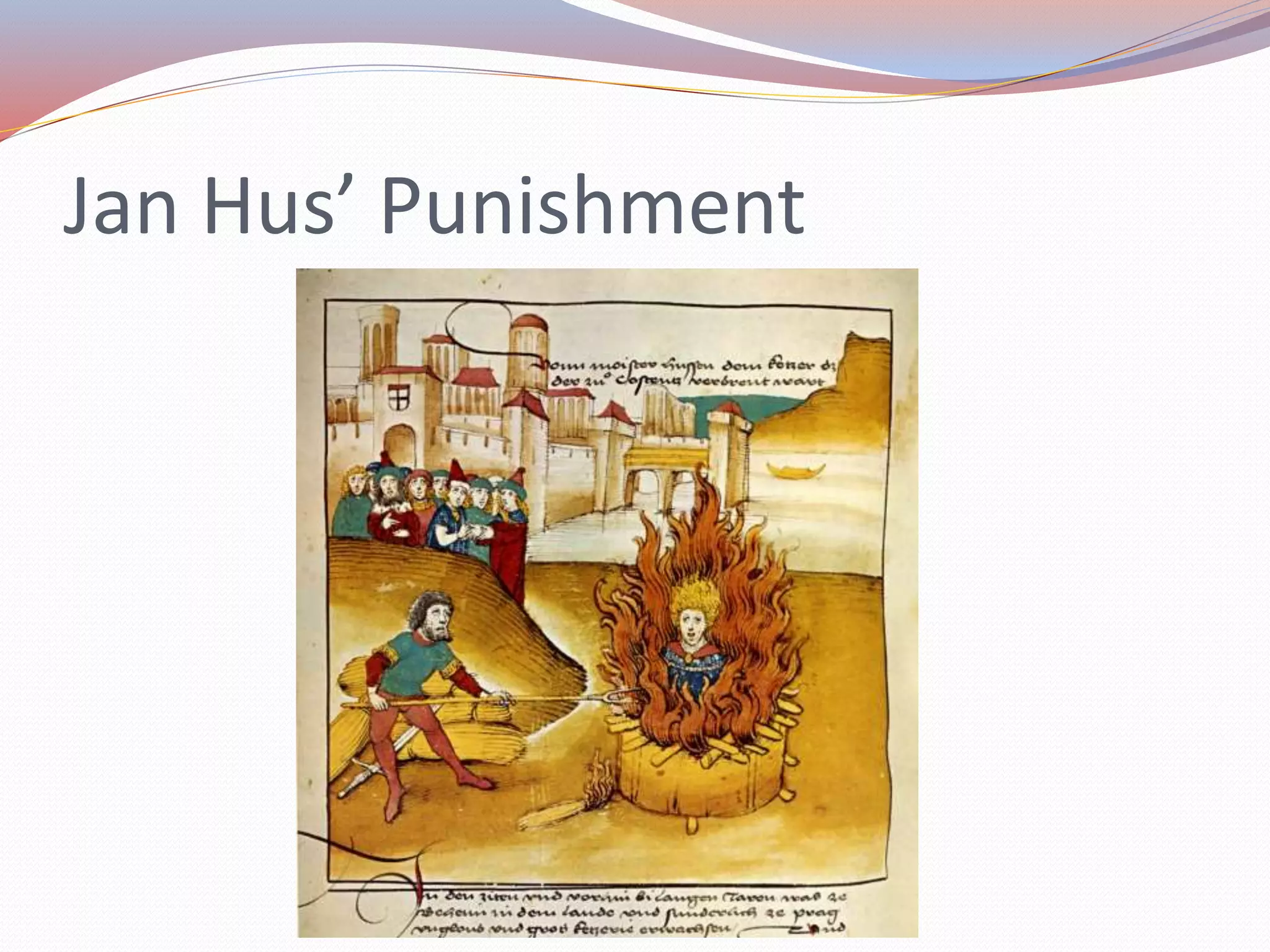
 Hus ended up getting but on trial for preaching heresy
and was burned at the stake in 1415
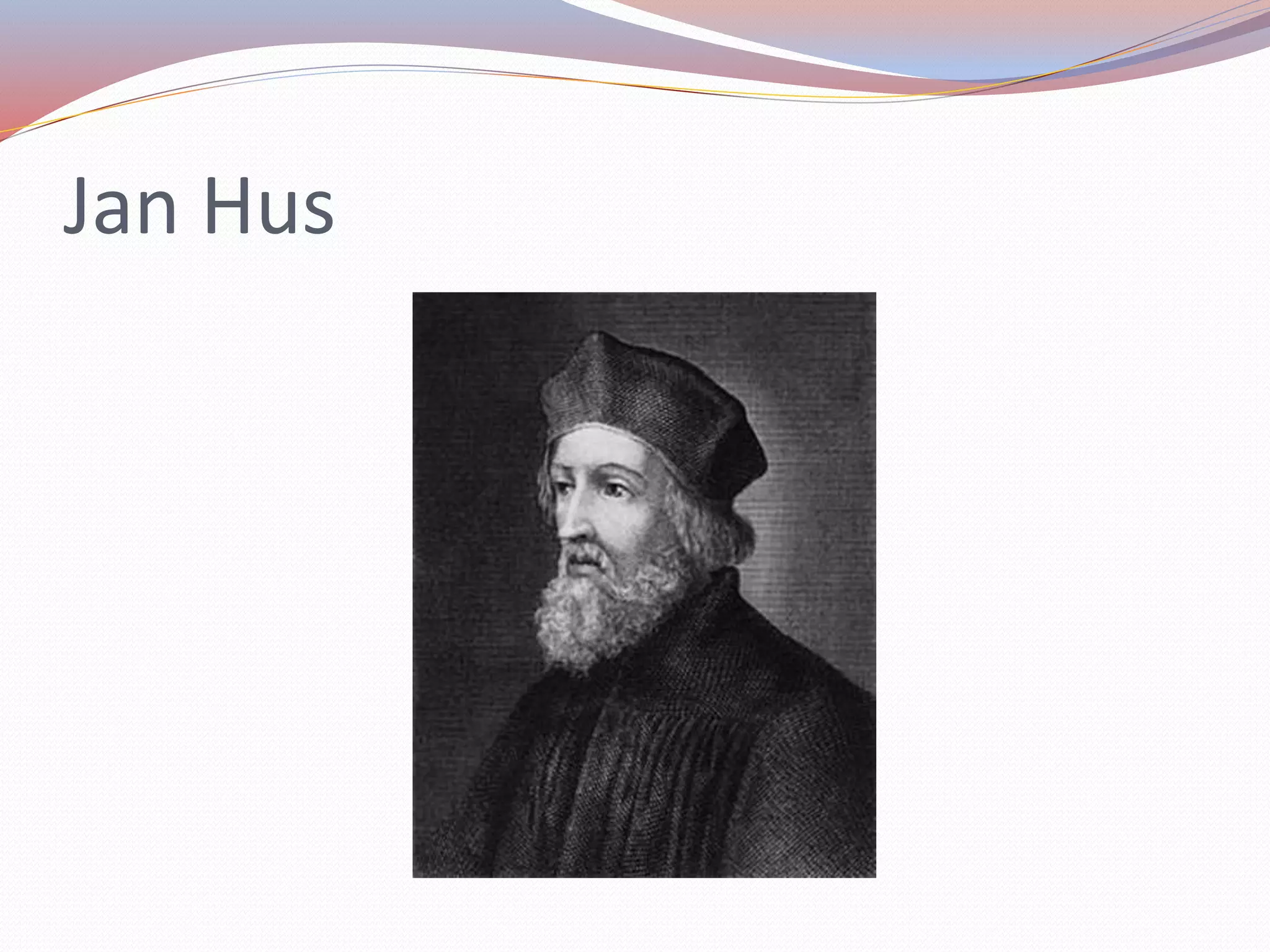
Jan Hus
Jan Hus’ Punishment
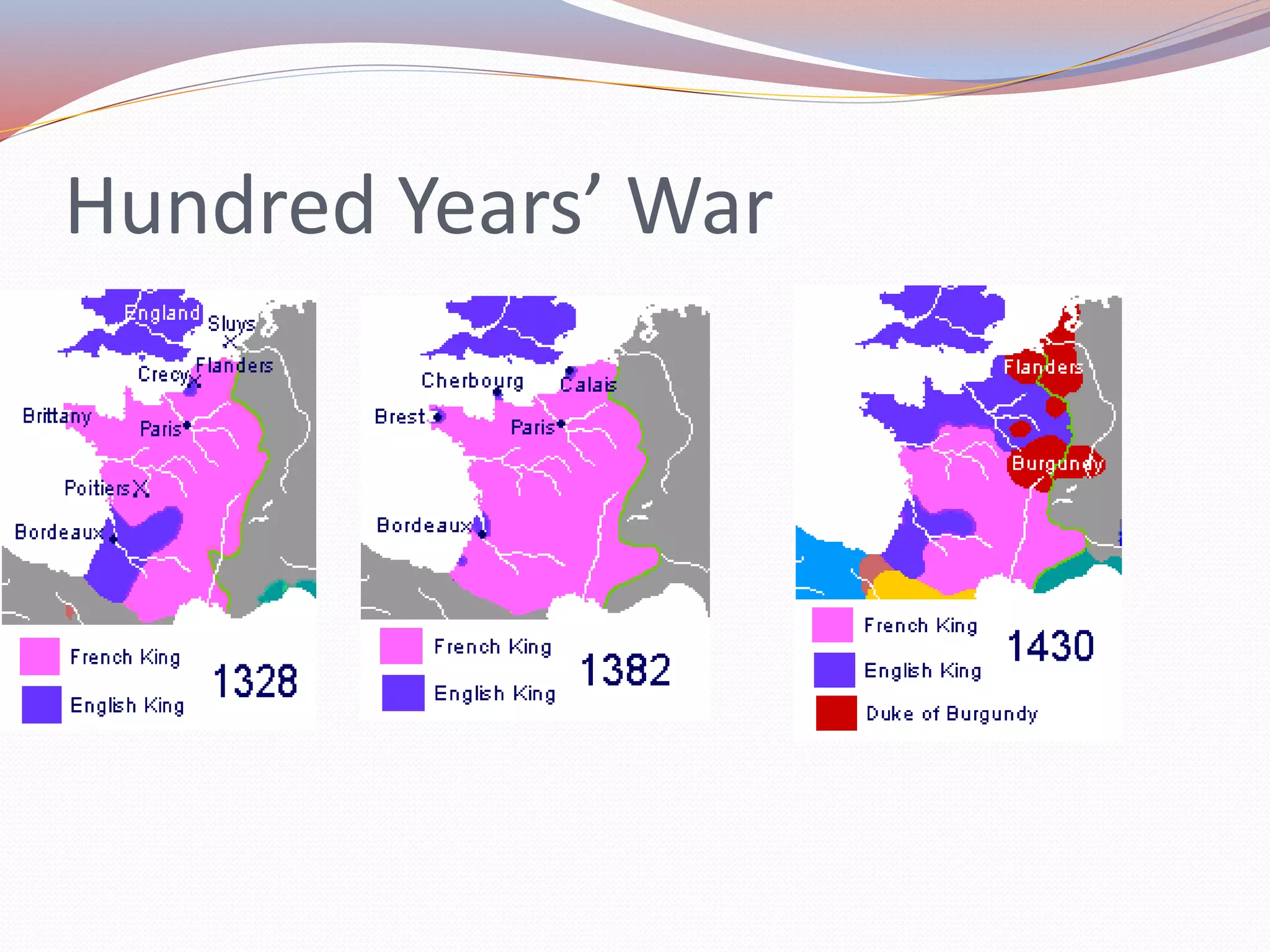
The Hundred Years’ War
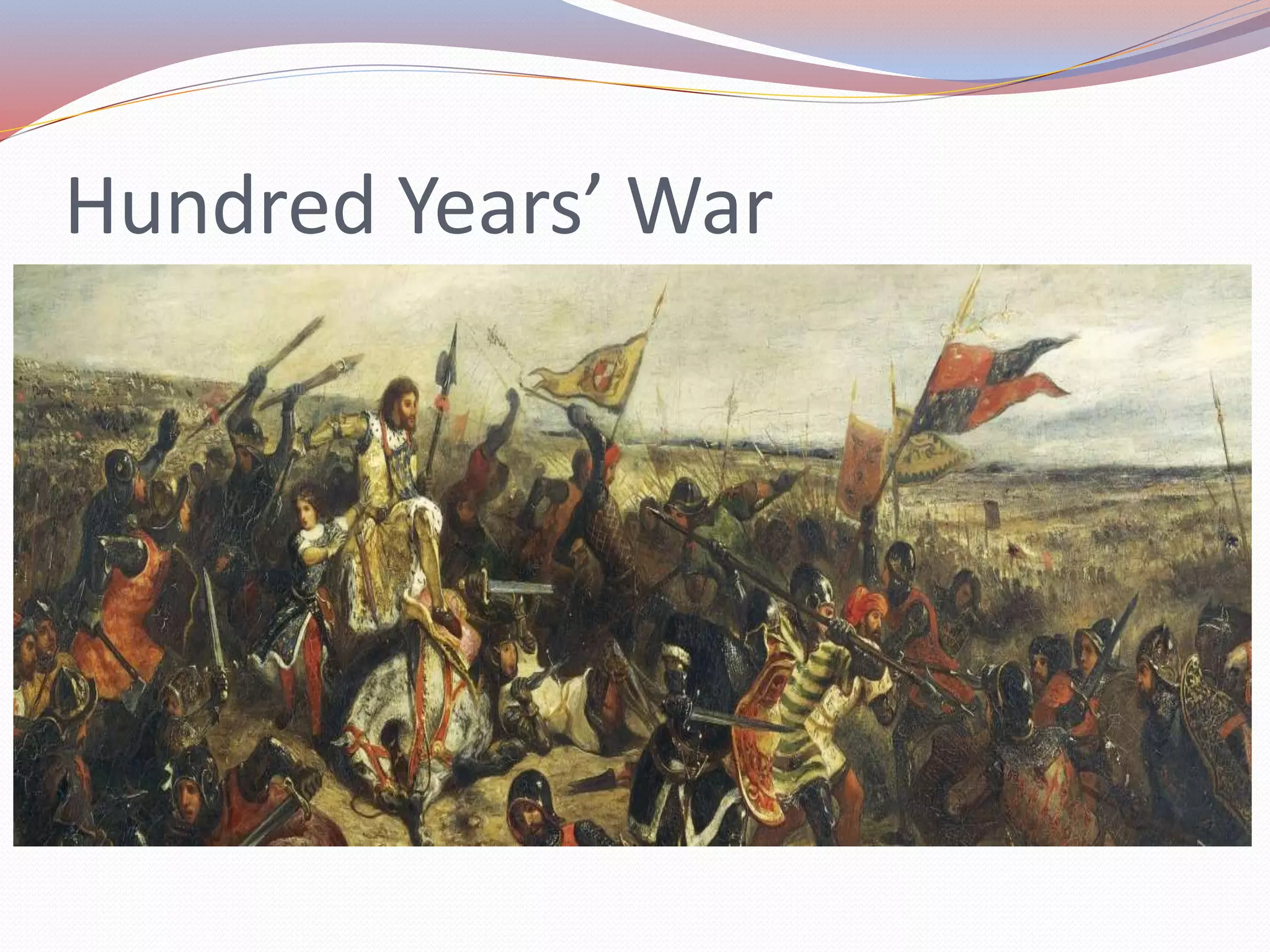
 War fought by England against France between 1337
and 1453
 3 causes for the long conflict---
 English rulers holding onto French land
 French kings extending their own power
 Economic rivalry and national pride
Hundred Years’ War
Hundred Years’ War
The Hundred Years’ War
 At first the English claimed a string of victories that
made it seem like they were going to bring all of
France under their control
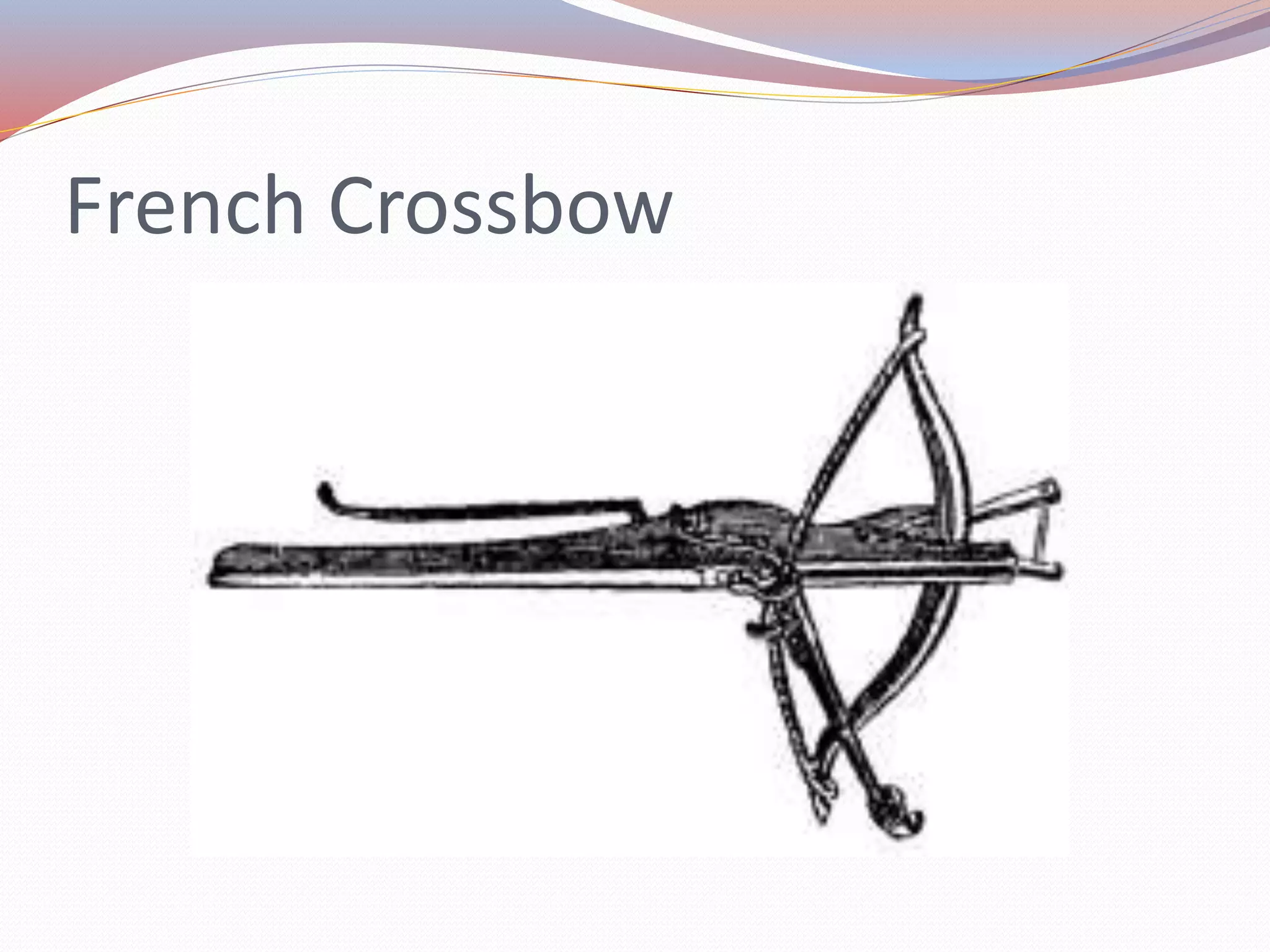
 This success was made possible by the English
longbow---powerful new weapon (its arrows could
pierce all but the heaviest armor) six feet long that
could shoot 3 arrows in the same time a French archer
could fire 1 with his crossbow
 Soon the tide would turn in France’s favor
English Longbow
French Crossbow
The Hundred Years’ War
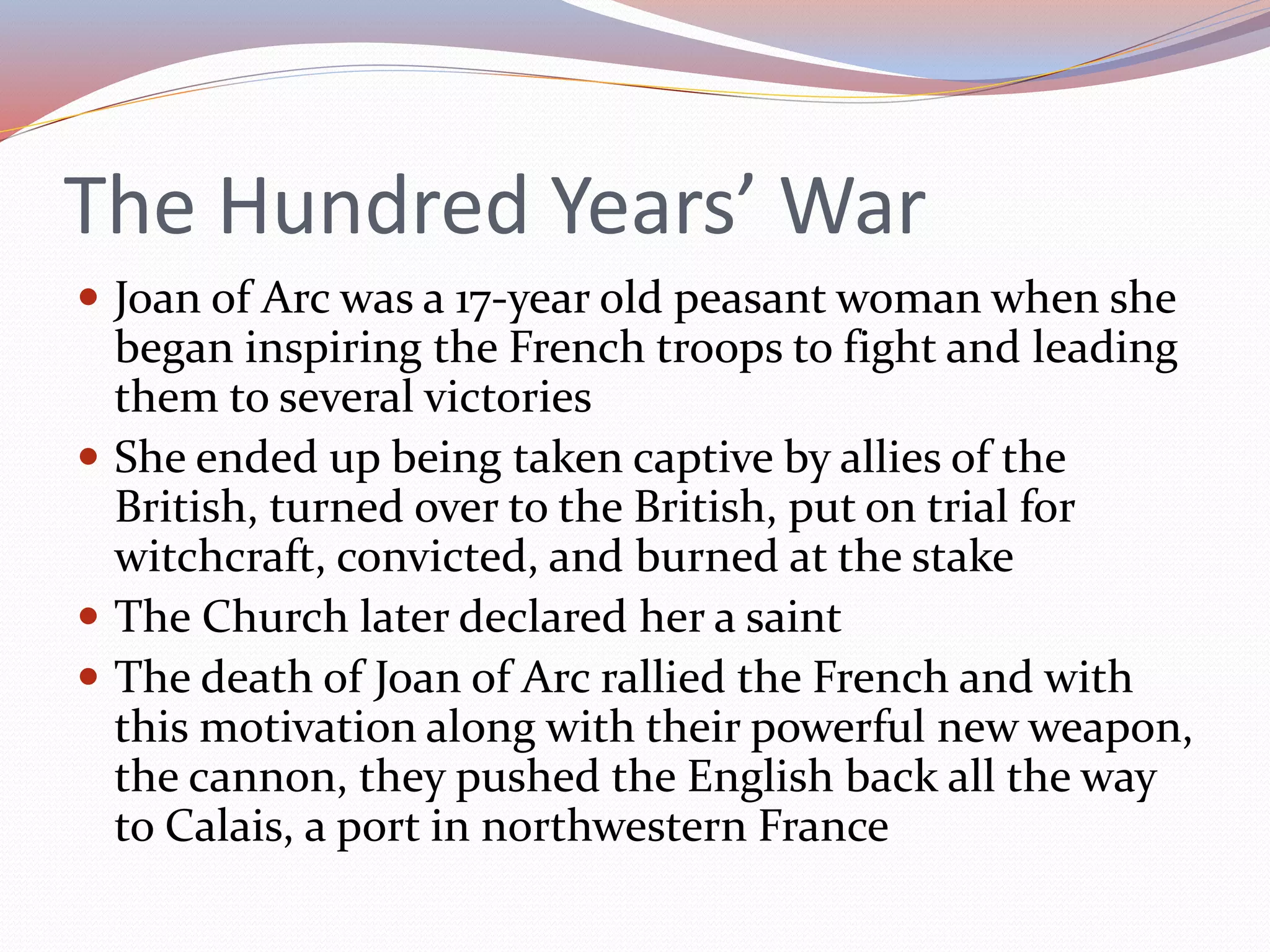
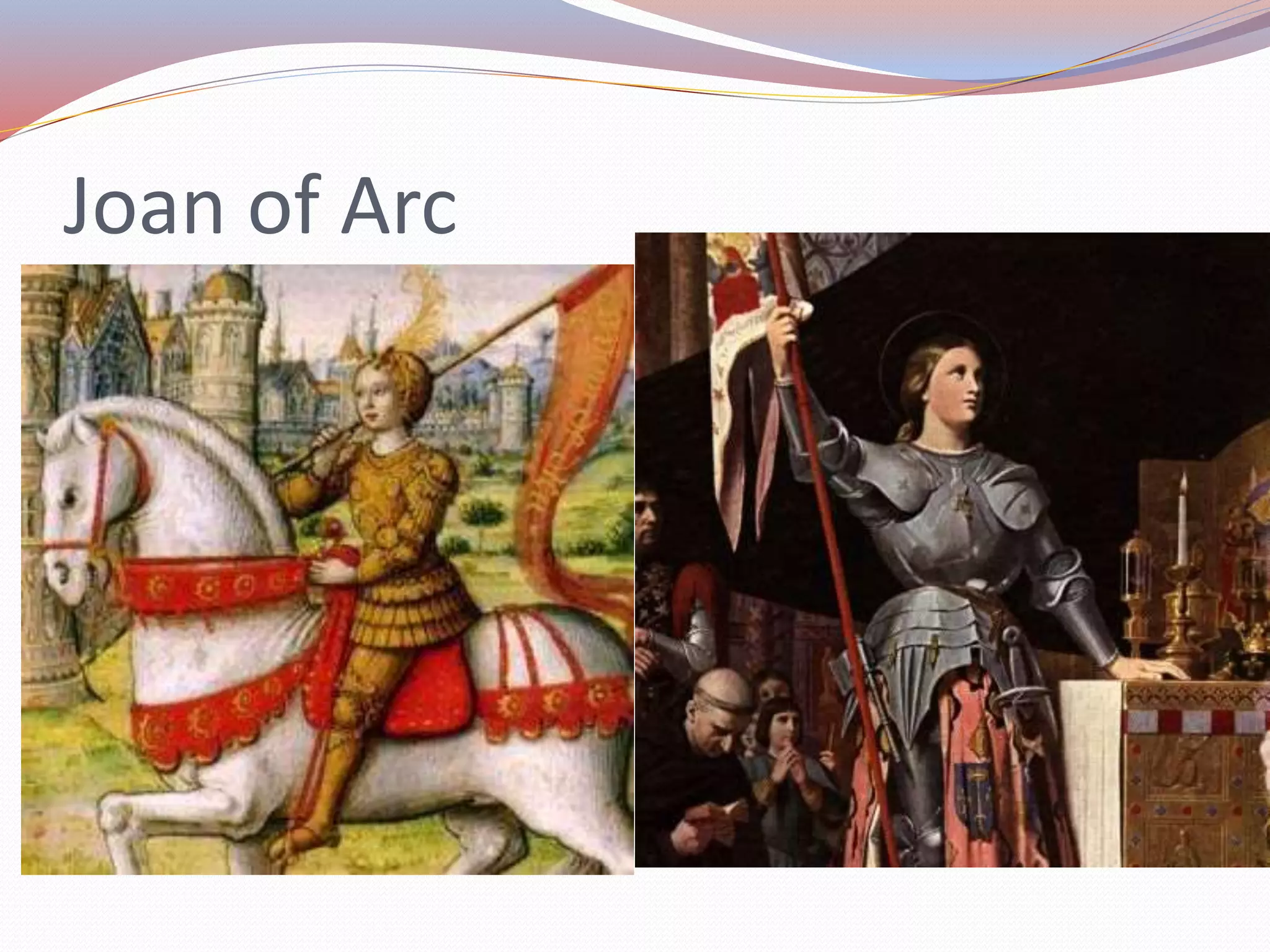
 Joan of Arc was a 17-year old peasant woman when she
began inspiring the French troops to fight and leading
them to several victories
 She ended up being taken captive by allies of the
British, turned over to the British, put on trial for
witchcraft, convicted, and burned at the stake
 The Church later declared her a saint
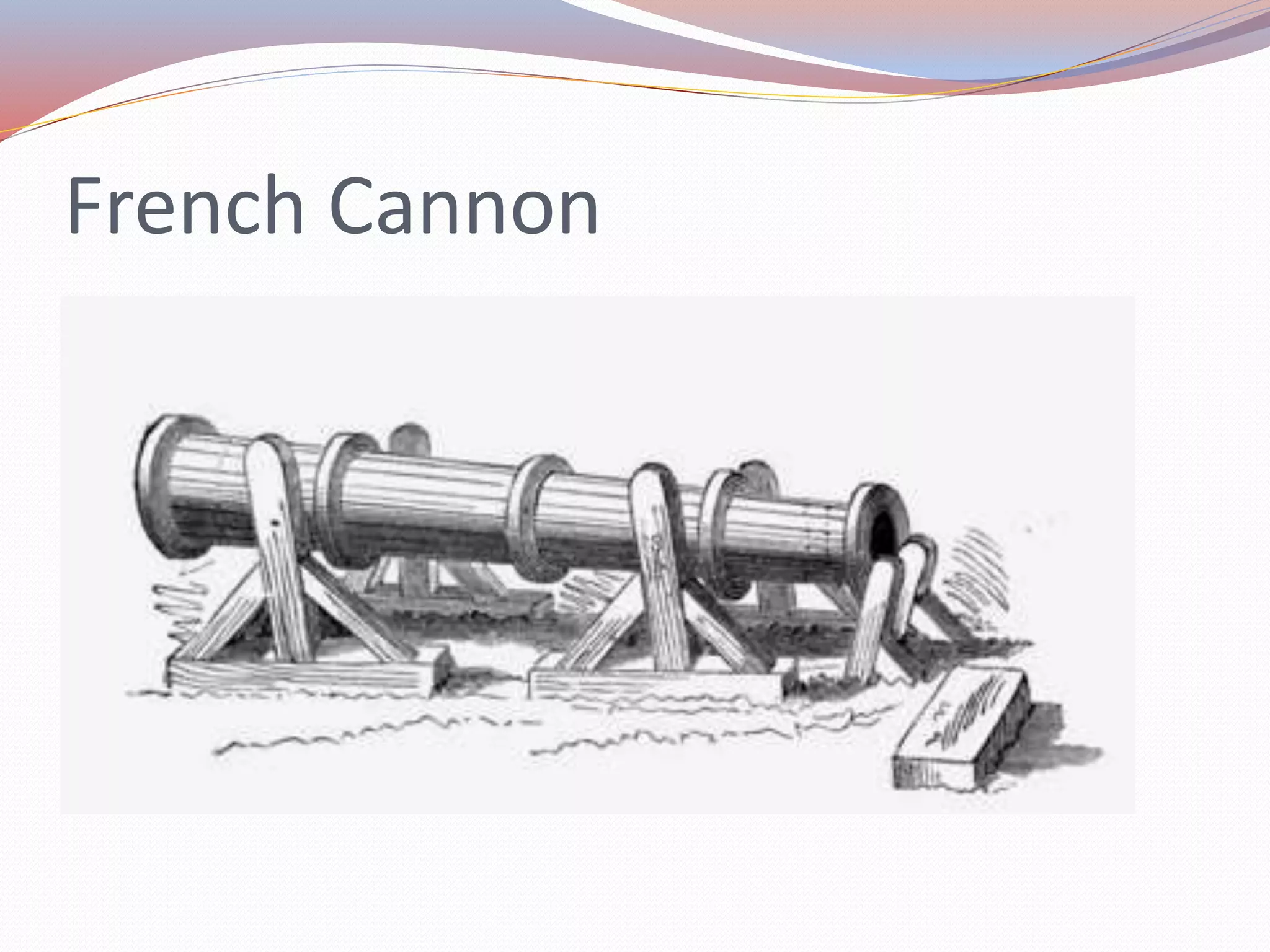
 The death of Joan of Arc rallied the French and with
this motivation along with their powerful new weapon,
the cannon, they pushed the English back all the way
to Calais, a port in northwestern France
Joan of Arc
French Cannon
The Hundred Years’ War
 Changes in France--- increased sense of national pride
and allowed French kings to expand their power
 Changes in England--- Parliament gets “power of the
purse”, dreams of an English continental empire
snuffed out, future rulers look for trading
opportunities overseas
 Changes in military strategy---common soldiers gain
new importance on battlefield due to the longbow and
cannon, castles and knights become obsolete due to
superior firepower, kings realize they need large
armies and not feudal vassals to fight wars
A Look Ahead
 1400s Europe recovers after the Black Death and
undergoes changes
 Population expands, manufacturing grows, trade
expands
 Italian cities become important shipping centers
 New technologies developed
 German miners use water power to crush ore and build
blast furnaces to make cast iron

Chapter 9 Section 5 Notes

  • 1.
  • 2.
    The Black Death The Plague started in Italy  33% of people who contracted the disease died  Black Death---really Bubonic Plague (as opposed to Pneumonic Plague)  The Black Death was spread by fleas on rats  Yersinia pestis  Epidemic---outbreak of a rapid-spreading disease  At it’s height, the Black Death was killing 7,000 people per day in Cairo, Egypt (more than the entire population of Minersville per day)
  • 3.
  • 4.
  • 5.
  • 6.
    The Black Death The Black Death made society turn to magic and witchcraft to try to cope with what was happening to them…Why???  Eventually, Europeans began to blame Jewish people for the outbreak of the Black Death (obviously this is ridiculous!!!)  The Italian poet Boccaccio wrote The Decameron in which he described the social decay he saw in Florence, Italy during the Black Death…”and scarcely to be believed, fathers and mothers were found to abandon their own children…as if they had been strangers”
  • 7.
  • 8.
    The Black Death Within hours of getting bitten, victims developed egg- sized lumps under their arms (buboes)  Black spots then appeared on their skin  Spitting blood usually signified death was near  Unsanitary conditions in towns and cities helped lead to the quick spread of the plague (people threw garbage and human waste into the streets)  So many people were dying that gravediggers used carts to collect all the corpses and buried victims in mass graves…”Bring out your dead” was often called out
  • 9.
  • 10.
  • 11.
  • 12.
  • 13.
  • 14.
  • 15.
  • 16.
    Death and theEconomy  The Black Death greatly affected the medieval economy  As both workers and employers died, production began to decline  People who survived the Black Death demanded to be paid more money to work  This rise for labor led to inflation in the price of goods  To stem the rise in wages, farmers converted croplands to sheep raising  Guilds limited apprenticeships, refused to accept new members, and denied journeymen the chance to become masters  Revolts sprung up all of Europe  The plague spread both death and social unrest and it took Western Europe 100+ years to fully recover from it
  • 17.
    Upheaval in theChurch  Pope Clement V moved the papal court to Avignon  Critics spoke out against the worldly, pleasure-loving papacy and anticlergy feelings grew  For a period of time, there were two popes---one in Avignon in southern France and one in Rome  This caused a schism in the Church  Problem was not resolved 1417 when a Church council at Constance finally ended the crisis
  • 18.
    Upheaval in theChurch  John Wycliffe, an Oxford professor, began to attack Church corruption  Wycliffe said that the Bible not the Church was the source of truth for Christians  His followers began translating the Bible into English so that people could read it for themselves and not have to rely on the clergy to read it
  • 19.
  • 20.
    Upheaval in theChurch  Wycliffe’s ideas spread to Bohemia (today’s Czech Republic) where Jan Hus began leading calls for reforming the Church  The Church got angry and began persecuting Wycliffe and suppressing the Hussites  Hus ended up getting but on trial for preaching heresy and was burned at the stake in 1415
  • 21.
  • 22.
  • 23.
    The Hundred Years’War  War fought by England against France between 1337 and 1453  3 causes for the long conflict---  English rulers holding onto French land  French kings extending their own power  Economic rivalry and national pride
  • 24.
  • 25.
  • 26.
    The Hundred Years’War  At first the English claimed a string of victories that made it seem like they were going to bring all of France under their control  This success was made possible by the English longbow---powerful new weapon (its arrows could pierce all but the heaviest armor) six feet long that could shoot 3 arrows in the same time a French archer could fire 1 with his crossbow  Soon the tide would turn in France’s favor
  • 27.
  • 28.
  • 29.
    The Hundred Years’War  Joan of Arc was a 17-year old peasant woman when she began inspiring the French troops to fight and leading them to several victories  She ended up being taken captive by allies of the British, turned over to the British, put on trial for witchcraft, convicted, and burned at the stake  The Church later declared her a saint  The death of Joan of Arc rallied the French and with this motivation along with their powerful new weapon, the cannon, they pushed the English back all the way to Calais, a port in northwestern France
  • 30.
  • 31.
  • 32.
    The Hundred Years’War  Changes in France--- increased sense of national pride and allowed French kings to expand their power  Changes in England--- Parliament gets “power of the purse”, dreams of an English continental empire snuffed out, future rulers look for trading opportunities overseas  Changes in military strategy---common soldiers gain new importance on battlefield due to the longbow and cannon, castles and knights become obsolete due to superior firepower, kings realize they need large armies and not feudal vassals to fight wars
  • 33.
    A Look Ahead 1400s Europe recovers after the Black Death and undergoes changes  Population expands, manufacturing grows, trade expands  Italian cities become important shipping centers  New technologies developed  German miners use water power to crush ore and build blast furnaces to make cast iron