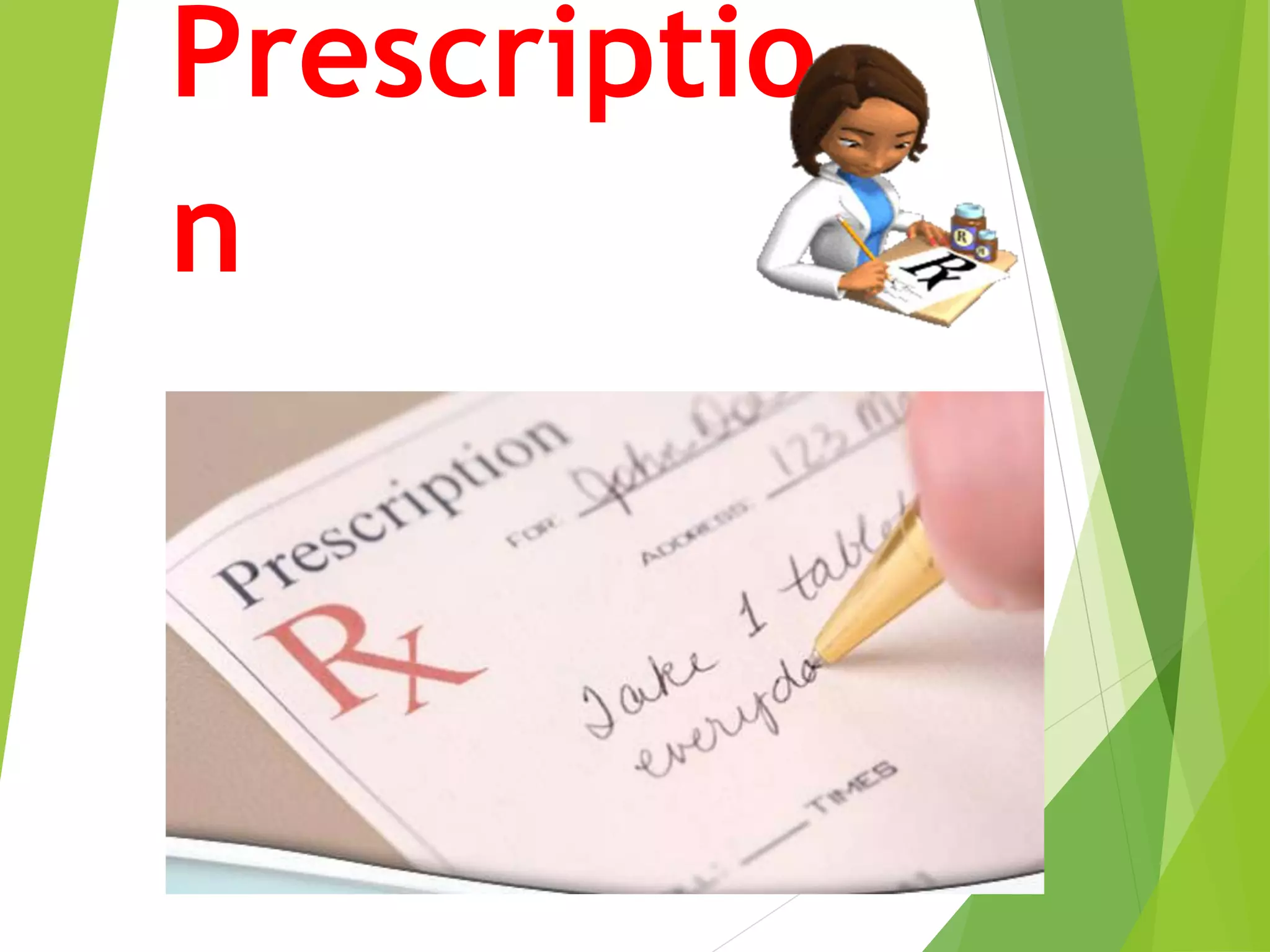
Prescriptio
n
Presented By-
Suraiya Ahmed
Neda Khurshid
Bushra Haider
Nadia Afrin
DEFINITION
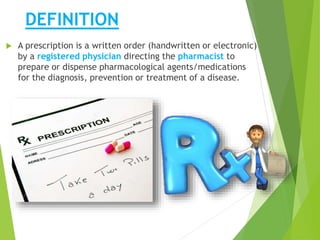
 A prescription is a written order (handwritten or electronic)
by a registered physician directing the pharmacist to
prepare or dispense pharmacological agents/medications
for the diagnosis, prevention or treatment of a disease.
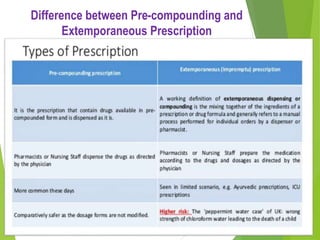
Types of Prescription
 There are mainly two types of prescription:
1) Pre compounding prescription:
Prescription for already prepared drug (by
pharmaceutical companies) e.g. Cap. Ciprofloxacin
(500 mg) etc.
2) Extemporaneous prescription:
The pharmacists prepare the medication according
to the drugs and dosages directed by the
physician.
Difference between Pre-compounding and
Extemporaneous Prescription
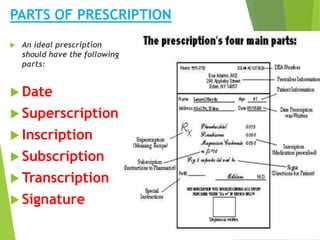
 An ideal prescription
should have the following
parts:
 Date
 Superscription
 Inscription
 Subscription
 Transcription
 Signature
PARTS OF PRESCRIPTION
Date:
-To know when the medicines were last dispensed
-To prevent the misuse of the drug by the patients
Superscription:
 Information about the prescriber (name, address and telephone
number)
 Information about the patient (full name, address, gender, DOB,
weight & height if necessary)
 Rx symbol
-It is an abbreviation of Latin term “Recipe”, meaning “to take” or
“take thou”
 Inscription:
-Main part of the prescription.
-It gives the information about the name of the drug
(generic or trade name), its formulation and unit
dosage.
 Subscription:
- Subscription provides information to the pharmacists
about the quantity and dosage form of the drug to be
dispensed.
 Transcription:
- Transcription is the prescribers direction to the
patient contains instruction about the amount of drug,
time and frequency of doses to be taken.
 Signature & Instructions:
- Prescription should be signed by the prescriber.
-Refill instructions (if needed)
-Special instructions (if any)
A Prescription should be:
-Kept simple
-Abbreviations free (if necessary Latin abbreviations should be used)
-Trailing zeros should be avoided, Leading zeros must be added
-It should provide clear and specific directions
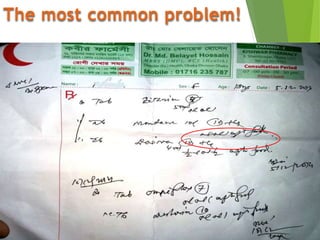
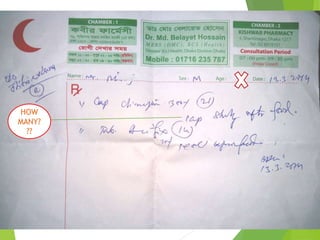
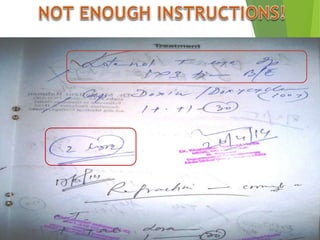
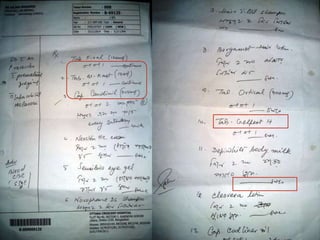
We collected and studied about 20 prescriptions
from different patients visiting different doctors
in Dhaka and found the problems occurring
during prescribing.
The most common problem!
HOW
MANY?
??
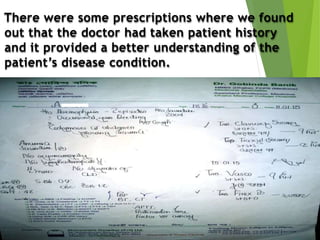
There were some prescriptions where we found
out that the doctor had taken patient history
and it provided a better understanding of the
patient’s disease condition.
COMPARISON
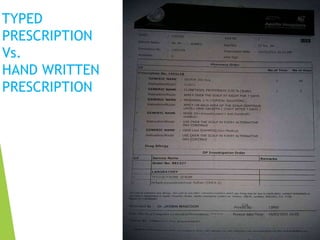
TYPED
PRESCRIPTION
Vs.
HAND WRITTEN
PRESCRIPTION
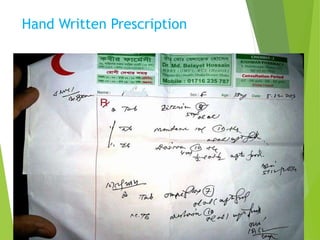
Hand Written Prescription
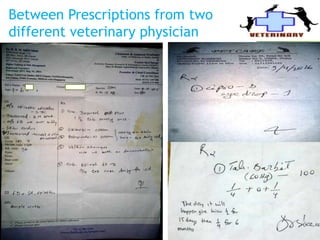
Between Prescriptions from two
different veterinary physician
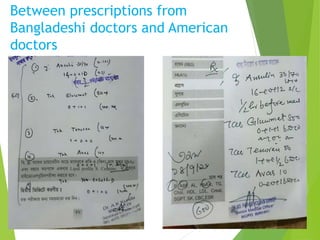
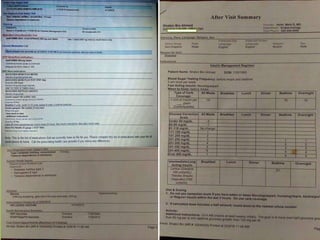
Between prescriptions from
Bangladeshi doctors and American
doctors
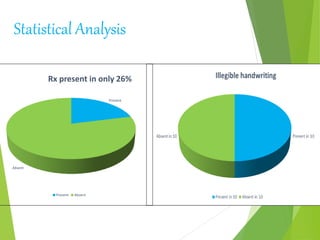
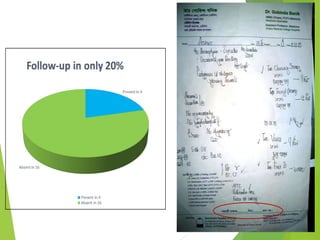
Statistical Analysis
Present
Absent
Rx present in only 26%
Present Absent
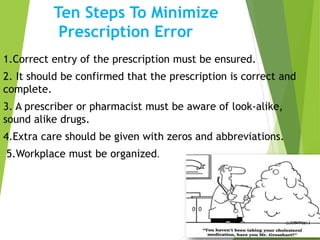
Ten Steps To Minimize
Prescription Error
1.Correct entry of the prescription must be ensured.
2. It should be confirmed that the prescription is correct and
complete.
3. A prescriber or pharmacist must be aware of look-alike,
sound alike drugs.
4.Extra care should be given with zeros and abbreviations.
5.Workplace must be organized.
Ten Steps To Minimize
Prescription Error
6. Distraction should be reduced when possible.
7. Focus must be given on reducing stress and
balancing heavy workloads.
8. Drugs should be stored properly taking adequate
time.
9. All prescriptions should be checked thoroughly.
10. Thorough patient counseling should be provided.
Prescription

Prescription

  • 1.
  • 2.
    Presented By- Suraiya Ahmed NedaKhurshid Bushra Haider Nadia Afrin
  • 3.
    DEFINITION  A prescriptionis a written order (handwritten or electronic) by a registered physician directing the pharmacist to prepare or dispense pharmacological agents/medications for the diagnosis, prevention or treatment of a disease.
  • 4.
    Types of Prescription There are mainly two types of prescription: 1) Pre compounding prescription: Prescription for already prepared drug (by pharmaceutical companies) e.g. Cap. Ciprofloxacin (500 mg) etc. 2) Extemporaneous prescription: The pharmacists prepare the medication according to the drugs and dosages directed by the physician.
  • 5.
    Difference between Pre-compoundingand Extemporaneous Prescription
  • 6.
     An idealprescription should have the following parts:  Date  Superscription  Inscription  Subscription  Transcription  Signature PARTS OF PRESCRIPTION
  • 7.
    Date: -To know whenthe medicines were last dispensed -To prevent the misuse of the drug by the patients Superscription:  Information about the prescriber (name, address and telephone number)  Information about the patient (full name, address, gender, DOB, weight & height if necessary)  Rx symbol -It is an abbreviation of Latin term “Recipe”, meaning “to take” or “take thou”
  • 8.
     Inscription: -Main partof the prescription. -It gives the information about the name of the drug (generic or trade name), its formulation and unit dosage.  Subscription: - Subscription provides information to the pharmacists about the quantity and dosage form of the drug to be dispensed.  Transcription: - Transcription is the prescribers direction to the patient contains instruction about the amount of drug, time and frequency of doses to be taken.
  • 9.
     Signature &Instructions: - Prescription should be signed by the prescriber. -Refill instructions (if needed) -Special instructions (if any) A Prescription should be: -Kept simple -Abbreviations free (if necessary Latin abbreviations should be used) -Trailing zeros should be avoided, Leading zeros must be added -It should provide clear and specific directions
  • 10.
    We collected andstudied about 20 prescriptions from different patients visiting different doctors in Dhaka and found the problems occurring during prescribing.
  • 11.
  • 12.
  • 15.
    There were someprescriptions where we found out that the doctor had taken patient history and it provided a better understanding of the patient’s disease condition.
  • 17.
  • 18.
  • 19.
  • 20.
    Between Prescriptions fromtwo different veterinary physician
  • 21.
    Between prescriptions from Bangladeshidoctors and American doctors
  • 23.
  • 25.
    Ten Steps ToMinimize Prescription Error 1.Correct entry of the prescription must be ensured. 2. It should be confirmed that the prescription is correct and complete. 3. A prescriber or pharmacist must be aware of look-alike, sound alike drugs. 4.Extra care should be given with zeros and abbreviations. 5.Workplace must be organized.
  • 26.
    Ten Steps ToMinimize Prescription Error 6. Distraction should be reduced when possible. 7. Focus must be given on reducing stress and balancing heavy workloads. 8. Drugs should be stored properly taking adequate time. 9. All prescriptions should be checked thoroughly. 10. Thorough patient counseling should be provided.