Lesson Demonstrators
Elixir Shalinee Li P. Dayday
Elixir Christopher S. Bandoquillo
Elixir Victor F. Melitante Jr
Elixir Juan Carlos J. Lagahit
Protein is a chain of amino acids joined by peptide
bonds in a specific sequence.
Protein is an essential nutrient. There is no life
without protein. Protein is contained in every part of your
body, the skin, muscles, hair, blood, body organs, eyes,
even fingernails and bone. Next to water, protein is the
most plentiful substance in your body.
(Lauritzen, Georgia C.)
Fibrous proteins are found only in animals.
They usually serve as structural entities — for
example, connective tissue, tendons, and muscle
fiber. They are normally insoluble in water.
Globular proteins usually do not serve a
structural function — they act as transporters, like
hemoglobin, and are often enzymes. They are
usually water-soluble
Protein has a critical physiological function. Protein
is primarily used in the body to build, maintain, and repair
body tissues.
In the event that protein intake is greater than that
required by the body for this primary function, excessive
protein is converted to energy for immediate use or
stored in the body as fat.
Protein energy will be used only after other energy
sources (carbohydrate and fat) are exhausted or
unavailable.
 Protein is vital in the maintenance of body tissue,
including development and repair.
 Protein is the major source of energy.
 Protein is involved in the creation of some
hormones, help control body functions that involve
the interaction of several organs and help regulate
cell growth.
 Protein produces enzymes that increase the rate
of chemical reactions in the body.
 Proteins transport small molecules through the
organism. Hemoglobin is the protein that
transports oxygen to the cells and it is called as
transport protein.
 Proteins called antibodies help rid the body of
foreign protein and help prevent infections,
illnesses and diseases.
 protein help store other substance in the organism.
For example, iron is stored in the liver in a
complex with the protein ferritin.
 Proteins help mediate cell responses, such as the
protein rhodopsin, found in the eye and involved in
the vision process.
 Proteins make up a large protein of muscle fiber
and help in the movement of various parts of our
bodies.
 Skin and bone contain collagen, a fibrous protein
Proteins are composed of small units. These
units are the amino acids which are called the building
blocks of protein. There are about 20 different amino
acids which are commonly known.
Each different protein is composed of various
amino acids put together in varying order with almost
limitless combinations. Most proteins are large
molecules that may contain several hundred amino
acids arranged in branches and chains.
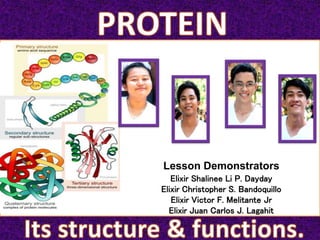
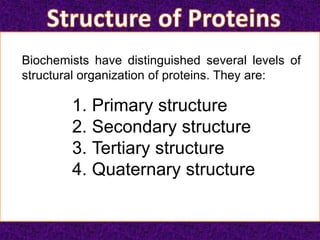
Biochemists have distinguished several levels of
structural organization of proteins. They are:
1. Primary structure
2. Secondary structure
3. Tertiary structure
4. Quaternary structure
Elixir JUAN CARLOS
J.LAGAHIT
Elixir SHALINEE LI P. DAYDAY
Elixir CHRISTOPHER S. BANDOQUILLO
Elixir VICTOR F. MELITANTE JR.

Protein; its functions

  • 1.
    Lesson Demonstrators Elixir ShalineeLi P. Dayday Elixir Christopher S. Bandoquillo Elixir Victor F. Melitante Jr Elixir Juan Carlos J. Lagahit
  • 2.
    Protein is achain of amino acids joined by peptide bonds in a specific sequence. Protein is an essential nutrient. There is no life without protein. Protein is contained in every part of your body, the skin, muscles, hair, blood, body organs, eyes, even fingernails and bone. Next to water, protein is the most plentiful substance in your body. (Lauritzen, Georgia C.)
  • 3.
    Fibrous proteins arefound only in animals. They usually serve as structural entities — for example, connective tissue, tendons, and muscle fiber. They are normally insoluble in water. Globular proteins usually do not serve a structural function — they act as transporters, like hemoglobin, and are often enzymes. They are usually water-soluble
  • 4.
    Protein has acritical physiological function. Protein is primarily used in the body to build, maintain, and repair body tissues. In the event that protein intake is greater than that required by the body for this primary function, excessive protein is converted to energy for immediate use or stored in the body as fat. Protein energy will be used only after other energy sources (carbohydrate and fat) are exhausted or unavailable.
  • 5.
     Protein isvital in the maintenance of body tissue, including development and repair.  Protein is the major source of energy.  Protein is involved in the creation of some hormones, help control body functions that involve the interaction of several organs and help regulate cell growth.  Protein produces enzymes that increase the rate of chemical reactions in the body.
  • 6.
     Proteins transportsmall molecules through the organism. Hemoglobin is the protein that transports oxygen to the cells and it is called as transport protein.  Proteins called antibodies help rid the body of foreign protein and help prevent infections, illnesses and diseases.  protein help store other substance in the organism. For example, iron is stored in the liver in a complex with the protein ferritin.
  • 7.
     Proteins helpmediate cell responses, such as the protein rhodopsin, found in the eye and involved in the vision process.  Proteins make up a large protein of muscle fiber and help in the movement of various parts of our bodies.  Skin and bone contain collagen, a fibrous protein
  • 8.
    Proteins are composedof small units. These units are the amino acids which are called the building blocks of protein. There are about 20 different amino acids which are commonly known. Each different protein is composed of various amino acids put together in varying order with almost limitless combinations. Most proteins are large molecules that may contain several hundred amino acids arranged in branches and chains.
  • 9.
    Biochemists have distinguishedseveral levels of structural organization of proteins. They are: 1. Primary structure 2. Secondary structure 3. Tertiary structure 4. Quaternary structure
  • 10.
  • 11.
  • 12.
  • 13.
    Elixir VICTOR F.MELITANTE JR.