VIRUSES
DR.PRINCE C P
Associate Professor , Department of Microbiology,
Mother Theresa Post Graduate & Research Institute of Health Sciences
(Government of Puducherry Institution)
General characters of Viruses
• Small size (20-300 nm) / bacteria (size measured in μm)
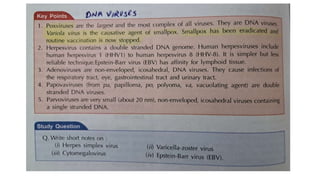
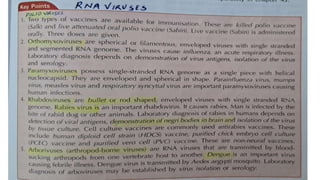
• Viral genome – single type of nucleic acid:
• DNA – dezoxyriboviruses
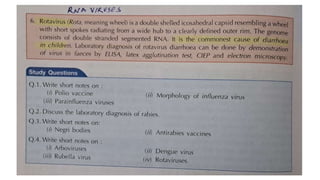
• RNA - riboviruses
• Totally dependant on living cells for all metabolic processes
• May infect humans, animals, plants, bacteria, fungi,parasites, insects
• Virion = viral corpuscle = elementary, infectious unit
• Only visible by electron microscopy
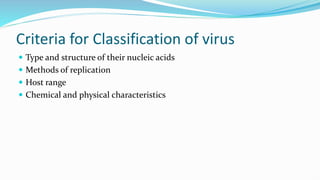
Criteria for Classification of virus
• Type and structure of their nucleic acids
• Methods of replication
• Host range
• Chemical and physical characteristics
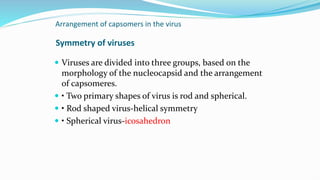
Symmetry of viruses
 Viruses are divided into three groups, based on the
morphology of the nucleocapsid and the arrangement
of capsomeres.
 • Two primary shapes of virus is rod and spherical.
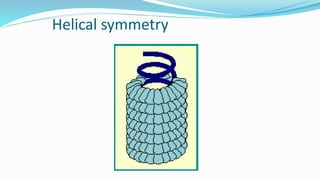
 • Rod shaped virus-helical symmetry
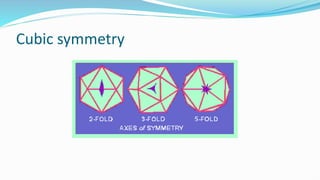
 • Spherical virus-icosahedron
Laboratory diagnosis of viral infections
Methods:
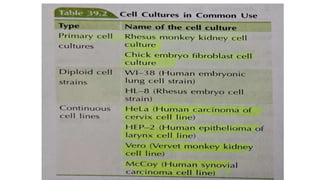
• Cytology
• Electron microscopy
• Cultivation
• Detection of viral proteins
• Serology
• Molecular diagnosis (detection of
genetic material i.e. nucleic acids)
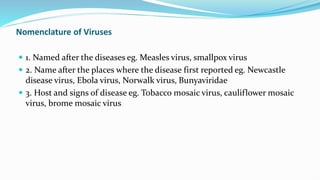
Nomenclature of Viruses
 1. Named after the diseases eg. Measles virus, smallpox virus
 2. Name after the places where the disease first reported eg. Newcastle
disease virus, Ebola virus, Norwalk virus, Bunyaviridae
 3. Host and signs of disease eg. Tobacco mosaic virus, cauliflower mosaic
virus, brome mosaic virus
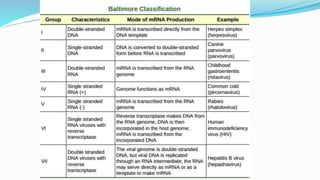
Classification of virus
 determined by the structural and chemical composition of virus
 apply to all plant viruses, animal viruses and bacterial viruses
 Virus is acellular cell – cannot be categorised using taxonomic
classification
 International Committee on taxonomy of Viruses (ICTV) to classify the
viruses
Criteria for Classification of virus
 Type and structure of their nucleic acids
 Methods of replication
 Host range
 Chemical and physical characteristics
Arrangement of capsomers in the virus
Symmetry of viruses
 Viruses are divided into three groups, based on the
morphology of the nucleocapsid and the arrangement
of capsomeres.
 • Two primary shapes of virus is rod and spherical.
 • Rod shaped virus-helical symmetry
 • Spherical virus-icosahedron
Cubic symmetry
Helical symmetry
Thank You

VIRUSES structure and classification ppt by Dr.Prince C P

  • 1.
    VIRUSES DR.PRINCE C P AssociateProfessor , Department of Microbiology, Mother Theresa Post Graduate & Research Institute of Health Sciences (Government of Puducherry Institution)
  • 2.
    General characters ofViruses • Small size (20-300 nm) / bacteria (size measured in μm) • Viral genome – single type of nucleic acid: • DNA – dezoxyriboviruses • RNA - riboviruses • Totally dependant on living cells for all metabolic processes • May infect humans, animals, plants, bacteria, fungi,parasites, insects • Virion = viral corpuscle = elementary, infectious unit
  • 3.
    • Only visibleby electron microscopy
  • 4.
    Criteria for Classificationof virus • Type and structure of their nucleic acids • Methods of replication • Host range • Chemical and physical characteristics
  • 5.
    Symmetry of viruses Viruses are divided into three groups, based on the morphology of the nucleocapsid and the arrangement of capsomeres.  • Two primary shapes of virus is rod and spherical.  • Rod shaped virus-helical symmetry  • Spherical virus-icosahedron
  • 7.
    Laboratory diagnosis ofviral infections Methods: • Cytology • Electron microscopy • Cultivation • Detection of viral proteins • Serology • Molecular diagnosis (detection of genetic material i.e. nucleic acids)
  • 26.
    Nomenclature of Viruses 1. Named after the diseases eg. Measles virus, smallpox virus  2. Name after the places where the disease first reported eg. Newcastle disease virus, Ebola virus, Norwalk virus, Bunyaviridae  3. Host and signs of disease eg. Tobacco mosaic virus, cauliflower mosaic virus, brome mosaic virus
  • 27.
    Classification of virus determined by the structural and chemical composition of virus  apply to all plant viruses, animal viruses and bacterial viruses  Virus is acellular cell – cannot be categorised using taxonomic classification  International Committee on taxonomy of Viruses (ICTV) to classify the viruses
  • 28.
    Criteria for Classificationof virus  Type and structure of their nucleic acids  Methods of replication  Host range  Chemical and physical characteristics
  • 29.
    Arrangement of capsomersin the virus Symmetry of viruses  Viruses are divided into three groups, based on the morphology of the nucleocapsid and the arrangement of capsomeres.  • Two primary shapes of virus is rod and spherical.  • Rod shaped virus-helical symmetry  • Spherical virus-icosahedron
  • 30.
  • 31.
  • 34.