DR PRINCE C P
Associate Professor in Microbiology
Mother Teresa PG& RI of Health Sciences
Puducherry
CSSD
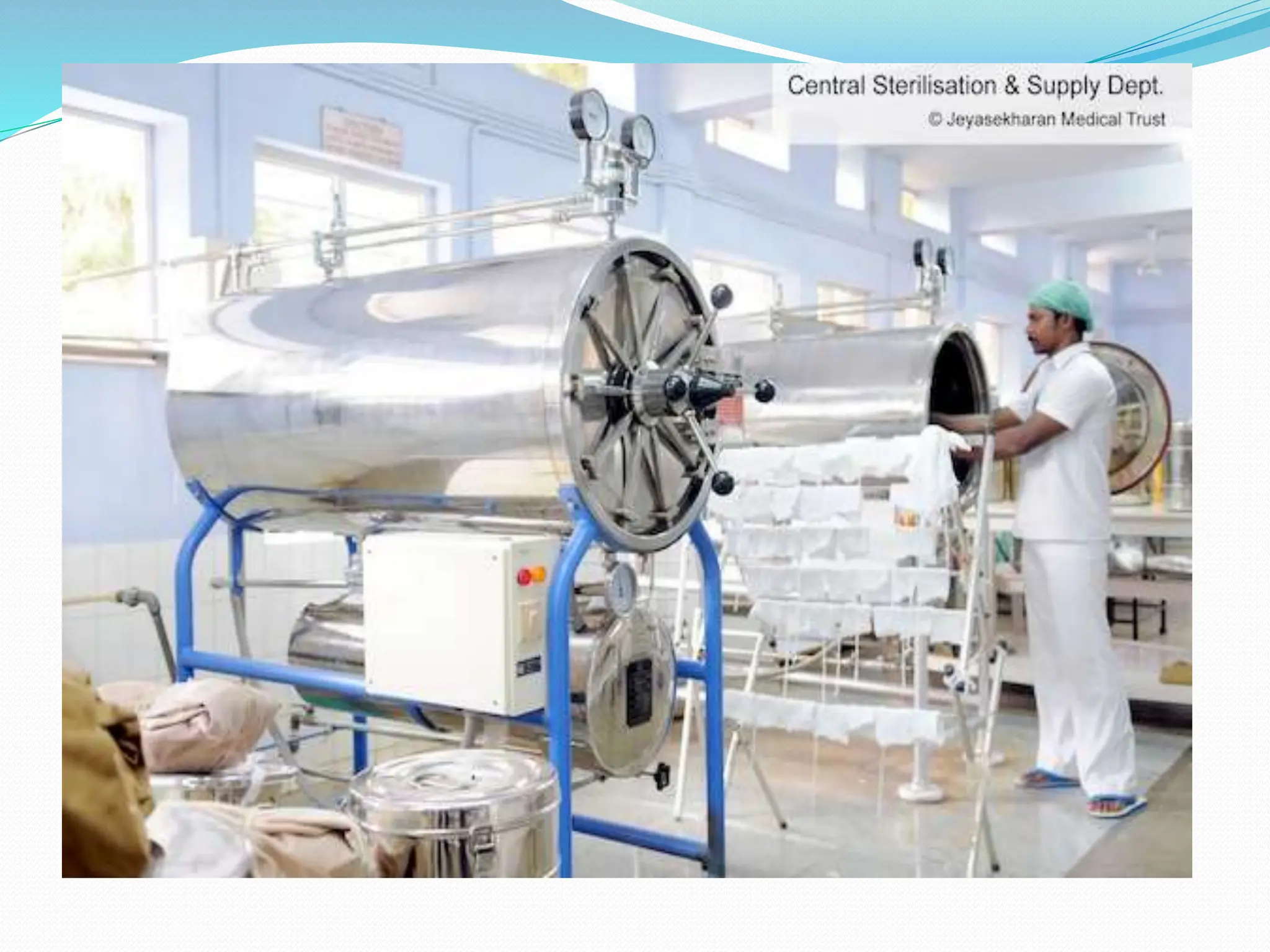
Central Sterile Supply
Department
.
Sterile supplies to all departments ,
both to specialized units as well as
general wards and OPDs
 Infection Control—The process by which health
care facilities develop and implement specific
policies and procedures to prevent the spread of
infections among health care staff and patients
 Nosocomial Infection—An infection contracted
by a patient or staff member while in a hospital or
health care facility (and not present or incubating
on admission)
 Disinfection—The process of microbial
inactivation that eliminates virtually all recognized
pathogenic microorganisms, but not necessarily all
microbial forms (e.g., spores)
 Sterilization—The use of physical or chemical
procedures to destroy all microbial life, including
large numbers of highly resistant bacterial
endospores. Procedures include—
 Steam sterilization
 Heat sterilization
 Chemical sterilization
AIMS
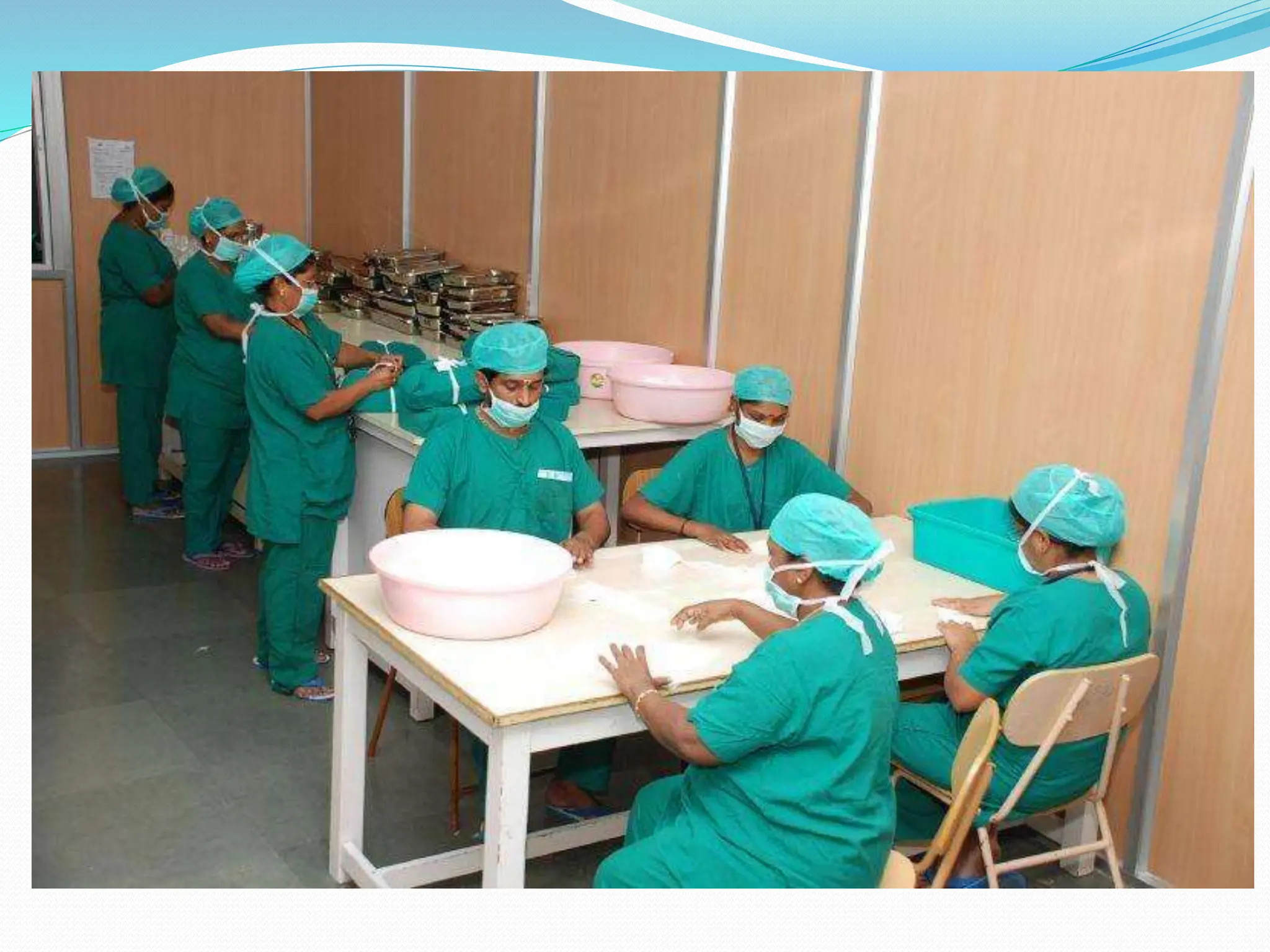
 To provide sterilized material
from a central department where
sterilizing process is carried out
under properly controlled
conditions
 To alleviate the burden of work
of the nursing personnel, there by
enabling them to devote more of
their time to patient care .
ADVANTAGES
1. Bacteriological safe sterilization.
2. Less expensive.
3. Elimination of unsound practices &
establishment of standard
procedures.
4. Assurance of adequate supply of
sterile products immediately and
constantly available for sometime as
well as emergency use.
5. Conservation of trained staff.
6. Better quality control
7. Better good of material flow
8. Prolonged life by proper care of
equipment
EQUIPMENTS IN CSSD
1.Jet water cleaning gadgets.
2.Ultrasonic Washers
3.Glove sharpener
4.Needle sharpener.
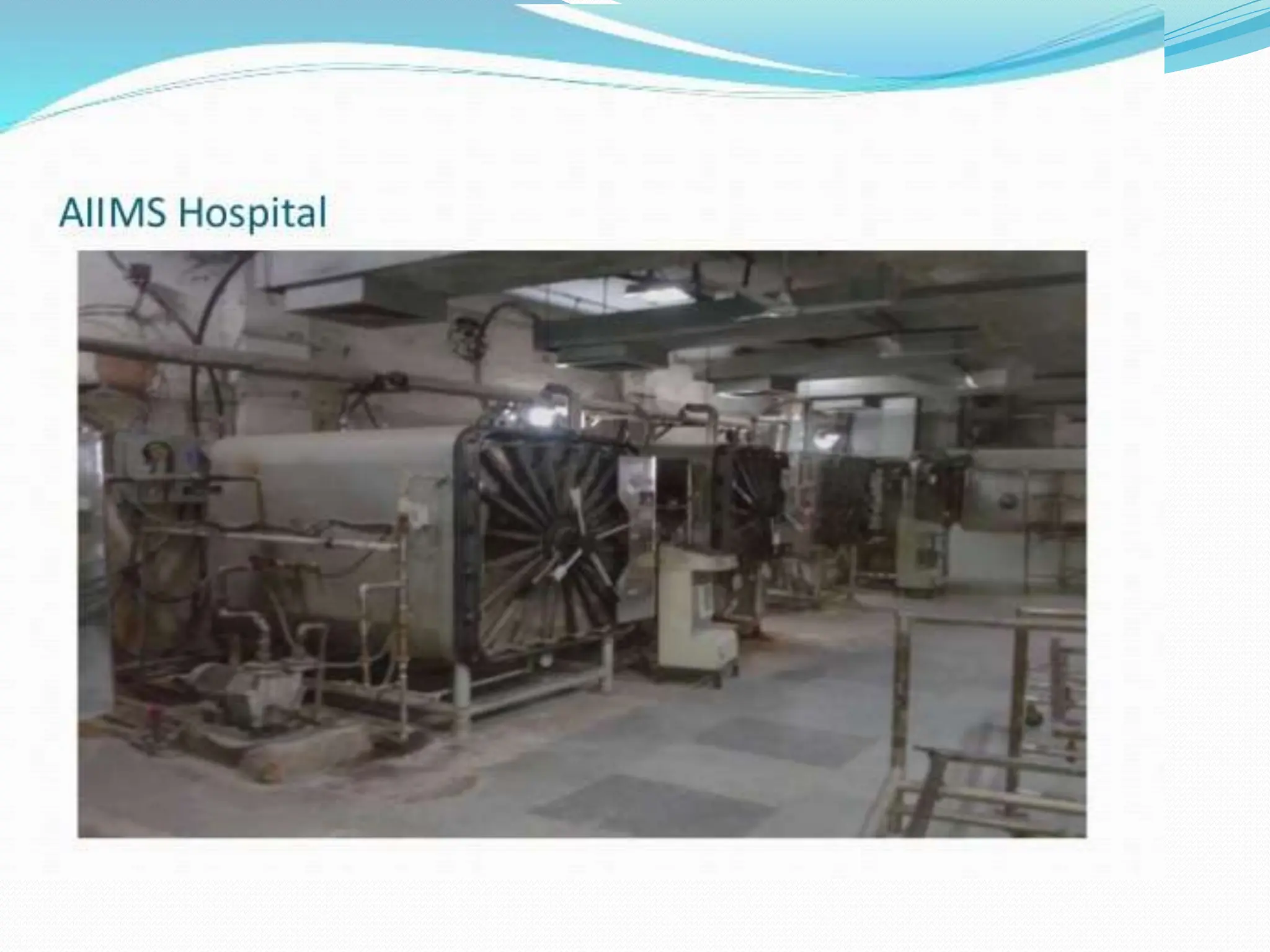
5.Gas, Chemical or steam autoclaves.
6.Testing apparatus for efficiency of
sterilization
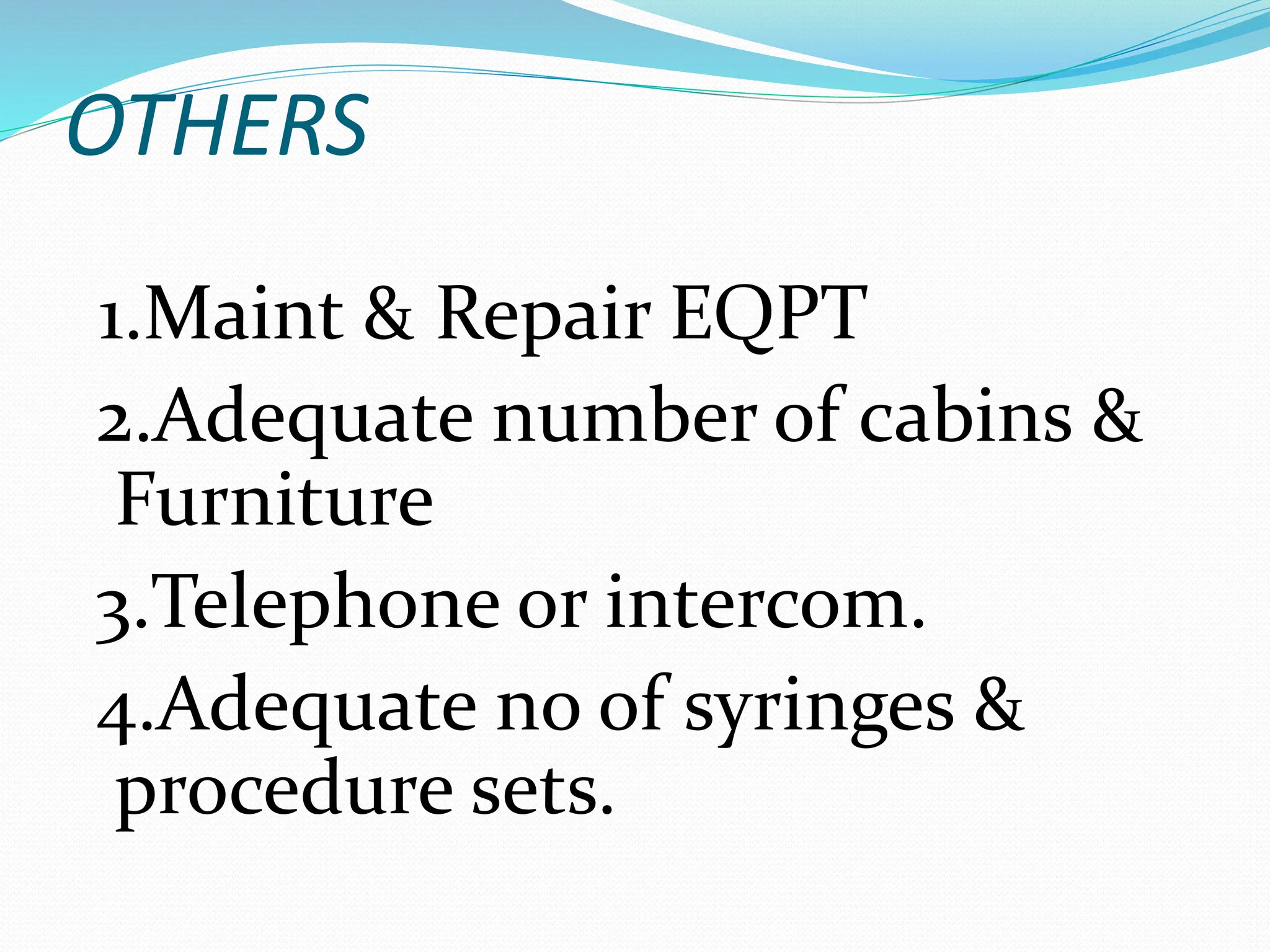
OTHERS
1.Maint & Repair EQPT
2.Adequate number of cabins &
Furniture
3.Telephone or intercom.
4.Adequate no of syringes &
procedure sets.
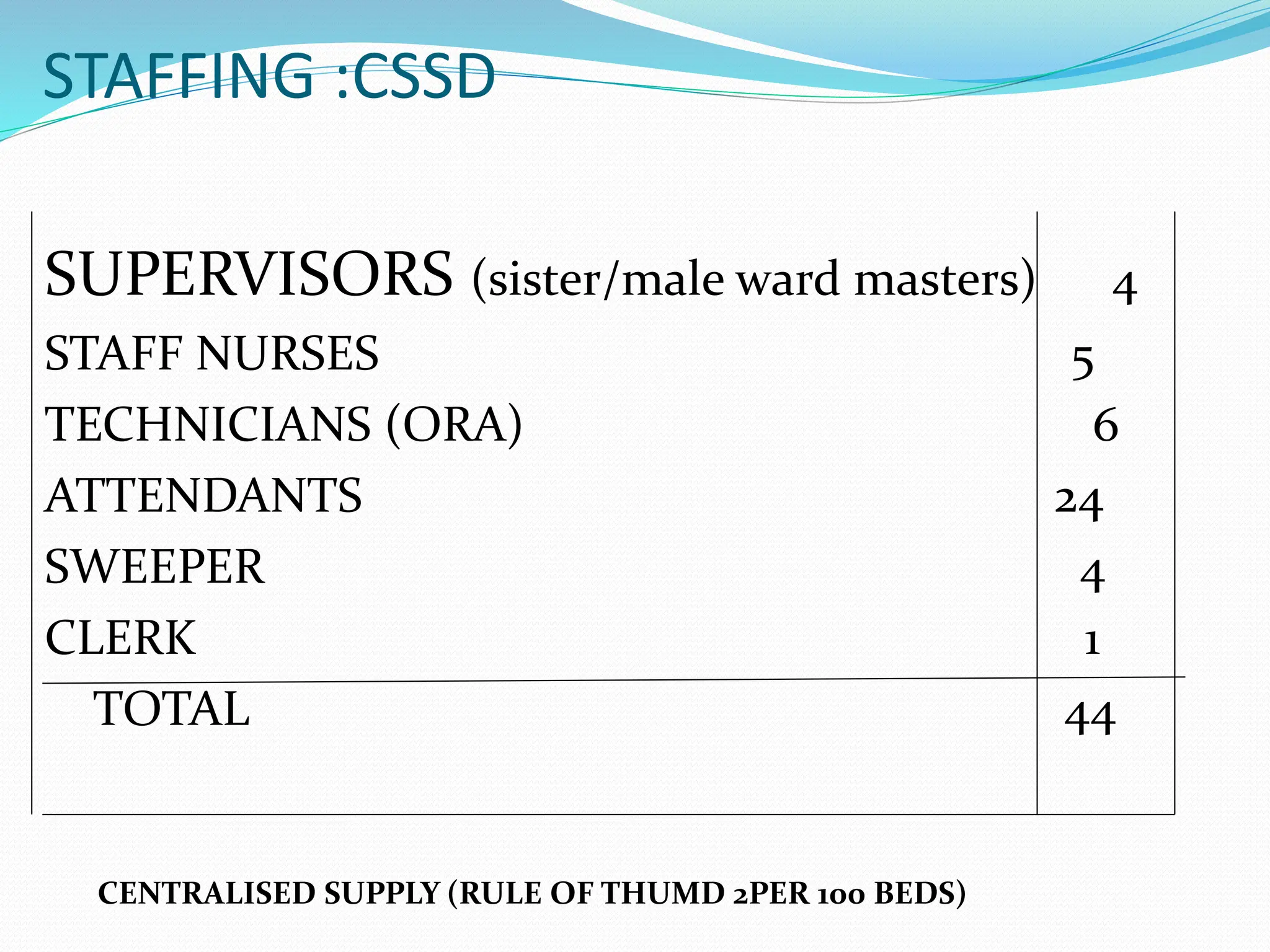
STAFFING :CSSD
SUPERVISORS (sister/male ward masters) 4
STAFF NURSES 5
TECHNICIANS (ORA) 6
ATTENDANTS 24
SWEEPER 4
CLERK 1
TOTAL 44
CENTRALISED SUPPLY (RULE OF THUMD 2PER 100 BEDS)
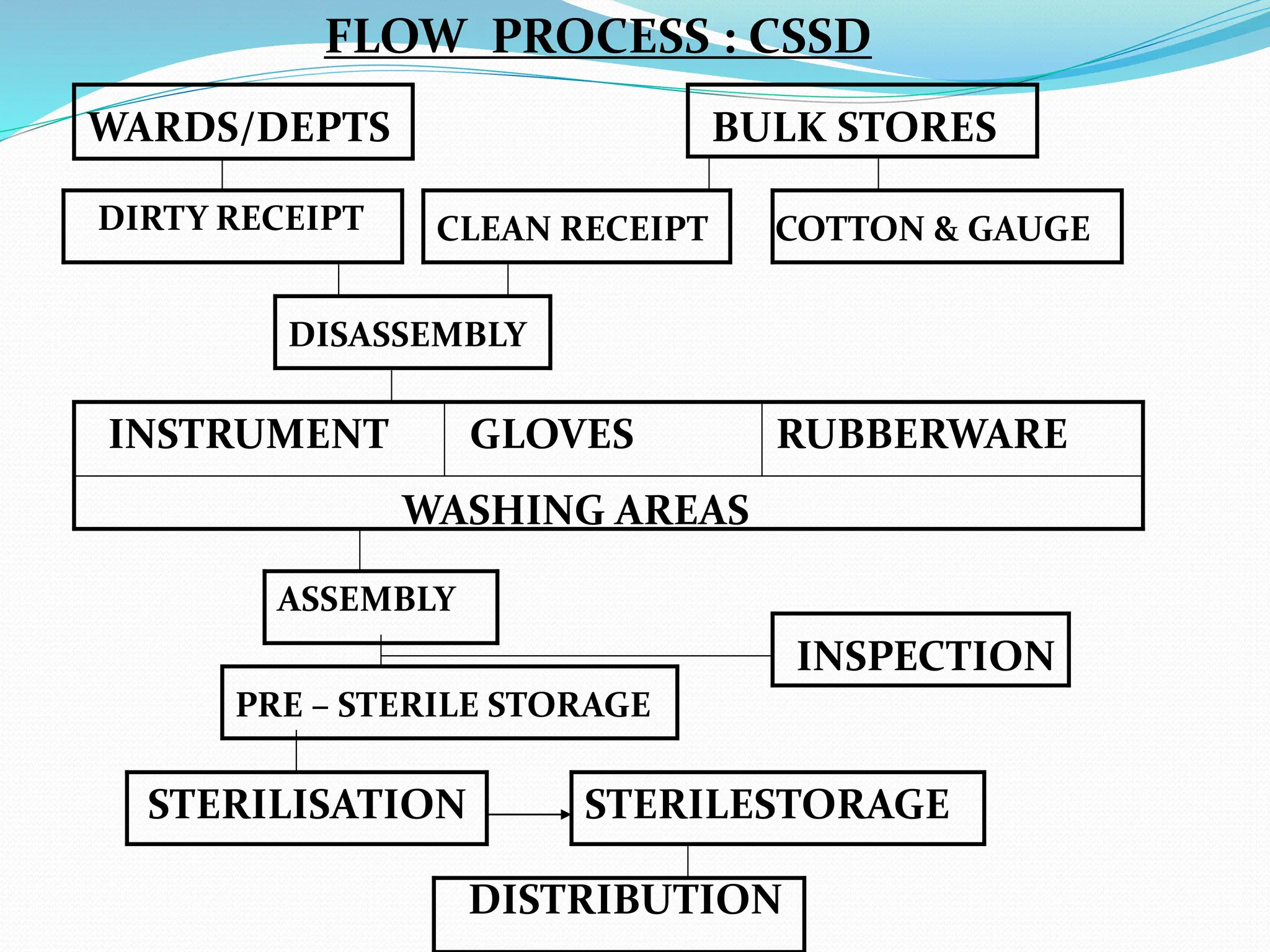
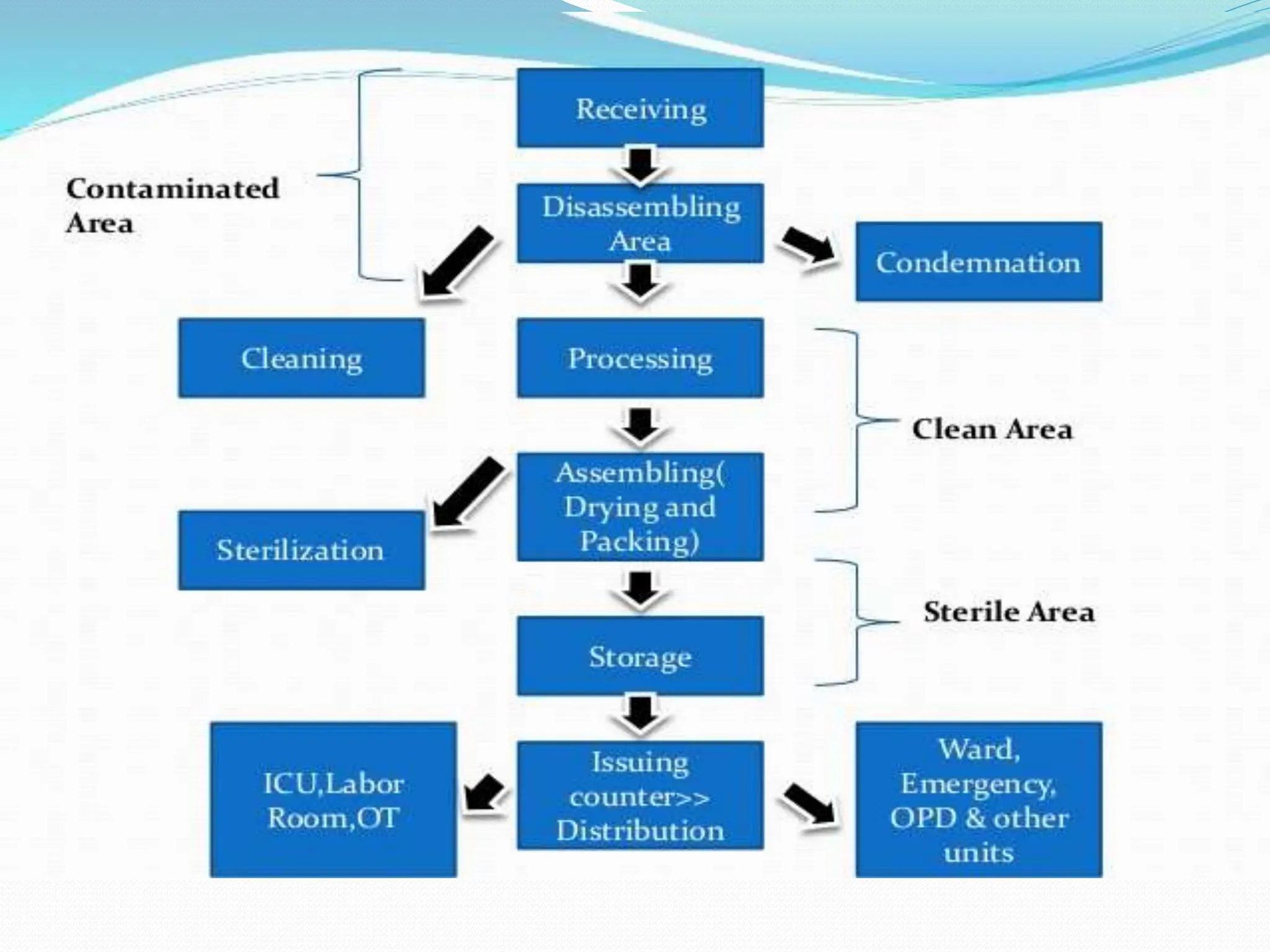
FLOW PROCESS : CSSD
WARDS/DEPTS BULK STORES
DIRTY RECEIPT CLEAN RECEIPT COTTON & GAUGE
DISASSEMBLY
INSTRUMENT GLOVES RUBBERWARE
WASHING AREAS
ASSEMBLY
PRE – STERILE STORAGE
INSPECTION
STERILISATION STERILESTORAGE
DISTRIBUTION
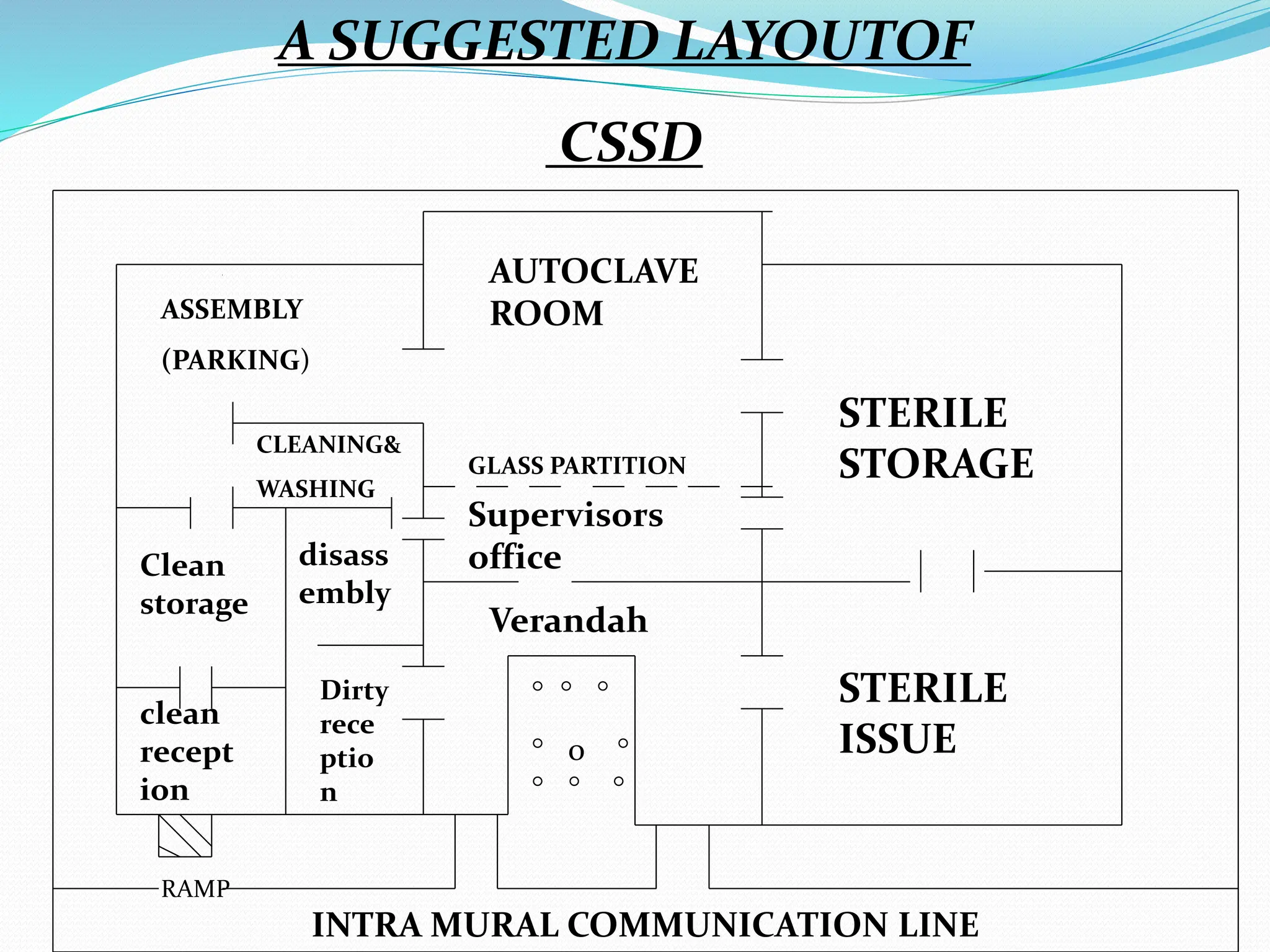
A SUGGESTED LAYOUTOF
CSSD
INTRA MURAL COMMUNICATION LINE
RAMP
ASSEMBLY
(PARKING)
CLEANING&
WASHING
AUTOCLAVE
ROOM
GLASS PARTITION
STERILE
STORAGE
STERILE
ISSUE
clean
recept
ion
Clean
storage
Supervisors
office
Verandah
disass
embly
Dirty
rece
ptio
n
° ° °
° 0 °
° ° °
Thank you
 ‘However beautiful the strategy you should
occasionally look at the results…’
 (Winston Churchill)

CSSD- Central Sterile Supply Department ppt by DR.PRINCE.C.P

  • 1.
    DR PRINCE CP Associate Professor in Microbiology Mother Teresa PG& RI of Health Sciences Puducherry
  • 2.
  • 3.
    . Sterile supplies toall departments , both to specialized units as well as general wards and OPDs
  • 4.
     Infection Control—Theprocess by which health care facilities develop and implement specific policies and procedures to prevent the spread of infections among health care staff and patients  Nosocomial Infection—An infection contracted by a patient or staff member while in a hospital or health care facility (and not present or incubating on admission)
  • 5.
     Disinfection—The processof microbial inactivation that eliminates virtually all recognized pathogenic microorganisms, but not necessarily all microbial forms (e.g., spores)  Sterilization—The use of physical or chemical procedures to destroy all microbial life, including large numbers of highly resistant bacterial endospores. Procedures include—  Steam sterilization  Heat sterilization  Chemical sterilization
  • 8.
    AIMS  To providesterilized material from a central department where sterilizing process is carried out under properly controlled conditions  To alleviate the burden of work of the nursing personnel, there by enabling them to devote more of their time to patient care .
  • 9.
    ADVANTAGES 1. Bacteriological safesterilization. 2. Less expensive. 3. Elimination of unsound practices & establishment of standard procedures. 4. Assurance of adequate supply of sterile products immediately and constantly available for sometime as well as emergency use.
  • 10.
    5. Conservation oftrained staff. 6. Better quality control 7. Better good of material flow 8. Prolonged life by proper care of equipment
  • 12.
    EQUIPMENTS IN CSSD 1.Jetwater cleaning gadgets. 2.Ultrasonic Washers 3.Glove sharpener 4.Needle sharpener. 5.Gas, Chemical or steam autoclaves. 6.Testing apparatus for efficiency of sterilization
  • 13.
    OTHERS 1.Maint & RepairEQPT 2.Adequate number of cabins & Furniture 3.Telephone or intercom. 4.Adequate no of syringes & procedure sets.
  • 14.
    STAFFING :CSSD SUPERVISORS (sister/maleward masters) 4 STAFF NURSES 5 TECHNICIANS (ORA) 6 ATTENDANTS 24 SWEEPER 4 CLERK 1 TOTAL 44 CENTRALISED SUPPLY (RULE OF THUMD 2PER 100 BEDS)
  • 15.
    FLOW PROCESS :CSSD WARDS/DEPTS BULK STORES DIRTY RECEIPT CLEAN RECEIPT COTTON & GAUGE DISASSEMBLY INSTRUMENT GLOVES RUBBERWARE WASHING AREAS ASSEMBLY PRE – STERILE STORAGE INSPECTION STERILISATION STERILESTORAGE DISTRIBUTION
  • 16.
    A SUGGESTED LAYOUTOF CSSD INTRAMURAL COMMUNICATION LINE RAMP ASSEMBLY (PARKING) CLEANING& WASHING AUTOCLAVE ROOM GLASS PARTITION STERILE STORAGE STERILE ISSUE clean recept ion Clean storage Supervisors office Verandah disass embly Dirty rece ptio n ° ° ° ° 0 ° ° ° °
  • 19.
    Thank you  ‘Howeverbeautiful the strategy you should occasionally look at the results…’  (Winston Churchill)