MICROBIOLOGY
Viruses characteristics; Classification (Baltimore), Idea
about Viroids and Prions
VIROLOGY
A Presentation By
Dr. N. Sannigrahi, Associate Professor
Department of Botany,
Nistarini College, Purulia
D.B. Road, Purulia -723101( W.B) India
GENERAL CHARACTERS OF VIRUS & HISTORY
• The name ‘virus’ came from a Latin word virus which means venom or
poisonous fluid. Although plant diseases like leaf roll of potato and human
diseases like yellow fever, small pox etc., were known for long time, the
nature of causative agent was known to us quite later.
• Adolph Meyer (1886), an agriculture chemist of Holland, observed a
diseased tobacco plant showing mottling of leaf and named it mosaic. He
was able to demonstrate the infectious nature of the sap of infected plant by
grinding, filtering through double filter paper and then applying the sap to
the healthy plants.
• D. Iwanowski (1892), a Russian scientist, was the first to demonstrate the
transmission of tobacco mosaic virus disease from infected to healthy plant
through sap, even the sap was filtered through Chamberland filter candle,
which is sufficient enough to remove bacteria. W. M. Beijerinck (1898), a
bacteriologist of Holland, demonstrated that the invisible, filterable and
non- cultivable infectious sap could diffuse through an agar gel, like a fluid.
GENERAL CHARACTERS OF VIRUS & HISTORY
• F. W. Twort (1915), a British scientist, was the first to describe some
viruses that attack bacteria. Two years later, Felix d’Herelle (1917), a
French scientist, independently observed and studied in detail about the
virus attacking bacteria. He named the virus bacteriophage (bacteria- eater),
commonly called phage.
• Schlesinger (1933) was the first to purify virus by using differential
centrifugation. Later, in 1935, Wendell M. Stanley, an organic chemist,
observed that the virus could be crystallized and consisted largely of
proteins.
• Later, it has been established that virus contains a small amount of RNA or
DNA in addition to protein. Therefore, virus is an organism of
nucleoprotein and the nucleic acid is the infective agent rather than protein.
A few years later, in 1946, W. M. Stanley was awarded the Nobel Prize for
the above discovery.
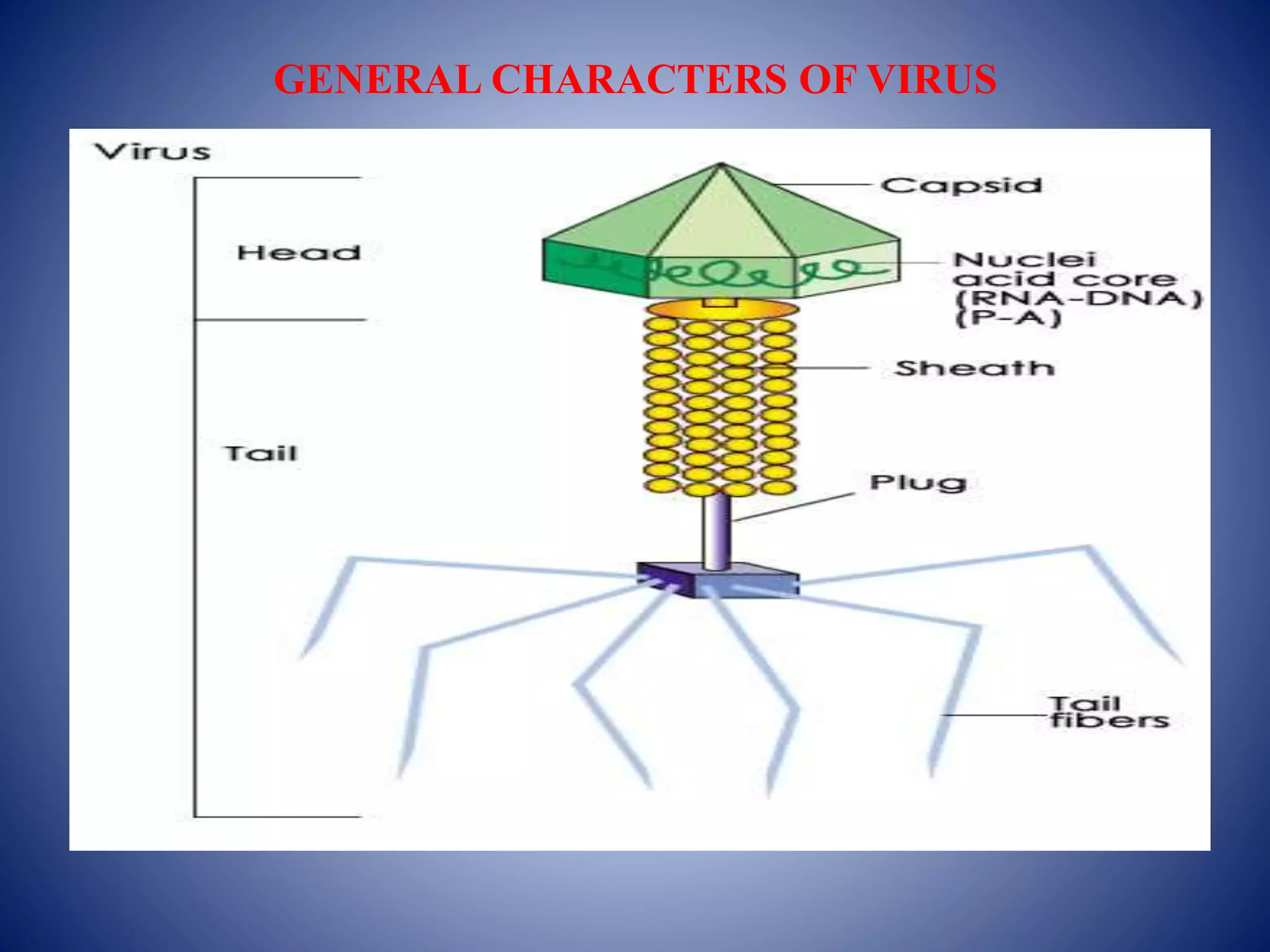
GENERAL CHARACTERS OF VIRUS
• Viruses have several common characteristics: they are small, have DNA or
RNA genomes, and are obligate intracellular parasites. The virus capsid
functions to protect the nucleic acid from the environment, and some
viruses surround their capsid with a membrane envelope. Most viruses have
icosahedral or helical capsid structure, although a few have complex virion
architecture. An icosahedrons is a geometric shape with 20 sides, each
composed of an equilateral triangle, and icosahedral viruses increase the
number of structural units in each face to expand capsid size. The
classification of viruses is very useful, and the International Committee on
Taxonomy of Viruses is the official body that classifies viruses into order,
family, genus, and species taxa. There are currently seven orders of viruses.
• The most notable non-living intracellular parasites in the cells are virus.
• The World of Viruses” viruses were initially characterized as filterable
agents capable of causing disease. Since that time, advances in microscopy
and scientific techniques have led to a better classification of viruses and
their properties. Electron microscopy has allowed us to visualize viruses in
great detail, while molecular and cellular assays have broadened our
understanding of how viruses function and are related to one another.
CHARACTERISTICS OF VIRUS
• Viruses are small. Most viruses are in the range of 20–200 nm, although
some viruses can exceed 1000 nm in length. A typical bacterium is 2–3 μM
in length; a typical eukaryotic cell is 10–30 μM in diameter.
• Viruses are obligate intracellular parasites and are completely dependent
upon the cell for replication. Unlike cells that undergo mitosis and split in
two, viruses completely disassemble within the cell and new virions
(infectious particles) are assembled de novo from newly made components.
• While living things have dsDNA genomes, the genetic material of viruses
can be composed of DNA or RNA, and single- or double-stranded. Most
virus genomes fall within the range of 7–20 kb, but they range from 3 kb to
over 2 mb.
• The simplest viruses are composed of a protein capsid that protects the viral
nucleic acid from the harsh environment outside the cell.
• Virus capsids are predominantly one of two shapes, helical or icosahedral,
although a few viruses have a complex architecture. In addition, some
viruses also have a lipid membrane envelope, derived from the cell. All
helical animal viruses are enveloped.
GENERAL CHARACTERS OF VIRUS
• The outer covering i.e., shell or capsid is made up of protein units, called
capsomeres; except some animal viruses which are with additional
polysaccharides.
• (h) They have no machinery of their own for protein synthesis and thereby
they use host machinery for the synthesis of protein.
• (i) During replication their nucleic acid directs the host cell to make
different parts of virus and when these parts assemble together they form a
complete infectious particle, the virion.
• They are transmitted very easily from one organism to another organism.
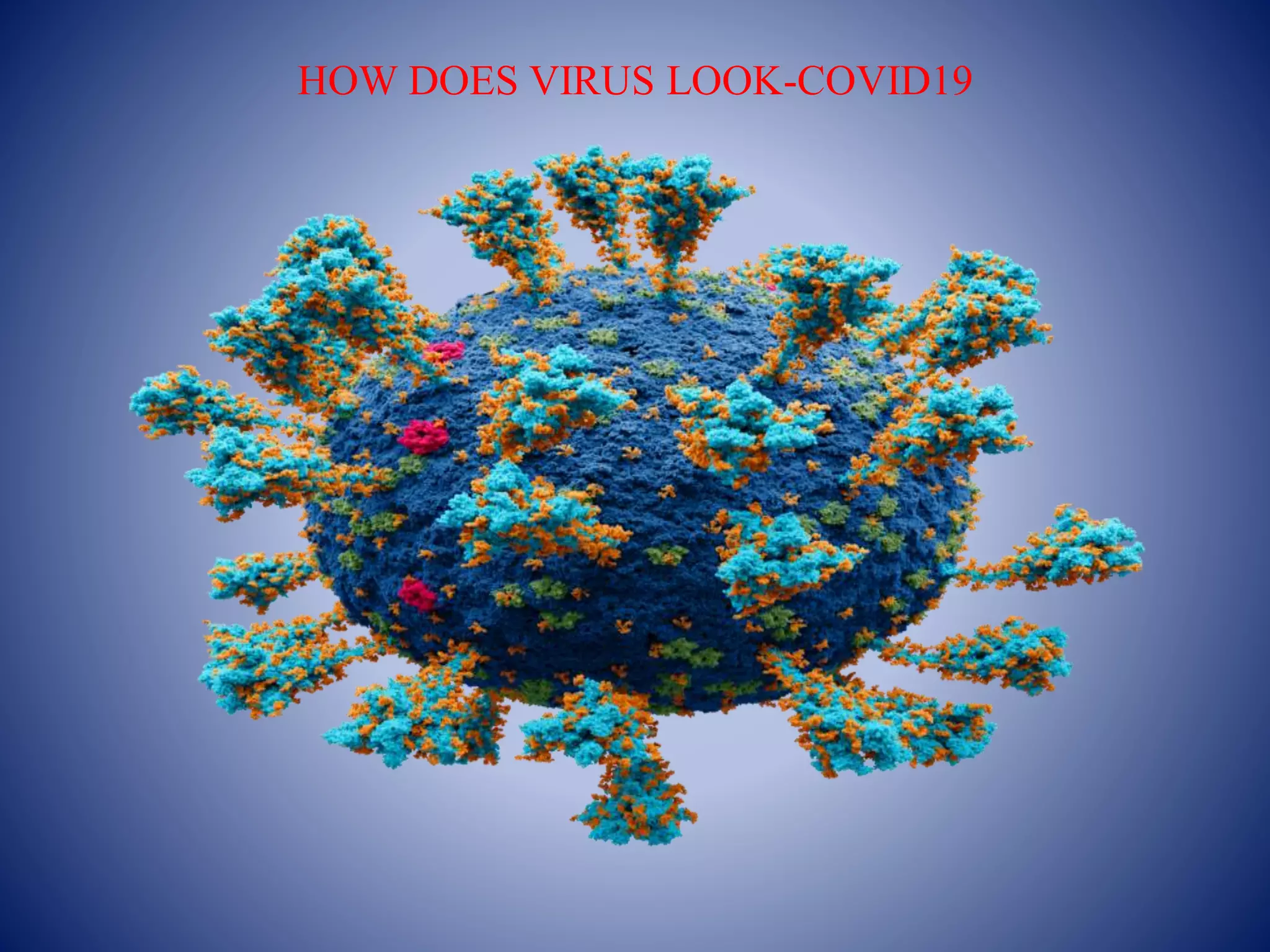
HOW DOES VIRUS LOOK-COVID19
CLASSIFICATION OF VIRUS
• Helical capsid proteins wind around the viral nucleic acid to form the
nucleocapsid. A helix is mathematically defined by amplitude and pitch.
• An icosahedrons is a geometric shape with 20 sides, each composed of an
equilateral triangle. The sides are composed of viral protein subunits that
create a structural unit, which is repeated to form a larger side and the other
sides of the icosahedrons. The triangulation number refers to the number of
structural units per side.
• The Baltimore classification system categorizes viruses based upon the
type and replication strategy of the nucleic acid genome of the virus. There
are seven classes.
• The ICTV was formed to assign viruses to a taxonomical hierarchy. The
taxa used for classifying viruses are order, family, genus, and species.
Because they are not alive, viruses are not categorized within the same
taxonomical tree as living organisms.
VIRUS CLASSIFICATION
• The classification of virus is a matter of great concern due to its uniqueness
. The International Committee on Taxonomy OF Viruses( ICTV) in 2014
listed 3186 virus species but the debate in light due to its pseudoloving
nature. Although initially the classification was done on the basis of disease
occurrence, types of disease, sites of the body infected, place from isolation
and other parameters, there are three approaches of the classification of
virus-
• The Hierarchical system( LHT System)-Proposed by Lwoff, Horne &
Tournier on the basis of symmetry of protein, types of nucleic Acid,
presence and absence of lipid membrane & dimensions of the size of the
virion & capsid. In general, it consists of 2 subphyla, 5 classes, 8 orders and
19 families.
• ICTV system-It mainly deals with levels of organization like order(-ales),
family9-viridae), subfamily (-virinae) and genus (-virus) etc., having 7
orders , 23 families, 104 subfamilies. 505 genera and 3186 species
• The Baltimore classification.
BALTIMORE CLASSIFICATION
• Viral genome ‘s nucleic acid ( DNA or RNA ), strandedness (single-
stranded or double-stranded), Sense, and method of replication determine
its class.
• Viruses can be placed in one of the seven groups.
• Virus classification is the process of naming viruses and placing them into a
taxonomic system. Much like the classification systems used for cellular
organisms, virus classification is the subject of ongoing debate and
proposals. This is mainly due to the pseudo-living nature of viruses, which
is to say they are non-living particles with some chemical characteristics
similar to those of life. As such, they do not fit neatly into the established
biological classification system in place for cellular organisms.
• Baltimore classification (first defined in 1971) is a classification system
that places viruses into one of seven groups depending on a combination of
their nucleic acid (DNA or RNA), strandedness (single-stranded or
BALTIMORE CLASSIFICATION
• double-stranded), Sense, and method of replication. Named after David
Baltimore, a Nobel Prize-winning biologist, these groups are designated by
Roman numerals and discriminate viruses depending on their mode of
replication and genome type. Other classifications are determined by the
disease caused by the virus or its morphology, neither of which are
satisfactory due to different viruses either causing the same disease or
looking very similar. In addition, viral structures are often difficult to
determine under the microscope.
• The RNA within the virion is known as plus (+) or sense strand because it
acts as mRNA, whereas the newly synthesized RNA which is
complementary in base-sequence to the original infectious strand is called
minus (-) or antisense strand. It acts as template to produce additional (+)
strand which may act as mRNA.
• Classifying viruses according to their genome means that those in a given
category will all behave in a similar fashion, offering some indication of
how to proceed with further research. Viruses can be placed in one of the
seven following groups:
BALTIMORE CLASSIFICATION
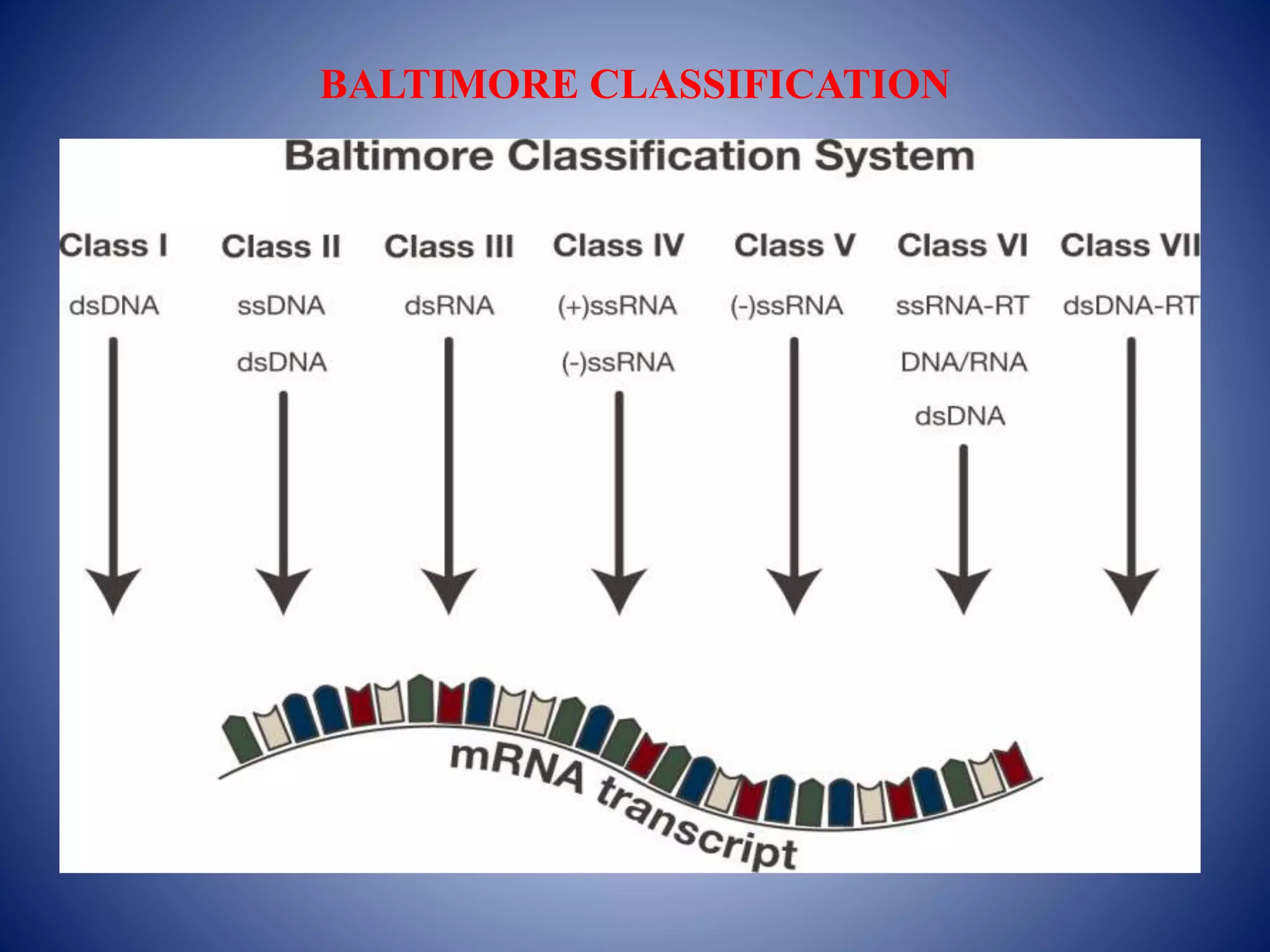
• I: dsDNA viruses (e.g. Adenoviruses, Herpes viruses, Poxviruses)
• II: ssDNA viruses (+)sense DNA (e.g. Parvovirus's)
• III: dsRNA viruses (e.g. Reoviruses)
• IV: (+) ssRNA viruses (+)sense RNA (e.g. Picornaviruses, Toga viruses)
• V: (−)ssRNA viruses (−)sense RNA (e.g. Orthomyxoviruses,
Rhabdoviruses)
• VI: ssRNA -RT viruses (+)sense RNA with DNA intermediate in life-cycle
(e.g. Retroviruses)
• VII: dsDNA-RT viruses (e.g. Hepadnaviruses)
• The Baltimore classification is an elegant molecular algorithm for
virologists. The principles followed in the scheme are very useful to
understand the information in viruses with genome configurations. When
one knows the genome of the virus, he can easily understand the basic steps
to produce mRNA and can simplify the understanding of the extra ordinary
life cycles of virus.
BALTIMORE CLASSIFICATION
IDEA ABOUT VIROIDS AND PRIONS
• Viroids are plant pathogens: small, single-stranded, circular RNA particles
that are much simpler than a virus. They do not have a capsid or outer
envelope, but like viruses can reproduce only within a host cell. Viroids do
not, however, manufacture any proteins, and they only produce a single,
specific RNA molecule. Human diseases caused by viroids have yet to be
identified.
• Viroids are known to infect plants and are responsible for crop failures and
the loss of millions of dollars in agricultural revenue each year. Some of the
plants they infect include potatoes, cucumbers, tomatoes, chrysanthemums,
avocados, and coconut palms. For example, the potato spindle tuber viroid
(PSTVd), which typically spreads when infected knives cut healthy
potatoes in preparation for planting, can affect potatoes and tomatoes.
• Viriods Vs Virus: Like viruses, viriods invade cells ( Only plant cells),
captivate the host cell machinery and force the cell to duplicate their RNA.
However they differ from the virus on the following parameters:
• Viriods exist in vitro as low molecular weight RNA molecules, no DNA is
found
VIRIODS
• The viriods are without any protein coat and can not encode also any protein,
• The RNA is single stranded and circular whereas virus contain DNA or RNA
as ss or ds circular/ linear forms,
• Viriods only infect plant cells,
• Viriods replicate autonomously inside the cell,
• In viriod replication no DNA is formed where as in replication of RNA viruses
a DNA intermediate is formed,
• Viriods are extremely smaller than the smallest virus.
• ORIGIN OF VIRIODS: The origin of virus is a conundrum . Several woirkers
think them as the relics of the RNA world due to the following features-
• Small genome size
• High G+C content to provide greater stability,
• Circular genome
• No protein content
• The presence of ribozymes make the viriods as the survivors of the RNA world.
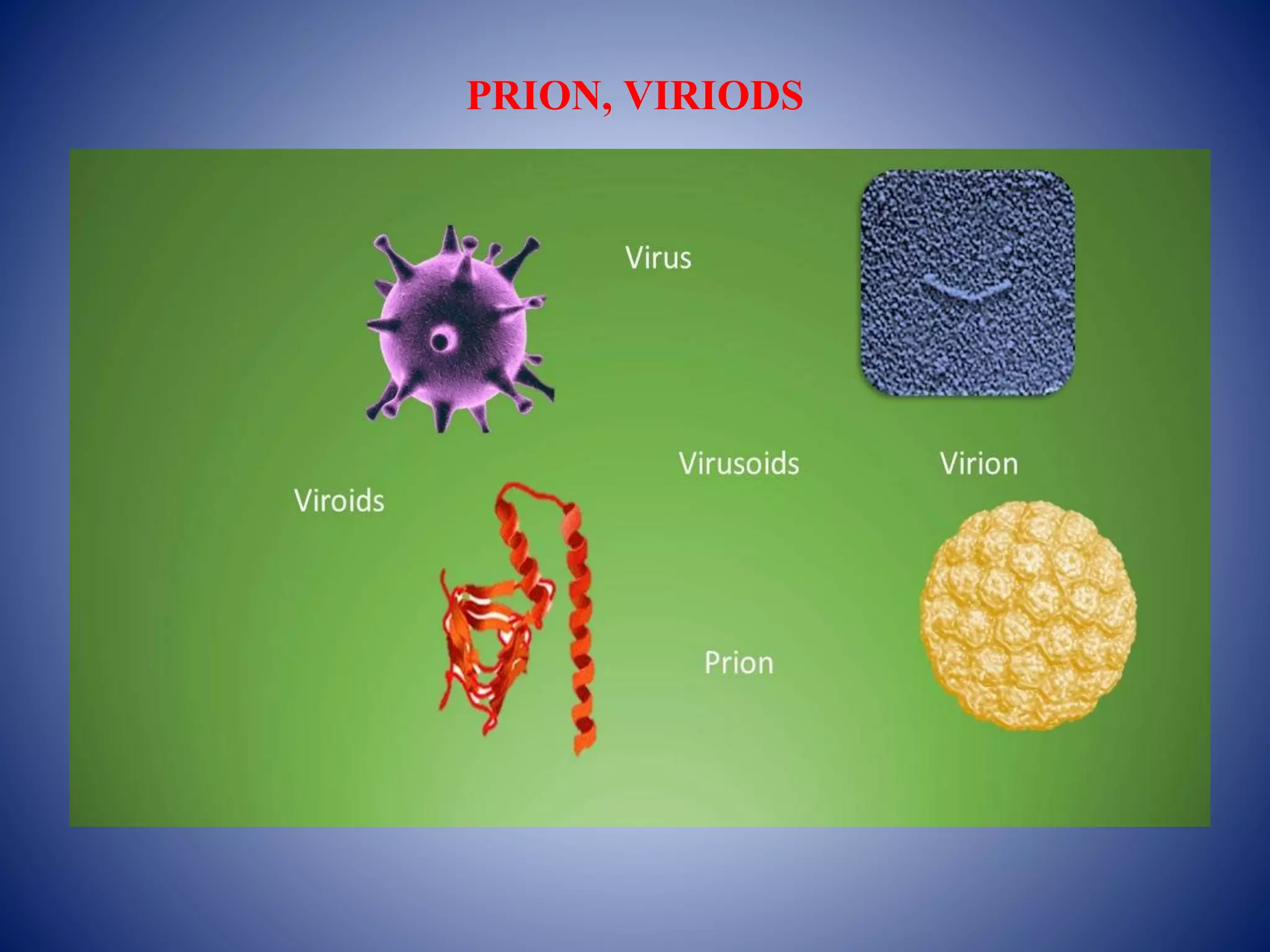
PRION, VIRIODS
PRION
• Prions, so-called because they are proteinaceous, are infectious particles—
smaller than viruses—that contain no nucleic acids (neither DNA nor
RNA). Historically, the idea of an infectious agent that did not use nucleic
acids was considered impossible, but pioneering work by Nobel Prize-
winning biologist Stanley Prusiner has convinced the majority of biologists
that such agents do indeed exist.
• Fatal neurodegenerative diseases, such as kuru in humans and bovine
spongiform encephalopathy (BSE) in cattle (commonly known as “mad
cow disease”), were shown to be transmitted by prions. The disease was
spread by the consumption of meat, nervous tissue, or internal organs
between members of the same species. Kuru, native to humans in Papua
New Guinea, was spread from human to human via ritualistic cannibalism.
BSE, originally detected in the United Kingdom, was spread between cattle
by the practice of including cattle nervous tissue in feed for other cattle.
Individuals with kuru and BSE show symptoms of loss of motor control
and unusual behaviors, such as uncontrolled bursts of laughter with kuru,
followed by death. Kuru was controlled by inducing the population to
abandon its ritualistic cannibalism.
PRION
• On the other hand, BSE was initially thought to only affect cattle. Cattle dying
of the disease were shown to have developed lesions or “holes” in the brain,
causing the brain tissue to resemble a sponge. Later on in the outbreak,
however, it was shown that a similar encephalopathy in humans known as
variant Creutzfeldt-Jakob disease (CJD) could be acquired from eating beef
from animals with BSE, sparking bans by various countries on the importation
of British beef and causing considerable economic damage to the British beef
industry. BSE still exists in various areas, and although a rare disease, CJD is
difficult to treat. The disease can be spread from human to human by blood, so
many countries have banned blood donation from regions associated with BSE.
• Structural & Biochemical nature:
• Prusiner designated the proteins in prion as ‘Prion protein’ PrP- in two forms,
• PrPc- Normal protein that does not cause disease, 209 amino acids with 35-36
Da, susceptible to protease emzyme
• PrPsc- infectious type where sc refers to scarpie for prion disease in sheep
consisating of flattened strands of amino acids
PRION
• Prion gene- Prion-gene coding for the prion protein has been discovered
in host gene. The lack of the gene in host makes it resistant , host neither
catches the disease nor transmit the disease.
• Replication of Prion- The infectious toxic protein enters into the healthy
organisms, induces the existing properly folded normal protein and cause
chain reaction in an exponential outgrowth by two mechanisms-
Heterodimer model & Fibrilar module.
• FUNCTIONS
• PrP may play a role in long memory,
• PrP expressions in stem cells has been found as a necessity for the self
renewal of bone marrow,
• It plays a role in the controlling the endogenous retrovirus,
• Normal Prion protein is involved in the regulation of sleep although
another infective prion involves abnormal sleep.
THANKS A LOT FOR YOUR CONSIDERATION
• References:
• Google for images
• Microbiology & Phycology - Mishra & Dash
• Brook Microbiology of Microorganisms-Madigan, Martinko,
Bender, Buckley & Stahl,
• A Textbook of Microbiology- Chakraborty
• Microbiology- Pelzer, Chan & Krieg,
• Different webpages to enrich content.
• Disclaimer: This PPT has been designed to enrich the open source of
learning. The author does not claim any kind of financial pleasure

Virology - Basic Idea & Classification

  • 1.
    MICROBIOLOGY Viruses characteristics; Classification(Baltimore), Idea about Viroids and Prions
  • 2.
    VIROLOGY A Presentation By Dr.N. Sannigrahi, Associate Professor Department of Botany, Nistarini College, Purulia D.B. Road, Purulia -723101( W.B) India
  • 3.
    GENERAL CHARACTERS OFVIRUS & HISTORY • The name ‘virus’ came from a Latin word virus which means venom or poisonous fluid. Although plant diseases like leaf roll of potato and human diseases like yellow fever, small pox etc., were known for long time, the nature of causative agent was known to us quite later. • Adolph Meyer (1886), an agriculture chemist of Holland, observed a diseased tobacco plant showing mottling of leaf and named it mosaic. He was able to demonstrate the infectious nature of the sap of infected plant by grinding, filtering through double filter paper and then applying the sap to the healthy plants. • D. Iwanowski (1892), a Russian scientist, was the first to demonstrate the transmission of tobacco mosaic virus disease from infected to healthy plant through sap, even the sap was filtered through Chamberland filter candle, which is sufficient enough to remove bacteria. W. M. Beijerinck (1898), a bacteriologist of Holland, demonstrated that the invisible, filterable and non- cultivable infectious sap could diffuse through an agar gel, like a fluid.
  • 4.
    GENERAL CHARACTERS OFVIRUS & HISTORY • F. W. Twort (1915), a British scientist, was the first to describe some viruses that attack bacteria. Two years later, Felix d’Herelle (1917), a French scientist, independently observed and studied in detail about the virus attacking bacteria. He named the virus bacteriophage (bacteria- eater), commonly called phage. • Schlesinger (1933) was the first to purify virus by using differential centrifugation. Later, in 1935, Wendell M. Stanley, an organic chemist, observed that the virus could be crystallized and consisted largely of proteins. • Later, it has been established that virus contains a small amount of RNA or DNA in addition to protein. Therefore, virus is an organism of nucleoprotein and the nucleic acid is the infective agent rather than protein. A few years later, in 1946, W. M. Stanley was awarded the Nobel Prize for the above discovery.
  • 5.
    GENERAL CHARACTERS OFVIRUS • Viruses have several common characteristics: they are small, have DNA or RNA genomes, and are obligate intracellular parasites. The virus capsid functions to protect the nucleic acid from the environment, and some viruses surround their capsid with a membrane envelope. Most viruses have icosahedral or helical capsid structure, although a few have complex virion architecture. An icosahedrons is a geometric shape with 20 sides, each composed of an equilateral triangle, and icosahedral viruses increase the number of structural units in each face to expand capsid size. The classification of viruses is very useful, and the International Committee on Taxonomy of Viruses is the official body that classifies viruses into order, family, genus, and species taxa. There are currently seven orders of viruses. • The most notable non-living intracellular parasites in the cells are virus. • The World of Viruses” viruses were initially characterized as filterable agents capable of causing disease. Since that time, advances in microscopy and scientific techniques have led to a better classification of viruses and their properties. Electron microscopy has allowed us to visualize viruses in great detail, while molecular and cellular assays have broadened our understanding of how viruses function and are related to one another.
  • 6.
    CHARACTERISTICS OF VIRUS •Viruses are small. Most viruses are in the range of 20–200 nm, although some viruses can exceed 1000 nm in length. A typical bacterium is 2–3 μM in length; a typical eukaryotic cell is 10–30 μM in diameter. • Viruses are obligate intracellular parasites and are completely dependent upon the cell for replication. Unlike cells that undergo mitosis and split in two, viruses completely disassemble within the cell and new virions (infectious particles) are assembled de novo from newly made components. • While living things have dsDNA genomes, the genetic material of viruses can be composed of DNA or RNA, and single- or double-stranded. Most virus genomes fall within the range of 7–20 kb, but they range from 3 kb to over 2 mb. • The simplest viruses are composed of a protein capsid that protects the viral nucleic acid from the harsh environment outside the cell. • Virus capsids are predominantly one of two shapes, helical or icosahedral, although a few viruses have a complex architecture. In addition, some viruses also have a lipid membrane envelope, derived from the cell. All helical animal viruses are enveloped.
  • 7.
  • 8.
    GENERAL CHARACTERS OFVIRUS • The outer covering i.e., shell or capsid is made up of protein units, called capsomeres; except some animal viruses which are with additional polysaccharides. • (h) They have no machinery of their own for protein synthesis and thereby they use host machinery for the synthesis of protein. • (i) During replication their nucleic acid directs the host cell to make different parts of virus and when these parts assemble together they form a complete infectious particle, the virion. • They are transmitted very easily from one organism to another organism.
  • 9.
    HOW DOES VIRUSLOOK-COVID19
  • 10.
    CLASSIFICATION OF VIRUS •Helical capsid proteins wind around the viral nucleic acid to form the nucleocapsid. A helix is mathematically defined by amplitude and pitch. • An icosahedrons is a geometric shape with 20 sides, each composed of an equilateral triangle. The sides are composed of viral protein subunits that create a structural unit, which is repeated to form a larger side and the other sides of the icosahedrons. The triangulation number refers to the number of structural units per side. • The Baltimore classification system categorizes viruses based upon the type and replication strategy of the nucleic acid genome of the virus. There are seven classes. • The ICTV was formed to assign viruses to a taxonomical hierarchy. The taxa used for classifying viruses are order, family, genus, and species. Because they are not alive, viruses are not categorized within the same taxonomical tree as living organisms.
  • 11.
    VIRUS CLASSIFICATION • Theclassification of virus is a matter of great concern due to its uniqueness . The International Committee on Taxonomy OF Viruses( ICTV) in 2014 listed 3186 virus species but the debate in light due to its pseudoloving nature. Although initially the classification was done on the basis of disease occurrence, types of disease, sites of the body infected, place from isolation and other parameters, there are three approaches of the classification of virus- • The Hierarchical system( LHT System)-Proposed by Lwoff, Horne & Tournier on the basis of symmetry of protein, types of nucleic Acid, presence and absence of lipid membrane & dimensions of the size of the virion & capsid. In general, it consists of 2 subphyla, 5 classes, 8 orders and 19 families. • ICTV system-It mainly deals with levels of organization like order(-ales), family9-viridae), subfamily (-virinae) and genus (-virus) etc., having 7 orders , 23 families, 104 subfamilies. 505 genera and 3186 species • The Baltimore classification.
  • 12.
    BALTIMORE CLASSIFICATION • Viralgenome ‘s nucleic acid ( DNA or RNA ), strandedness (single- stranded or double-stranded), Sense, and method of replication determine its class. • Viruses can be placed in one of the seven groups. • Virus classification is the process of naming viruses and placing them into a taxonomic system. Much like the classification systems used for cellular organisms, virus classification is the subject of ongoing debate and proposals. This is mainly due to the pseudo-living nature of viruses, which is to say they are non-living particles with some chemical characteristics similar to those of life. As such, they do not fit neatly into the established biological classification system in place for cellular organisms. • Baltimore classification (first defined in 1971) is a classification system that places viruses into one of seven groups depending on a combination of their nucleic acid (DNA or RNA), strandedness (single-stranded or
  • 13.
    BALTIMORE CLASSIFICATION • double-stranded),Sense, and method of replication. Named after David Baltimore, a Nobel Prize-winning biologist, these groups are designated by Roman numerals and discriminate viruses depending on their mode of replication and genome type. Other classifications are determined by the disease caused by the virus or its morphology, neither of which are satisfactory due to different viruses either causing the same disease or looking very similar. In addition, viral structures are often difficult to determine under the microscope. • The RNA within the virion is known as plus (+) or sense strand because it acts as mRNA, whereas the newly synthesized RNA which is complementary in base-sequence to the original infectious strand is called minus (-) or antisense strand. It acts as template to produce additional (+) strand which may act as mRNA. • Classifying viruses according to their genome means that those in a given category will all behave in a similar fashion, offering some indication of how to proceed with further research. Viruses can be placed in one of the seven following groups:
  • 14.
    BALTIMORE CLASSIFICATION • I:dsDNA viruses (e.g. Adenoviruses, Herpes viruses, Poxviruses) • II: ssDNA viruses (+)sense DNA (e.g. Parvovirus's) • III: dsRNA viruses (e.g. Reoviruses) • IV: (+) ssRNA viruses (+)sense RNA (e.g. Picornaviruses, Toga viruses) • V: (−)ssRNA viruses (−)sense RNA (e.g. Orthomyxoviruses, Rhabdoviruses) • VI: ssRNA -RT viruses (+)sense RNA with DNA intermediate in life-cycle (e.g. Retroviruses) • VII: dsDNA-RT viruses (e.g. Hepadnaviruses) • The Baltimore classification is an elegant molecular algorithm for virologists. The principles followed in the scheme are very useful to understand the information in viruses with genome configurations. When one knows the genome of the virus, he can easily understand the basic steps to produce mRNA and can simplify the understanding of the extra ordinary life cycles of virus.
  • 15.
  • 16.
    IDEA ABOUT VIROIDSAND PRIONS • Viroids are plant pathogens: small, single-stranded, circular RNA particles that are much simpler than a virus. They do not have a capsid or outer envelope, but like viruses can reproduce only within a host cell. Viroids do not, however, manufacture any proteins, and they only produce a single, specific RNA molecule. Human diseases caused by viroids have yet to be identified. • Viroids are known to infect plants and are responsible for crop failures and the loss of millions of dollars in agricultural revenue each year. Some of the plants they infect include potatoes, cucumbers, tomatoes, chrysanthemums, avocados, and coconut palms. For example, the potato spindle tuber viroid (PSTVd), which typically spreads when infected knives cut healthy potatoes in preparation for planting, can affect potatoes and tomatoes. • Viriods Vs Virus: Like viruses, viriods invade cells ( Only plant cells), captivate the host cell machinery and force the cell to duplicate their RNA. However they differ from the virus on the following parameters: • Viriods exist in vitro as low molecular weight RNA molecules, no DNA is found
  • 17.
    VIRIODS • The viriodsare without any protein coat and can not encode also any protein, • The RNA is single stranded and circular whereas virus contain DNA or RNA as ss or ds circular/ linear forms, • Viriods only infect plant cells, • Viriods replicate autonomously inside the cell, • In viriod replication no DNA is formed where as in replication of RNA viruses a DNA intermediate is formed, • Viriods are extremely smaller than the smallest virus. • ORIGIN OF VIRIODS: The origin of virus is a conundrum . Several woirkers think them as the relics of the RNA world due to the following features- • Small genome size • High G+C content to provide greater stability, • Circular genome • No protein content • The presence of ribozymes make the viriods as the survivors of the RNA world.
  • 18.
  • 19.
    PRION • Prions, so-calledbecause they are proteinaceous, are infectious particles— smaller than viruses—that contain no nucleic acids (neither DNA nor RNA). Historically, the idea of an infectious agent that did not use nucleic acids was considered impossible, but pioneering work by Nobel Prize- winning biologist Stanley Prusiner has convinced the majority of biologists that such agents do indeed exist. • Fatal neurodegenerative diseases, such as kuru in humans and bovine spongiform encephalopathy (BSE) in cattle (commonly known as “mad cow disease”), were shown to be transmitted by prions. The disease was spread by the consumption of meat, nervous tissue, or internal organs between members of the same species. Kuru, native to humans in Papua New Guinea, was spread from human to human via ritualistic cannibalism. BSE, originally detected in the United Kingdom, was spread between cattle by the practice of including cattle nervous tissue in feed for other cattle. Individuals with kuru and BSE show symptoms of loss of motor control and unusual behaviors, such as uncontrolled bursts of laughter with kuru, followed by death. Kuru was controlled by inducing the population to abandon its ritualistic cannibalism.
  • 20.
    PRION • On theother hand, BSE was initially thought to only affect cattle. Cattle dying of the disease were shown to have developed lesions or “holes” in the brain, causing the brain tissue to resemble a sponge. Later on in the outbreak, however, it was shown that a similar encephalopathy in humans known as variant Creutzfeldt-Jakob disease (CJD) could be acquired from eating beef from animals with BSE, sparking bans by various countries on the importation of British beef and causing considerable economic damage to the British beef industry. BSE still exists in various areas, and although a rare disease, CJD is difficult to treat. The disease can be spread from human to human by blood, so many countries have banned blood donation from regions associated with BSE. • Structural & Biochemical nature: • Prusiner designated the proteins in prion as ‘Prion protein’ PrP- in two forms, • PrPc- Normal protein that does not cause disease, 209 amino acids with 35-36 Da, susceptible to protease emzyme • PrPsc- infectious type where sc refers to scarpie for prion disease in sheep consisating of flattened strands of amino acids
  • 21.
    PRION • Prion gene-Prion-gene coding for the prion protein has been discovered in host gene. The lack of the gene in host makes it resistant , host neither catches the disease nor transmit the disease. • Replication of Prion- The infectious toxic protein enters into the healthy organisms, induces the existing properly folded normal protein and cause chain reaction in an exponential outgrowth by two mechanisms- Heterodimer model & Fibrilar module. • FUNCTIONS • PrP may play a role in long memory, • PrP expressions in stem cells has been found as a necessity for the self renewal of bone marrow, • It plays a role in the controlling the endogenous retrovirus, • Normal Prion protein is involved in the regulation of sleep although another infective prion involves abnormal sleep.
  • 22.
    THANKS A LOTFOR YOUR CONSIDERATION • References: • Google for images • Microbiology & Phycology - Mishra & Dash • Brook Microbiology of Microorganisms-Madigan, Martinko, Bender, Buckley & Stahl, • A Textbook of Microbiology- Chakraborty • Microbiology- Pelzer, Chan & Krieg, • Different webpages to enrich content. • Disclaimer: This PPT has been designed to enrich the open source of learning. The author does not claim any kind of financial pleasure