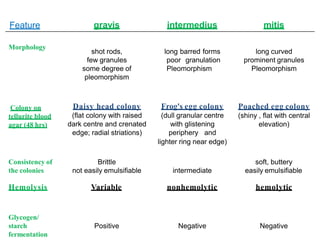
This document provides information on Corynebacterium diphtheriae, the bacteria that causes diphtheria. It discusses the etiology, pathogenesis, symptoms, epidemiology, and laboratory diagnosis of diphtheria. Key points include:
- C. diphtheriae bacteria produce a toxin that is absorbed systemically and can damage organs. Only toxigenic strains can cause severe disease.
- Diphtheria usually causes an infection in the throat that produces a gray membrane. Symptoms include sore throat and fever. It is communicable for weeks without antibiotics.
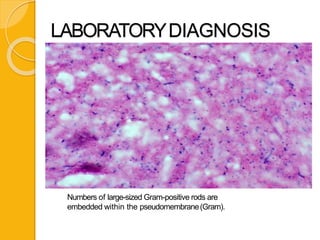
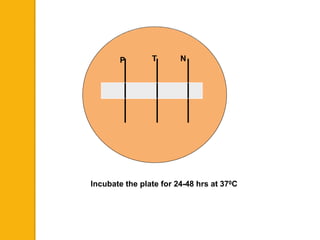
- The disease is most common in children under 5. It spreads through respiratory droplets or direct contact. Laboratory diagnosis involves