

Herpesviruses
GENERAL PROPERTIES
• Herpes viridae comprises of a group of viruses that possess a
unique property of:
oEstablishing latent or persistent infections in their hosts
oUndergo periodic reactivation.
Essentials of Medical Microbiology
Morphology
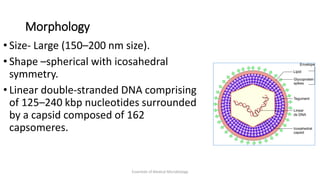
• Size- Large (150–200 nm size).
• Shape –spherical with icosahedral
symmetry.
• Linear double-stranded DNA comprising
of 125–240 kbp nucleotides surrounded
by a capsid composed of 162
capsomeres.
Essentials of Medical Microbiology
Morphology
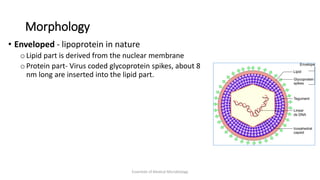
• Enveloped - lipoprotein in nature
o Lipid part is derived from the nuclear membrane
o Protein part- Virus coded glycoprotein spikes, about 8
nm long are inserted into the lipid part.
Essentials of Medical Microbiology
Morphology
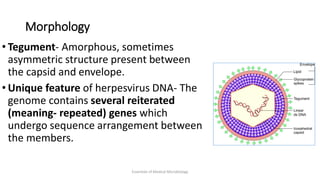
• Tegument- Amorphous, sometimes
asymmetric structure present between
the capsid and envelope.
• Unique feature of herpesvirus DNA- The
genome contains several reiterated
(meaning- repeated) genes which
undergo sequence arrangement between
the members.
Essentials of Medical Microbiology
Morphology
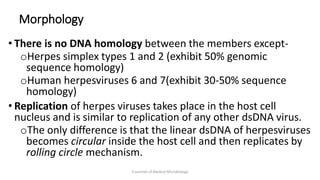
• There is no DNA homology between the members except-
oHerpes simplex types 1 and 2 (exhibit 50% genomic
sequence homology)
oHuman herpesviruses 6 and 7(exhibit 30-50% sequence
homology)
• Replication of herpes viruses takes place in the host cell
nucleus and is similar to replication of any other dsDNA virus.
oThe only difference is that the linear dsDNA of herpesviruses
becomes circular inside the host cell and then replicates by
rolling circle mechanism.
Essentials of Medical Microbiology
Classification
Subfamily
("Herpesvirinae")
Duration of
replication &
Cytopathology
Site of
Latency
Genus Species
Official Name Common Name
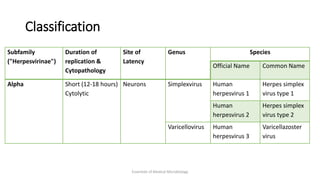
Alpha Short (12-18 hours)
Cytolytic
Neurons Simplexvirus Human
herpesvirus 1
Herpes simplex
virus type 1
Human
herpesvirus 2
Herpes simplex
virus type 2
Varicellovirus Human
herpesvirus 3
Varicellazoster
virus
Essentials of Medical Microbiology
Classification
Subfamily
("Herpesvirinae")
Duration of
replication &
Cytopathology
Site of
Latency
Genus Species
Official Name Common Name
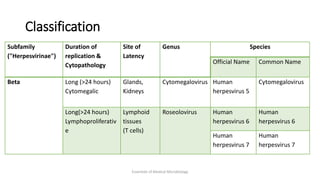
Beta Long (>24 hours)
Cytomegalic
Glands,
Kidneys
Cytomegalovirus Human
herpesvirus 5
Cytomegalovirus
Long(>24 hours)
Lymphoproliferativ
e
Lymphoid
tissues
(T cells)
Roseolovirus Human
herpesvirus 6
Human
herpesvirus 6
Human
herpesvirus 7
Human
herpesvirus 7
Essentials of Medical Microbiology
Classification
Subfamily
("Herpesvirinae")
Duration of
replication &
Cytopathology
Site of
Latency
Genus Species
Official Name Common Name
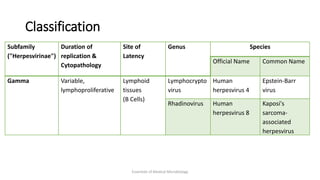
Gamma Variable,
lymphoproliferative
Lymphoid
tissues
(B Cells)
Lymphocrypto
virus
Human
herpesvirus 4
Epstein-Barr
virus
Rhadinovirus Human
herpesvirus 8
Kaposi's
sarcoma-
associated
herpesvirus
Essentials of Medical Microbiology
HERPES SIMPLEX VIRUS
• Belong to α-subfamily of Herpes viridae.
• Extremely widespread and exhibit a broad host range.
• However, the human herpes viruses infect exclusively man.
• Replicate fast (12-18 hours cycle), spread fast and are cytolytic.
• Spectrum of diseases - skin, mucosa and various organs.
• Undergo latency in nerve cells; reactivate later causing recurrent
lesions.
Essentials of Medical Microbiology
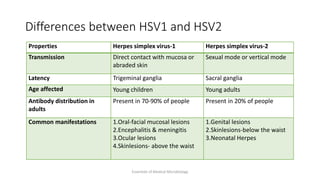
Differences between HSV1 and HSV2
Properties Herpes simplex virus-1 Herpes simplex virus-2
Transmission Direct contact with mucosa or
abraded skin
Sexual mode or vertical mode
Latency Trigeminal ganglia Sacral ganglia
Age affected Young children Young adults
Antibody distribution in
adults
Present in 70-90% of people Present in 20% of people
Common manifestations 1.Oral-facial mucosal lesions
2.Encephalitis & meningitis
3.Ocular lesions
4.Skinlesions- above the waist
1.Genital lesions
2.Skinlesions-below the waist
3.Neonatal Herpes
Essentials of Medical Microbiology
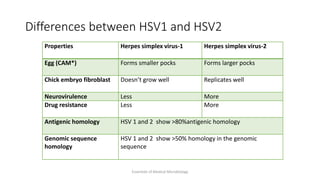
Differences between HSV1 and HSV2
Properties Herpes simplex virus-1 Herpes simplex virus-2
Egg (CAM*) Forms smaller pocks Forms larger pocks
Chick embryo fibroblast Doesn’t grow well Replicates well
Neurovirulence Less More
Drug resistance Less More
Antigenic homology HSV 1 and 2 show >80%antigenic homology
Genomic sequence
homology
HSV 1 and 2 show >50% homology in the genomic
sequence
Essentials of Medical Microbiology
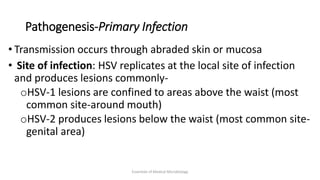
Pathogenesis-Primary Infection
• Transmission occurs through abraded skin or mucosa
• Site of infection: HSV replicates at the local site of infection
and produces lesions commonly-
oHSV-1 lesions are confined to areas above the waist (most
common site-around mouth)
oHSV-2 produces lesions below the waist (most common site-
genital area)
Essentials of Medical Microbiology
Pathogenesis-Primary Infection (cont..)
• Spread via nerve- Virus then invades the local nerve endings  transported
by retrograde axonal flow to the dorsal root ganglia  replicates further 
undergoes latency.
• Primary HSV infections are usually mild (most are asymptomatic).
• In immunocompromised hosts–Viremia occurs that leads to widespread organ
involvement and systemic manifestations.
Essentials of Medical Microbiology
Pathogenesis- Latent Infection (cont..)
• HSV has a tendency to undergo latency in neurons
o HSV-1-trigeminal ganglia
o HSV-2-sacral ganglia
• Non-replicating state- HSV does not replicate in latent stage except for a small
RNA, called microRNA (encoded by a latency-associated viral gene) which
maintains the latent infection and prevents cell death.
• Viruses cannot be isolated during latency.
Essentials of Medical Microbiology
Pathogenesis-Recurrent Infection (cont..)
• Reactivation of the latent virus: Following fever, axonal injury,
physical or emotional stress, and exposure to ultraviolet light.
• Via the axonal spread, virus goes back to the peripheral site and
further replicates in skin or mucosa and produces secondary lesions.
• Recurrent infections are less extensive and less severe because of
presence of pre-existing host immunity that limits the local viral
replication.
• Many recurrences are asymptomatic; but viruses are shed in the
secretions.
Essentials of Medical Microbiology
Clinical manifestations
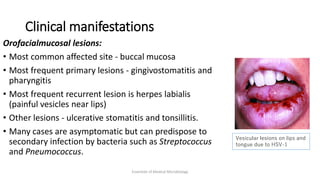
Orofacialmucosal lesions:
• Most common affected site - buccal mucosa
• Most frequent primary lesions - gingivostomatitis and
pharyngitis
• Most frequent recurrent lesion is herpes labialis
(painful vesicles near lips)
• Other lesions - ulcerative stomatitis and tonsillitis.
• Many cases are asymptomatic but can predispose to
secondary infection by bacteria such as Streptococcus
and Pneumococcus.
Essentials of Medical Microbiology
Vesicular lesions on lips and
tongue due to HSV-1
Clinical manifestations
Nervous system:
• Encephalitis
• Meningitis
• Other manifestations-
o Autonomous nervous system involvement(sacral region)
o Transverse myelitis
o Guillain-Barré syndrome
o Peripheral nervous system involvement (e.g. Bell's palsy)
Essentials of Medical Microbiology
Clinical manifestations
Cutaneous lesions:
o Herpetic whitlow
o Febrile blisters
o Herpes gladiatorum
o Eczema herpeticum
o Erythema multiforme
Essentials of Medical Microbiology
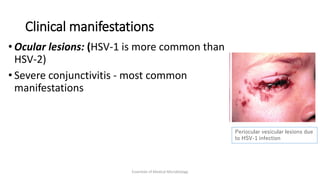
Clinical manifestations
• Ocular lesions: (HSV-1 is more common than
HSV-2)
• Severe conjunctivitis - most common
manifestations
Essentials of Medical Microbiology
Periocular vesicular lesions due
to HSV-1 infection
Clinical manifestations
Genital lesions: (HSV-2 is more common than HSV-1)
• Bilateral, painful multiple, tiny vesicular ulcers
• Associated with fever and inguinal lymphadenopathy.
Essentials of Medical Microbiology
Clinical manifestations
Visceral and Disseminated Herpes:
• Risk factors- Immunocompromised patients, underlying
malnutrition or AIDS, pregnant women and transplant recipients
are at a higher risk of developing viremia and disseminated
infection.
• Common manifestations – pneumonitis, tracheo-bronchitis and
hepatitis.
Essentials of Medical Microbiology
Clinical manifestations
Neonatal Herpes:
• Transmission- During birth from the maternal genital tract, in
utero or after birth.
• Risk of developing neonatal herpes is maximum (10 times more)if
the mother recently acquires the virus (primary infection) than
those who are presented with recurrent infection.
• HSV-2 is more common to cause neonatal herpes (75% of total
cases) than HSV-1.
Essentials of Medical Microbiology
Clinical manifestations
Neonatal Herpes:
• Clinical features- Babies are almost always symptomatic and
presenting one of the three forms -
oLocal lesions involving skin, eye and mouth
oEncephalitis
oDisseminated disease involving multiple organs, including
the CNS-Neonate has the highest frequency of visceral
infections.
Essentials of Medical Microbiology
Epidemiology
HSV-1
• Children are commonly affected.
• Adults- Antibodies developing 70–
90% of adults, but they fail to
eliminate the virus from the body.
• Most adults become carriers
throughout the life, occasionally get
transient recurrent attacks.
HSV-2
• Primary infection occurs in adult
life.
• Antibodies develop only in 20%
of people particularly among
black women than men and
whites.
• HSV-2 tends to recur more often
than HSV-1, irrespective of the
site of infection.
Essentials of Medical Microbiology
LABORATORY DIAGNOSIS
• Cytopathology (Tzanck preparation) by Wrights or Giemsa stain
• Virus isolation
• Viral antigen detection - direct IF
• HSV DNA detection - PCR and real-time PCR
• Antibody detection by ELISA or other formats
Essentials of Medical Microbiology
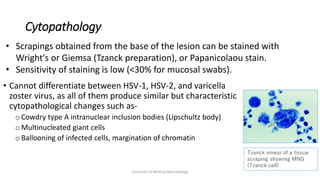
Cytopathology
• Cannot differentiate between HSV-1, HSV-2, and varicella
zoster virus, as all of them produce similar but characteristic
cytopathological changes such as-
o Cowdry type A intranuclear inclusion bodies (Lipschultz body)
o Multinucleated giant cells
o Ballooning of infected cells, margination of chromatin
Essentials of Medical Microbiology
• Scrapings obtained from the base of the lesion can be stained with
Wright's or Giemsa (Tzanck preparation), or Papanicolaou stain.
• Sensitivity of staining is low (<30% for mucosal swabs).
Tzanck smear of a tissue
scraping showing MNG
(Tzanck cell)
Virus Isolation
• Remains the most definitive tool for HSV diagnosis.
• Growth inside the cell lines can be detected in 2-4 days by-
oCharacteristic cytopathic effect- diffuse rounding and
ballooning of the infected cells
oViral antigen detection by neutralization test or
immunofluorescence staining with specific antiserum
oShell vial technique can be followed to decrease the
detection time to <24hrs.
Essentials of Medical Microbiology
Direct detection by immunofluorescence
• Staining with specific antiserum.
• Sensitive and specific assay.
• Can differentiateHSV-1 from HSV-2.
Essentials of Medical Microbiology
HSV DNA detection
• PCR:
o Most sensitive
oDifferentiates between HSV-1 and HSV-2
• Real-time PCR:
oTargeting genes - glycoprotein B and UL 30
oMore sensitive
oCan quantitate the viral load in specimens and also can
differentiate between HSV-1 and -2.
Essentials of Medical Microbiology
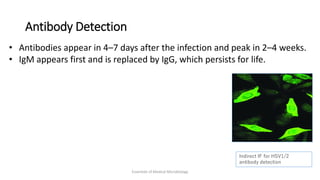
Antibody Detection
Essentials of Medical Microbiology
Indirect IF for HSV1/2
antibody detection
• Antibodies appear in 4–7 days after the infection and peak in 2–4 weeks.
• IgM appears first and is replaced by IgG, which persists for life.
Treatment
• Acyclovir is the drug of choice (acts by inhibiting viral DNA
polymerase).
oFor mucocutaneous infections- Acyclovir and its congeners
famciclovir and valacyclovir have been the mainstay of
treatment.
oOcular infections-Topical idoxuridine, trifluorothymidine,
topical vidarabine, and cidofovir are used.
oFor HSV encephalitis and neonatal herpes, IV acyclovir is the
treatment of choice.
• Acyclovir resistance (altered substrate specificity for
phosphorylating)- Foscarnet is the drug of choice.
Essentials of Medical Microbiology
Prevention
• Use of condom to prevent genital herpes
• Neonatal herpes can be prevented by prior administration of
acyclovir to mothers during third trimester of pregnancy or
delivery by elective caesarean section.
• No vaccine is currently licensed. Several vaccine trials are going
on, such as recombinant HSV-2 glycoprotein vaccine.
Essentials of Medical Microbiology
VARICELLA ZOSTER VIRUS-
• Produces vesicular eruptions (rashes)on the skin and
mucous membranes in the form of two clinical entities-
o Chicken pox:
Generalized diffuse bilateral vesicular rashes
Following primary infection
Usually affecting children.
o Zoster or Shingles:
Occurs following reactivation of latent VZV, present in the trigeminal
ganglia that occurs mainly in adult life.
Vesicular rashes are unilateral and segmental (confined to the skin
innervated by a single sensory ganglion).
Essentials of Medical Microbiology
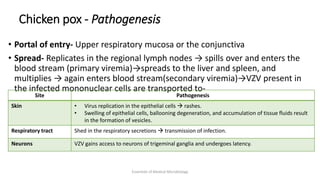
Chicken pox - Pathogenesis
• Portal of entry- Upper respiratory mucosa or the conjunctiva
• Spread- Replicates in the regional lymph nodes → spills over and enters the
blood stream (primary viremia)→spreads to the liver and spleen, and
multiplies → again enters blood stream(secondary viremia)→VZV present in
the infected mononuclear cells are transported to-
Essentials of Medical Microbiology
Site Pathogenesis
Skin • Virus replication in the epithelial cells  rashes.
• Swelling of epithelial cells, ballooning degeneration, and accumulation of tissue fluids result
in the formation of vesicles.
Respiratory tract Shed in the respiratory secretions  transmission of infection.
Neurons VZV gains access to neurons of trigeminal ganglia and undergoes latency.
Clinical manifestations
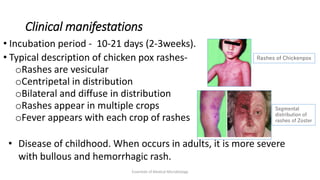
• Incubation period - 10-21 days (2-3weeks).
• Typical description of chicken pox rashes-
oRashes are vesicular
oCentripetal in distribution
oBilateral and diffuse in distribution
oRashes appear in multiple crops
oFever appears with each crop of rashes
Essentials of Medical Microbiology
• Disease of childhood. When occurs in adults, it is more severe
with bullous and hemorrhagic rash.
Rashes of Chickenpox
Segmental
distribution of
rashes of Zoster
Complications
• Most common infectious complication: secondary bacterial infection of skin
• Most common extracutaneous complication - CNS involvement (cerebellar
ataxia, encephalitis and aseptic meningitis)- usually occurs in children.
• Most serious complication is - Varicella pneumonia, develops more commonly
in adults (up to 20% of cases) than in children and is particularly severe in
pregnant women.
• Reye’s syndrome
• Other complications are -myocarditis, nephritis, corneal lesion and arthritis
Essentials of Medical Microbiology
Chickenpox in Pregnancy
• Can affect both mother and the fetus.
• Mothers are at high risk of developing varicella pneumonia.
• Fetus can develop two types of infection; depending up on the
gestational period:
oFetal or congenital varicella syndrome (infection in early
pregnancy)
oNeonatal varicella (infection near delivery)
Essentials of Medical Microbiology
Fetal or congenital varicella syndrome
• VZV is highly teratogenic. Risk is maximum when mother
• Acquires infection at early pregnancy (risk of transmission is 25 % and
developing into disease is 0.4% and 2% of infants whose mother get chicken
pox in <13 weeks and 13-20 weeks of gestation respectively).
• Characterized by:
o Cicatricial skin lesions and limb hypoplasia (most characteristic anomaly)
o CNS defects: microcephaly, mental retardation and seizures
o Ocular defects- chorioretinitis, microphthalmia, and cataracts
o Renal system- hydroureter and hydronephrosis
o Autonomic system- neurogenic bladder
o Low birthweight
Essentials of Medical Microbiology
Neonatal varicella
• If mother develops chickenpox more than 5 days before delivery— then baby is
mostly asymptomatic due to protective maternal antibody in spite transmission
occurs during delivery.
• If mother develops chickenpox 5 days before to 2 days after the delivery—
maternal antibodies would not have produced in such a short time  leads to
dissemination of virus in the baby to cause neonatal varicella (a severe form of
chickenpox with mortality rate exceeding 30%).
Essentials of Medical Microbiology
Epidemiology
• Chicken pox is a highly contagious disease.
• Period of infectivity-Child is infectious from 2 days before the
onset of rash to 5 days thereafter, until the vesicles are
crusted.
• One attack gives lifelong immunity
• Reservoir- Humans are the only known reservoir hosts.
• Source of infection- Patients are the only source, there are
no carriers
• Secondary attack rate is about 70–90%.
Essentials of Medical Microbiology
Zoster or Shingles
• Due to reactivation of latent VZV in old age (>60year age), in
immunocompromised individuals or occasionally in healthy adults.
• Starts with severe pain in the area of skin or mucosa supplied by one or more
groups of sensory nerves and ganglia.
• Rashes- are unilateral and segmental, confined to the area of skin supplied by
the affected nerves
• Most common nerve involved- ophthalmic branch of trigeminal nerve. Head,
neck and trunk are the most common affected sites.
Essentials of Medical Microbiology
Zoster or Shingles - Complications
• Post-herpetic neuralgia
• Zoster ophthalmicus
• Ramsay Hunt syndrome
• Visceral disease
Essentials of Medical Microbiology
Laboratory diagnosis
• Cytopathology-Giemsa staining of the scrapings from the ulcer base (Tzanck
smear) reveals cytopathological changes similar to that of HSV infection, such
as formation of multinucleated giant cells.
• Virus Isolation in various cell lines can also produce HSV-like cytopathic
effects- diffuse rounding and ballooning of infected cells
• VZV-specific methods include-
o Specific antigen detection by direct immunofluorescence staining
o PCR detecting VZV specific genes
Essentials of Medical Microbiology
Vaccine
• Live attenuated vaccine using Oka strain of VZV is available.
• Given to children after 1 year of age; 2 doses, first dose is given at 12-
15months&second at 4-6yrs.
• Also given to seronegative adults;2 doses at 1-month gap.
• Transmission of the vaccine virus can occasionally cause mild rashes in the
recipient.
• Protectivity- Vaccine is >80%effective in preventing chickenpox in children but
less so in adults (70%). However, it is 95% effective in preventing severe
disease.
Essentials of Medical Microbiology
Treatment
• Acyclovir is the drug of choice.
• Can prevent the complications of chicken pox and can also halt the
progression of zoster in adults, but cannot prevent post-herpetic neuralgia.
Essentials of Medical Microbiology
VZIG (Varicella zoster immunoglobulin)
• Recommended for post exposure prophylaxis.
• Given within 96hrs (preferably 72hrs) of exposure.
• Also indicated for neonates born to mothers suffering from chicken pox if the
onset of chicken pox in the mother is between <5 days before delivery till 48
hrs after delivery.
• VZIG not indicated if the mother has zoster.
Essentials of Medical Microbiology
Infection Control Measures
• Isolation.
• Airborne precautions (e.g. negative air-flow rooms) plus contact precautions
must be followed until lesions are dry and crusted.
• For localized zoster in an immunocompetent host, contact precaution alone
can be followed.
Essentials of Medical Microbiology
CYTOMEGALOVIRUS
• Largest virus in herpes viridae family.
• Named because it causes massive enlargement of infected
host cells.
Essentials of Medical Microbiology
CYTOMEGALOVIRUS
• Properties of CMV are similar to any other herpesvirus described earlier with
some minor differences.
o CMV belongs to β-subfamily
o dsDNA is the largest among herpesviruses.
o Cytomegaloviruses are strictly species-specific.
o Cell type specificity-
In vivo, CMV infects kidney and salivary glands; where it undergoes latency.
In vitro, CMV replicates only in human fibroblast cell line &produces a characteristic cytopathic effect
(CPE) described as Owl’s eye appearance
o Cell–to-cell spread
Essentials of Medical Microbiology
Clinical Manifestations
• CMV causes an array of clinical syndromes:
o Congenital
o Perinatal infections
o Infections in immunocompetent
o Infection in immunocompromised & transplant recipients
Essentials of Medical Microbiology
Congenital CMV Infection
• Most common intrauterine infection associated with congenital defects.
• About 1% of infants born are infected with CMV.
• Cytomegalic inclusion disease develops in about 5% of the infected fetus.
• 5–25% of them may develop significant psychomotor, hearing, ocular, or dental
defects within 2 years.
Essentials of Medical Microbiology
Clinical Manifestations
• Congenital defects include-
o Most common defects arepetechiae, hepatosplenomegaly, and jaundice (60–80% of
cases).
o Less common defects include-microcephaly, cerebral calcifications, intrauterine growth
retardation, and prematurity (30–50% of cases).
• Risk is maximum if the infection occurs in early pregnancy and if the mother
is primarily infected during pregnancy (one third of the primarily infected
mothers transmit the virus to fetus in contrast to 1% of reactivated mothers)
Essentials of Medical Microbiology
Perinatal CMV Infection-
• Transmission to the new-born occurs either during
odelivery-through infected birth canal or
opost natal- through infected breast milk / secretions from
mother.
• Mostly asymptomatic, but shed virus in urine from 8-12 weeks
of age, up to several years.
• Few infants, especially premature babies develop interstitial
pneumonitis.
Essentials of Medical Microbiology
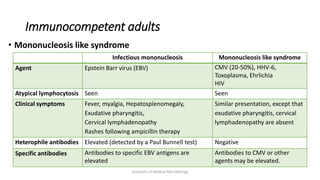
Immunocompetent adults
• Mononucleosis like syndrome
Essentials of Medical Microbiology
Infectious mononucleosis Mononucleosis like syndrome
Agent Epstein Barr virus (EBV) CMV (20-50%), HHV-6,
Toxoplasma, Ehrlichia
HIV
Atypical lymphocytosis Seen Seen
Clinical symptoms Fever, myalgia, Hepatosplenomegaly,
Exudative pharyngitis,
Cervical lymphadenopathy
Rashes following ampicillin therapy
Similar presentation, except that
exudative pharyngitis, cervical
lymphadenopathy are absent
Heterophile antibodies Elevated (detected by a Paul Bunnell test) Negative
Specific antibodies Antibodies to specific EBV antigens are
elevated
Antibodies to CMV or other
agents may be elevated.
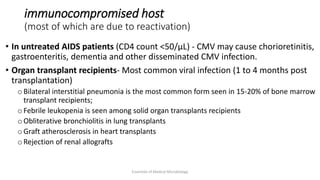
immunocompromised host
(most of which are due to reactivation)
• In untreated AIDS patients (CD4 count <50/µL) - CMV may cause chorioretinitis,
gastroenteritis, dementia and other disseminated CMV infection.
• Organ transplant recipients- Most common viral infection (1 to 4 months post
transplantation)
o Bilateral interstitial pneumonia is the most common form seen in 15-20% of bone marrow
transplant recipients;
o Febrile leukopenia is seen among solid organ transplants recipients
o Obliterative bronchiolitis in lung transplants
o Graft atherosclerosis in heart transplants
o Rejection of renal allografts
Essentials of Medical Microbiology
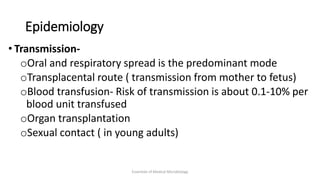
Epidemiology
• Transmission-
oOral and respiratory spread is the predominant mode
oTransplacental route ( transmission from mother to fetus)
oBlood transfusion- Risk of transmission is about 0.1-10% per
blood unit transfused
oOrgan transplantation
oSexual contact ( in young adults)
Essentials of Medical Microbiology
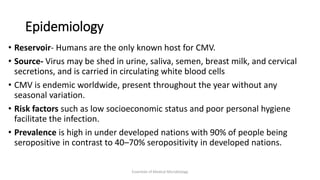
Epidemiology
• Reservoir- Humans are the only known host for CMV.
• Source- Virus may be shed in urine, saliva, semen, breast milk, and cervical
secretions, and is carried in circulating white blood cells
• CMV is endemic worldwide, present throughout the year without any
seasonal variation.
• Risk factors such as low socioeconomic status and poor personal hygiene
facilitate the infection.
• Prevalence is high in under developed nations with 90% of people being
seropositive in contrast to 40–70% seropositivity in developed nations.
Essentials of Medical Microbiology
Laboratory diagnosis
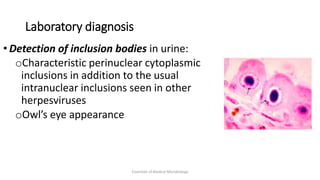
• Detection of inclusion bodies in urine:
oCharacteristic perinuclear cytoplasmic
inclusions in addition to the usual
intranuclear inclusions seen in other
herpesviruses
oOwl’s eye appearance
Essentials of Medical Microbiology
Laboratory diagnosis (cont..)
• Virus Isolation- From throat washings and urine.
• Human fibroblasts are the most ideal cell lines.
• Cytopathic effect-After2–3 weeks of incubation, the following
CPE may be observed-
oTypical CMV inclusions,
oMultinucleated giant cells are seen.
oEnlargement of infected host cells
Essentials of Medical Microbiology
Laboratory diagnosis (cont..)
• Shell vial technique - very useful in CMV mononucleosis where viral load is low
and CPE takes several weeks to appear.
Essentials of Medical Microbiology
Antibody Detection
• ELISA has been available for detecting serum antibodies against
various antigens such as:
oMatrix phosphoproteins pp150 and pp65
oGlycoproteins gB and gH
oMajor DNA binding protein (pp52)
Essentials of Medical Microbiology
Antibody Detection (cont..)
• CMV IgM antibodies appear in 1–2 weeks after infection and
indicates recent or on-going infection.
• Drops to below detectable levels within several months after
infection.
• IgM detection in pregnancy indicates congenital infection, thus
guiding initiation of appropriate treatment
Essentials of Medical Microbiology
Antibody Detection (cont..)
• CMV IgG antibodies are produced few days after IgM and persist life-long.
• Indicates either a recent or past infection; which can be differentiated by
performing IgG avidity test.
• Low IgG avidity indicates recent infection (<3 weeks).
• IgG avidity test is also useful in diagnosing congenital infection
• Antibody detection cannot distinguish strain differences among the clinical
isolates.
Essentials of Medical Microbiology
Antigen Detection
• CMV-specific pp65 antigen (a major matrix phosphoprotein) can be detected
in peripheral-blood leukocytes by indirect immunofluorescence test using
specific monoclonal antibody.
• Test has been in use since long; but is less preferred as it is time-consuming
and technically demanding.
Essentials of Medical Microbiology
Molecular Methods
• PCR - To detect specific CMV DNA in blood or body fluids such as CSF.
• Various genes targeted are glycoprotein B (UL55), DNA polymerase (UL54)
and pp65 (UL83)
• PCR assays are rapid, highly sensitive, specific and have replaced the gold
standard culture technique in most laboratories
• Real time PCR can quantitate the viral load, hence, it is the method of choice
to monitor the treatment response.
Essentials of Medical Microbiology
Treatment
• CMV does not respond to acyclovir.
• The following drugs are used for treatment of CMV infections.
o Ganciclovir
o Valganciclovir
o Foscarnet
o Cidofovir
o CMV immunoglobulin
Essentials of Medical Microbiology
Treatment
• Antiviral resistance can occur rarely due to mutations in
target genes.
• For example, UL97 mutation confers resistance to ganciclovir,
while UL54 mutation leads to resistance to ganciclovir,
cidofovir, and foscarnet)
Essentials of Medical Microbiology
Prophylaxis
• Both ganciclovir and valgancyclovir have been used successfully
for prophylaxis and preemptive therapy in transplant recipients.
• CMV immunoglobulin has shown to be effective in preventing
congenital infection when given to mother during pregnancy
Essentials of Medical Microbiology

Herpes Viruses

  • 1.
  • 2.
    GENERAL PROPERTIES • Herpesviridae comprises of a group of viruses that possess a unique property of: oEstablishing latent or persistent infections in their hosts oUndergo periodic reactivation. Essentials of Medical Microbiology
  • 3.
    Morphology • Size- Large(150–200 nm size). • Shape –spherical with icosahedral symmetry. • Linear double-stranded DNA comprising of 125–240 kbp nucleotides surrounded by a capsid composed of 162 capsomeres. Essentials of Medical Microbiology
  • 4.
    Morphology • Enveloped -lipoprotein in nature o Lipid part is derived from the nuclear membrane o Protein part- Virus coded glycoprotein spikes, about 8 nm long are inserted into the lipid part. Essentials of Medical Microbiology
  • 5.
    Morphology • Tegument- Amorphous,sometimes asymmetric structure present between the capsid and envelope. • Unique feature of herpesvirus DNA- The genome contains several reiterated (meaning- repeated) genes which undergo sequence arrangement between the members. Essentials of Medical Microbiology
  • 6.
    Morphology • There isno DNA homology between the members except- oHerpes simplex types 1 and 2 (exhibit 50% genomic sequence homology) oHuman herpesviruses 6 and 7(exhibit 30-50% sequence homology) • Replication of herpes viruses takes place in the host cell nucleus and is similar to replication of any other dsDNA virus. oThe only difference is that the linear dsDNA of herpesviruses becomes circular inside the host cell and then replicates by rolling circle mechanism. Essentials of Medical Microbiology
  • 7.
    Classification Subfamily ("Herpesvirinae") Duration of replication & Cytopathology Siteof Latency Genus Species Official Name Common Name Alpha Short (12-18 hours) Cytolytic Neurons Simplexvirus Human herpesvirus 1 Herpes simplex virus type 1 Human herpesvirus 2 Herpes simplex virus type 2 Varicellovirus Human herpesvirus 3 Varicellazoster virus Essentials of Medical Microbiology
  • 8.
    Classification Subfamily ("Herpesvirinae") Duration of replication & Cytopathology Siteof Latency Genus Species Official Name Common Name Beta Long (>24 hours) Cytomegalic Glands, Kidneys Cytomegalovirus Human herpesvirus 5 Cytomegalovirus Long(>24 hours) Lymphoproliferativ e Lymphoid tissues (T cells) Roseolovirus Human herpesvirus 6 Human herpesvirus 6 Human herpesvirus 7 Human herpesvirus 7 Essentials of Medical Microbiology
  • 9.
    Classification Subfamily ("Herpesvirinae") Duration of replication & Cytopathology Siteof Latency Genus Species Official Name Common Name Gamma Variable, lymphoproliferative Lymphoid tissues (B Cells) Lymphocrypto virus Human herpesvirus 4 Epstein-Barr virus Rhadinovirus Human herpesvirus 8 Kaposi's sarcoma- associated herpesvirus Essentials of Medical Microbiology
  • 10.
    HERPES SIMPLEX VIRUS •Belong to α-subfamily of Herpes viridae. • Extremely widespread and exhibit a broad host range. • However, the human herpes viruses infect exclusively man. • Replicate fast (12-18 hours cycle), spread fast and are cytolytic. • Spectrum of diseases - skin, mucosa and various organs. • Undergo latency in nerve cells; reactivate later causing recurrent lesions. Essentials of Medical Microbiology
  • 11.
    Differences between HSV1and HSV2 Properties Herpes simplex virus-1 Herpes simplex virus-2 Transmission Direct contact with mucosa or abraded skin Sexual mode or vertical mode Latency Trigeminal ganglia Sacral ganglia Age affected Young children Young adults Antibody distribution in adults Present in 70-90% of people Present in 20% of people Common manifestations 1.Oral-facial mucosal lesions 2.Encephalitis & meningitis 3.Ocular lesions 4.Skinlesions- above the waist 1.Genital lesions 2.Skinlesions-below the waist 3.Neonatal Herpes Essentials of Medical Microbiology
  • 12.
    Differences between HSV1and HSV2 Properties Herpes simplex virus-1 Herpes simplex virus-2 Egg (CAM*) Forms smaller pocks Forms larger pocks Chick embryo fibroblast Doesn’t grow well Replicates well Neurovirulence Less More Drug resistance Less More Antigenic homology HSV 1 and 2 show >80%antigenic homology Genomic sequence homology HSV 1 and 2 show >50% homology in the genomic sequence Essentials of Medical Microbiology
  • 13.
    Pathogenesis-Primary Infection • Transmissionoccurs through abraded skin or mucosa • Site of infection: HSV replicates at the local site of infection and produces lesions commonly- oHSV-1 lesions are confined to areas above the waist (most common site-around mouth) oHSV-2 produces lesions below the waist (most common site- genital area) Essentials of Medical Microbiology
  • 14.
    Pathogenesis-Primary Infection (cont..) •Spread via nerve- Virus then invades the local nerve endings  transported by retrograde axonal flow to the dorsal root ganglia  replicates further  undergoes latency. • Primary HSV infections are usually mild (most are asymptomatic). • In immunocompromised hosts–Viremia occurs that leads to widespread organ involvement and systemic manifestations. Essentials of Medical Microbiology
  • 15.
    Pathogenesis- Latent Infection(cont..) • HSV has a tendency to undergo latency in neurons o HSV-1-trigeminal ganglia o HSV-2-sacral ganglia • Non-replicating state- HSV does not replicate in latent stage except for a small RNA, called microRNA (encoded by a latency-associated viral gene) which maintains the latent infection and prevents cell death. • Viruses cannot be isolated during latency. Essentials of Medical Microbiology
  • 16.
    Pathogenesis-Recurrent Infection (cont..) •Reactivation of the latent virus: Following fever, axonal injury, physical or emotional stress, and exposure to ultraviolet light. • Via the axonal spread, virus goes back to the peripheral site and further replicates in skin or mucosa and produces secondary lesions. • Recurrent infections are less extensive and less severe because of presence of pre-existing host immunity that limits the local viral replication. • Many recurrences are asymptomatic; but viruses are shed in the secretions. Essentials of Medical Microbiology
  • 17.
    Clinical manifestations Orofacialmucosal lesions: •Most common affected site - buccal mucosa • Most frequent primary lesions - gingivostomatitis and pharyngitis • Most frequent recurrent lesion is herpes labialis (painful vesicles near lips) • Other lesions - ulcerative stomatitis and tonsillitis. • Many cases are asymptomatic but can predispose to secondary infection by bacteria such as Streptococcus and Pneumococcus. Essentials of Medical Microbiology Vesicular lesions on lips and tongue due to HSV-1
  • 18.
    Clinical manifestations Nervous system: •Encephalitis • Meningitis • Other manifestations- o Autonomous nervous system involvement(sacral region) o Transverse myelitis o Guillain-Barré syndrome o Peripheral nervous system involvement (e.g. Bell's palsy) Essentials of Medical Microbiology
  • 19.
    Clinical manifestations Cutaneous lesions: oHerpetic whitlow o Febrile blisters o Herpes gladiatorum o Eczema herpeticum o Erythema multiforme Essentials of Medical Microbiology
  • 20.
    Clinical manifestations • Ocularlesions: (HSV-1 is more common than HSV-2) • Severe conjunctivitis - most common manifestations Essentials of Medical Microbiology Periocular vesicular lesions due to HSV-1 infection
  • 21.
    Clinical manifestations Genital lesions:(HSV-2 is more common than HSV-1) • Bilateral, painful multiple, tiny vesicular ulcers • Associated with fever and inguinal lymphadenopathy. Essentials of Medical Microbiology
  • 22.
    Clinical manifestations Visceral andDisseminated Herpes: • Risk factors- Immunocompromised patients, underlying malnutrition or AIDS, pregnant women and transplant recipients are at a higher risk of developing viremia and disseminated infection. • Common manifestations – pneumonitis, tracheo-bronchitis and hepatitis. Essentials of Medical Microbiology
  • 23.
    Clinical manifestations Neonatal Herpes: •Transmission- During birth from the maternal genital tract, in utero or after birth. • Risk of developing neonatal herpes is maximum (10 times more)if the mother recently acquires the virus (primary infection) than those who are presented with recurrent infection. • HSV-2 is more common to cause neonatal herpes (75% of total cases) than HSV-1. Essentials of Medical Microbiology
  • 24.
    Clinical manifestations Neonatal Herpes: •Clinical features- Babies are almost always symptomatic and presenting one of the three forms - oLocal lesions involving skin, eye and mouth oEncephalitis oDisseminated disease involving multiple organs, including the CNS-Neonate has the highest frequency of visceral infections. Essentials of Medical Microbiology
  • 25.
    Epidemiology HSV-1 • Children arecommonly affected. • Adults- Antibodies developing 70– 90% of adults, but they fail to eliminate the virus from the body. • Most adults become carriers throughout the life, occasionally get transient recurrent attacks. HSV-2 • Primary infection occurs in adult life. • Antibodies develop only in 20% of people particularly among black women than men and whites. • HSV-2 tends to recur more often than HSV-1, irrespective of the site of infection. Essentials of Medical Microbiology
  • 26.
    LABORATORY DIAGNOSIS • Cytopathology(Tzanck preparation) by Wrights or Giemsa stain • Virus isolation • Viral antigen detection - direct IF • HSV DNA detection - PCR and real-time PCR • Antibody detection by ELISA or other formats Essentials of Medical Microbiology
  • 27.
    Cytopathology • Cannot differentiatebetween HSV-1, HSV-2, and varicella zoster virus, as all of them produce similar but characteristic cytopathological changes such as- o Cowdry type A intranuclear inclusion bodies (Lipschultz body) o Multinucleated giant cells o Ballooning of infected cells, margination of chromatin Essentials of Medical Microbiology • Scrapings obtained from the base of the lesion can be stained with Wright's or Giemsa (Tzanck preparation), or Papanicolaou stain. • Sensitivity of staining is low (<30% for mucosal swabs). Tzanck smear of a tissue scraping showing MNG (Tzanck cell)
  • 28.
    Virus Isolation • Remainsthe most definitive tool for HSV diagnosis. • Growth inside the cell lines can be detected in 2-4 days by- oCharacteristic cytopathic effect- diffuse rounding and ballooning of the infected cells oViral antigen detection by neutralization test or immunofluorescence staining with specific antiserum oShell vial technique can be followed to decrease the detection time to <24hrs. Essentials of Medical Microbiology
  • 29.
    Direct detection byimmunofluorescence • Staining with specific antiserum. • Sensitive and specific assay. • Can differentiateHSV-1 from HSV-2. Essentials of Medical Microbiology
  • 30.
    HSV DNA detection •PCR: o Most sensitive oDifferentiates between HSV-1 and HSV-2 • Real-time PCR: oTargeting genes - glycoprotein B and UL 30 oMore sensitive oCan quantitate the viral load in specimens and also can differentiate between HSV-1 and -2. Essentials of Medical Microbiology
  • 31.
    Antibody Detection Essentials ofMedical Microbiology Indirect IF for HSV1/2 antibody detection • Antibodies appear in 4–7 days after the infection and peak in 2–4 weeks. • IgM appears first and is replaced by IgG, which persists for life.
  • 32.
    Treatment • Acyclovir isthe drug of choice (acts by inhibiting viral DNA polymerase). oFor mucocutaneous infections- Acyclovir and its congeners famciclovir and valacyclovir have been the mainstay of treatment. oOcular infections-Topical idoxuridine, trifluorothymidine, topical vidarabine, and cidofovir are used. oFor HSV encephalitis and neonatal herpes, IV acyclovir is the treatment of choice. • Acyclovir resistance (altered substrate specificity for phosphorylating)- Foscarnet is the drug of choice. Essentials of Medical Microbiology
  • 33.
    Prevention • Use ofcondom to prevent genital herpes • Neonatal herpes can be prevented by prior administration of acyclovir to mothers during third trimester of pregnancy or delivery by elective caesarean section. • No vaccine is currently licensed. Several vaccine trials are going on, such as recombinant HSV-2 glycoprotein vaccine. Essentials of Medical Microbiology
  • 34.
    VARICELLA ZOSTER VIRUS- •Produces vesicular eruptions (rashes)on the skin and mucous membranes in the form of two clinical entities- o Chicken pox: Generalized diffuse bilateral vesicular rashes Following primary infection Usually affecting children. o Zoster or Shingles: Occurs following reactivation of latent VZV, present in the trigeminal ganglia that occurs mainly in adult life. Vesicular rashes are unilateral and segmental (confined to the skin innervated by a single sensory ganglion). Essentials of Medical Microbiology
  • 35.
    Chicken pox -Pathogenesis • Portal of entry- Upper respiratory mucosa or the conjunctiva • Spread- Replicates in the regional lymph nodes → spills over and enters the blood stream (primary viremia)→spreads to the liver and spleen, and multiplies → again enters blood stream(secondary viremia)→VZV present in the infected mononuclear cells are transported to- Essentials of Medical Microbiology Site Pathogenesis Skin • Virus replication in the epithelial cells  rashes. • Swelling of epithelial cells, ballooning degeneration, and accumulation of tissue fluids result in the formation of vesicles. Respiratory tract Shed in the respiratory secretions  transmission of infection. Neurons VZV gains access to neurons of trigeminal ganglia and undergoes latency.
  • 36.
    Clinical manifestations • Incubationperiod - 10-21 days (2-3weeks). • Typical description of chicken pox rashes- oRashes are vesicular oCentripetal in distribution oBilateral and diffuse in distribution oRashes appear in multiple crops oFever appears with each crop of rashes Essentials of Medical Microbiology • Disease of childhood. When occurs in adults, it is more severe with bullous and hemorrhagic rash. Rashes of Chickenpox Segmental distribution of rashes of Zoster
  • 37.
    Complications • Most commoninfectious complication: secondary bacterial infection of skin • Most common extracutaneous complication - CNS involvement (cerebellar ataxia, encephalitis and aseptic meningitis)- usually occurs in children. • Most serious complication is - Varicella pneumonia, develops more commonly in adults (up to 20% of cases) than in children and is particularly severe in pregnant women. • Reye’s syndrome • Other complications are -myocarditis, nephritis, corneal lesion and arthritis Essentials of Medical Microbiology
  • 38.
    Chickenpox in Pregnancy •Can affect both mother and the fetus. • Mothers are at high risk of developing varicella pneumonia. • Fetus can develop two types of infection; depending up on the gestational period: oFetal or congenital varicella syndrome (infection in early pregnancy) oNeonatal varicella (infection near delivery) Essentials of Medical Microbiology
  • 39.
    Fetal or congenitalvaricella syndrome • VZV is highly teratogenic. Risk is maximum when mother • Acquires infection at early pregnancy (risk of transmission is 25 % and developing into disease is 0.4% and 2% of infants whose mother get chicken pox in <13 weeks and 13-20 weeks of gestation respectively). • Characterized by: o Cicatricial skin lesions and limb hypoplasia (most characteristic anomaly) o CNS defects: microcephaly, mental retardation and seizures o Ocular defects- chorioretinitis, microphthalmia, and cataracts o Renal system- hydroureter and hydronephrosis o Autonomic system- neurogenic bladder o Low birthweight Essentials of Medical Microbiology
  • 40.
    Neonatal varicella • Ifmother develops chickenpox more than 5 days before delivery— then baby is mostly asymptomatic due to protective maternal antibody in spite transmission occurs during delivery. • If mother develops chickenpox 5 days before to 2 days after the delivery— maternal antibodies would not have produced in such a short time  leads to dissemination of virus in the baby to cause neonatal varicella (a severe form of chickenpox with mortality rate exceeding 30%). Essentials of Medical Microbiology
  • 41.
    Epidemiology • Chicken poxis a highly contagious disease. • Period of infectivity-Child is infectious from 2 days before the onset of rash to 5 days thereafter, until the vesicles are crusted. • One attack gives lifelong immunity • Reservoir- Humans are the only known reservoir hosts. • Source of infection- Patients are the only source, there are no carriers • Secondary attack rate is about 70–90%. Essentials of Medical Microbiology
  • 42.
    Zoster or Shingles •Due to reactivation of latent VZV in old age (>60year age), in immunocompromised individuals or occasionally in healthy adults. • Starts with severe pain in the area of skin or mucosa supplied by one or more groups of sensory nerves and ganglia. • Rashes- are unilateral and segmental, confined to the area of skin supplied by the affected nerves • Most common nerve involved- ophthalmic branch of trigeminal nerve. Head, neck and trunk are the most common affected sites. Essentials of Medical Microbiology
  • 43.
    Zoster or Shingles- Complications • Post-herpetic neuralgia • Zoster ophthalmicus • Ramsay Hunt syndrome • Visceral disease Essentials of Medical Microbiology
  • 44.
    Laboratory diagnosis • Cytopathology-Giemsastaining of the scrapings from the ulcer base (Tzanck smear) reveals cytopathological changes similar to that of HSV infection, such as formation of multinucleated giant cells. • Virus Isolation in various cell lines can also produce HSV-like cytopathic effects- diffuse rounding and ballooning of infected cells • VZV-specific methods include- o Specific antigen detection by direct immunofluorescence staining o PCR detecting VZV specific genes Essentials of Medical Microbiology
  • 45.
    Vaccine • Live attenuatedvaccine using Oka strain of VZV is available. • Given to children after 1 year of age; 2 doses, first dose is given at 12- 15months&second at 4-6yrs. • Also given to seronegative adults;2 doses at 1-month gap. • Transmission of the vaccine virus can occasionally cause mild rashes in the recipient. • Protectivity- Vaccine is >80%effective in preventing chickenpox in children but less so in adults (70%). However, it is 95% effective in preventing severe disease. Essentials of Medical Microbiology
  • 46.
    Treatment • Acyclovir isthe drug of choice. • Can prevent the complications of chicken pox and can also halt the progression of zoster in adults, but cannot prevent post-herpetic neuralgia. Essentials of Medical Microbiology
  • 47.
    VZIG (Varicella zosterimmunoglobulin) • Recommended for post exposure prophylaxis. • Given within 96hrs (preferably 72hrs) of exposure. • Also indicated for neonates born to mothers suffering from chicken pox if the onset of chicken pox in the mother is between <5 days before delivery till 48 hrs after delivery. • VZIG not indicated if the mother has zoster. Essentials of Medical Microbiology
  • 48.
    Infection Control Measures •Isolation. • Airborne precautions (e.g. negative air-flow rooms) plus contact precautions must be followed until lesions are dry and crusted. • For localized zoster in an immunocompetent host, contact precaution alone can be followed. Essentials of Medical Microbiology
  • 49.
    CYTOMEGALOVIRUS • Largest virusin herpes viridae family. • Named because it causes massive enlargement of infected host cells. Essentials of Medical Microbiology
  • 50.
    CYTOMEGALOVIRUS • Properties ofCMV are similar to any other herpesvirus described earlier with some minor differences. o CMV belongs to β-subfamily o dsDNA is the largest among herpesviruses. o Cytomegaloviruses are strictly species-specific. o Cell type specificity- In vivo, CMV infects kidney and salivary glands; where it undergoes latency. In vitro, CMV replicates only in human fibroblast cell line &produces a characteristic cytopathic effect (CPE) described as Owl’s eye appearance o Cell–to-cell spread Essentials of Medical Microbiology
  • 51.
    Clinical Manifestations • CMVcauses an array of clinical syndromes: o Congenital o Perinatal infections o Infections in immunocompetent o Infection in immunocompromised & transplant recipients Essentials of Medical Microbiology
  • 52.
    Congenital CMV Infection •Most common intrauterine infection associated with congenital defects. • About 1% of infants born are infected with CMV. • Cytomegalic inclusion disease develops in about 5% of the infected fetus. • 5–25% of them may develop significant psychomotor, hearing, ocular, or dental defects within 2 years. Essentials of Medical Microbiology
  • 53.
    Clinical Manifestations • Congenitaldefects include- o Most common defects arepetechiae, hepatosplenomegaly, and jaundice (60–80% of cases). o Less common defects include-microcephaly, cerebral calcifications, intrauterine growth retardation, and prematurity (30–50% of cases). • Risk is maximum if the infection occurs in early pregnancy and if the mother is primarily infected during pregnancy (one third of the primarily infected mothers transmit the virus to fetus in contrast to 1% of reactivated mothers) Essentials of Medical Microbiology
  • 54.
    Perinatal CMV Infection- •Transmission to the new-born occurs either during odelivery-through infected birth canal or opost natal- through infected breast milk / secretions from mother. • Mostly asymptomatic, but shed virus in urine from 8-12 weeks of age, up to several years. • Few infants, especially premature babies develop interstitial pneumonitis. Essentials of Medical Microbiology
  • 55.
    Immunocompetent adults • Mononucleosislike syndrome Essentials of Medical Microbiology Infectious mononucleosis Mononucleosis like syndrome Agent Epstein Barr virus (EBV) CMV (20-50%), HHV-6, Toxoplasma, Ehrlichia HIV Atypical lymphocytosis Seen Seen Clinical symptoms Fever, myalgia, Hepatosplenomegaly, Exudative pharyngitis, Cervical lymphadenopathy Rashes following ampicillin therapy Similar presentation, except that exudative pharyngitis, cervical lymphadenopathy are absent Heterophile antibodies Elevated (detected by a Paul Bunnell test) Negative Specific antibodies Antibodies to specific EBV antigens are elevated Antibodies to CMV or other agents may be elevated.
  • 56.
    immunocompromised host (most ofwhich are due to reactivation) • In untreated AIDS patients (CD4 count <50/µL) - CMV may cause chorioretinitis, gastroenteritis, dementia and other disseminated CMV infection. • Organ transplant recipients- Most common viral infection (1 to 4 months post transplantation) o Bilateral interstitial pneumonia is the most common form seen in 15-20% of bone marrow transplant recipients; o Febrile leukopenia is seen among solid organ transplants recipients o Obliterative bronchiolitis in lung transplants o Graft atherosclerosis in heart transplants o Rejection of renal allografts Essentials of Medical Microbiology
  • 57.
    Epidemiology • Transmission- oOral andrespiratory spread is the predominant mode oTransplacental route ( transmission from mother to fetus) oBlood transfusion- Risk of transmission is about 0.1-10% per blood unit transfused oOrgan transplantation oSexual contact ( in young adults) Essentials of Medical Microbiology
  • 58.
    Epidemiology • Reservoir- Humansare the only known host for CMV. • Source- Virus may be shed in urine, saliva, semen, breast milk, and cervical secretions, and is carried in circulating white blood cells • CMV is endemic worldwide, present throughout the year without any seasonal variation. • Risk factors such as low socioeconomic status and poor personal hygiene facilitate the infection. • Prevalence is high in under developed nations with 90% of people being seropositive in contrast to 40–70% seropositivity in developed nations. Essentials of Medical Microbiology
  • 59.
    Laboratory diagnosis • Detectionof inclusion bodies in urine: oCharacteristic perinuclear cytoplasmic inclusions in addition to the usual intranuclear inclusions seen in other herpesviruses oOwl’s eye appearance Essentials of Medical Microbiology
  • 60.
    Laboratory diagnosis (cont..) •Virus Isolation- From throat washings and urine. • Human fibroblasts are the most ideal cell lines. • Cytopathic effect-After2–3 weeks of incubation, the following CPE may be observed- oTypical CMV inclusions, oMultinucleated giant cells are seen. oEnlargement of infected host cells Essentials of Medical Microbiology
  • 61.
    Laboratory diagnosis (cont..) •Shell vial technique - very useful in CMV mononucleosis where viral load is low and CPE takes several weeks to appear. Essentials of Medical Microbiology
  • 62.
    Antibody Detection • ELISAhas been available for detecting serum antibodies against various antigens such as: oMatrix phosphoproteins pp150 and pp65 oGlycoproteins gB and gH oMajor DNA binding protein (pp52) Essentials of Medical Microbiology
  • 63.
    Antibody Detection (cont..) •CMV IgM antibodies appear in 1–2 weeks after infection and indicates recent or on-going infection. • Drops to below detectable levels within several months after infection. • IgM detection in pregnancy indicates congenital infection, thus guiding initiation of appropriate treatment Essentials of Medical Microbiology
  • 64.
    Antibody Detection (cont..) •CMV IgG antibodies are produced few days after IgM and persist life-long. • Indicates either a recent or past infection; which can be differentiated by performing IgG avidity test. • Low IgG avidity indicates recent infection (<3 weeks). • IgG avidity test is also useful in diagnosing congenital infection • Antibody detection cannot distinguish strain differences among the clinical isolates. Essentials of Medical Microbiology
  • 65.
    Antigen Detection • CMV-specificpp65 antigen (a major matrix phosphoprotein) can be detected in peripheral-blood leukocytes by indirect immunofluorescence test using specific monoclonal antibody. • Test has been in use since long; but is less preferred as it is time-consuming and technically demanding. Essentials of Medical Microbiology
  • 66.
    Molecular Methods • PCR- To detect specific CMV DNA in blood or body fluids such as CSF. • Various genes targeted are glycoprotein B (UL55), DNA polymerase (UL54) and pp65 (UL83) • PCR assays are rapid, highly sensitive, specific and have replaced the gold standard culture technique in most laboratories • Real time PCR can quantitate the viral load, hence, it is the method of choice to monitor the treatment response. Essentials of Medical Microbiology
  • 67.
    Treatment • CMV doesnot respond to acyclovir. • The following drugs are used for treatment of CMV infections. o Ganciclovir o Valganciclovir o Foscarnet o Cidofovir o CMV immunoglobulin Essentials of Medical Microbiology
  • 68.
    Treatment • Antiviral resistancecan occur rarely due to mutations in target genes. • For example, UL97 mutation confers resistance to ganciclovir, while UL54 mutation leads to resistance to ganciclovir, cidofovir, and foscarnet) Essentials of Medical Microbiology
  • 69.
    Prophylaxis • Both ganciclovirand valgancyclovir have been used successfully for prophylaxis and preemptive therapy in transplant recipients. • CMV immunoglobulin has shown to be effective in preventing congenital infection when given to mother during pregnancy Essentials of Medical Microbiology