Gothic Art and Architecture
Art Appreciation I
Gothic Art and Architecture
• Mid-12th
into the 15th
Century CE
• Dominant style in Europe for 400 years
• Art and Architecture that expressed the political and religious values of
Christians
• Term Gothic comes from the “Goths” – a group of Germanic invaders who
helped destroy the Roman Empire
• Style began in France, but spread throughout Europe
Mid-12th Century in Europe
• Advances in Building Technology
• Access to More Materials and Resources
• New Intellectual and Spiritual Aspirations
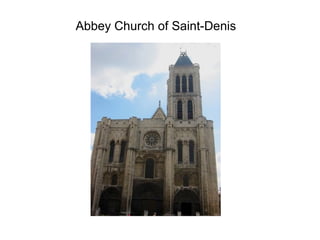
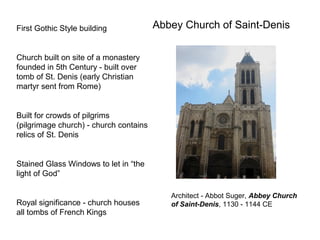
Abbey Church of Saint-Denis
Abbey Church of Saint-DenisFirst Gothic Style building
Church built on site of a monastery
founded in 5th Century - built over
tomb of St. Denis (early Christian
martyr sent from Rome)
Built for crowds of pilgrims
(pilgrimage church) - church contains
relics of St. Denis
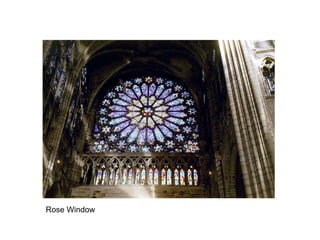
Stained Glass Windows to let in “the
light of God”
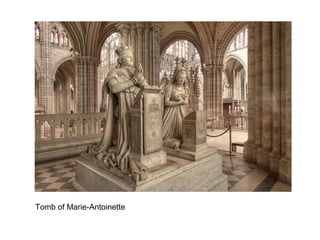
Royal significance - church houses
all tombs of French Kings
Architect - Abbot Suger, Abbey Church
of Saint-Denis, 1130 - 1144 CE
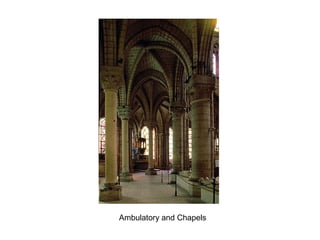
Ambulatory and Chapels
Rose Window
Tomb of Marie-Antoinette
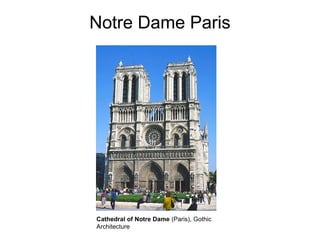
Notre Dame Paris
Cathedral of Notre Dame (Paris), Gothic
Architecture
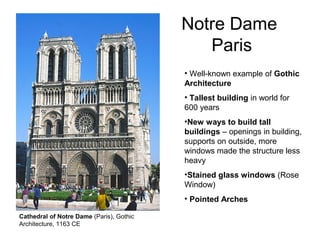
Notre Dame
Paris
• Well-known example of Gothic
Architecture
• Tallest building in world for
600 years
•New ways to build tall
buildings – openings in building,
supports on outside, more
windows made the structure less
heavy
•Stained glass windows (Rose
Window)
• Pointed Arches
Cathedral of Notre Dame (Paris), Gothic
Architecture, 1163 CE
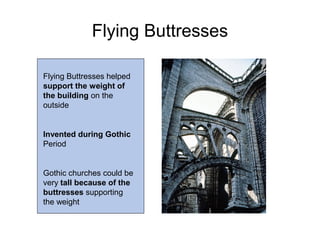
Flying Buttresses
Flying Buttresses helped
support the weight of
the building on the
outside
Invented during Gothic
Period
Gothic churches could be
very tall because of the
buttresses supporting
the weight
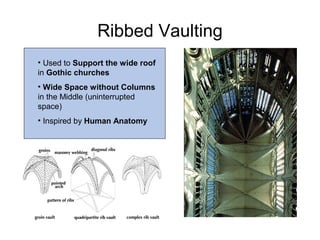
Ribbed Vaulting
• Used to Support the wide roof
in Gothic churches
• Wide Space without Columns
in the Middle (uninterrupted
space)
• Inspired by Human Anatomy
Stained Glass Windows
• Invented during the Gothic Period
• Light as a symbol of God
• Colorful images of Saints, donors to the church, animals, other
designs
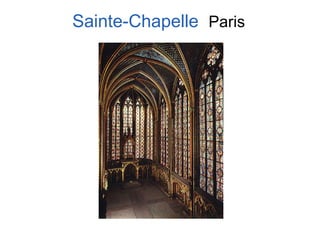
Sainte-Chapelle Paris
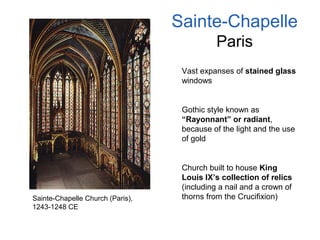
Sainte-Chapelle
Paris
Vast expanses of stained glass
windows
Gothic style known as
“Rayonnant” or radiant,
because of the light and the use
of gold
Church built to house King
Louis IX’s collection of relics
(including a nail and a crown of
thorns from the Crucifixion)Sainte-Chapelle Church (Paris),
1243-1248 CE
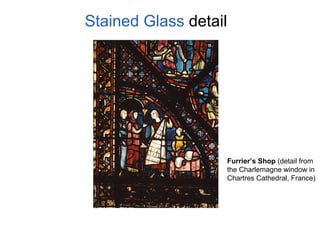
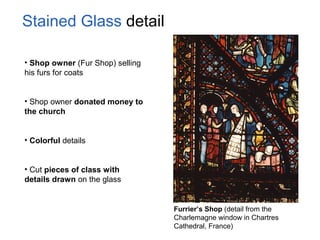
Stained Glass detail
Furrier’s Shop (detail from
the Charlemagne window in
Chartres Cathedral, France)
Stained Glass detail
• Shop owner (Fur Shop) selling
his furs for coats
• Shop owner donated money to
the church
• Colorful details
• Cut pieces of class with
details drawn on the glass
Furrier’s Shop (detail from the
Charlemagne window in Chartres
Cathedral, France)
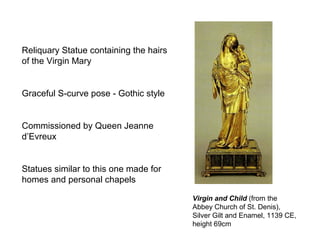
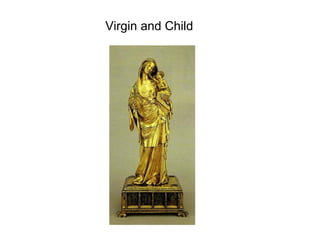
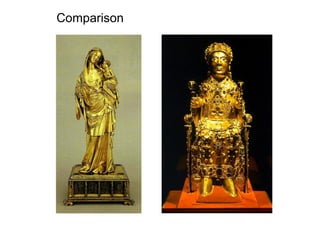
Virgin and Child (from the
Abbey Church of St. Denis),
Silver Gilt and Enamel, 1139 CE,
height 69cm
Reliquary Statue containing the hairs
of the Virgin Mary
Graceful S-curve pose - Gothic style
Commissioned by Queen Jeanne
d’Evreux
Statues similar to this one made for
homes and personal chapels
Virgin and Child
Comparison
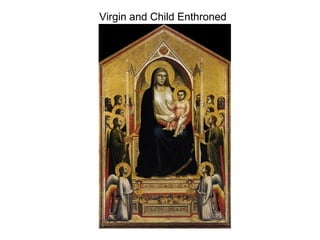
Virgin and Child Enthroned
Artist: Giotto di Bondone,
Virgin and Child Enthroned, 1280 CE,
Tempera Paint and Gold on Wood,
10 feet 8 inches x 6 feet 8 inches
Painted for the Church of the Ognissanti (All
Saints) in Florence, Italy
Symmetrical Composition
Convincing Light and Shadow
Hierarchy of Figures (Scale of Virgin Mary
and Christ child compared to Angels)
Tempera Paint – Mixture of Dry Pigment and
Egg – paint dries quickly
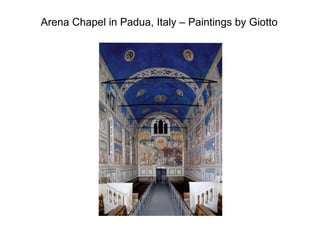
Arena Chapel in Padua, Italy – Paintings by Giotto
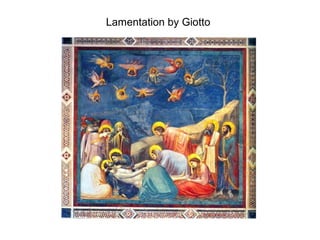
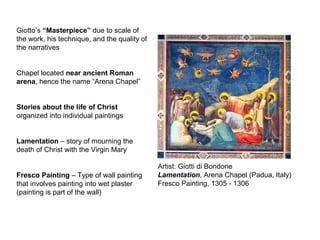
Lamentation by Giotto
Artist: Giotti di Bondone
Lamentation, Arena Chapel (Padua, Italy)
Fresco Painting, 1305 - 1306
Giotto’s “Masterpiece” due to scale of
the work, his technique, and the quality of
the narratives
Chapel located near ancient Roman
arena, hence the name “Arena Chapel”
Stories about the life of Christ
organized into individual paintings
Lamentation – story of mourning the
death of Christ with the Virgin Mary
Fresco Painting – Type of wall painting
that involves painting into wet plaster
(painting is part of the wall)

Gothic Art

  • 1.
    Gothic Art andArchitecture Art Appreciation I
  • 2.
    Gothic Art andArchitecture • Mid-12th into the 15th Century CE • Dominant style in Europe for 400 years • Art and Architecture that expressed the political and religious values of Christians • Term Gothic comes from the “Goths” – a group of Germanic invaders who helped destroy the Roman Empire • Style began in France, but spread throughout Europe
  • 3.
    Mid-12th Century inEurope • Advances in Building Technology • Access to More Materials and Resources • New Intellectual and Spiritual Aspirations
  • 4.
    Abbey Church ofSaint-Denis
  • 5.
    Abbey Church ofSaint-DenisFirst Gothic Style building Church built on site of a monastery founded in 5th Century - built over tomb of St. Denis (early Christian martyr sent from Rome) Built for crowds of pilgrims (pilgrimage church) - church contains relics of St. Denis Stained Glass Windows to let in “the light of God” Royal significance - church houses all tombs of French Kings Architect - Abbot Suger, Abbey Church of Saint-Denis, 1130 - 1144 CE
  • 6.
  • 7.
  • 8.
  • 9.
    Notre Dame Paris Cathedralof Notre Dame (Paris), Gothic Architecture
  • 10.
    Notre Dame Paris • Well-knownexample of Gothic Architecture • Tallest building in world for 600 years •New ways to build tall buildings – openings in building, supports on outside, more windows made the structure less heavy •Stained glass windows (Rose Window) • Pointed Arches Cathedral of Notre Dame (Paris), Gothic Architecture, 1163 CE
  • 11.
    Flying Buttresses Flying Buttresseshelped support the weight of the building on the outside Invented during Gothic Period Gothic churches could be very tall because of the buttresses supporting the weight
  • 12.
    Ribbed Vaulting • Usedto Support the wide roof in Gothic churches • Wide Space without Columns in the Middle (uninterrupted space) • Inspired by Human Anatomy
  • 13.
    Stained Glass Windows •Invented during the Gothic Period • Light as a symbol of God • Colorful images of Saints, donors to the church, animals, other designs
  • 14.
  • 15.
    Sainte-Chapelle Paris Vast expanses ofstained glass windows Gothic style known as “Rayonnant” or radiant, because of the light and the use of gold Church built to house King Louis IX’s collection of relics (including a nail and a crown of thorns from the Crucifixion)Sainte-Chapelle Church (Paris), 1243-1248 CE
  • 16.
    Stained Glass detail Furrier’sShop (detail from the Charlemagne window in Chartres Cathedral, France)
  • 17.
    Stained Glass detail •Shop owner (Fur Shop) selling his furs for coats • Shop owner donated money to the church • Colorful details • Cut pieces of class with details drawn on the glass Furrier’s Shop (detail from the Charlemagne window in Chartres Cathedral, France)
  • 18.
    Virgin and Child(from the Abbey Church of St. Denis), Silver Gilt and Enamel, 1139 CE, height 69cm Reliquary Statue containing the hairs of the Virgin Mary Graceful S-curve pose - Gothic style Commissioned by Queen Jeanne d’Evreux Statues similar to this one made for homes and personal chapels
  • 19.
  • 20.
  • 21.
  • 22.
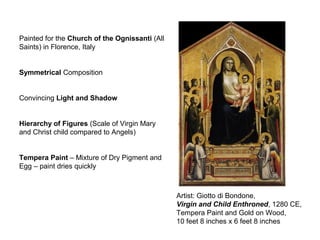
    Artist: Giotto diBondone, Virgin and Child Enthroned, 1280 CE, Tempera Paint and Gold on Wood, 10 feet 8 inches x 6 feet 8 inches Painted for the Church of the Ognissanti (All Saints) in Florence, Italy Symmetrical Composition Convincing Light and Shadow Hierarchy of Figures (Scale of Virgin Mary and Christ child compared to Angels) Tempera Paint – Mixture of Dry Pigment and Egg – paint dries quickly
  • 23.
    Arena Chapel inPadua, Italy – Paintings by Giotto
  • 24.
  • 25.
    Artist: Giotti diBondone Lamentation, Arena Chapel (Padua, Italy) Fresco Painting, 1305 - 1306 Giotto’s “Masterpiece” due to scale of the work, his technique, and the quality of the narratives Chapel located near ancient Roman arena, hence the name “Arena Chapel” Stories about the life of Christ organized into individual paintings Lamentation – story of mourning the death of Christ with the Virgin Mary Fresco Painting – Type of wall painting that involves painting into wet plaster (painting is part of the wall)