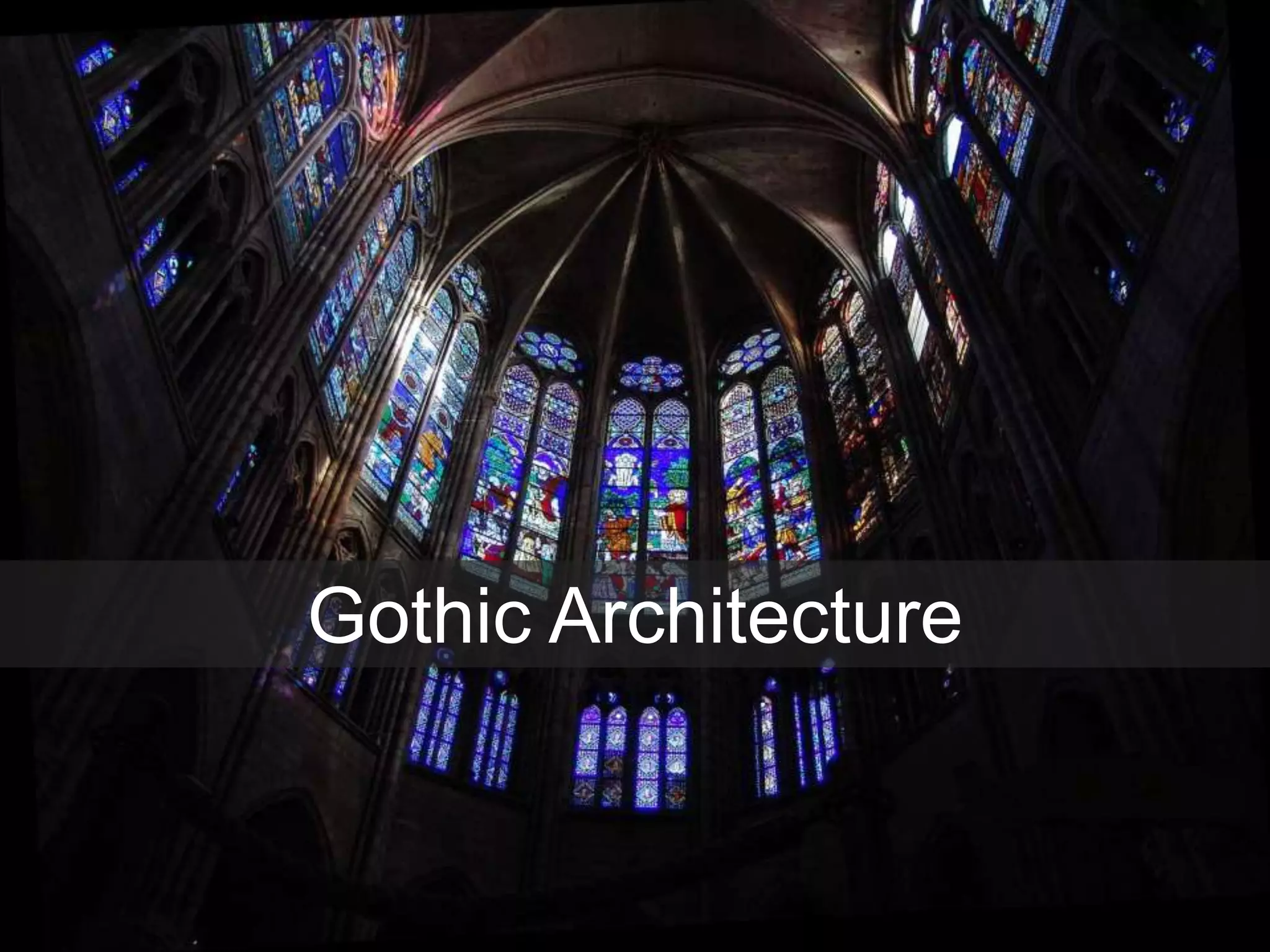

Gothic Architecture
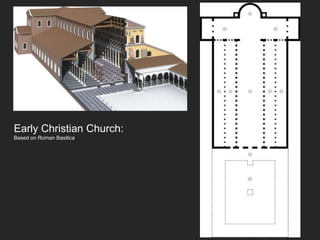
Early Christian Church:
Based on Roman Basilica
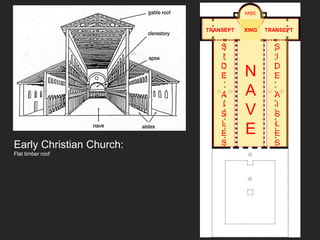
N
A
V
E
S
I
D
E
A
I
S
L
E
S
S
I
D
E
A
I
S
L
E
S
TRANSEPT TRANSEPT
APSE
XING
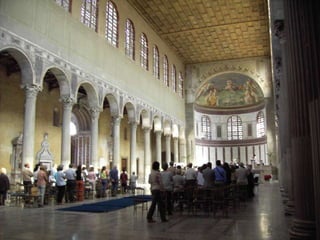
Early Christian Church:
Flat timber roof
N
A
V
E
S
I
D
E
A
I
S
L
E
S
S
I
D
E
A
I
S
L
E
S
TRANSEPT TRANSEPTXIN
G
APSE
CHOIR
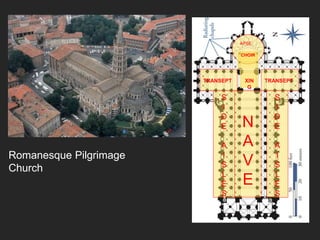
Romanesque Pilgrimage
Church
N
A
V
E
S
I
D
E
A
I
S
L
E
S
S
I
D
E
A
I
S
L
E
S
TRANSEPT TRANSEPT
XIN
XNG
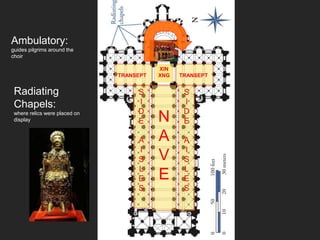
Ambulatory:
guides pilgrims around the
choir
Radiating
Chapels:
where relics were placed on
display
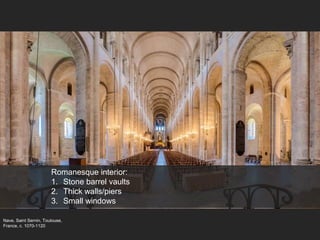
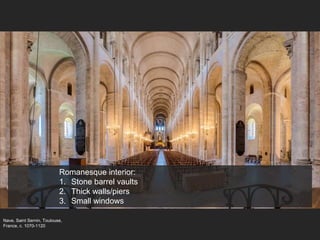
Romanesque interior:
1. Stone barrel vaults
2. Thick walls/piers
3. Small windows
Nave, Saint Sernin, Toulouse,
France, c. 1070-1120
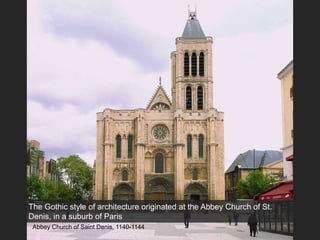
The Gothic style of architecture originated at the Abbey Church of St.
Denis, in a suburb of Paris
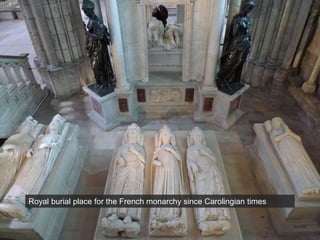
Abbey Church of Saint Denis, 1140-1144
Royal burial place for the French monarchy since Carolingian times
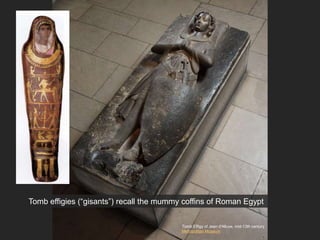
Tomb Effigy of Jean d'Alluye, mid-13th century
Metropolitan Museum
Tomb effigies (“gisants”) recall the mummy coffins of Roman Egypt
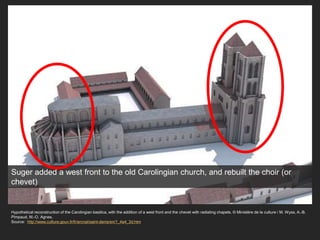
Hypothetical reconstruction of the Carolingian basilica, with the addition of a west front and the chevet with radiating chapels. © Ministère de la culture / M. Wyss, A.-B.
Pimpaud, M.-O. Agnes.
Source: http://www.culture.gouv.fr/fr/arcnat/saint-denis/en/1_4a4_3d.htm
Suger added a west front to the old Carolingian church, and rebuilt the choir (or
chevet)
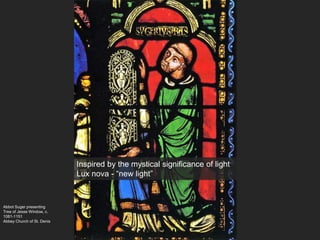
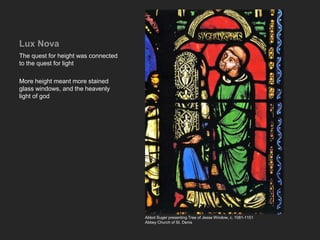
Abbot Suger presenting
Tree of Jesse Window, c.
1081-1151
Abbey Church of St. Denis
Inspired by the mystical significance of light
Lux nova - “new light”
Romanesque interior:
1. Stone barrel vaults
2. Thick walls/piers
3. Small windows
Nave, Saint Sernin, Toulouse,
France, c. 1070-1120
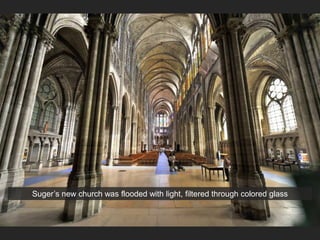
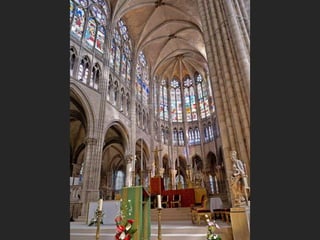
Suger’s new church was flooded with light, filtered through colored glass
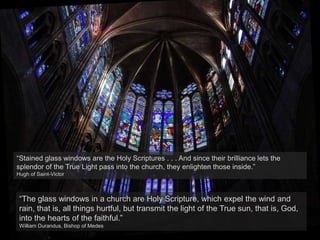
“Stained glass windows are the Holy Scriptures . . . And since their brilliance lets the
splendor of the True Light pass into the church, they enlighten those inside.”
Hugh of Saint-Victor
“The glass windows in a church are Holy Scripture, which expel the wind and
rain, that is, all things hurtful, but transmit the light of the True sun, that is, God,
into the hearts of the faithful.”
William Durandus, Bishop of Medes
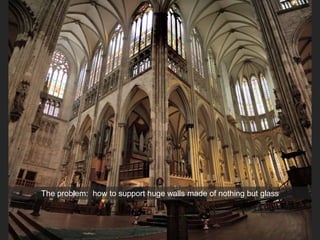
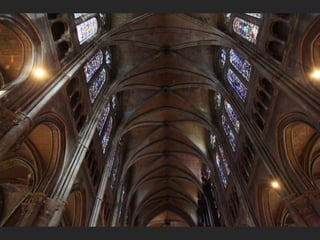
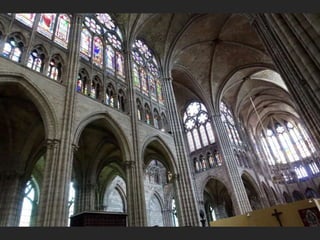
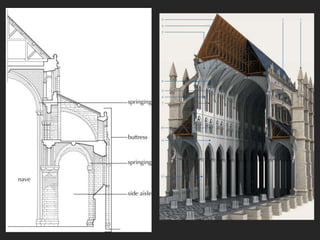
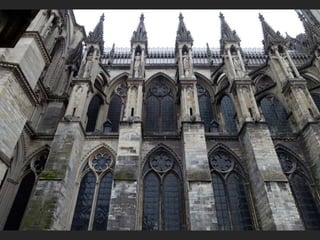
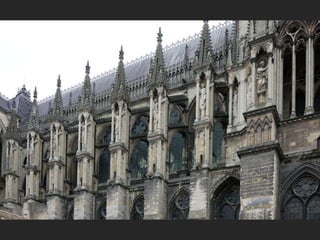
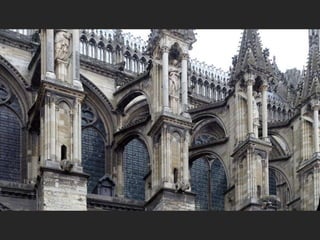
The problem: how to support huge walls made of nothing but glass
https://www.youtube.com/watch?v=vrdkL7Y8Who
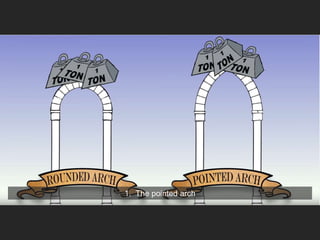
1. The pointed arch
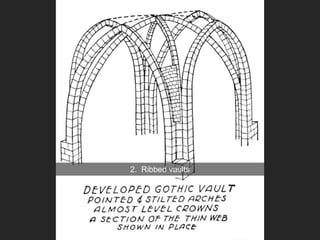
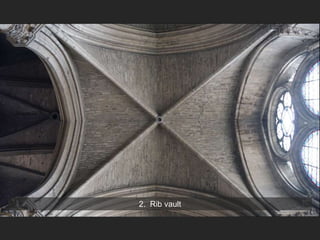
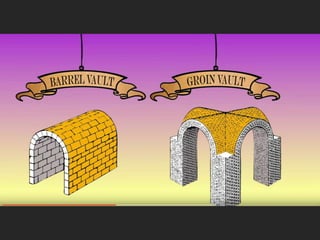
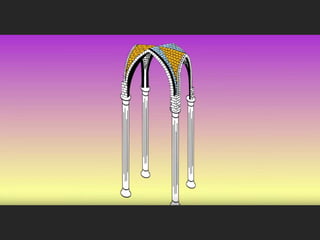
2. Ribbed vaults
2. Rib vault
3. Flying buttresses
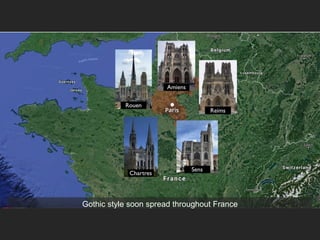
Gothic style soon spread throughout France
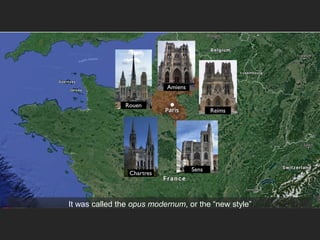
It was called the opus modernum, or the “new style”
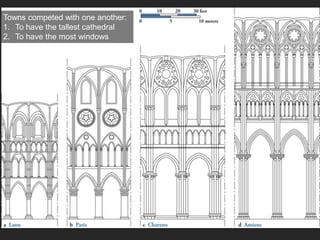
Towns competed with one another:
1. To have the tallest cathedral
2. To have the most windows
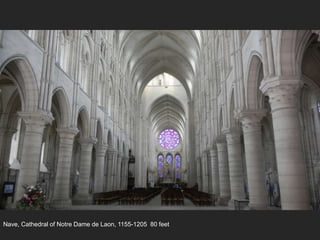
Nave, Cathedral of Notre Dame de Laon, 1155-1205 80 feet
Nave, Cathedral of Notre Dame de
Laon, 1155-1205 80 feet
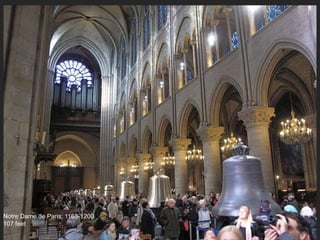
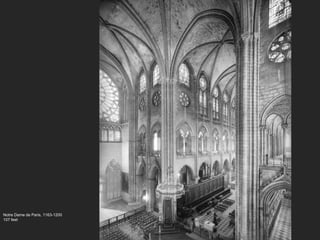
Notre Dame de Paris, 1163-1200
107 feet
Notre Dame de Paris, 1163-1200
107 feet
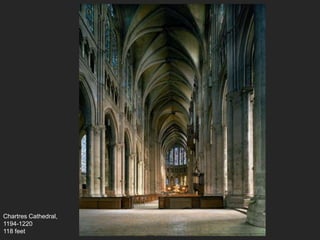
Chartres Cathedral,
1194-1220
118 feet
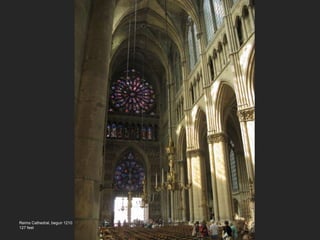
Reims Cathedral, begun 1210
127 feet
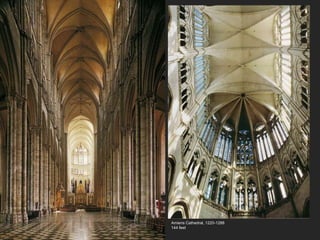
Amiens Cathedral, 1220-1288
144 feet
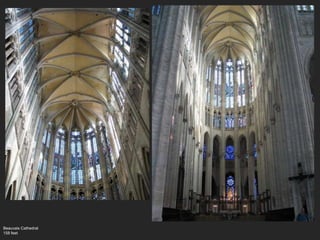
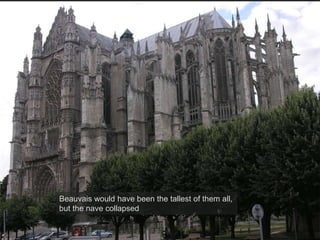
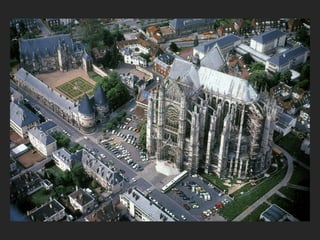
Beauvais Cathedral
158 feet
Beauvais would have been the tallest of them all,
but the nave collapsed
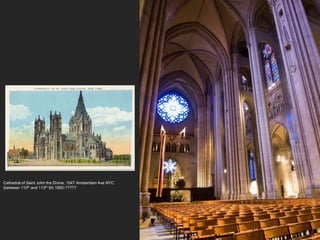
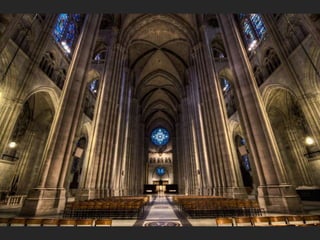
Cathedral of Saint John the Divine, 1047 Amsterdam Ave NYC
(between 110th and 113th St) 1892-?????
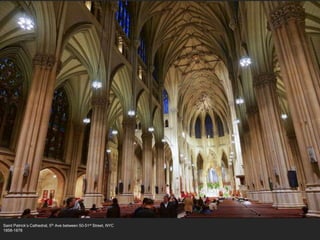
Saint Patrick’s Cathedral, 5th Ave between 50-51st Street, NYC
1858-1878
Lux Nova
The quest for height was connected
to the quest for light
More height meant more stained
glass windows, and the heavenly
light of god
Abbot Suger presenting Tree of Jesse Window, c. 1081-1151
Abbey Church of St. Denis
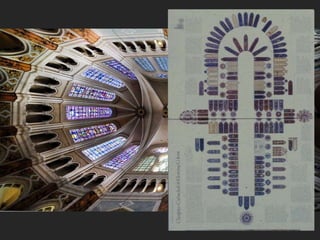
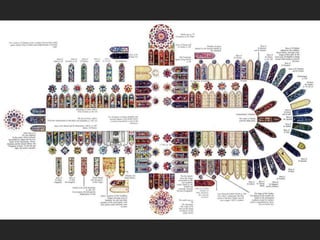
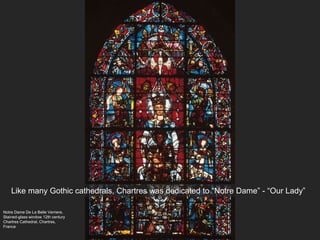
Notre Dame De La Belle Verriere,
Stained-glass window 12th century
Chartres Cathedral, Chartres,
France
Like many Gothic cathedrals, Chartres was dedicated to “Notre Dame” - “Our Lady”
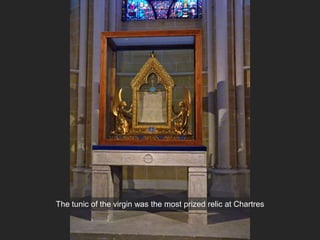
The tunic of the virgin was the most prized relic at Chartres
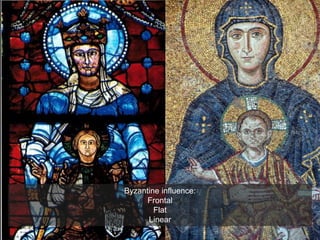
Byzantine influence:
Frontal
Flat
Linear
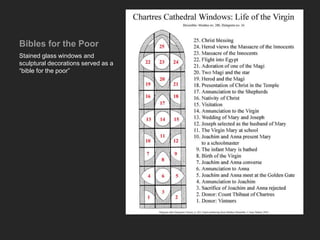
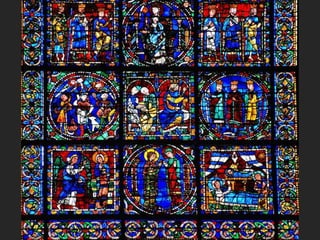
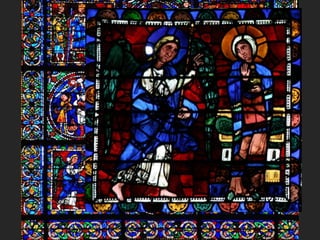
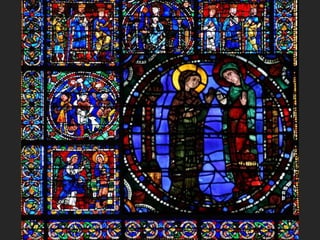
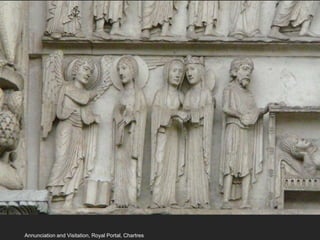
Bibles for the Poor
Stained glass windows and
sculptural decorations served as a
“bible for the poor”
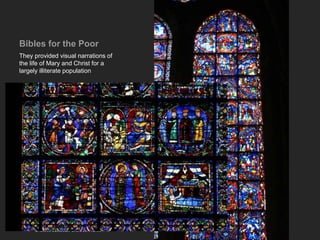
Bibles for the Poor
They provided visual narrations of
the life of Mary and Christ for a
largely illiterate population
South Side of Choir Window: Life of the Virgin, 12th century
Chartres Cathedral, Chartres, France
Annunciation and Visitation, Royal Portal, Chartres
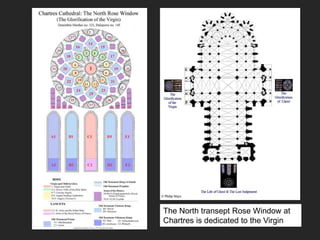
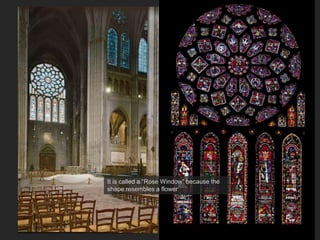
The North transept Rose Window at
Chartres is dedicated to the Virgin
It is called a “Rose Window” because the
shape resembles a flower
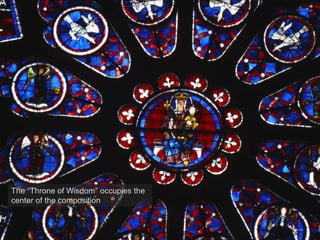
The “Throne of Wisdom” occupies the
center of the composition
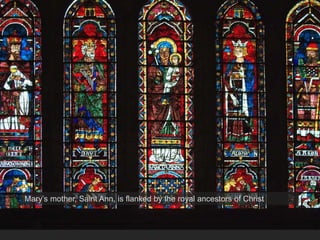
Mary’s mother, Saint Ann, is flanked by the royal ancestors of Christ
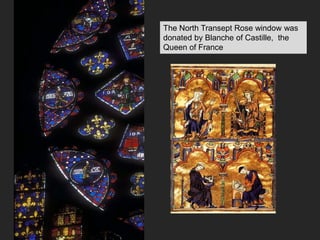
The North Transept Rose window was
donated by Blanche of Castille, the
Queen of France
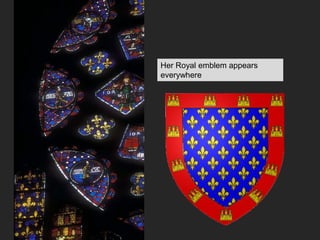
Her Royal emblem appears
everywhere
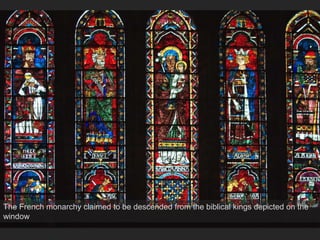
The French monarchy claimed to be descended from the biblical kings depicted on the
window
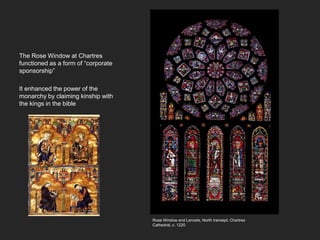
The Rose Window at Chartres
functioned as a form of “corporate
sponsorship”
It enhanced the power of the
monarchy by claiming kinship with
the kings in the bible
Rose Window and Lancets, North transept, Chartres
Cathedral, c. 1220
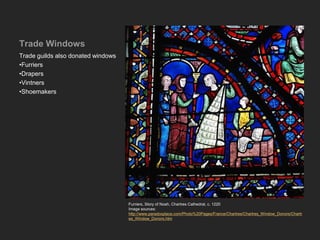
Trade Windows
Trade guilds also donated windows
•Furriers
•Drapers
•Vintners
•Shoemakers
Furriers, Story of Noah, Chartres Cathedral, c. 1220
Image sources:
http://www.paradoxplace.com/Photo%20Pages/France/Chartres/Chartres_Window_Donors/Chartr
es_Window_Donors.htm
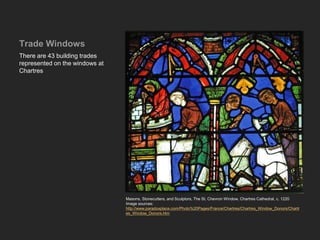
Trade Windows
There are 43 building trades
represented on the windows at
Chartres
Masons, Stonecutters, and Sculptors, The St. Chevron Window, Chartres Cathedral, c. 1220
Image sources:
http://www.paradoxplace.com/Photo%20Pages/France/Chartres/Chartres_Window_Donors/Chartr
es_Window_Donors.htm
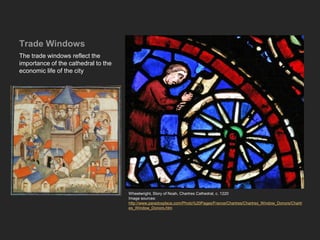
Trade Windows
The trade windows reflect the
importance of the cathedral to the
economic life of the city
Wheelwright, Story of Noah, Chartres Cathedral, c. 1220
Image sources:
http://www.paradoxplace.com/Photo%20Pages/France/Chartres/Chartres_Window_Donors/Chartr
es_Window_Donors.htm
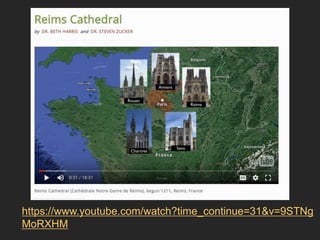
https://www.youtube.com/watch?time_continue=31&v=9STNg
MoRXHM

Gothic Architecture