Art of the Ancient   Near East
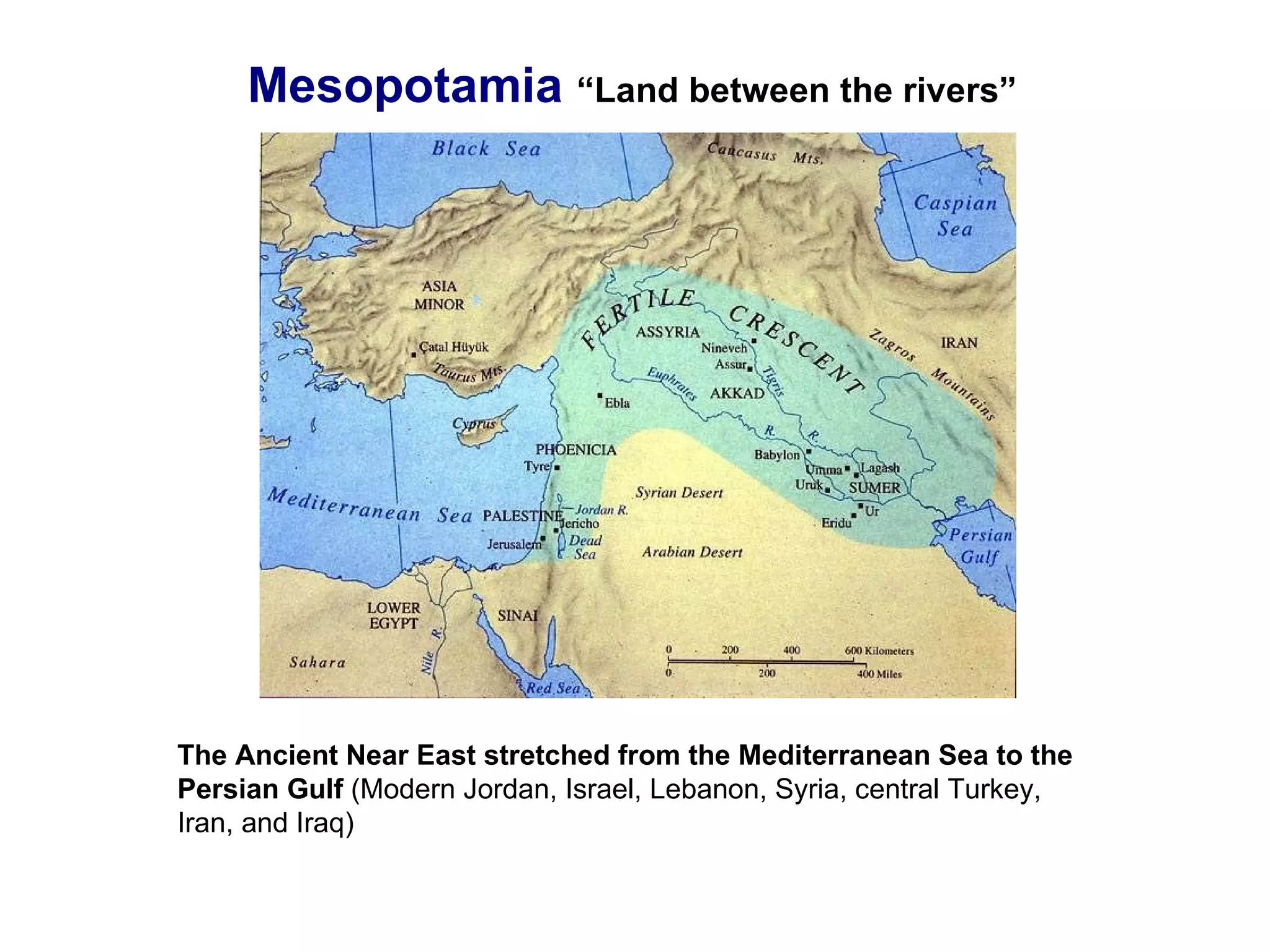
Mesopotamia   “Land between the rivers” The Ancient Near East stretched from the Mediterranean Sea to the Persian Gulf  (Modern Jordan, Israel, Lebanon, Syria, central Turkey, Iran, and Iraq)
Mesopotamia  was ideal for  agriculture ,  and farming communities arose around 9000 BCE Major city-states  include Elam, Sumer, Akkad, Lagash, Babylonia, Anatolia, and Assyria Near East  traded with Egypt People worshipped numerous  Gods and Goddesses
Sumerian   Art
Accomplishments of the   Sumerians invention of writing (cuneiform) cities laws architecture pottery (invention of potter’s wheel) weaving  metalwork
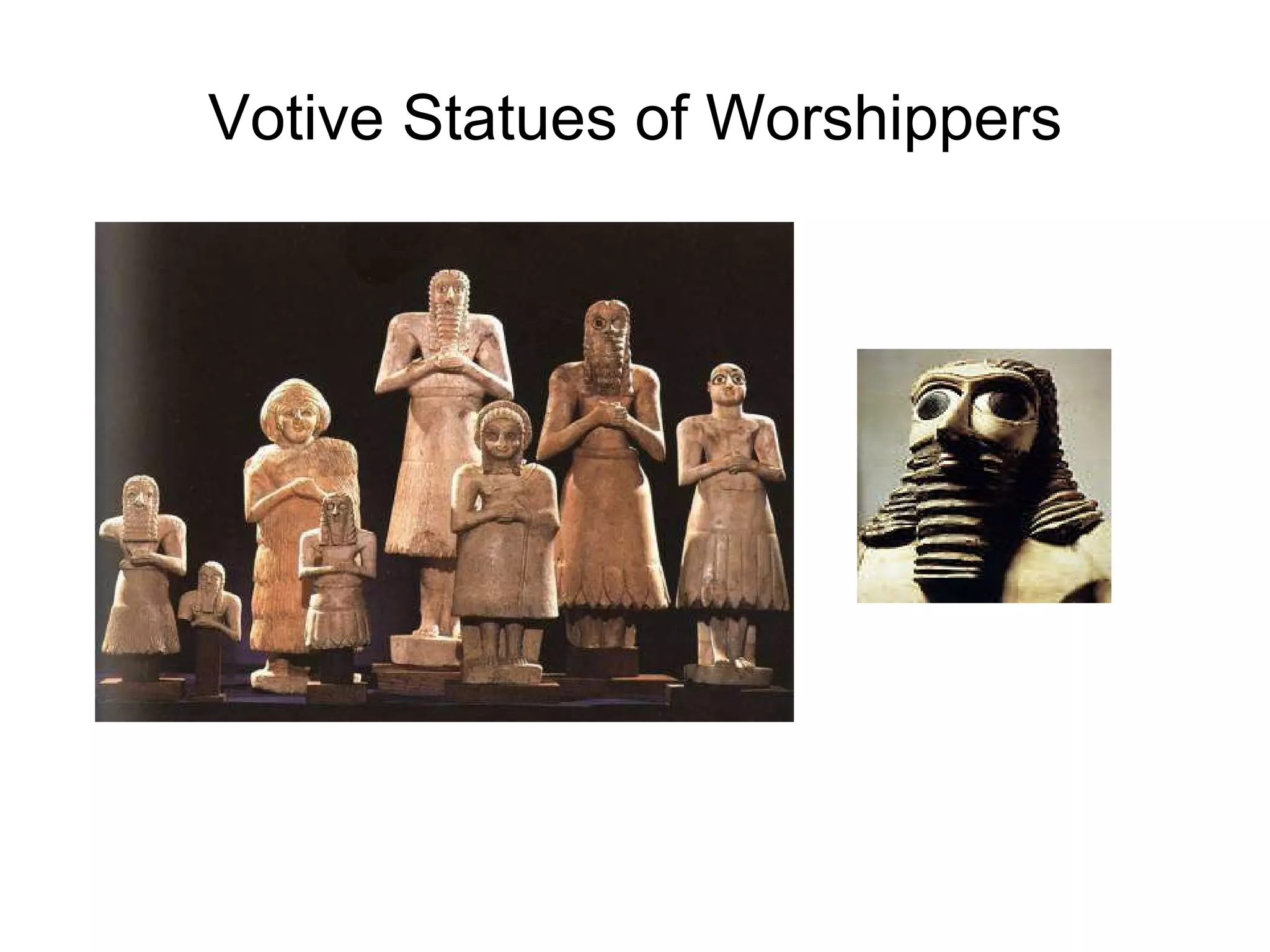
Votive Statues of Worshippers
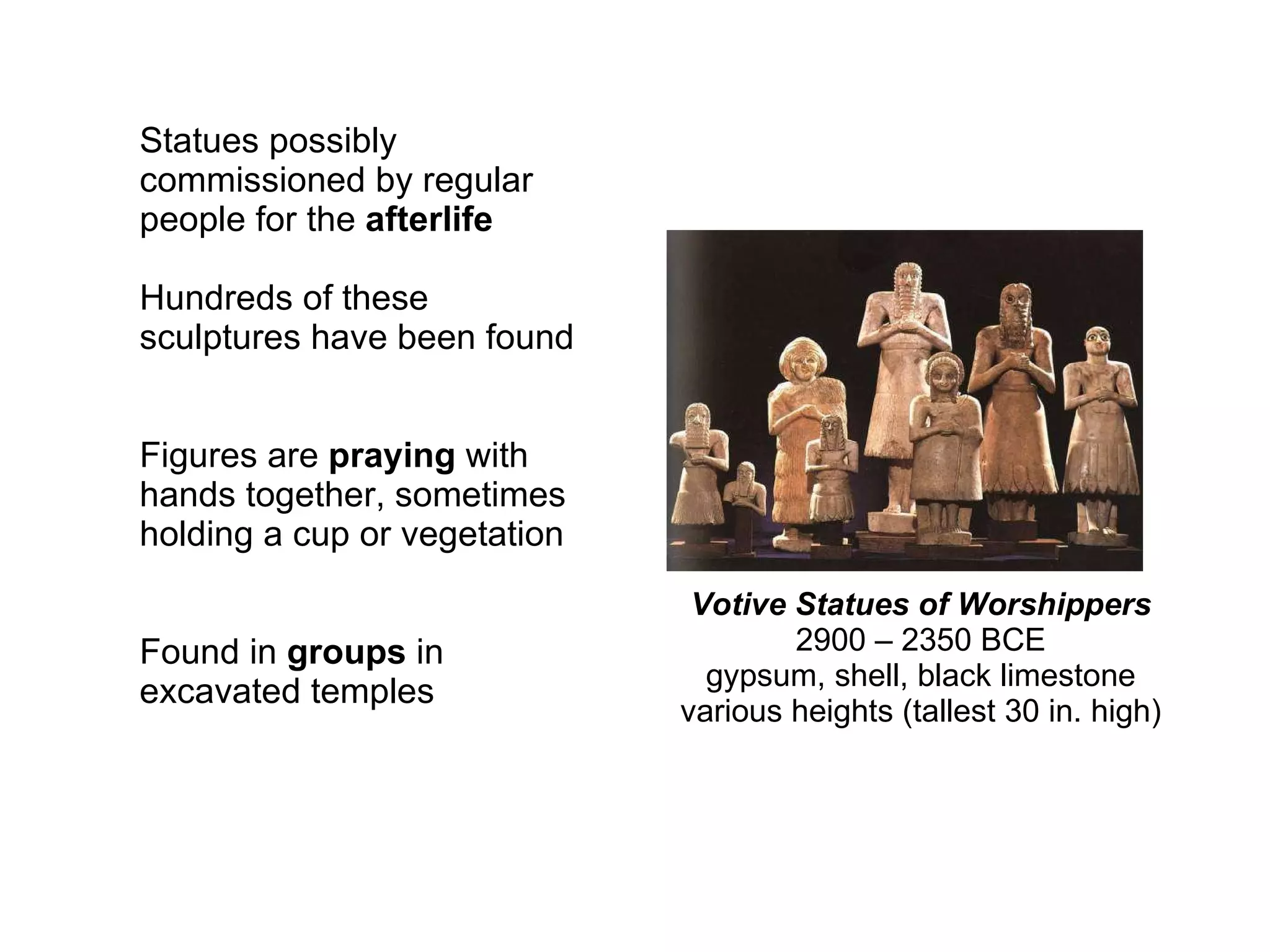
Votive Statues of Worshippers 2900 – 2350 BCE gypsum, shell, black limestone various heights (tallest 30 in. high) Statues possibly commissioned by regular people for the  afterlife Hundreds of these sculptures have been found Figures are  praying  with hands together, sometimes holding a cup or vegetation Found in  groups  in excavated temples
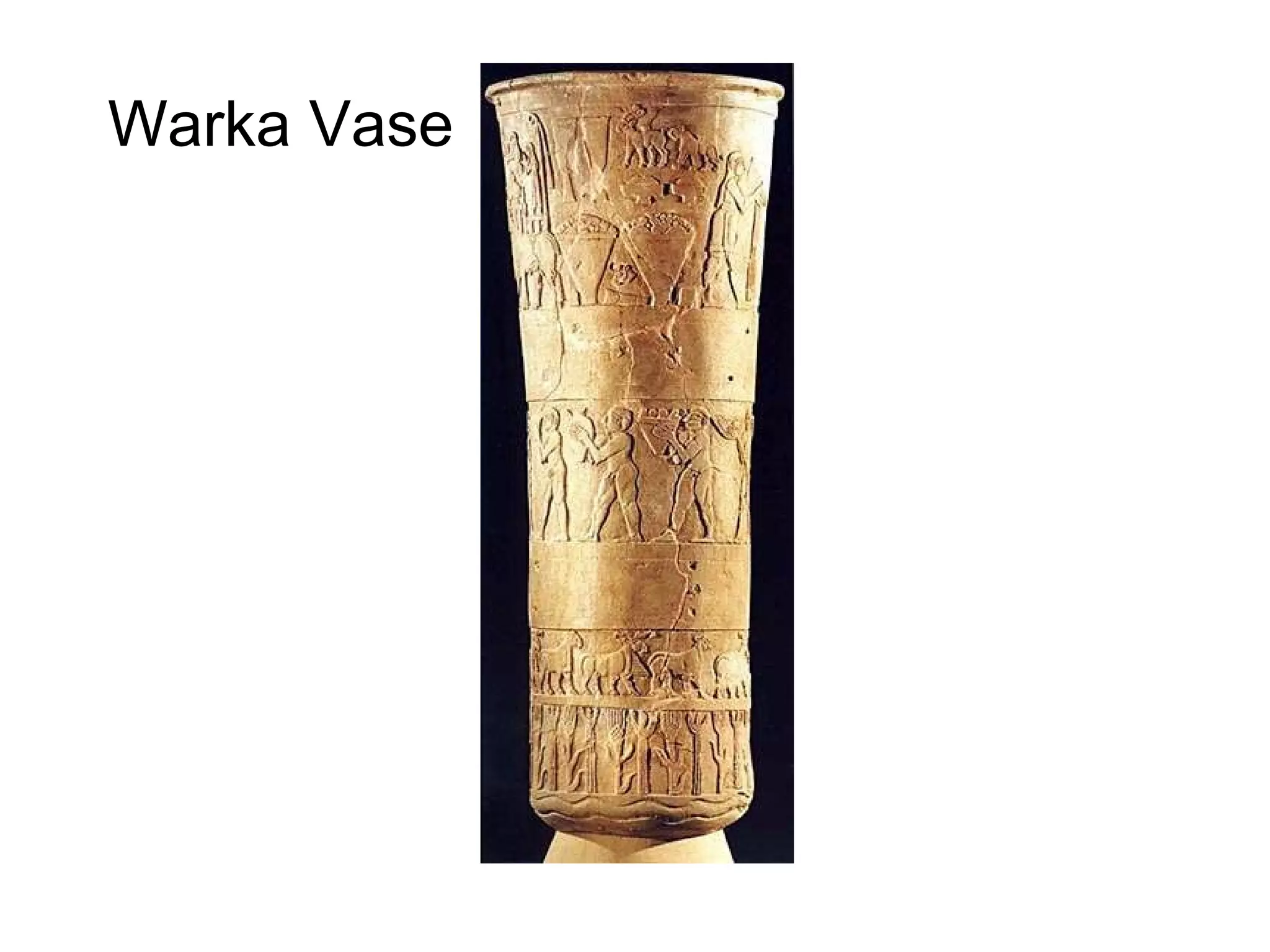
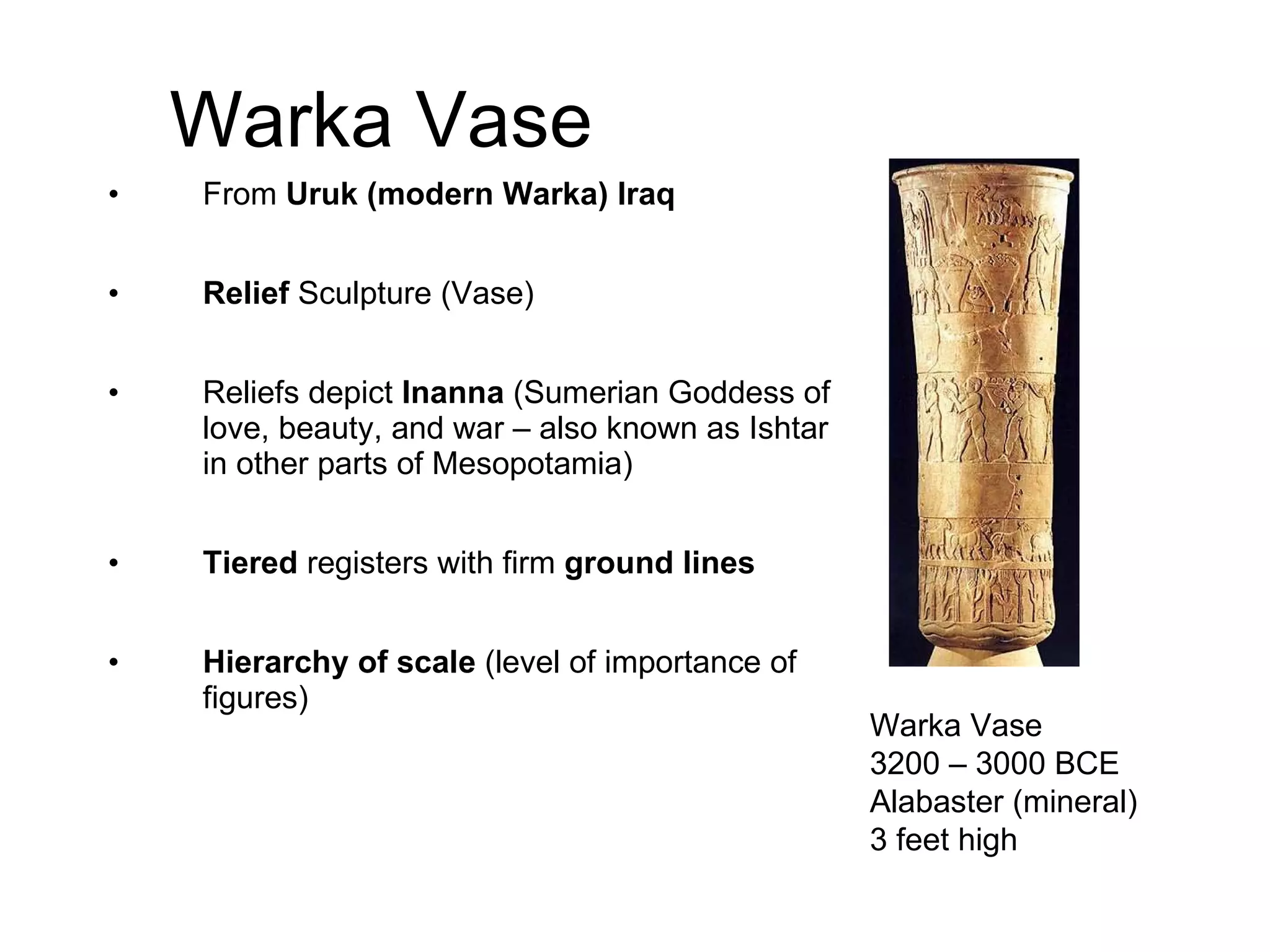
Warka Vase
Warka Vase From  Uruk (modern Warka) Iraq Relief  Sculpture (Vase) Reliefs depict  Inanna  (Sumerian Goddess of love, beauty, and war – also known as Ishtar in other parts of Mesopotamia) Tiered  registers with firm  ground lines Hierarchy of scale  (level of importance of figures) Warka Vase 3200 – 3000 BCE Alabaster (mineral) 3 feet high
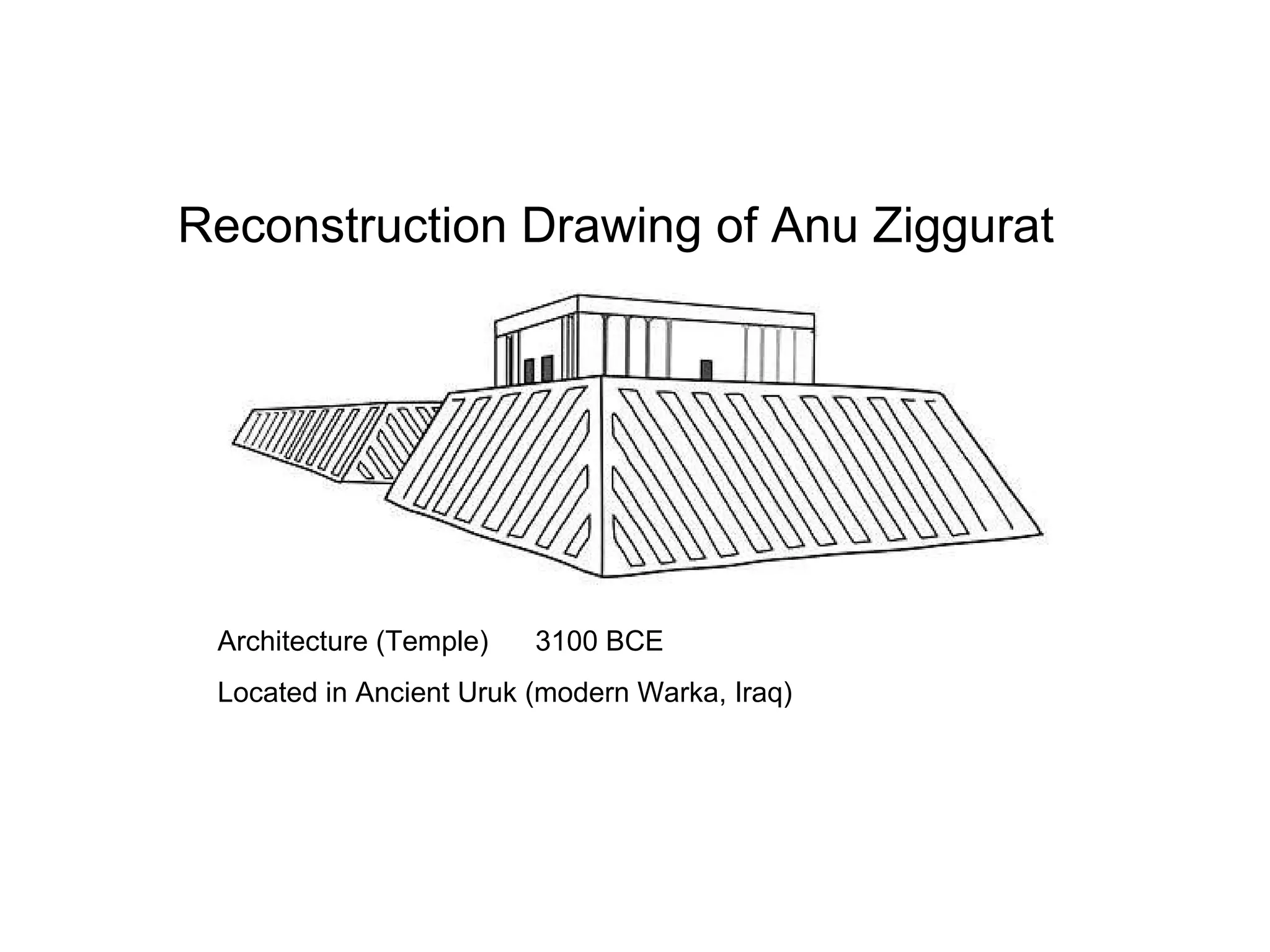
Reconstruction Drawing of Anu Ziggurat Architecture (Temple)  3100 BCE   Located in Ancient Uruk (modern Warka, Iraq)
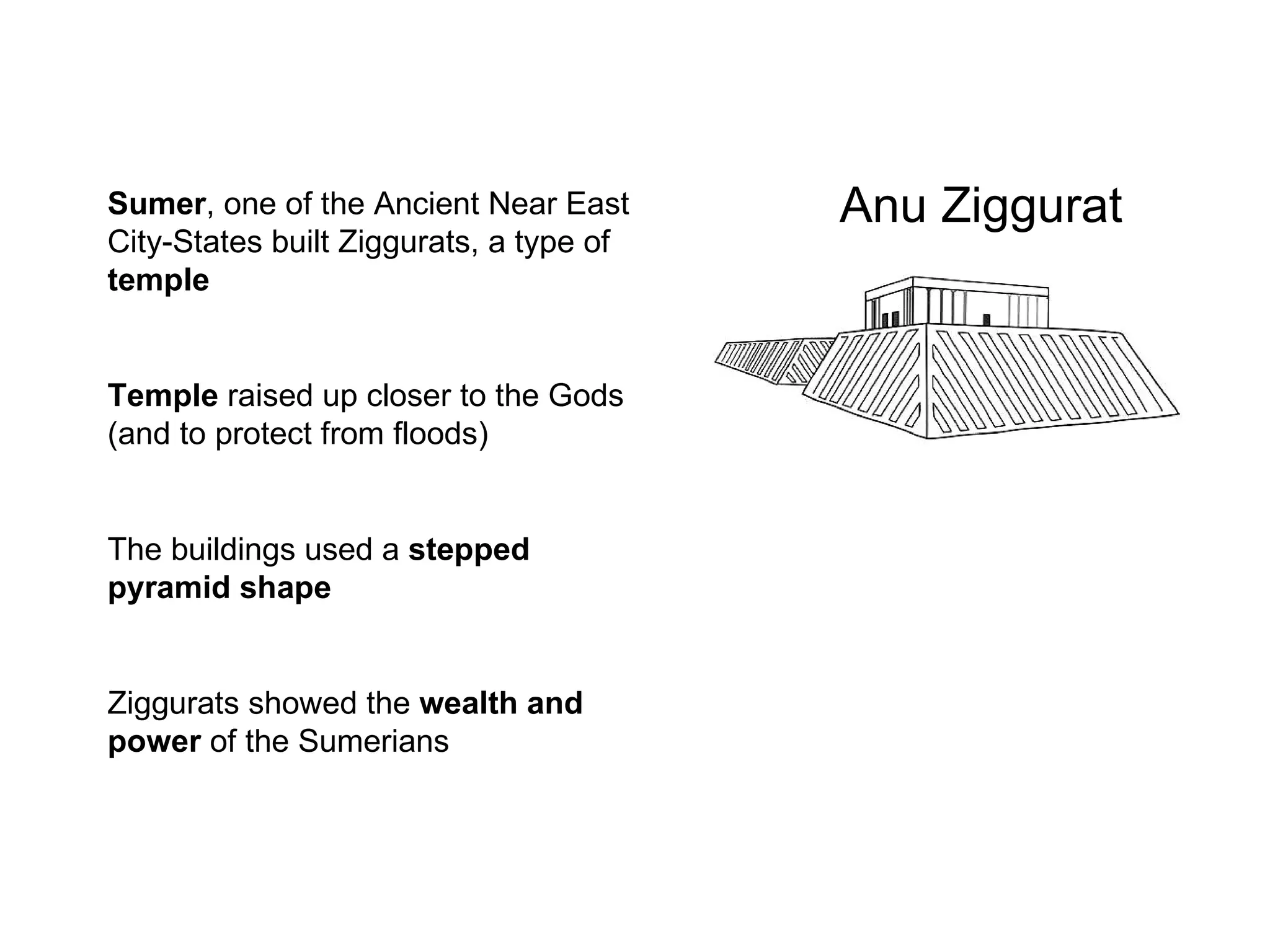
Anu Ziggurat Sumer , one of the Ancient Near East City-States built Ziggurats, a type of  temple Temple  raised up closer to the Gods (and to protect from floods) The buildings used a  stepped pyramid shape Ziggurats   showed the  wealth and power  of the Sumerians
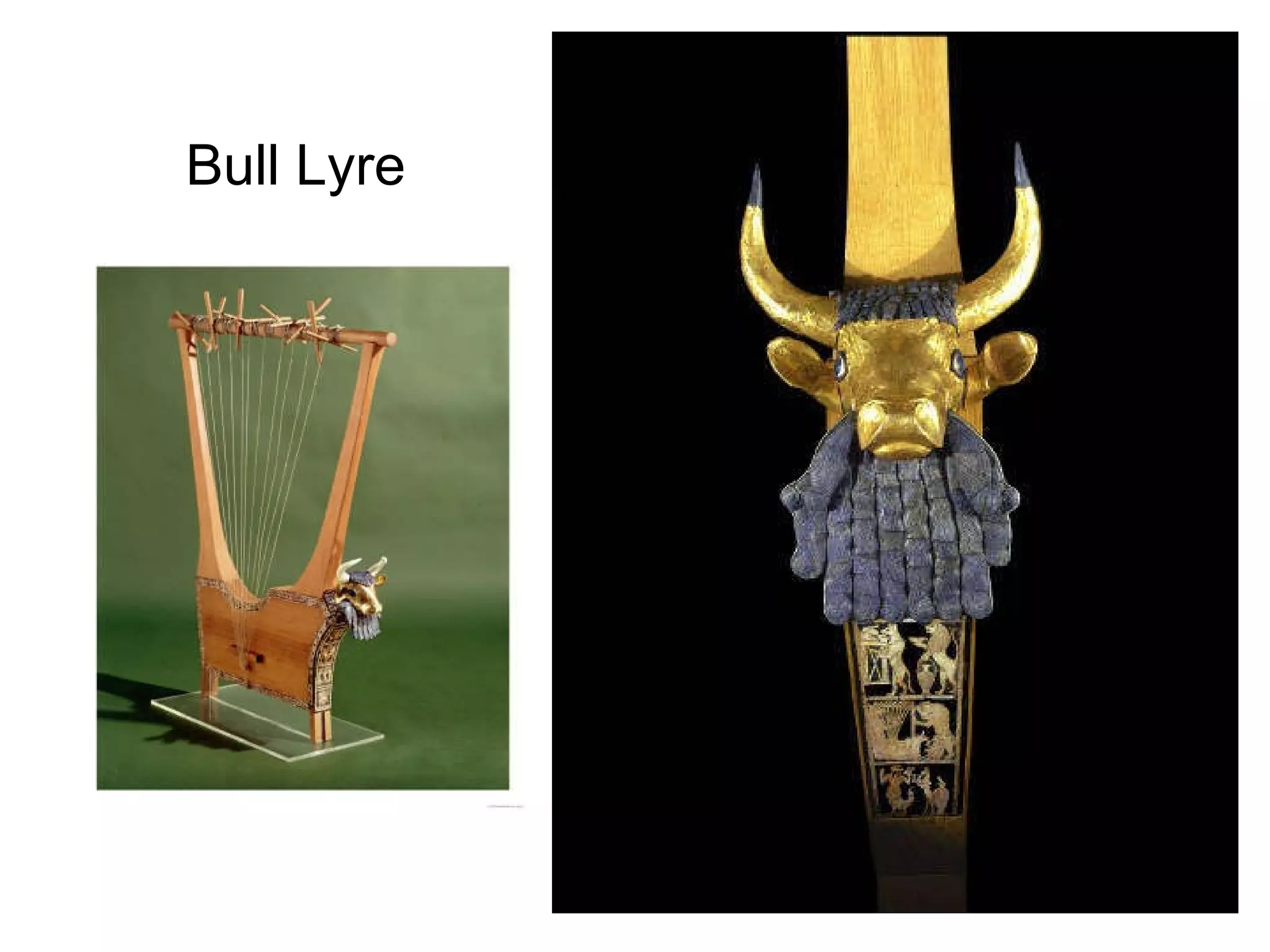
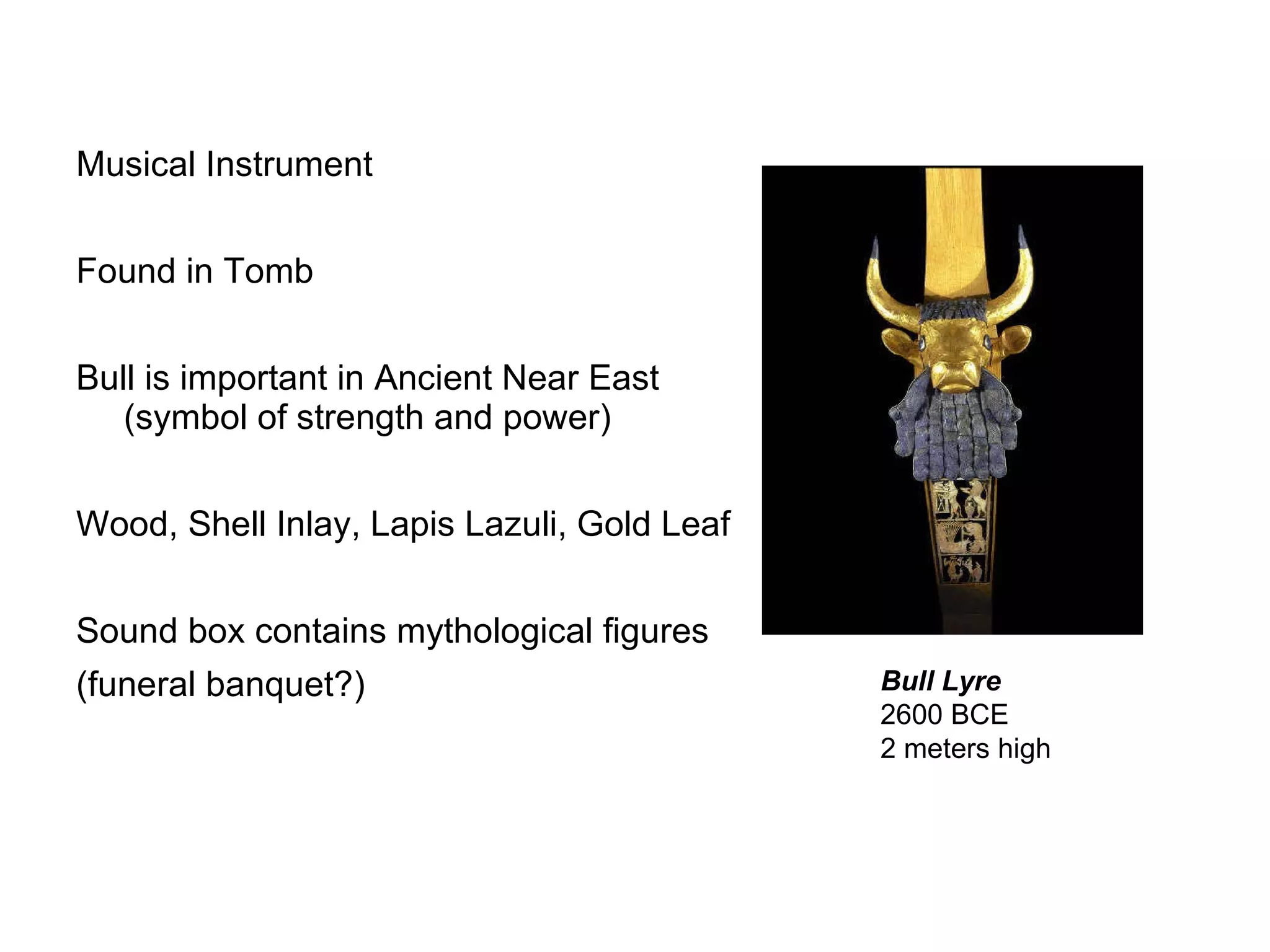
Bull Lyre
Musical Instrument Found in Tomb Bull is important in Ancient Near East (symbol of strength and power) Wood, Shell Inlay, Lapis Lazuli, Gold Leaf Sound box contains mythological figures (funeral banquet?) Bull Lyre   2600 BCE  2 meters high
Akkadian   Art
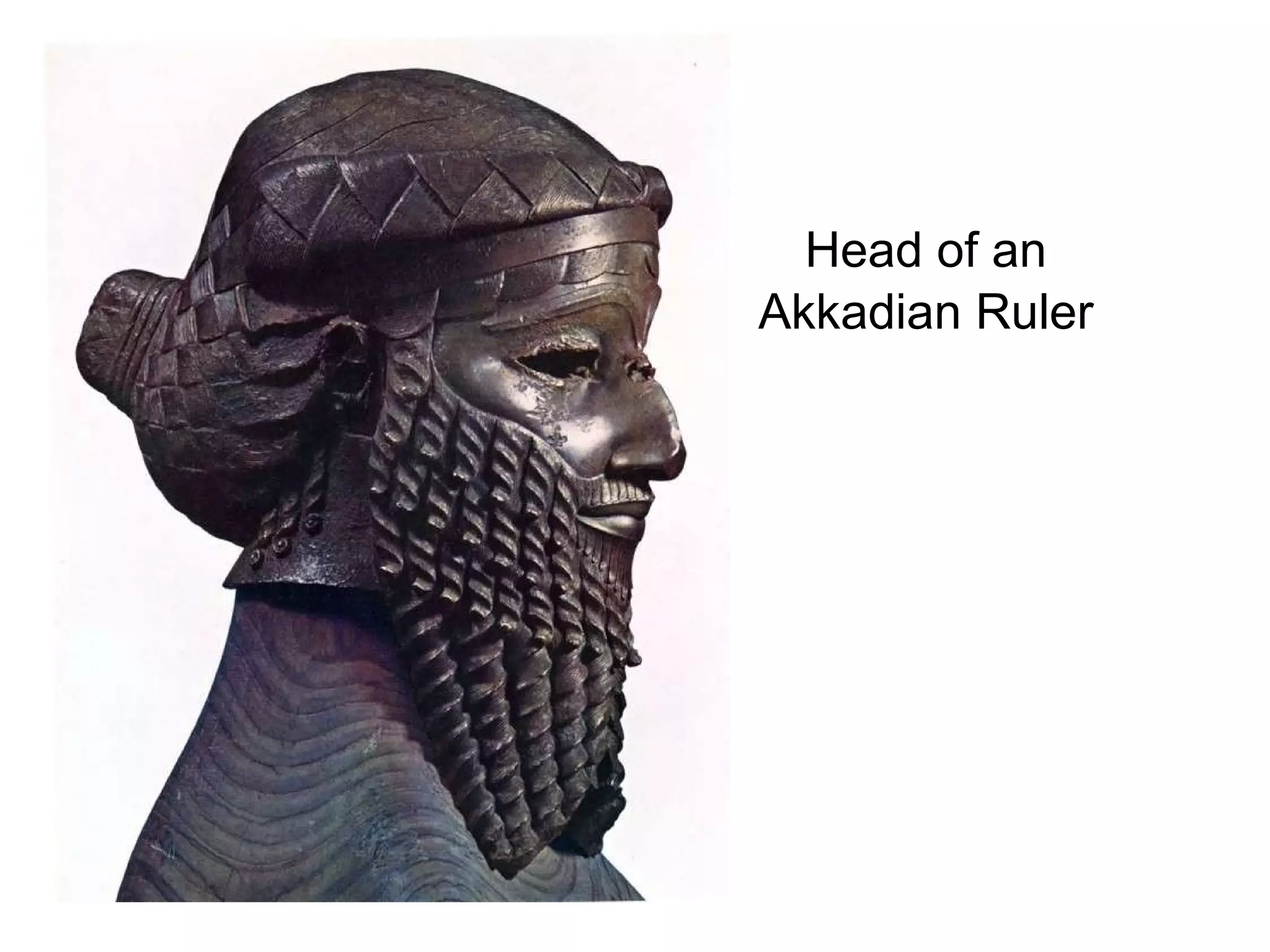
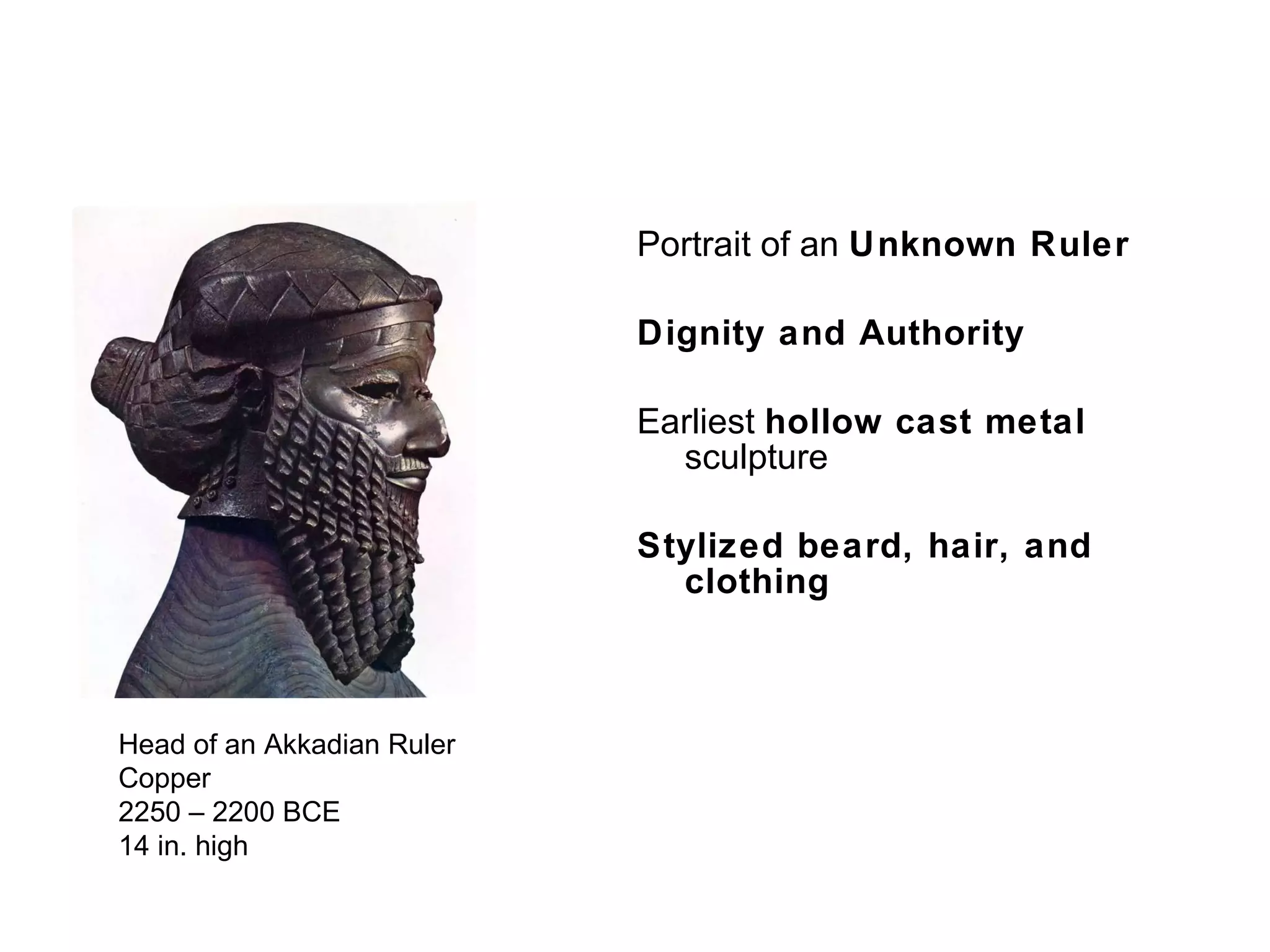
Head of an Akkadian Ruler
Portrait of an  Unknown Ruler Dignity and Authority Earliest  hollow cast metal  sculpture Stylized beard, hair, and clothing Head of an Akkadian Ruler Copper 2250 – 2200 BCE 14 in. high
Neo-Sumerian  Art
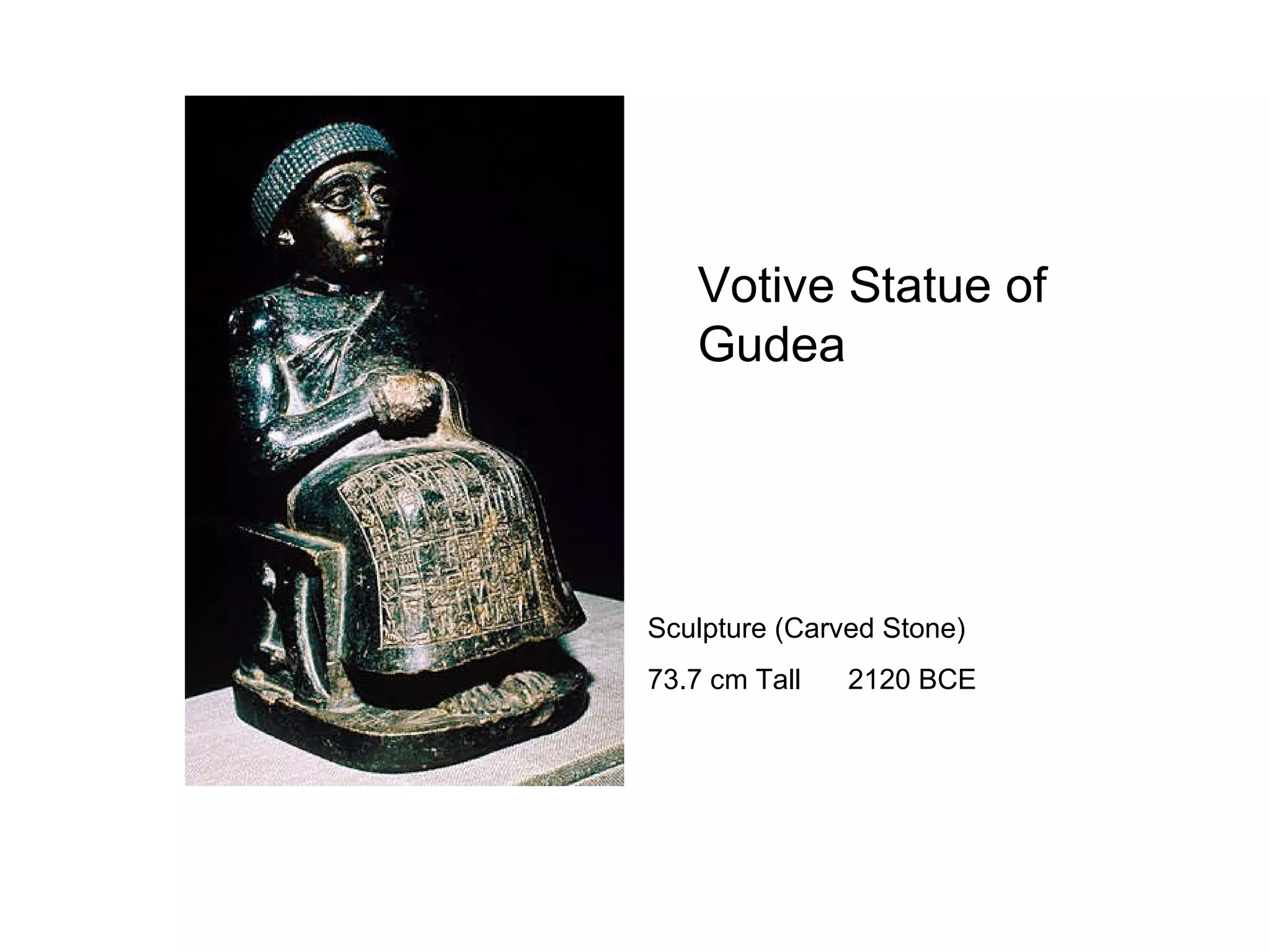
Votive Statue of Gudea Sculpture (Carved Stone)  73.7 cm Tall  2120 BCE
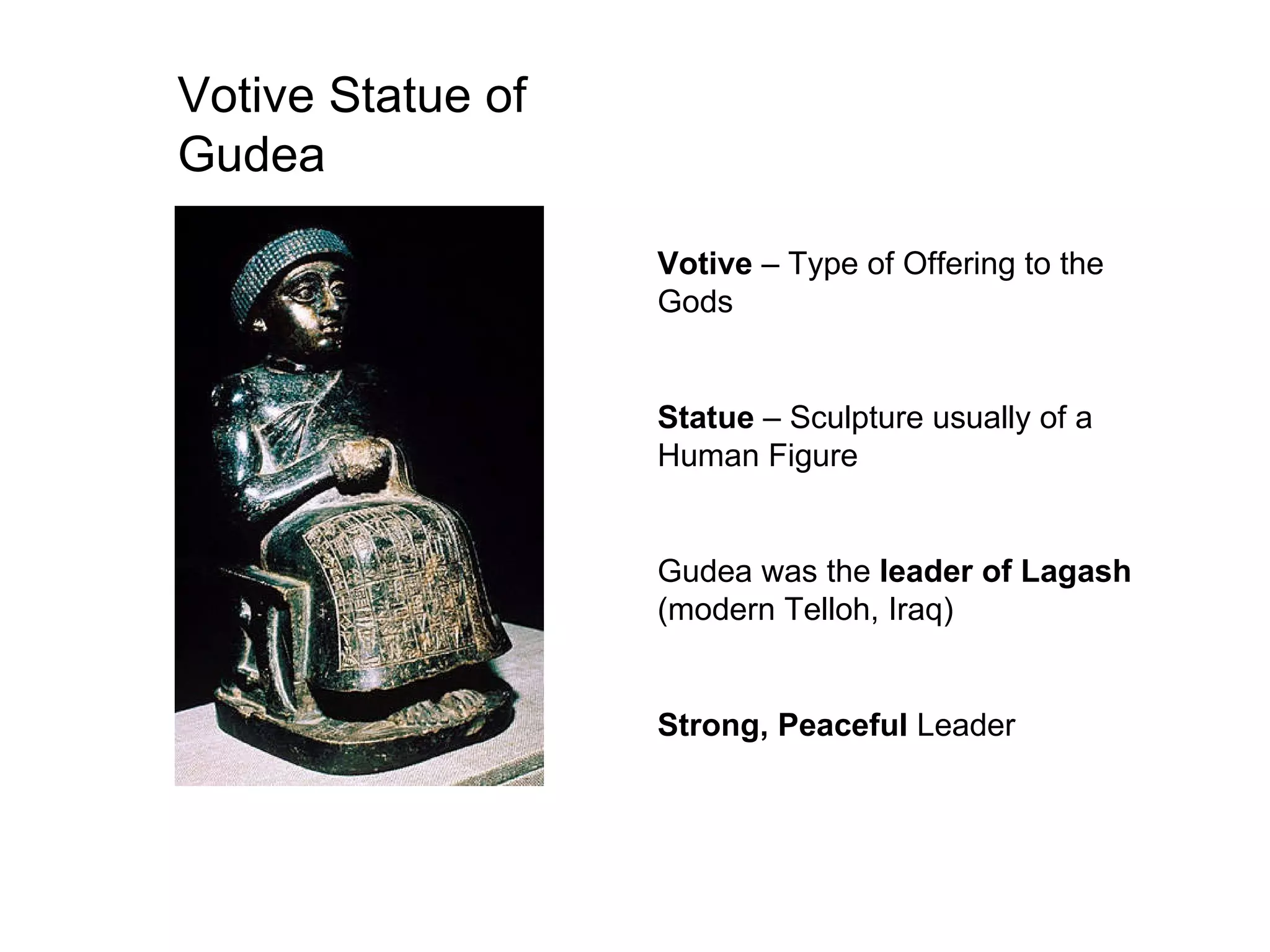
Votive Statue of Gudea Votive  – Type of Offering to the Gods Statue  – Sculpture usually of a Human Figure Gudea was the  leader of Lagash  (modern Telloh, Iraq) Strong, Peaceful  Leader
Babylonian   Art
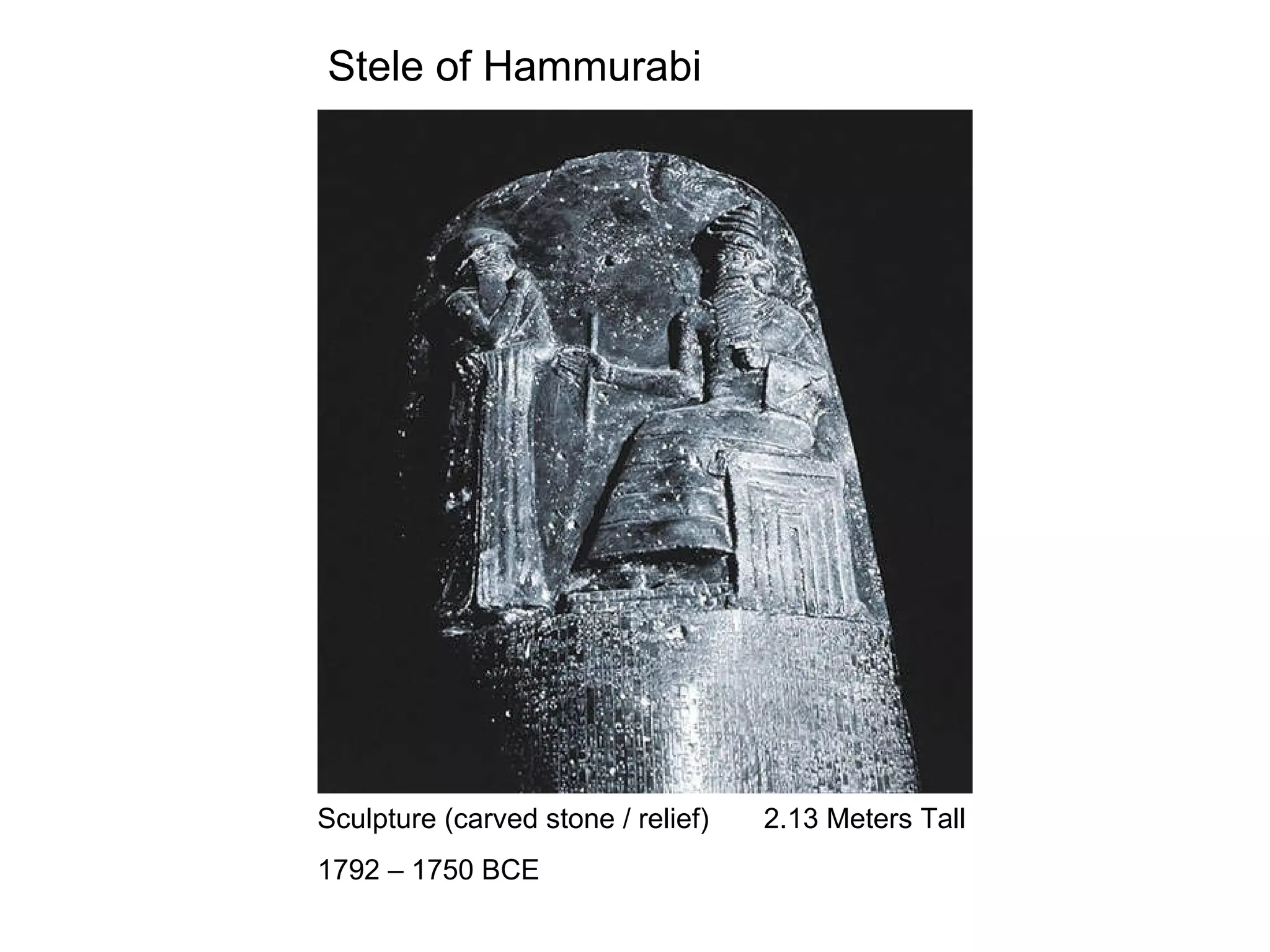
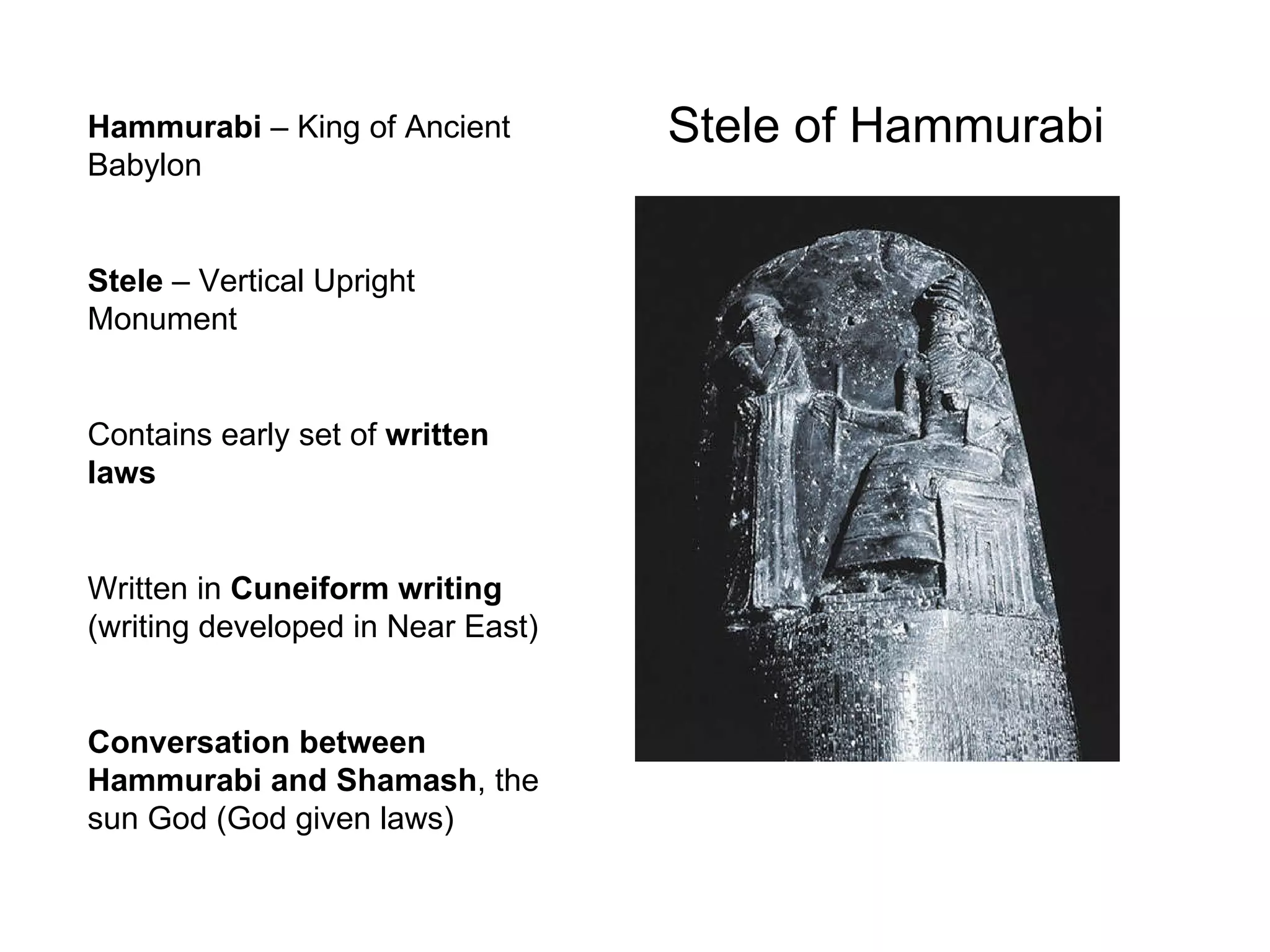
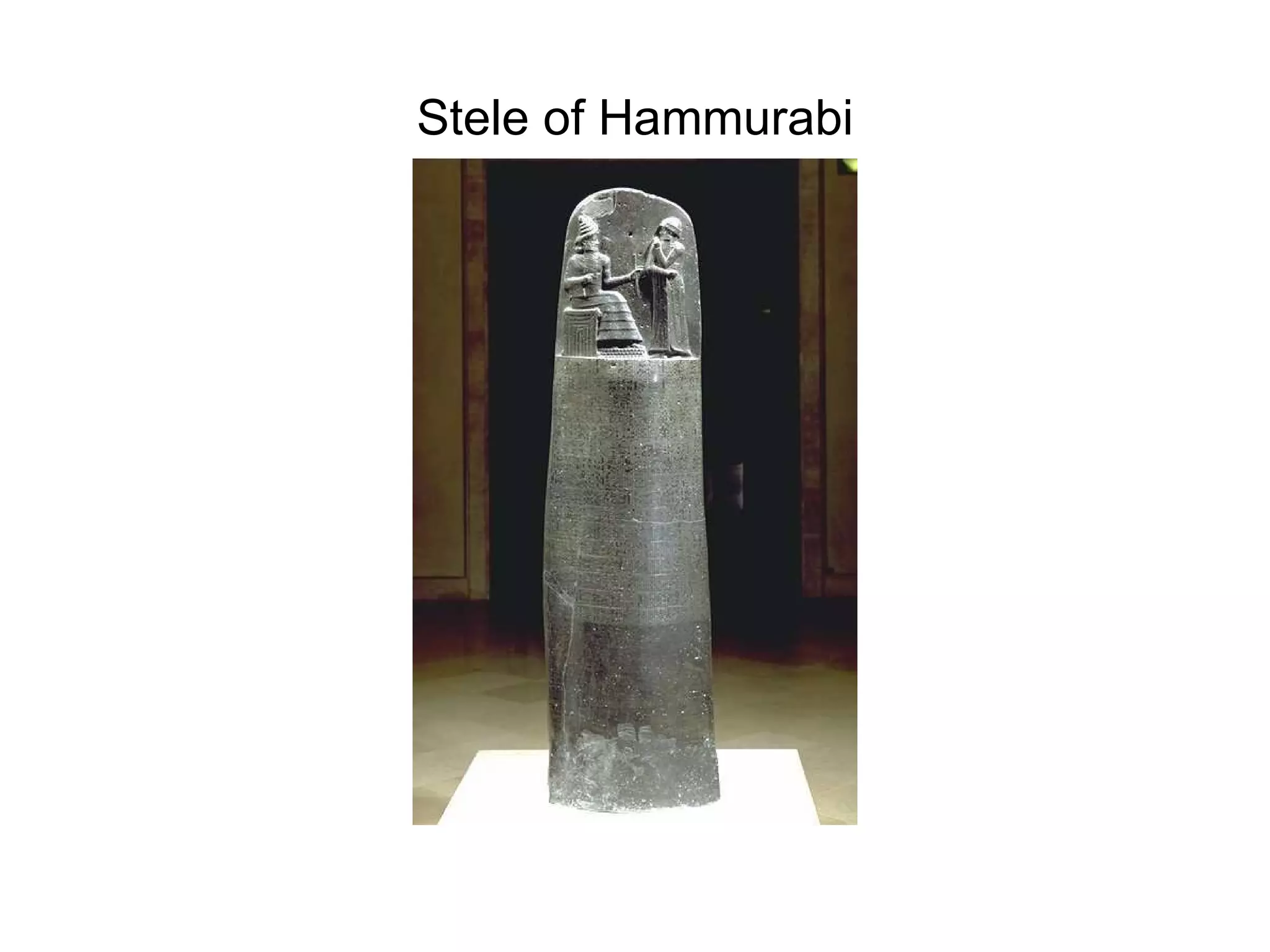
Stele of Hammurabi   Sculpture (carved stone / relief)  2.13 Meters Tall 1792 – 1750 BCE
Hammurabi  – King of Ancient Babylon Stele  – Vertical Upright Monument Contains early set of  written laws Written in  Cuneiform writing  (writing developed in Near East) Conversation between Hammurabi and Shamash , the sun God (God given laws) Stele of Hammurabi
Stele of Hammurabi
Assyrian   Art
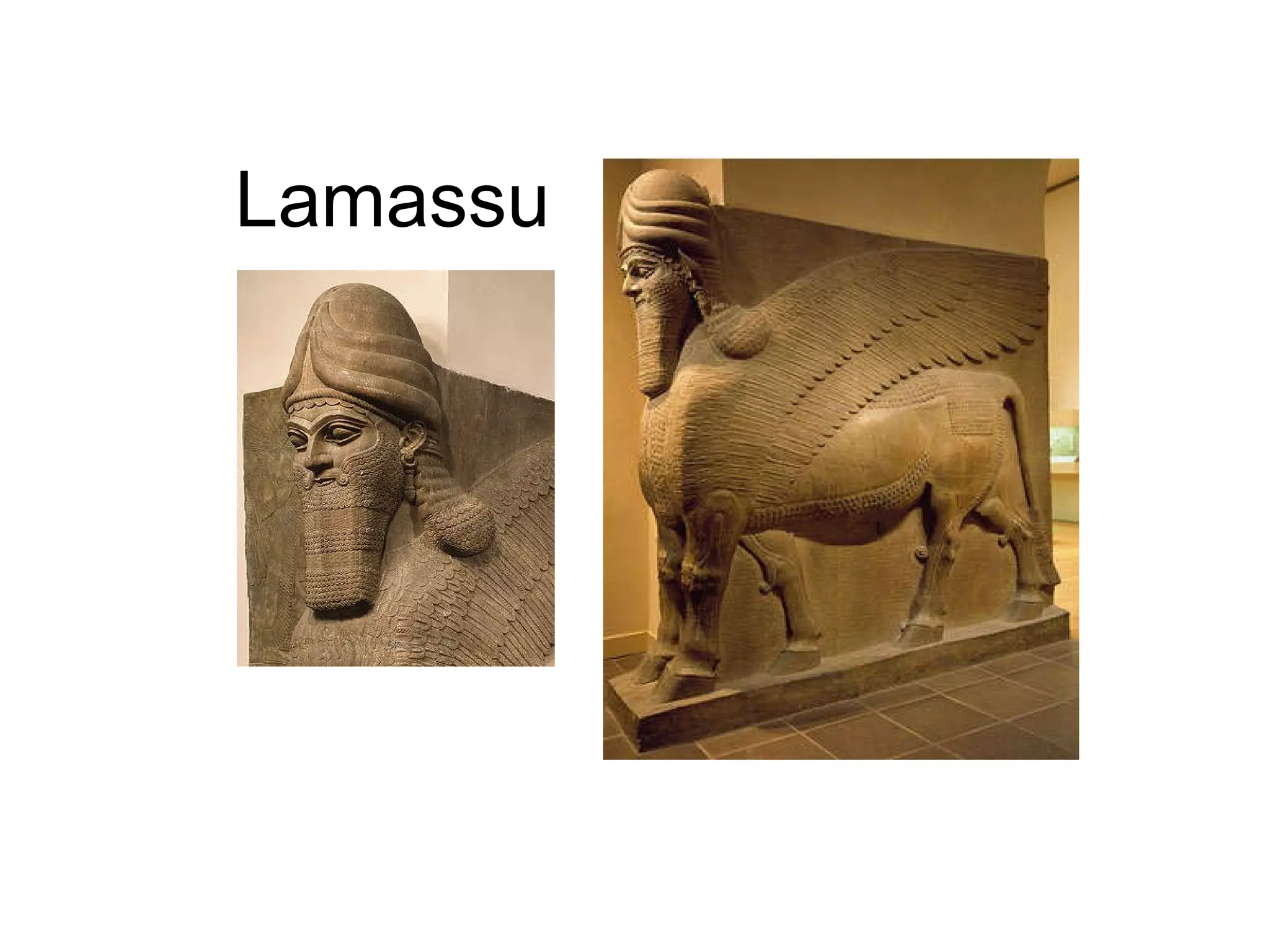
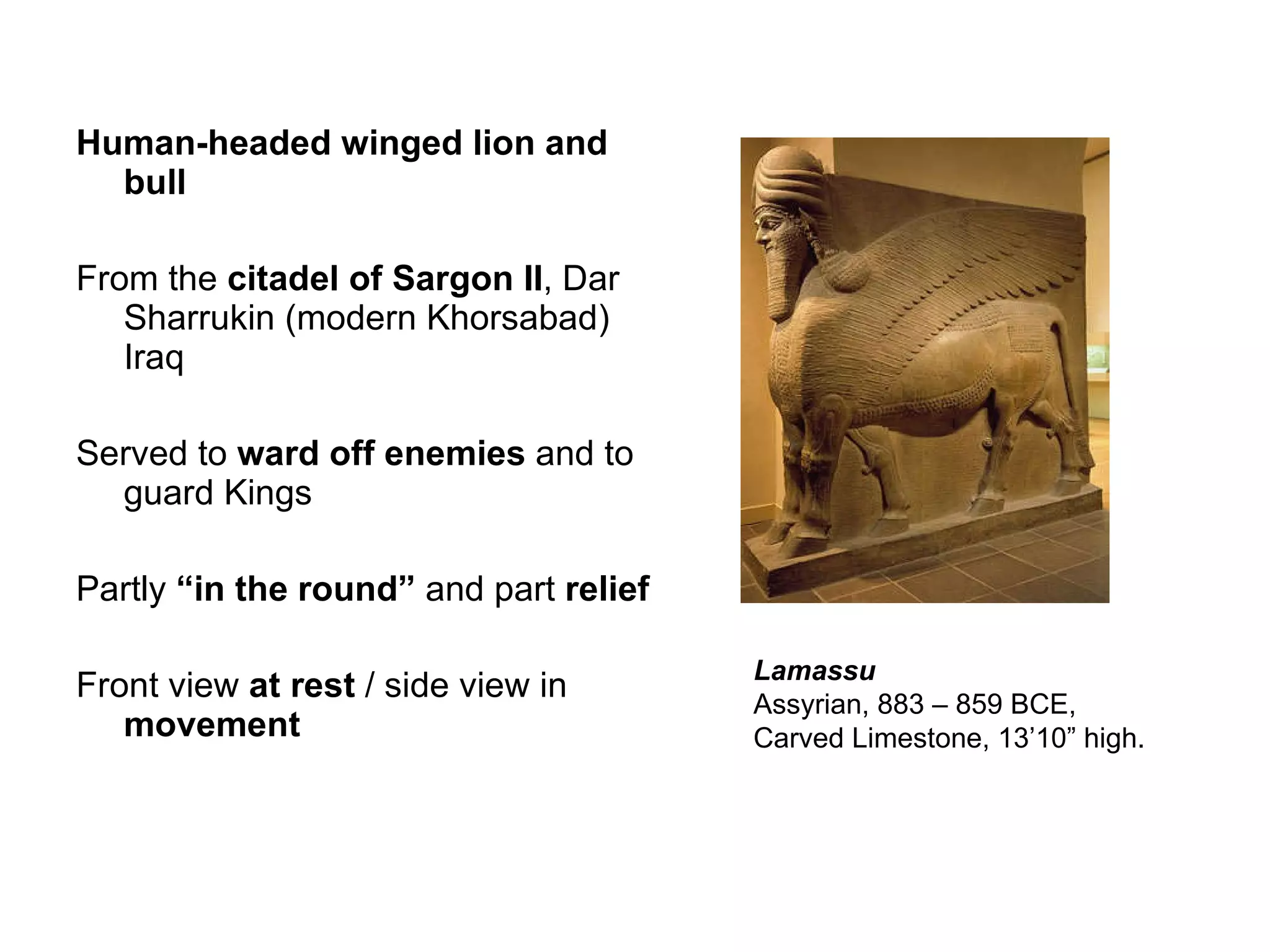
Lamassu
Human-headed winged lion and bull From the  citadel of Sargon II , Dar Sharrukin (modern Khorsabad) Iraq  Served to  ward off enemies  and to guard Kings Partly  “in the round”  and part  relief Front view  at rest  / side view in  movement Lamassu Assyrian, 883 – 859 BCE, Carved Limestone, 13’10” high.
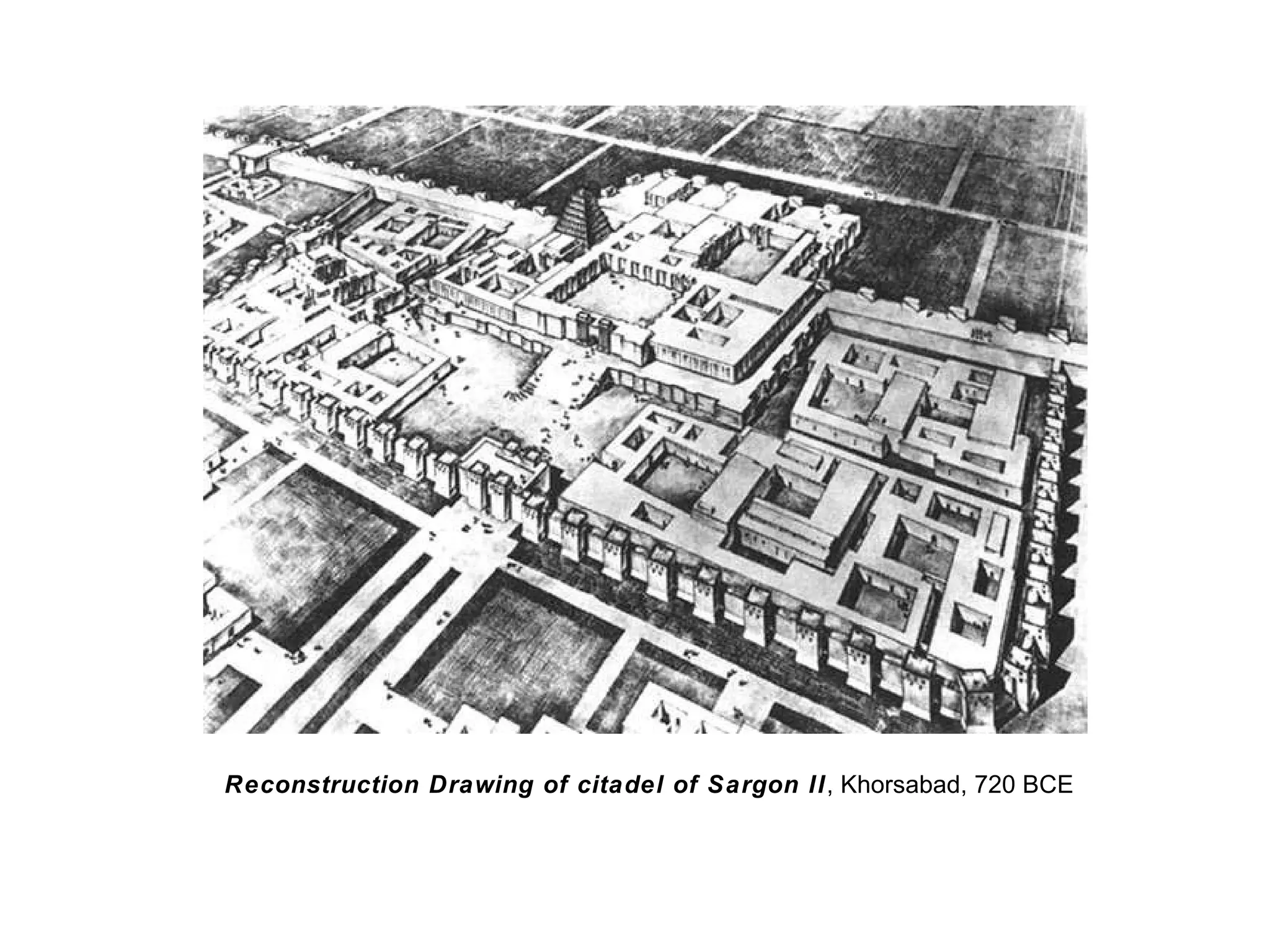
Reconstruction Drawing of citadel of Sargon II , Khorsabad, 720 BCE
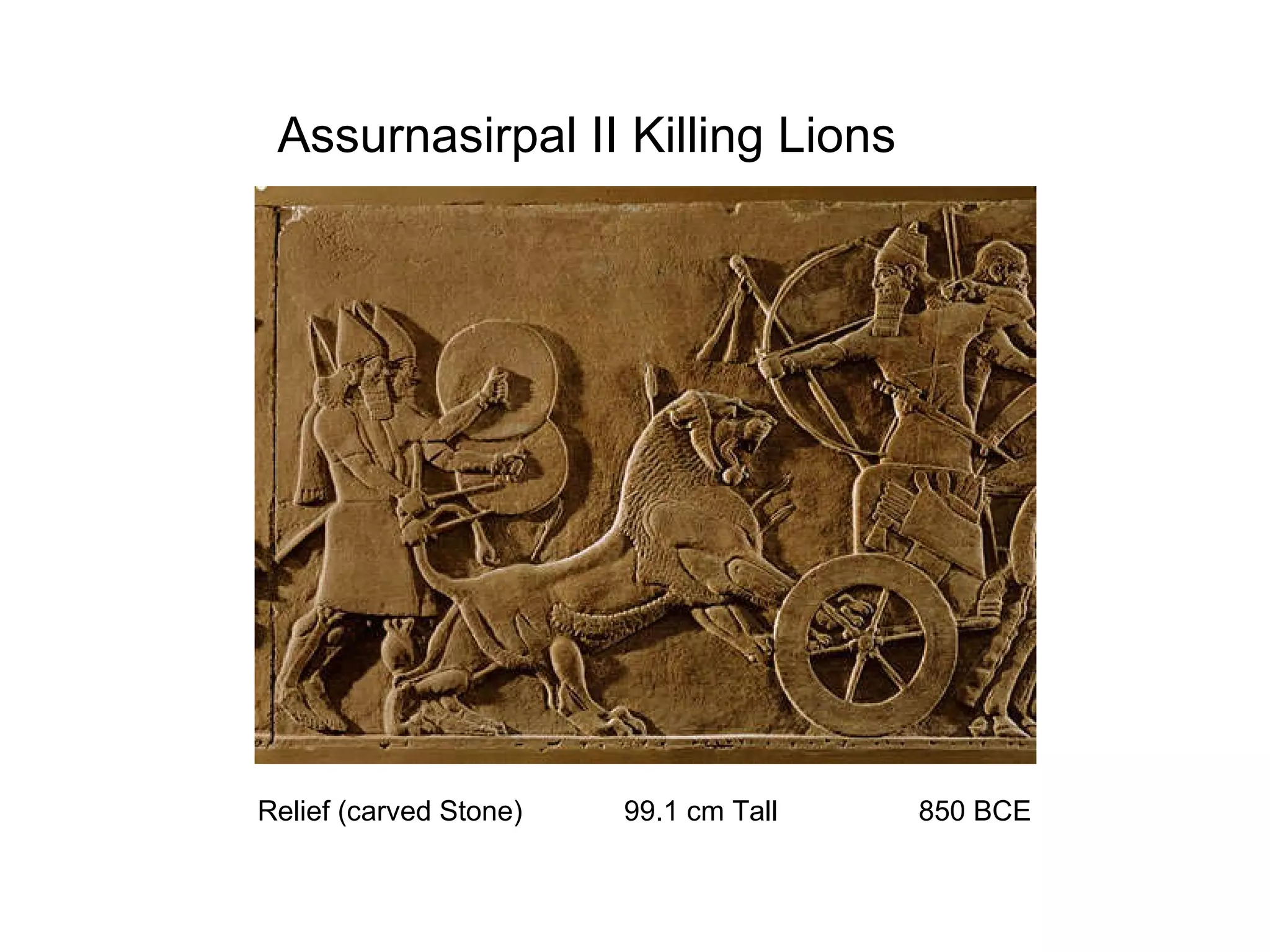
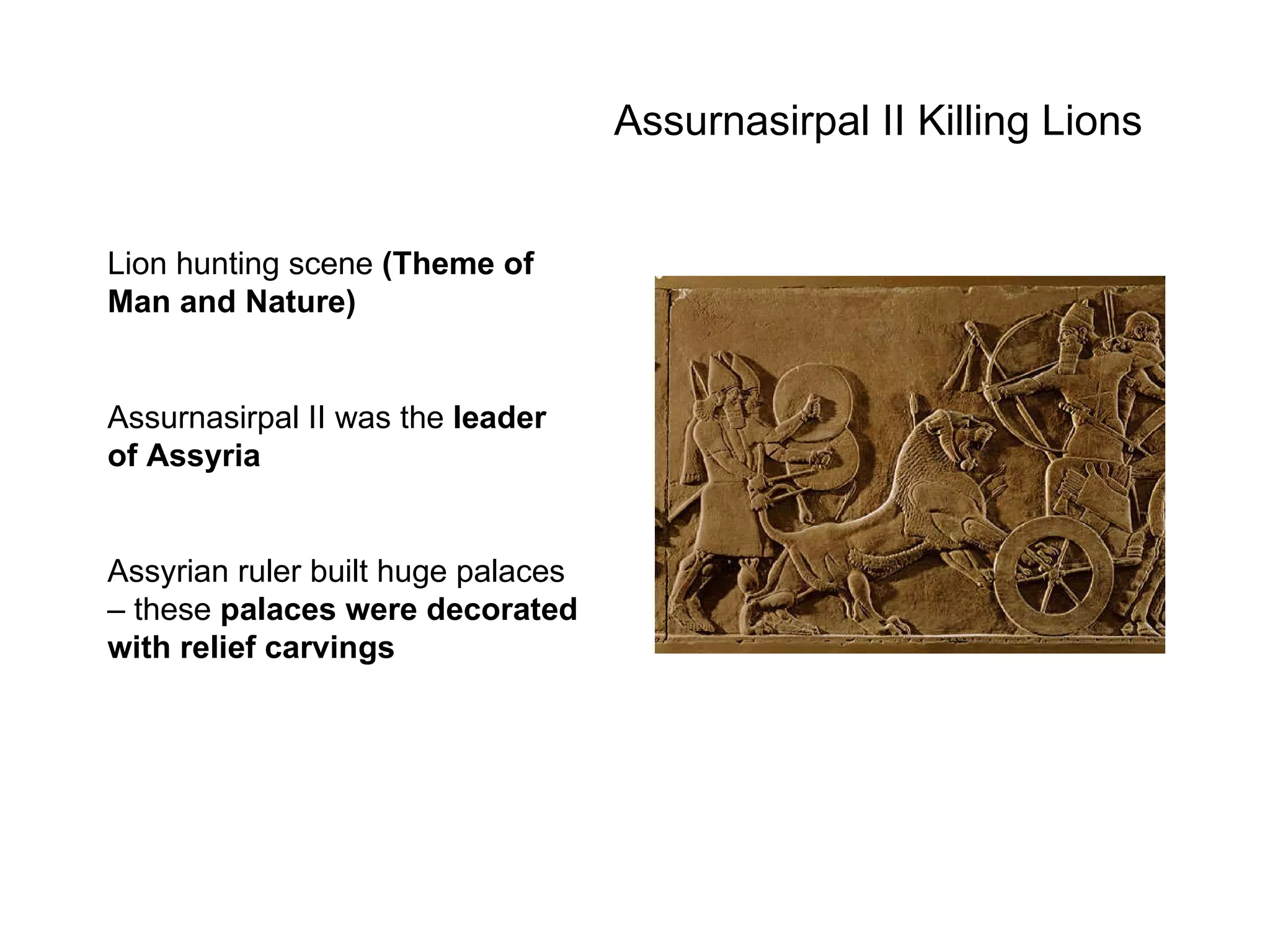
Assurnasirpal II Killing Lions Relief (carved Stone)  99.1 cm Tall  850 BCE
Assurnasirpal II Killing Lions Lion hunting scene  (Theme of Man and Nature) Assurnasirpal II was the  leader of Assyria Assyrian ruler built huge palaces – these  palaces were decorated with relief carvings
Neo-Babylonian   Art
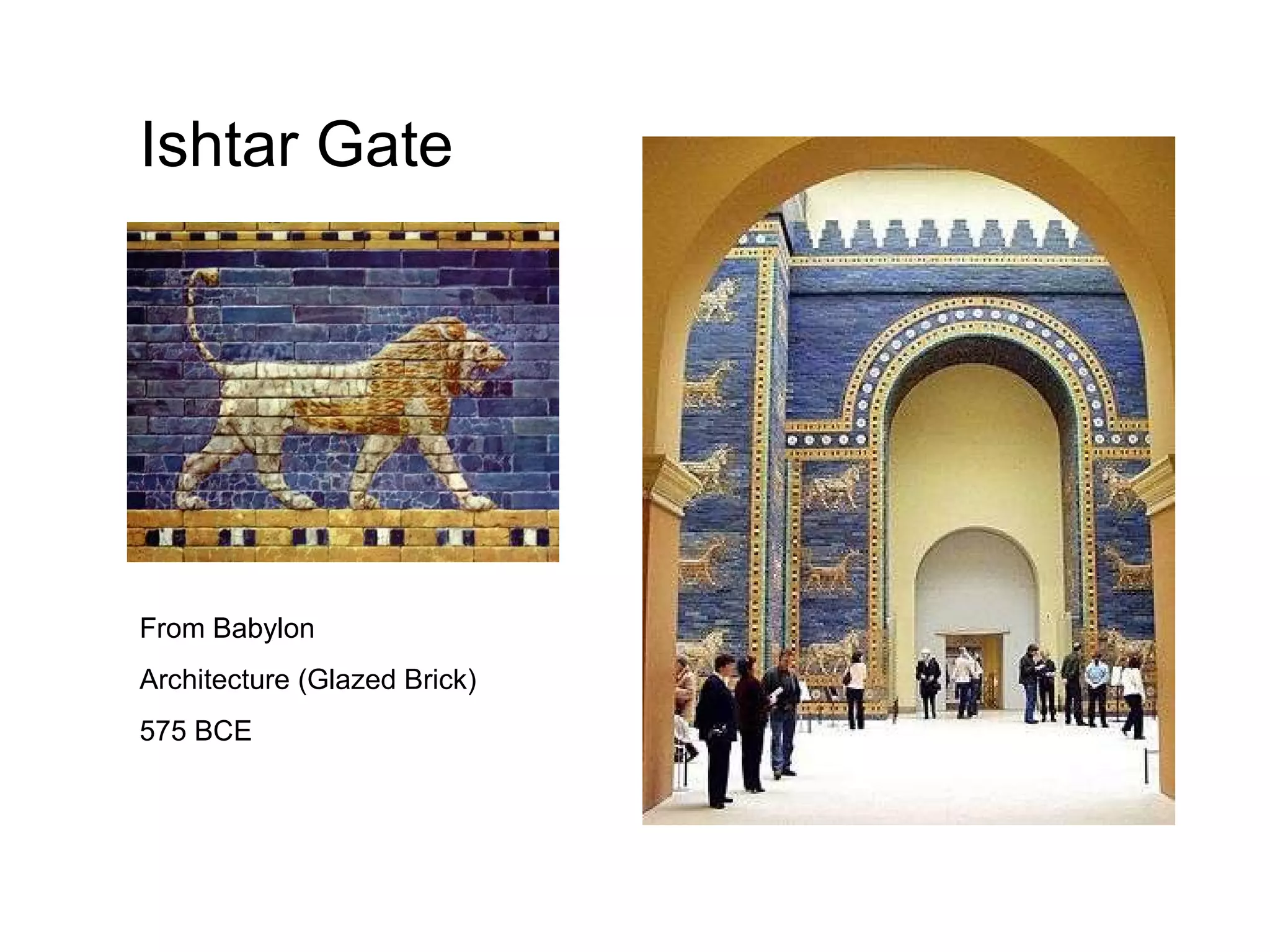
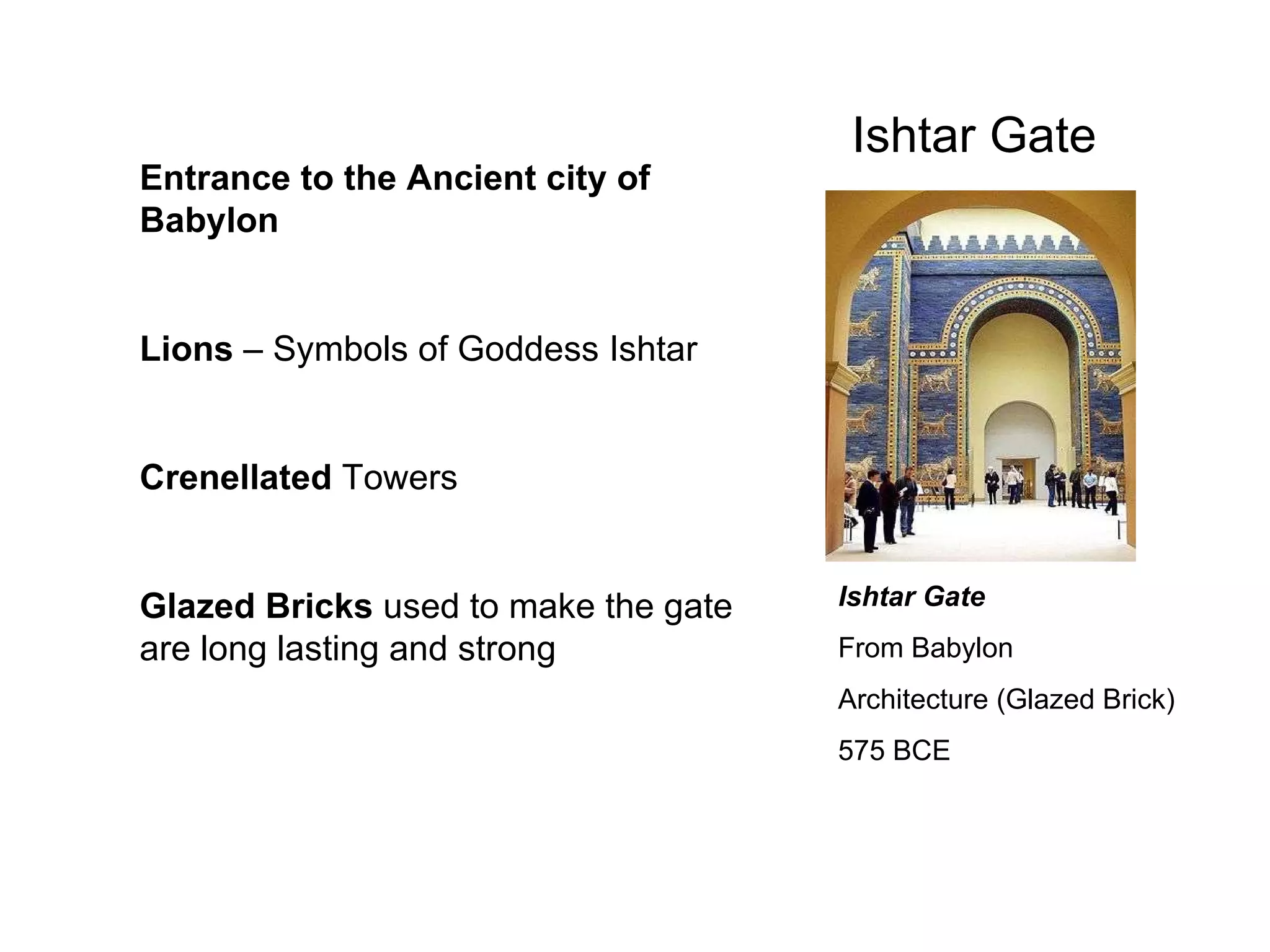
Ishtar Gate From Babylon Architecture (Glazed Brick)  575 BCE
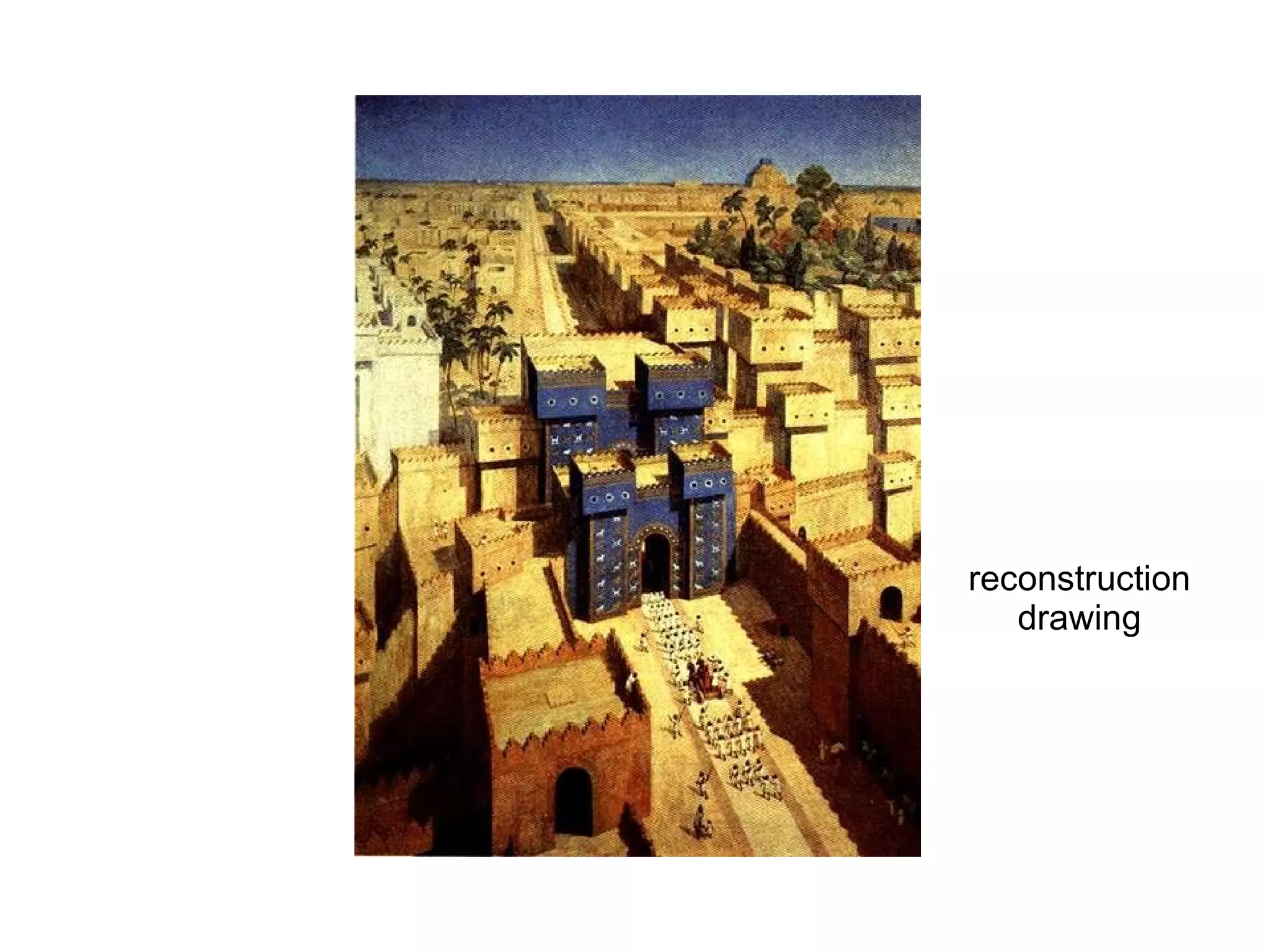
reconstruction drawing
Ishtar Gate Ishtar Gate From Babylon Architecture (Glazed Brick)  575 BCE Entrance to the Ancient city of Babylon Lions  – Symbols of Goddess Ishtar Crenellated  Towers Glazed Bricks  used to make the gate are long lasting and strong
Persian  Art
Persepolis
Persepolis
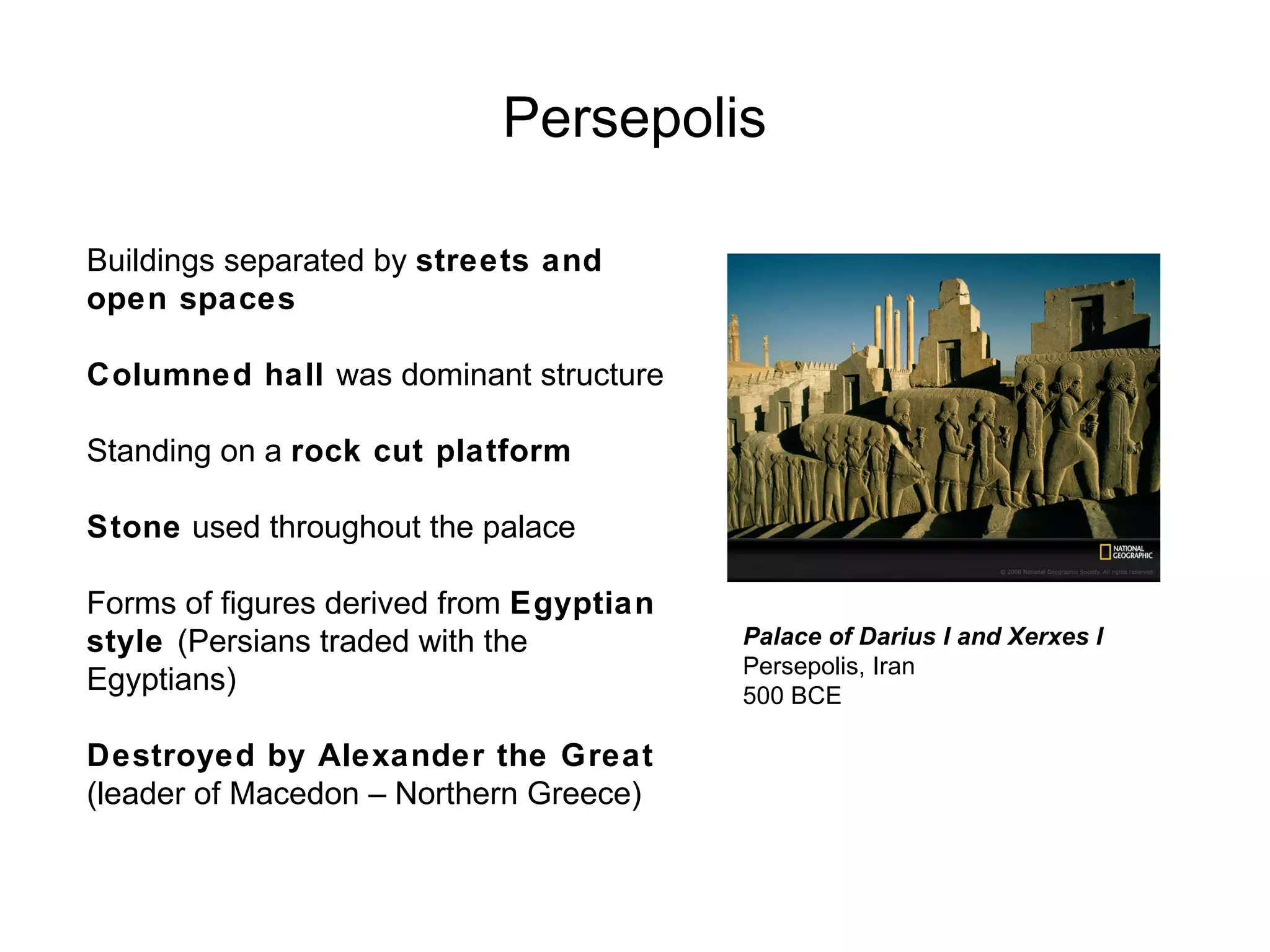
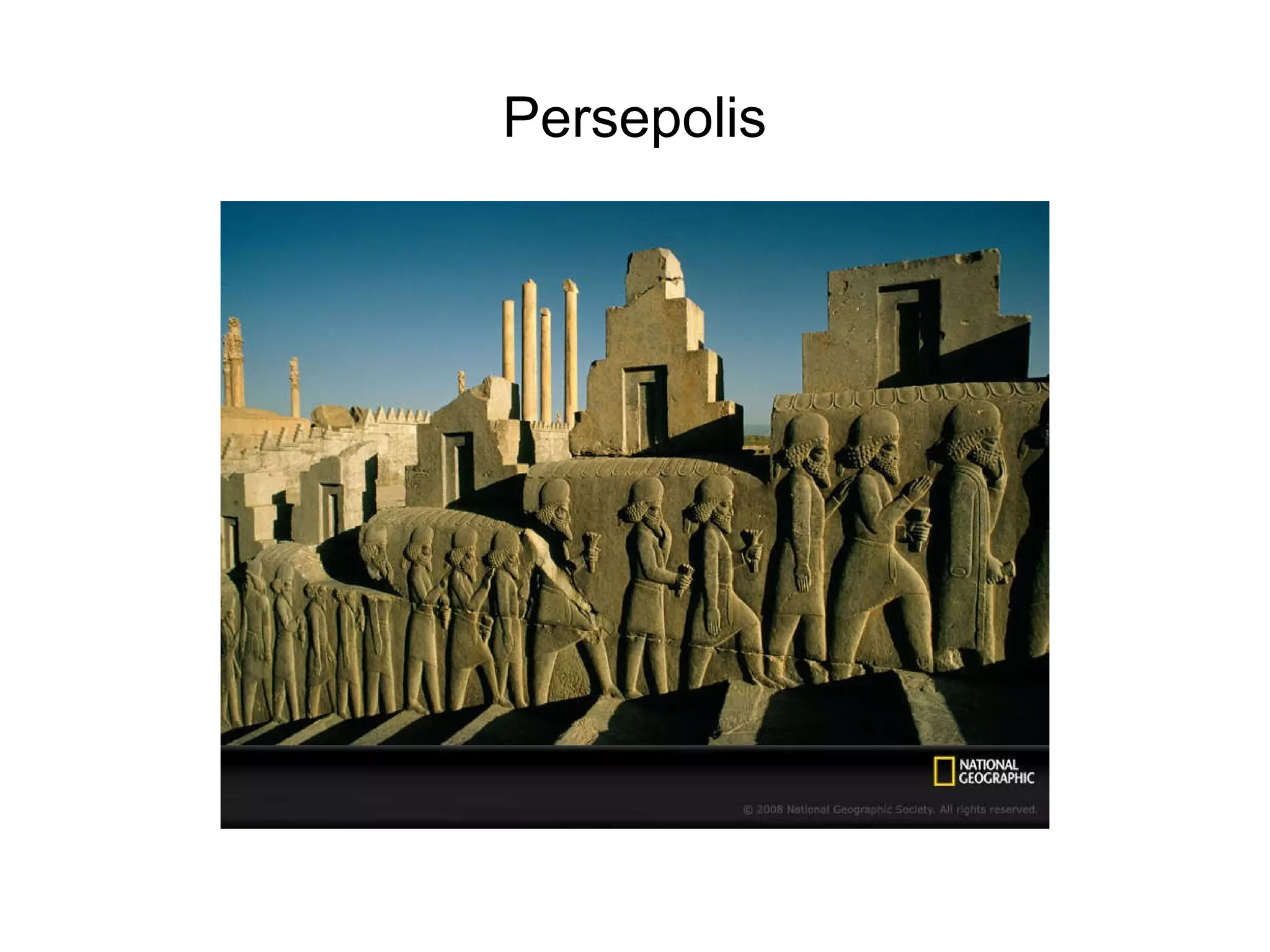
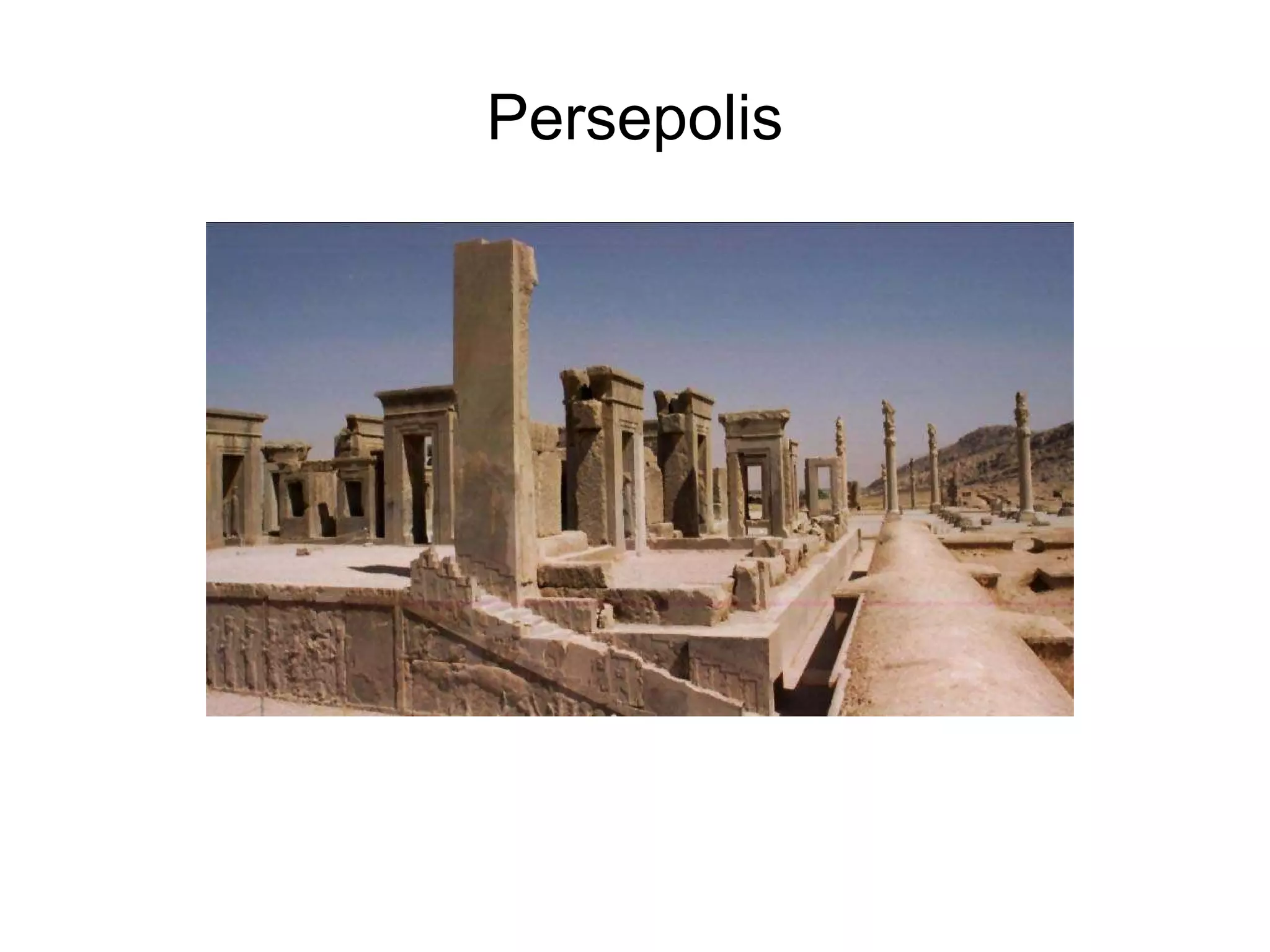
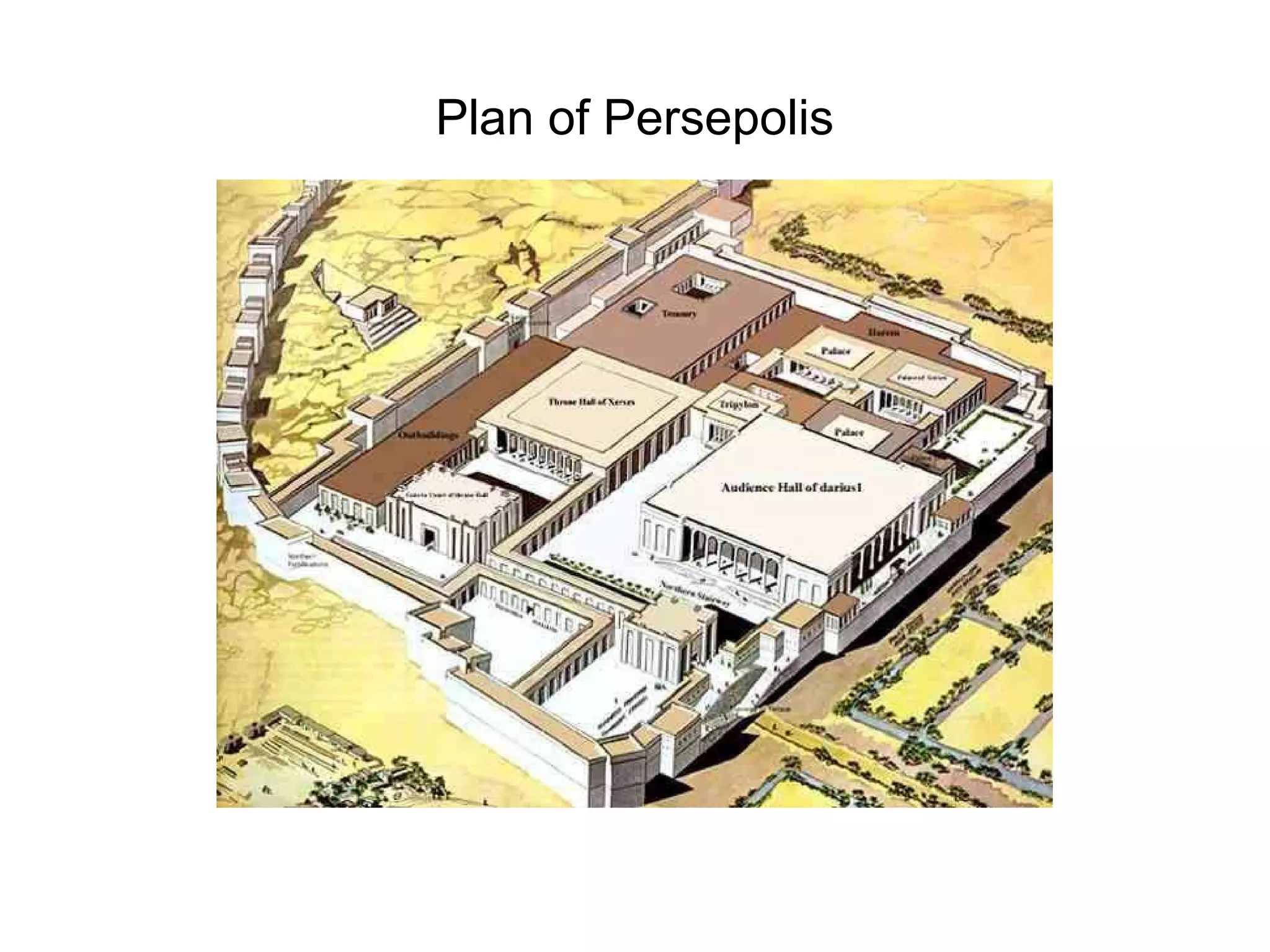
Persepolis Palace of Darius I and Xerxes I Persepolis, Iran 500 BCE Buildings separated by  streets and open spaces Columned hall  was dominant structure Standing on a  rock cut platform Stone  used throughout the palace Forms of figures derived from  Egyptian style  (Persians traded with the Egyptians) Destroyed by Alexander the Great  (leader of Macedon – Northern Greece)
Plan of Persepolis

Ancient Near East

  • 1.
    Art of theAncient Near East
  • 2.
    Mesopotamia “Land between the rivers” The Ancient Near East stretched from the Mediterranean Sea to the Persian Gulf (Modern Jordan, Israel, Lebanon, Syria, central Turkey, Iran, and Iraq)
  • 3.
    Mesopotamia wasideal for agriculture , and farming communities arose around 9000 BCE Major city-states include Elam, Sumer, Akkad, Lagash, Babylonia, Anatolia, and Assyria Near East traded with Egypt People worshipped numerous Gods and Goddesses
  • 4.
  • 5.
    Accomplishments of the Sumerians invention of writing (cuneiform) cities laws architecture pottery (invention of potter’s wheel) weaving metalwork
  • 6.
    Votive Statues ofWorshippers
  • 7.
    Votive Statues ofWorshippers 2900 – 2350 BCE gypsum, shell, black limestone various heights (tallest 30 in. high) Statues possibly commissioned by regular people for the afterlife Hundreds of these sculptures have been found Figures are praying with hands together, sometimes holding a cup or vegetation Found in groups in excavated temples
  • 8.
  • 9.
    Warka Vase From Uruk (modern Warka) Iraq Relief Sculpture (Vase) Reliefs depict Inanna (Sumerian Goddess of love, beauty, and war – also known as Ishtar in other parts of Mesopotamia) Tiered registers with firm ground lines Hierarchy of scale (level of importance of figures) Warka Vase 3200 – 3000 BCE Alabaster (mineral) 3 feet high
  • 10.
    Reconstruction Drawing ofAnu Ziggurat Architecture (Temple) 3100 BCE Located in Ancient Uruk (modern Warka, Iraq)
  • 11.
    Anu Ziggurat Sumer, one of the Ancient Near East City-States built Ziggurats, a type of temple Temple raised up closer to the Gods (and to protect from floods) The buildings used a stepped pyramid shape Ziggurats showed the wealth and power of the Sumerians
  • 12.
  • 13.
    Musical Instrument Foundin Tomb Bull is important in Ancient Near East (symbol of strength and power) Wood, Shell Inlay, Lapis Lazuli, Gold Leaf Sound box contains mythological figures (funeral banquet?) Bull Lyre 2600 BCE 2 meters high
  • 14.
  • 15.
    Head of anAkkadian Ruler
  • 16.
    Portrait of an Unknown Ruler Dignity and Authority Earliest hollow cast metal sculpture Stylized beard, hair, and clothing Head of an Akkadian Ruler Copper 2250 – 2200 BCE 14 in. high
  • 17.
  • 18.
    Votive Statue ofGudea Sculpture (Carved Stone) 73.7 cm Tall 2120 BCE
  • 19.
    Votive Statue ofGudea Votive – Type of Offering to the Gods Statue – Sculpture usually of a Human Figure Gudea was the leader of Lagash (modern Telloh, Iraq) Strong, Peaceful Leader
  • 20.
  • 21.
    Stele of Hammurabi Sculpture (carved stone / relief) 2.13 Meters Tall 1792 – 1750 BCE
  • 22.
    Hammurabi –King of Ancient Babylon Stele – Vertical Upright Monument Contains early set of written laws Written in Cuneiform writing (writing developed in Near East) Conversation between Hammurabi and Shamash , the sun God (God given laws) Stele of Hammurabi
  • 23.
  • 24.
  • 25.
  • 26.
    Human-headed winged lionand bull From the citadel of Sargon II , Dar Sharrukin (modern Khorsabad) Iraq Served to ward off enemies and to guard Kings Partly “in the round” and part relief Front view at rest / side view in movement Lamassu Assyrian, 883 – 859 BCE, Carved Limestone, 13’10” high.
  • 27.
    Reconstruction Drawing ofcitadel of Sargon II , Khorsabad, 720 BCE
  • 28.
    Assurnasirpal II KillingLions Relief (carved Stone) 99.1 cm Tall 850 BCE
  • 29.
    Assurnasirpal II KillingLions Lion hunting scene (Theme of Man and Nature) Assurnasirpal II was the leader of Assyria Assyrian ruler built huge palaces – these palaces were decorated with relief carvings
  • 30.
  • 31.
    Ishtar Gate FromBabylon Architecture (Glazed Brick) 575 BCE
  • 32.
  • 33.
    Ishtar Gate IshtarGate From Babylon Architecture (Glazed Brick) 575 BCE Entrance to the Ancient city of Babylon Lions – Symbols of Goddess Ishtar Crenellated Towers Glazed Bricks used to make the gate are long lasting and strong
  • 34.
  • 35.
  • 36.
  • 37.
    Persepolis Palace ofDarius I and Xerxes I Persepolis, Iran 500 BCE Buildings separated by streets and open spaces Columned hall was dominant structure Standing on a rock cut platform Stone used throughout the palace Forms of figures derived from Egyptian style (Persians traded with the Egyptians) Destroyed by Alexander the Great (leader of Macedon – Northern Greece)
  • 38.