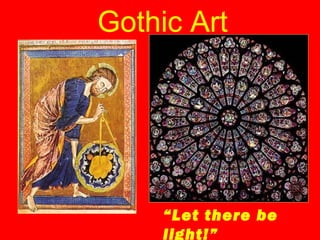
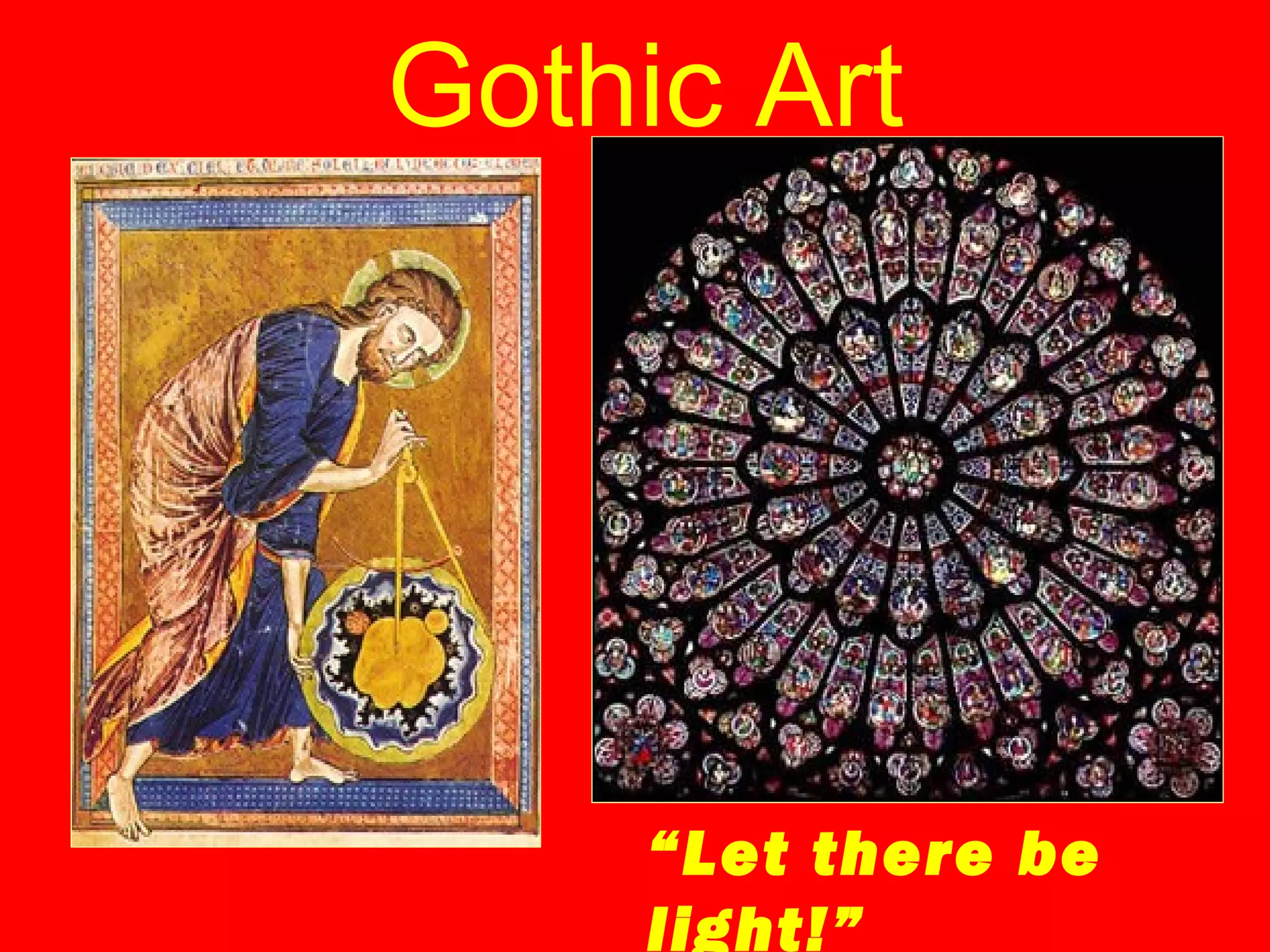
Gothic Art
“Let there be
light!”
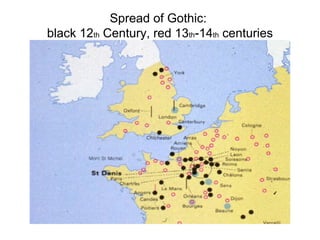
Spread of Gothic:
black 12th Century, red 13th-14th centuries
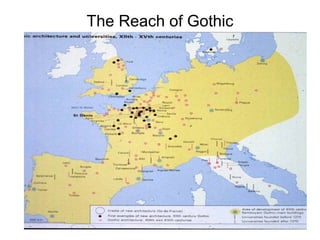
The Reach of Gothic
Gothic Architecture
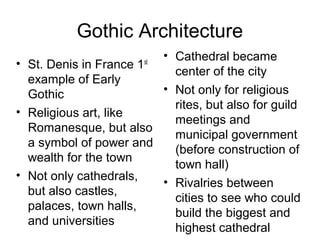
• St. Denis in France 1st
example of Early
Gothic
• Religious art, like
Romanesque, but also
a symbol of power and
wealth for the town
• Not only cathedrals,
but also castles,
palaces, town halls,
and universities
• Cathedral became
center of the city
• Not only for religious
rites, but also for guild
meetings and
municipal government
(before construction of
town hall)
• Rivalries between
cities to see who could
build the biggest and
highest cathedral
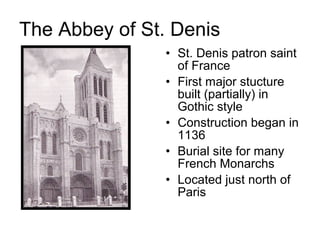
The Abbey of St. Denis
• St. Denis patron saint
of France
• First major stucture
built (partially) in
Gothic style
• Construction began in
1136
• Burial site for many
French Monarchs
• Located just north of
Paris
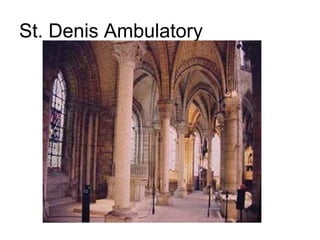
St. Denis Ambulatory
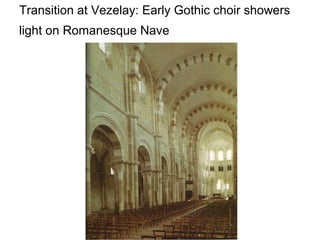
Transition at Vezelay: Early Gothic choir showers
light on Romanesque Nave
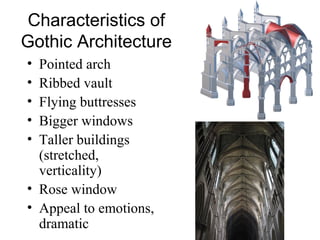
Characteristics of
Gothic Architecture
• Pointed arch
• Ribbed vault
• Flying buttresses
• Bigger windows
• Taller buildings
(stretched,
verticality)
• Rose window
• Appeal to emotions,
dramatic
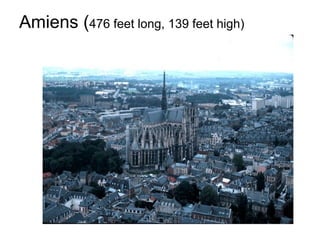
Amiens (476 feet long, 139 feet high)
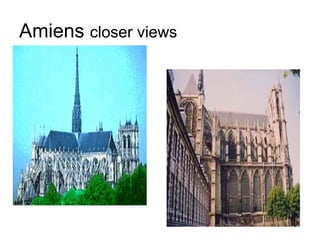
Amiens closer views
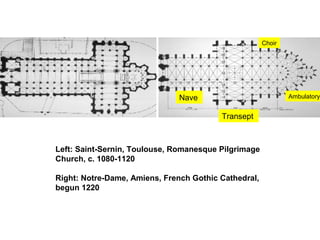
Left: Saint-Sernin, Toulouse, Romanesque Pilgrimage
Church, c. 1080-1120
Right: Notre-Dame, Amiens, French Gothic Cathedral,
begun 1220
Nave
Transept
Choir
Ambulatory
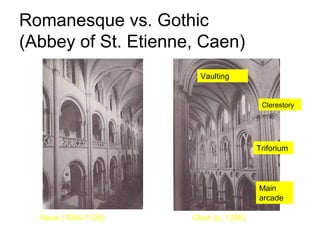
Romanesque vs. Gothic
(Abbey of St. Etienne, Caen)
Nave (1064-1120) Choir (c. 1200)
Main
arcade
Triforium
Clerestory
Vaulting
Some Gothic Styles
• Early Gothic beginning around 1140 (St.
Denis).
• High Gothic/Rayonnant (St. Chapelle,
Paris, 1248)
• Perpendicular (choir of Gloucester
cathedral, begun 1330), unique to England
• Flamboyant (St. Maclou, Rouen,1500-14)
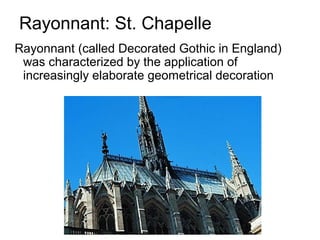
Rayonnant: St. Chapelle
Rayonnant (called Decorated Gothic in England)
was characterized by the application of
increasingly elaborate geometrical decoration
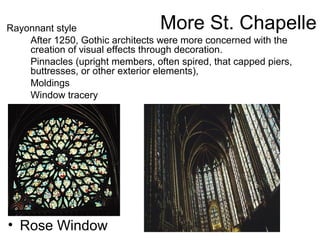
More St. ChapelleRayonnant style
• After 1250, Gothic architects were more concerned with the
creation of visual effects through decoration.
• Pinnacles (upright members, often spired, that capped piers,
buttresses, or other exterior elements),
• Moldings
• Window tracery
(Some classify this as Flamboyant)• Rose Window
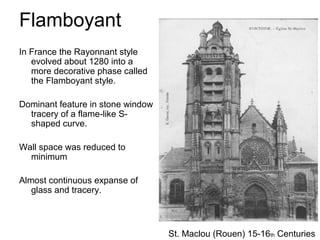
Flamboyant
In France the Rayonnant style
evolved about 1280 into a
more decorative phase called
the Flamboyant style.
Dominant feature in stone window
tracery of a flame-like S-
shaped curve.
Wall space was reduced to
minimum
Almost continuous expanse of
glass and tracery.
St. Maclou (Rouen) 15-16th Centuries
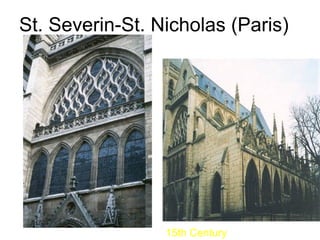
St. Severin-St. Nicholas (Paris)
15th Century
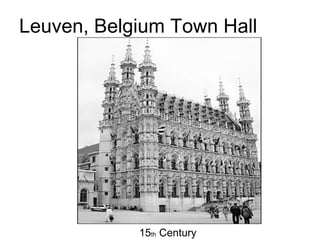
Leuven, Belgium Town Hall
15th Century
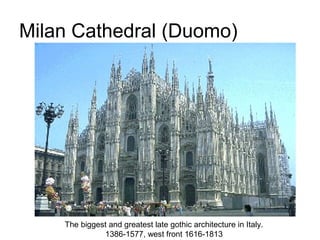
Milan Cathedral (Duomo)
The biggest and greatest late gothic architecture in Italy.
1386-1577, west front 1616-1813
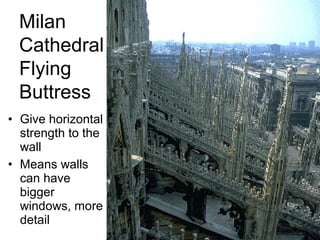
Milan
Cathedral
Flying
Buttress
• Give horizontal
strength to the
wall
• Means walls
can have
bigger
windows, more
detail
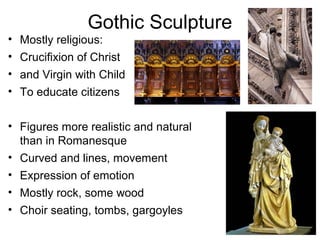
Gothic Sculpture
• Mostly religious:
• Crucifixion of Christ
• and Virgin with Child
• To educate citizens
• Figures more realistic and natural
than in Romanesque
• Curved and lines, movement
• Expression of emotion
• Mostly rock, some wood
• Choir seating, tombs, gargoyles
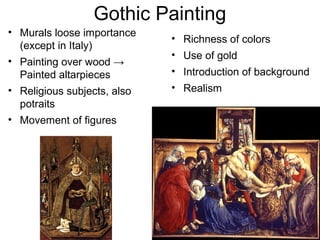
Gothic Painting
• Murals loose importance
(except in Italy)
• Painting over wood →
Painted altarpieces
• Religious subjects, also
potraits
• Movement of figures
• Richness of colors
• Use of gold
• Introduction of background
• Realism

Gothic art

  • 1.
  • 2.
    Spread of Gothic: black12th Century, red 13th-14th centuries
  • 3.
  • 4.
    Gothic Architecture • St.Denis in France 1st example of Early Gothic • Religious art, like Romanesque, but also a symbol of power and wealth for the town • Not only cathedrals, but also castles, palaces, town halls, and universities • Cathedral became center of the city • Not only for religious rites, but also for guild meetings and municipal government (before construction of town hall) • Rivalries between cities to see who could build the biggest and highest cathedral
  • 5.
    The Abbey ofSt. Denis • St. Denis patron saint of France • First major stucture built (partially) in Gothic style • Construction began in 1136 • Burial site for many French Monarchs • Located just north of Paris
  • 6.
  • 7.
    Transition at Vezelay:Early Gothic choir showers light on Romanesque Nave
  • 8.
    Characteristics of Gothic Architecture •Pointed arch • Ribbed vault • Flying buttresses • Bigger windows • Taller buildings (stretched, verticality) • Rose window • Appeal to emotions, dramatic
  • 9.
    Amiens (476 feetlong, 139 feet high)
  • 10.
  • 11.
    Left: Saint-Sernin, Toulouse,Romanesque Pilgrimage Church, c. 1080-1120 Right: Notre-Dame, Amiens, French Gothic Cathedral, begun 1220 Nave Transept Choir Ambulatory
  • 12.
    Romanesque vs. Gothic (Abbeyof St. Etienne, Caen) Nave (1064-1120) Choir (c. 1200) Main arcade Triforium Clerestory Vaulting
  • 13.
    Some Gothic Styles •Early Gothic beginning around 1140 (St. Denis). • High Gothic/Rayonnant (St. Chapelle, Paris, 1248) • Perpendicular (choir of Gloucester cathedral, begun 1330), unique to England • Flamboyant (St. Maclou, Rouen,1500-14)
  • 14.
    Rayonnant: St. Chapelle Rayonnant(called Decorated Gothic in England) was characterized by the application of increasingly elaborate geometrical decoration
  • 15.
    More St. ChapelleRayonnantstyle • After 1250, Gothic architects were more concerned with the creation of visual effects through decoration. • Pinnacles (upright members, often spired, that capped piers, buttresses, or other exterior elements), • Moldings • Window tracery (Some classify this as Flamboyant)• Rose Window
  • 16.
    Flamboyant In France theRayonnant style evolved about 1280 into a more decorative phase called the Flamboyant style. Dominant feature in stone window tracery of a flame-like S- shaped curve. Wall space was reduced to minimum Almost continuous expanse of glass and tracery. St. Maclou (Rouen) 15-16th Centuries
  • 17.
    St. Severin-St. Nicholas(Paris) 15th Century
  • 18.
    Leuven, Belgium TownHall 15th Century
  • 19.
    Milan Cathedral (Duomo) Thebiggest and greatest late gothic architecture in Italy. 1386-1577, west front 1616-1813
  • 20.
    Milan Cathedral Flying Buttress • Give horizontal strengthto the wall • Means walls can have bigger windows, more detail
  • 21.
    Gothic Sculpture • Mostlyreligious: • Crucifixion of Christ • and Virgin with Child • To educate citizens • Figures more realistic and natural than in Romanesque • Curved and lines, movement • Expression of emotion • Mostly rock, some wood • Choir seating, tombs, gargoyles
  • 22.
    Gothic Painting • Muralsloose importance (except in Italy) • Painting over wood → Painted altarpieces • Religious subjects, also potraits • Movement of figures • Richness of colors • Use of gold • Introduction of background • Realism

Editor's Notes

  • #10 exterior length of 476 feet (145 metres)—23 feet (7 metres) longer than Reims Cathedral and 49 feet (15 metres)longer than Chartres Cathedral—with an interior length of 438 feet (133.5 metres). The soaring nave reaches an elevation of 139 feet (42.3 metres) at the apex of the vault, yet it is only 48 feet (14.6 metres) wide.
  • #12 See Scott 2 to go over the terms of the floor plan: nave, porch etc.