Prehistoric Art
Art before Written History
Prehistoric Art
•

Our knowledge of Prehistoric “cave people” based on art (and
fossils)

•

The art that survives is a small fraction of the total art created
•

Study of Prehistoric art began only 200 years ago
Ice Age – Stone Age
•

Earliest upright human beings came into existence 4.4 million years
ago

•

Homo sapiens (“wise humans”) appeared about 200,000 years ago

•

Earliest humans from Africa.

•

As the Ice Age glaciers receded, humans spread across Asia, into
Europe, and finally to Australia and the Americas
Prehistoric Periods
•

Paleolithic Old Stone Age
(35,000 – 8000 BCE)

Paleo = old / Lithic = stone

•

Mesolithic Middle Stone Age
(8000 – 4000 BCE)

Meso = middle / Lithic = stone

•

Neolithic New Stone Age
(4000 – 1500 BCE)

Neo = new / Lithic = stone

•

Bronze Age Bronze - alloy metal made from tin and copper
(2300 - 1000 BCE)

•

Iron Age
(1000 BCE – 50 CE)
Dating System
10,000
BCE
etc.

1000
BCE

Western Dating System
BCE (Before Christ Era)
CE (Christ Era)

Year

0

1000
CE

2014 CE
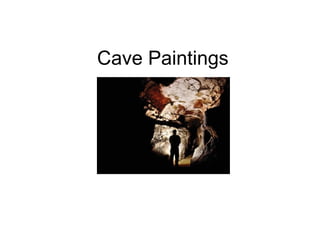
Cave Paintings
Why did Prehistoric People
make cave art?
Theories
Human Need / Desire to Create and Decorate
Worship / Spirituality
Used for Teaching / Story-telling
“Magic” Power – similar to voodoo practices
Calendar (way to mark time passed and hunting season)
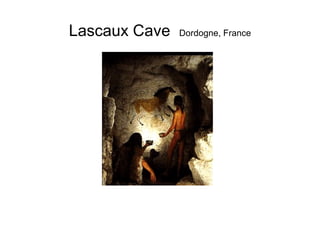
Lascaux Cave

Dordogne, France
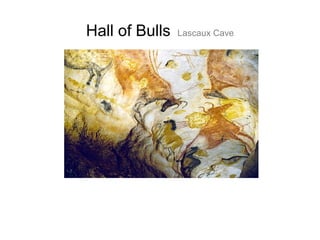
Hall of Bulls

Lascaux Cave
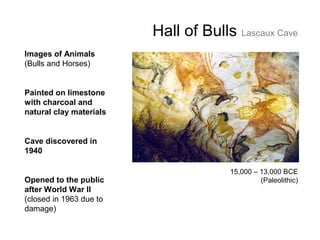
Hall of Bulls Lascaux Cave
Images of Animals
(Bulls and Horses)

Painted on limestone
with charcoal and
natural clay materials

Cave discovered in
1940

Opened to the public
after World War II
(closed in 1963 due to
damage)

15,000 – 13,000 BCE
(Paleolithic)
Bird-Headed Man and Bison
Lascaux Cave
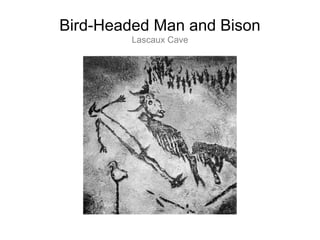
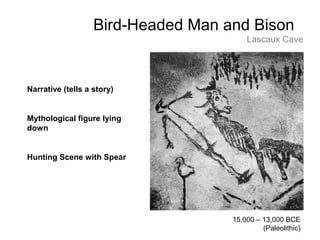
Bird-Headed Man and Bison
Lascaux Cave

Narrative (tells a story)

Mythological figure lying
down

Hunting Scene with Spear

15,000 – 13,000 BCE
(Paleolithic)
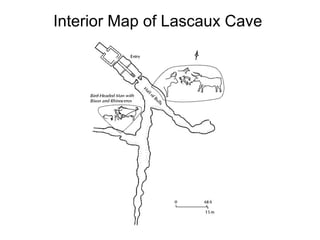
Interior Map of Lascaux Cave
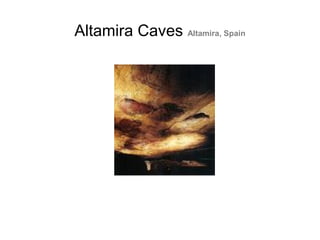
Altamira Caves Altamira, Spain
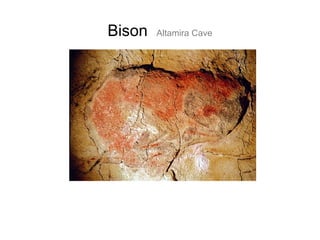
Bison

Altamira Cave
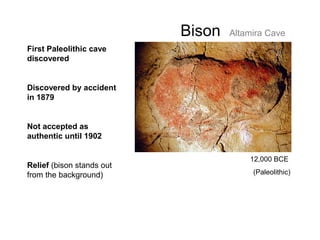
Bison

Altamira Cave

First Paleolithic cave
discovered

Discovered by accident
in 1879

Not accepted as
authentic until 1902

Relief (bison stands out
from the background)

12,000 BCE
(Paleolithic)
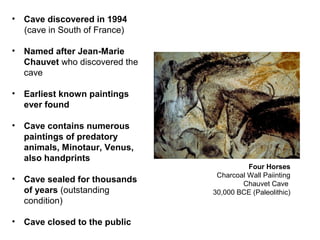
Four Horses

Chauvet Cave
• Cave discovered in 1994
(cave in South of France)
• Named after Jean-Marie
Chauvet who discovered the
cave
• Earliest known paintings
ever found
• Cave contains numerous
paintings of predatory
animals, Minotaur, Venus,
also handprints
• Cave sealed for thousands
of years (outstanding
condition)
• Cave closed to the public

Four Horses
Charcoal Wall Paiinting
Chauvet Cave
30,000 BCE (Paleolithic)
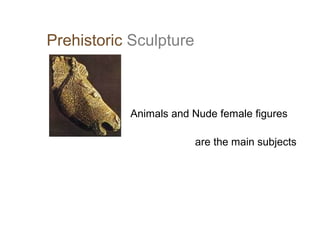
Prehistoric Sculpture

Animals and Nude female figures
are the main subjects
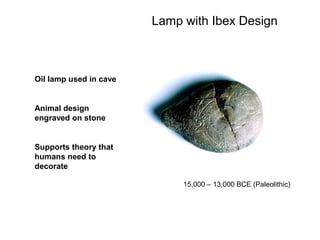
Lamp with Ibex Design
Ibex
Lamp with Ibex Design

Oil lamp used in cave

Animal design
engraved on stone

Supports theory that
humans need to
decorate
15,000 – 13,000 BCE (Paleolithic)
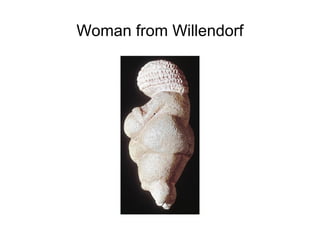
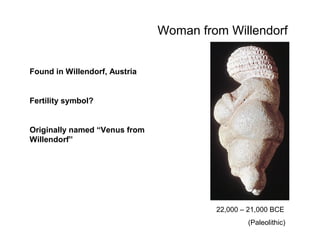
Woman from Willendorf
Found in Willendorf, Austria

Fertility symbol?

Originally named “Venus from
Willendorf”

22,000 – 21,000 BCE
(Paleolithic)
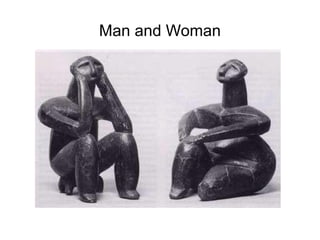
Man and Woman
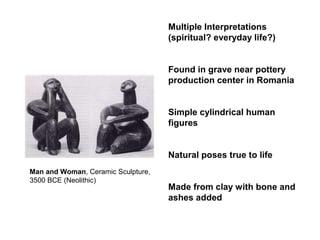
Multiple Interpretations
(spiritual? everyday life?)
Found in grave near pottery
production center in Romania
Simple cylindrical human
figures
Natural poses true to life
Man and Woman, Ceramic Sculpture,
3500 BCE (Neolithic)

Made from clay with bone and
ashes added
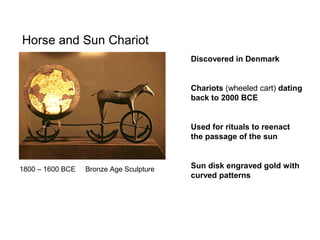
Horse and Sun Chariot
Discovered in Denmark

Chariots (wheeled cart) dating
back to 2000 BCE

Used for rituals to reenact
the passage of the sun

1800 – 1600 BCE

Bronze Age Sculpture

Sun disk engraved gold with
curved patterns
Prehistoric Architecture

As Paleolithic people adopted a settled, agricultural way of life, they
began to build structures to use as houses, storage, and shelters
for animals

Neolithic people also built Tombs and Buildings used for
Ceremonies
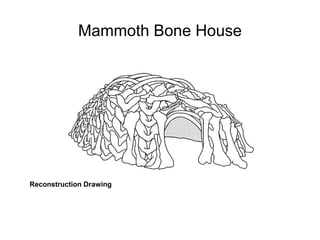
Mammoth Bone House

Reconstruction Drawing
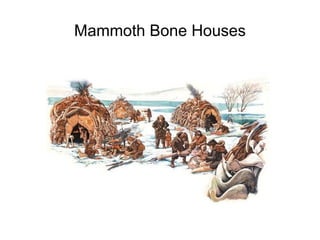
Mammoth Bone Houses
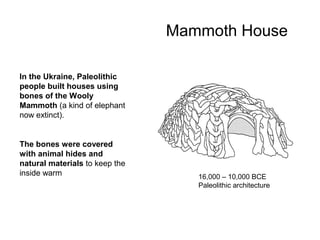
Mammoth House
In the Ukraine, Paleolithic
people built houses using
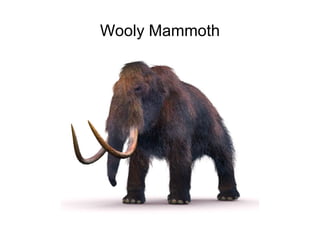
bones of the Wooly
Mammoth (a kind of elephant
now extinct).

The bones were covered
with animal hides and
natural materials to keep the
inside warm

16,000 – 10,000 BCE
Paleolithic architecture
Wooly Mammoth
Stonehenge

Wiltshire, England
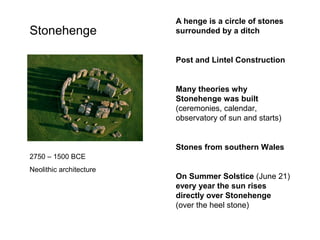
Stonehenge

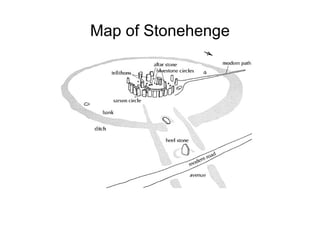
A henge is a circle of stones
surrounded by a ditch

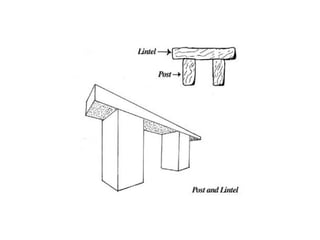
Post and Lintel Construction

Many theories why
Stonehenge was built
(ceremonies, calendar,
observatory of sun and starts)

Stones from southern Wales
2750 – 1500 BCE
Neolithic architecture

On Summer Solstice (June 21)
every year the sun rises
directly over Stonehenge
(over the heel stone)
Map of Stonehenge

Prehistoric Art

  • 1.
  • 2.
    Prehistoric Art • Our knowledgeof Prehistoric “cave people” based on art (and fossils) • The art that survives is a small fraction of the total art created • Study of Prehistoric art began only 200 years ago
  • 3.
    Ice Age –Stone Age • Earliest upright human beings came into existence 4.4 million years ago • Homo sapiens (“wise humans”) appeared about 200,000 years ago • Earliest humans from Africa. • As the Ice Age glaciers receded, humans spread across Asia, into Europe, and finally to Australia and the Americas
  • 4.
    Prehistoric Periods • Paleolithic OldStone Age (35,000 – 8000 BCE) Paleo = old / Lithic = stone • Mesolithic Middle Stone Age (8000 – 4000 BCE) Meso = middle / Lithic = stone • Neolithic New Stone Age (4000 – 1500 BCE) Neo = new / Lithic = stone • Bronze Age Bronze - alloy metal made from tin and copper (2300 - 1000 BCE) • Iron Age (1000 BCE – 50 CE)
  • 5.
    Dating System 10,000 BCE etc. 1000 BCE Western DatingSystem BCE (Before Christ Era) CE (Christ Era) Year 0 1000 CE 2014 CE
  • 6.
  • 7.
    Why did PrehistoricPeople make cave art? Theories Human Need / Desire to Create and Decorate Worship / Spirituality Used for Teaching / Story-telling “Magic” Power – similar to voodoo practices Calendar (way to mark time passed and hunting season)
  • 8.
  • 9.
  • 10.
    Hall of BullsLascaux Cave Images of Animals (Bulls and Horses) Painted on limestone with charcoal and natural clay materials Cave discovered in 1940 Opened to the public after World War II (closed in 1963 due to damage) 15,000 – 13,000 BCE (Paleolithic)
  • 11.
    Bird-Headed Man andBison Lascaux Cave
  • 12.
    Bird-Headed Man andBison Lascaux Cave Narrative (tells a story) Mythological figure lying down Hunting Scene with Spear 15,000 – 13,000 BCE (Paleolithic)
  • 13.
    Interior Map ofLascaux Cave
  • 14.
  • 15.
  • 16.
    Bison Altamira Cave First Paleolithiccave discovered Discovered by accident in 1879 Not accepted as authentic until 1902 Relief (bison stands out from the background) 12,000 BCE (Paleolithic)
  • 17.
  • 18.
    • Cave discoveredin 1994 (cave in South of France) • Named after Jean-Marie Chauvet who discovered the cave • Earliest known paintings ever found • Cave contains numerous paintings of predatory animals, Minotaur, Venus, also handprints • Cave sealed for thousands of years (outstanding condition) • Cave closed to the public Four Horses Charcoal Wall Paiinting Chauvet Cave 30,000 BCE (Paleolithic)
  • 19.
    Prehistoric Sculpture Animals andNude female figures are the main subjects
  • 20.
  • 21.
  • 22.
    Lamp with IbexDesign Oil lamp used in cave Animal design engraved on stone Supports theory that humans need to decorate 15,000 – 13,000 BCE (Paleolithic)
  • 23.
  • 24.
    Woman from Willendorf Foundin Willendorf, Austria Fertility symbol? Originally named “Venus from Willendorf” 22,000 – 21,000 BCE (Paleolithic)
  • 25.
  • 26.
    Multiple Interpretations (spiritual? everydaylife?) Found in grave near pottery production center in Romania Simple cylindrical human figures Natural poses true to life Man and Woman, Ceramic Sculpture, 3500 BCE (Neolithic) Made from clay with bone and ashes added
  • 27.
  • 28.
    Horse and SunChariot Discovered in Denmark Chariots (wheeled cart) dating back to 2000 BCE Used for rituals to reenact the passage of the sun 1800 – 1600 BCE Bronze Age Sculpture Sun disk engraved gold with curved patterns
  • 29.
    Prehistoric Architecture As Paleolithicpeople adopted a settled, agricultural way of life, they began to build structures to use as houses, storage, and shelters for animals Neolithic people also built Tombs and Buildings used for Ceremonies
  • 30.
  • 31.
  • 32.
    Mammoth House In theUkraine, Paleolithic people built houses using bones of the Wooly Mammoth (a kind of elephant now extinct). The bones were covered with animal hides and natural materials to keep the inside warm 16,000 – 10,000 BCE Paleolithic architecture
  • 33.
  • 34.
  • 35.
    Stonehenge A henge isa circle of stones surrounded by a ditch Post and Lintel Construction Many theories why Stonehenge was built (ceremonies, calendar, observatory of sun and starts) Stones from southern Wales 2750 – 1500 BCE Neolithic architecture On Summer Solstice (June 21) every year the sun rises directly over Stonehenge (over the heel stone)
  • 37.