Dept of Urology
Govt RoyapettahHospital and Kilpauk Medical College
Chennai
1
Moderators:
Professors:
 Prof. Dr. G. Sivasankar, M.S., M.Ch.,
 Prof. Dr. A. Senthilvel, M.S., M.Ch.,
Asst Professors:
 Dr. J. Sivabalan, M.S., M.Ch.,
 Dr. R. Bhargavi, M.S., M.Ch.,
 Dr. S. Raju, M.S., M.Ch.,
 Dr. K. Muthurathinam, M.S., M.Ch.,
 Dr. D. Tamilselvan, M.S., M.Ch.,
 Dr. K. Senthilkumar, M.S., M.Ch.
Dept of Urology,GRH and KMC, Chennai. 2
 9% patients with calculous disease
 female predominance of kidney stone disease in
childhood and adolescence
 50% recur with in 3-5 yrs
3
Dept of Urology,GRH and KMC, Chennai.
 75% of all pediatric kidney stones - composed of
calcium oxalate - usually mixed calculi
 10–20% - composed of Struvite (magnesium
ammonium phosphate)
 5% - Brushite (calcium phosphate)
 <5% - Uric acid
 <1% - Cystine
4
Dept of Urology,GRH and KMC, Chennai.
 Diabetes and hypertension is risk factor
 Ass. with decreased bone mineral density ,
chronic kidney disease (twice)and heart disease
5
Dept of Urology,GRH and KMC, Chennai.
clinical presentation
 Presentation depends upon – age
Flank pain and hematuria - more common in older
children.
Non-specific symptoms - irritabilityand vomiting - more
common in younger children.
 Renal colic - 40–75%
 Irritative voiding symptoms - dysuria, urgency,stanguary
frequency -20%
 Microscopicor macroscopic hematuria -- 33–90%
 Physical examination, -
restless and costovertebral angle tendernesselicited on the
affected side.
6
Dept of Urology,GRH and KMC, Chennai.
Evaluation
 family history of nephrolithiasis, hematuria, and CKD
 H/O fluid and salt intake, vitamin (A, C, D) and
mineral supplementation, and special diets (e.g.
ketogenic diet
 Melamine-tainted milk has been associated with
bilateral renal calculi in children 6 to 18 months old
 current medications -- steroids, antibiotic,diuretics,
protease inhibitors,
7
Dept of Urology,GRH and KMC, Chennai.
 Recurrent skeletal fractures : presence of
hyperparathyroidism or other bone disease
 concurrent illnesses - cystic fibrosis, neoplasms,
seizures
 dysmorphic features (William syndrome), rickets ,
tetany or gout
8
Dept of Urology,GRH and KMC, Chennai.
Laboratory evaluation
 Urine – urine analysis
culture and sensitivity
 Serum electrolytes,
blood urea nitrogen (BUN),creatinine.
 Complete blood count (CBC)
 Stone analysis
 Serum - calcium, phosphorous, bicarbonate, magnesium, and
uric acid levels, ?parathyroid hormone & vitamin D
(hypercalcemic state)
 spot urine β2-microglobulin or retinol-binding protein for Dent
ds
9
Dept of Urology,GRH and KMC, Chennai.
10
Dept of Urology,GRH and KMC, Chennai.
 24-hour urine sample - determine a stone-risk profile
metabolic abnormalities.
 Urine collection
evaluated - volume, pH, calcium, uric acid,creatinine,
sodium, oxalate, citrate, and cystine.
 ratio of calcium, uric acid, citrate, and oxalate to
creatinine in a random spot urine sample
11
Dept of Urology,GRH and KMC, Chennai.
12
Dept of Urology,GRH and KMC, Chennai.
 Plain Xray KUB –
Abdomen
- useful in detecting
stones, and type of
calculi
13
Dept of Urology,GRH and KMC, Chennai.
 Ultrasound has >70% sensitivity and >95%
specificity for detecting urinary tract stones,
14
Dept of Urology,GRH and KMC, Chennai.
15
Dept of Urology,GRH and KMC, Chennai.
Pathophysiology
 Formation of a stone in the urinary tract -
consequence of complex physical processes &
culmination of many interrelated anatomic and
physiochemical processes
 Major factors -- supersaturation of lithogenic ions and
crystallization of compounds in urine.
16
Dept of Urology,GRH and KMC, Chennai.
 Formation of stones - influenced by urinary volume,
pH, presence of urinary ions or compounds
(promoters or inhibitors)
 Urine pH - affects saturation of stone-forming
solutes by altering their solubility.
17
Dept of Urology,GRH and KMC, Chennai.
18
Dept of Urology,GRH and KMC, Chennai.
19
Dept of Urology,GRH and KMC, Chennai.
Inhibitors and Promoters
Inhibit crystal growth Promotors
• Citrate, complexes with Ca
• Magnesium, complexes with
oxalates
• Pyrophosphate, complexes
with Ca
• Zinc
• Bacterial Infection
• Matrix
• Anatomic Abnormalities
• Altered Ca and oxalate
transport in renal epithelia
• Prolonged immobilization
• Increased uric acid levels
• Nanobacteria
Inhibit crystal aggregation
• Glycosaminoglycans
• Nephrocalcin
• Uropontin
20
Dept of Urology,GRH and KMC, Chennai.
Conservative management
 calculi less than 3 mm are likely to spontaneously pass,
and stones greater than or equal to 4 mm require
endourologic treatment
 fever, anorexia greater than 24 hours, persistent nausea
and vomiting, and/or pain refractory to conservative
measures prompts endourologic intervention.
21
Dept of Urology,GRH and KMC, Chennai.
Medical Expulsion Therapy
 use of α-blockers or, less commonly, calcium-channel
blockers to facilitate passage of a ureteral stone
 guide line recommend pediatric patients with
uncomplicated ureteral stones ≤10 mm should be
offered “observation with or without MET using
alpha-blockers”(should not exceed 6 weeks)
22
Dept of Urology,GRH and KMC, Chennai.
Aims of Surgical management
 preservation of renal development & function
 prevention of radiation exposure
 minimizing the need for re-treatment.
23
Dept of Urology,GRH and KMC, Chennai.
Choice of intervention depend upon
 size of calculi
 location of the stone
 patient anatomy
 patient (and provider) preference
 patient comorbidities, composition of stone (if
known), and equipment availability
24
Dept of Urology,GRH and KMC, Chennai.
 Stone Clearance?
 Radiation :Current guidelines recommend a
maximum dose of 50 mSv in a 12-month period, and an
average of <20 mSv/year over a 5-year period
 Ancillary Procedures/Anesthesia
 Surgical Antimicrobial Prophylaxis
25
Dept of Urology,GRH and KMC, Chennai.
SWL
 first reported in 1988
 Reported ESWL success rates for mean stone sizes up
to 1.5cm are excellent, with a 75–98% stone-free rate at
3 months
26
Dept of Urology,GRH and KMC, Chennai.
COMLICATION
 Whereas extended long-term microvascular
consequences and those on renal anatomy is not
evaluated, morphologic changes such as subcapsular
or intrarenal hematomas have been infrequently
noted.
 These findings usually resolve spontaneously within
weeks.
27
Dept of Urology,GRH and KMC, Chennai.
COMLICATION
 Hemoptysis has been reported postoperatively,
particularly in children with significant orthopedic
deformities.
 Prevention of such a complication may be lessened
through the use of styrofoam padding, and symptoms
should resolve with conservative management.
28
Dept of Urology,GRH and KMC, Chennai.
C/I
 Some relative contraindications for ESWL include
morbid obesity, a large stone burden, increased stone
density, congenital skeletal/renal anomalies, and
previously failed ESWL.
 SWL failure and re-treatment rates were
associated with increased mean stone burden
increased infundibular length, and an
infundibulopelvic angle greater than 45 degrees
29
Dept of Urology,GRH and KMC, Chennai.
 The superior success rates with SWL monotherapy in
children compared with adults have been attributed to
 softer stone composition,
 smaller relative stone volume,
 increased ureteral compliance to accommodate stone
fragments, and
 smaller body volume to facilitate shock transmission
30
Dept of Urology,GRH and KMC, Chennai.
SWL - URETERIC
 Proximal ureter – 86% clearance
 Distal ureter - difficulties with localization over the
sacroiliac joint and concern regarding possible injury
to developing reproductive systems.
 The greater and lesser sciatic foramen has been
explored as a potential blast path to treat distal stones
in children.
31
Dept of Urology,GRH and KMC, Chennai.
URS
 the mini rigid fiberoptic ureteroscope
 4.5-Fr semirigid ureteroscopes with working ports
 the flexible fiberoptic ureteroscope.
 Calculi measuring 15 mm were as safely and
effectively treated in children as in adults
32
Dept of Urology,GRH and KMC, Chennai.
Methods
 Adoption of techniques used in the adult population,
most notably sequential coaxial and balloon dilation
of the ureteric orifice and use of ureteral access
sheaths, has facilitated access to the pediatric urinary
tract.
 facilitate repetitive upper tract access, reduce
intrarenal pressures, decrease operative time, and
improve stone-free rates.
33
Dept of Urology,GRH and KMC, Chennai.
Armamentarium
 Ureteroscopes:
 7.5- to 8-Fr flexible ureteroscope
 4.5-Fr and 6.5-Fr semirigid ureteroscope
 Endourologicequipment:
Guidewires (minimum):
• 0.035-inch guide wire with floppy hydrophilic tip (straight
and angled)
 • 0.018- to 0.025-inch Glidewire (straight and angled)
 Open-ended ureteral catheters (3-Fr, 4-Fr, and 5-Fr)
 Dual-lumen catheter
 Holmium laser
 Basket devices: Zero-tip 4-wire, 16-wire
 8- to 10-Fr coaxial ureteral dilators
 Ureteral access sheaths (9.5-Fr and 12-Fr internal diameter)
 Ureteral stents: 3.7-Fr, 4.6 to 4.7-Fr, 6-Fr, and 8-Fr
34
Dept of Urology,GRH and KMC, Chennai.
Armamentarium
 With flexible ureteroscopes, distal tip deflection up to
270 degrees can facilitate access to most lower pole
stones
 Irrigating fluid, which may be used under pressure,
should be isotonic and at body temperature to avoid
hypothermia and hyponatremia
35
Dept of Urology,GRH and KMC, Chennai.
36
Dept of Urology,GRH and KMC, Chennai.
37
Dept of Urology,GRH and KMC, Chennai.
38
Dept of Urology,GRH and KMC, Chennai.
39
Dept of Urology,GRH and KMC, Chennai.
Complications
The most common complications involve
 unrecognized ureteral injury,
 including mucosal flaps and tears, perforation, false
 passage, and partial to complete avulsion
40
Dept of Urology,GRH and KMC, Chennai.
PCNL / MINI PERC
 + SANDWICH THERAPY
 Large upper tract stone burden (>1.5 cm),
 lower pole calculi greater than 1 cm,
 concurrent anatomic abnormality
 impairing urinary drainage and stone clearance,
 known cystine or struvite composition
41
Dept of Urology,GRH and KMC, Chennai.
ARMAENTARIUM
 Use of adult instruments
 Damage to renal parenchyma due to larger size
instruments
 Transfusion was associated with operative time, sheath
size, and stone burden
 reported high efficacy rates with acceptable
complication rates even when the dilating tract size as
high as 30 Fr.
 recent data have suggested that PCNL is possible in
very young children using adult-sized equipment
42
Dept of Urology,GRH and KMC, Chennai.
Mini perc
 13-Fr peel-away vascular access sheath
 The benefits of minimal tract
dilation included increased
maneuverability, decreased blood
loss, and shorter hospital stay.
 However, theoretical limitations,
including prolonged operative times
and impaired visualization from
bleeding, suggests that this
technique may not be adequate for
very large stone burdens.
43
Dept of Urology,GRH and KMC, Chennai.
Procedure
 16- or 18-gauge spinal needle is placed with the
assistance of fluoroscopy in the 30-degree position.
 PCS opacification / USG
 The ideal tract is one that provides the shortest and
most direct access to the stone.
 GW placement
 Coaxial dilators 8/10
44
Dept of Urology,GRH and KMC, Chennai.
Tract dilatation
 Tract dilationcan be performed by several techniques.
 Serial dilation with Amplatz dilators over working wires and
subsequent sheath placement under fluoroscopic guidance is the most
common technique employed.
 Forsmaller children and lower stone burdens, an 11- to 13-Fr peel-away
sheath and trocar are passed over the wire and through the calyx under
fluoroscopicguidance.
 For balloon dilation.
 Either will facilitate dilation of a 30-Fr tract at a pressure of 17
atmospheres.
 This technique permits dilation and sheath placement in a single step,
thereby minimizing potential parenchymal trauma and bleeding from
sequential dilationwith rigid dilators.
 Although the decision to proceed with mini-perc or dilation is
individualized based on the child’s age, anatomy, and stone burden,
familiarity with all of the above techniques facilitates complete access
with minimal morbidity 45
Dept of Urology,GRH and KMC, Chennai.
Nephroscope
 The outer diameter of nephroscopes range from 15 to
26 Fr, and a 15-Fr flexible nephroscope with a 6-Fr
working channel has also been developed.
 In addition, 7- and 8-Fr offset cystoscopes with 5-Fr
working ports and 7- to 9-Fr flexible ureteroscopes can
be used through an 11-Fr access sheath with enough
clearance to allow low pressure irrigation
46
Dept of Urology,GRH and KMC, Chennai.
Energy sources
 Energy sources currently used include ultrasonic
lithotripsy, electrohydraulic lithotripsy (EHL) ,
holmium laser
47
Dept of Urology,GRH and KMC, Chennai.
Vesical calculus
 Diets low in animal protein and phosphorous (breast
milk as opposed to cow’s milk), in addition to vitamin
A deficiency, are contributor.
 Bladder stones from children in these developing
countries are most often composed of ammonium acid
urate
48
Dept of Urology,GRH and KMC, Chennai.
Vesical calculus
 It has been reported that up to 50% of children with
reconstructed bladders will develop a bladder stone in
their lifetime.
 Urinary stasis, bacterial colonization or infection with
urea-splitting organisms, retained mucus, and foreign
bodies can all contribute to the formation of bladder
stones, the majority of which are struvite
49
Dept of Urology,GRH and KMC, Chennai.
Vesical calculus
 Open cystolithotomy
 Transurethral route
 Suprapubic transvesical cystolithotomy
50
Dept of Urology,GRH and KMC, Chennai.
Suprapubic transvesical
cystolithotomy
51
Dept of Urology,GRH and KMC, Chennai.
52
Dept of Urology,GRH and KMC, Chennai.
Secondary Prevention
 Increase Fluid
 Decrease Sodium
 Increase Calcium
 Animal Protein
 Oxalate
 Citrate
 Others(mg,phytate, decrease carbohydrate)
53
Dept of Urology,GRH and KMC, Chennai.
Medication
 Diuretics:hydrochlorothiazide 1 to 2 mg/kg per day (adult 25 to
100 mg/day)
 Alkali Agents:either potassium citrate or potassium-magnesium
citrate. uric acid lithiasis (goal of urine pH >6.5), cystinuria (goal
of urine pH >7), and hyperoxaluria.
 Thiol-Containing Agents: D-penicillamine and α-
mercaptopropionylglycine (tiopronin). Form more soluble
cysteine–drug product
 Allopurinol: (4 to 10 mg/kg/day) for uric acid calculi is a
combination of high urine flow rate and alkalinization of the urine.
 Pyridoxine: (2 to 5 mg/kg/day) in primary hyperoxaluria
54
Dept of Urology,GRH and KMC, Chennai.
THANK YOU
55
Dept of Urology,GRH and KMC, Chennai.
Hypercalciuria
 Defined as calcium excretion of greater than 4
mg/kg/day in children older than 2 years
 found in approximately 30% to 50% of stone-forming
children
 Most common cause is idiopathic hypercalciuria (ass.
with normal s.calcium level
56
Dept of Urology,GRH and KMC, Chennai.
Absorptive hypercalciuria
 Most common
 Results from increased intestinal absorption of
calcium
 Caused by either overly aggressive vitamin D
supplementation
 Excessive ingestion of calcium-containing foods
 Shows -
increase in serum calcium levels.
Serum PTH - low-normal range
Fasting urinary calcium levels- normal range
57
Dept of Urology,GRH and KMC, Chennai.
 Three types of absorptive hypercalciuria
Type I - Hypercalciuria without calcium load,
most severe type
Type II - Have hypercalciuria only, with high
calcium intake
Most common variety
Type III - relatively rare
58
Dept of Urology,GRH and KMC, Chennai.
Renal hypercalciuria
 Results from - specific defect kidneys that allows
excessive urinary calcium excretion,regardless of
serum calcium levels,body stores, or calcium
ingestion.
 Calcium:creatinine ratio - usually high (>0.20)
 Loss of serum calcium produces –
mild hypocalcemia and secondary
hyperparathyroidism,
 Renal leak hypercalciuria - far less common
than absorptive hypercalciuria.
59
Dept of Urology,GRH and KMC, Chennai.
Hypercalcemic states
 Hyperparathyroidism
Resorptive hypercalciuria - results from loss of
calcium from the body’s normal stores in the bony
skeleton
 overwhelming serum calcium load - produced
hyperparathyroidism, results in hypercalciuria
 Immobilization
Cause of secondary hypercalciuria.
60
Dept of Urology,GRH and KMC, Chennai.
Treatment of hypercalcuria
 preventative management
maintenance adequate daily fluid intake
 restriction of Dietary sodium high-potassium, low-
oxalate
 low-calcium diet - not effective reduces risk of stone
 Diuretics -Thiazide
61
Dept of Urology,GRH and KMC, Chennai.
 SIDE effects -hypokalemia ,hypocitraturia
 Hypercalciuria with distal RTA-
potassium citrate
-correct the metabolic acidemia and
hypokalemia, normalize urinary calcium and citrate
excretion
62
Dept of Urology,GRH and KMC, Chennai.
Hyperoxaluria
Primary hyperoxaluria
 very rare but serious disorder
 caused by a congenital defect resulting in very high
levels (>200 mg/day) of Overproduction of oxalate by
the liver causes excessive urinary oxalate excretion
with resultant nephrocalcinosis and nephrolithiasis.
 Prognosis - poor.
 Renal failure occurs - 50% by age 15 years
80% by age 30 years.
63
Dept of Urology,GRH and KMC, Chennai.
 Type I primary hyperoxaluria - mutations in the
AGXT gene
 Functional defect of the hepatic peroxisomal enzyme
alanine-glyoxylate aminotransferase (AGT).
median age presentation -5 years
 Type II primary hyperoxaluria - Less common
deficiency of D-glycerate dehydrogen promotes
conversion of glyoxylate to oxalate.
 glycolate (elevated in PH1), glycerate (elevated in
PH2), and 4-hydroxy-2-oxoglutarate (elevated inPH3).
64
Dept of Urology,GRH and KMC, Chennai.
65
Dept of Urology,GRH and KMC, Chennai.
 Pharmacologic intervention – reduce urinary oxalate
 Pyridoxine supplementation
cofactor - AGT-mediated conversion of
glyoxylate to glycine.
 Neutral orthophosphate combined with pyridoxine -
used as long-term therapy
66
Dept of Urology,GRH and KMC, Chennai.
 Potassium citrate -
Direct inhibitor of calcium oxalate
crystallization.
 Magnesium oxide - forms a soluble complex
with oxalate in urine
 Definitive therapy - combined kidney and
liver transplantation.
67
Dept of Urology,GRH and KMC, Chennai.
Secondary hyperoxaluria
Enteric hyperoxaluria
 Caused by intestinal hyperabsorption seen in
Crohn’s disease ,cystic fibrosis or resection of the
small bowel
 Leads to malabsorption of fat and bile acids.
Dietary calcium bound by the free fatty acids in
intestinal lumen.
 Less calcium is available to bind oxalate, resulting in
increased amounts of free oxalate for absorption
68
Dept of Urology,GRH and KMC, Chennai.
Enteric hyperoxaluria - Treatment
 Restriction of high-
oxalate foods like
spinach, soy burgers,
beetroot, almond
pecans, peanuts,
chocolate, collard
greens, and sweet
potatoes.
69
Dept of Urology,GRH and KMC, Chennai.
 Avoid - excessive protein consumption
 Cholestyramine - added to bind bile acids, reverse
increased permeability in the colon, bind oxalate.
70
Dept of Urology,GRH and KMC, Chennai.
Xanthinuria
 Excessive urinary excretion of the purine base - xanthine.
 Deficiency of enzyme - Xanthine dehydrogenase
responsible for degrading hypoxanthine and
xanthine to uricacid.
 Increase in plasma levels and excess urinary excretion of
highly insoluble xanthine
 Leads - urolithiasis, arthropathy, myopathy, crystal
nephropathy, or renal failure.
 Iatrogenic xanthinuria- occur during allopurinol therapy
 No specific therapies are available
71
Dept of Urology,GRH and KMC, Chennai.
Uric acid lithiasis
 constitute less than 5% urinary calculi encountered
in pediatric patients.
 Stones - usually white or orange,radiolucent
 Familial, or idiopathic, form
- children have hyperuricosuria and normal uric
acid serum concentration
Wilson’s disease, Fanconi Syndrome Lesch–Nyhan
syndrome
72
Dept of Urology,GRH and KMC, Chennai.
Hyperuricosuria
 LESCH–NYHANSYNDROME
Deficiency of the enzyme hypoxanthine–
guanine phosphoribosyl transferase (HPRT).
 Genetic disorder - associated with overproduction of
uric acid
 Neurologic disability, and behavioral problems
produce nephrolithiasis with renal failure gouty
arthritis, subcutaneous tophi.
73
Dept of Urology,GRH and KMC, Chennai.
 Uric acid overproduction-- occur secondary to
myeloproliferative disorders result of a high purine
intake or uricosuric drugs (such as probenecid,
salicylate)
 Chronic diarrheal syndromes (e.g. ulcerative colitis,
regional enteritis)
74
Dept of Urology,GRH and KMC, Chennai.
 Present between 3 and 12 months of age
with delayed motor development, hypotonia
failure to reach normal motor milestones
 Treatment
- increased fluid intake
- urinary alkalinization - potassium citrate or
sodium bicarbonate
- Reduction of dietary protein
- xanthine oxidase inhibitor - Allopurinol is indicated
75
Dept of Urology,GRH and KMC, Chennai.
Renal tubular acidosis
 Clinical syndromes of metabolic acidosis result from
specific defects in renal tubular hydrogen ion
secretion and urinary acidification.
 Stones – composed of calcium phosphate (brushite)
76
Dept of Urology,GRH and KMC, Chennai.
Type 1 (Distal) RTA
 Primary functional abnormality - inability of the
distal nephron to establish and maintain
hydrogen ion gradient between the tubular fluid
and the blood
 Finally urine - remains alkaline regardless
of the severity of the systemic acidemia.
 Associated renal stone disease - up to 70%
 Factors contributes stone formation include
increased urinary pH, hypercalciuria,
hypocitraturia.
77
Dept of Urology,GRH and KMC, Chennai.
 Present- vomiting and diarrhea (>33%) ,
failure to thrive (>50%),
growth retardation.
 Hypokalemic, hyperchloremic metabolic acidosis
 Urinary pH will never fall below 5.5
 If urinary pH falls below 5.5, diagnosis of RTA
can be excluded.
78
Dept of Urology,GRH and KMC, Chennai.
 Type 2 (proximal) RTA
primary defect - failure of bicarbonate
reabsorption in the proximal tubule,
 Nephrolithiasis and nephrocalcinosis -
not seen in proximal RTA
79
Dept of Urology,GRH and KMC, Chennai.
 Type 4 RTA -
chronic renal parenchymal damage, leads to
moderate reductions in glomerular filtration rate
 Produces hyperkalemic, hyperchloremic
metabolic acidosis in conjunction with
bicarbonaturia, decreased ammonium excretion
 Nephrolithiasis and Nephrocalcinosis- absent
80
Dept of Urology,GRH and KMC, Chennai.
Hypocitruria
 Risk factor for urinary stone formation with idiopathic
calcium oxalate urolithiasis.
 Hypocitraturia is generally defined as a citrate-to-
creatinine ratio of <128 mg/g in males and <300
mg/g in females on a 24-hour collection.
 Intracellular acidosis of the proximal tubule, caused
either by metabolic acidosis or hypokalemia results in
increased citrate absorption in the proximal tubule
and resultant hypocitraturia.

81
Dept of Urology,GRH and KMC, Chennai.
 increases the inhibitory activity- Tamm–Horsfall
protein reduce the expression of urinary osteopontin,
 Citrate excretion -- impaired by acidosis hypokalemia,
high animal protein diet & UTI
 RTA – most common cause of hypocitriuria in children.
82
Dept of Urology,GRH and KMC, Chennai.
Cystinuria
 Autosomal recessive disorder caused by mutations in
either the SLC3A1 or SLC7A9 gene resulting in disordered
amino acid transport in the proximal tubule
 Results from an excessive urinary excretion of cystine
and dibasic amino acids arginine lysine, and ornithine
83
Dept of Urology,GRH and KMC, Chennai.
 Cystine stones - very hard
characteristically flat hexagonal, and colorless
resistant to fragmentation
 Three subtypes - cystinuria.
 Cystine crystals –diagnostic
 associated with - hyperuricemia, uric acid urolithiasis,
hemophilia, retinitis pigmentosa,muscular dystrophy,
muscular hypotonia, Mental retardation, trisomy 21
84
Dept of Urology,GRH and KMC, Chennai.
 Treatment
Maintains urinary flow rates
Dietary protein and sodium restriction
Urinary alkalinization - potassium citrate
 Fruit juices - (citrus or orange)
contain citric acid and potassium
increasing diuresis and alkali load
 LowerS daily sodium intake
85
Dept of Urology,GRH and KMC, Chennai.
 Chelating agents
- D-penicillamine, mercaptopropionyl glycine
(Thiola)
- Adjunctive therapies
Side effects :
fever, rash, nephrosis, pancytopenia,
hypogeusia, and epidermolysis.
 Captopril - shown to be effective
Lowers the urinary cystine level
86
Dept of Urology,GRH and KMC, Chennai.
Infection stones (Struvite )
 constitute about 2–3% stones in pediatric patients
 seen in younger children <6 years of age.
 Infection by urea-splitting bacteria results –increased
urinary pH , increased urinary magnesium ammonium
phosphate,
 Conditions favoring the formation of struvite stones.
Urinary pH of ≥6.8 results - action of the
bacterial enzyme urease on urinary urea.
87
Dept of Urology,GRH and KMC, Chennai.
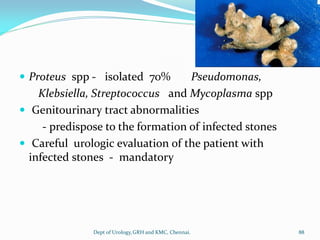
 Proteus spp - isolated 70% Pseudomonas,
Klebsiella, Streptococcus and Mycoplasma spp
 Genitourinary tract abnormalities
- predispose to the formation of infected stones
 Careful urologic evaluation of the patient with
infected stones - mandatory
88
Dept of Urology,GRH and KMC, Chennai.
Infection stones - Treatment
 Elimination of urinary stones and fragments
 Correction of anatomic or functional obstruction,
 Long-term suppressive, culture-specific antibiotic
therapy
89
Dept of Urology,GRH and KMC, Chennai.
Miscellaneous stones
 Indinavir stones
- protease inhibitor
- used antiviral drug in the treatment of HIV:
- stones - typically radiolucent, and
- composed of a soft yellowish-brown
gelatinous material
 Unenhanced computed tomography (CT) imaging
may fail to demonstrate these stones
 ESWL - not useful , because of their soft nature
90
Dept of Urology,GRH and KMC, Chennai.
A recent review reported stone
clearance ranging from 70% to 97% for
PCNL, 85% to 88% for URS, and 80%
to 83% for SWL
91
Dept of Urology,GRH and KMC, Chennai.
 Saturation –
pure aqueous solution of a salt is considered
saturated when it reaches the point at which no
further added salt will dissolve
 Central event in calculus formation –
supersaturation.
If urinary solute exceeds its solubility product
crystallization of the solutes –occur
 Supersaturation - When a solute is added to solvent it
dissolves in it until an equilibrium point is achieved
92
Dept of Urology,GRH and KMC, Chennai.
 Metastable zone-- Beyond this point (i.e. between
saturated and supersaturated states) no further
dissolution is possible
 Unstable zone -Once urinary solutes exceed their Ksp,
solvent - said to be saturated
 Crystallization occurs via homogeneous nucleation
or heterogeneous nucleation (other crystals, cell
tubular casts)
93
Dept of Urology,GRH and KMC, Chennai.
94
Dept of Urology,GRH and KMC, Chennai.
 Crystal aggregation - Once this process is initiated, growth
of the stone - fostered by the nuclei coming in close
contact and binding to each other resulting in crystal
aggregation
 Crystal retention and formation of calculi takes place -
initially in the papillary duct.
 Disorders of metabolism / endocrine / urologic
abnormalities may lead- development of crystallized
material in the urinary tract
95
Dept of Urology,GRH and KMC, Chennai.

Urolithiasis pediatric

  • 1.
    Dept of Urology GovtRoyapettahHospital and Kilpauk Medical College Chennai 1
  • 2.
    Moderators: Professors:  Prof. Dr.G. Sivasankar, M.S., M.Ch.,  Prof. Dr. A. Senthilvel, M.S., M.Ch., Asst Professors:  Dr. J. Sivabalan, M.S., M.Ch.,  Dr. R. Bhargavi, M.S., M.Ch.,  Dr. S. Raju, M.S., M.Ch.,  Dr. K. Muthurathinam, M.S., M.Ch.,  Dr. D. Tamilselvan, M.S., M.Ch.,  Dr. K. Senthilkumar, M.S., M.Ch. Dept of Urology,GRH and KMC, Chennai. 2
  • 3.
     9% patientswith calculous disease  female predominance of kidney stone disease in childhood and adolescence  50% recur with in 3-5 yrs 3 Dept of Urology,GRH and KMC, Chennai.
  • 4.
     75% ofall pediatric kidney stones - composed of calcium oxalate - usually mixed calculi  10–20% - composed of Struvite (magnesium ammonium phosphate)  5% - Brushite (calcium phosphate)  <5% - Uric acid  <1% - Cystine 4 Dept of Urology,GRH and KMC, Chennai.
  • 5.
     Diabetes andhypertension is risk factor  Ass. with decreased bone mineral density , chronic kidney disease (twice)and heart disease 5 Dept of Urology,GRH and KMC, Chennai.
  • 6.
    clinical presentation  Presentationdepends upon – age Flank pain and hematuria - more common in older children. Non-specific symptoms - irritabilityand vomiting - more common in younger children.  Renal colic - 40–75%  Irritative voiding symptoms - dysuria, urgency,stanguary frequency -20%  Microscopicor macroscopic hematuria -- 33–90%  Physical examination, - restless and costovertebral angle tendernesselicited on the affected side. 6 Dept of Urology,GRH and KMC, Chennai.
  • 7.
    Evaluation  family historyof nephrolithiasis, hematuria, and CKD  H/O fluid and salt intake, vitamin (A, C, D) and mineral supplementation, and special diets (e.g. ketogenic diet  Melamine-tainted milk has been associated with bilateral renal calculi in children 6 to 18 months old  current medications -- steroids, antibiotic,diuretics, protease inhibitors, 7 Dept of Urology,GRH and KMC, Chennai.
  • 8.
     Recurrent skeletalfractures : presence of hyperparathyroidism or other bone disease  concurrent illnesses - cystic fibrosis, neoplasms, seizures  dysmorphic features (William syndrome), rickets , tetany or gout 8 Dept of Urology,GRH and KMC, Chennai.
  • 9.
    Laboratory evaluation  Urine– urine analysis culture and sensitivity  Serum electrolytes, blood urea nitrogen (BUN),creatinine.  Complete blood count (CBC)  Stone analysis  Serum - calcium, phosphorous, bicarbonate, magnesium, and uric acid levels, ?parathyroid hormone & vitamin D (hypercalcemic state)  spot urine β2-microglobulin or retinol-binding protein for Dent ds 9 Dept of Urology,GRH and KMC, Chennai.
  • 10.
    10 Dept of Urology,GRHand KMC, Chennai.
  • 11.
     24-hour urinesample - determine a stone-risk profile metabolic abnormalities.  Urine collection evaluated - volume, pH, calcium, uric acid,creatinine, sodium, oxalate, citrate, and cystine.  ratio of calcium, uric acid, citrate, and oxalate to creatinine in a random spot urine sample 11 Dept of Urology,GRH and KMC, Chennai.
  • 12.
    12 Dept of Urology,GRHand KMC, Chennai.
  • 13.
     Plain XrayKUB – Abdomen - useful in detecting stones, and type of calculi 13 Dept of Urology,GRH and KMC, Chennai.
  • 14.
     Ultrasound has>70% sensitivity and >95% specificity for detecting urinary tract stones, 14 Dept of Urology,GRH and KMC, Chennai.
  • 15.
    15 Dept of Urology,GRHand KMC, Chennai.
  • 16.
    Pathophysiology  Formation ofa stone in the urinary tract - consequence of complex physical processes & culmination of many interrelated anatomic and physiochemical processes  Major factors -- supersaturation of lithogenic ions and crystallization of compounds in urine. 16 Dept of Urology,GRH and KMC, Chennai.
  • 17.
     Formation ofstones - influenced by urinary volume, pH, presence of urinary ions or compounds (promoters or inhibitors)  Urine pH - affects saturation of stone-forming solutes by altering their solubility. 17 Dept of Urology,GRH and KMC, Chennai.
  • 18.
    18 Dept of Urology,GRHand KMC, Chennai.
  • 19.
    19 Dept of Urology,GRHand KMC, Chennai.
  • 20.
    Inhibitors and Promoters Inhibitcrystal growth Promotors • Citrate, complexes with Ca • Magnesium, complexes with oxalates • Pyrophosphate, complexes with Ca • Zinc • Bacterial Infection • Matrix • Anatomic Abnormalities • Altered Ca and oxalate transport in renal epithelia • Prolonged immobilization • Increased uric acid levels • Nanobacteria Inhibit crystal aggregation • Glycosaminoglycans • Nephrocalcin • Uropontin 20 Dept of Urology,GRH and KMC, Chennai.
  • 21.
    Conservative management  calculiless than 3 mm are likely to spontaneously pass, and stones greater than or equal to 4 mm require endourologic treatment  fever, anorexia greater than 24 hours, persistent nausea and vomiting, and/or pain refractory to conservative measures prompts endourologic intervention. 21 Dept of Urology,GRH and KMC, Chennai.
  • 22.
    Medical Expulsion Therapy use of α-blockers or, less commonly, calcium-channel blockers to facilitate passage of a ureteral stone  guide line recommend pediatric patients with uncomplicated ureteral stones ≤10 mm should be offered “observation with or without MET using alpha-blockers”(should not exceed 6 weeks) 22 Dept of Urology,GRH and KMC, Chennai.
  • 23.
    Aims of Surgicalmanagement  preservation of renal development & function  prevention of radiation exposure  minimizing the need for re-treatment. 23 Dept of Urology,GRH and KMC, Chennai.
  • 24.
    Choice of interventiondepend upon  size of calculi  location of the stone  patient anatomy  patient (and provider) preference  patient comorbidities, composition of stone (if known), and equipment availability 24 Dept of Urology,GRH and KMC, Chennai.
  • 25.
     Stone Clearance? Radiation :Current guidelines recommend a maximum dose of 50 mSv in a 12-month period, and an average of <20 mSv/year over a 5-year period  Ancillary Procedures/Anesthesia  Surgical Antimicrobial Prophylaxis 25 Dept of Urology,GRH and KMC, Chennai.
  • 26.
    SWL  first reportedin 1988  Reported ESWL success rates for mean stone sizes up to 1.5cm are excellent, with a 75–98% stone-free rate at 3 months 26 Dept of Urology,GRH and KMC, Chennai.
  • 27.
    COMLICATION  Whereas extendedlong-term microvascular consequences and those on renal anatomy is not evaluated, morphologic changes such as subcapsular or intrarenal hematomas have been infrequently noted.  These findings usually resolve spontaneously within weeks. 27 Dept of Urology,GRH and KMC, Chennai.
  • 28.
    COMLICATION  Hemoptysis hasbeen reported postoperatively, particularly in children with significant orthopedic deformities.  Prevention of such a complication may be lessened through the use of styrofoam padding, and symptoms should resolve with conservative management. 28 Dept of Urology,GRH and KMC, Chennai.
  • 29.
    C/I  Some relativecontraindications for ESWL include morbid obesity, a large stone burden, increased stone density, congenital skeletal/renal anomalies, and previously failed ESWL.  SWL failure and re-treatment rates were associated with increased mean stone burden increased infundibular length, and an infundibulopelvic angle greater than 45 degrees 29 Dept of Urology,GRH and KMC, Chennai.
  • 30.
     The superiorsuccess rates with SWL monotherapy in children compared with adults have been attributed to  softer stone composition,  smaller relative stone volume,  increased ureteral compliance to accommodate stone fragments, and  smaller body volume to facilitate shock transmission 30 Dept of Urology,GRH and KMC, Chennai.
  • 31.
    SWL - URETERIC Proximal ureter – 86% clearance  Distal ureter - difficulties with localization over the sacroiliac joint and concern regarding possible injury to developing reproductive systems.  The greater and lesser sciatic foramen has been explored as a potential blast path to treat distal stones in children. 31 Dept of Urology,GRH and KMC, Chennai.
  • 32.
    URS  the minirigid fiberoptic ureteroscope  4.5-Fr semirigid ureteroscopes with working ports  the flexible fiberoptic ureteroscope.  Calculi measuring 15 mm were as safely and effectively treated in children as in adults 32 Dept of Urology,GRH and KMC, Chennai.
  • 33.
    Methods  Adoption oftechniques used in the adult population, most notably sequential coaxial and balloon dilation of the ureteric orifice and use of ureteral access sheaths, has facilitated access to the pediatric urinary tract.  facilitate repetitive upper tract access, reduce intrarenal pressures, decrease operative time, and improve stone-free rates. 33 Dept of Urology,GRH and KMC, Chennai.
  • 34.
    Armamentarium  Ureteroscopes:  7.5-to 8-Fr flexible ureteroscope  4.5-Fr and 6.5-Fr semirigid ureteroscope  Endourologicequipment: Guidewires (minimum): • 0.035-inch guide wire with floppy hydrophilic tip (straight and angled)  • 0.018- to 0.025-inch Glidewire (straight and angled)  Open-ended ureteral catheters (3-Fr, 4-Fr, and 5-Fr)  Dual-lumen catheter  Holmium laser  Basket devices: Zero-tip 4-wire, 16-wire  8- to 10-Fr coaxial ureteral dilators  Ureteral access sheaths (9.5-Fr and 12-Fr internal diameter)  Ureteral stents: 3.7-Fr, 4.6 to 4.7-Fr, 6-Fr, and 8-Fr 34 Dept of Urology,GRH and KMC, Chennai.
  • 35.
    Armamentarium  With flexibleureteroscopes, distal tip deflection up to 270 degrees can facilitate access to most lower pole stones  Irrigating fluid, which may be used under pressure, should be isotonic and at body temperature to avoid hypothermia and hyponatremia 35 Dept of Urology,GRH and KMC, Chennai.
  • 36.
    36 Dept of Urology,GRHand KMC, Chennai.
  • 37.
    37 Dept of Urology,GRHand KMC, Chennai.
  • 38.
    38 Dept of Urology,GRHand KMC, Chennai.
  • 39.
    39 Dept of Urology,GRHand KMC, Chennai.
  • 40.
    Complications The most commoncomplications involve  unrecognized ureteral injury,  including mucosal flaps and tears, perforation, false  passage, and partial to complete avulsion 40 Dept of Urology,GRH and KMC, Chennai.
  • 41.
    PCNL / MINIPERC  + SANDWICH THERAPY  Large upper tract stone burden (>1.5 cm),  lower pole calculi greater than 1 cm,  concurrent anatomic abnormality  impairing urinary drainage and stone clearance,  known cystine or struvite composition 41 Dept of Urology,GRH and KMC, Chennai.
  • 42.
    ARMAENTARIUM  Use ofadult instruments  Damage to renal parenchyma due to larger size instruments  Transfusion was associated with operative time, sheath size, and stone burden  reported high efficacy rates with acceptable complication rates even when the dilating tract size as high as 30 Fr.  recent data have suggested that PCNL is possible in very young children using adult-sized equipment 42 Dept of Urology,GRH and KMC, Chennai.
  • 43.
    Mini perc  13-Frpeel-away vascular access sheath  The benefits of minimal tract dilation included increased maneuverability, decreased blood loss, and shorter hospital stay.  However, theoretical limitations, including prolonged operative times and impaired visualization from bleeding, suggests that this technique may not be adequate for very large stone burdens. 43 Dept of Urology,GRH and KMC, Chennai.
  • 44.
    Procedure  16- or18-gauge spinal needle is placed with the assistance of fluoroscopy in the 30-degree position.  PCS opacification / USG  The ideal tract is one that provides the shortest and most direct access to the stone.  GW placement  Coaxial dilators 8/10 44 Dept of Urology,GRH and KMC, Chennai.
  • 45.
    Tract dilatation  Tractdilationcan be performed by several techniques.  Serial dilation with Amplatz dilators over working wires and subsequent sheath placement under fluoroscopic guidance is the most common technique employed.  Forsmaller children and lower stone burdens, an 11- to 13-Fr peel-away sheath and trocar are passed over the wire and through the calyx under fluoroscopicguidance.  For balloon dilation.  Either will facilitate dilation of a 30-Fr tract at a pressure of 17 atmospheres.  This technique permits dilation and sheath placement in a single step, thereby minimizing potential parenchymal trauma and bleeding from sequential dilationwith rigid dilators.  Although the decision to proceed with mini-perc or dilation is individualized based on the child’s age, anatomy, and stone burden, familiarity with all of the above techniques facilitates complete access with minimal morbidity 45 Dept of Urology,GRH and KMC, Chennai.
  • 46.
    Nephroscope  The outerdiameter of nephroscopes range from 15 to 26 Fr, and a 15-Fr flexible nephroscope with a 6-Fr working channel has also been developed.  In addition, 7- and 8-Fr offset cystoscopes with 5-Fr working ports and 7- to 9-Fr flexible ureteroscopes can be used through an 11-Fr access sheath with enough clearance to allow low pressure irrigation 46 Dept of Urology,GRH and KMC, Chennai.
  • 47.
    Energy sources  Energysources currently used include ultrasonic lithotripsy, electrohydraulic lithotripsy (EHL) , holmium laser 47 Dept of Urology,GRH and KMC, Chennai.
  • 48.
    Vesical calculus  Dietslow in animal protein and phosphorous (breast milk as opposed to cow’s milk), in addition to vitamin A deficiency, are contributor.  Bladder stones from children in these developing countries are most often composed of ammonium acid urate 48 Dept of Urology,GRH and KMC, Chennai.
  • 49.
    Vesical calculus  Ithas been reported that up to 50% of children with reconstructed bladders will develop a bladder stone in their lifetime.  Urinary stasis, bacterial colonization or infection with urea-splitting organisms, retained mucus, and foreign bodies can all contribute to the formation of bladder stones, the majority of which are struvite 49 Dept of Urology,GRH and KMC, Chennai.
  • 50.
    Vesical calculus  Opencystolithotomy  Transurethral route  Suprapubic transvesical cystolithotomy 50 Dept of Urology,GRH and KMC, Chennai.
  • 51.
  • 52.
    52 Dept of Urology,GRHand KMC, Chennai.
  • 53.
    Secondary Prevention  IncreaseFluid  Decrease Sodium  Increase Calcium  Animal Protein  Oxalate  Citrate  Others(mg,phytate, decrease carbohydrate) 53 Dept of Urology,GRH and KMC, Chennai.
  • 54.
    Medication  Diuretics:hydrochlorothiazide 1to 2 mg/kg per day (adult 25 to 100 mg/day)  Alkali Agents:either potassium citrate or potassium-magnesium citrate. uric acid lithiasis (goal of urine pH >6.5), cystinuria (goal of urine pH >7), and hyperoxaluria.  Thiol-Containing Agents: D-penicillamine and α- mercaptopropionylglycine (tiopronin). Form more soluble cysteine–drug product  Allopurinol: (4 to 10 mg/kg/day) for uric acid calculi is a combination of high urine flow rate and alkalinization of the urine.  Pyridoxine: (2 to 5 mg/kg/day) in primary hyperoxaluria 54 Dept of Urology,GRH and KMC, Chennai.
  • 55.
    THANK YOU 55 Dept ofUrology,GRH and KMC, Chennai.
  • 56.
    Hypercalciuria  Defined ascalcium excretion of greater than 4 mg/kg/day in children older than 2 years  found in approximately 30% to 50% of stone-forming children  Most common cause is idiopathic hypercalciuria (ass. with normal s.calcium level 56 Dept of Urology,GRH and KMC, Chennai.
  • 57.
    Absorptive hypercalciuria  Mostcommon  Results from increased intestinal absorption of calcium  Caused by either overly aggressive vitamin D supplementation  Excessive ingestion of calcium-containing foods  Shows - increase in serum calcium levels. Serum PTH - low-normal range Fasting urinary calcium levels- normal range 57 Dept of Urology,GRH and KMC, Chennai.
  • 58.
     Three typesof absorptive hypercalciuria Type I - Hypercalciuria without calcium load, most severe type Type II - Have hypercalciuria only, with high calcium intake Most common variety Type III - relatively rare 58 Dept of Urology,GRH and KMC, Chennai.
  • 59.
    Renal hypercalciuria  Resultsfrom - specific defect kidneys that allows excessive urinary calcium excretion,regardless of serum calcium levels,body stores, or calcium ingestion.  Calcium:creatinine ratio - usually high (>0.20)  Loss of serum calcium produces – mild hypocalcemia and secondary hyperparathyroidism,  Renal leak hypercalciuria - far less common than absorptive hypercalciuria. 59 Dept of Urology,GRH and KMC, Chennai.
  • 60.
    Hypercalcemic states  Hyperparathyroidism Resorptivehypercalciuria - results from loss of calcium from the body’s normal stores in the bony skeleton  overwhelming serum calcium load - produced hyperparathyroidism, results in hypercalciuria  Immobilization Cause of secondary hypercalciuria. 60 Dept of Urology,GRH and KMC, Chennai.
  • 61.
    Treatment of hypercalcuria preventative management maintenance adequate daily fluid intake  restriction of Dietary sodium high-potassium, low- oxalate  low-calcium diet - not effective reduces risk of stone  Diuretics -Thiazide 61 Dept of Urology,GRH and KMC, Chennai.
  • 62.
     SIDE effects-hypokalemia ,hypocitraturia  Hypercalciuria with distal RTA- potassium citrate -correct the metabolic acidemia and hypokalemia, normalize urinary calcium and citrate excretion 62 Dept of Urology,GRH and KMC, Chennai.
  • 63.
    Hyperoxaluria Primary hyperoxaluria  veryrare but serious disorder  caused by a congenital defect resulting in very high levels (>200 mg/day) of Overproduction of oxalate by the liver causes excessive urinary oxalate excretion with resultant nephrocalcinosis and nephrolithiasis.  Prognosis - poor.  Renal failure occurs - 50% by age 15 years 80% by age 30 years. 63 Dept of Urology,GRH and KMC, Chennai.
  • 64.
     Type Iprimary hyperoxaluria - mutations in the AGXT gene  Functional defect of the hepatic peroxisomal enzyme alanine-glyoxylate aminotransferase (AGT). median age presentation -5 years  Type II primary hyperoxaluria - Less common deficiency of D-glycerate dehydrogen promotes conversion of glyoxylate to oxalate.  glycolate (elevated in PH1), glycerate (elevated in PH2), and 4-hydroxy-2-oxoglutarate (elevated inPH3). 64 Dept of Urology,GRH and KMC, Chennai.
  • 65.
    65 Dept of Urology,GRHand KMC, Chennai.
  • 66.
     Pharmacologic intervention– reduce urinary oxalate  Pyridoxine supplementation cofactor - AGT-mediated conversion of glyoxylate to glycine.  Neutral orthophosphate combined with pyridoxine - used as long-term therapy 66 Dept of Urology,GRH and KMC, Chennai.
  • 67.
     Potassium citrate- Direct inhibitor of calcium oxalate crystallization.  Magnesium oxide - forms a soluble complex with oxalate in urine  Definitive therapy - combined kidney and liver transplantation. 67 Dept of Urology,GRH and KMC, Chennai.
  • 68.
    Secondary hyperoxaluria Enteric hyperoxaluria Caused by intestinal hyperabsorption seen in Crohn’s disease ,cystic fibrosis or resection of the small bowel  Leads to malabsorption of fat and bile acids. Dietary calcium bound by the free fatty acids in intestinal lumen.  Less calcium is available to bind oxalate, resulting in increased amounts of free oxalate for absorption 68 Dept of Urology,GRH and KMC, Chennai.
  • 69.
    Enteric hyperoxaluria -Treatment  Restriction of high- oxalate foods like spinach, soy burgers, beetroot, almond pecans, peanuts, chocolate, collard greens, and sweet potatoes. 69 Dept of Urology,GRH and KMC, Chennai.
  • 70.
     Avoid -excessive protein consumption  Cholestyramine - added to bind bile acids, reverse increased permeability in the colon, bind oxalate. 70 Dept of Urology,GRH and KMC, Chennai.
  • 71.
    Xanthinuria  Excessive urinaryexcretion of the purine base - xanthine.  Deficiency of enzyme - Xanthine dehydrogenase responsible for degrading hypoxanthine and xanthine to uricacid.  Increase in plasma levels and excess urinary excretion of highly insoluble xanthine  Leads - urolithiasis, arthropathy, myopathy, crystal nephropathy, or renal failure.  Iatrogenic xanthinuria- occur during allopurinol therapy  No specific therapies are available 71 Dept of Urology,GRH and KMC, Chennai.
  • 72.
    Uric acid lithiasis constitute less than 5% urinary calculi encountered in pediatric patients.  Stones - usually white or orange,radiolucent  Familial, or idiopathic, form - children have hyperuricosuria and normal uric acid serum concentration Wilson’s disease, Fanconi Syndrome Lesch–Nyhan syndrome 72 Dept of Urology,GRH and KMC, Chennai.
  • 73.
    Hyperuricosuria  LESCH–NYHANSYNDROME Deficiency ofthe enzyme hypoxanthine– guanine phosphoribosyl transferase (HPRT).  Genetic disorder - associated with overproduction of uric acid  Neurologic disability, and behavioral problems produce nephrolithiasis with renal failure gouty arthritis, subcutaneous tophi. 73 Dept of Urology,GRH and KMC, Chennai.
  • 74.
     Uric acidoverproduction-- occur secondary to myeloproliferative disorders result of a high purine intake or uricosuric drugs (such as probenecid, salicylate)  Chronic diarrheal syndromes (e.g. ulcerative colitis, regional enteritis) 74 Dept of Urology,GRH and KMC, Chennai.
  • 75.
     Present between3 and 12 months of age with delayed motor development, hypotonia failure to reach normal motor milestones  Treatment - increased fluid intake - urinary alkalinization - potassium citrate or sodium bicarbonate - Reduction of dietary protein - xanthine oxidase inhibitor - Allopurinol is indicated 75 Dept of Urology,GRH and KMC, Chennai.
  • 76.
    Renal tubular acidosis Clinical syndromes of metabolic acidosis result from specific defects in renal tubular hydrogen ion secretion and urinary acidification.  Stones – composed of calcium phosphate (brushite) 76 Dept of Urology,GRH and KMC, Chennai.
  • 77.
    Type 1 (Distal)RTA  Primary functional abnormality - inability of the distal nephron to establish and maintain hydrogen ion gradient between the tubular fluid and the blood  Finally urine - remains alkaline regardless of the severity of the systemic acidemia.  Associated renal stone disease - up to 70%  Factors contributes stone formation include increased urinary pH, hypercalciuria, hypocitraturia. 77 Dept of Urology,GRH and KMC, Chennai.
  • 78.
     Present- vomitingand diarrhea (>33%) , failure to thrive (>50%), growth retardation.  Hypokalemic, hyperchloremic metabolic acidosis  Urinary pH will never fall below 5.5  If urinary pH falls below 5.5, diagnosis of RTA can be excluded. 78 Dept of Urology,GRH and KMC, Chennai.
  • 79.
     Type 2(proximal) RTA primary defect - failure of bicarbonate reabsorption in the proximal tubule,  Nephrolithiasis and nephrocalcinosis - not seen in proximal RTA 79 Dept of Urology,GRH and KMC, Chennai.
  • 80.
     Type 4RTA - chronic renal parenchymal damage, leads to moderate reductions in glomerular filtration rate  Produces hyperkalemic, hyperchloremic metabolic acidosis in conjunction with bicarbonaturia, decreased ammonium excretion  Nephrolithiasis and Nephrocalcinosis- absent 80 Dept of Urology,GRH and KMC, Chennai.
  • 81.
    Hypocitruria  Risk factorfor urinary stone formation with idiopathic calcium oxalate urolithiasis.  Hypocitraturia is generally defined as a citrate-to- creatinine ratio of <128 mg/g in males and <300 mg/g in females on a 24-hour collection.  Intracellular acidosis of the proximal tubule, caused either by metabolic acidosis or hypokalemia results in increased citrate absorption in the proximal tubule and resultant hypocitraturia.  81 Dept of Urology,GRH and KMC, Chennai.
  • 82.
     increases theinhibitory activity- Tamm–Horsfall protein reduce the expression of urinary osteopontin,  Citrate excretion -- impaired by acidosis hypokalemia, high animal protein diet & UTI  RTA – most common cause of hypocitriuria in children. 82 Dept of Urology,GRH and KMC, Chennai.
  • 83.
    Cystinuria  Autosomal recessivedisorder caused by mutations in either the SLC3A1 or SLC7A9 gene resulting in disordered amino acid transport in the proximal tubule  Results from an excessive urinary excretion of cystine and dibasic amino acids arginine lysine, and ornithine 83 Dept of Urology,GRH and KMC, Chennai.
  • 84.
     Cystine stones- very hard characteristically flat hexagonal, and colorless resistant to fragmentation  Three subtypes - cystinuria.  Cystine crystals –diagnostic  associated with - hyperuricemia, uric acid urolithiasis, hemophilia, retinitis pigmentosa,muscular dystrophy, muscular hypotonia, Mental retardation, trisomy 21 84 Dept of Urology,GRH and KMC, Chennai.
  • 85.
     Treatment Maintains urinaryflow rates Dietary protein and sodium restriction Urinary alkalinization - potassium citrate  Fruit juices - (citrus or orange) contain citric acid and potassium increasing diuresis and alkali load  LowerS daily sodium intake 85 Dept of Urology,GRH and KMC, Chennai.
  • 86.
     Chelating agents -D-penicillamine, mercaptopropionyl glycine (Thiola) - Adjunctive therapies Side effects : fever, rash, nephrosis, pancytopenia, hypogeusia, and epidermolysis.  Captopril - shown to be effective Lowers the urinary cystine level 86 Dept of Urology,GRH and KMC, Chennai.
  • 87.
    Infection stones (Struvite)  constitute about 2–3% stones in pediatric patients  seen in younger children <6 years of age.  Infection by urea-splitting bacteria results –increased urinary pH , increased urinary magnesium ammonium phosphate,  Conditions favoring the formation of struvite stones. Urinary pH of ≥6.8 results - action of the bacterial enzyme urease on urinary urea. 87 Dept of Urology,GRH and KMC, Chennai.
  • 88.
     Proteus spp- isolated 70% Pseudomonas, Klebsiella, Streptococcus and Mycoplasma spp  Genitourinary tract abnormalities - predispose to the formation of infected stones  Careful urologic evaluation of the patient with infected stones - mandatory 88 Dept of Urology,GRH and KMC, Chennai.
  • 89.
    Infection stones -Treatment  Elimination of urinary stones and fragments  Correction of anatomic or functional obstruction,  Long-term suppressive, culture-specific antibiotic therapy 89 Dept of Urology,GRH and KMC, Chennai.
  • 90.
    Miscellaneous stones  Indinavirstones - protease inhibitor - used antiviral drug in the treatment of HIV: - stones - typically radiolucent, and - composed of a soft yellowish-brown gelatinous material  Unenhanced computed tomography (CT) imaging may fail to demonstrate these stones  ESWL - not useful , because of their soft nature 90 Dept of Urology,GRH and KMC, Chennai.
  • 91.
    A recent reviewreported stone clearance ranging from 70% to 97% for PCNL, 85% to 88% for URS, and 80% to 83% for SWL 91 Dept of Urology,GRH and KMC, Chennai.
  • 92.
     Saturation – pureaqueous solution of a salt is considered saturated when it reaches the point at which no further added salt will dissolve  Central event in calculus formation – supersaturation. If urinary solute exceeds its solubility product crystallization of the solutes –occur  Supersaturation - When a solute is added to solvent it dissolves in it until an equilibrium point is achieved 92 Dept of Urology,GRH and KMC, Chennai.
  • 93.
     Metastable zone--Beyond this point (i.e. between saturated and supersaturated states) no further dissolution is possible  Unstable zone -Once urinary solutes exceed their Ksp, solvent - said to be saturated  Crystallization occurs via homogeneous nucleation or heterogeneous nucleation (other crystals, cell tubular casts) 93 Dept of Urology,GRH and KMC, Chennai.
  • 94.
    94 Dept of Urology,GRHand KMC, Chennai.
  • 95.
     Crystal aggregation- Once this process is initiated, growth of the stone - fostered by the nuclei coming in close contact and binding to each other resulting in crystal aggregation  Crystal retention and formation of calculi takes place - initially in the papillary duct.  Disorders of metabolism / endocrine / urologic abnormalities may lead- development of crystallized material in the urinary tract 95 Dept of Urology,GRH and KMC, Chennai.