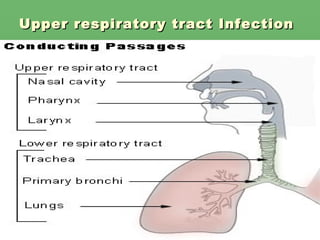
Upper respiratory tract Infection
Causes:  Most URIs are viral in origin. More than  200  different viruses are known to cause the common cold. Most viral agents that cause   Rhinoviruses  cause approximately 30-50% of colds in adults. They grow optimally at temperatures near 32.8°C (91°F), which is the temperature inside the human nares. Coronaviruses  are a significant cause of colds. However, exact case numbers are difficult to determine, because unlike rhinoviruses, coronaviruses are difficult to culture in the laboratory. Enteroviruses,  including coxsackieviruses, echoviruses, and others, are also leading causes of common colds.  Adenoviruses ,  orthomyxoviruses (including influenza A and B viruses), paramyxoviruses (eg, parainfluenza [PIV]), RSV, EBV, and hMPV account for many URIs. Varicella, rubella, and rubeola infections may manifest as a nasopharyngitis before other classic signs and symptoms
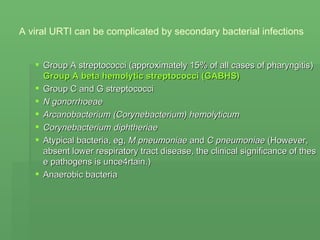
A viral URTI can be complicated by secondary bacterial infections Group A streptococci (approximately 15% of all cases of pharyngitis)  Group A beta hemolytic streptococci (GABHS)   Group C and G streptococci  N gonorrhoeae   Arcanobacterium (Corynebacterium) hemolyticum   Corynebacterium diphtheriae   Atypical bacteria, eg,  M pneumoniae  and  C pneumoniae  (However, absent lower respiratory tract disease, the clinical significance of these pathogens is unce rtain.)  Anaerobic bacteria
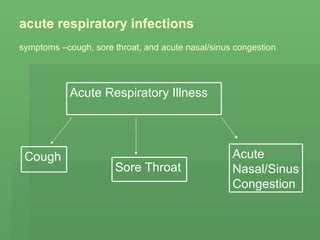
acute respiratory infections   symptoms –cough, sore throat, and acute nasal/sinus congestion Acute Respiratory Illness Acute Nasal/Sinus Congestion Cough Sore Throat
PATHOPHYSIOLOGY Viruses cause most URIs, with rhinovirus, parainfluenza virus, coronavirus, adenovirus, respiratory syncytial virus, coxsackievirus, and influenza virus accounting for most cases. cause 5% to 10% of cases of pharyngitis in adults. Other less common causes of bacterial pharyngitis include group C beta hemolytic streptococci,  Corynebacterium diphtheriae, Neisseria gonorrhoeae, Arcanobacterium haemolyticum, Chlamydia pneumoniae, Mycoplasma pneumoniae , and herpes simplex virus.  Streptococcus pneumoniae, Haemophilus influenzae , and  Moraxella catarrhalis  are the most common organisms that cause bacterial superinfection of viral acute sinusitis. Less than 10% of cases of acute tracheobronchitis are caused by  Bordetella pertussis, B. parapertussis, M. pneumoniae , or  C. pneumoniae   (TWAR).  Direct invasion of respiratory epithelium results in symptoms respective to the area or areas involved.  Transmission of organisms causing URIs occurs by aerosol, droplet, or direct hand-to-hand contact with infected secretions, with subsequent passage to the nares or eyes. 8
 
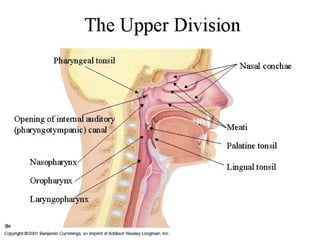
Upper respiratory tract Infection The Nasal cavity Rhinitis - Inflammation of the nasal mucosa  Rhinosinusitis, sinusitis - Inflammation of the nares and paranasal sinuses, including frontal, ethmoid, maxillary, and sphenoid  Nasopharyngitis (rhinopharyngitis or the common cold) -  Inflammation of the nares, pharynx, hypopharynx, uvula, and tonsils  Pharyngitis - Inflammation of the pharynx, hypopharynx, uvula, and tonsils  Epiglottitis (supraglottitis) - Inflammation of the superior portion of  the larynx and supraglottic area   Laryngitis - Inflammation of the larynx  Laryngotracheitis - Inflammation of the larynx, trachea, and subglottic area  Tracheitis - Inflammation of the trachea and subglottic area
 
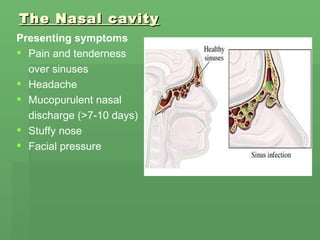
The Nasal cavity Presenting symptoms Pain and tenderness  over sinuses  Headache  Mucopurulent nasal  discharge (>7-10 days)   Stuffy nose Facial pressure
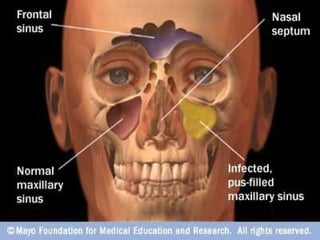
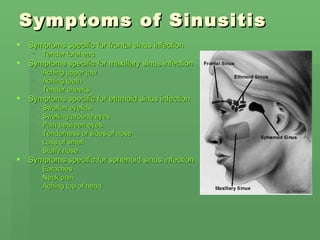
Symptoms of Sinusitis  Symptoms specific for frontal sinus infection   Tender forehead   Symptoms specific for maxillary sinus infection   Aching upper jaw   Aching teeth   Tender cheeks   Symptoms specific for ethmoid sinus infection   Swollen eyelids   Swelling around eyes   Pain between eyes   Tenderness of sides of nose   Loss of smell   Stuffy nose   Symptoms specific for sphenoid sinus infection   Earaches   Neck pain   Aching top of head
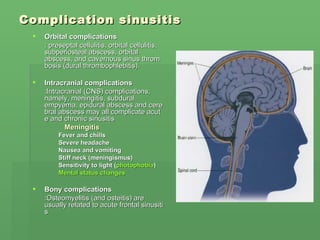
Complication sinusitis Orbital complications   : preseptal cellulitis, orbital cellulitis, subperiosteal abscess, orbital abscess, and cavernous sinus thrombosis (dural thrombophlebitis).  Intracranial complications   : Intracranial (CNS) complications, namely, meningitis, subdural empyema, epidural abscess and cerebral abscess may all complicate acute and chronic sinusitis Meningitis Fever and chills  Severe headache  Nausea and vomiting  Stiff neck (meningismus)  Sensitivity to light ( photophobia )  Mental status changes   Bony complications   : Osteomyelitis (and osteitis) are usually related to acute frontal sinusitis
Investigation sinusitis Sinusitis includes:  Physical examation  X-ray of sinuses  CAT scan of sinuses  Nasal swab tests  Physical exam   Sinus X-ray   MRI scan   CT scan
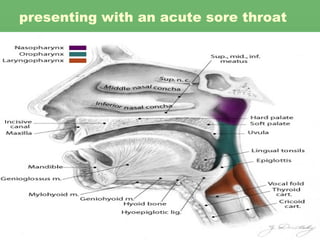
presenting with an acute sore throat
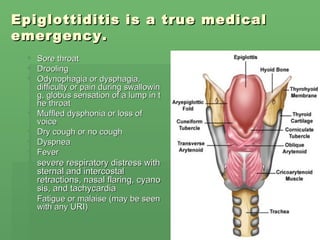
Epiglottiditis is a true medical emergency. Sore throat  Drooling  Odynophagia or dysphagia, difficulty or pain during swallowing, globus sensation of a lump in the throat  Muffled dysphonia or loss of voice  Dry cough or no cough  Dyspnea  Fever  severe respiratory distress with sternal and intercostal retractions, nasal flaring, cyanosis, and tachycardia Fatigue or malaise (may be seen with any URI)
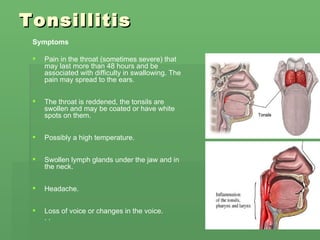
Tonsillitis Symptoms Pain in the throat (sometimes severe) that may last more than 48 hours and be associated with difficulty in swallowing. The pain may spread to the ears. The throat is reddened, the tonsils are swollen and may be coated or have white spots on them. Possibly a high temperature. Swollen lymph glands under the jaw and in the neck. Headache. Loss of voice or changes in the voice.  . .
complications  Tonsillitis Local Complication Peritonsillar abscess Superlative cervical Lymphadenitis Systemic complication A secondary infection may occur in the  middle ear  or  sinuses . If the sore throat is due to a streptococcus infection, there may be a rash ( scarlet fever ). An uncommon complication is a throat abscess which occurs usually only on one side. If sufficiently large this can need surgical drainage (Quinsy throat). ** Beta – hemolytic streptococci group   In very rare cases, diseases like  rheumatic fever   a particular kidney disease  (glomerulonephritis)  can occur. This is much less commonly observed now than it was several decades ago.  Acute endocarditis
Assessment  :  Detailed history   - Onset and nature of symptoms: location and duration of pain  (throat, sinuses, joints) Itchy, watery eyes  , Nasal discharge  , Nasal congestion  , Sneezing  , Sore throat  , Headache Fever MalaiseFatigue, weakness  , Myalgias  - Cough (productive/non productive)  - Fever and nasal discharge  - Existing co-morbidities  - History of rheumatic heart disease  - Known sinus polyps  - Immuno-suppression  - Prosthetic heart valve  -Respiratory diseases like asthma, COPD  - Other family members with recent sore throat  - History of foreign travel  - History of foreign body
Physical assessment   - General appearance, toxicity, respiratory distress, vital signs  - Inspection of throat, tonsillar exudates, redness, oedema 1  - Palpate sinuses; oedema or bogginess over adjacent bony  areas  - Inspect peri orbital area, assess for visual and  neurological disturbance  - Palpate for lymphadenopathy, splenomegaly, and  hepatomegaly  - Assess for signs of meningitis  ( sign :HA, photophobia,I irritability,  clouding of conciousness,neck stiffness) , haemorrhagic spots  - Ear examination  - Chest auscultation  -  Airway compromise, stridor or drooling
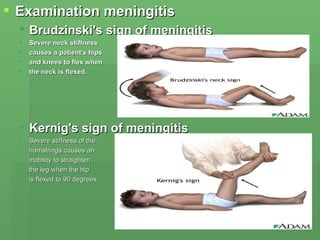
Examination meningitis Brudzinski's sign of meningitis  Severe neck stiffness  causes a patient's hips  and knees to flex when  the neck is flexed.   Kernig's sign of meningitis   Severe stiffness of the  hamstrings causes an  inability to straighten  the leg when the hip  is flexed to 90 degrees.
Investigation  CBC Chest X ray  – if  focal signs on chest examination , fever with productive cough or prolonged symptoms of URTI  ,  Lateral upper airways – Foreign body, Upper Airway obstruction, retro- pharyngeal abscess,   epiglotitis.   Blood Culture  – uncertain diagnosis, toxic clinical picture Consider:  LFT’s  – glandular fever & atypical pneumonia  EBV serology  and monospot- prolonged history of URTI not resolving with antibiotics  Throat swab  – very rarely helpful.  BS  :  prolonged poor oral intake, diabetes, age >55 years, renal disease
Indication for admit Respiratory distress, pulse rate >110 (adult), SaO2 <95%  Toxic clinical picture  History of rheumatic heart disease  History of prosthetic valve  Hepatomegaly or splenomegaly  Asymmetrical pharyngeal swelling  Peri-tonsillar abscess  Epiglotitis  Signs of meningitis  Age >70 years  Inability to swallow / dehydration  Torticollis  Oedema involving the bony areas adjacent to sinuses  Peri-orbital involvement  Visual or neurological disturbance  Beta Lactam allergy 2, 3, 6  Pneumonia  Relevant Co morbidities  Immunocompromised patients  Atypical lymphocytosis  Lymphadenopathy outside cervical.
Treatment Virus infections Antibiotics do not kill viruses. Antibiotics only kill bacteria.  Antibiotics may cause side-effects such as diarrhea, rashes, feeling sick, etc.  Overuse of antibiotics when they have not been necessary has led to some bacteria becoming resistant to them. This means that some antibiotics might not be as effective when they are really needed.
Consider:  Drug   Analgesic drug Paracetamol  Indication   Temporary relief of pain. Reduces fever >38. Oral Adults 500mg to 1000mg 4-6 hourly – Max. 60mg/kg/day  Precautions-  Renal or hepatic dysfunction. Accidental paracetamol hepatotoxicity Dyspepsia, nausea, allergic and haematological reactions. Overdose can result in severe liver damage, renal tubular necrosis.  NSAID Ibuprofen   Indication   Temporary relief of pain. Reduces fever Oral Adults 400mg 4-6 hourly (Max 2400mg/24hrs) Short term use only.  Non steroidal anti inflammatory / S2  NSAID sensitive asthma, rhinitis, urticaria, active GI bleeding, ulcer, <2 years.  Precautions-  prolonged use, history of GI bleeding,  Decongestant Oxymetazoline Hydrochloride  Nasal and middle ear congestion  Topical  Adults 2-3dropseach nostril (0.5mg/ml)  8-12 hourly Max. 3 days  Decongestant  / S2 Hypersensitivity, Glaucoma Precautions- Hypertension, coronary artery disease, hyperthyroidism, diabetes, high doses, prolonged use, pregnancy, lactation, <2yrs Burning, stinging, dry nasal mucosa, sneezing, headache, light-headedness, insomnia, palpitations and rebound congestion  Antibiotic Phenoxymethylpenicillin   Oral therapy for mild to moderate infections due to penicillin sensitive organisms – Sore throat  Oral Adult 250mg-500mg  4-6 hourly Antibiotic  Amoxycillin Trihydrate Infections  due to susceptible organisms incl. sinusitis Oral Adult 250-500mg 8 hourly (Antibiotic )  side effect  GI upset; raised LFTs; CNS
tonsillitis treat ment   In the vast majority of people, infection caused by a virus infection need only be treated with paracetamol (eg  Calpol ,  Panadol ) to bring the temperature down.  Aspirin (eg Disprin)  is also useful, but should not be given to children under 16 years of age, unless on the advise of a doctor. In a small minority of patients, tonsillitis caused by bacteria is treated with  penicillin  or  erythromycin (eg Erythroped)  if the person is allergic to penicillin. If antibiotics are prescribed, it is important to complete the full course, or the infection may not be cured. Surgery to remove the tonsils (tonsillectomy) may be necessary for those patients suffering from repeated, severe infections that refuse to respond to treatment and significantly interfere with their school or work schedule but it is now a relatively uncommon operation compared to previous practice.  Prevention Frequent hand washing is the best way to prevent all kinds of infections, including tonsillitis. Wash your hands often, and encourage your children to do the same.
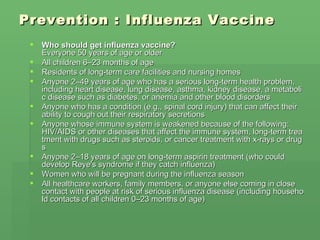
Prevention : Influenza Vaccine Who should get influenza vaccine? Everyone 50 years of age or older  All children 6–23 months of age  Residents of long-term care facilities and nursing homes  Anyone 2–49 years of age who has a serious long-term health problem, including heart disease, lung disease, asthma, kidney disease, a metabolic disease such as diabetes, or anemia and other blood disorders  Anyone who has a condition (e.g., spinal cord injury) that can affect their ability to cough out their respiratory secretions  Anyone whose immune system is weakened because of the following: HIV/AIDS or other diseases that affect the immune system, long-term treatment with drugs such as steroids, or cancer treatment with x-rays or drugs  Anyone 2–18 years of age on long-term aspirin treatment (who could develop Reye's syndrome if they catch influenza)  Women who will be pregnant during the influenza season  All healthcare workers, family members, or anyone else coming in close contact with people at risk of serious influenza disease (including household contacts of all children 0–23 months of age)
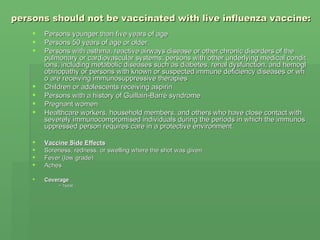
persons should not be vaccinated with live influenza vaccine:   Persons younger than five years of age  Persons 50 years of age or older  Persons with asthma, reactive airways disease or other chronic disorders of the pulmonary or cardiovascular systems; persons with other underlying medical conditions, including metabolic diseases such as diabetes, renal dysfunction, and hemoglobinopathy or persons with known or suspected immune deficiency diseases or who are receiving immunosuppressive therapies  Children or adolescents receiving aspirin  Persons with a history of Guillain-Barré syndrome  Pregnant women  Healthcare workers, household members, and others who have close contact with severely immunocompromised individuals during the periods in which the immunosuppressed person requires care in a protective environment.  Vaccine Side Effects   Soreness, redness, or swelling where the shot was given  Fever (low grade)  Aches  Coverage ~ 1year
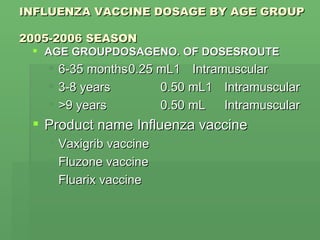
INFLUENZA VACCINE DOSAGE BY AGE GROUP  2005-2006 SEASON AGE GROUPDOSAGENO. OF DOSESROUTE 6-35 months 0.25 mL1  Intramuscular 3-8 years 0.50 mL1  Intramuscular > 9 years 0.50 mL Intramuscular Product name Influenza vaccine Vaxigrib vaccine Fluzone vaccine Fluarix vaccine
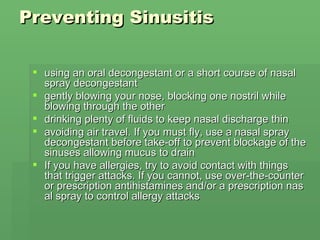
Preventing Sinusitis  using an oral decongestant or a short course of nasal spray decongestant  gently blowing your nose, blocking one nostril while blowing through the other  drinking plenty of fluids to keep nasal discharge thin  avoiding air travel. If you must fly, use a nasal spray decongestant before take-off to prevent blockage of the sinuses allowing mucus to drain  If you have allergies, try to avoid contact with things that trigger attacks. If you cannot, use over-the-counter or prescription antihistamines and/or a prescription nasal spray to control allergy attacks

Upper Respiratory Tract Infection

  • 1.
  • 2.
  • 3.
    Causes: MostURIs are viral in origin. More than 200 different viruses are known to cause the common cold. Most viral agents that cause Rhinoviruses cause approximately 30-50% of colds in adults. They grow optimally at temperatures near 32.8°C (91°F), which is the temperature inside the human nares. Coronaviruses are a significant cause of colds. However, exact case numbers are difficult to determine, because unlike rhinoviruses, coronaviruses are difficult to culture in the laboratory. Enteroviruses, including coxsackieviruses, echoviruses, and others, are also leading causes of common colds. Adenoviruses , orthomyxoviruses (including influenza A and B viruses), paramyxoviruses (eg, parainfluenza [PIV]), RSV, EBV, and hMPV account for many URIs. Varicella, rubella, and rubeola infections may manifest as a nasopharyngitis before other classic signs and symptoms
  • 4.
    A viral URTIcan be complicated by secondary bacterial infections Group A streptococci (approximately 15% of all cases of pharyngitis) Group A beta hemolytic streptococci (GABHS) Group C and G streptococci N gonorrhoeae Arcanobacterium (Corynebacterium) hemolyticum Corynebacterium diphtheriae Atypical bacteria, eg, M pneumoniae and C pneumoniae (However, absent lower respiratory tract disease, the clinical significance of these pathogens is unce rtain.) Anaerobic bacteria
  • 5.
    acute respiratory infections symptoms –cough, sore throat, and acute nasal/sinus congestion Acute Respiratory Illness Acute Nasal/Sinus Congestion Cough Sore Throat
  • 6.
    PATHOPHYSIOLOGY Viruses causemost URIs, with rhinovirus, parainfluenza virus, coronavirus, adenovirus, respiratory syncytial virus, coxsackievirus, and influenza virus accounting for most cases. cause 5% to 10% of cases of pharyngitis in adults. Other less common causes of bacterial pharyngitis include group C beta hemolytic streptococci, Corynebacterium diphtheriae, Neisseria gonorrhoeae, Arcanobacterium haemolyticum, Chlamydia pneumoniae, Mycoplasma pneumoniae , and herpes simplex virus. Streptococcus pneumoniae, Haemophilus influenzae , and Moraxella catarrhalis are the most common organisms that cause bacterial superinfection of viral acute sinusitis. Less than 10% of cases of acute tracheobronchitis are caused by Bordetella pertussis, B. parapertussis, M. pneumoniae , or C. pneumoniae (TWAR). Direct invasion of respiratory epithelium results in symptoms respective to the area or areas involved. Transmission of organisms causing URIs occurs by aerosol, droplet, or direct hand-to-hand contact with infected secretions, with subsequent passage to the nares or eyes. 8
  • 7.
  • 8.
    Upper respiratory tractInfection The Nasal cavity Rhinitis - Inflammation of the nasal mucosa Rhinosinusitis, sinusitis - Inflammation of the nares and paranasal sinuses, including frontal, ethmoid, maxillary, and sphenoid Nasopharyngitis (rhinopharyngitis or the common cold) - Inflammation of the nares, pharynx, hypopharynx, uvula, and tonsils Pharyngitis - Inflammation of the pharynx, hypopharynx, uvula, and tonsils Epiglottitis (supraglottitis) - Inflammation of the superior portion of the larynx and supraglottic area Laryngitis - Inflammation of the larynx Laryngotracheitis - Inflammation of the larynx, trachea, and subglottic area Tracheitis - Inflammation of the trachea and subglottic area
  • 9.
  • 10.
    The Nasal cavityPresenting symptoms Pain and tenderness over sinuses Headache Mucopurulent nasal discharge (>7-10 days) Stuffy nose Facial pressure
  • 11.
    Symptoms of Sinusitis Symptoms specific for frontal sinus infection Tender forehead Symptoms specific for maxillary sinus infection Aching upper jaw Aching teeth Tender cheeks Symptoms specific for ethmoid sinus infection Swollen eyelids Swelling around eyes Pain between eyes Tenderness of sides of nose Loss of smell Stuffy nose Symptoms specific for sphenoid sinus infection Earaches Neck pain Aching top of head
  • 12.
    Complication sinusitis Orbitalcomplications : preseptal cellulitis, orbital cellulitis, subperiosteal abscess, orbital abscess, and cavernous sinus thrombosis (dural thrombophlebitis). Intracranial complications : Intracranial (CNS) complications, namely, meningitis, subdural empyema, epidural abscess and cerebral abscess may all complicate acute and chronic sinusitis Meningitis Fever and chills Severe headache Nausea and vomiting Stiff neck (meningismus) Sensitivity to light ( photophobia ) Mental status changes Bony complications : Osteomyelitis (and osteitis) are usually related to acute frontal sinusitis
  • 13.
    Investigation sinusitis Sinusitisincludes: Physical examation X-ray of sinuses CAT scan of sinuses Nasal swab tests Physical exam Sinus X-ray MRI scan CT scan
  • 14.
    presenting with anacute sore throat
  • 15.
    Epiglottiditis is atrue medical emergency. Sore throat Drooling Odynophagia or dysphagia, difficulty or pain during swallowing, globus sensation of a lump in the throat Muffled dysphonia or loss of voice Dry cough or no cough Dyspnea Fever severe respiratory distress with sternal and intercostal retractions, nasal flaring, cyanosis, and tachycardia Fatigue or malaise (may be seen with any URI)
  • 16.
    Tonsillitis Symptoms Painin the throat (sometimes severe) that may last more than 48 hours and be associated with difficulty in swallowing. The pain may spread to the ears. The throat is reddened, the tonsils are swollen and may be coated or have white spots on them. Possibly a high temperature. Swollen lymph glands under the jaw and in the neck. Headache. Loss of voice or changes in the voice. . .
  • 17.
    complications TonsillitisLocal Complication Peritonsillar abscess Superlative cervical Lymphadenitis Systemic complication A secondary infection may occur in the middle ear or sinuses . If the sore throat is due to a streptococcus infection, there may be a rash ( scarlet fever ). An uncommon complication is a throat abscess which occurs usually only on one side. If sufficiently large this can need surgical drainage (Quinsy throat). ** Beta – hemolytic streptococci group In very rare cases, diseases like rheumatic fever a particular kidney disease (glomerulonephritis) can occur. This is much less commonly observed now than it was several decades ago. Acute endocarditis
  • 18.
    Assessment : Detailed history - Onset and nature of symptoms: location and duration of pain (throat, sinuses, joints) Itchy, watery eyes , Nasal discharge , Nasal congestion , Sneezing , Sore throat , Headache Fever MalaiseFatigue, weakness , Myalgias - Cough (productive/non productive) - Fever and nasal discharge - Existing co-morbidities - History of rheumatic heart disease - Known sinus polyps - Immuno-suppression - Prosthetic heart valve -Respiratory diseases like asthma, COPD - Other family members with recent sore throat - History of foreign travel - History of foreign body
  • 19.
    Physical assessment - General appearance, toxicity, respiratory distress, vital signs - Inspection of throat, tonsillar exudates, redness, oedema 1 - Palpate sinuses; oedema or bogginess over adjacent bony areas - Inspect peri orbital area, assess for visual and neurological disturbance - Palpate for lymphadenopathy, splenomegaly, and hepatomegaly - Assess for signs of meningitis ( sign :HA, photophobia,I irritability, clouding of conciousness,neck stiffness) , haemorrhagic spots - Ear examination - Chest auscultation - Airway compromise, stridor or drooling
  • 20.
    Examination meningitis Brudzinski'ssign of meningitis Severe neck stiffness causes a patient's hips and knees to flex when the neck is flexed. Kernig's sign of meningitis Severe stiffness of the hamstrings causes an inability to straighten the leg when the hip is flexed to 90 degrees.
  • 21.
    Investigation CBCChest X ray – if focal signs on chest examination , fever with productive cough or prolonged symptoms of URTI , Lateral upper airways – Foreign body, Upper Airway obstruction, retro- pharyngeal abscess, epiglotitis. Blood Culture – uncertain diagnosis, toxic clinical picture Consider: LFT’s – glandular fever & atypical pneumonia EBV serology and monospot- prolonged history of URTI not resolving with antibiotics Throat swab – very rarely helpful. BS : prolonged poor oral intake, diabetes, age >55 years, renal disease
  • 22.
    Indication for admitRespiratory distress, pulse rate >110 (adult), SaO2 <95% Toxic clinical picture History of rheumatic heart disease History of prosthetic valve Hepatomegaly or splenomegaly Asymmetrical pharyngeal swelling Peri-tonsillar abscess Epiglotitis Signs of meningitis Age >70 years Inability to swallow / dehydration Torticollis Oedema involving the bony areas adjacent to sinuses Peri-orbital involvement Visual or neurological disturbance Beta Lactam allergy 2, 3, 6 Pneumonia Relevant Co morbidities Immunocompromised patients Atypical lymphocytosis Lymphadenopathy outside cervical.
  • 23.
    Treatment Virus infectionsAntibiotics do not kill viruses. Antibiotics only kill bacteria. Antibiotics may cause side-effects such as diarrhea, rashes, feeling sick, etc. Overuse of antibiotics when they have not been necessary has led to some bacteria becoming resistant to them. This means that some antibiotics might not be as effective when they are really needed.
  • 24.
    Consider: Drug Analgesic drug Paracetamol Indication Temporary relief of pain. Reduces fever >38. Oral Adults 500mg to 1000mg 4-6 hourly – Max. 60mg/kg/day Precautions- Renal or hepatic dysfunction. Accidental paracetamol hepatotoxicity Dyspepsia, nausea, allergic and haematological reactions. Overdose can result in severe liver damage, renal tubular necrosis. NSAID Ibuprofen Indication Temporary relief of pain. Reduces fever Oral Adults 400mg 4-6 hourly (Max 2400mg/24hrs) Short term use only. Non steroidal anti inflammatory / S2 NSAID sensitive asthma, rhinitis, urticaria, active GI bleeding, ulcer, <2 years. Precautions- prolonged use, history of GI bleeding, Decongestant Oxymetazoline Hydrochloride Nasal and middle ear congestion Topical Adults 2-3dropseach nostril (0.5mg/ml) 8-12 hourly Max. 3 days Decongestant / S2 Hypersensitivity, Glaucoma Precautions- Hypertension, coronary artery disease, hyperthyroidism, diabetes, high doses, prolonged use, pregnancy, lactation, <2yrs Burning, stinging, dry nasal mucosa, sneezing, headache, light-headedness, insomnia, palpitations and rebound congestion Antibiotic Phenoxymethylpenicillin Oral therapy for mild to moderate infections due to penicillin sensitive organisms – Sore throat Oral Adult 250mg-500mg 4-6 hourly Antibiotic Amoxycillin Trihydrate Infections due to susceptible organisms incl. sinusitis Oral Adult 250-500mg 8 hourly (Antibiotic ) side effect GI upset; raised LFTs; CNS
  • 25.
    tonsillitis treat ment In the vast majority of people, infection caused by a virus infection need only be treated with paracetamol (eg Calpol , Panadol ) to bring the temperature down. Aspirin (eg Disprin) is also useful, but should not be given to children under 16 years of age, unless on the advise of a doctor. In a small minority of patients, tonsillitis caused by bacteria is treated with penicillin or erythromycin (eg Erythroped) if the person is allergic to penicillin. If antibiotics are prescribed, it is important to complete the full course, or the infection may not be cured. Surgery to remove the tonsils (tonsillectomy) may be necessary for those patients suffering from repeated, severe infections that refuse to respond to treatment and significantly interfere with their school or work schedule but it is now a relatively uncommon operation compared to previous practice. Prevention Frequent hand washing is the best way to prevent all kinds of infections, including tonsillitis. Wash your hands often, and encourage your children to do the same.
  • 26.
    Prevention : InfluenzaVaccine Who should get influenza vaccine? Everyone 50 years of age or older All children 6–23 months of age Residents of long-term care facilities and nursing homes Anyone 2–49 years of age who has a serious long-term health problem, including heart disease, lung disease, asthma, kidney disease, a metabolic disease such as diabetes, or anemia and other blood disorders Anyone who has a condition (e.g., spinal cord injury) that can affect their ability to cough out their respiratory secretions Anyone whose immune system is weakened because of the following: HIV/AIDS or other diseases that affect the immune system, long-term treatment with drugs such as steroids, or cancer treatment with x-rays or drugs Anyone 2–18 years of age on long-term aspirin treatment (who could develop Reye's syndrome if they catch influenza) Women who will be pregnant during the influenza season All healthcare workers, family members, or anyone else coming in close contact with people at risk of serious influenza disease (including household contacts of all children 0–23 months of age)
  • 27.
    persons should notbe vaccinated with live influenza vaccine: Persons younger than five years of age Persons 50 years of age or older Persons with asthma, reactive airways disease or other chronic disorders of the pulmonary or cardiovascular systems; persons with other underlying medical conditions, including metabolic diseases such as diabetes, renal dysfunction, and hemoglobinopathy or persons with known or suspected immune deficiency diseases or who are receiving immunosuppressive therapies Children or adolescents receiving aspirin Persons with a history of Guillain-Barré syndrome Pregnant women Healthcare workers, household members, and others who have close contact with severely immunocompromised individuals during the periods in which the immunosuppressed person requires care in a protective environment. Vaccine Side Effects Soreness, redness, or swelling where the shot was given Fever (low grade) Aches Coverage ~ 1year
  • 28.
    INFLUENZA VACCINE DOSAGEBY AGE GROUP 2005-2006 SEASON AGE GROUPDOSAGENO. OF DOSESROUTE 6-35 months 0.25 mL1 Intramuscular 3-8 years 0.50 mL1 Intramuscular > 9 years 0.50 mL Intramuscular Product name Influenza vaccine Vaxigrib vaccine Fluzone vaccine Fluarix vaccine
  • 29.
    Preventing Sinusitis using an oral decongestant or a short course of nasal spray decongestant gently blowing your nose, blocking one nostril while blowing through the other drinking plenty of fluids to keep nasal discharge thin avoiding air travel. If you must fly, use a nasal spray decongestant before take-off to prevent blockage of the sinuses allowing mucus to drain If you have allergies, try to avoid contact with things that trigger attacks. If you cannot, use over-the-counter or prescription antihistamines and/or a prescription nasal spray to control allergy attacks