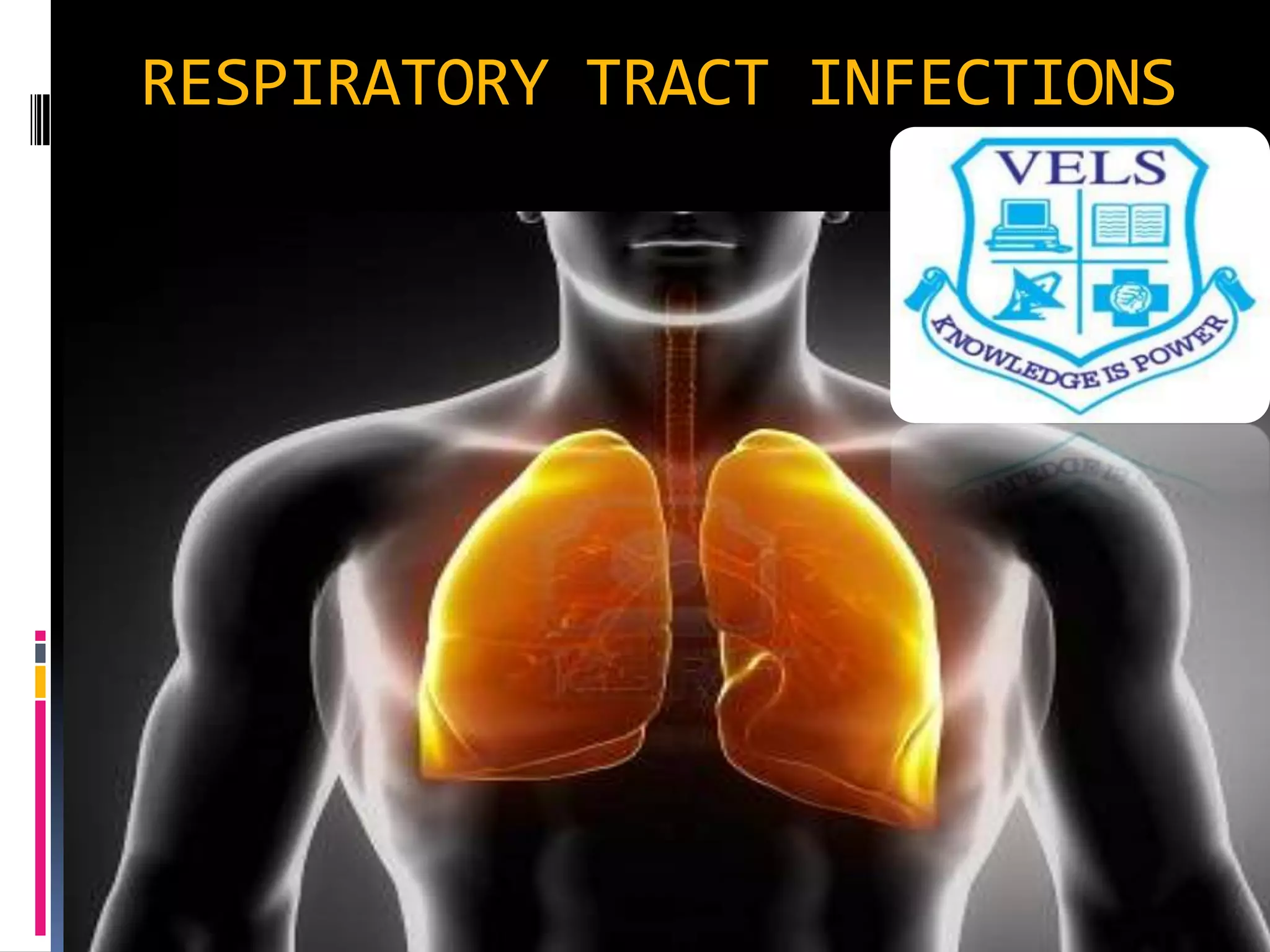
RESPIRATORY TRACT INFECTIONS
INTRODUCTION
 Respiratory tract infection refers to any of a
number of infectious diseases involving
the respiratory tract
 It is classified in to 2 types they are:
 UPPER RESPIRATORYTRACT INFECTION
 LOWER RESPIRATORYTRACT INFECTION
The upper respiratory tract
consists
 Following parts
 The lower respiratory tract consists of
ABOUT URTI
 Upper respiratory tract
infections (URI or URTI) are the illnesses caused
by an acute infection which involves the
 upper respiratory tract
 : nose,
 sinuses,
 pharynx or larynx.
 This commonly includes:
tonsillitis, pharyngitis, laryngitis, sinusitis, otitis
media, and the common cold.
X-RAY OF URTI
ABOUT LRTI
o Inflammation of the air passages within the
lungs.
o Trachea(windpipe),and the large & small
bronchi(airways)within the lungs become
inflamed because of the infection.
• I t divided into 2 types :
 BRONCHITIS
 PNEMONIA
 BRONCHITIS
BRONCHITIS DIVIDED INTO:
A. Acute(viruses,pollutant)
B. Chronic(prolonged smoking,heavy exposure
to pollutants
BRONCHITIS CHEST X-RAY
 PNEUMONIA
PNEMONIA CHEST X-RAY
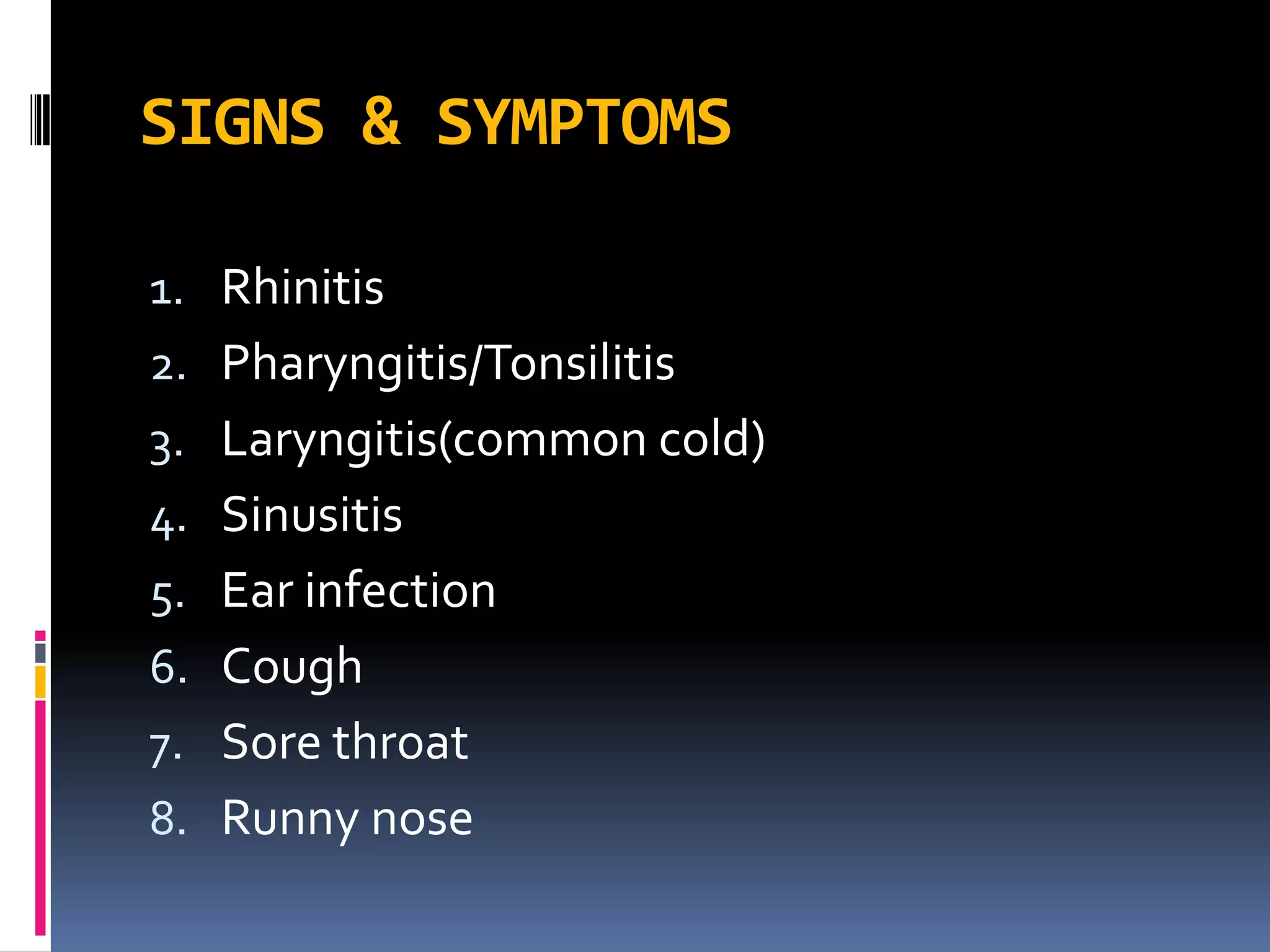
SIGNS & SYMPTOMS
1. Rhinitis
2. Pharyngitis/Tonsilitis
3. Laryngitis(common cold)
4. Sinusitis
5. Ear infection
6. Cough
7. Sore throat
8. Runny nose
Cntd……
9.Headache
10.Lowgrade fever
11.Facial pressure
12.Sneezing
CAUSES
VIRUSES(Rhinovirus, Coronavirus,
Adenovirus).
BACTERIA(GroupA Strptococcus)
Influenza
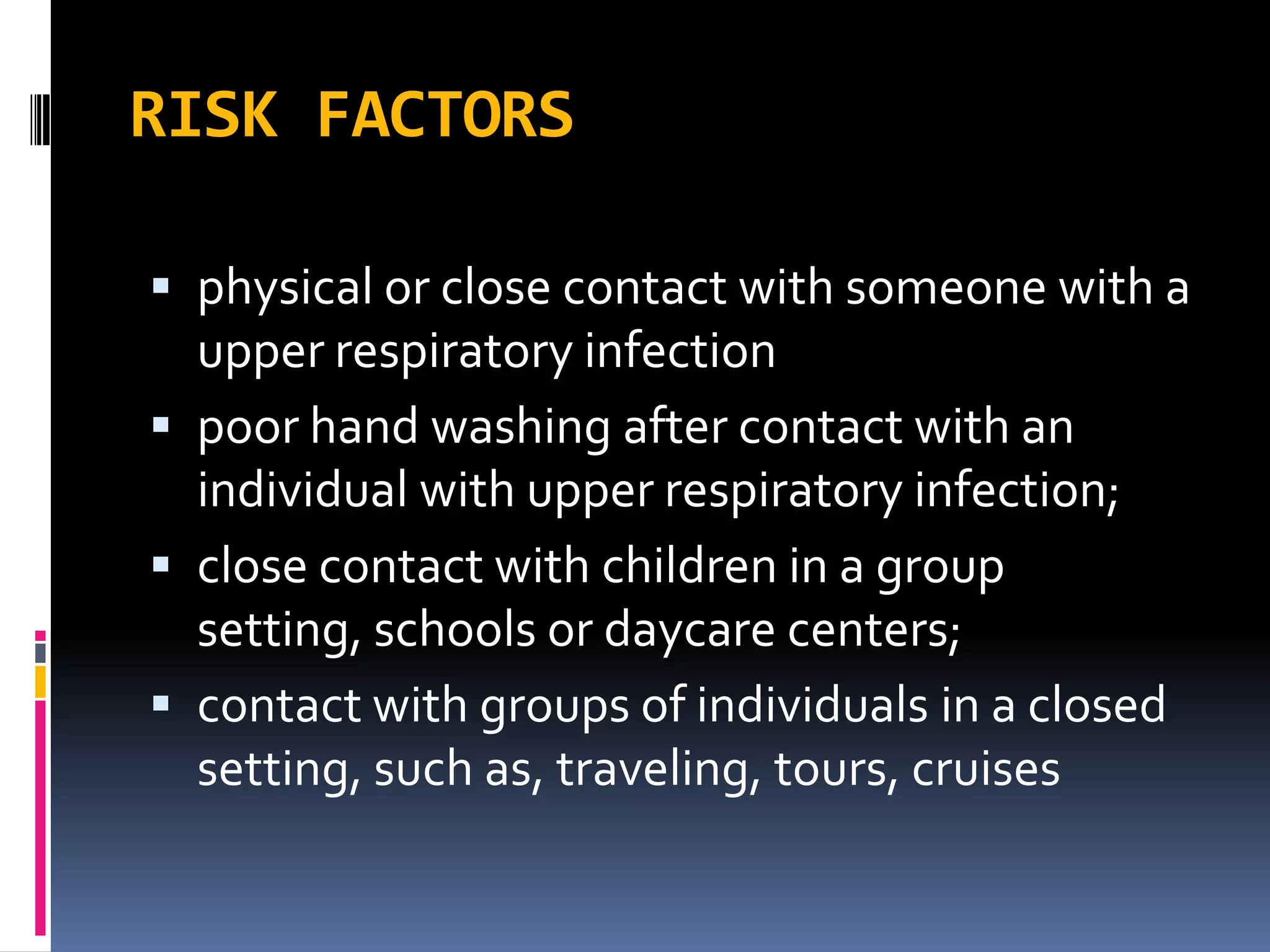
RISK FACTORS
 physical or close contact with someone with a
upper respiratory infection
 poor hand washing after contact with an
individual with upper respiratory infection;
 close contact with children in a group
setting, schools or daycare centers;
 contact with groups of individuals in a closed
setting, such as, traveling, tours, cruises
Cntd…
 smoking or second-hand smoking.
 health care facilities, hospitals, nursing
homes.
Cntd…
 immunocompromised state (compromised
immune system) such as, HIV, organ
transplant, congenital immune defects, long
term steroid use.
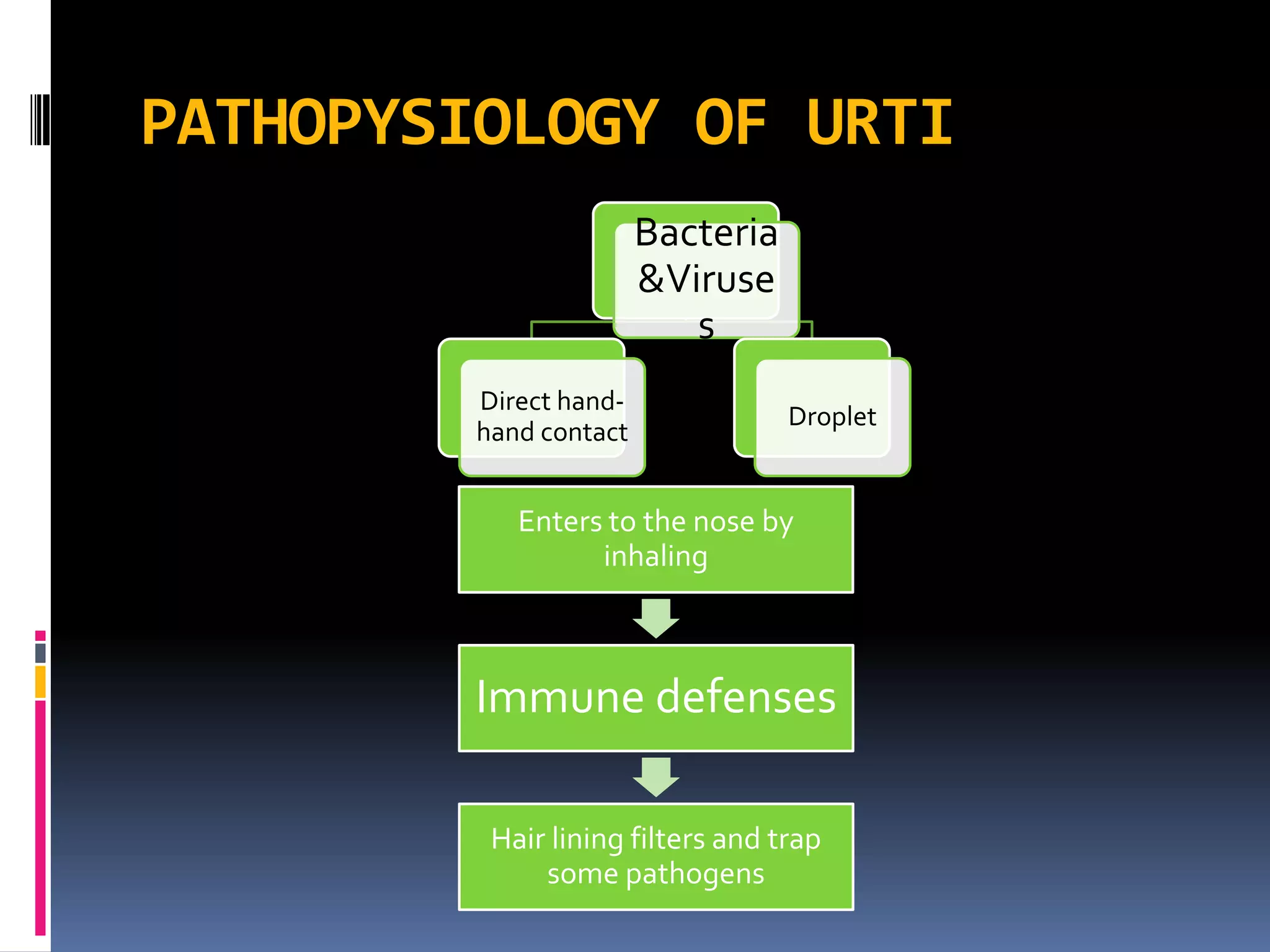
PATHOPYSIOLOGY OF URTI
Bacteria
&Viruse
s
Direct hand-
hand contact
Droplet
Enters to the nose by
inhaling
Immune defenses
Hair lining filters and trap
some pathogens
Cntd…
Traps in URT which
coats by mucus
Junction of the
posterior nose to
pharynx
Cntd… Impinge on the back
of the throat
Transport pathogens
upto pharynx
Inflammatory
response to immune
system
SWELLING ERYTHMA
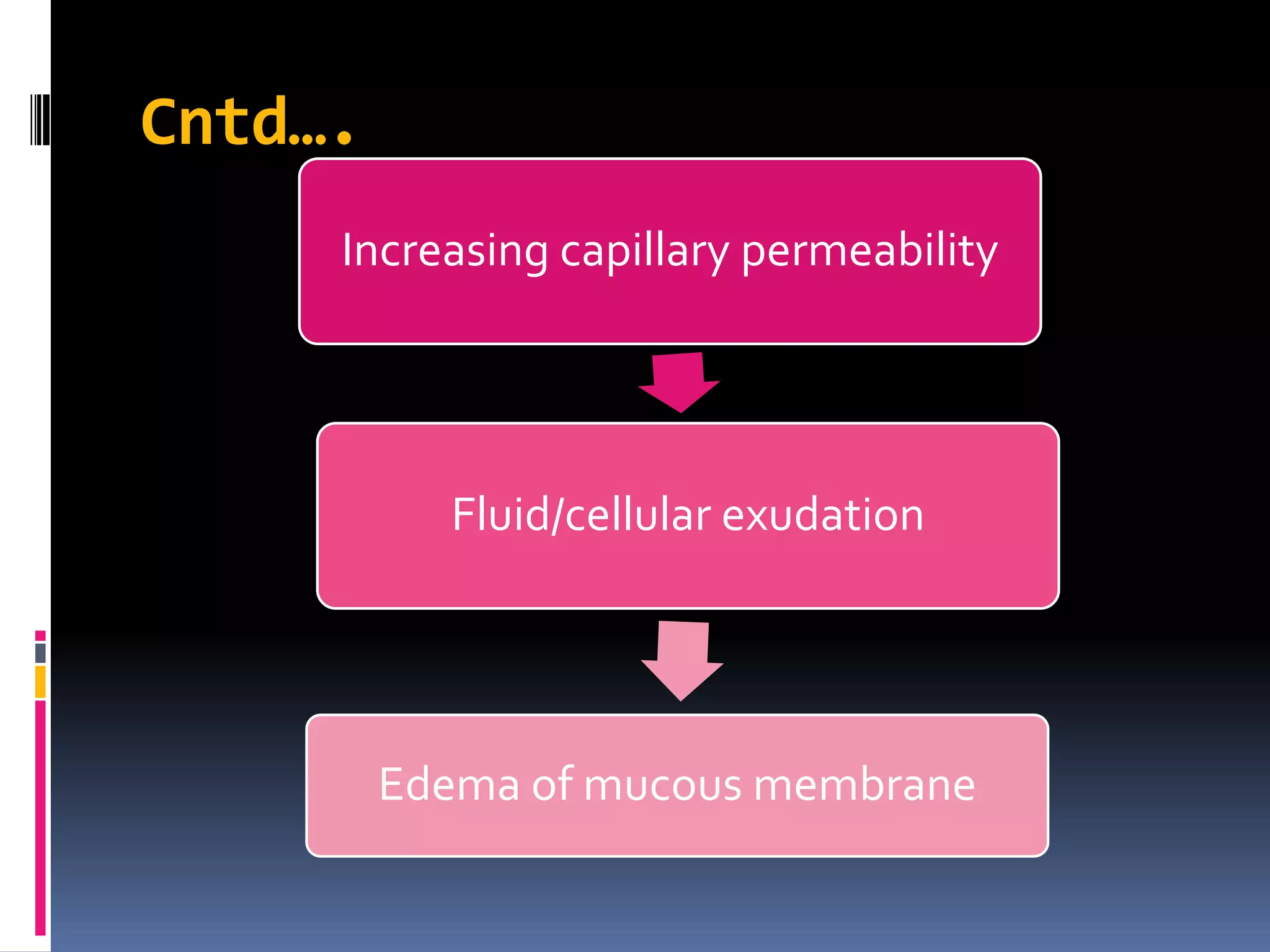
Increasing of
MUCUS
SECRETION
FEVER
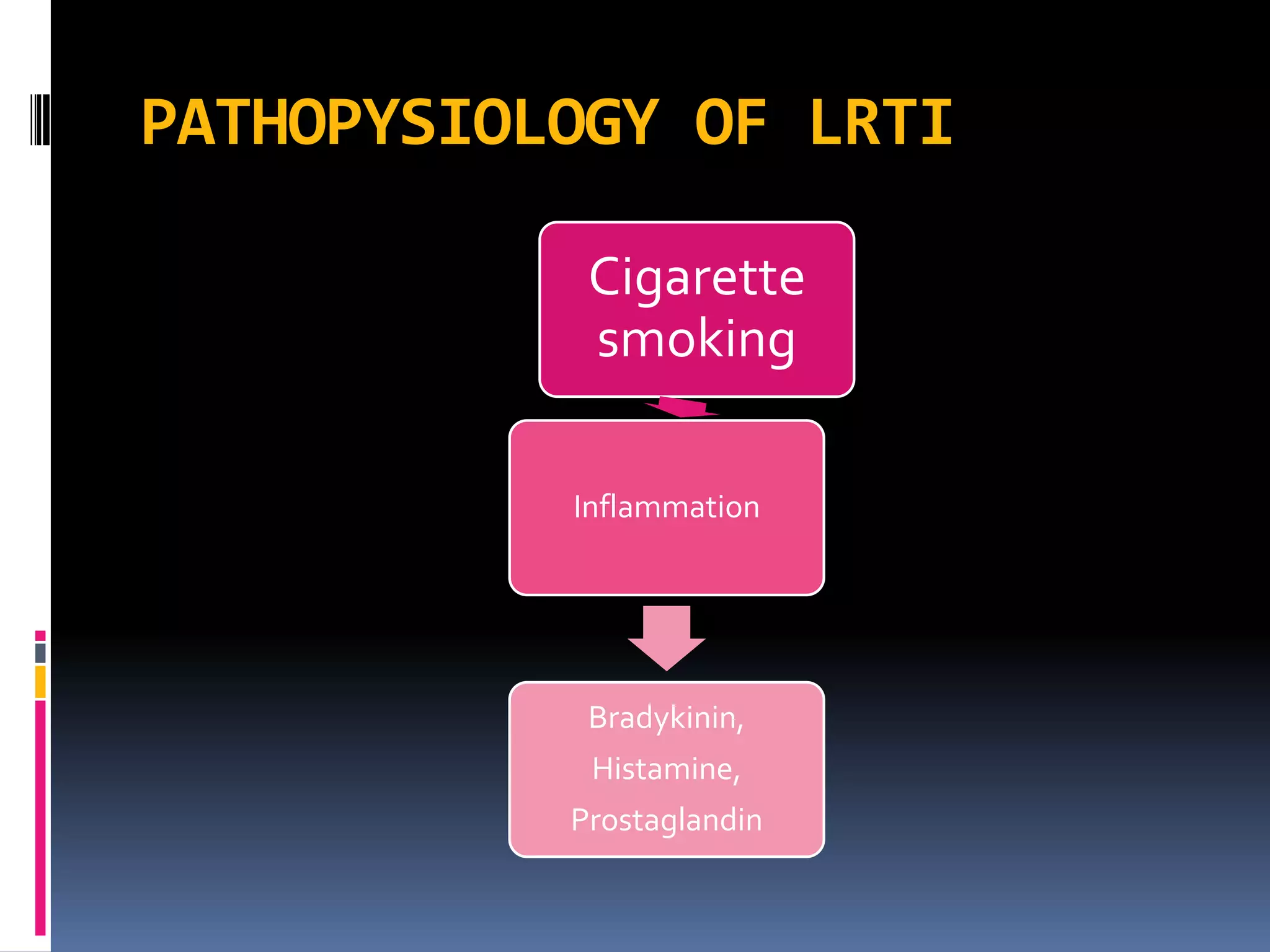
PATHOPYSIOLOGY OF LRTI
Cigarette
smoking
Inflammation
Bradykinin,
Histamine,
Prostaglandin
Cntd….
Increasing capillary permeability
Fluid/cellular exudation
Edema of mucous membrane
Cntd….
Hypersecretion of mucus
Persistant cough
DIAGNOSIS
 The diagnosis of upper respiratory infection
is based on :
1. Symptoms,
2. Physical examination, and
3. Laboratory tests.
Cntd…
o By taking bacterial cultures with nasal swab,
throat swab
o Evaluation of allergies,asthma
o Enlarged lymphnodes and sore throat
DIAGNOSTIC TESTS
o BLOOD tests
o SPUTUMTESTS
o X-RAYs of the neck
o CT scan
o NASAL ANDTHROAT SWAB
PHYSICAL EXAMINATION
 In physical examination of an individual with upper
respiratory infection, a doctor may look for
1. swollen and redness inside wall of the nasal cavity (sign of
inflammation),
2. redness of the throat,
3. enlargement of the tonsils,
4. white secretions on the tonsils ,
5. enlarged lymph nodes around the head and neck,
6. redness of the eyes, and
7. facial tenderness (sinusitis).
8. Other signs may include bad
breath (halitosis), cough, voice hoarseness, and fever.
TREATMENT
 There are 2 types of treatments they are:
PHARMACOLOGICAL AND
 NON PHARMACOLOGICALTREATMENT.
NON PHARMACOLOGICAL TRATMENT
 Patients should be encouraged to drink fluids
prevent dehydration & possible decrease the
viscosity of respiratory secretions.
 use of vaporization may further promote the
thinning & losening of RESPIRATORY
SECRETIONS
PHARMACOLOGICAL TRATMENT
A. NSAIDS such as (T.IBUPROFEN +
T.PARACETAMOL) Dose: for
adults(400mg+325mg) for
children(100mg+125mg) t/d………
B. ANTIHISTAMINES such as
Syp.DIPHENEDRINE Dose: (10-20 ml) for
adults for children (5-7.5ml) Q4h
Cntd…..
3. ANTITUSSIVES such as Syp.ROBITUSSIN
Dose: adults(10-20ml), children(5-10ml)
Q4h.
4.STEROIDS such as T.PREDNISONE Dose:
adults (5mg), children(4-5mg) BD.
5.DECONGESTANTS such as
T.PSEUDOEPHEDRINE Dose:
adults(60mg),children(30mg)TD.
Cntd…
 ANTIBIOTICS.
1. CIPROFLOXACIN for adults (500mg) for
children(5o-15omg)BD
2. AMOXICILLIN/CLAVULATE for adults
(500+125mg), for children(250_125mg)TD
3. TETRACYLINE for adults(250_500mg), for
children(125-250mg
Cntd….
 Rarely surgical procedures may be necessary
in case of complicated sinus
infections, comprised airway with difficulty in
breathing
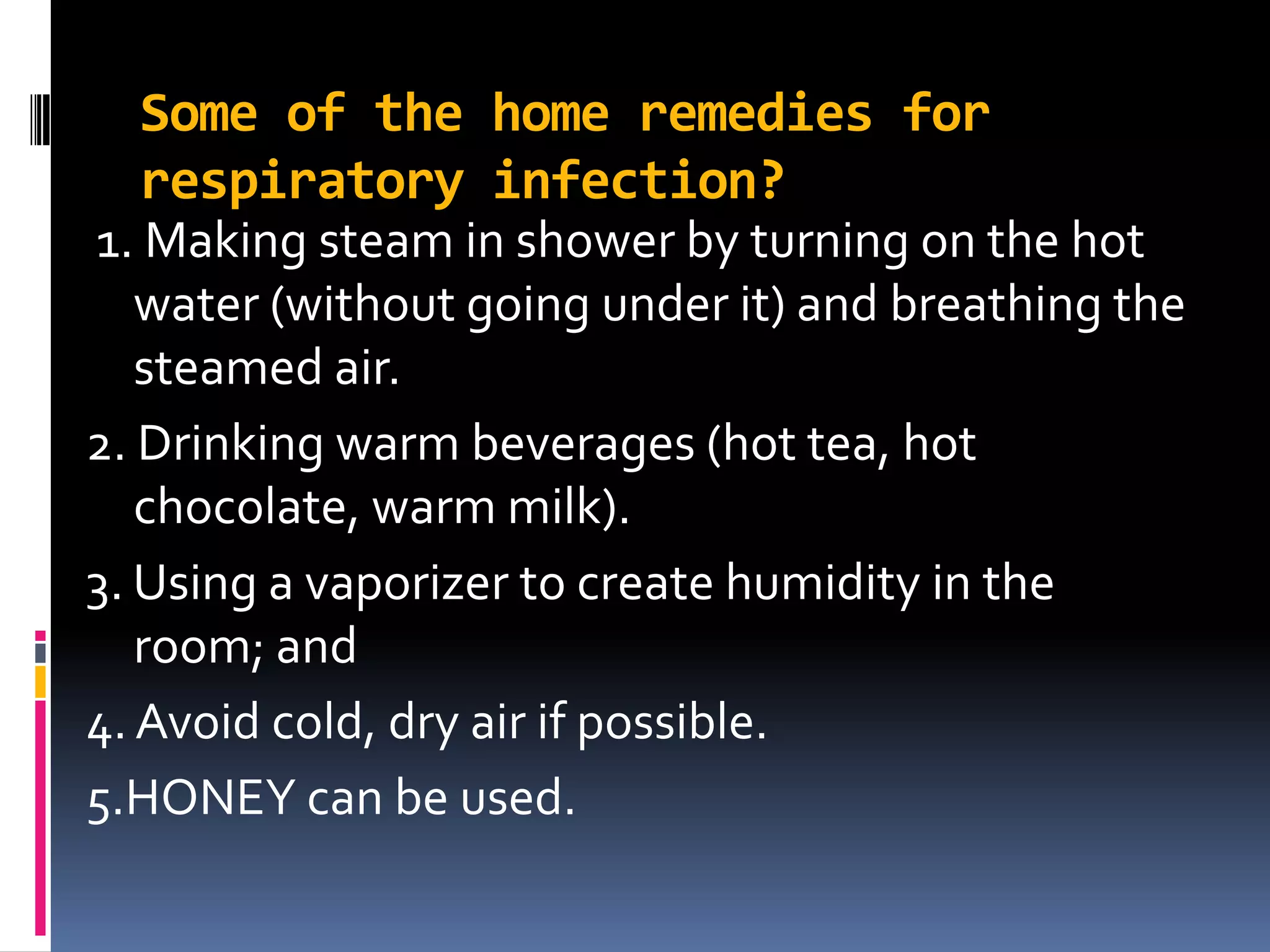
Some of the home remedies for
respiratory infection?
1. Making steam in shower by turning on the hot
water (without going under it) and breathing the
steamed air.
2. Drinking warm beverages (hot tea, hot
chocolate, warm milk).
3. Using a vaporizer to create humidity in the
room; and
4. Avoid cold, dry air if possible.
5.HONEY can be used.
Respiratory tract infections

Respiratory tract infections