Introduction to
Environment,
Ecology, and
Natural Resources
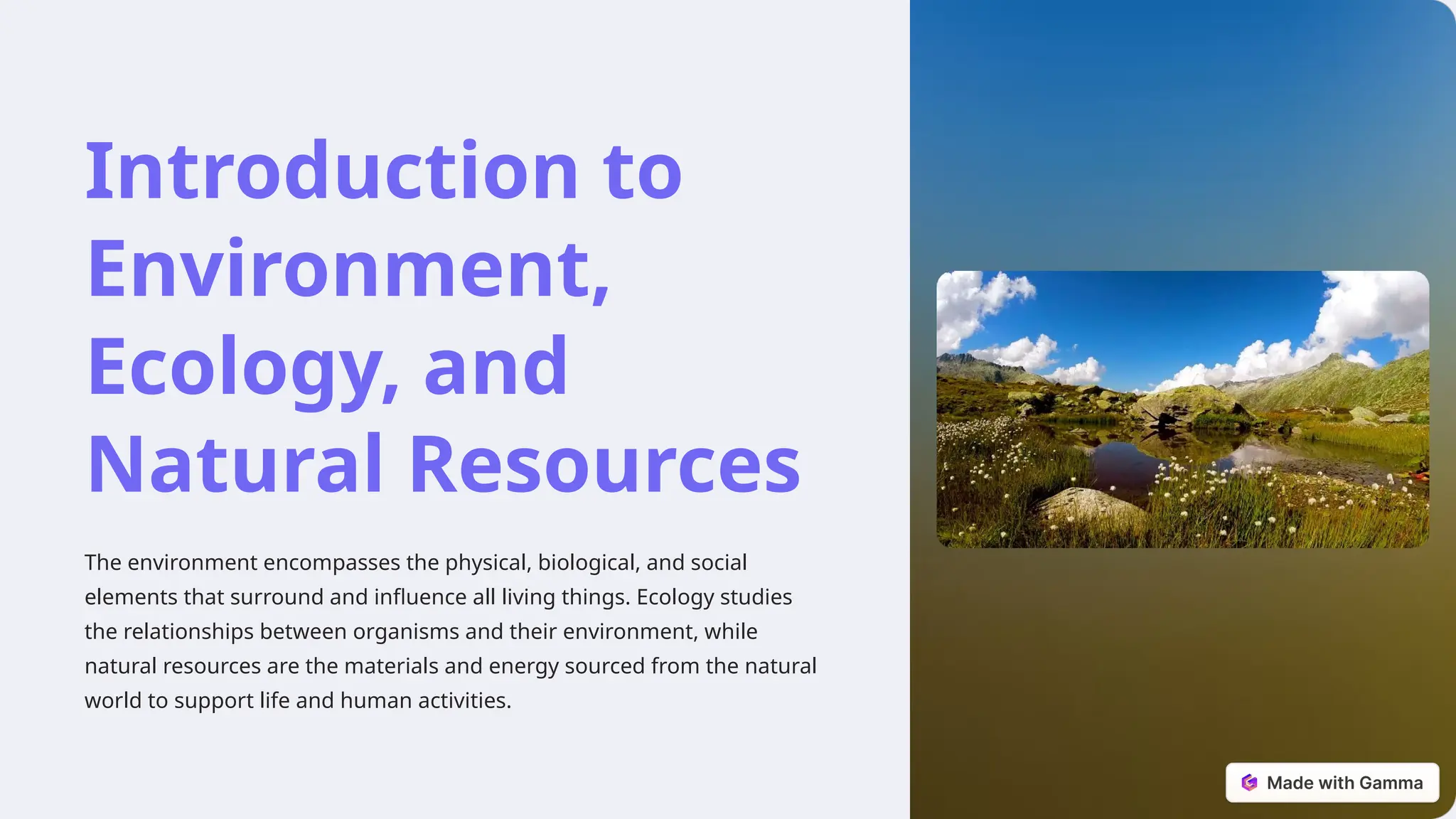
The environment encompasses the physical, biological, and social
elements that surround and influence all living things. Ecology studies
the relationships between organisms and their environment, while
natural resources are the materials and energy sourced from the natural
world to support life and human activities.
Carrying Capacity and
Pollution Concepts
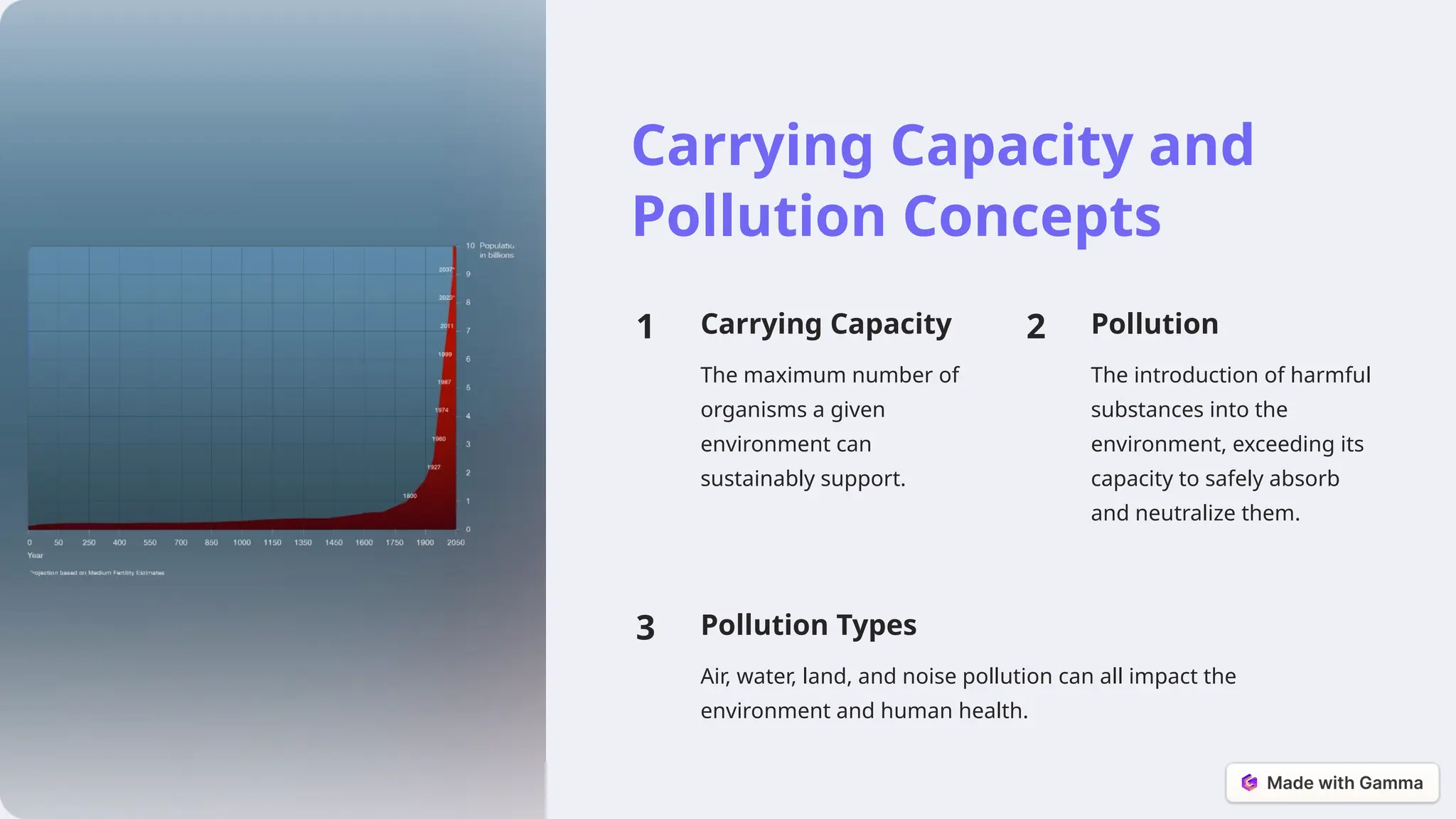
1 Carrying Capacity
The maximum number of
organisms a given
environment can
sustainably support.
2 Pollution
The introduction of harmful
substances into the
environment, exceeding its
capacity to safely absorb
and neutralize them.
3 Pollution Types
Air, water, land, and noise pollution can all impact the
environment and human health.
Interaction between Socio-Economic Systems
Economic Factors
The production, distribution, and
consumption of goods and services.
Social Factors
The relationships, institutions, and
culture within a society.
Environmental Factors
The natural resources, climate, and
ecology that support human
activities.
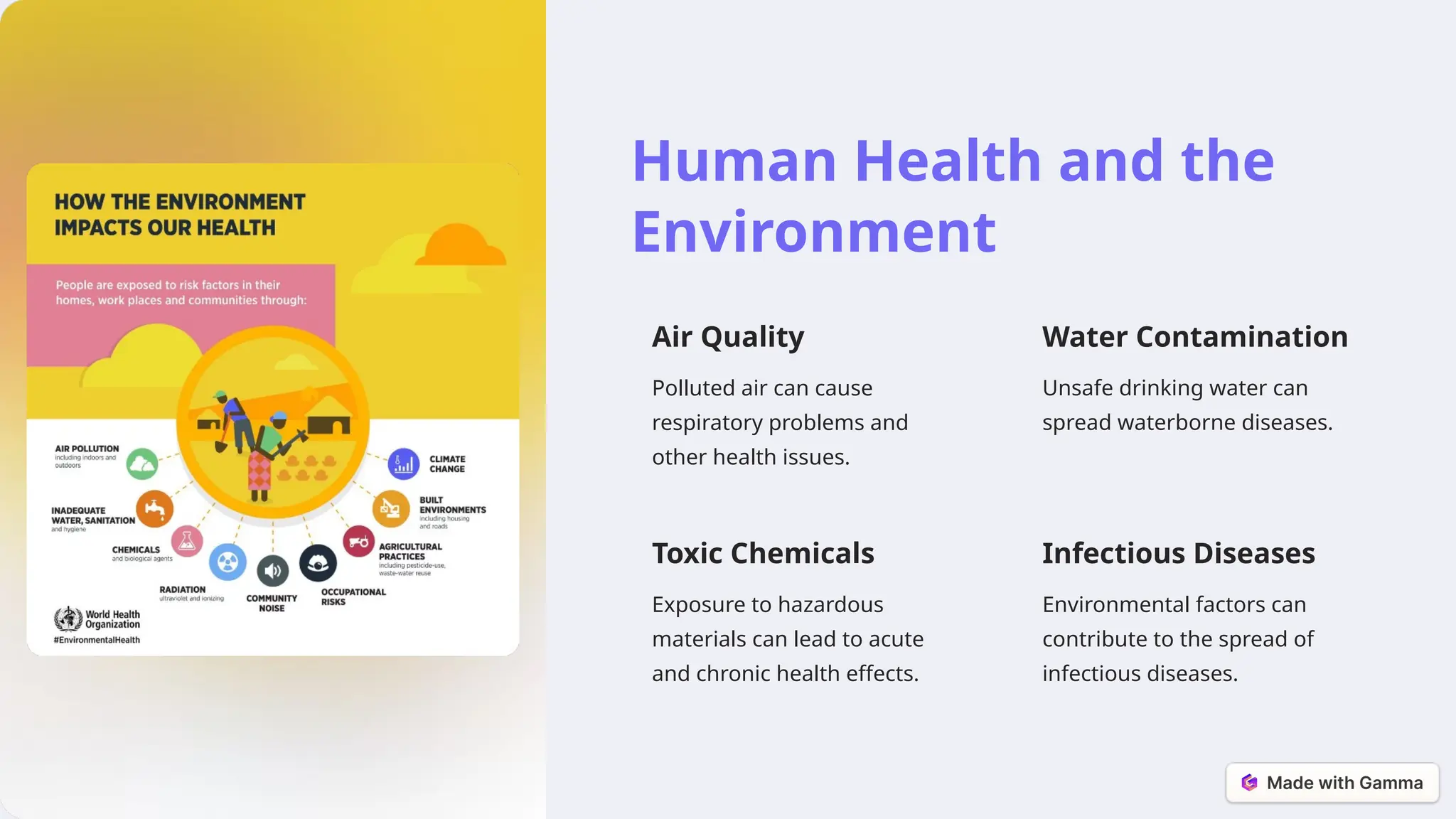
Human Health and the
Environment
Air Quality
Polluted air can cause
respiratory problems and
other health issues.
Water Contamination
Unsafe drinking water can
spread waterborne diseases.
Toxic Chemicals
Exposure to hazardous
materials can lead to acute
and chronic health effects.
Infectious Diseases
Environmental factors can
contribute to the spread of
infectious diseases.
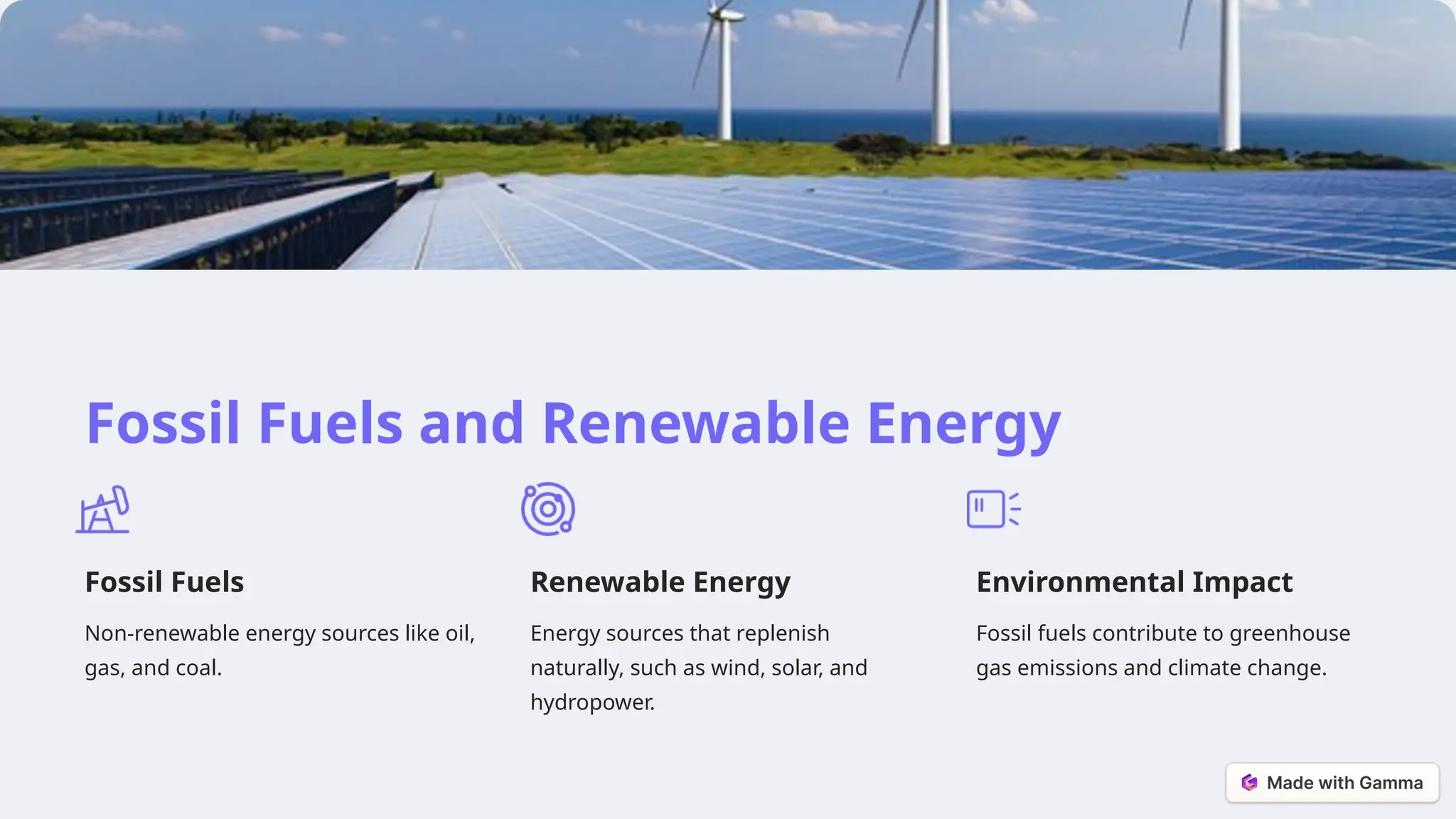
Fossil Fuels and Renewable Energy
Fossil Fuels
Non-renewable energy sources like oil,
gas, and coal.
Renewable Energy
Energy sources that replenish
naturally, such as wind, solar, and
hydropower.
Environmental Impact
Fossil fuels contribute to greenhouse
gas emissions and climate change.
Nuclear Energy and
Sustainable Energy
Options
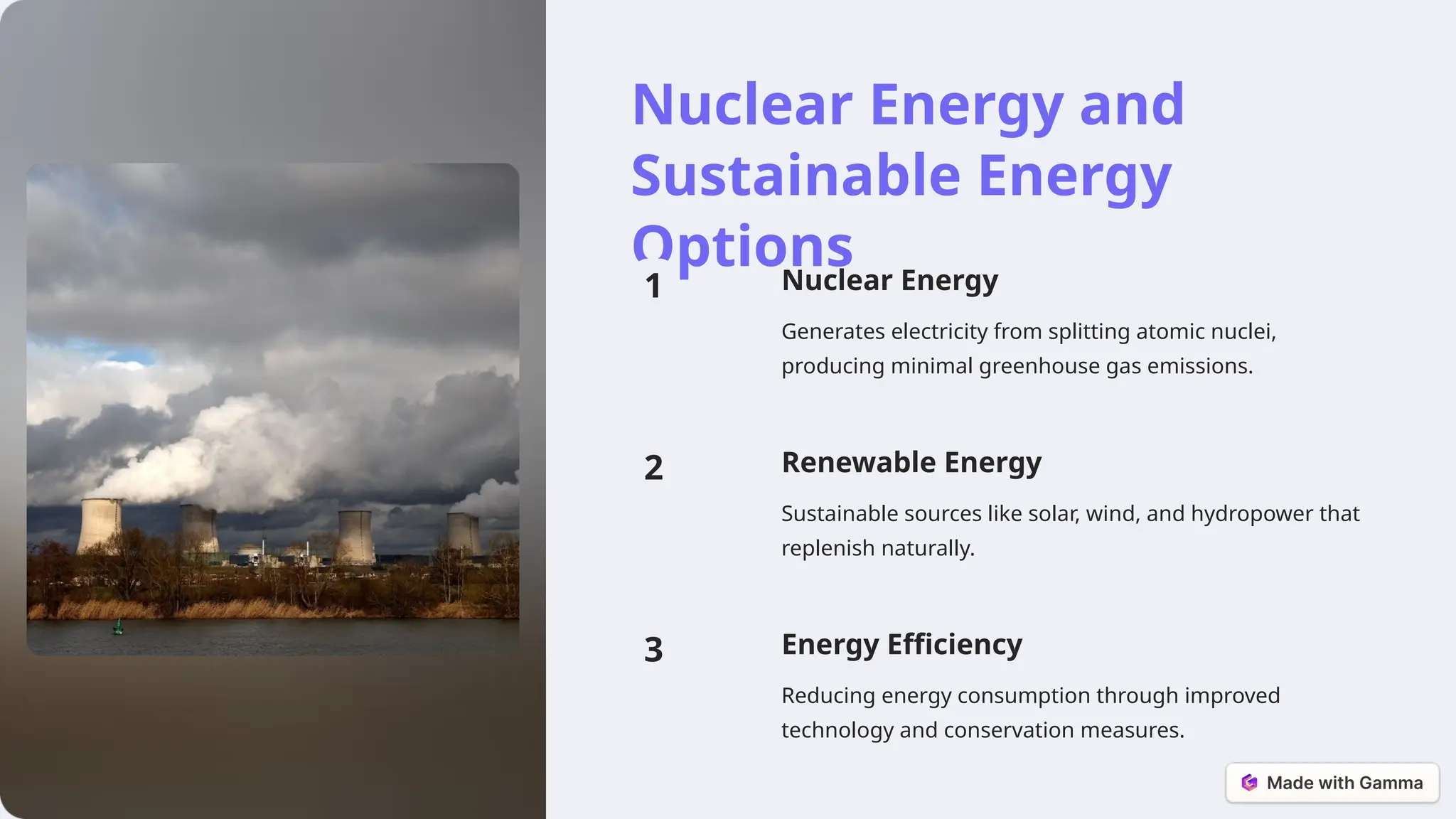
1 Nuclear Energy
Generates electricity from splitting atomic nuclei,
producing minimal greenhouse gas emissions.
2 Renewable Energy
Sustainable sources like solar, wind, and hydropower that
replenish naturally.
3 Energy Efficiency
Reducing energy consumption through improved
technology and conservation measures.
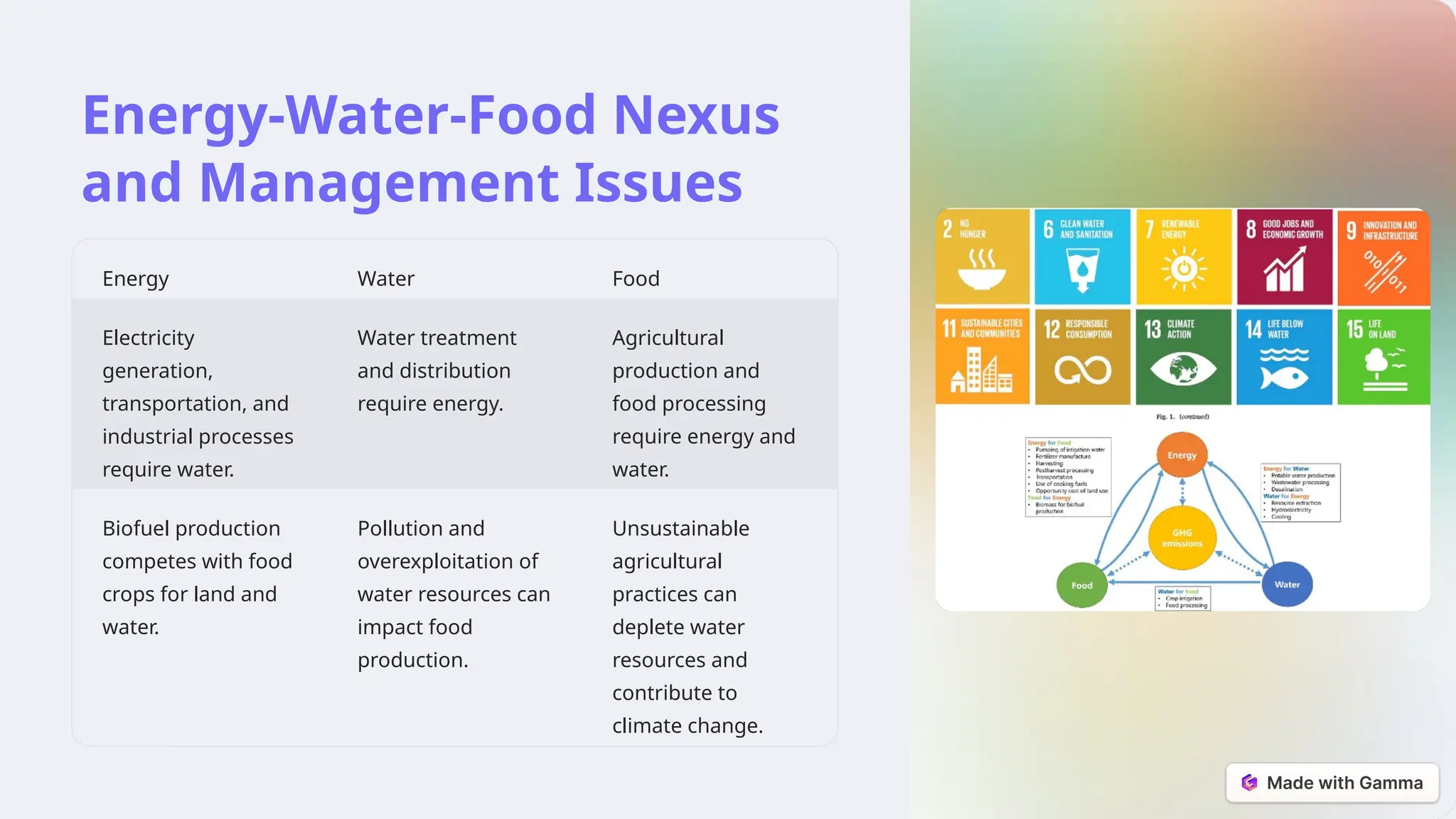
Energy-Water-Food Nexus
and Management Issues
Energy Water Food
Electricity
generation,
transportation, and
industrial processes
require water.
Water treatment
and distribution
require energy.
Agricultural
production and
food processing
require energy and
water.
Biofuel production
competes with food
crops for land and
water.
Pollution and
overexploitation of
water resources can
impact food
production.
Unsustainable
agricultural
practices can
deplete water
resources and
contribute to
climate change.
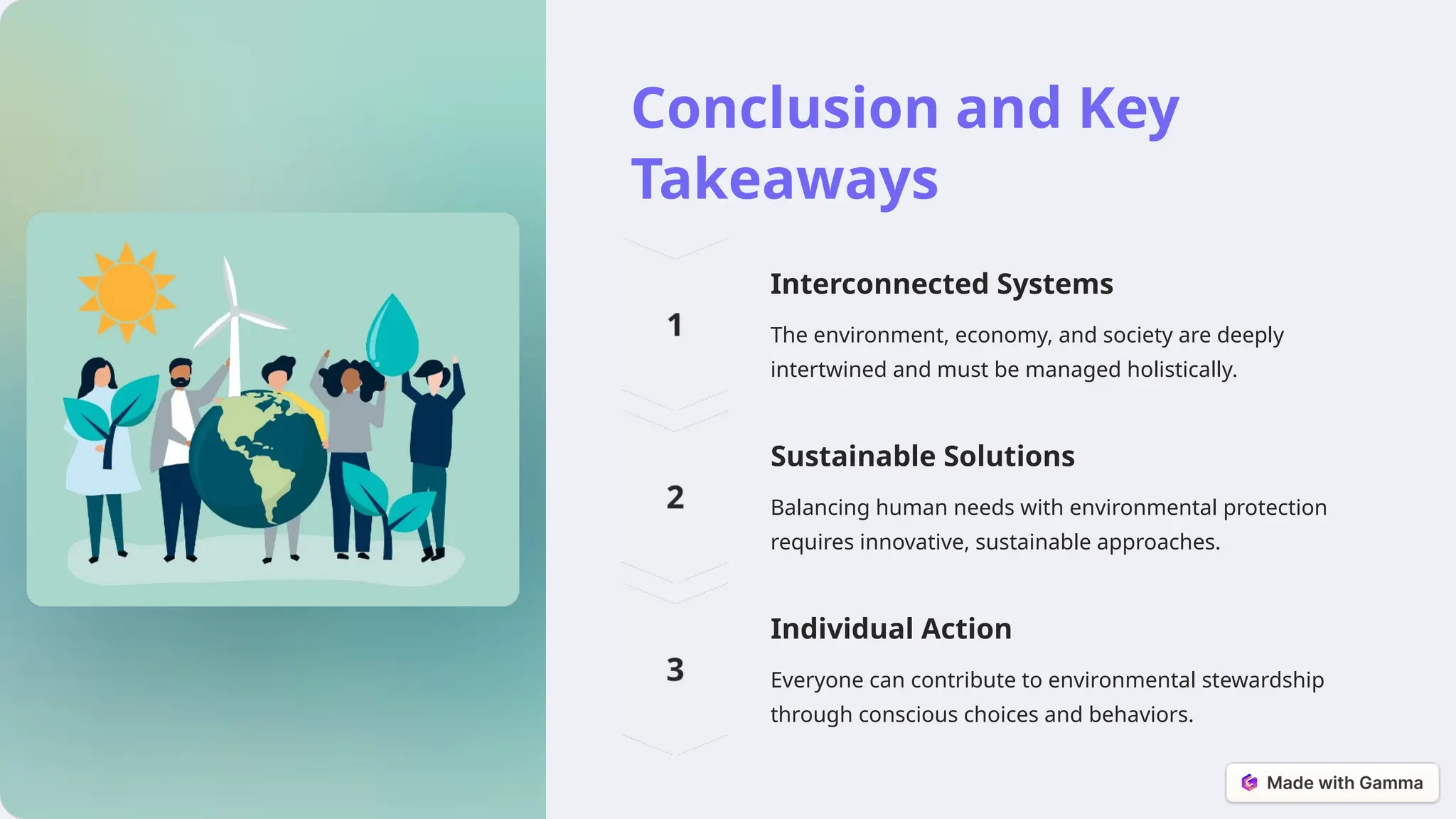
Conclusion and Key
Takeaways
Interconnected Systems
The environment, economy, and society are deeply
intertwined and must be managed holistically.
Sustainable Solutions
Balancing human needs with environmental protection
requires innovative, sustainable approaches.
Individual Action
Everyone can contribute to environmental stewardship
through conscious choices and behaviors.

Introduction-to-Environment-Ecology-and-Natural-Resources (1).pptx

  • 1.
    Introduction to Environment, Ecology, and NaturalResources The environment encompasses the physical, biological, and social elements that surround and influence all living things. Ecology studies the relationships between organisms and their environment, while natural resources are the materials and energy sourced from the natural world to support life and human activities.
  • 2.
    Carrying Capacity and PollutionConcepts 1 Carrying Capacity The maximum number of organisms a given environment can sustainably support. 2 Pollution The introduction of harmful substances into the environment, exceeding its capacity to safely absorb and neutralize them. 3 Pollution Types Air, water, land, and noise pollution can all impact the environment and human health.
  • 3.
    Interaction between Socio-EconomicSystems Economic Factors The production, distribution, and consumption of goods and services. Social Factors The relationships, institutions, and culture within a society. Environmental Factors The natural resources, climate, and ecology that support human activities.
  • 4.
    Human Health andthe Environment Air Quality Polluted air can cause respiratory problems and other health issues. Water Contamination Unsafe drinking water can spread waterborne diseases. Toxic Chemicals Exposure to hazardous materials can lead to acute and chronic health effects. Infectious Diseases Environmental factors can contribute to the spread of infectious diseases.
  • 5.
    Fossil Fuels andRenewable Energy Fossil Fuels Non-renewable energy sources like oil, gas, and coal. Renewable Energy Energy sources that replenish naturally, such as wind, solar, and hydropower. Environmental Impact Fossil fuels contribute to greenhouse gas emissions and climate change.
  • 6.
    Nuclear Energy and SustainableEnergy Options 1 Nuclear Energy Generates electricity from splitting atomic nuclei, producing minimal greenhouse gas emissions. 2 Renewable Energy Sustainable sources like solar, wind, and hydropower that replenish naturally. 3 Energy Efficiency Reducing energy consumption through improved technology and conservation measures.
  • 7.
    Energy-Water-Food Nexus and ManagementIssues Energy Water Food Electricity generation, transportation, and industrial processes require water. Water treatment and distribution require energy. Agricultural production and food processing require energy and water. Biofuel production competes with food crops for land and water. Pollution and overexploitation of water resources can impact food production. Unsustainable agricultural practices can deplete water resources and contribute to climate change.
  • 8.
    Conclusion and Key Takeaways InterconnectedSystems The environment, economy, and society are deeply intertwined and must be managed holistically. Sustainable Solutions Balancing human needs with environmental protection requires innovative, sustainable approaches. Individual Action Everyone can contribute to environmental stewardship through conscious choices and behaviors.