Ecological balance:
 A state of dynamic equilibrium
 A community of organisms
 Genetic, Species and Ecosystem diversity remains stable
 Subject to Gradual changes
 Natural Succession
 A state of dynamic equilibrium within a community of organisms in which Genetic, Species and
ecosystem diversity remains stable subject to gradual changes through natural succession.
 Ecological balance ensures the stability of the organisms and environment. Human being plays a
key role to maintain ecological balance because they have the highest thinking capacity as
compared to other living organisms.
 Sufficient food availability to all living organisms and their stability reflect the existence of
ecological balance. Therefore, this balance is very important because it ensures survival, existence
and stability of the environment.
 Ecological Imbalance
Ecological imbalance is when a natural or human-caused disturbance disrupts the natural balance of an
ecosystem. A disturbance is any change that causes a disruption in the balance of an ecosystem.
Examples of natural disturbances are
 Volcanic eruptions
 Floods
 Natural fires
Examples of human-caused disturbances are
 The introduction of a new species
 Logging a forest
 Pollution
 Overhunting of a species
 Environmental Issues Related to Ecological Imbalance
1. Global problems – These are problems that affect different nations and can only be
resolve through solidarity of affected nation. Some global problems are:
 Global warming or Greenhouse effect
 Acid Rain
 Pollution (Air and Marine Pollution)
 Depletion of ozone layer in the atmosphere
 Radioactive fallout because of nuclear war
2. National problems – These are problems that affect a country and can only be resolved within
the country. These national environmental issues are:
 Pollution (air, water and soil)
 Degradation of natural resources such as soil erosion, deforestation, depletion of wildlife,
shortage of energy, degradation of marine ecosystems and depletion of mineral resources
 Alteration and inconsistent land use like the conversion of agricultural land into industrial
estates, conversion of mangrove swamps into fishponds and salt beds.
Ecological Imbalance Examples
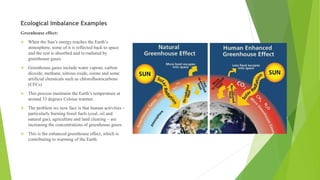
Greenhouse effect:
 When the Sun’s energy reaches the Earth’s
atmosphere, some of it is reflected back to space
and the rest is absorbed and re-radiated by
greenhouse gases.
 Greenhouse gases include water vapour, carbon
dioxide, methane, nitrous oxide, ozone and some
artificial chemicals such as chlorofluorocarbons
(CFCs)
 This process maintains the Earth’s temperature at
around 33 degrees Celsius warmer.
 The problem we now face is that human activities –
particularly burning fossil fuels (coal, oil and
natural gas), agriculture and land clearing – are
increasing the concentrations of greenhouse gases.
 This is the enhanced greenhouse effect, which is
contributing to warming of the Earth.
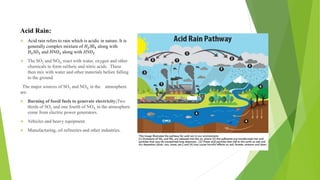
Acid Rain:
 Acid rain refers to rain which is acidic in nature. It is
generally complex mixture of 𝐻2S04 along with
𝐻2S𝑂3 and HN𝑂3 along with HN𝑂2
 The SO2 and NOX react with water, oxygen and other
chemicals to form sulfuric and nitric acids. These
then mix with water and other materials before falling
to the ground.
The major sources of SO2 and NOX in the atmosphere
are:
 Burning of fossil fuels to generate electricity:Two
thirds of SO2 and one fourth of NOX in the atmosphere
come from electric power generators.
 Vehicles and heavy equipment.
 Manufacturing, oil refineries and other industries.
Theories of balance
 Gaia hypothesis
 The entire range of living matter on Earth from whales to viruses and from oaks to
algae could be regarded as constituting a single living entity capable of maintaining
Earth’s atmosphere to suit its overall needs and endowed with faculties and powers far
beyond those of its constitute parts”
 Two ways Gaia accomplishes this include:
 1. Allowing evolution so species may meet new environmental changes
 2. Ensuring a great diversity of life
Chaos Hypothesis:
 Chaos theory is a branch of mathematics focusing on the behavior of dynamical
systems that are highly sensitive to initial conditions
 Chaotic behavior exists in many natural systems, such as weather and climate.
 It also occurs spontaneously in some systems with artificial components, such as road
traffic.
 Maintaining the Ecological Balance
 Manage Natural Resources Carefully
 Control the Population
 Protect the Water
 Reduce Logging
 Reduce chlorofluorocarbon
 Stop open burning

Ecological Balance

  • 1.
    Ecological balance:  Astate of dynamic equilibrium  A community of organisms  Genetic, Species and Ecosystem diversity remains stable  Subject to Gradual changes  Natural Succession  A state of dynamic equilibrium within a community of organisms in which Genetic, Species and ecosystem diversity remains stable subject to gradual changes through natural succession.  Ecological balance ensures the stability of the organisms and environment. Human being plays a key role to maintain ecological balance because they have the highest thinking capacity as compared to other living organisms.  Sufficient food availability to all living organisms and their stability reflect the existence of ecological balance. Therefore, this balance is very important because it ensures survival, existence and stability of the environment.
  • 2.
     Ecological Imbalance Ecologicalimbalance is when a natural or human-caused disturbance disrupts the natural balance of an ecosystem. A disturbance is any change that causes a disruption in the balance of an ecosystem. Examples of natural disturbances are  Volcanic eruptions  Floods  Natural fires Examples of human-caused disturbances are  The introduction of a new species  Logging a forest  Pollution  Overhunting of a species
  • 3.
     Environmental IssuesRelated to Ecological Imbalance 1. Global problems – These are problems that affect different nations and can only be resolve through solidarity of affected nation. Some global problems are:  Global warming or Greenhouse effect  Acid Rain  Pollution (Air and Marine Pollution)  Depletion of ozone layer in the atmosphere  Radioactive fallout because of nuclear war 2. National problems – These are problems that affect a country and can only be resolved within the country. These national environmental issues are:  Pollution (air, water and soil)  Degradation of natural resources such as soil erosion, deforestation, depletion of wildlife, shortage of energy, degradation of marine ecosystems and depletion of mineral resources  Alteration and inconsistent land use like the conversion of agricultural land into industrial estates, conversion of mangrove swamps into fishponds and salt beds.
  • 4.
    Ecological Imbalance Examples Greenhouseeffect:  When the Sun’s energy reaches the Earth’s atmosphere, some of it is reflected back to space and the rest is absorbed and re-radiated by greenhouse gases.  Greenhouse gases include water vapour, carbon dioxide, methane, nitrous oxide, ozone and some artificial chemicals such as chlorofluorocarbons (CFCs)  This process maintains the Earth’s temperature at around 33 degrees Celsius warmer.  The problem we now face is that human activities – particularly burning fossil fuels (coal, oil and natural gas), agriculture and land clearing – are increasing the concentrations of greenhouse gases.  This is the enhanced greenhouse effect, which is contributing to warming of the Earth.
  • 5.
    Acid Rain:  Acidrain refers to rain which is acidic in nature. It is generally complex mixture of 𝐻2S04 along with 𝐻2S𝑂3 and HN𝑂3 along with HN𝑂2  The SO2 and NOX react with water, oxygen and other chemicals to form sulfuric and nitric acids. These then mix with water and other materials before falling to the ground. The major sources of SO2 and NOX in the atmosphere are:  Burning of fossil fuels to generate electricity:Two thirds of SO2 and one fourth of NOX in the atmosphere come from electric power generators.  Vehicles and heavy equipment.  Manufacturing, oil refineries and other industries.
  • 6.
    Theories of balance Gaia hypothesis  The entire range of living matter on Earth from whales to viruses and from oaks to algae could be regarded as constituting a single living entity capable of maintaining Earth’s atmosphere to suit its overall needs and endowed with faculties and powers far beyond those of its constitute parts”  Two ways Gaia accomplishes this include:  1. Allowing evolution so species may meet new environmental changes  2. Ensuring a great diversity of life Chaos Hypothesis:  Chaos theory is a branch of mathematics focusing on the behavior of dynamical systems that are highly sensitive to initial conditions  Chaotic behavior exists in many natural systems, such as weather and climate.  It also occurs spontaneously in some systems with artificial components, such as road traffic.
  • 7.
     Maintaining theEcological Balance  Manage Natural Resources Carefully  Control the Population  Protect the Water  Reduce Logging  Reduce chlorofluorocarbon  Stop open burning