KEY CONCEPT The chromosomes on which genes are located can affect the expression of traits.
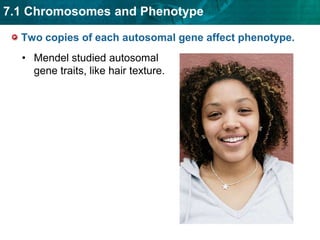
Two copies of each autosomal gene affect phenotype.Mendel studied autosomal gene traits, like hair texture.
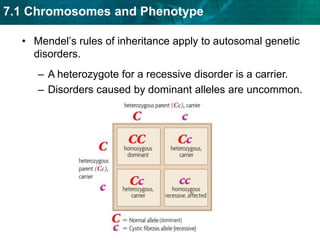
(dominant)Mendel’s rules of inheritance apply to autosomal genetic disorders.A heterozygote for a recessive disorder is a carrier.
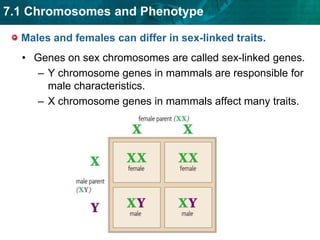
Disorders caused by dominant alleles are uncommon.Males and females can differ in sex-linked traits.    Genes on sex chromosomes are called sex-linked genes. Y chromosome genes in mammals are responsible for male characteristics.X chromosome genes in mammals affect many traits.
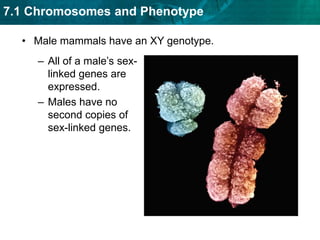
Male mammals have an XY genotype.
All of a male’s sex-linked genes are expressed.
Males have no second copies of sex-linked genes.Female mammals have an XX genotype.
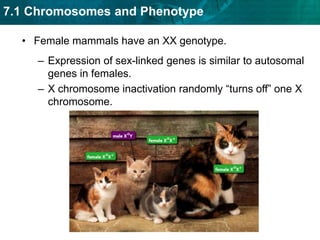
Expression of sex-linked genes is similar to autosomal genes in females.
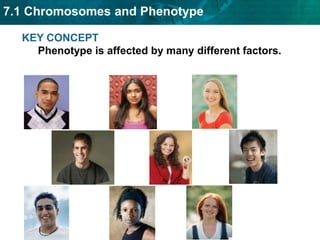
X chromosome inactivation randomly “turns off” one X chromosome. KEY CONCEPT Phenotype is affected by many different factors.
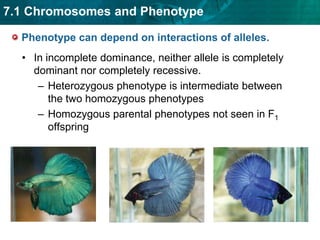
Phenotype can depend on interactions of alleles.In incomplete dominance, neither allele is completely dominant nor completely recessive.Heterozygous phenotype is intermediate between the two homozygous phenotypesHomozygous parental phenotypes not seen in F1 offspring
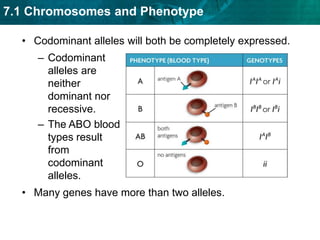
Codominant alleles will both be completely expressed.Codominant alleles are neither dominant nor recessive.
The ABO blood types result from codominant alleles.
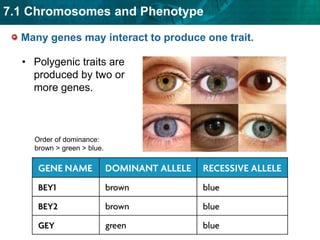
Many genes have more than two alleles.Order of dominance: brown > green > blue.Many genes may interact to produce one trait.    Polygenic traits are produced by two or more genes.
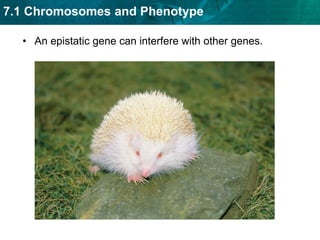
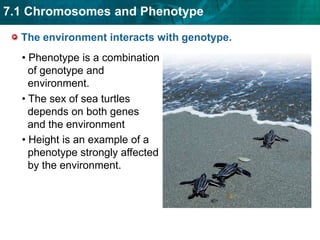
An epistatic gene can interfere with other genes.The environment interacts with genotype.  Phenotype is a combination   of genotype and   environment.
 The sex of sea turtles   depends on both genes   and the environment
 Height is an example of a   phenotype strongly affected   by the environment.KEY CONCEPT Genes can be mapped to specific locations on chromosomes.
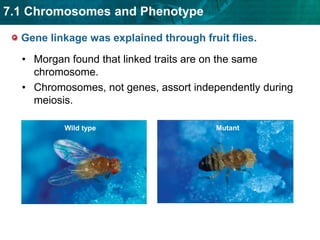
MutantWild typeGene linkage was explained through fruit flies. Morgan found that linked traits are on the same chromosome.Chromosomes, not genes, assort independently during meiosis.
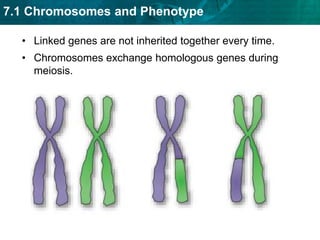
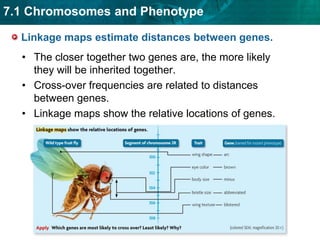
Linked genes are not inherited together every time.Chromosomes exchange homologous genes during meiosis. Linkage maps estimate distances between genes.    The closer together two genes are, the more likely they will be inherited together.Cross-over frequencies are related to distances between genes.Linkage maps show the relative locations of genes.
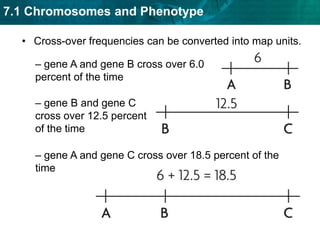
Cross-over frequencies can be converted into map units.
gene A and gene B cross over 6.0 percent of the time
gene B and gene C cross over 12.5 percent of the time
gene A and gene C cross over 18.5 percent of the timeKEY CONCEPT A combination of methods is used to study human genetics.
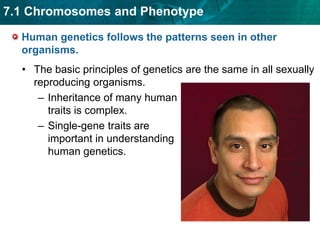
Human genetics follows the patterns seen in other organisms. The basic principles of genetics are the same in all sexually reproducing organisms.Inheritance of many humantraits is complex.Single-gene traits areimportant in understandinghuman genetics.
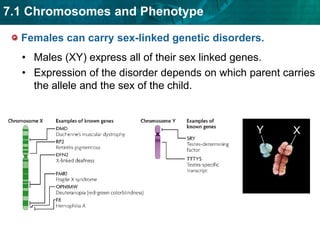
YXFemales can carry sex-linked genetic disorders. Males (XY) express all of their sex linked genes.Expression of the disorder depends on which parent carries the allele and the sex of the child.

Unit 7 Chromosomes And Phenotype

  • 1.
    KEY CONCEPT Thechromosomes on which genes are located can affect the expression of traits.
  • 2.
    Two copies ofeach autosomal gene affect phenotype.Mendel studied autosomal gene traits, like hair texture.
  • 3.
    (dominant)Mendel’s rules ofinheritance apply to autosomal genetic disorders.A heterozygote for a recessive disorder is a carrier.
  • 4.
    Disorders caused bydominant alleles are uncommon.Males and females can differ in sex-linked traits. Genes on sex chromosomes are called sex-linked genes. Y chromosome genes in mammals are responsible for male characteristics.X chromosome genes in mammals affect many traits.
  • 5.
    Male mammals havean XY genotype.
  • 6.
    All of amale’s sex-linked genes are expressed.
  • 7.
    Males have nosecond copies of sex-linked genes.Female mammals have an XX genotype.
  • 8.
    Expression of sex-linkedgenes is similar to autosomal genes in females.
  • 9.
    X chromosome inactivationrandomly “turns off” one X chromosome. KEY CONCEPT Phenotype is affected by many different factors.
  • 10.
    Phenotype can dependon interactions of alleles.In incomplete dominance, neither allele is completely dominant nor completely recessive.Heterozygous phenotype is intermediate between the two homozygous phenotypesHomozygous parental phenotypes not seen in F1 offspring
  • 11.
    Codominant alleles willboth be completely expressed.Codominant alleles are neither dominant nor recessive.
  • 12.
    The ABO bloodtypes result from codominant alleles.
  • 13.
    Many genes havemore than two alleles.Order of dominance: brown > green > blue.Many genes may interact to produce one trait. Polygenic traits are produced by two or more genes.
  • 14.
    An epistatic genecan interfere with other genes.The environment interacts with genotype. Phenotype is a combination of genotype and environment.
  • 15.
    The sexof sea turtles depends on both genes and the environment
  • 16.
    Height isan example of a phenotype strongly affected by the environment.KEY CONCEPT Genes can be mapped to specific locations on chromosomes.
  • 17.
    MutantWild typeGene linkagewas explained through fruit flies. Morgan found that linked traits are on the same chromosome.Chromosomes, not genes, assort independently during meiosis.
  • 18.
    Linked genes arenot inherited together every time.Chromosomes exchange homologous genes during meiosis. Linkage maps estimate distances between genes. The closer together two genes are, the more likely they will be inherited together.Cross-over frequencies are related to distances between genes.Linkage maps show the relative locations of genes.
  • 19.
    Cross-over frequencies canbe converted into map units.
  • 20.
    gene A andgene B cross over 6.0 percent of the time
  • 21.
    gene B andgene C cross over 12.5 percent of the time
  • 22.
    gene A andgene C cross over 18.5 percent of the timeKEY CONCEPT A combination of methods is used to study human genetics.
  • 23.
    Human genetics followsthe patterns seen in other organisms. The basic principles of genetics are the same in all sexually reproducing organisms.Inheritance of many humantraits is complex.Single-gene traits areimportant in understandinghuman genetics.
  • 24.
    YXFemales can carrysex-linked genetic disorders. Males (XY) express all of their sex linked genes.Expression of the disorder depends on which parent carries the allele and the sex of the child.
  • 25.
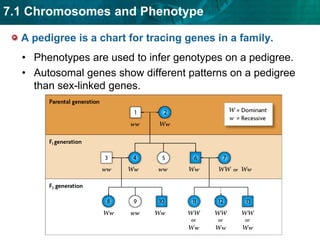
    A pedigree isa chart for tracing genes in a family. Phenotypes are used to infer genotypes on a pedigree.Autosomal genes show different patterns on a pedigree than sex-linked genes.
  • 26.
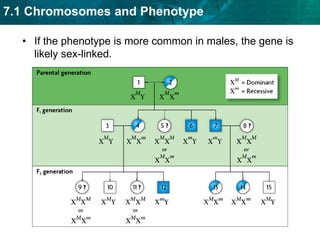
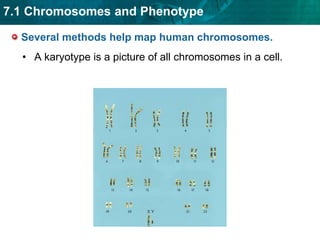
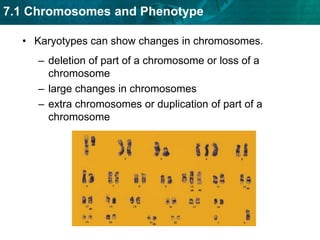
    If the phenotypeis more common in males, the gene is likely sex-linked.X YSeveral methods help map human chromosomes. A karyotype is a picture of all chromosomes in a cell.
  • 27.
    Karyotypes can showchanges in chromosomes.
  • 28.
    deletion of partof a chromosome or loss of a chromosome
  • 29.
    large changes inchromosomes
  • 30.
    extra chromosomes orduplication of part of a chromosome